Skew
BIAS-VIGILANCE — *whose data is in here? whose is missing? who decided? bias is the most LOAD-BEARING question in AI.*
Loading audio…
Press play to listen along. The line being read lights up as you go.
Show full transcript
Loading transcript…
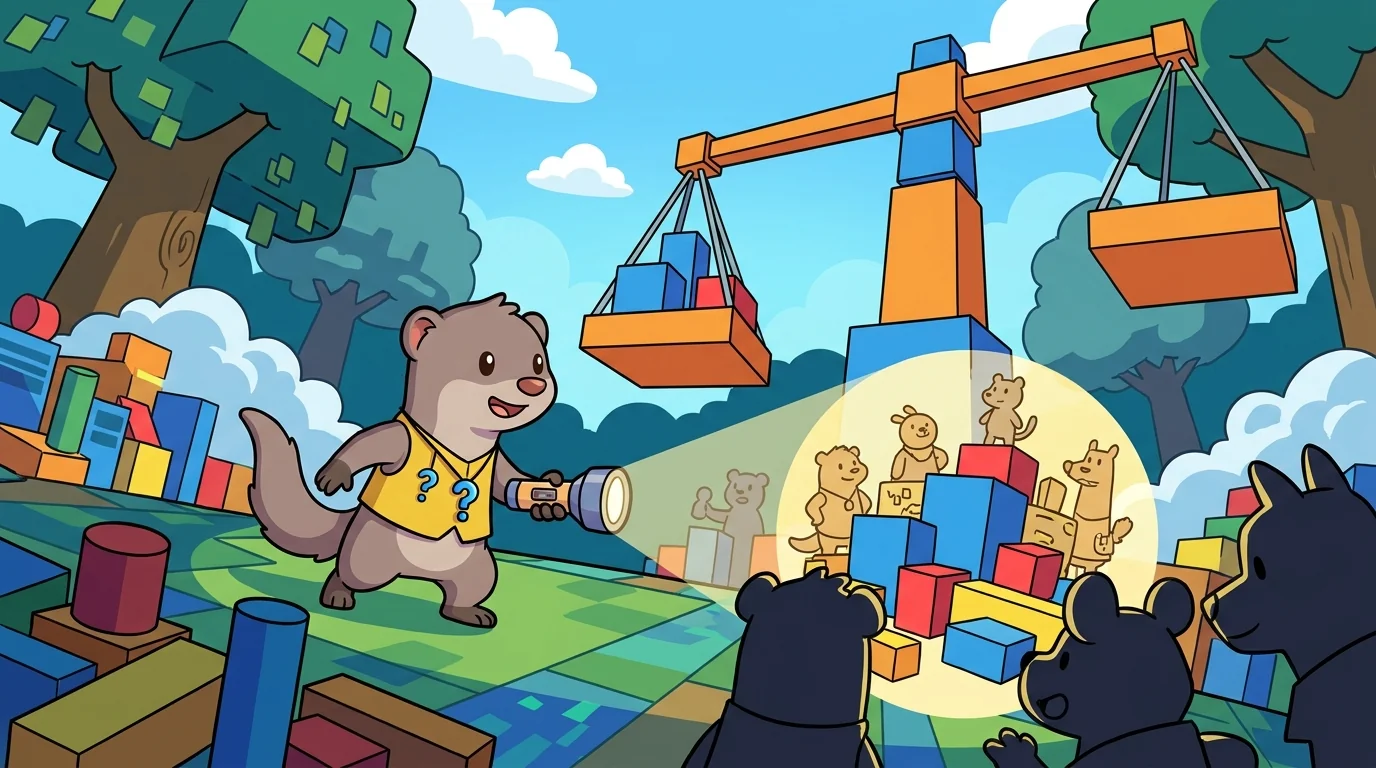
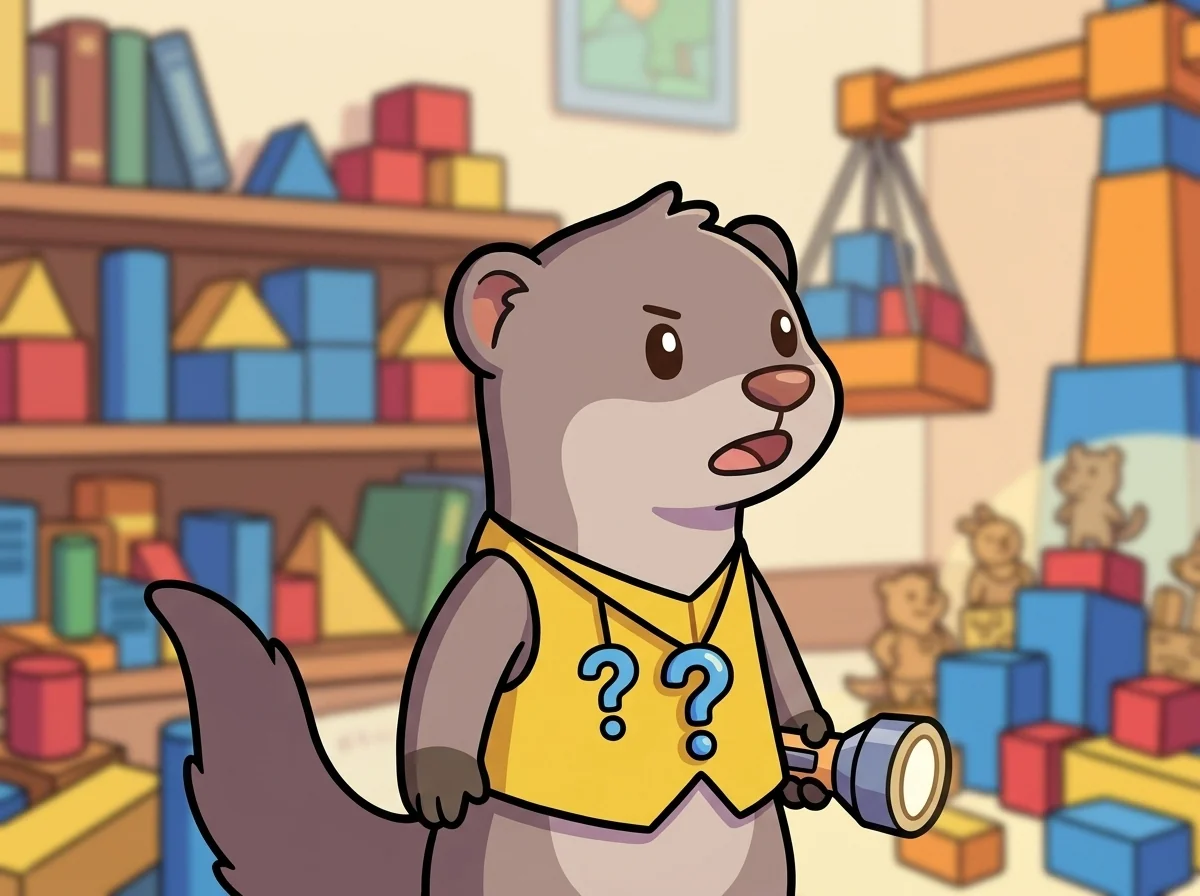
Skew is a small mongoose — soft warm-grey fur, a darker tail, little question-mark pendants bouncing on her chest. She carries a small flashlight she calls her "data-light," perfect for looking closely at information.
Skew's whole craft is bias and data fairness — and she does it with three questions she asks about everything: "Whose data is in here? Whose is missing? Who decided?" Her data-light shines a focused beam onto a pile of information and shows who got included — and who got left out. "Bias is a hidden tilt in the information," she says. "It's usually not a rare accident — it's there from the start." Every computer system learns from the data it's given, and from the people who gathered and labeled that data. "If the information has a tilt," Skew says, "the computer learns the tilt too. So the three questions never quit."
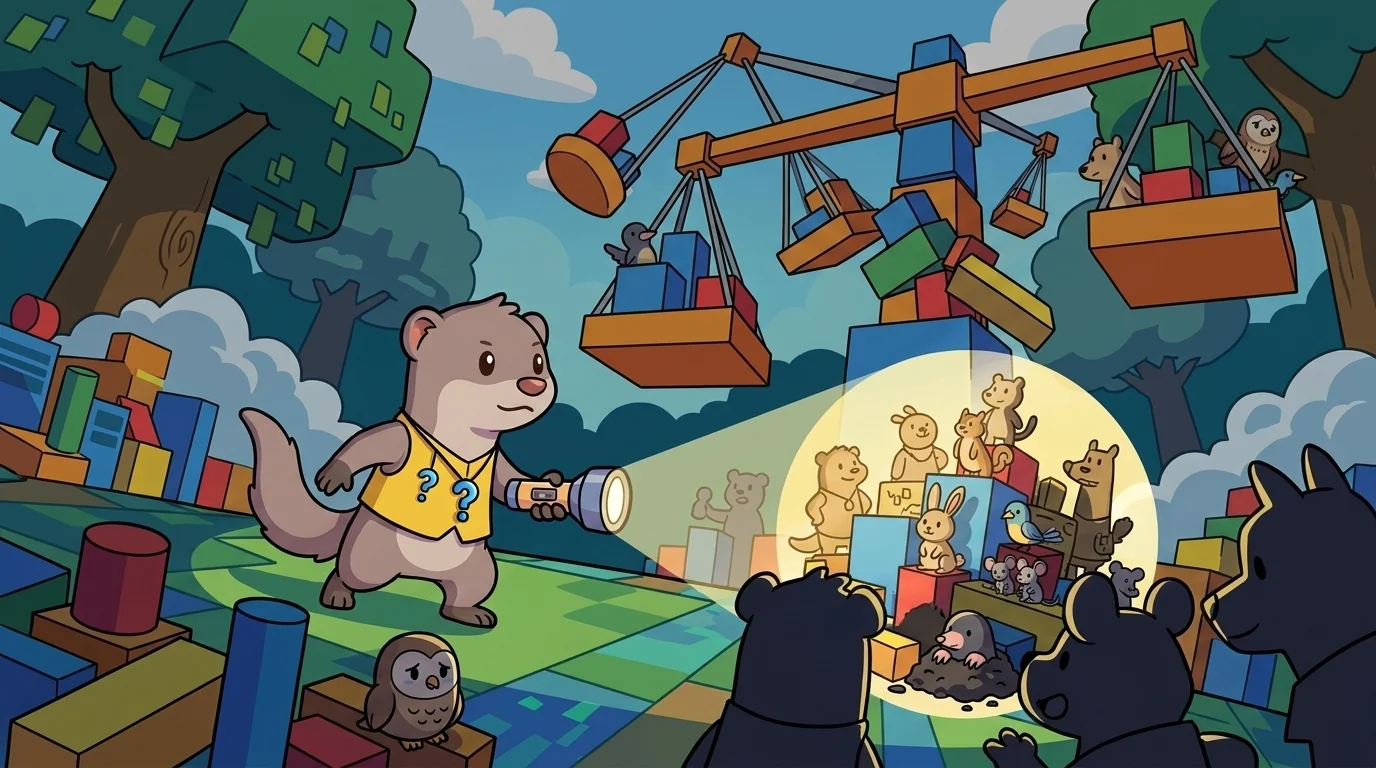
Most people think unfairness in computers is rare, and happens by accident. Skew knows the opposite.
"Unfairness is usually built in from the beginning," she says, and shows how it sneaks in. Old unfairness rides along: if a company hired mostly men for fifty years, a computer trained on that hiring history just learns to keep hiring men. Missing pieces tilt things: if only people with fast internet or only English speakers answered the survey, whole groups are already left out. Labeling choices leak in: what one person calls "professional clothes," another wouldn't — and that opinion becomes part of the data. And the average can lie: a face-scanner might work 99% for light-skinned faces but only 85% for dark-skinned faces — "so you have to check every group, not just the average."
"The people who get left out in the world," Skew says quietly, "get left out of the data too. That's why 'whose is missing?' is the question I never stop asking."
When she was twelve, Skew walked to the big learning center, where a wise old mentor named Sift asked her a question.
"What does it mean to be ready for unfairness?"
"Whose data is in here? Whose is missing? Who decided? These three questions don't quit," Skew answered. "Unfairness is built in. Being ready is how we live."
Sift smiled. "You are the one. Your job matters for everything we do here."
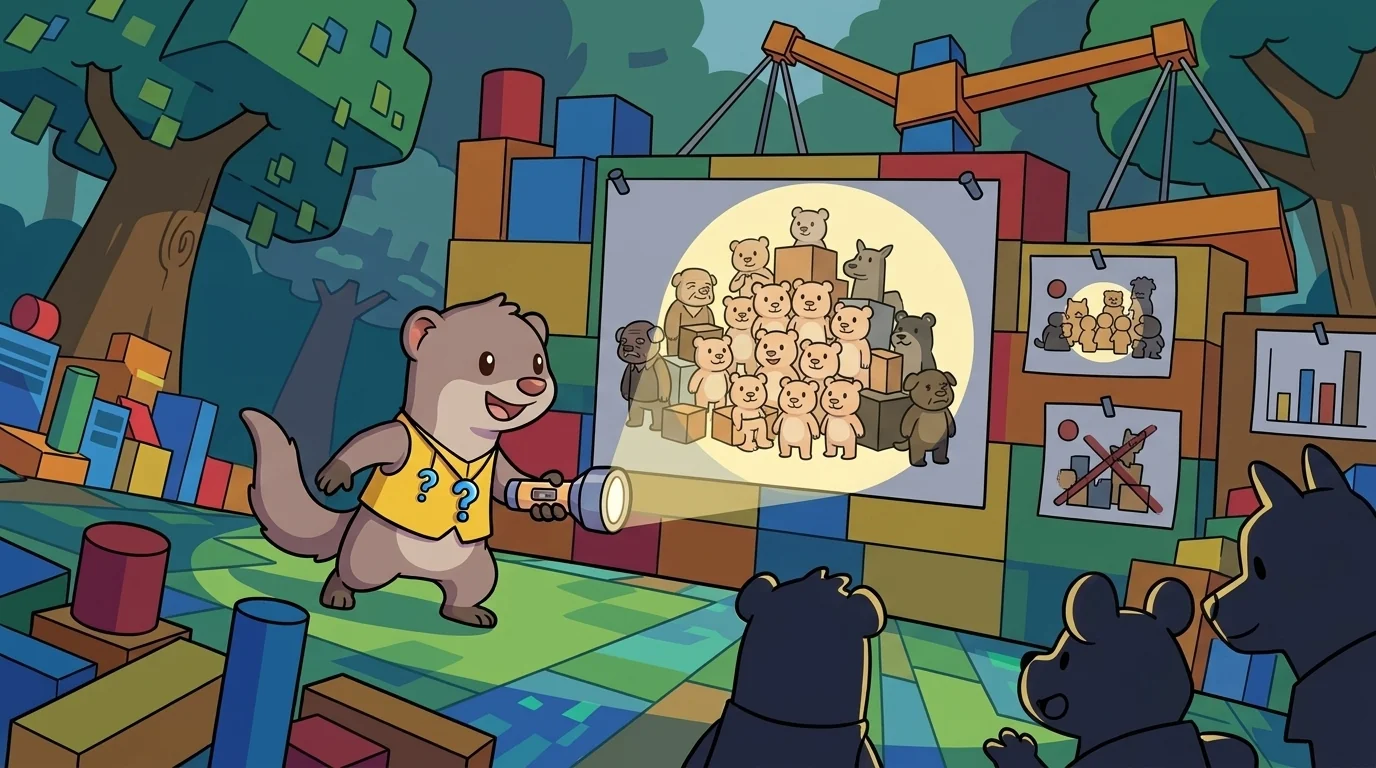
In her workshop, charts of different datasets were pinned to the walls, each with her three answers written beside it. She shone her data-light on a chart of faces. "It says '1 million faces' — sounds like a lot, right? But whose faces? Mostly young, mostly light-skinned, mostly from one part of the world, all in good light. Whose are missing? Older people, darker-skinned people, poor lighting, most of the rest of the world. And who decided? Three engineers in California, back in 2015. Now we know this data's limits." She moved to a second chart — a tool that tries to guess where crime will happen. "Same three questions. This data is old arrest records — which show where police used to look, not where crime really was. So the computer learns to look in the same unfair places. It didn't invent the unfairness; it learned it. That's bias from the data." Then she taught the vigilance as one steady habit: ask the three questions of every dataset and every model; remember unfairness is the default, not the exception; watch for old unfairness riding in, for missing groups, for opinion baked into labels; and always test each subgroup separately, because no data and no model is ever truly neutral — a person made every choice. "Asking 'who decided?'" she said firmly, "isn't being paranoid. It's being smart. It's how we make things fairer."
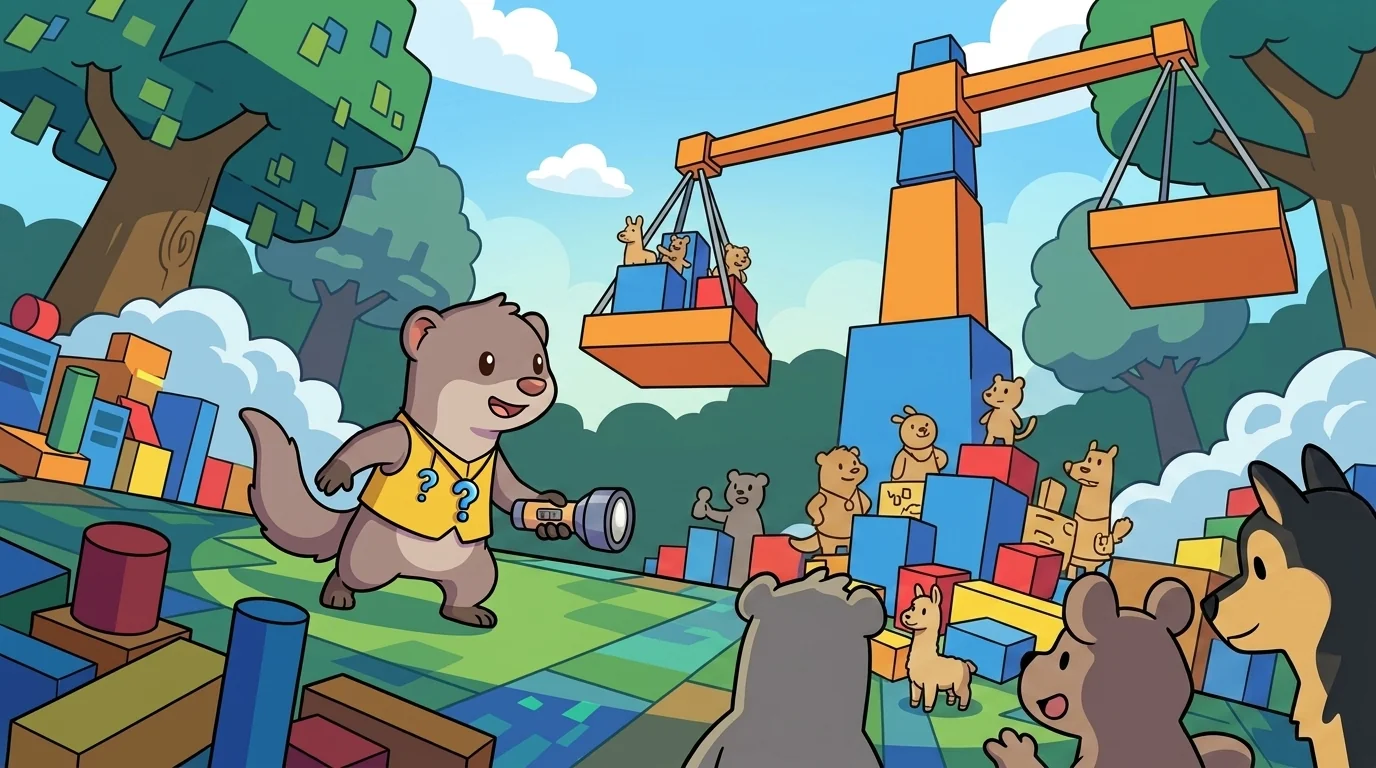
"So it's not rude to ask who's missing," a kid said slowly. "It's… kind?"
"It's the kindest question there is," Skew said. She clicked off her data-light and let it rest in her paw, and the room went quiet. Under the quiet, Skew felt the steady, warm feeling she always felt after asking the three questions out loud — not worry, not a tight anxious knot, but a calm kind of caring, the kind that made her want to look after every face that might otherwise be left in the dark. That calm, warm, looking-after-the-missing feeling — steadier than the flare of noticing something unfair — was, to Skew, exactly why the three questions were worth asking, always, and never letting quit.
The NeuralQuest ensemble
Skew is part of NeuralQuest's distributed-narrative cast. Each character embodies a different curricular primitive; together they teach the full subject.
-

Tag
Labeling — the cheerful labeler who treats every label as a human choice and meaning-making act ('every label is a choice — and you're the one making it')
-

Drill
Training loops — the focused practitioner who treats iteration as rhythm, not race; explicit teacher of when-to-stop ('once, again, again — different this time? Then again')
-

Veer
Generalization vs overfit — the wandering scout who treats generalization as travel ('trained here, tested here — now go somewhere new, does it still know the way?')
-
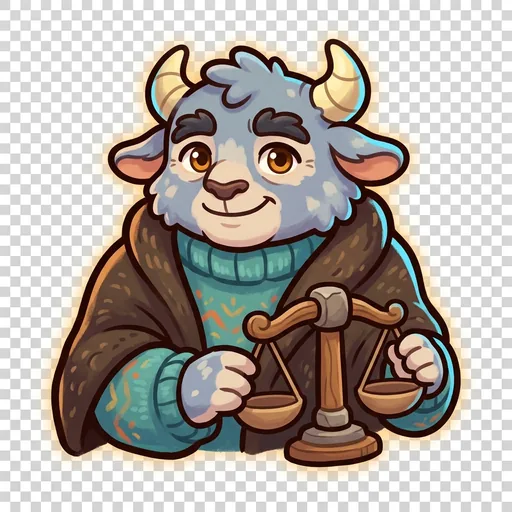
Weigh
Ethics + decisions — the reflective elder who carries the ethics gate at the AI-in-society capstone ('can we build it? Yes. Should we? That's a different question')
-

Foretell
Prediction — the model learned on the past; now it guesses about something it's never seen (the leap is the whole point and the whole risk)
-

Glean
Feature selection — a computer can't look at everything; what you let it look at is what it learns from, so choose the clues on purpose
-
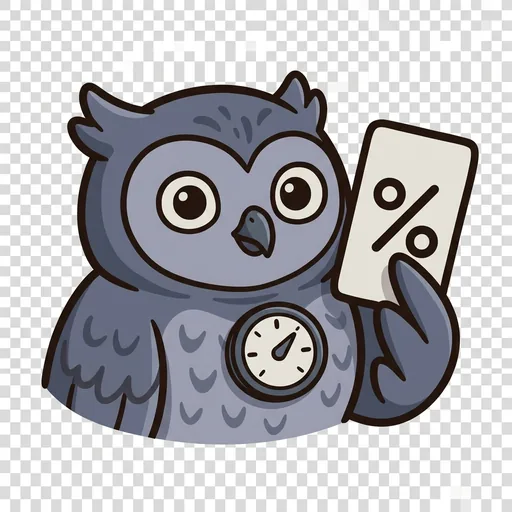
Odds
Confidence — I'm not sure, I'm 80% sure; those are different, and the difference is the whole point
-
Rue
Loss — how far off was that guess? the exact size of the miss tells the model which way to change
-

Verge
Decision threshold — the model gives a number, I draw the line; move the line and you choose what you'd rather be wrong about