Odds
CONFIDENCE — *"I'm not sure. I'm 80% sure. Those are different, and the difference is the whole point."*
Loading audio…
Press play to listen along. The line being read lights up as you go.
Show full transcript
Loading transcript…
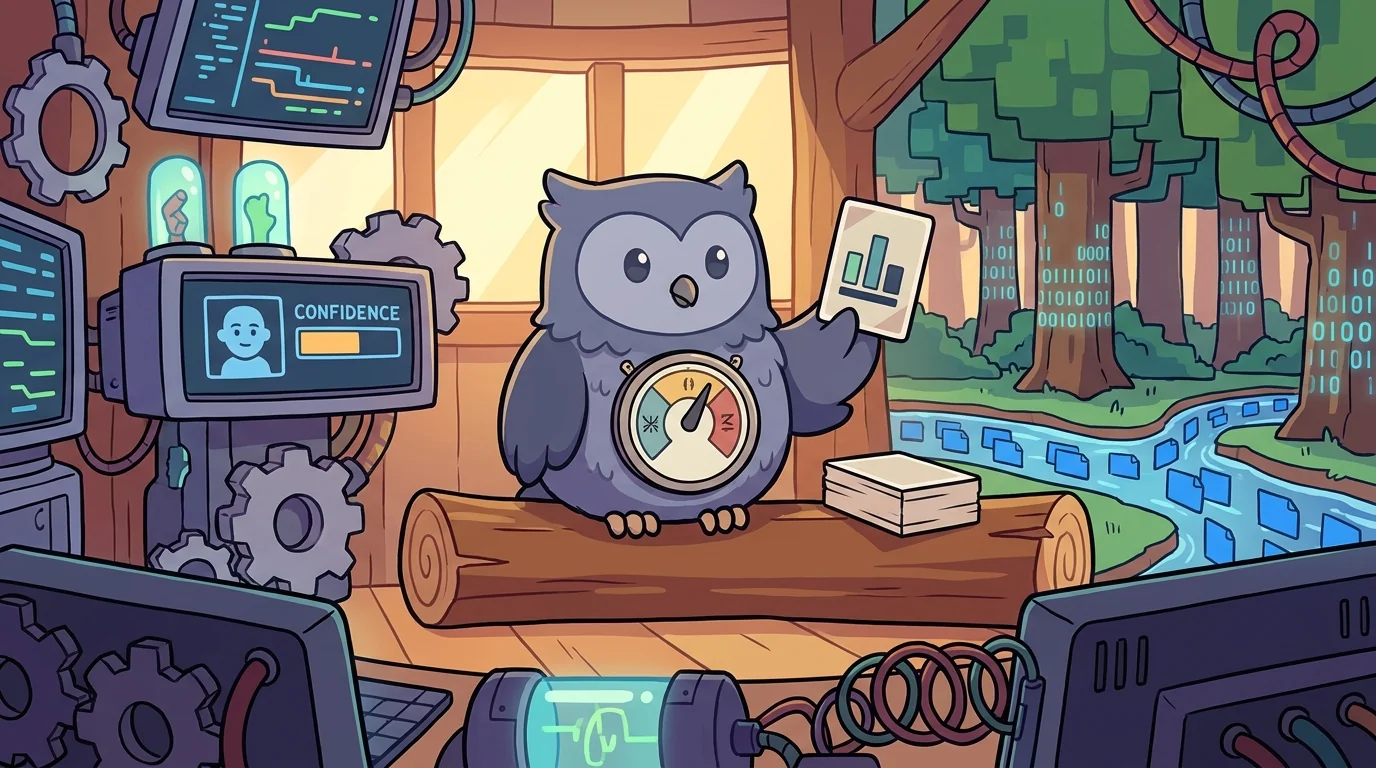
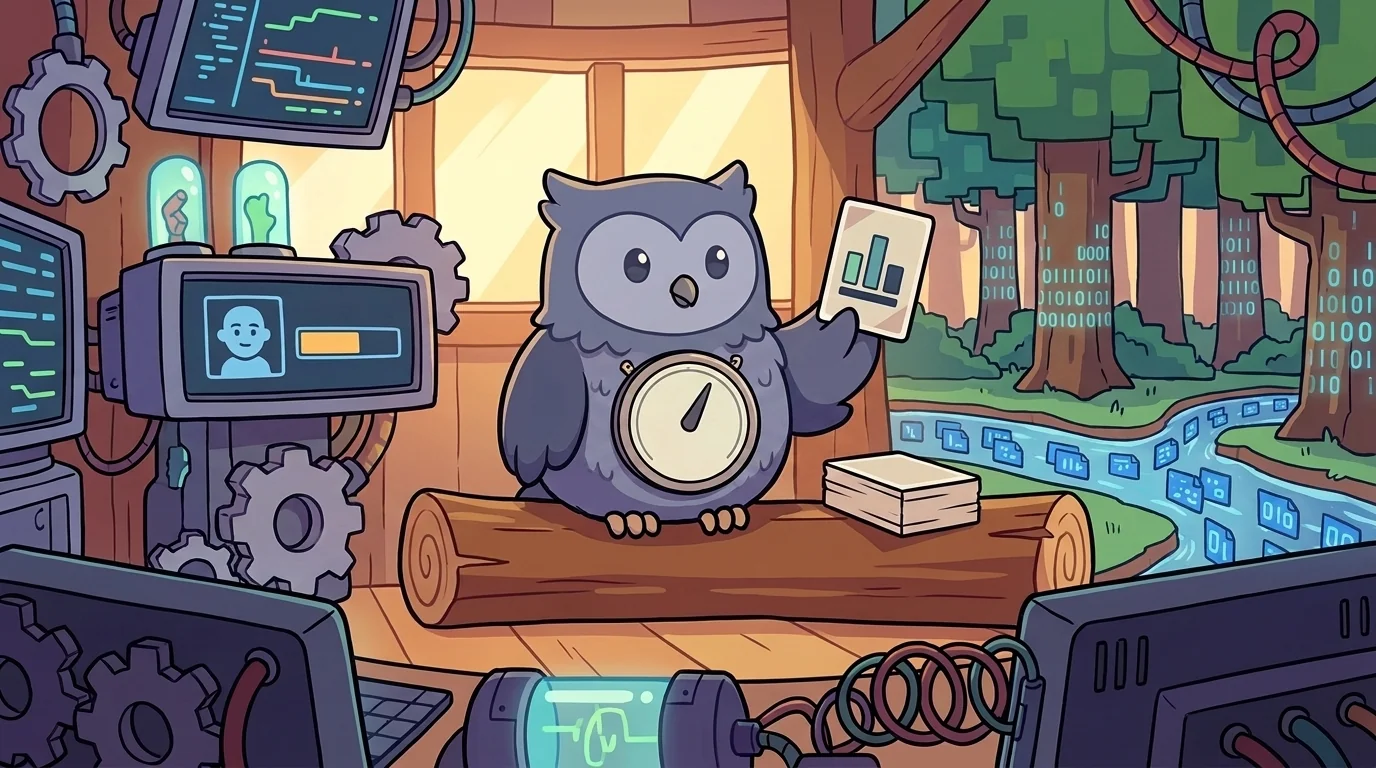
Odds is a small round owl — dusk-grey feathers, big steady eyes, a little dial pinned to her chest that always points somewhere between 0 and 100, never quite at either end. On her perch she keeps a stack of cards, each one printed with a percent, and she is forever holding one up.
Her whole craft is confidence — how sure a computer is about its guess. "A computer almost never knows," she says. "It estimates. And a good one tells you exactly how much to trust it." When a face-scanner looks at a photo it doesn't shout "THAT'S JAMIE." It quietly reports "I'm 71% sure that's Jamie" — and Odds thinks the 71 is the most honest, most useful part. "The guess tells you what it thinks," she says, tilting her dial. "The number tells you how much to lean on it. Lean too hard on a low number and you'll fall right over."
When she was small, Odds got a weather-guessing toy that only ever said two words: SUNNY or RAINY. It said SUNNY on the morning of the biggest storm of the year. She got soaked, and she was furious — not that it was wrong, but that it had sounded so certain.
"If it had said '60% chance of rain,'" she told her grandmother that night, wringing out her feathers, "I'd have brought the little umbrella. It didn't lie about the weather. It lied about how sure it was."
Her grandmother nodded slowly. "Then that," she said, "is the thing you'll spend your life fixing. Not the guess. The sureness." Odds has believed it ever since: a wrong guess said humbly is a friend; a wrong guess said loudly is a trap.
When she was twelve, Odds flew to the big learning center, where a wise old mentor named Sift asked her a question.
"What does a good guesser owe the person who's listening?"
"The truth about the doubt," Odds said. "Not just what I think — how much I think it. A promise I can't keep is worse than a maybe I can."
Sift smiled. "You are the one. Every guess in this place will pass through your dial before anyone's allowed to trust it."
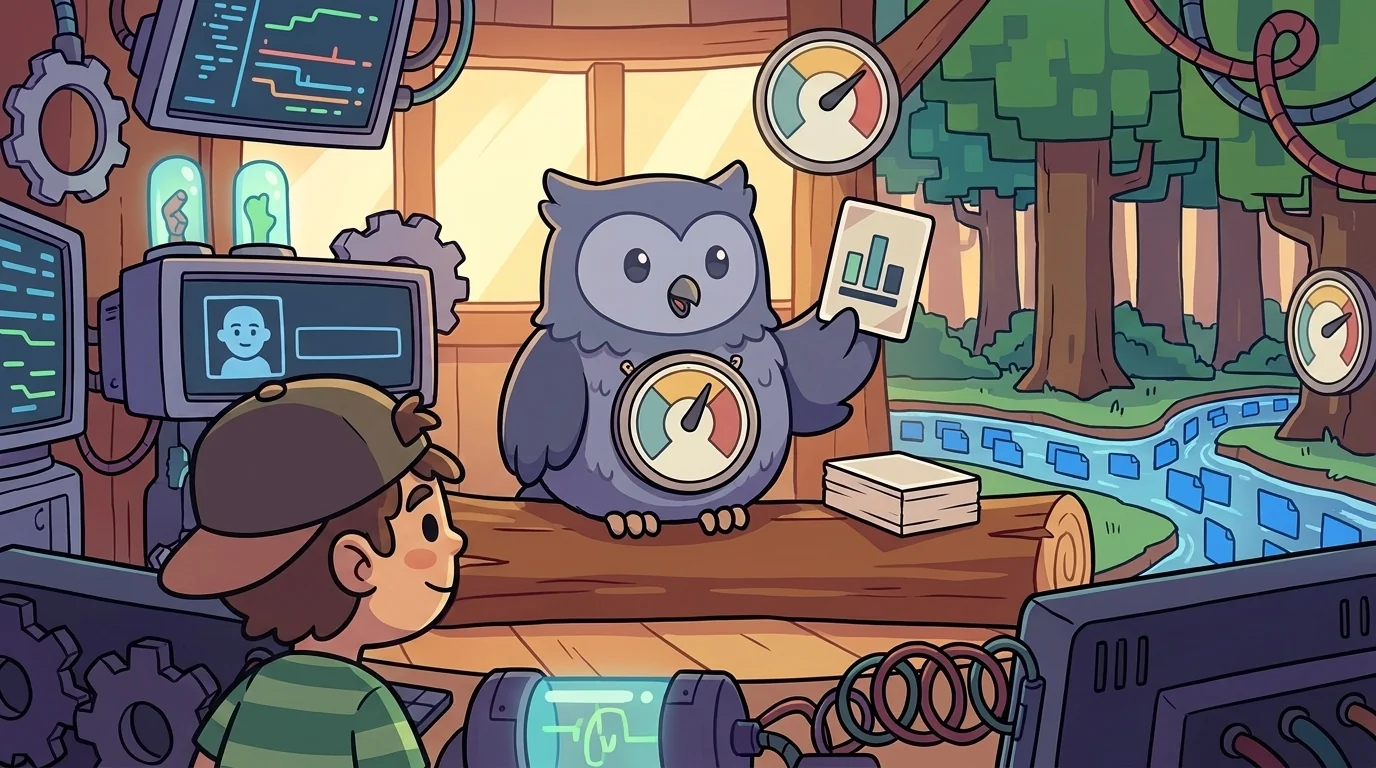
In her workshop the walls were covered in dials, each reading a different amount of sure. She held up a card to a visiting kid. "Watch. This tool looks at a spot on an X-ray and says 'probably fine.' But 'probably' is lazy. How probably?" She turned the tool's dial up until a real number showed: 88%. "There. Now a doctor knows: mostly reassuring, but check again, because 88 leaves 12 out in the cold." She swept a wing at a second tool that guessed which fruit was in a photo. "This one is 99% sure it's an apple. That I'll lean on." Then she taught the whole habit as one steady rule: never accept a bare 'yes' or 'maybe' from a computer — make it show the number; remember a high number can still be wrong and a low number can still be right, so the number is a weight, not a verdict; watch hardest when the number is near the middle, because 55% sure is a coin that barely remembers which side is which; and never, ever let a machine sound more certain than it truly is, because a confident wrong answer is the most dangerous answer there is. "Rounding 71 up to 100," she said firmly, "isn't confidence. It's a fib. My whole job is to keep the fib from happening."
"So it's okay to say I'm only kind-of sure," a kid said slowly, "as long as I say how kind-of?"
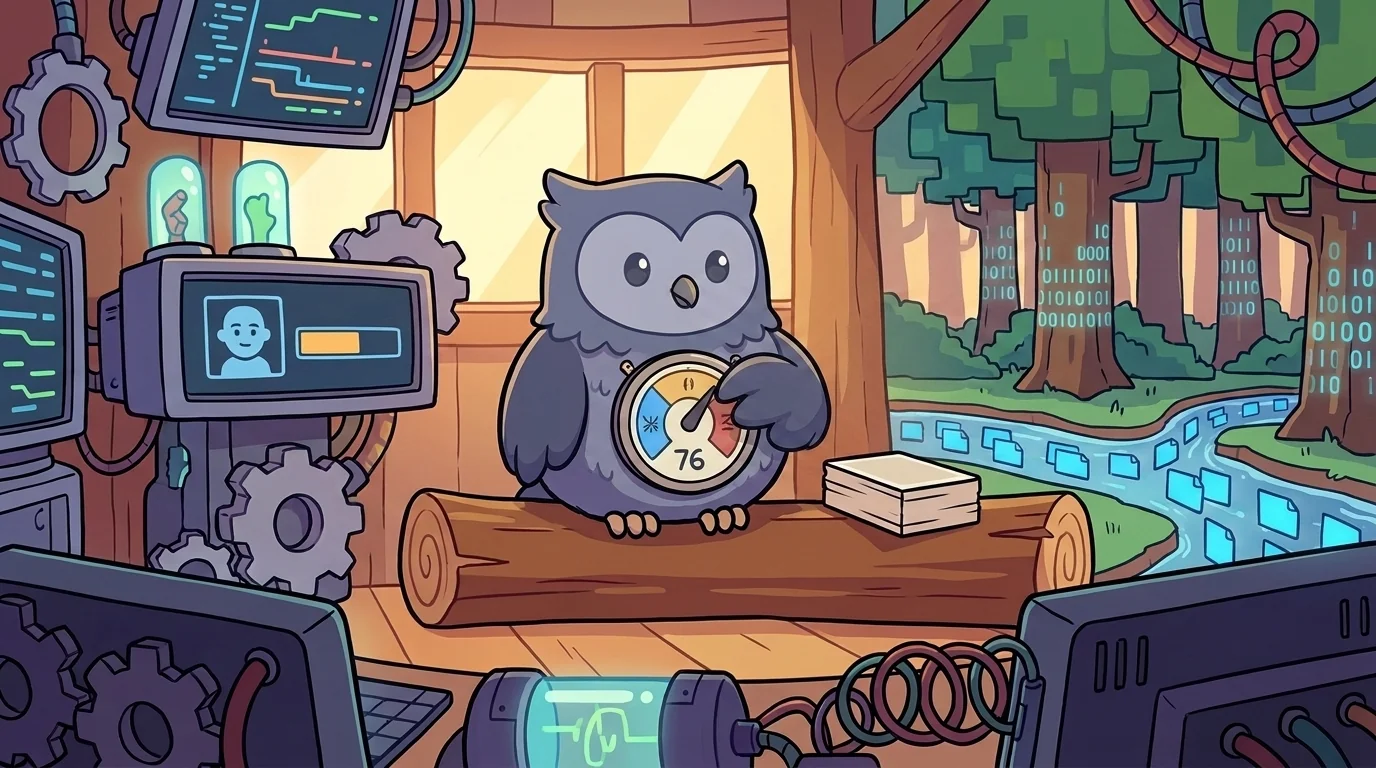
"That's not just okay," Odds said. "That's the brave part." She let her dial settle where it truly pointed — 76 that morning, not a hair higher — and rested a wing over it. Under the quiet, Odds felt the calm she always felt when a number told the exact truth: not the jittery worry of pretending, not the puffed-up pride of a fake 100, but a light, settled, unhurried ease — the ease of standing on a floor she'd tested and knew would hold. That honest, weightless, nothing-to-hide feeling, steadier than any louder certainty could ever be, was to Odds the warmest reason to keep every number exactly, gently, where it belonged.
The NeuralQuest ensemble
Odds is part of NeuralQuest's distributed-narrative cast. Each character embodies a different curricular primitive; together they teach the full subject.
-
Tag
Labeling — the cheerful labeler who treats every label as a human choice and meaning-making act ('every label is a choice — and you're the one making it')
-

Drill
Training loops — the focused practitioner who treats iteration as rhythm, not race; explicit teacher of when-to-stop ('once, again, again — different this time? Then again')
-
Skew
Bias + data fairness — the bias-vigilance anchor who always asks 'whose data is in here, whose is missing, who decided'; appears in every kit from kit 5 onward
-

Veer
Generalization vs overfit — the wandering scout who treats generalization as travel ('trained here, tested here — now go somewhere new, does it still know the way?')
-
Weigh
Ethics + decisions — the reflective elder who carries the ethics gate at the AI-in-society capstone ('can we build it? Yes. Should we? That's a different question')
-
Foretell
Prediction — the model learned on the past; now it guesses about something it's never seen (the leap is the whole point and the whole risk)
-
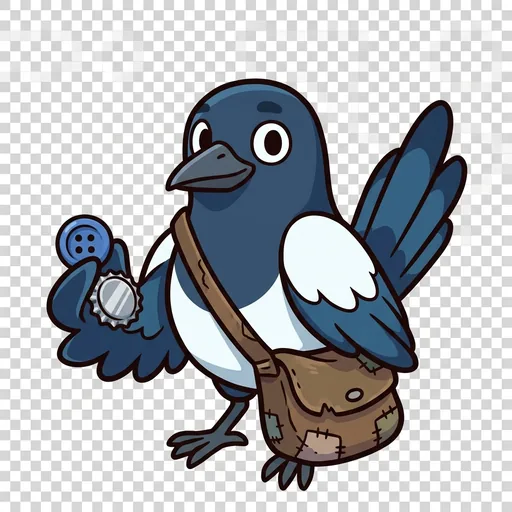
Glean
Feature selection — a computer can't look at everything; what you let it look at is what it learns from, so choose the clues on purpose
-
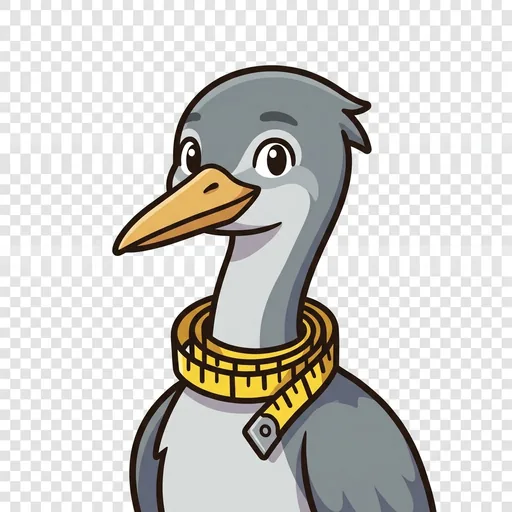
Rue
Loss — how far off was that guess? the exact size of the miss tells the model which way to change
-
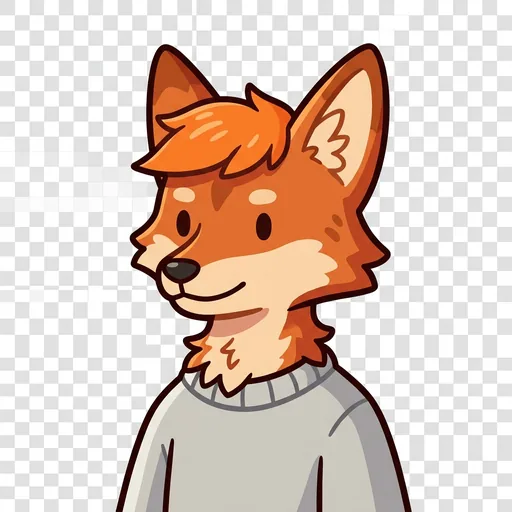
Verge
Decision threshold — the model gives a number, I draw the line; move the line and you choose what you'd rather be wrong about