Foretell
PREDICTION — *"the model learned on the past. Now it guesses about something it has never seen. That leap is the whole point — and the whole risk."*
Loading audio…
Press play to listen along. The line being read lights up as you go.
Show full transcript
Loading transcript…
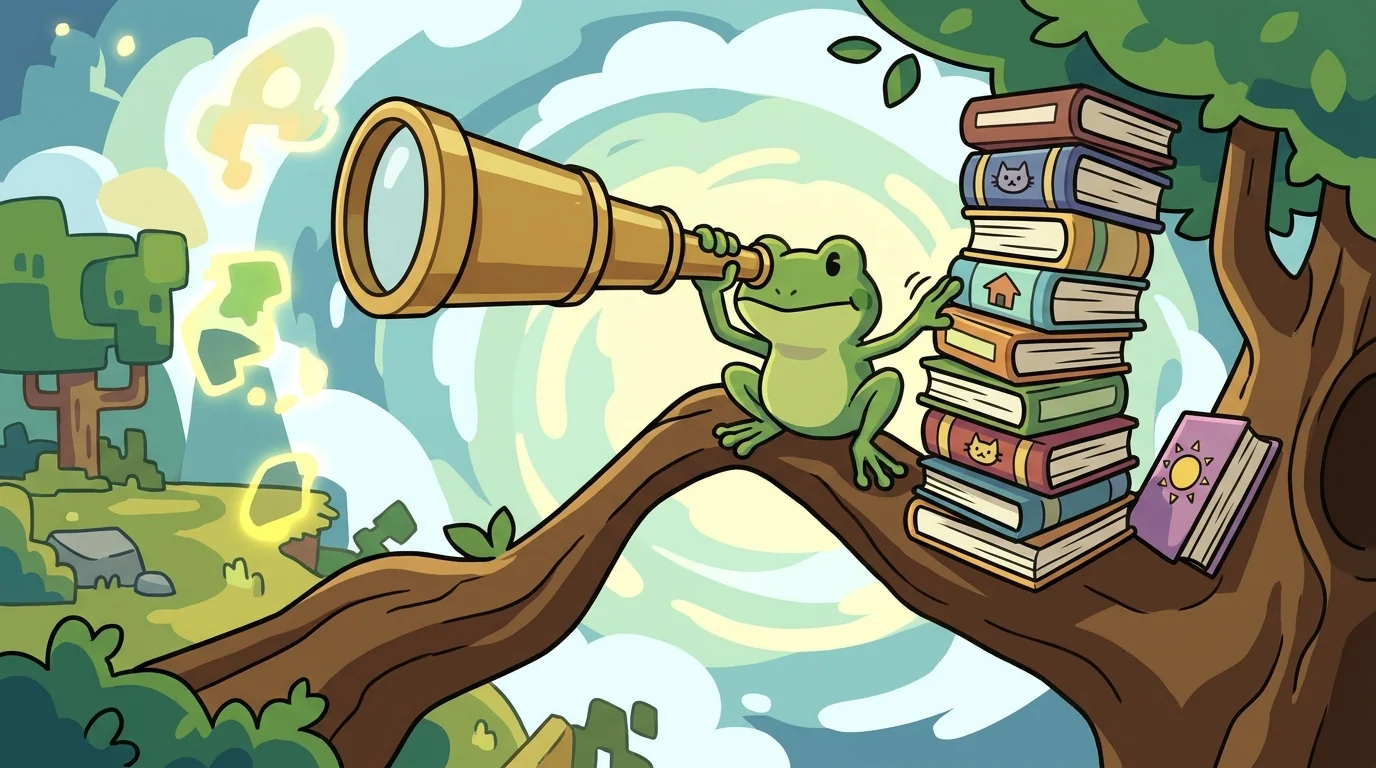
Foretell is a small green tree frog who sits at the very tip of a branch, looking out at things that haven't happened yet. He has a spyglass that shows nothing — because there's nothing there to see — and yet he peers through it all day, and makes his guess anyway.
His whole craft is prediction — the moment a computer takes everything it learned and uses it on something brand new. "A model studies a big pile of the past," he says, patting a stack of old examples Glean's clues came from. "Cat photos, house prices, yesterdays. But the pile isn't the job. The job is the photo it's never seen, the price of a house not built yet, tomorrow." He lifts his empty spyglass toward the not-yet. "Learning is looking back. Predicting is the leap forward. And every leap can miss — so I always call it my guess, never the truth."
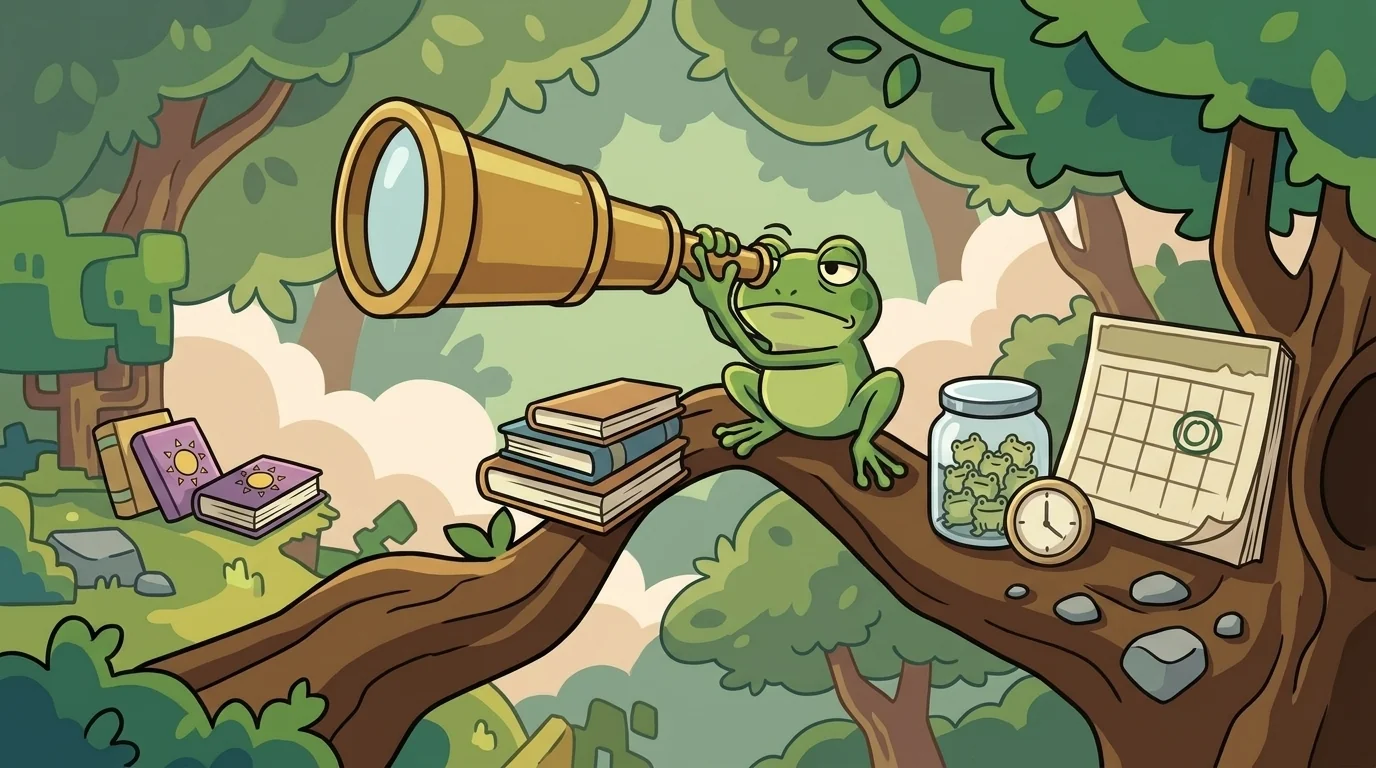
The first time Foretell trusted a guess too hard, it was about frogs, of all things. His pond-counter had learned that every spring the frogs arrived in the third week of the month, five years running. So it announced, boldly, that they'd arrive in the third week again.
They didn't. The spring was cold; they came late; the counter had promised a date it couldn't keep. "It didn't learn the frogs," Foretell realized, dripping with wounded pride. "It learned the third week. It memorized a pattern from five old springs and pointed it at a spring that hadn't happened." That was the day he split two things apart forever: what a model learned is real; what it predicts is a hope, and a hope wears a maybe. "The past is data," he says now. "The future is a guess in a costume."
When he was twelve, Foretell hopped to the big learning center, where a wise old mentor named Sift asked him a question.
"When you guess about the not-yet, what do you owe the person waiting on your answer?"
"The word 'guess,'" Foretell said. "Out loud. And the reason behind it, so they can decide how hard to lean. A prediction that hides that it's a prediction is a trick, and I won't play it."
Sift smiled. "You are the one. Every leap into tomorrow in this place lands through you."
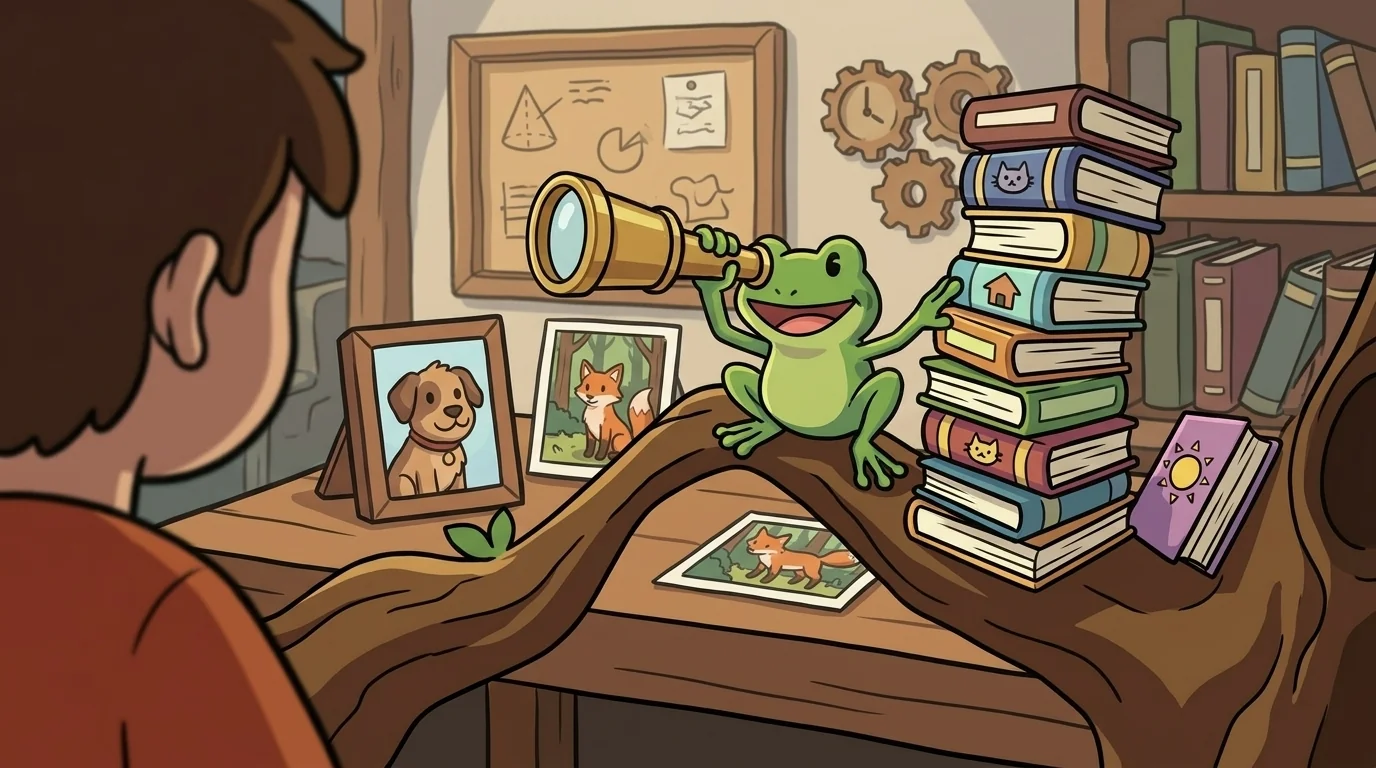
In his workshop, a kid held a photo the model had truly never seen. "Watch the leap," Foretell said. The tool looked, thought, and reported: "my guess: dog, and here's why — four legs, floppy ears, a tail mid-wag." "See how it said my guess?" Foretell beamed. "And gave its reasons? Now you can check the reasons yourself." Then he pointed the empty spyglass at a harder case — a photo of an animal the model had never met in its whole training pile — and it guessed anyway, wrongly, calling a fox a small dog. "That's the honest danger," he said. "It learned from what it saw. Show it something outside all that, and it still leaps — it just leaps blind." Then he taught the whole habit as one steady rule: a model only truly knows the kinds of things it studied, so its best guesses are about things like the past; treat every prediction as a guess with a reason attached, never a promise; check whether the new thing is even the kind of thing it learned on, because a leap into totally-new is a leap in the dark; and never let a guess about tomorrow wear the clothes of a fact about today. "The scariest predictions," he said firmly, "aren't the wrong ones. They're the wrong ones that sounded sure."
"So guessing about the future isn't showing off," a kid said, thinking hard. "It's… offering my best try, and saying it's a try?"
"That's exactly the shape of it," Foretell said. He lowered the empty spyglass, set it across his knees, and let the branch sway. Under the quiet, Foretell felt the calm that always came after an honest guess: not the vertigo of a promise he couldn't keep, not the shame of a fact that turned out to be a hope, but a light, balanced, sure-footed ease — the steadiness of someone standing at the very tip of the branch, leaning out over the not-yet, and unafraid, because he'd said the true small word guess and meant it. That poised, honest, leaning-out-and-glad feeling, steadier than any pretend certainty about tomorrow, was to Foretell exactly why the leap into the not-yet was worth making, gently, again and again.
The NeuralQuest ensemble
Foretell is part of NeuralQuest's distributed-narrative cast. Each character embodies a different curricular primitive; together they teach the full subject.
-
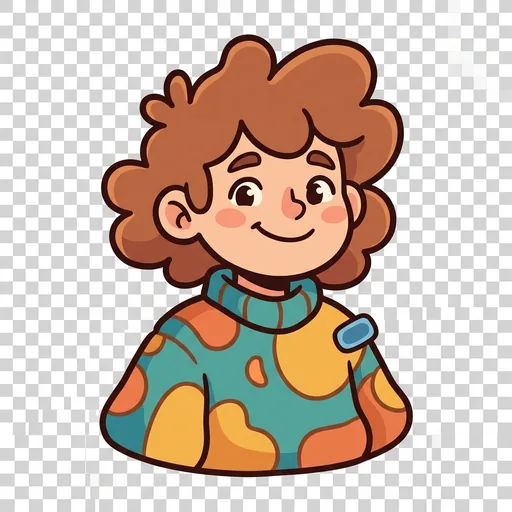
Tag
Labeling — the cheerful labeler who treats every label as a human choice and meaning-making act ('every label is a choice — and you're the one making it')
-

Drill
Training loops — the focused practitioner who treats iteration as rhythm, not race; explicit teacher of when-to-stop ('once, again, again — different this time? Then again')
-
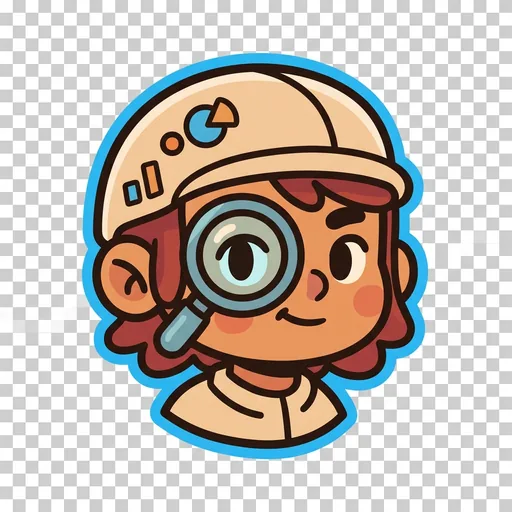
Skew
Bias + data fairness — the bias-vigilance anchor who always asks 'whose data is in here, whose is missing, who decided'; appears in every kit from kit 5 onward
-

Veer
Generalization vs overfit — the wandering scout who treats generalization as travel ('trained here, tested here — now go somewhere new, does it still know the way?')
-
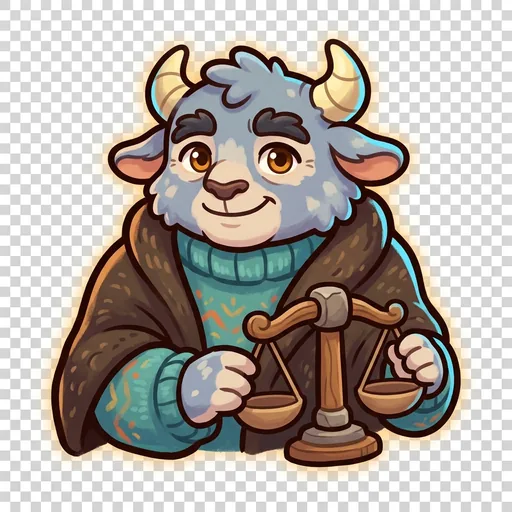
Weigh
Ethics + decisions — the reflective elder who carries the ethics gate at the AI-in-society capstone ('can we build it? Yes. Should we? That's a different question')
-
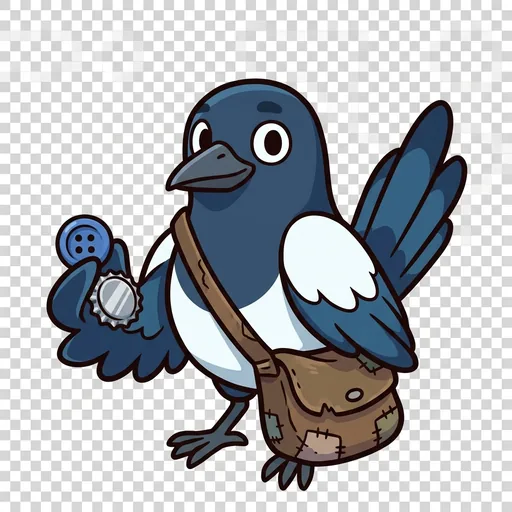
Glean
Feature selection — a computer can't look at everything; what you let it look at is what it learns from, so choose the clues on purpose
-
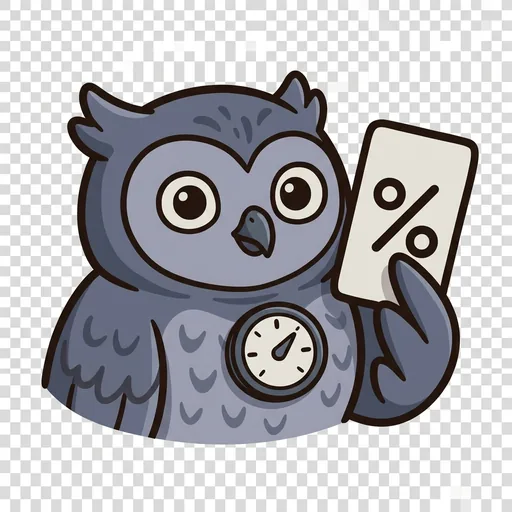
Odds
Confidence — I'm not sure, I'm 80% sure; those are different, and the difference is the whole point
-
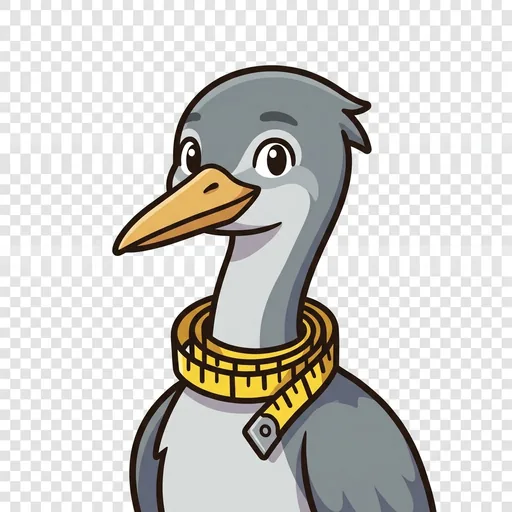
Rue
Loss — how far off was that guess? the exact size of the miss tells the model which way to change
-
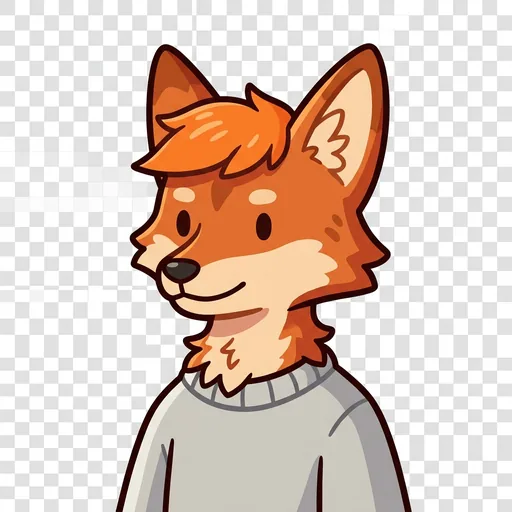
Verge
Decision threshold — the model gives a number, I draw the line; move the line and you choose what you'd rather be wrong about