Glean
FEATURE SELECTION — *"a computer can't look at everything. What you let it look at is what it learns from — so choose the clues on purpose."*
Loading audio…
Press play to listen along. The line being read lights up as you go.
Show full transcript
Loading transcript…
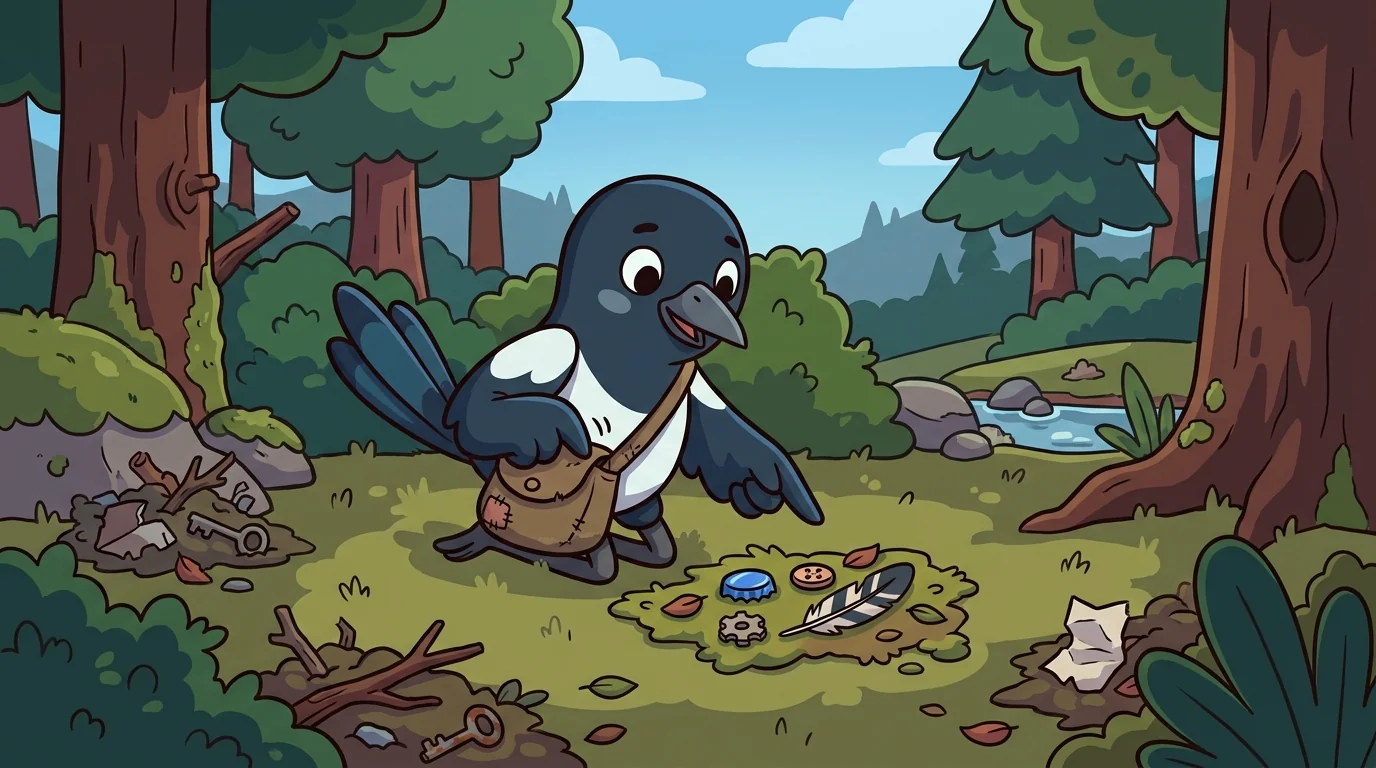
Glean is a bright-eyed magpie with a patched satchel and a habit of picking things up, turning them over, and — this is the surprising part — putting most of them back down. Feathers, buttons, bottle-caps, facts: she gathers a heap, then keeps only the few that matter and lets the rest go.
Her whole craft is feature selection — deciding which clues a computer gets to look at. "A computer can't pay attention to everything," she says, tapping her satchel. "There's too much. So somebody has to pick: out of a thousand things you could measure, which handful actually help?" She spreads a few kept clues on the ground. "Give the computer the right clues, and it learns something true. Give it junk clues, and it learns junk — confidently. The clues you feed it are the world it gets to see. Choose them like it matters, because it does."
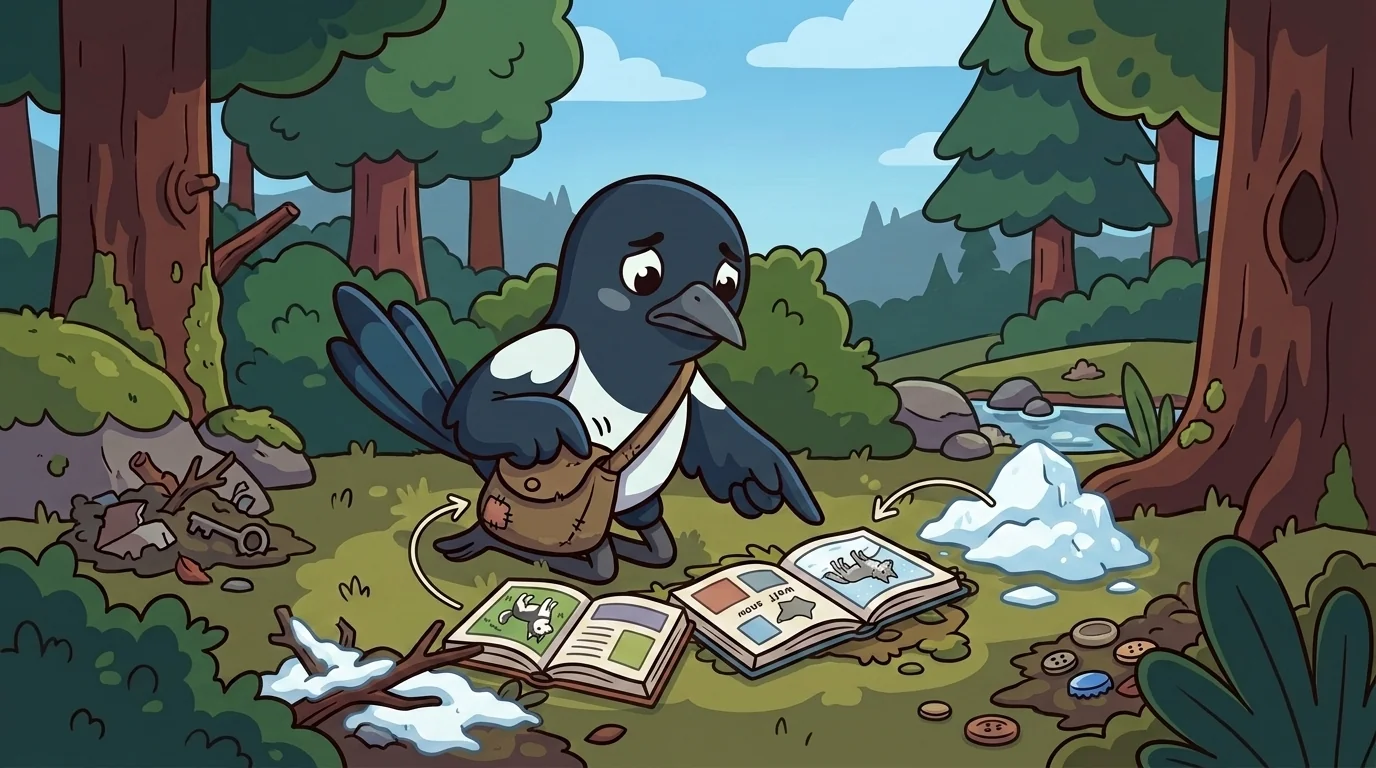
The first time Glean learned this the hard way, she built a little machine to guess whether a photo showed a wolf or a husky. It worked perfectly on her test photos — then failed on new ones, wildly, embarrassingly.
She dug into what it had actually been looking at, and her feathers drooped. "It wasn't looking at the animal at all," she said. "Every wolf photo had snow in the background. So it learned 'snow means wolf.' It was a snow-detector wearing a wolf costume." Nobody had chosen that clue on purpose — the machine had grabbed the loudest, laziest thing in the picture. That was the day Glean stopped letting machines pick their own clues by accident. "If I don't choose the clues," she said, "the data chooses the dumbest ones for me."
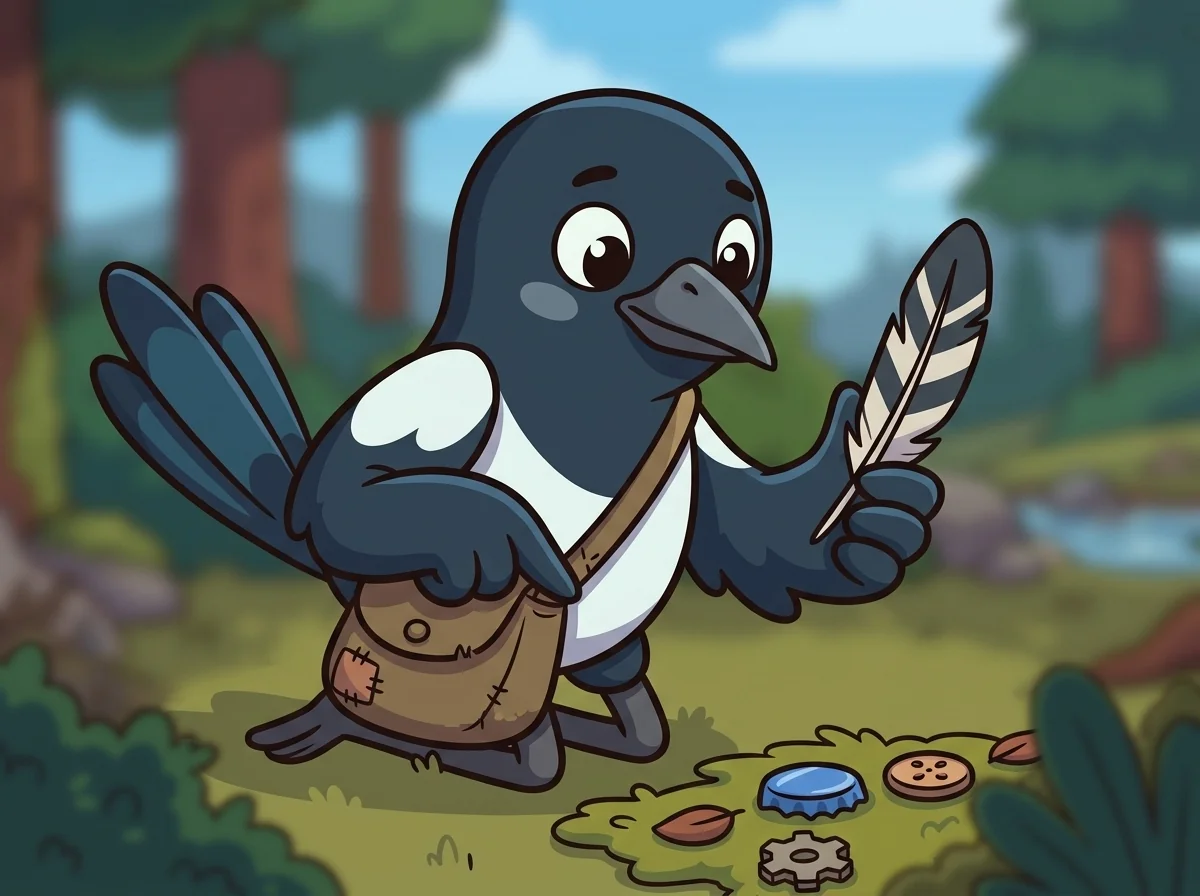
When she was twelve, Glean walked to the big learning center, where a wise old mentor named Sift asked her a question.
"Of everything you could measure, how do you know which few to keep?"
"You ask what actually causes the answer," Glean said, "not just what happens to sit nearby. Snow sits near wolves. It doesn't make a wolf. I keep the clues that carry the real signal and drop the ones that only got lucky."
Sift smiled. "You are the one. Nothing gets fed to a model in this place until you've decided what's worth feeding it."
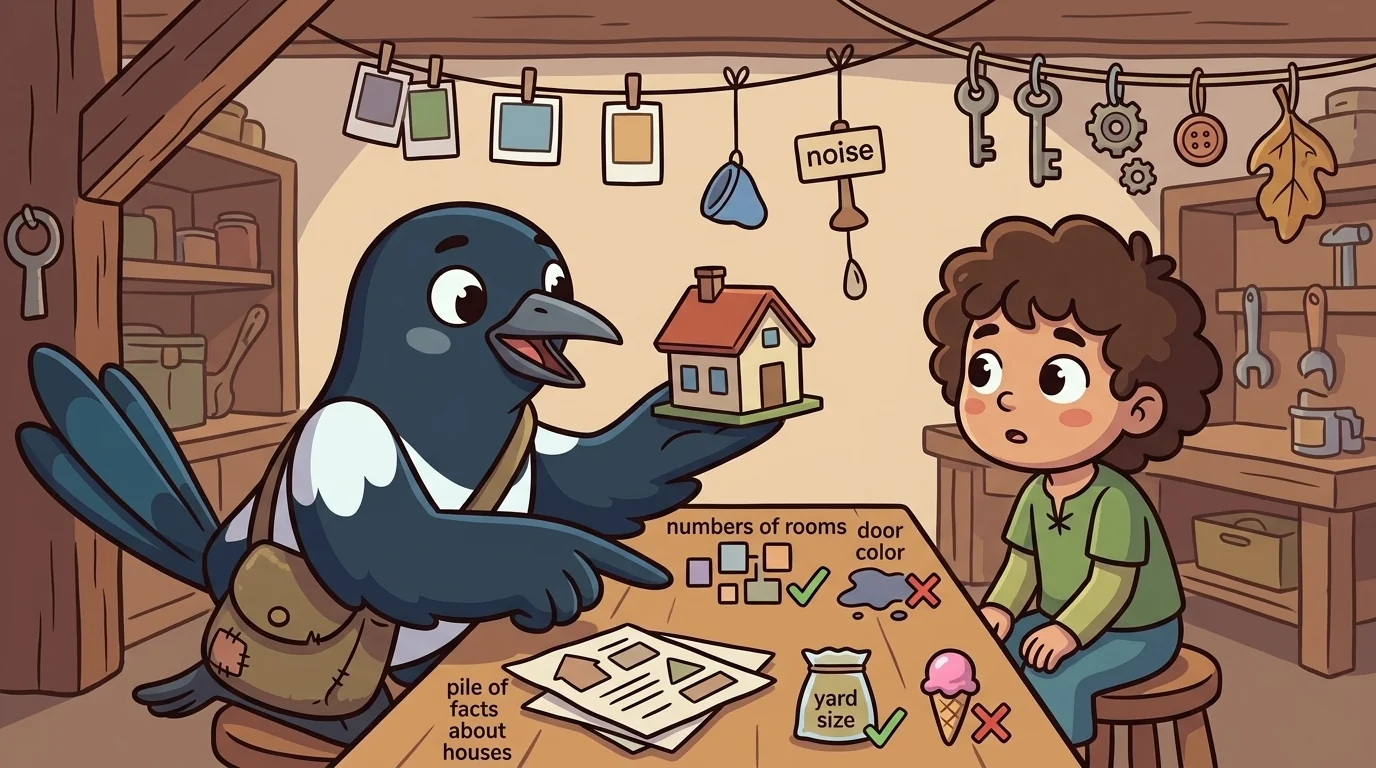
In her workshop, clues hung from strings like laundry. She sat a kid down with a pile of facts about houses and one question: guess the price. "Look at all these," she said. "The number of rooms — keep it, that matters. The color of the front door — drop it, it's noise. The size of the yard — keep it. The owner's favorite ice cream — drop it, unless you want a machine that thinks vanilla-lovers pay more." Then she taught the whole habit as one steady rule: more clues is not better — the right clues are better, and a pile of junk clues just teaches a machine to trust coincidence; watch for clues that only sit near the answer instead of causing it, because those are the snow-in-the-background traps; and remember a clever machine will grab the laziest clue you leave lying around, so the kindest thing you can do is hand it only the ones that carry real meaning. "Feeding a computer everything," she said firmly, "feels generous. It's actually how you teach it to believe nonsense."
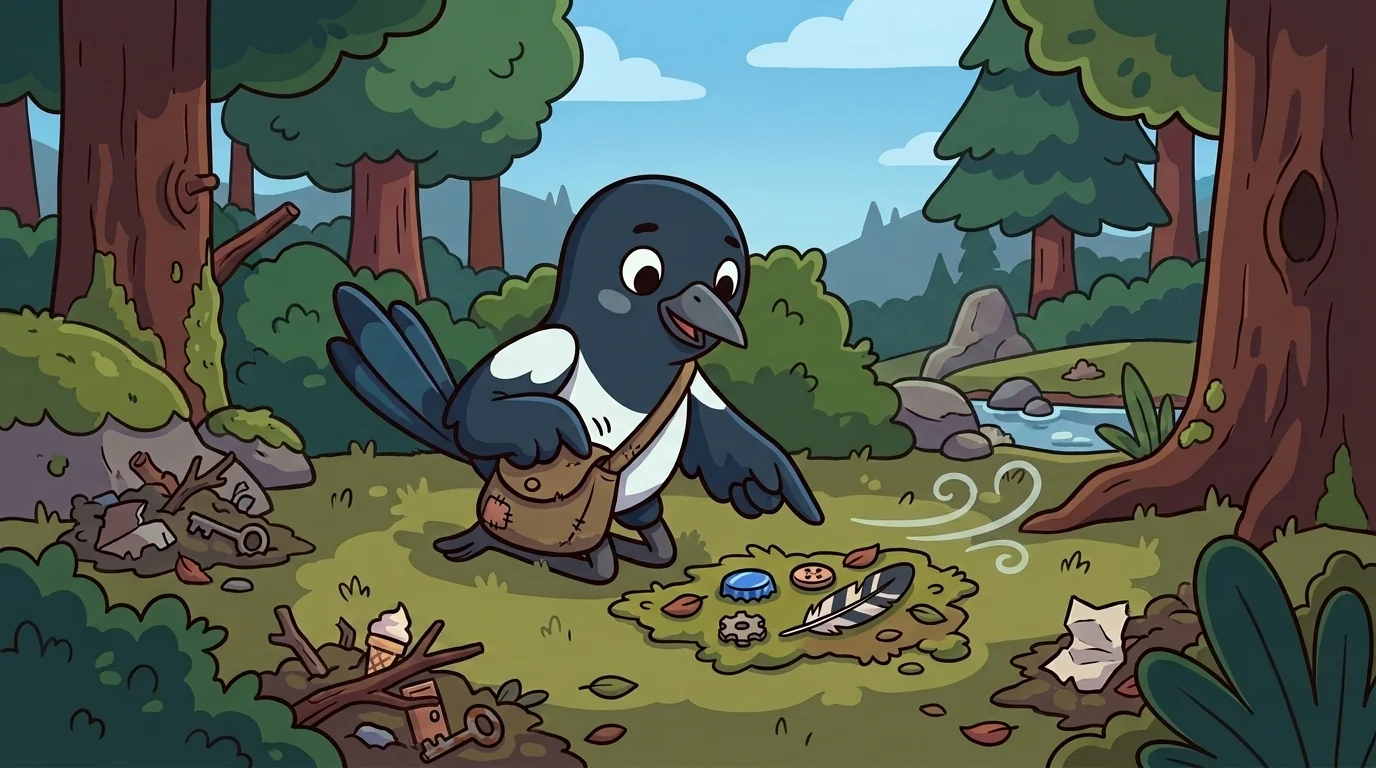
"So leaving stuff out isn't lazy," a kid said, surprised. "It's… taking care?"
"It's the whole job," Glean said. She swept the color-of-the-door and the favorite-ice-cream gently off the table, keeping only the clues that told the truth, and let the cleared space breathe. Under the quiet, Glean felt the calm that always came after the last useless clue was set down: not the itchy overwhelm of a heap too big to hold, not the guilt of a machine misled by junk, but a light, airy, uncluttered gladness — the relief of a table holding only what mattered, and the quiet knowing that whatever learned from it now would learn something true. That spare, unburdened, kept-only-what-counts feeling, steadier than any bulging satchel, was to Glean exactly why she picked things up so she could, so often, so happily, put most of them back down.
The NeuralQuest ensemble
Glean is part of NeuralQuest's distributed-narrative cast. Each character embodies a different curricular primitive; together they teach the full subject.
-

Tag
Labeling — the cheerful labeler who treats every label as a human choice and meaning-making act ('every label is a choice — and you're the one making it')
-

Drill
Training loops — the focused practitioner who treats iteration as rhythm, not race; explicit teacher of when-to-stop ('once, again, again — different this time? Then again')
-

Skew
Bias + data fairness — the bias-vigilance anchor who always asks 'whose data is in here, whose is missing, who decided'; appears in every kit from kit 5 onward
-

Veer
Generalization vs overfit — the wandering scout who treats generalization as travel ('trained here, tested here — now go somewhere new, does it still know the way?')
-
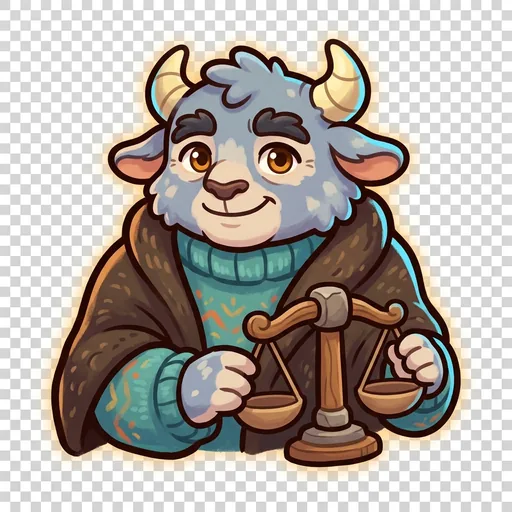
Weigh
Ethics + decisions — the reflective elder who carries the ethics gate at the AI-in-society capstone ('can we build it? Yes. Should we? That's a different question')
-
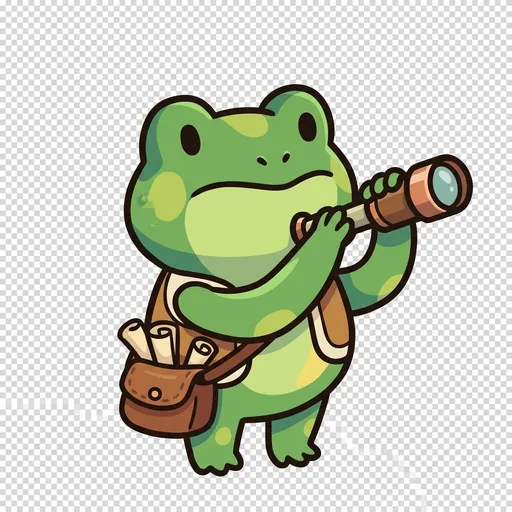
Foretell
Prediction — the model learned on the past; now it guesses about something it's never seen (the leap is the whole point and the whole risk)
-
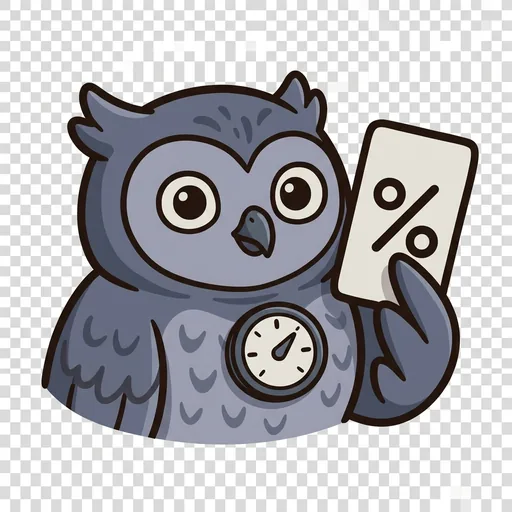
Odds
Confidence — I'm not sure, I'm 80% sure; those are different, and the difference is the whole point
-
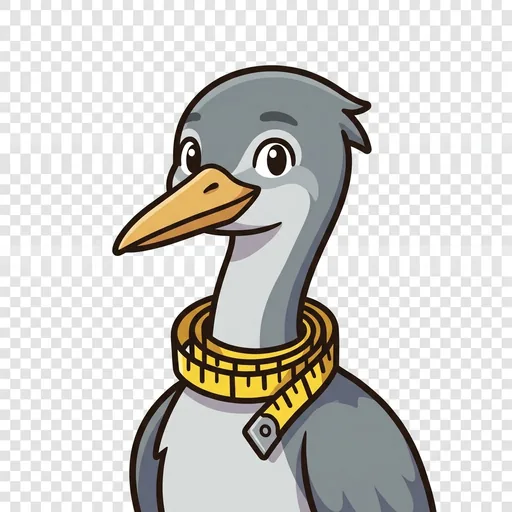
Rue
Loss — how far off was that guess? the exact size of the miss tells the model which way to change
-
Verge
Decision threshold — the model gives a number, I draw the line; move the line and you choose what you'd rather be wrong about