Lopsy
discordant pairs
Loading audio…
Press play to listen along. The line being read lights up as you go.
Show full transcript
Loading transcript…
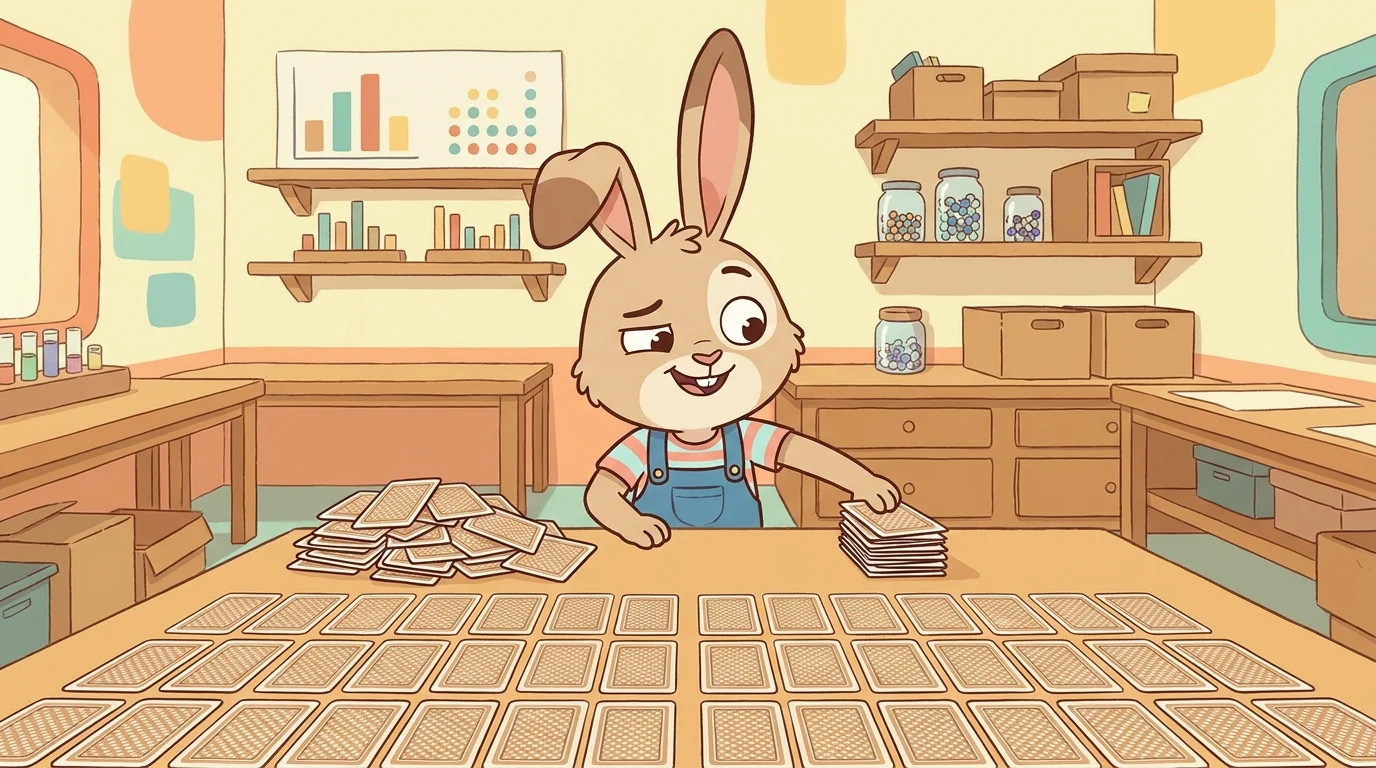
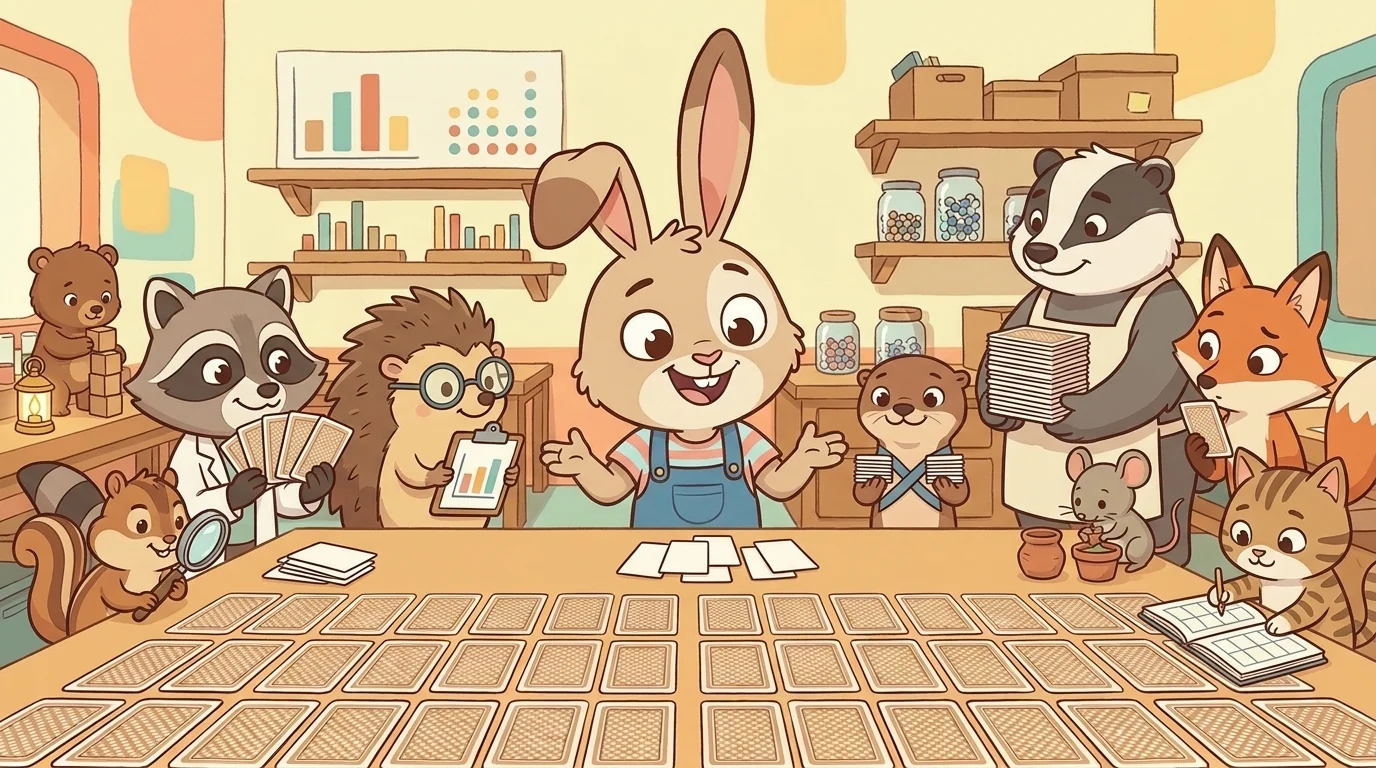
Lopsy is a young rabbit with one ear that stands straight up and one that flops down over her left eye. She has never once minded. "It means I look at things two ways at the same time," she says, and flashes a quick, crooked grin that matches her ears exactly. Lopsy is the Card Lab's sorter. Hand her any pile of anything, and in a blur of paws she will split it into two heaps, a big one and a small one. And here is the strange thing about Lopsy: she almost always cares more about the small one.
This is the story of how she found an entire answer hiding in the smallest pile of all.
Twinnie the otter had just finished a careful paired test, the kind she is famous for. She had taken forty deals and dealt each one twice, card for card identical. One copy was played under a rule that lets a card be taken back down from the finished foundation piles. The other copy was played under a rule that forbids it. The solver had played all eighty games, and now the results lay across the long central table in forty neat pairs, each pair side by side: same deal, two rules.
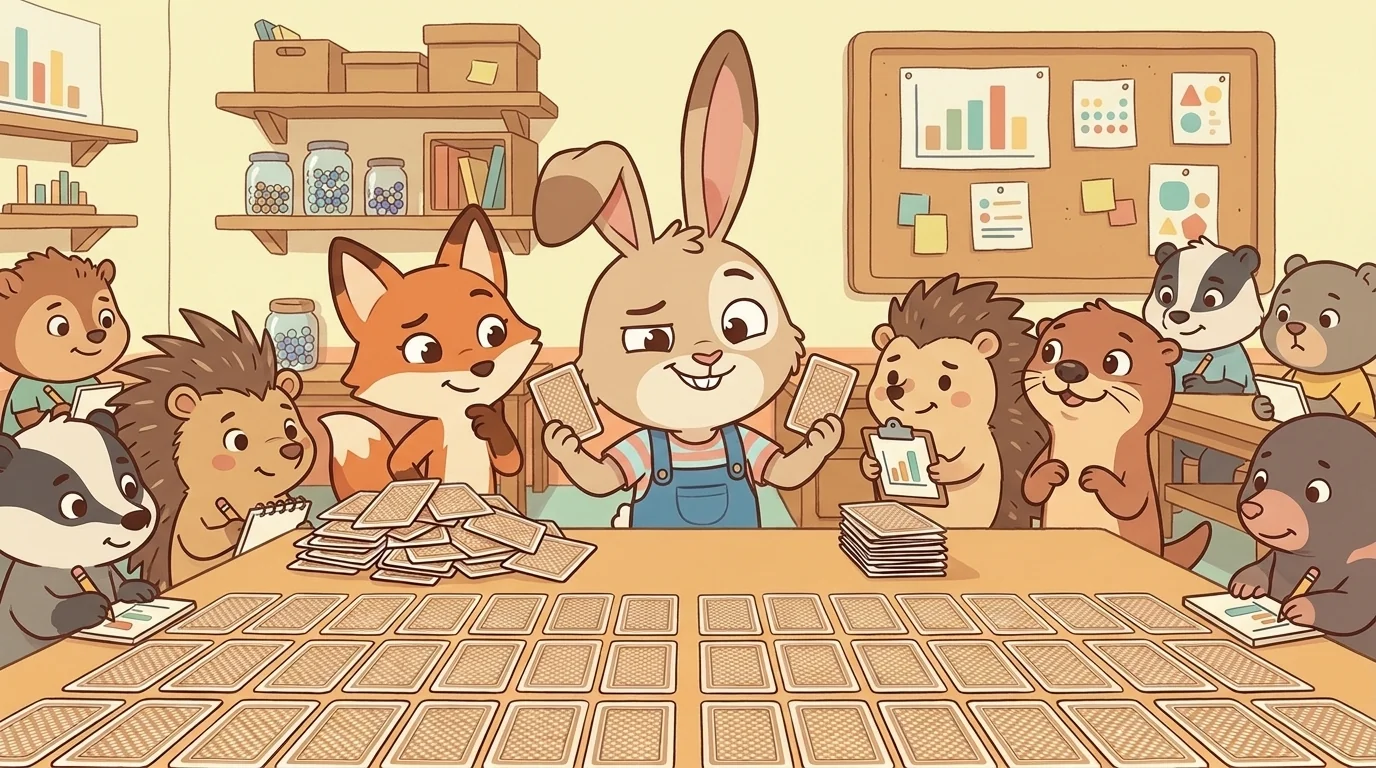
A crowd of young animals had gathered to decide which rule was better, and they were getting nowhere. There were simply so many results. Some were adding up totals on scraps of paper. Some were sketching charts. A pair of mice were arguing about percentages. Everyone was talking at once, and the more they talked, the more tangled it got.
Lopsy bounded up onto the table, her flopped ear swinging. "Wait," she said. "Most of these pairs don't matter."
The room went quiet. "What do you mean they don't matter?" someone asked. "They're data."
"They're data," Lopsy agreed. "They're just not evidence about this question." She picked up the first pair. Under both rules, the deal had been won. "Look. This deal was easy. Both rules won it. Does it tell us which rule is better?"
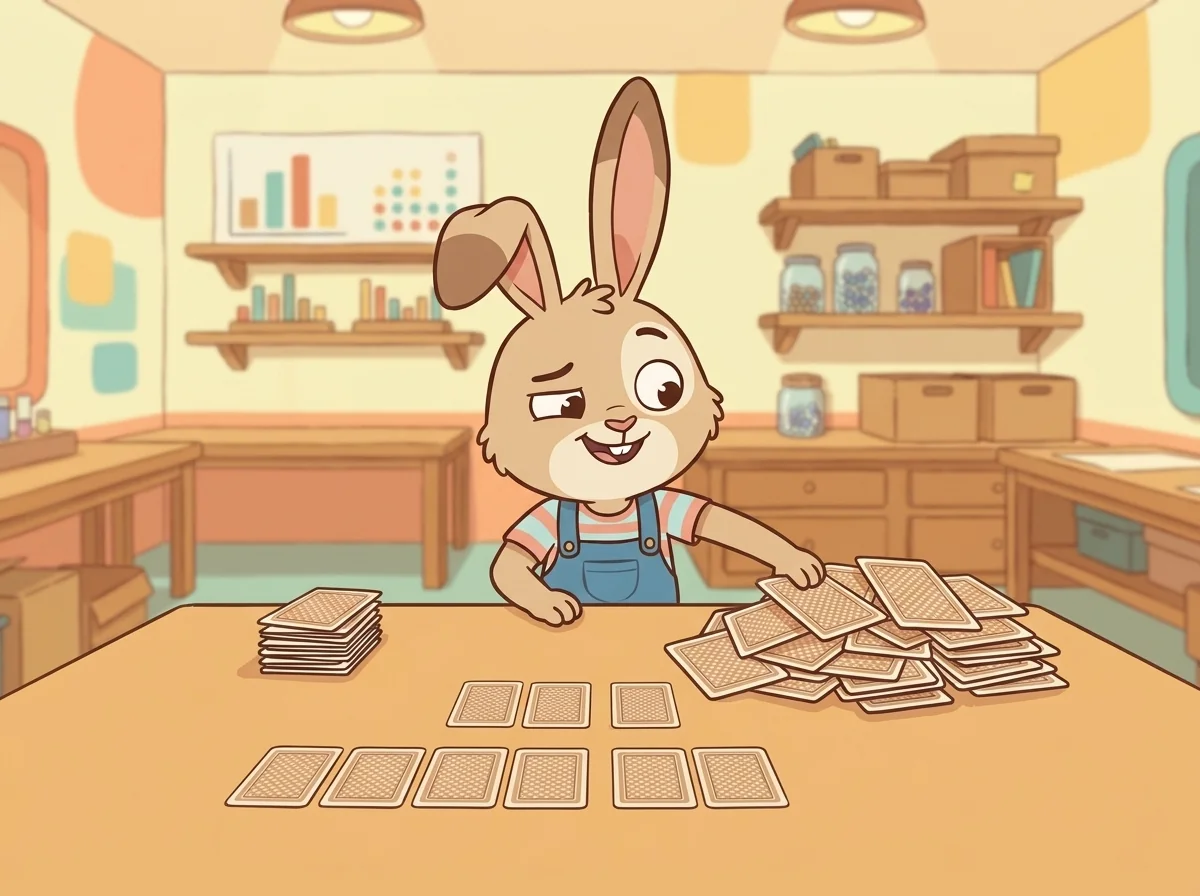
The crowd considered. "No," said one of the mice slowly. "They both won. It's a tie."
"Right." Lopsy set the pair on a spot to her left. "Big pile." She lifted the next. Both rules had lost it. "This one was hopeless. Neither rule could crack it. Does that tell us anything about which rule is better?"
"Another tie."
"Big pile." And now Lopsy got fast, paws flying across the table. Both won, big pile. Both lost, big pile. Both won, big pile, both won, both lost. The heap on her left grew taller and taller, because every pair where the two rules agreed went there. If both rules did the same thing on a deal, that deal could not possibly reveal a difference between them. It was like weighing two identical bags of flour against each other: the scale tells you nothing about which is heavier.
Then she found one where the take-back rule had won and the no-take-back rule had lost. She stopped, lifted it gently, and set it off to her right, all by itself. A few pairs later she found another just like it. Then one the other way around: here, only the no-take-back rule had won. She set that on the right, too, a little apart from the others.
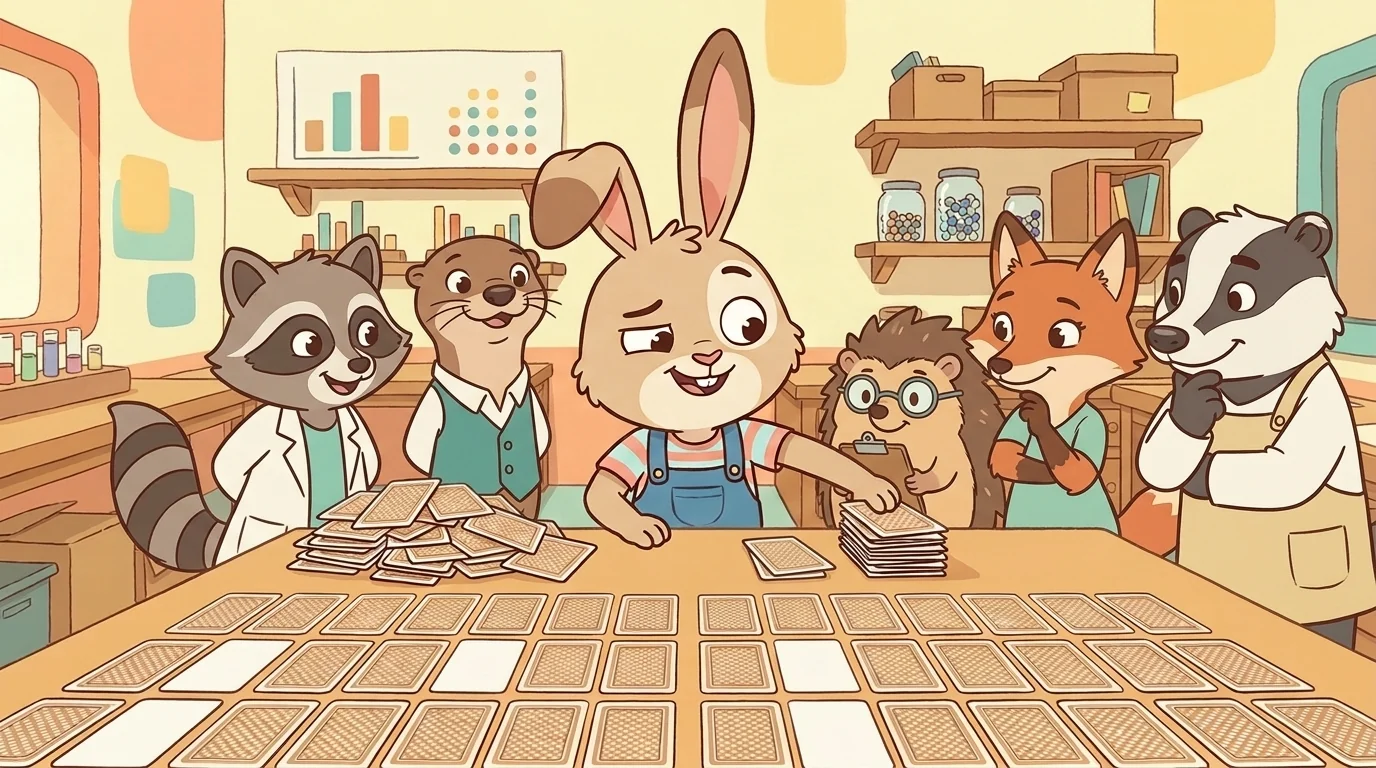
When the whole table was clear, nearly all forty pairs sat in the big heap. The small pile held just five. Four were deals that only the take-back rule could win. One was a deal that only the other rule could win.
"There," said Lopsy, and her upright ear quivered with delight. "These five are the whole story. On thirty-five deals, the two rules behaved identically, so those thirty-five can't tell us anything about the rules at all. They're what scientists call concordant pairs, pairs that agree. These five are the discordant pairs, the ones that disagree. They're the only deals where the rule actually changed what happened. And four of the five lean the same way."
The crowd leaned in, and suddenly the jumble had become simple. Taking a card back did help, but only on a handful of deals, because most of the time it simply didn't matter one way or the other. All those totals and charts had been drowning a clear signal in noise.
"But what if the small pile had been four and four?" asked the mouse. "Four each way?"
"Then we couldn't say either rule was better," said Lopsy. "The disagreements would cancel out. It's not just how many odd pairs you find. It's which way they lean. Four against one is starting to say something. If it were forty against ten across a much bigger test, you could say it firmly."
"And four against one isn't firm yet?" asked the mouse.
Lopsy's ear twitched thoughtfully. "Four against one is a nudge," she said. "With only five pairs that disagree, a little luck could tip it. That's when you go find Bigsby and deal a lot more, so the small pile grows big enough to trust. But you'd still only look at the small pile. That never changes."
Lopsy feels most like Lopsy when the big heap is finally finished and the small pile sits there, tiny and glittering, holding everything that matters. It is a bright, springy feeling, like spotting a four-leaf clover in a field full of ordinary three-leaf ones. Most animals walk straight past them. She never does.
You have some Lopsy in you whenever you look for what is different instead of what is the same. The next time you compare two ways of doing something, set aside the cases where they agree, and say it the way she does: "Lopsy skips the pairs that agree and counts the ones that don't."
Then look at the small pile. That's where the answer has been waiting.
Hear it as an audio drama
A short play starring Lopsy, from Solitaire Lab. Different voices, same idea. Listen any time after you read.
Loading audio…
Read the drama script
- Narrator: From Spark and Anvil and Solitaire Lab — this is Lopsy, in chapter 1 of the Solitaire Lab cast.
- Narrator: This drama uses an AI-generated voice. Voiced via Gemini 2.5.
- Narrator: Lopsy the rabbit, one ear up and one ear flopped, hopped onto a table covered with forty pairs of results.
- Crowd: Which rule is better? There's too much to read!
- Lopsy: Wait! Most of these pairs don't matter.
- Mouse: What do you mean?
- Lopsy: This deal, both rules won. Does it tell us which rule is better?
- Mouse: No. It's a tie.
- Lopsy: Big pile! This one, both rules lost. Tie again. Big pile!
- Narrator: Paws flying, Lopsy set every agreeing pair aside, and kept only the ones where the rules disagreed.
- Lopsy: Five pairs left. Four where only the take-back rule won, one the other way. These five are the whole story.
- Mouse: And if it were four and four?
- Lopsy: Then they'd cancel out, and we couldn't say. And four against one is only a nudge. To be sure, deal a lot more.
- Narrator: Skip the pairs that agree, and count the ones that don't. That's Lopsy's whole idea.
- Narrator: You've been listening to a Spark and Anvil chapter, written by the Spark and Anvil writing team for ages 9 to 14.
- Narrator: Apps stay free forever.
- Narrator: Curriculum aligned to Common Core and Next Generation Science Standards.
- Narrator: Released under Creative Commons BY-NC-SA 4.0 for educational reuse. Visit Spark and Anvil for the full transcript.
The Solitaire Lab ensemble
Lopsy is one of the friends in Solitaire Lab. Each friend shows you one idea by how they act; meet them all and you have the whole subject.
-

Dealia
asks what you predicted BEFORE you look at the data
-
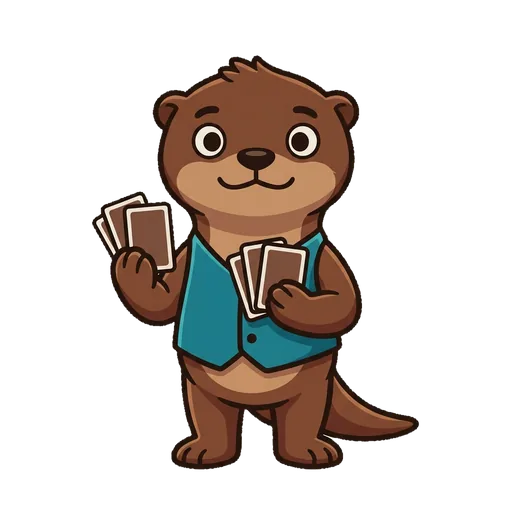
Twinnie
Deals every hand twice - the same deals for both rules, so the test is fair
-

Hedgeworth
Never says more than the data can - reports at least ... and at most ...
-

Maybelle
Knows an unknown is a maybe, not a no - the search ran out of time
-

Bigsby
Knows more deals make the answer sharper - the interval gets narrower
-
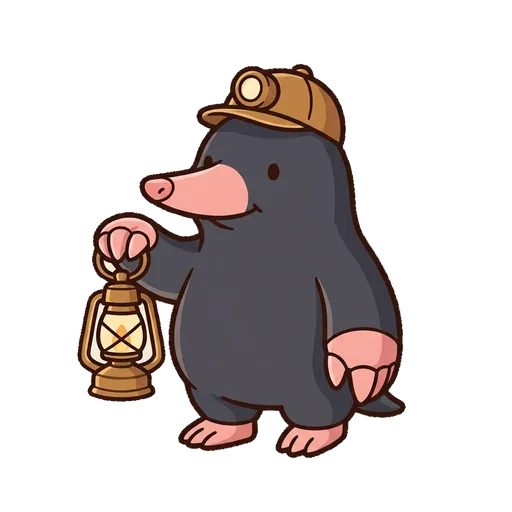
Lanternby
Knows the measuring tool is part of the result - a bigger search proves more wins of the SAME deals
-

Glassby
Knows FreeCell hides nothing, so a 'lost' there is a proof about the deal itself
-

Tiebelle
Calls it a tie when the two ranges overlap - no winner the data cannot back
-
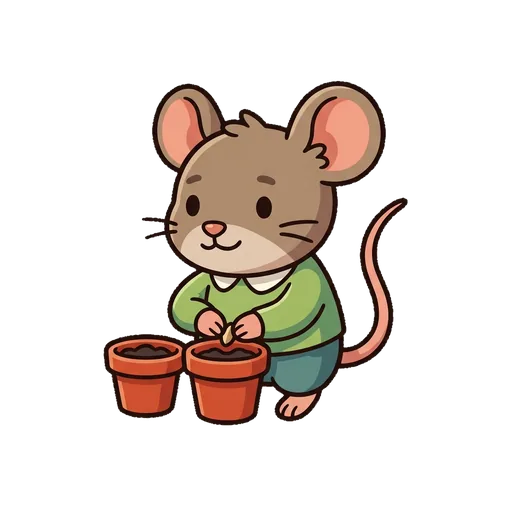
Seedwick
Knows the same run seed rebuilds the same deals, so anyone can re-check your test
-
Tabitha
Keeps one row per deal in the CSV so you can draw the chart yourself
-
Addison
Knows a rule that only ADDS moves can never truly win less - reason before you run