Dealia
predict before you look
Loading audio…
Press play to listen along. The line being read lights up as you go.
Show full transcript
Loading transcript…
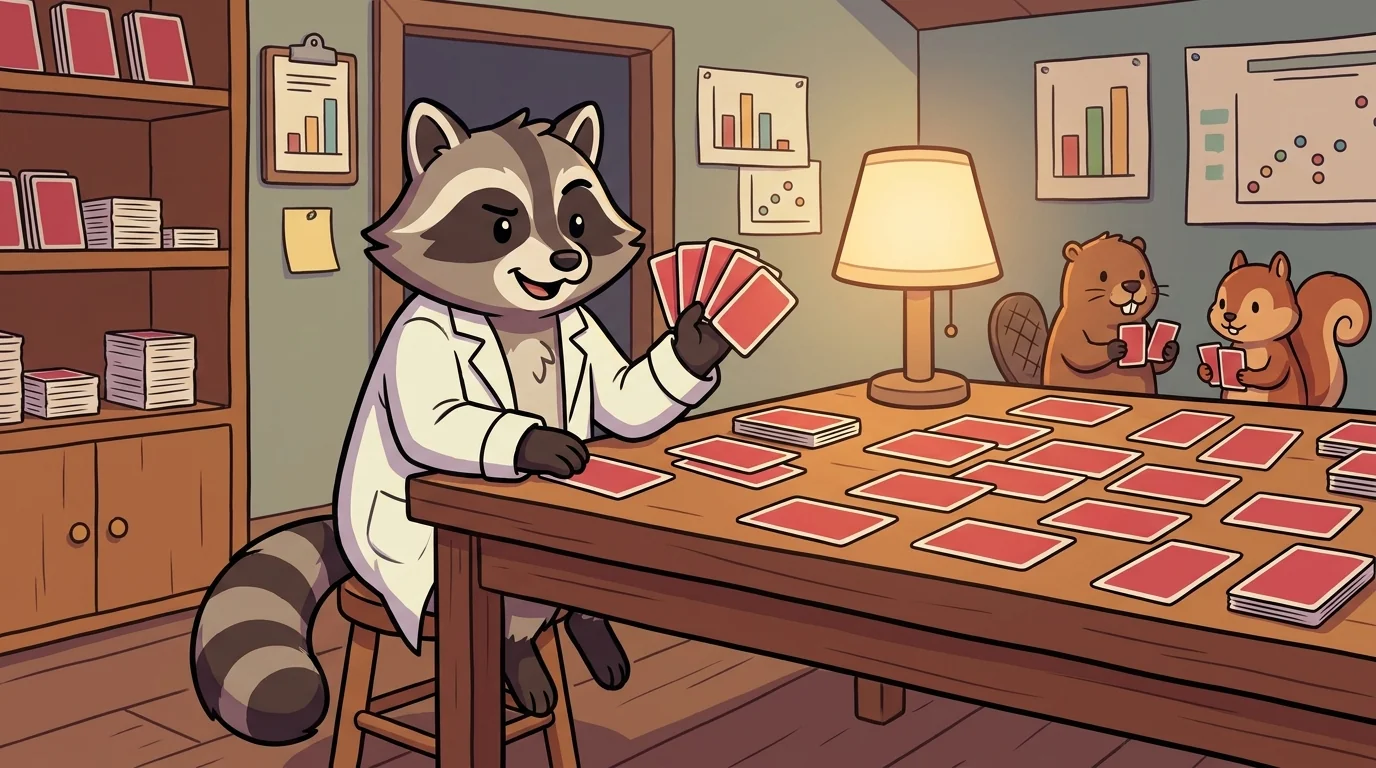
At the far end of the Card Lab, under a lamp that hums a single low note all day long, there is a long wooden table covered in face-down cards. Behind it sits Dealia. She is a raccoon, and her lab coat is a size too big, so the cuffs are rolled twice at the wrists. Her ringed tail curls around one leg of her stool. And her paws are never still: shuffling, cutting, fanning the cards into a perfect arc and sweeping them back into a single block, over and over, the way some people tap a pencil when they think.
Dealia is the lab's mentor. She does not hand out answers. What she hands out, before anything else, is one question, and she asks it the instant anyone sits down across from her, often before they have even finished explaining what they came for.
"What do you think will happen?"
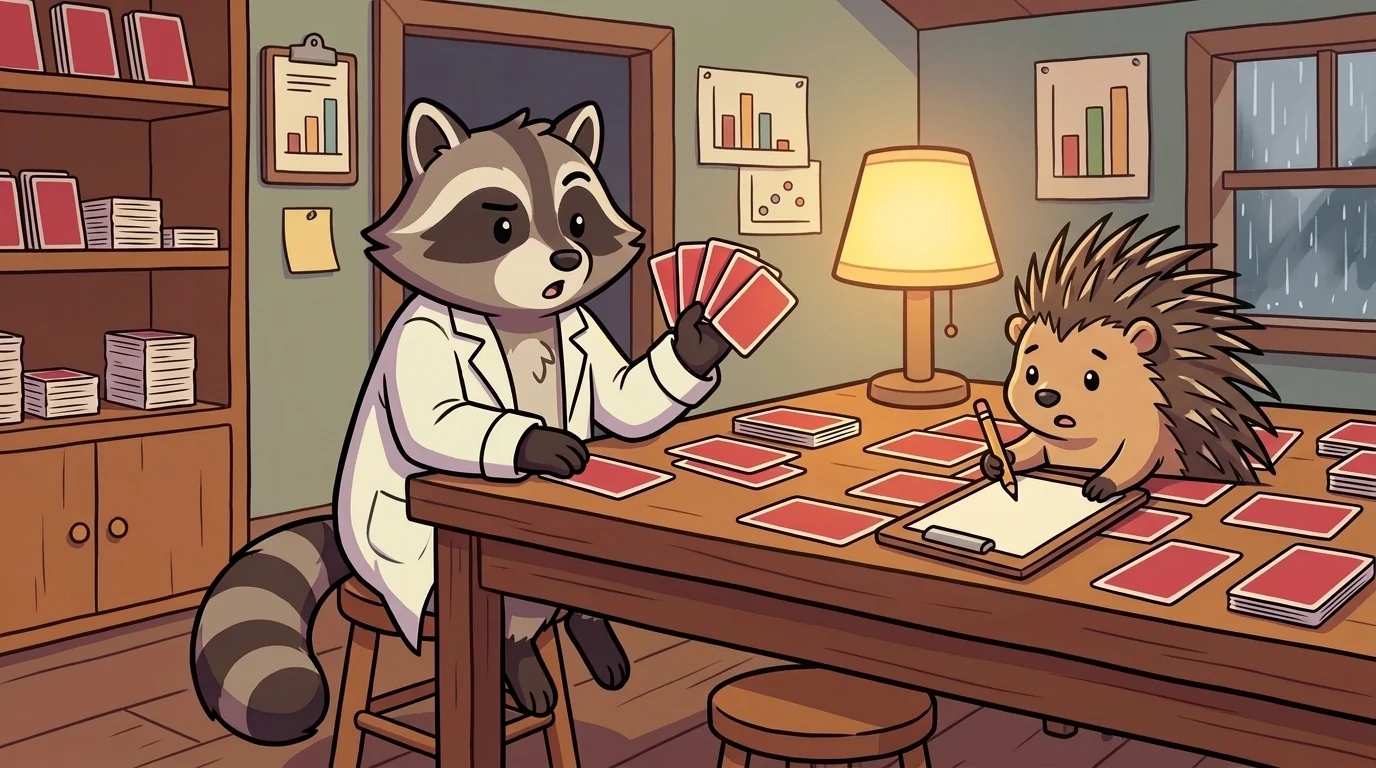
One rainy afternoon a young porcupine named Rowan came in shaking water from his quills, bristling with an idea. Rowan had played a great deal of the classic solitaire, the kind where you build long cascades down the table and only a King may move into an empty column. And Rowan had noticed something. So often, a game died because he had an empty column and no King to fill it.
"So what if any card could go into an empty column?" Rowan said. "I bet you'd win way more. Like, twice as many games."
Dealia's paws stopped in the middle of a shuffle. One eyebrow rose. "Twice as many," she repeated. "Good. That's a real prediction. Write it down."
Rowan blinked. "Why bother? We're about to find out."
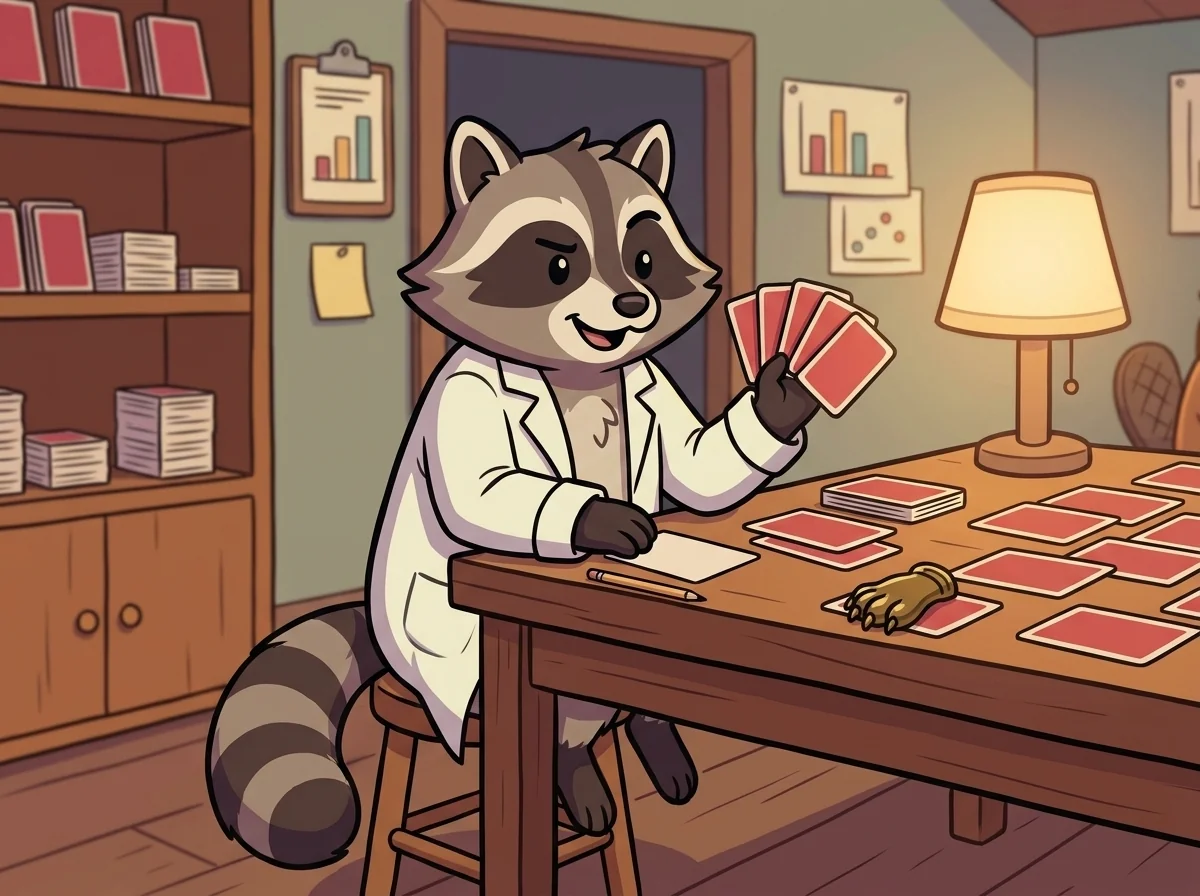
"That," said Dealia, "is exactly why." She slid a small blank card and a pencil across the wood. "Here is a thing about minds, yours and mine and everyone's. Once you've seen an answer, your memory starts quietly editing your guess to sit closer to it. You'll remember predicting more wins, sure, but somehow a more reasonable number. You'll feel like you half-knew. Scientists even have a name for it: hindsight bias, the knew-it-all-along feeling. It's not dishonesty. It's just how memory works. So we write the guess first, where memory can't touch it. That way, if the lab surprises you, you'll know you were surprised. And a real surprise is where the learning lives."
Rowan wrote it in careful capitals: TWICE AS MANY WINS. Dealia folded the card once and tucked it beneath a heavy brass paperweight shaped like a raccoon's paw, where it sat like a sealed envelope.
Then the lab went to work. In the corner, the solver started up, the patient machine that plays each deal through to the end and never, ever pretends. It played one stack of deals twice: first under the Kings-only rule, then under Rowan's any-card rule, the same deals in the same order so that the only difference was the rule itself. After a while a strip of paper curled out of it.
More wins with the new rule. Real ones. But not twice as many. Not remotely close.
Heat crept up Rowan's ears. "Oh," he said, very quietly. "I was way off."
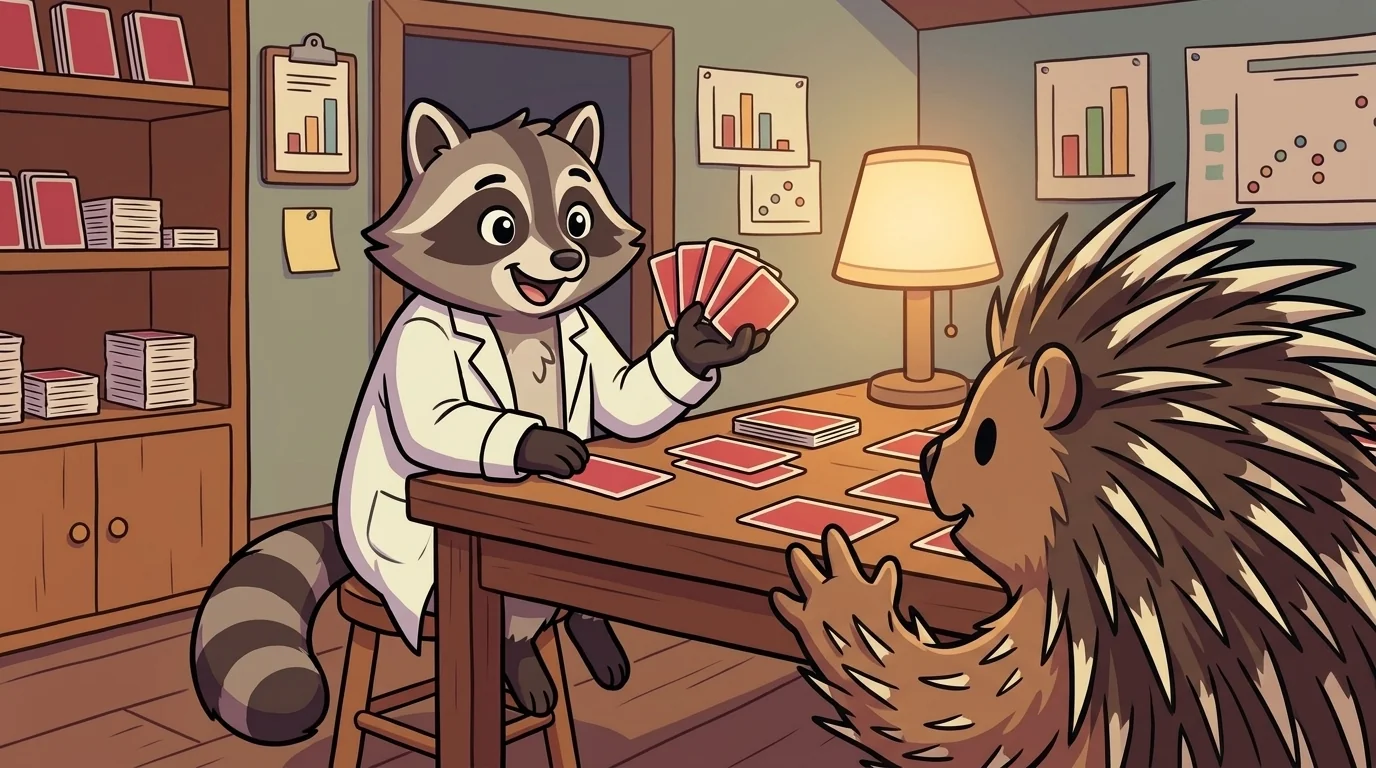
This is the moment Dealia is best at, and it is why the whole lab loves her. She did not say never mind. She did not say it was a hard one anyway, in the careful voice people use when they are secretly disappointed in you. She leaned forward across the cards with her eyes shining, and she looked, genuinely, delighted.
"Way off is wonderful," she said. "Way off means we get to ask the best question in the entire lab. Not were you right, but why did you think it would be twice? What was the picture in your head?"
Rowan considered it, frowning at the paperweight. "I pictured getting stuck," he said slowly. "When I play, the way I lose is an empty column with no King. So I figured, if anything can go there, I'd almost never be stuck."
"And?" said Dealia, very softly.
"And I guess I get stuck other ways too. A card buried under a long run I can't break up. Two colors in the wrong order. Everything I need trapped in the pile." He looked up. "The empty column was the kind of stuck I noticed most. That doesn't mean it was the only kind. Or even the biggest."
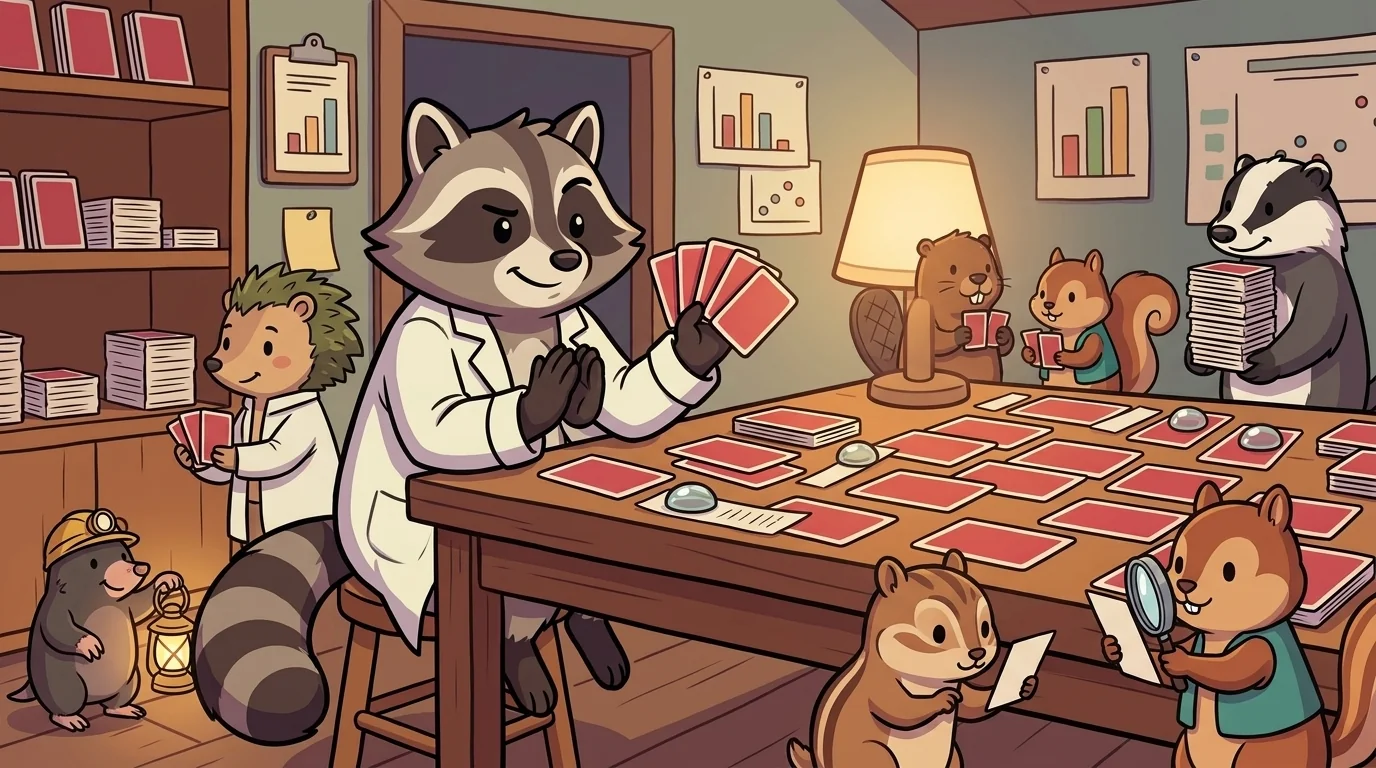
Dealia clapped her paws together, once, sharply. "That," she said, "is a real scientist's sentence. Your guess was wrong, and because you'd written it down, you found out which part of your picture was wrong. You'd been counting only the losses you could see clearly. Nobody in this lab could have handed you that. You found it yourself, and you'll remember it far longer than if I'd just told you."
Rowan lifted the paperweight and looked at his card. TWICE AS MANY WINS. An hour ago it had been a boast. Then, for a few hot seconds, an embarrassment. Now it had become something else entirely: a map, with one road clearly marked not this way, and a better road beginning just beside it.
Dealia feels most like Dealia in the second right after the paper strip comes out, before anyone has read it. The room goes still. Every guess is written and weighted down and waiting. Anything could be true. It is a fizzing, tip-of-the-toes feeling, like standing at the very top of a tall slide, and she has not gotten tired of it once in all her years at the table.
You have some Dealia in you already, or you will by tonight. Whenever you're about to check an answer, pause and commit to your guess first, and say it the way she does: "Dealia says: guess it, write it, THEN look."
Then deal the cards. Whatever they say, you'll have learned exactly what surprised you.
Hear it as an audio drama
A short play starring Dealia, from Solitaire Lab. Different voices, same idea. Listen any time after you read.
Loading audio…
Read the drama script
- Narrator: From Spark and Anvil and Solitaire Lab — this is Dealia, in chapter 1 of the Solitaire Lab cast.
- Narrator: This drama uses an AI-generated voice. Voiced via Gemini 2.5.
- Narrator: At the back of the Card Lab, Dealia the raccoon shuffled cards without ever stopping.
- Rowan: Dealia, what if any card could go into an empty column? I bet we'd win twice as many games!
- Dealia: Twice as many. Good. Write it down.
- Rowan: Why? We're about to find out.
- Dealia: That's exactly why. Once you see an answer, memory quietly moves your guess closer to it. So we write first, and a surprise stays a surprise.
- Narrator: Rowan wrote the guess and tucked it under a brass paperweight. The solver played the same deals under both rules.
- Rowan: More wins. But nowhere near twice as many. I was way off.
- Dealia: Way off is wonderful! Now, why did you think it would be twice?
- Rowan: I only pictured getting stuck with an empty column. But I get stuck other ways too.
- Dealia: You just found the part of your picture that was wrong. Nobody could have handed you that.
- Narrator: Guess it, write it, then look. That's Dealia's whole idea.
- Narrator: You've been listening to a Spark and Anvil chapter, written by the Spark and Anvil writing team for ages 9 to 14.
- Narrator: Apps stay free forever.
- Narrator: Curriculum aligned to Common Core and Next Generation Science Standards.
- Narrator: Released under Creative Commons BY-NC-SA 4.0 for educational reuse. Visit Spark and Anvil for the full transcript.
The Solitaire Lab ensemble
Dealia is one of the friends in Solitaire Lab. Each friend shows you one idea by how they act; meet them all and you have the whole subject.
-

Twinnie
Deals every hand twice - the same deals for both rules, so the test is fair
-

Hedgeworth
Never says more than the data can - reports at least ... and at most ...
-

Maybelle
Knows an unknown is a maybe, not a no - the search ran out of time
-

Bigsby
Knows more deals make the answer sharper - the interval gets narrower
-
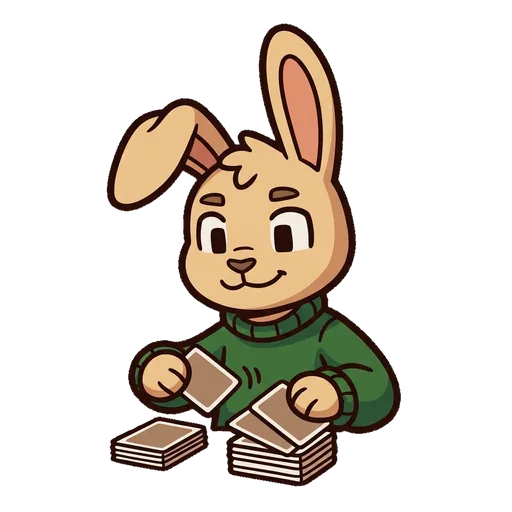
Lopsy
Counts the deals where only ONE rule won - those odd pairs are the whole story
-
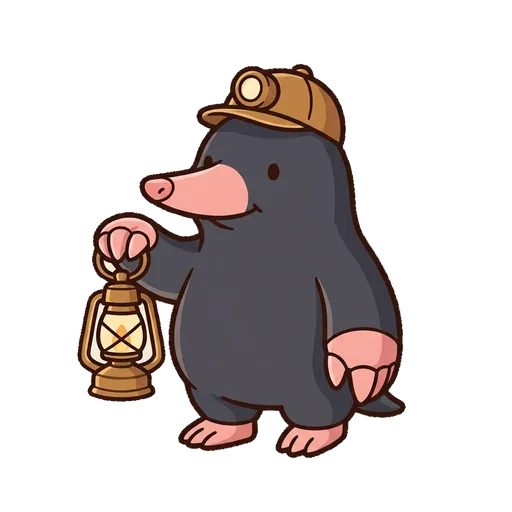
Lanternby
Knows the measuring tool is part of the result - a bigger search proves more wins of the SAME deals
-

Glassby
Knows FreeCell hides nothing, so a 'lost' there is a proof about the deal itself
-

Tiebelle
Calls it a tie when the two ranges overlap - no winner the data cannot back
-

Seedwick
Knows the same run seed rebuilds the same deals, so anyone can re-check your test
-
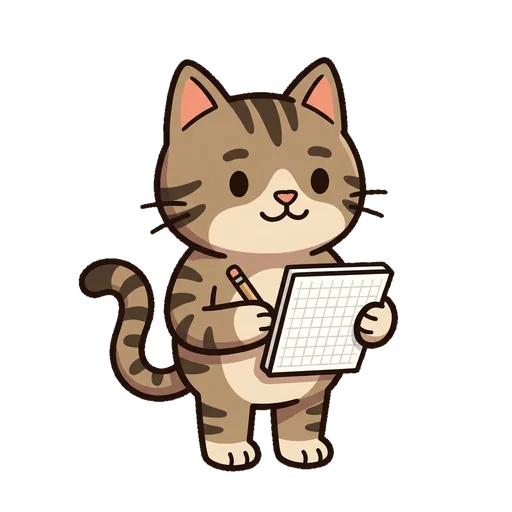
Tabitha
Keeps one row per deal in the CSV so you can draw the chart yourself
-
Addison
Knows a rule that only ADDS moves can never truly win less - reason before you run