Addison
reason before you run
Loading audio…
Press play to listen along. The line being read lights up as you go.
Show full transcript
Loading transcript…
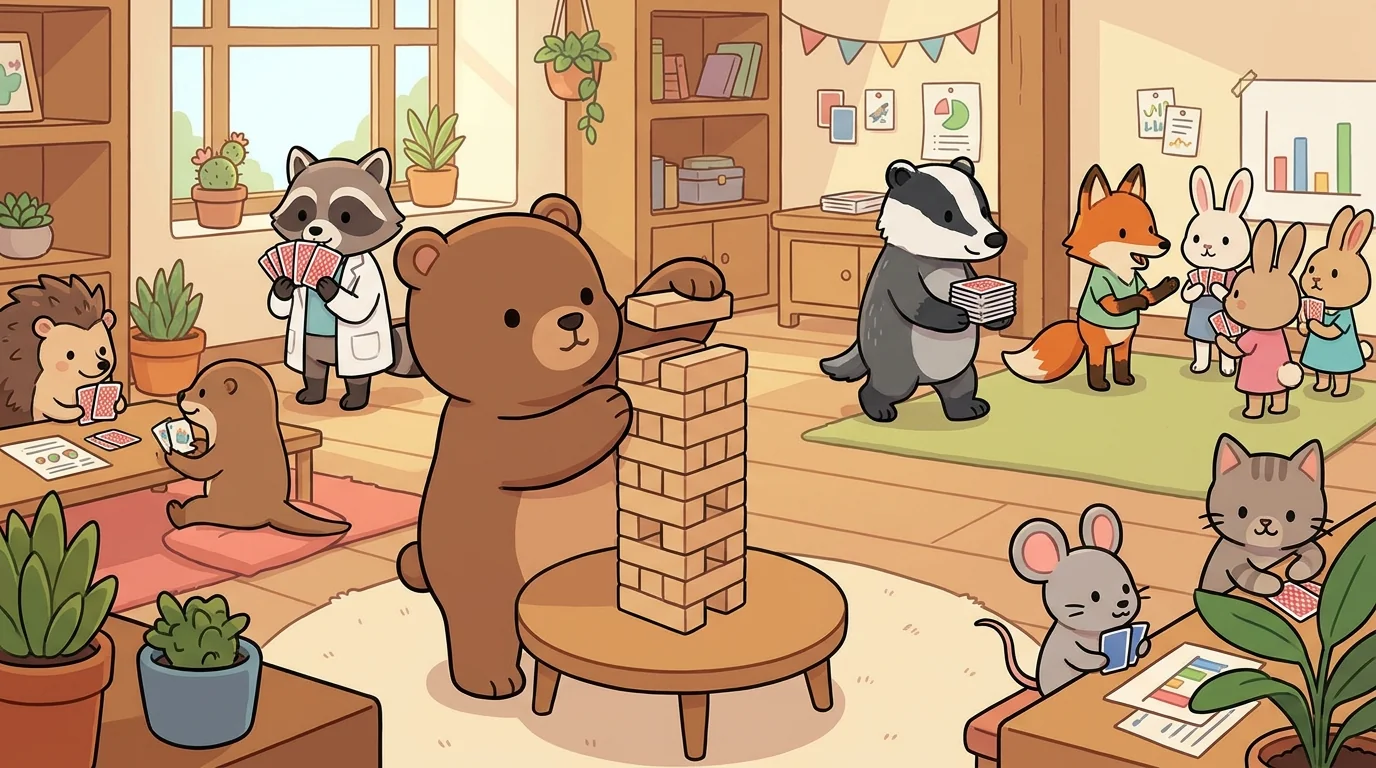
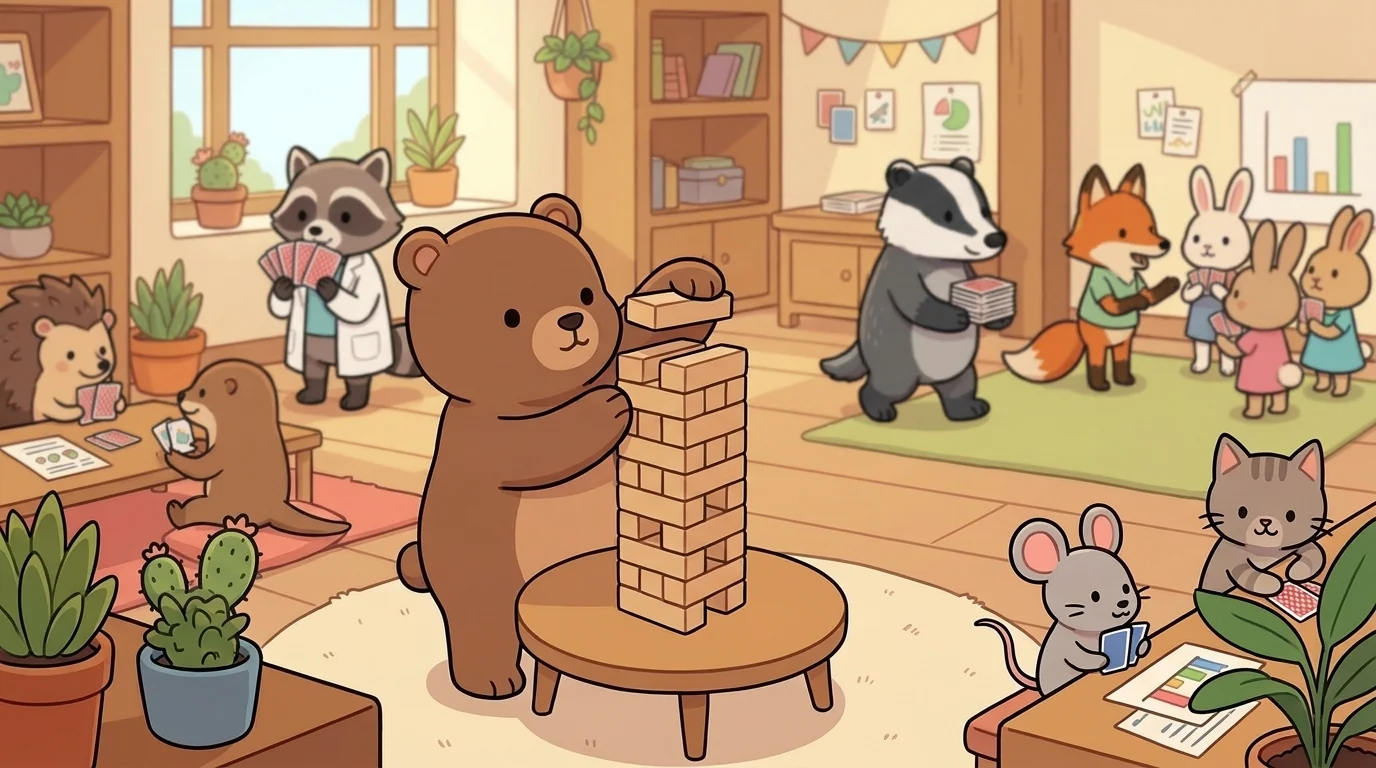
In a quiet corner of the Card Lab, past the long tables and the humming lamps, a bear cub named Addison builds towers. They are always made of the same plain wooden blocks, pale and a little scuffed at the corners, and he builds them the same way every time. He sets a block down. He crouches so his eyes are level with it and checks that it sits flat. Only then does he reach for the next one. He never goes faster than he can keep the tower straight, and so his towers are tall, and they do not fall.
Addison is round and soft, with small ears and a slow, thoughtful way of moving, and the younger animals sometimes assume he is simply slow. He isn't. He is thorough, which is a different thing. He likes to say one sentence so often that it has become a kind of motto: "Adding a block never takes a block away." It sounds almost too obvious to bother saying. Addison says it because the obvious things, examined carefully, are sometimes the strongest tools in the whole lab.
One grey afternoon, Maybelle the fox arrived at his corner with a small crowd of rabbits trailing behind her. The rabbits had the rumpled, unhappy look of scientists whose experiment has gone wrong. They had tested a new solitaire rule. In the normal game, only a King may be placed into an empty column. Their rule allowed any card at all to go there. They had expected it to win more deals. Instead, the lab's results showed it winning fewer.
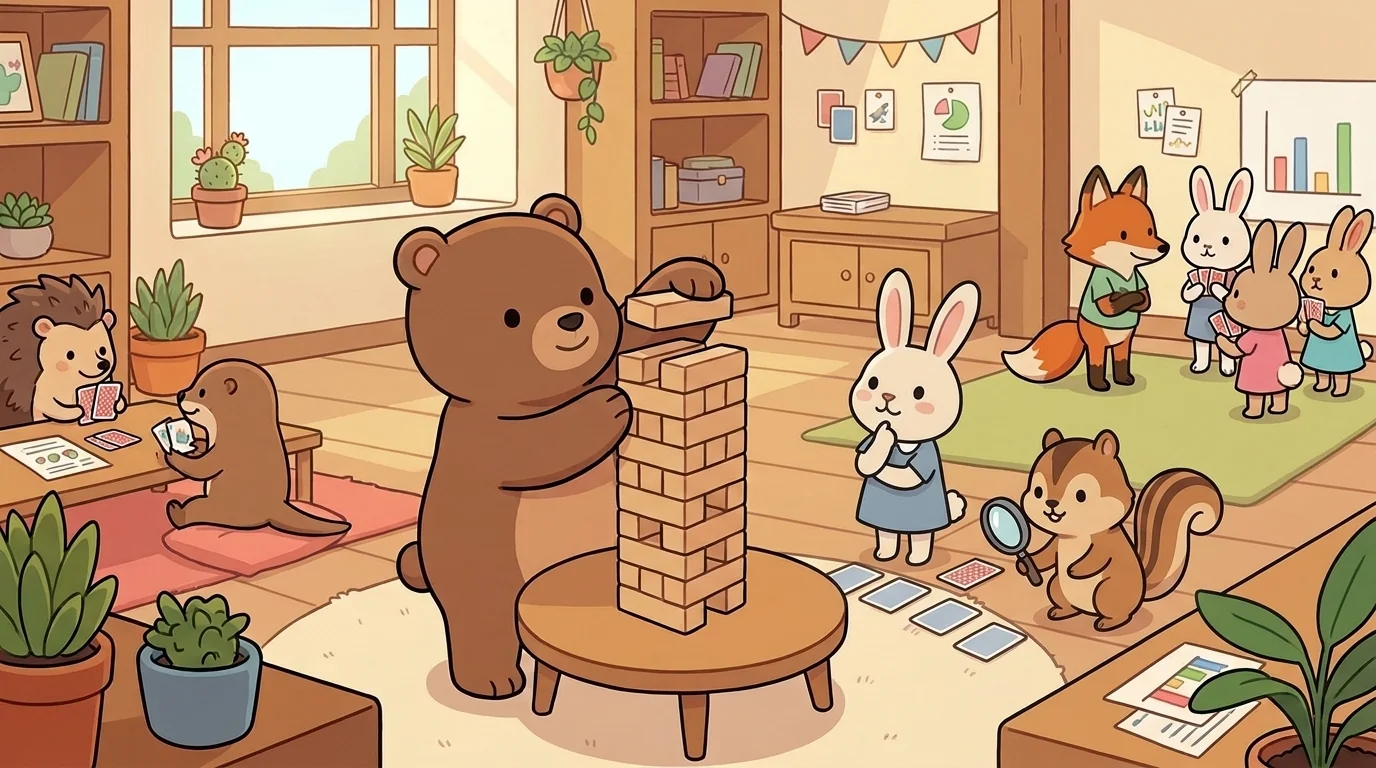
"Maybelle says the missing wins are probably hiding in the maybe pile," said the oldest rabbit, whose name was Clover. "The deals the solver didn't finish. But that feels like a convenient excuse. How can we know our rule isn't actually worse?"
It was a good question, and Addison treated it like one. He set down the block he was holding, sat back, and did not answer right away. When he finally spoke, it was to ask a question of his own.
"Under your rule," he said, "is there any move the normal game allows that your game forbids?"
The rabbits looked at one another. "No," said Clover after a moment. "A King can still go into an empty column. We didn't take that away. We just let other cards go there too."
"Then your rule only adds moves," Addison said. "Everything that was legal before is still legal. You've built something on top of the old game, not in place of it."
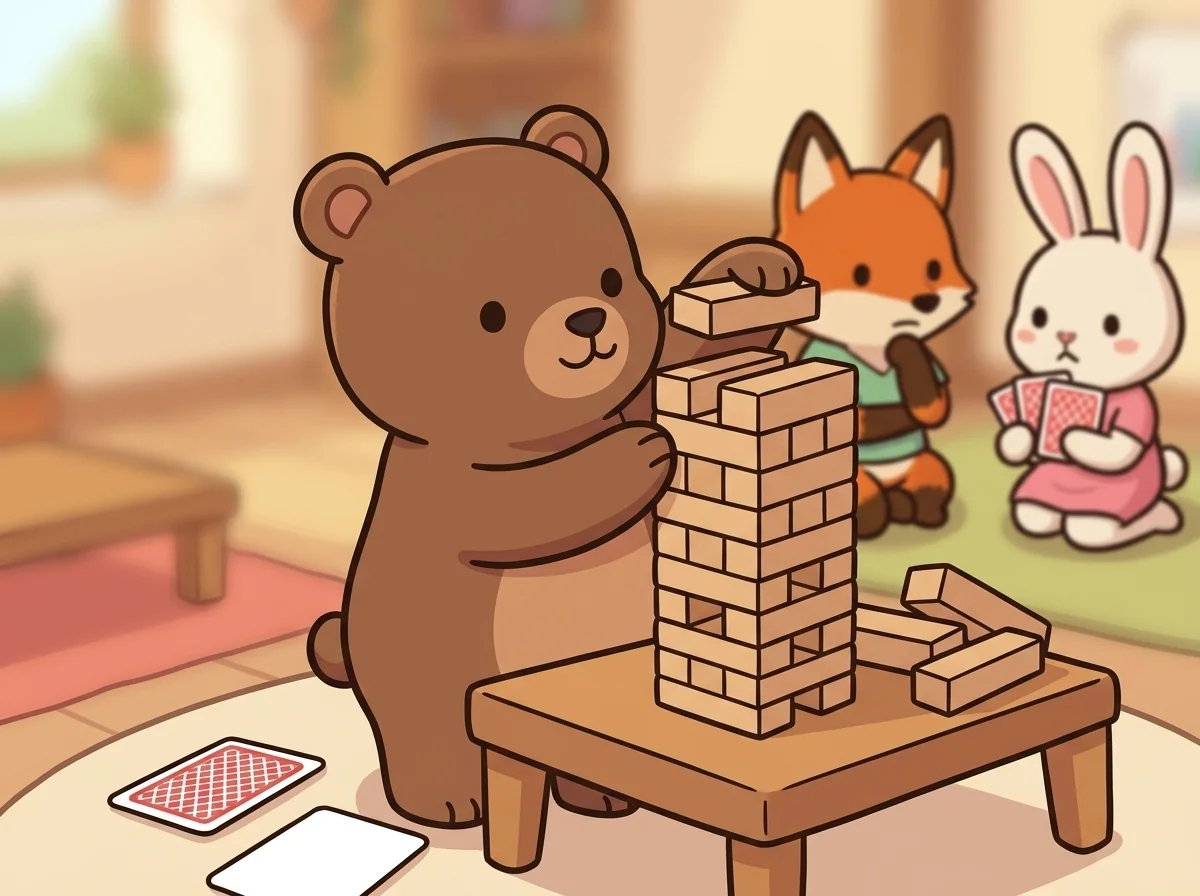
He picked up a block and placed it on his tower, squaring it with one careful paw. "Here is a way to think about it. Take any deal the normal game can win. There is a path to that win, a particular sequence of moves, one after another, ending with every card sorted home. Now walk that same path under your rule. Is any step on it now forbidden?"
Clover's ears rose slowly. "No," she said. "Every step is still allowed. So we could win that deal by making exactly the same moves."
"So every deal the normal game can win, your game can win too," said Addison. "Possibly more, since you have extra moves to try. But never fewer. The set of deals your rule can win contains the entire set the normal rule can win. It is the tower with one more block on top. A taller tower cannot have fewer blocks in it."
He let that sit for a moment. "And notice what we just did. We didn't run a single deal. We didn't need the solver at all. We reasoned from what the rule allows, and the reasoning tells us something no test result can overturn."
A young rabbit near the back frowned. "Then the lab is lying," he said. "It showed us fewer wins."
"The lab isn't lying," said Addison gently. "It's answering a slightly different question than the one you think you asked. You asked, how many deals can our rule win? The lab answers, how many wins did the solver manage to prove before its time ran out? Those are close cousins, but they aren't twins."
He tapped the base of his tower. "Your rule has more moves, so every deal has more branches to explore. That's more work for the solver. On a deal where the normal game has a short, obvious path, your game offers a whole thicket of extra options, and the solver can wander into them. More often than before, it runs out of time with the answer still unfinished, and it marks the deal not sure yet. Those deals aren't losses. They're unfinished searches. But in a quick count of proven wins, they look exactly like wins that never happened."
Clover was quiet, working it through. "So our result mixed up two things," she said. "Our rule, and how long the solver had."
"Exactly that," said Addison, and there was real pleasure in his voice. "And the thinking is what pulled them apart. Without it, you'd have trusted the number and thrown away a perfectly good rule. With it, you know the number can't mean what it seems to mean, and you know where to look next."
"So we should always think before we test?" asked the young rabbit.
"Think first, then test," said Addison. "They do different jobs. Thinking tells you what is possible, what must be true no matter how the deals fall. Testing tells you what actually happens with real deals and a real, limited solver. When the two agree, you can trust the answer twice over. When they disagree, that's not a disaster. It's a clue. It usually means something about the test itself, like a time limit, is getting in the way."
The rabbits went away that afternoon with a plan: run the same deals again with a longer search, and watch the not sure yets turn into wins. They came back a few days later to tell Addison it had happened exactly as he'd said, and he nodded as if it were the most natural thing in the world, which to him it was.
Addison feels most like Addison when a careful thought clicks into place and something confusing becomes suddenly, solidly clear. It is a grounded, settled feeling, like setting down the top block of a tower and watching it hold perfectly still, the whole structure steady beneath it.
You have some of Addison in you whenever you pause to reason before you rush to measure, and whenever you ask what a result can and cannot mean. When a new rule only ever gives more choices, remember what that guarantees, and say it the way he does: "Addison adds a block and knows: more choices can never lose a win."
Then build your understanding the way he builds his towers, one level block at a time.
Hear it as an audio drama
A short play starring Addison, from Solitaire Lab. Different voices, same idea. Listen any time after you read.
Loading audio…
Read the drama script
- Narrator: From Spark and Anvil and Solitaire Lab — this is Addison, in chapter 1 of the Solitaire Lab cast.
- Narrator: This drama uses an AI-generated voice. Voiced via Gemini 2.5.
- Narrator: In a quiet corner of the Card Lab, a bear cub named Addison was building a tower of wooden blocks, one careful block at a time.
- Clover: Addison? Our rule lets any card go into an empty column. But the lab says it won fewer deals. Is our rule worse?
- Addison: Hmm. Under your rule, can you still make every move the normal game allows?
- Clover: Yes. Kings can still go there. We just let other cards go there too.
- Addison: Then your rule only adds moves. Picture any deal the normal game can win. Walk the same path under your rule. Is any step forbidden?
- Clover: No. Every step still works. So we could win it the same way.
- Addison: So your rule can never truly win fewer deals. Adding a block never takes a block away.
- Clover: Then why did the lab show fewer?
- Addison: More moves means more paths to search. The solver ran out of time more often, and those not sure yets looked like losses.
- Clover: So the number mixed up our rule with the solver's time!
- Narrator: Think first, then test. A rule that only adds choices can never lose a win. That's Addison's whole idea.
- Narrator: You've been listening to a Spark and Anvil chapter, written by the Spark and Anvil writing team for ages 9 to 14.
- Narrator: Apps stay free forever.
- Narrator: Curriculum aligned to Common Core and Next Generation Science Standards.
- Narrator: Released under Creative Commons BY-NC-SA 4.0 for educational reuse. Visit Spark and Anvil for the full transcript.
The Solitaire Lab ensemble
Addison is one of the friends in Solitaire Lab. Each friend shows you one idea by how they act; meet them all and you have the whole subject.
-

Dealia
asks what you predicted BEFORE you look at the data
-

Twinnie
Deals every hand twice - the same deals for both rules, so the test is fair
-

Hedgeworth
Never says more than the data can - reports at least ... and at most ...
-

Maybelle
Knows an unknown is a maybe, not a no - the search ran out of time
-

Bigsby
Knows more deals make the answer sharper - the interval gets narrower
-

Lopsy
Counts the deals where only ONE rule won - those odd pairs are the whole story
-

Lanternby
Knows the measuring tool is part of the result - a bigger search proves more wins of the SAME deals
-

Glassby
Knows FreeCell hides nothing, so a 'lost' there is a proof about the deal itself
-

Tiebelle
Calls it a tie when the two ranges overlap - no winner the data cannot back
-

Seedwick
Knows the same run seed rebuilds the same deals, so anyone can re-check your test
-

Tabitha
Keeps one row per deal in the CSV so you can draw the chart yourself