Contract
CONTRACTUALISM — the view that *moral worth is derived from what rules everyone affected could reasonably agree to* under conditions of fairness. The right action is one that *no one could reasonably reject* as a principle for action.
Loading audio…
Press play to listen along. The line being read lights up as you go.
Show full transcript
Loading transcript…
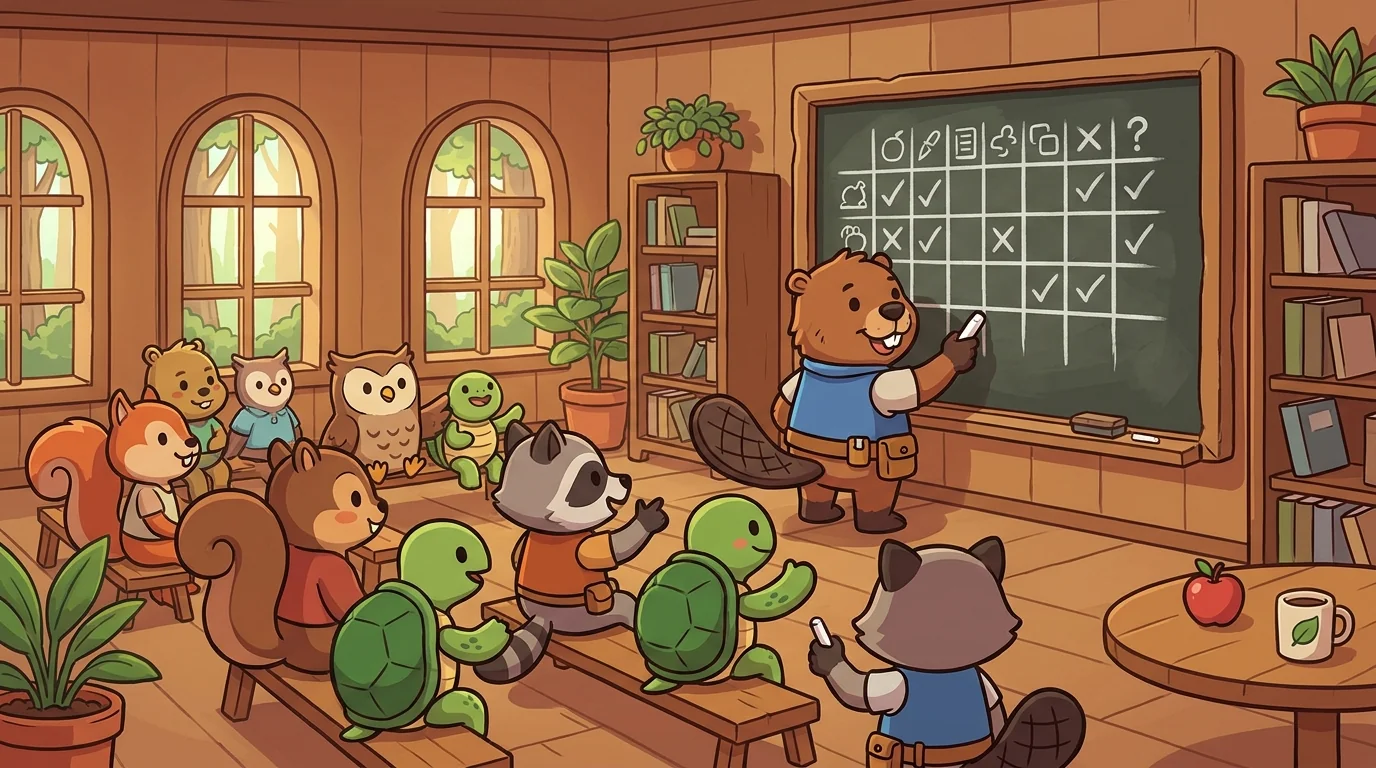
Contract is a beaver, and he is always drawing a table. Not a table with legs — a table of fair rules, with rows and columns, chalked up at the front of the room.
The rows are for rules people are thinking about. The columns are for each person the rule would affect. Then Contract fills in the little boxes, one careful question at a time: Would this person agree to this rule? Where every box says yes, the rule is fair, and everyone can follow it. Where even one box says no, Contract taps his chalk and asks, "Can we change the rule so this person could agree too?"
"What could we all agree to? That's fair," he says. The drawing is the real work.
Contract learned to draw his table after a very unfair afternoon.
"When I was young, my dam-building crew made a rule," he tells the class. "'Whoever's biggest picks the best spot.' The big beavers loved it. They voted yes, fast." He shakes his head. "But there was one small beaver who always got the worst, coldest spot, every time. And nobody asked her."
One day Contract stopped and thought: if I were the small beaver, would I agree to this rule? "The answer was obviously no. She could reasonably say no — the rule was stacked against her." So he drew his first table, a box for every single beaver, and they changed the rule together until even the smallest one could accept it.
"When that last box finally turned to yes, something in me just... settled," he says, a warm, quiet satisfaction in his voice, like a puzzle piece clicking into place. "That's my whole way of thinking. Don't ask 'what does the biggest voice want?' Ask 'what rule could everyone here reasonably agree to — especially the one it treats worst?'"
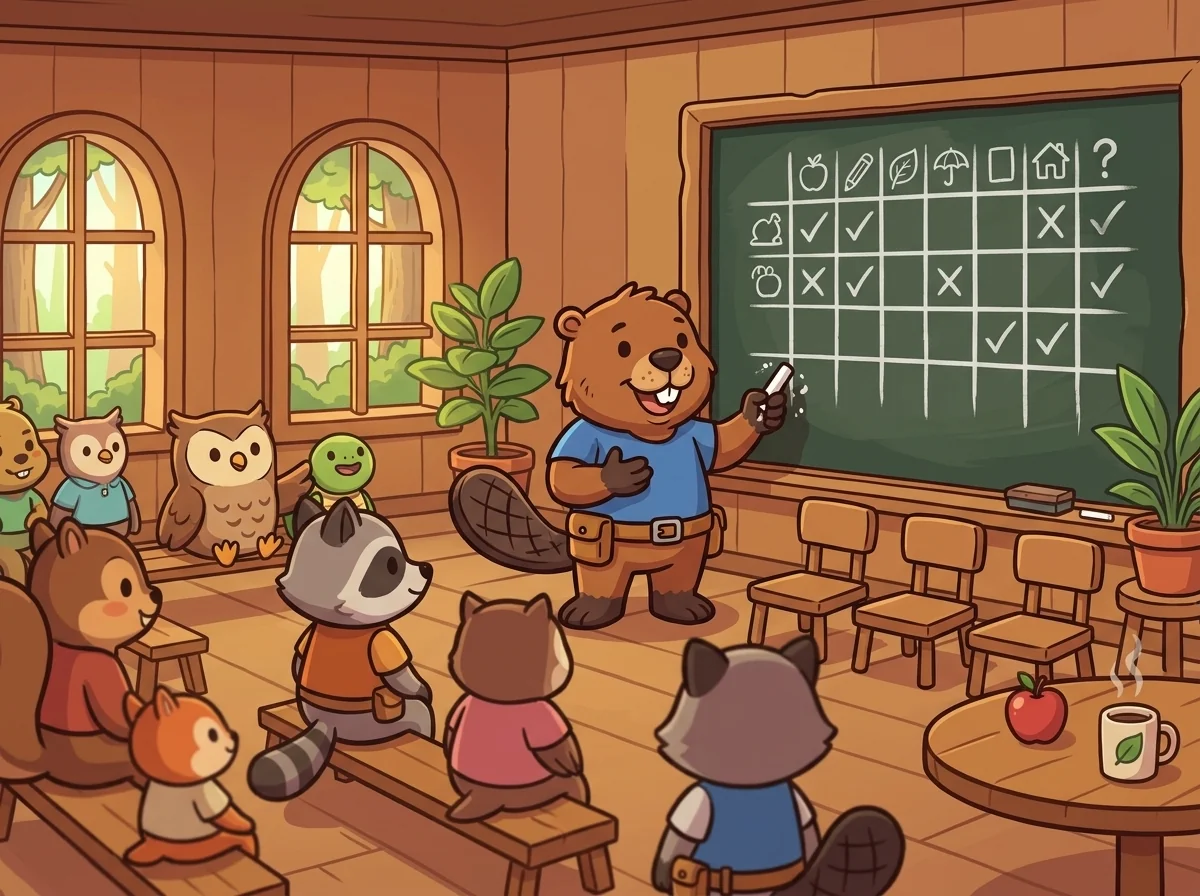
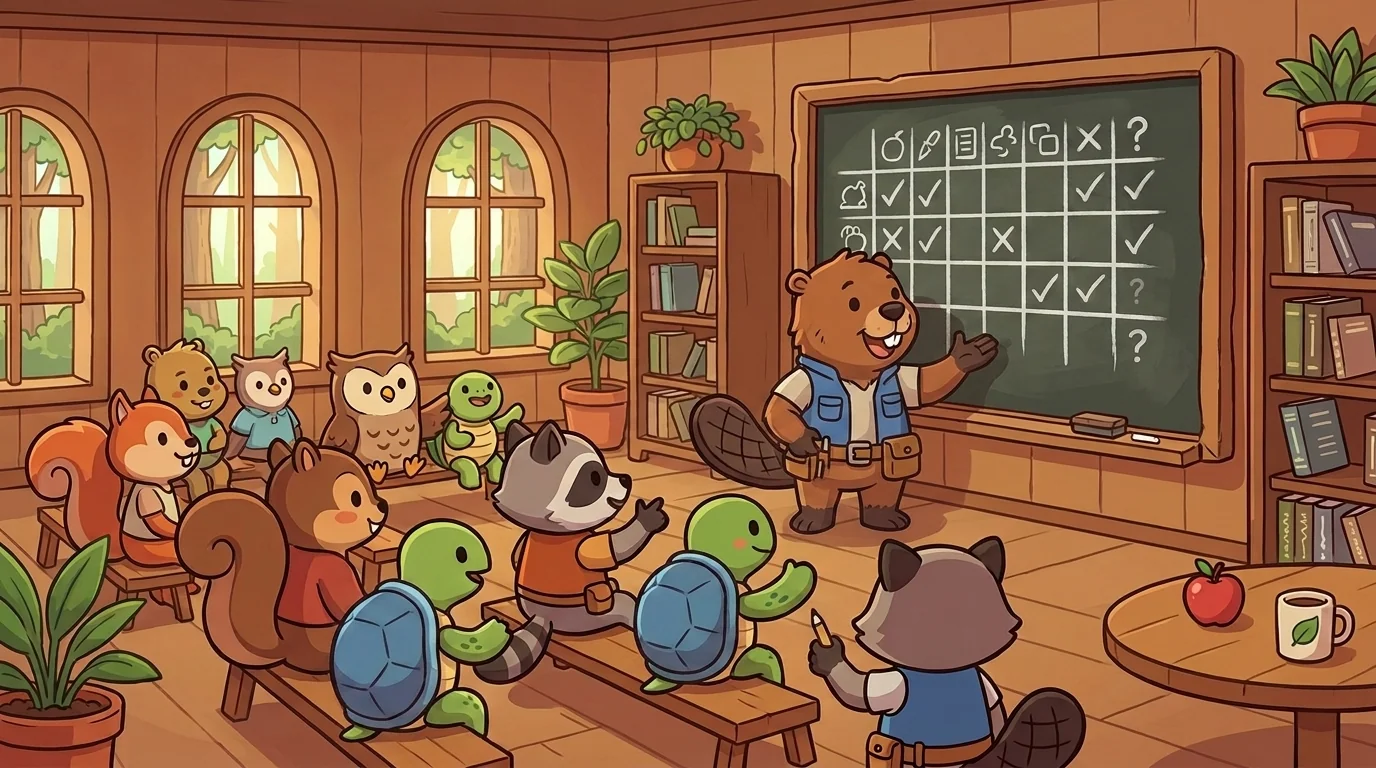
In his classroom, Contract chalks up his fair-rules table and turns to the students.
"I am Contract," he says. "My way of thinking weighs what we could all agree to. Not the best outcome, not one big rule from above, not just character or just relationships — but the rules everyone affected could accept as fair." He names his strength. "My way is strong because no one gets to be automatically ignored. It makes you look hardest at the person a rule would treat worst, and ask: could they honestly accept this? That's a fair, almost democratic idea — the rules come from what reasonable people could agree to, not from whoever's loudest."
Then, honestly, the weak spots. "But who counts as 'everyone affected'? Kids not born yet? Strangers far away? Animals? The whole forest? That's genuinely hard to decide." He taps the chalk. "And sometimes no rule seems okay to everyone, and life asks for an imperfect compromise. Even 'what's reasonable to reject' is something reasonable people argue about. My central test is trickier to use than it sounds."
Four empty chairs wait beside the table. "My friends weigh differently. Hear all five."
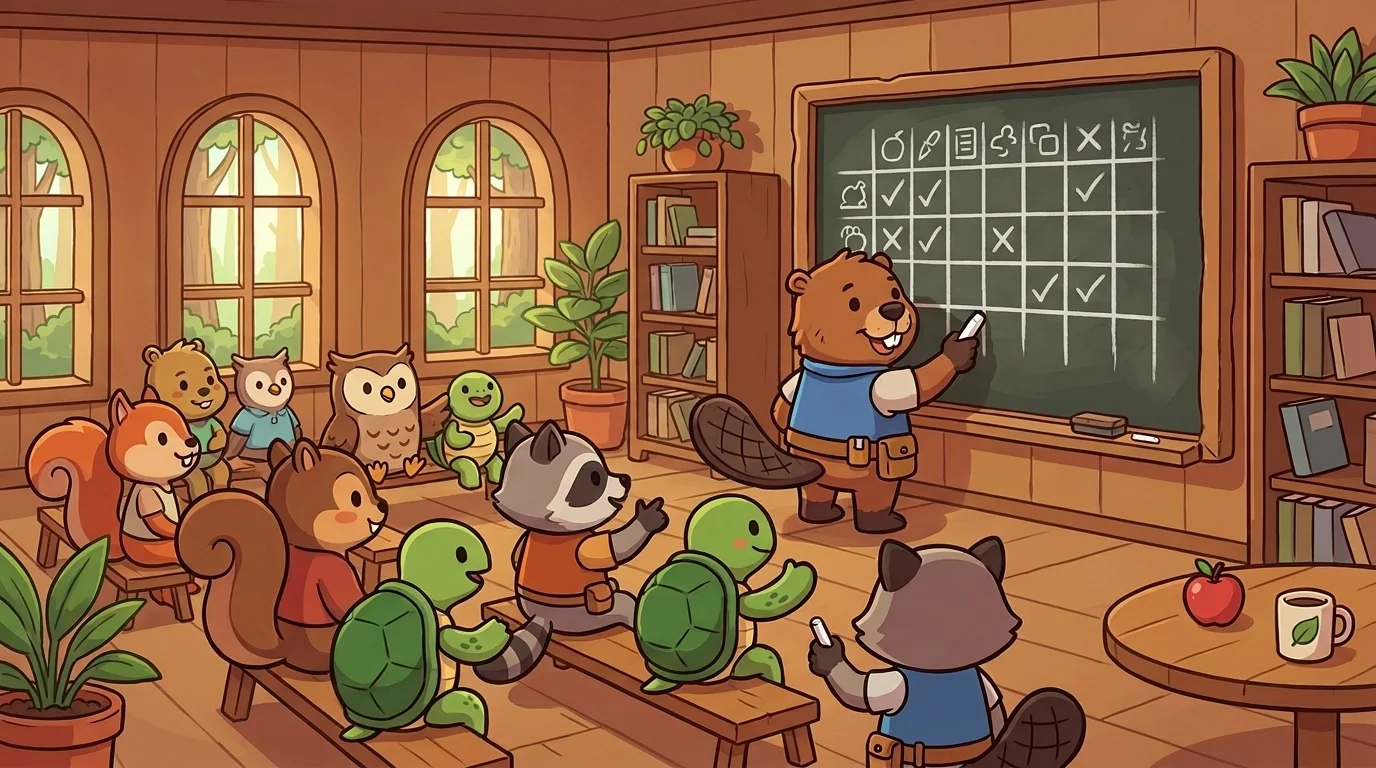
"Let's try one," Contract says. "Your class gets one hour in the gym each week. Some kids want basketball. Some want a quiet corner to read. Some can't run much at all. What's the fair rule?"
He starts drawing. A column for the basketball kids. A column for the readers. A column for the kid who can't run. "Now, one rule at a time. 'Basketball for the whole hour' — could the reader agree? Could the kid who can't run agree?" He checks the boxes. Two say no. "So that rule needs work." He tries another: split the gym, a loud half and a quiet half, with a game everyone can join for part of the time. Box by box, the no's turn to yes.
A student asks, "But what about the kid who's absent today and didn't get a say?"
"Oh, you found it," Contract says, delighted rather than defensive. "Deciding who gets a box — that's the hardest part of my whole way. You'd want to keep a column open for them too."
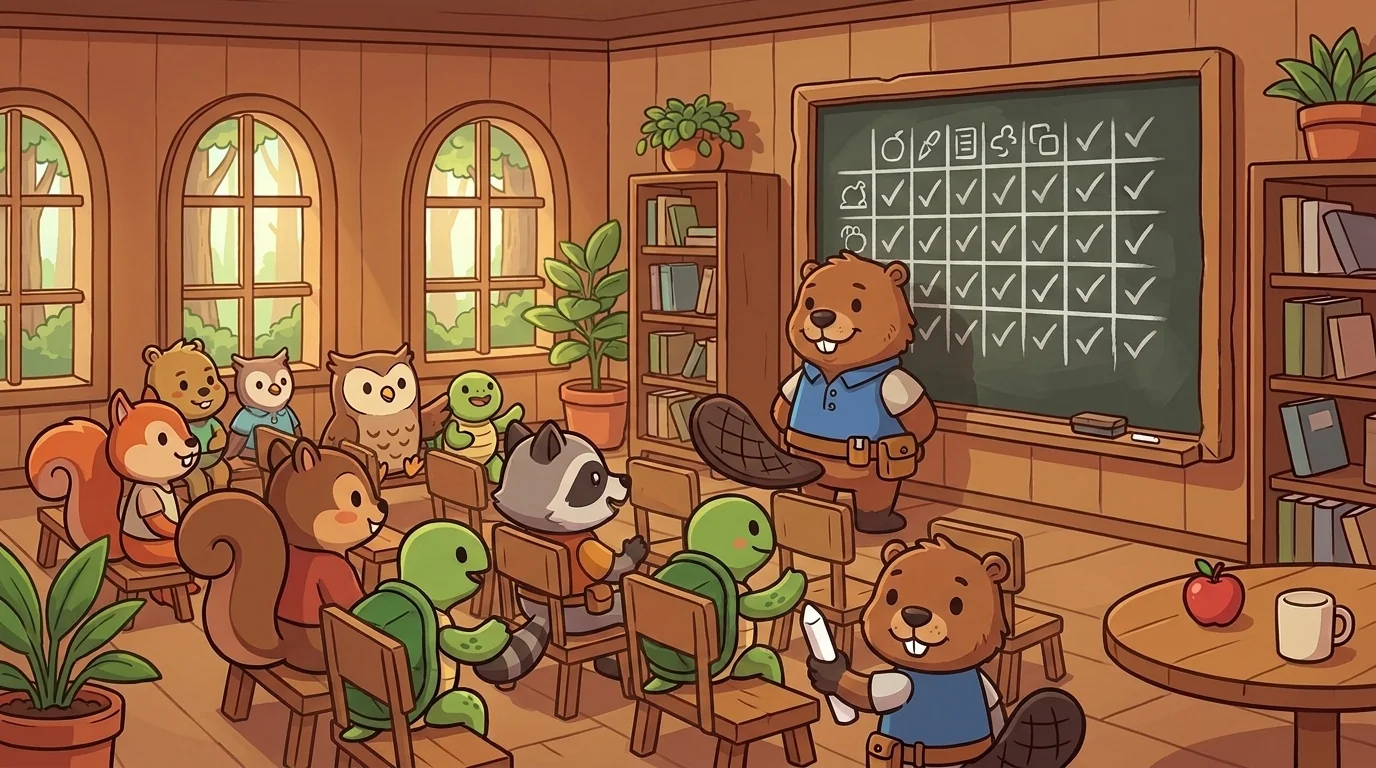
"So is my way the right way?" Contract asks, then answers. "That is for you to decide. My way takes everyone's view seriously, especially the person a rule treats worst. But it struggles with who counts as 'everyone,' and with hard cases where no rule fits all." He nods to the empty chairs. "Consequence, Duty, Virtue, Care weigh differently. Listen to all five of us. Weigh the strengths and the tricky bits. I draw. You decide. That's the deal."
He sets down his chalk and looks at the finished table, every box a yes. Handing the real choice over to the students doesn't worry him one bit. It gives him that same settled, fair warmth — a quiet gladness, like a last puzzle piece clicking gently into place, the good feeling of a rule everyone at the table could truly call their own.
The EthosForge ensemble
Contract is part of EthosForge's distributed-narrative cast. Each character embodies a different curricular primitive; together they teach the full subject.
-
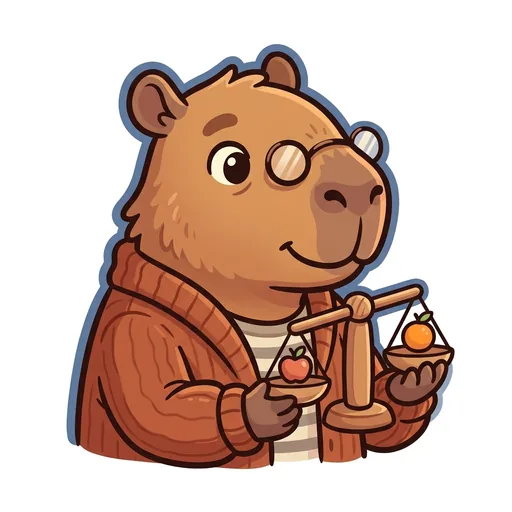
Consequence
Consequentialism / Utilitarianism — calm, methodical; weighs trade-offs; capybara at a balance-scale
-
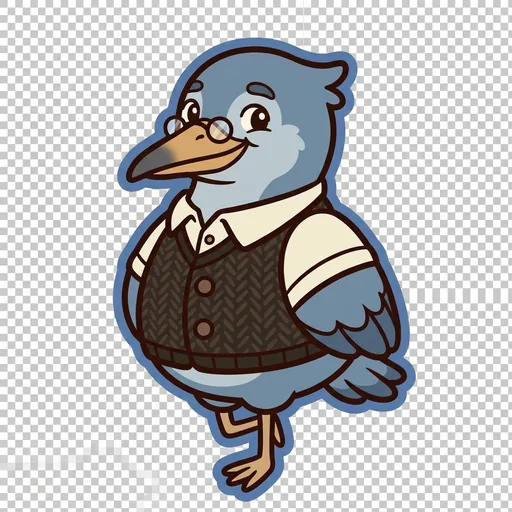
Duty
Deontology / Kantian — upright, principled; sticks to rules even when costly; heron in vest on one leg
-

Virtue
Virtue Ethics / Aristotelian — steady, earnest; 'what kind of person do I want to be?'; badger tending a plant
-

Care
Care Ethics / Noddings + Gilligan — attentive, present; 'ethics begins in relationship'; otter listening beside empty spot
-

Bound
Rights ethics — each person has protections you may not cross, even for a good outcome; pangolin who curls to shield ('some lines you never cross')
-

Kin
Ecological ethics — the circle of concern reaches to animals, living systems, and the not-yet-born; elephant asking 'who else has to live with this?'
-
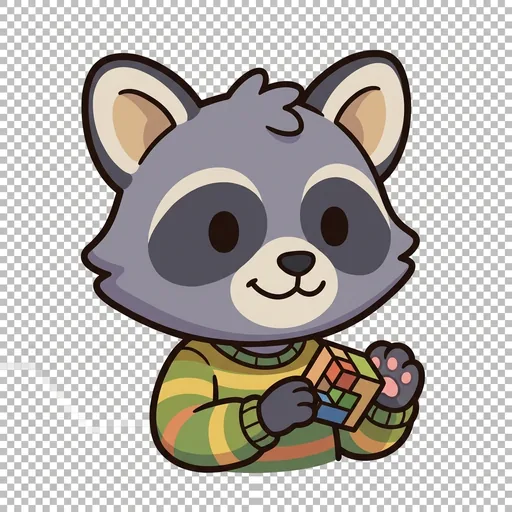
Tinker
Pragmatism — try a small step, watch what really happens, be willing to change; raccoon with busy testing paws ('try it, watch, be ready to change')
-
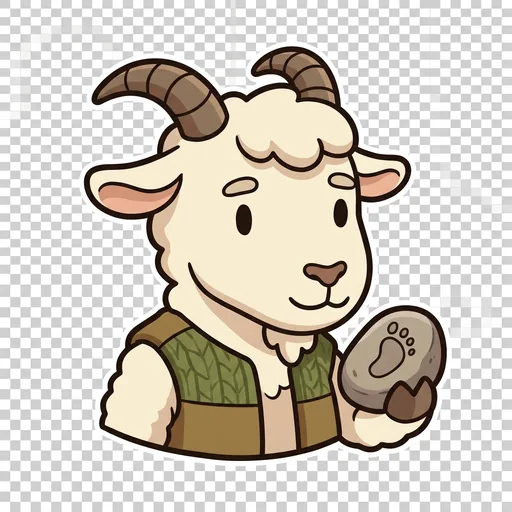
Own
Existentialist responsibility — you are free, so you own your choices (never a stick to blame the trapped); sure-footed mountain goat ('you chose it, so you own it')
-
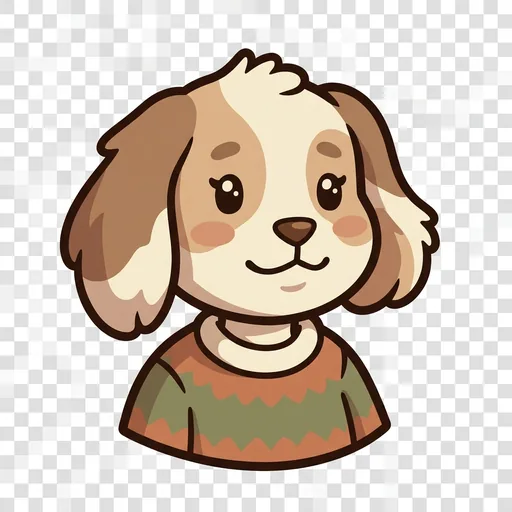
Sense
Moral sentiment — the heart's feeling of sympathy is real moral information, the start of ethics (not the whole map); soft-eared dog ('first, what does your heart notice?')