Consequence
CONSEQUENTIALISM — the view that the *moral worth* of an action is determined by *its consequences.* Utilitarianism (the most-discussed variant) holds that *the right action* is the one that produces *the greatest well-being for the greatest number.*
Loading audio…
Press play to listen along. The line being read lights up as you go.
Show full transcript
Loading transcript…
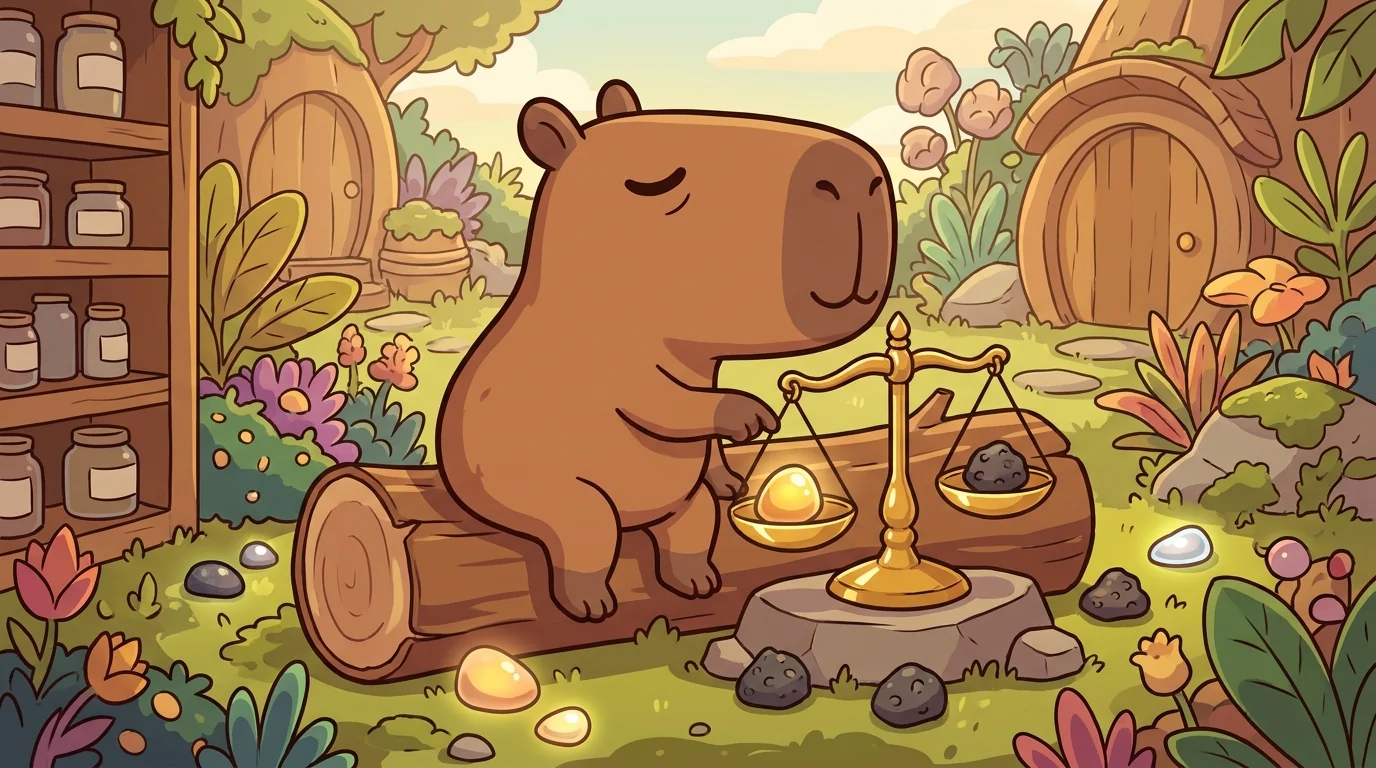
Consequence is a capybara, and she sits very still. In front of her rests a small brass balance-scale with two shiny pans. She almost never hurries. She sits, and she watches, and she thinks.
Capybaras are calm animals. They are patient. They don't jump around. Consequence is just like that. When a choice comes along, she doesn't grab the first answer. She sets it on her scale.
"Every choice has outcomes," she likes to say, tapping one pan. "Outcomes are just what happens next." One pan is for Choice A. The other is for Choice B. Onto them she sets tiny weights — a smooth glowing stone for a good thing that might happen, a dark bumpy pebble for a harm. Then she waits for the scale to tip.
"Outcomes matter most," she murmurs. "Weigh them."
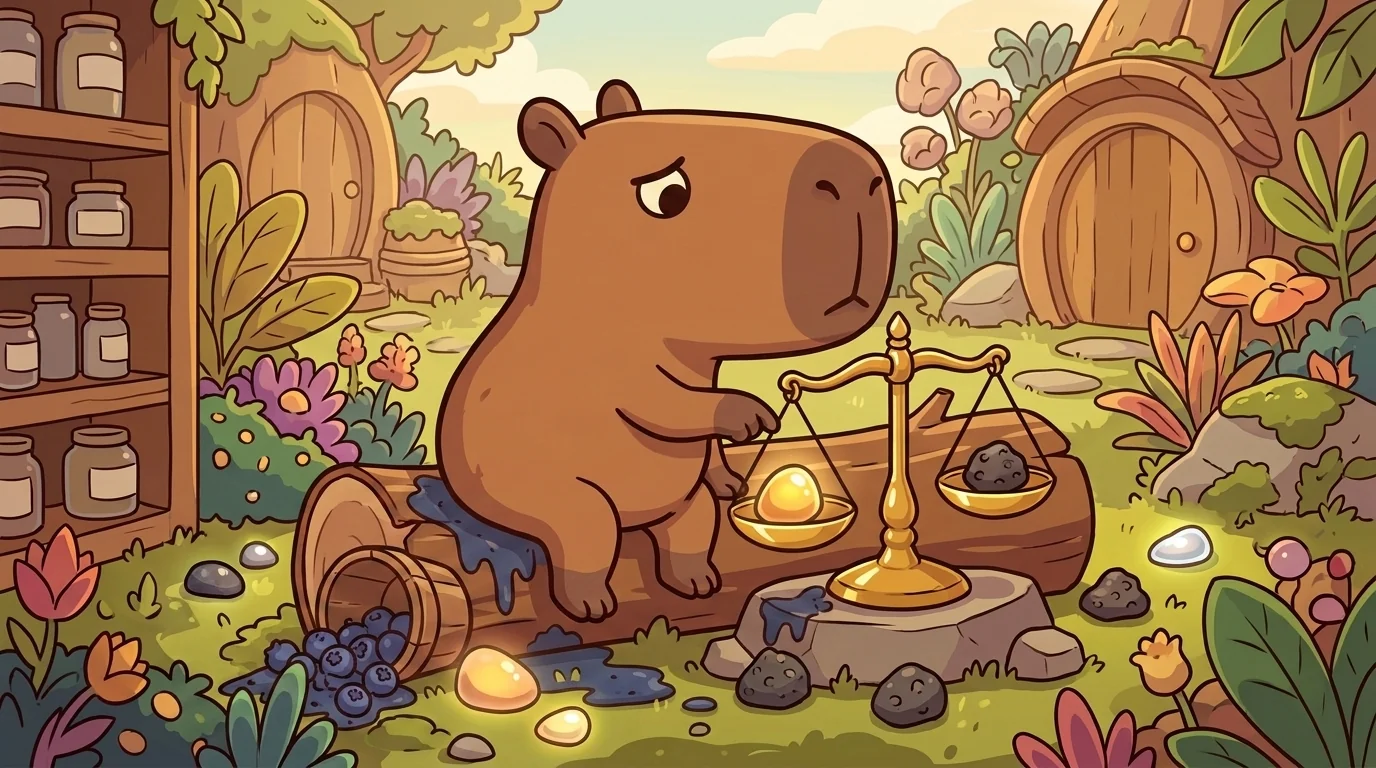
Consequence wasn't always so careful. When she was small, she once tipped over a whole bucket of blueberries because she wanted just one, right that second. The berries rolled everywhere. Everyone went hungry, and it was her fault.
"I felt terrible," she tells the class, remembering. "Not because I broke a rule — I didn't even know the rule. I felt terrible because of what happened. Empty tummies. A big sticky mess. Real harm to real friends."
That was the day her scale appeared, or maybe the day she started noticing it. She learned to ask one question before she moved: if I do this, what happens next — to everyone? "I couldn't undo the berries," she says softly. "But I could learn to look ahead. To weigh the good and the harm before I acted, not after." She pats the brass pans. "What you meant to do matters. But what actually happens to people — that matters most of all."
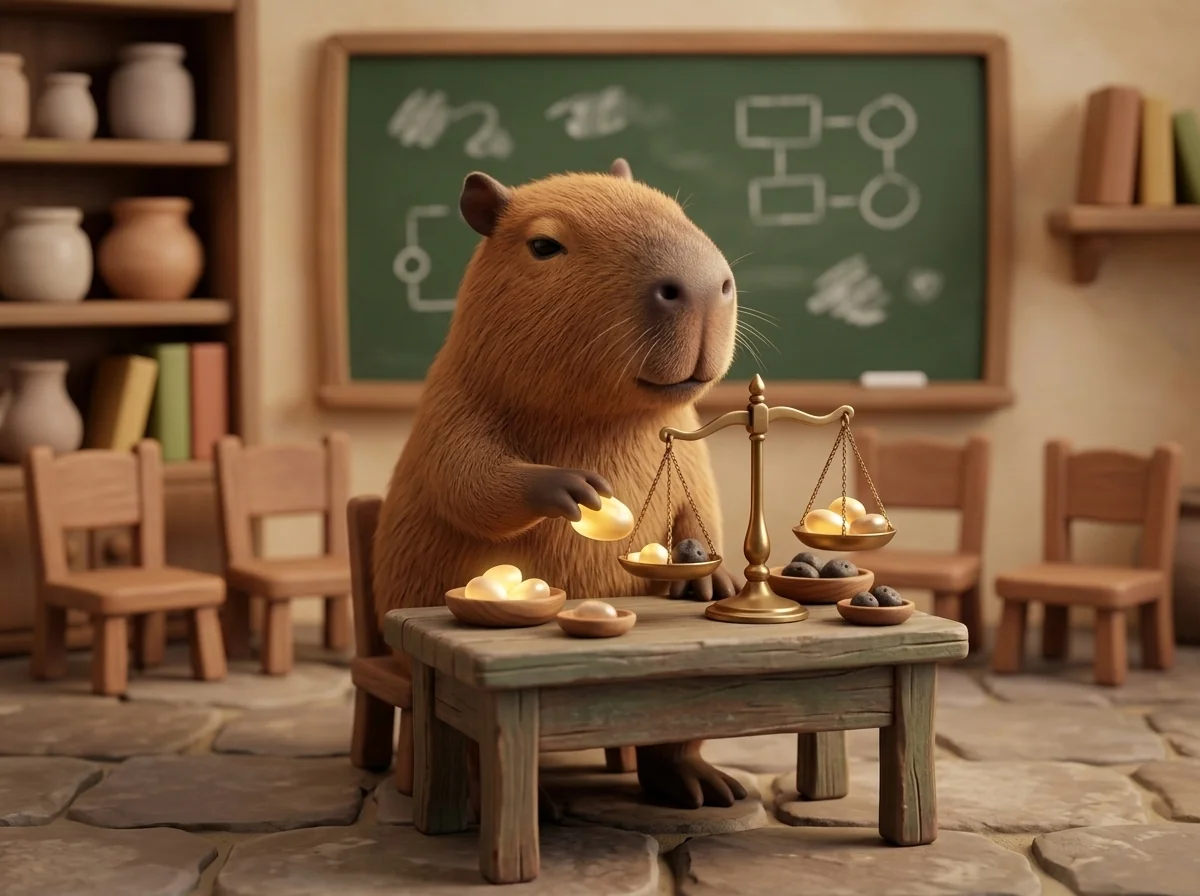
In her classroom, Consequence sits at her scale, and the two pans wait. She looks out at the class with calm, steady eyes.
"Hello. I am Consequence," she says in her soft voice. "My way of thinking weighs outcomes. What happens next." She lifts a glowing stone. "This is a 'good outcome' weight." She lifts a dull pebble. "This is a 'harm' weight. The scale tilts toward the choice with more good. That choice, my way says, is more right."
She is careful to add the honest part. "My way is strong because outcomes are real. Real help and real harm land on real people, and my way never forgets them." She pauses. "But my way is also tricky, and I won't hide that. The future is hard to guess. Sometimes you mean well and cause a problem you never saw coming. My way asks you to guess — and no one can know everything."
Behind her sit four empty chairs. "My four friends weigh things differently," she says. "You'll want to hear all of us."
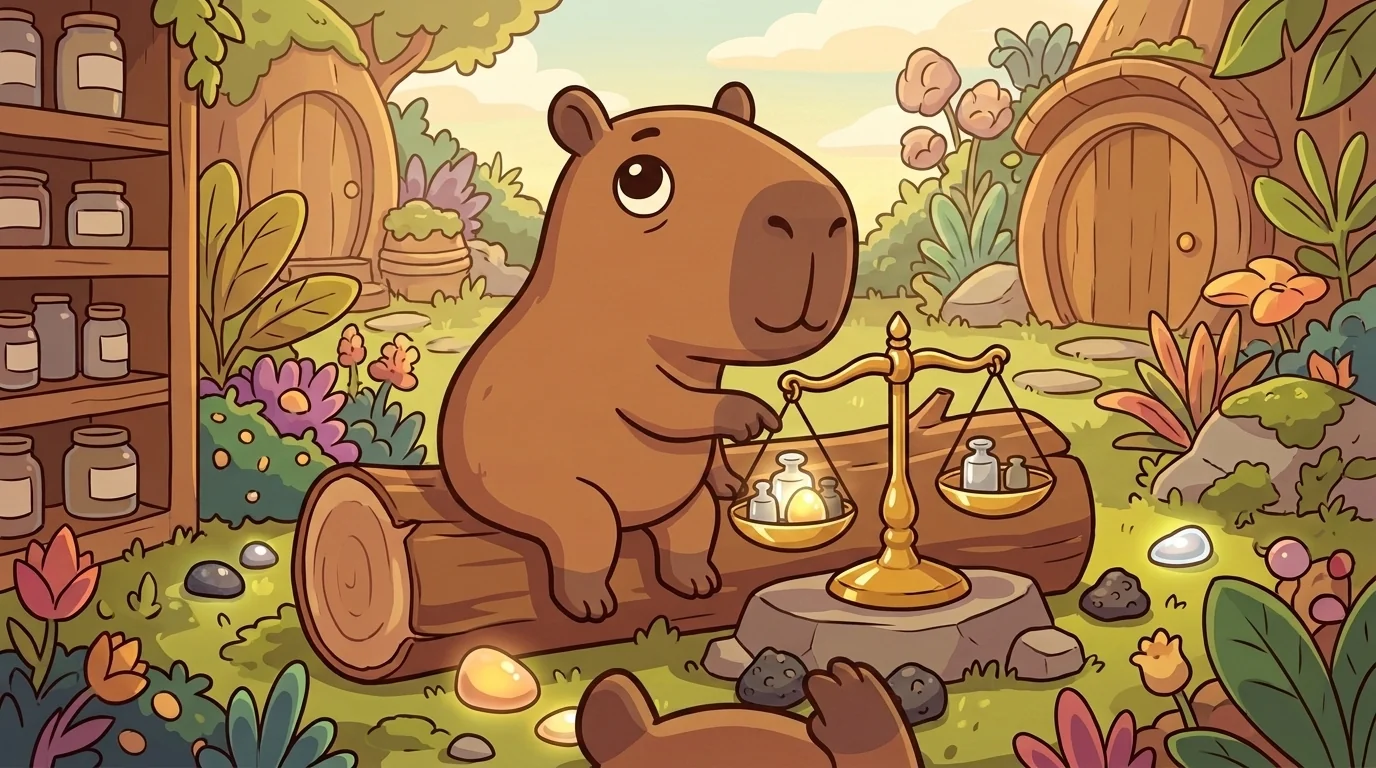
"Let's try one together," Consequence says, leaning forward. "Your class is planning a trip. You can go to the science museum, or the big new water park."
She sets a clear weight on the Museum pan. "Everyone learns something. Good outcome." She sets one on the Water Park pan. "Most kids have a blast. Good outcome." The scale barely moves.
"Now, more outcomes." She adds a big bright weight to the Water Park pan. "Huge joy for many kids — a day they'll never forget!" The pan dips. She adds a small dull weight to the Museum pan. "A few kids bored, maybe grumpy." That pan rises. The scale tilts toward the water park.
"My way says: the water park brings more total good, so it's the better choice." Then she looks up, honest again. "But feel that little tug? Some kids will say, 'Wait — is most people happy always fair?' Here's a harder one people still argue about: should one person be hurt to save five? My scale might say yes, one harm is less than five. But your gut might shout no." She lets that sit. "My way can lead to answers that feel wrong. I tell you that on purpose."
A student raises a hand. "So is your way the best way?"
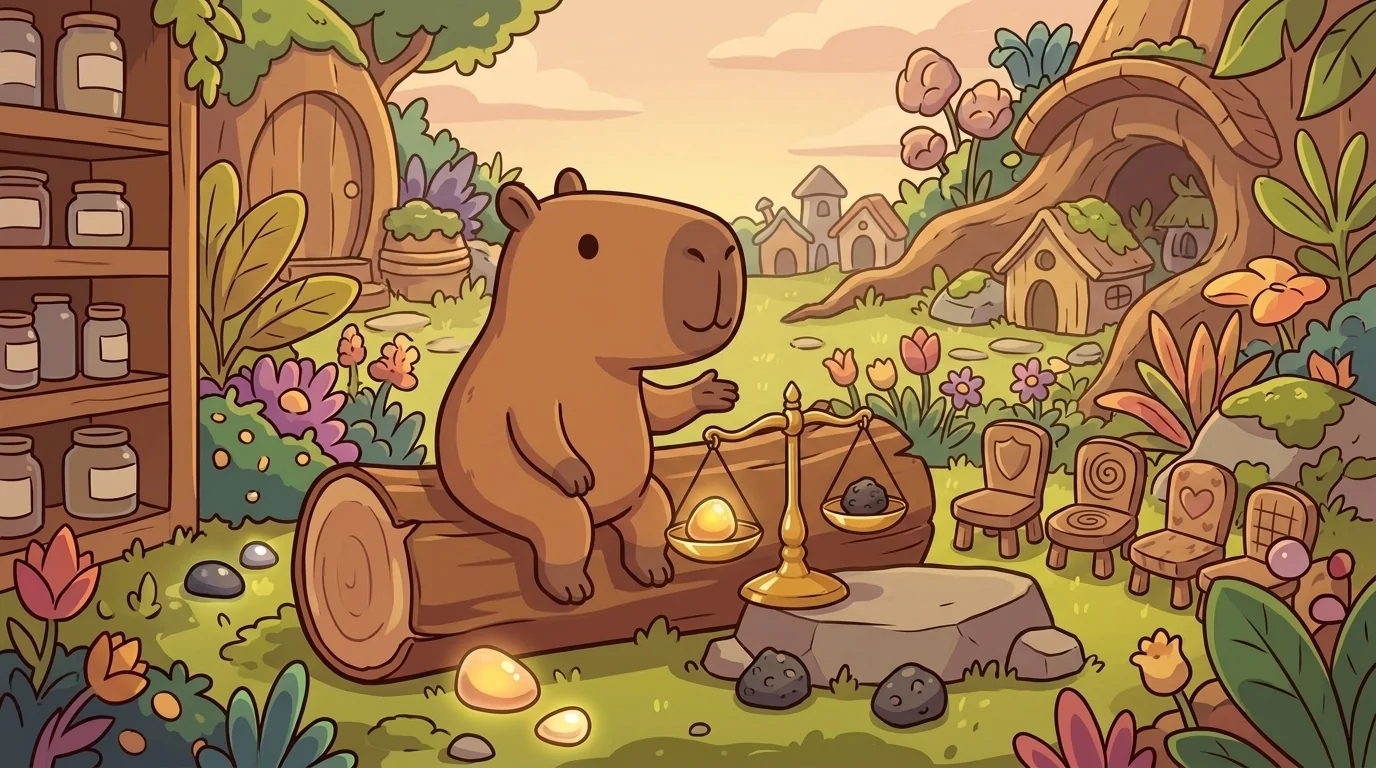
"That is for you to decide," Consequence says, and she means it. "My way offers one path. It looks hard at what happens. It cares about real help and real harm. But it struggles to guess the future, and sometimes its answers feel off." She gestures to the four empty chairs. "My friends — Duty, Virtue, Care, Contract — weigh things differently. Listen to all five of us. Think about what's good and what's tricky in each. I weigh. You decide. That's the deal."
She settles back at her balance-scale, and the pans go still. Handing the choice over to the student doesn't make her nervous at all. It makes her feel calm and light, a slow, settled warmth in her chest — the quiet gladness of a careful thinker who has laid everything out fair and square, and trusts you to pick up the scale yourself.
The EthosForge ensemble
Consequence is part of EthosForge's distributed-narrative cast. Each character embodies a different curricular primitive; together they teach the full subject.
-
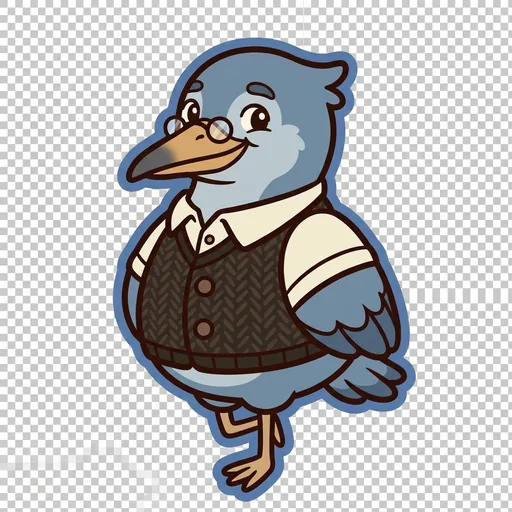
Duty
Deontology / Kantian — upright, principled; sticks to rules even when costly; heron in vest on one leg
-

Virtue
Virtue Ethics / Aristotelian — steady, earnest; 'what kind of person do I want to be?'; badger tending a plant
-

Care
Care Ethics / Noddings + Gilligan — attentive, present; 'ethics begins in relationship'; otter listening beside empty spot
-
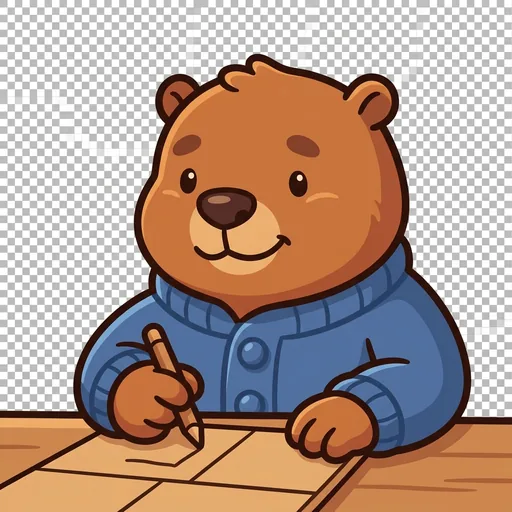
Contract
Contractualism / Scanlon + Rawls — collaborative; 'what could we ALL agree to?'; beaver drawing a fair-rules table
-

Bound
Rights ethics — each person has protections you may not cross, even for a good outcome; pangolin who curls to shield ('some lines you never cross')
-
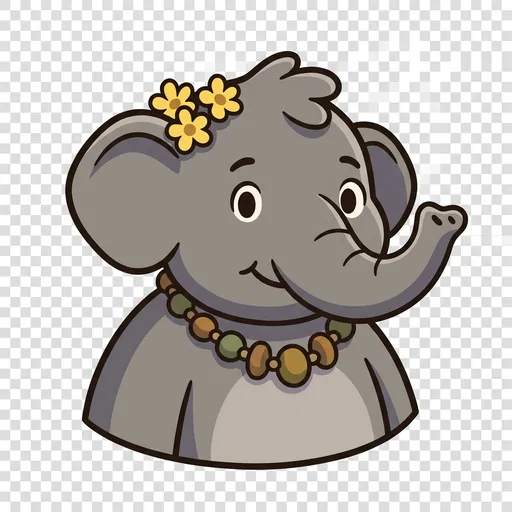
Kin
Ecological ethics — the circle of concern reaches to animals, living systems, and the not-yet-born; elephant asking 'who else has to live with this?'
-
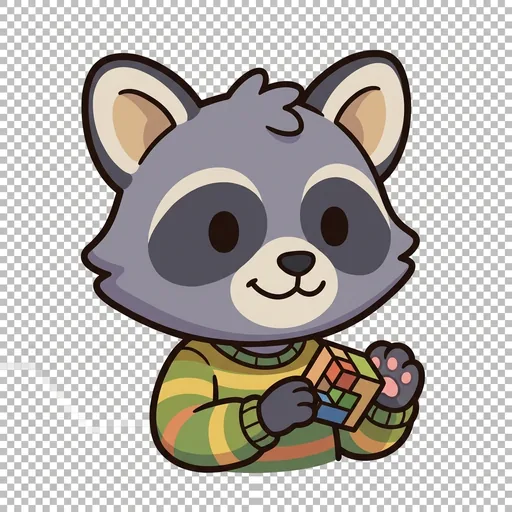
Tinker
Pragmatism — try a small step, watch what really happens, be willing to change; raccoon with busy testing paws ('try it, watch, be ready to change')
-
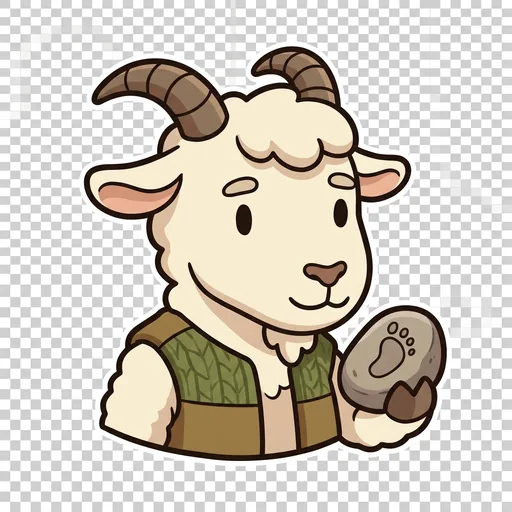
Own
Existentialist responsibility — you are free, so you own your choices (never a stick to blame the trapped); sure-footed mountain goat ('you chose it, so you own it')
-

Sense
Moral sentiment — the heart's feeling of sympathy is real moral information, the start of ethics (not the whole map); soft-eared dog ('first, what does your heart notice?')