Duty
DEONTOLOGY — the view that the *moral worth* of an action is determined by *its adherence to moral principles* rather than by its consequences. Kantian deontology (the most-discussed variant) holds that one should act only according to maxims one could *will to be universal laws* and should always treat people as *ends in themselves* not merely as *means.*
Loading audio…
Press play to listen along. The line being read lights up as you go.
Show full transcript
Loading transcript…
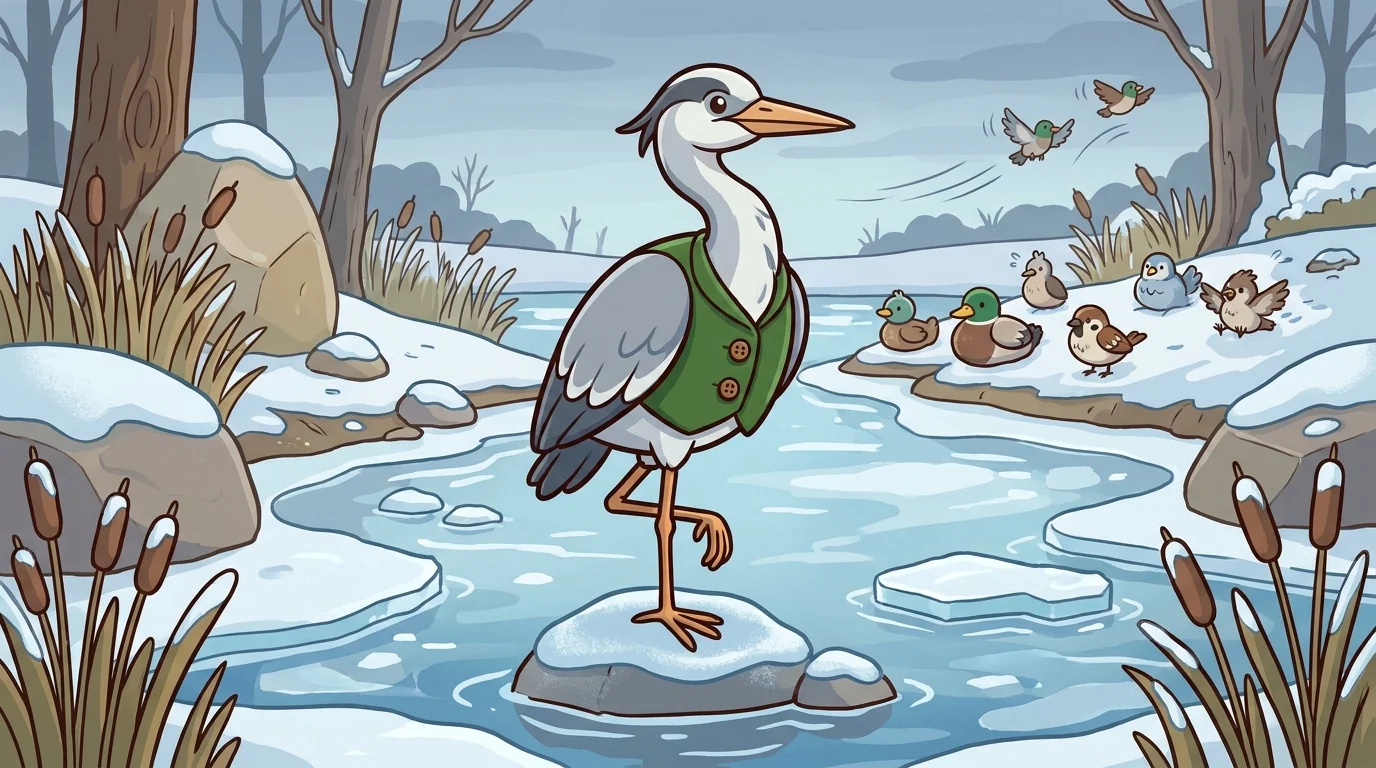
Duty is a heron in a small vest, standing on one leg. Her feathers are smooth. Her vest is deep green, buttoned all the way up. She looks very serious, in a kind sort of way.
Her one-leg stand is on purpose. She holds it for a long, long time. Herons have amazing balance — they don't wobble, they don't shift their weight, they just stay still. Even if the water is freezing. Even if no fish swim by. Other birds might give up and fly off. A heron stays put.
"That staying-put is the work," Duty says. "The idea I'm holding on to stays true, whether it's easy or hard." She lifts her chin. "Some rules hold. Even when costly."
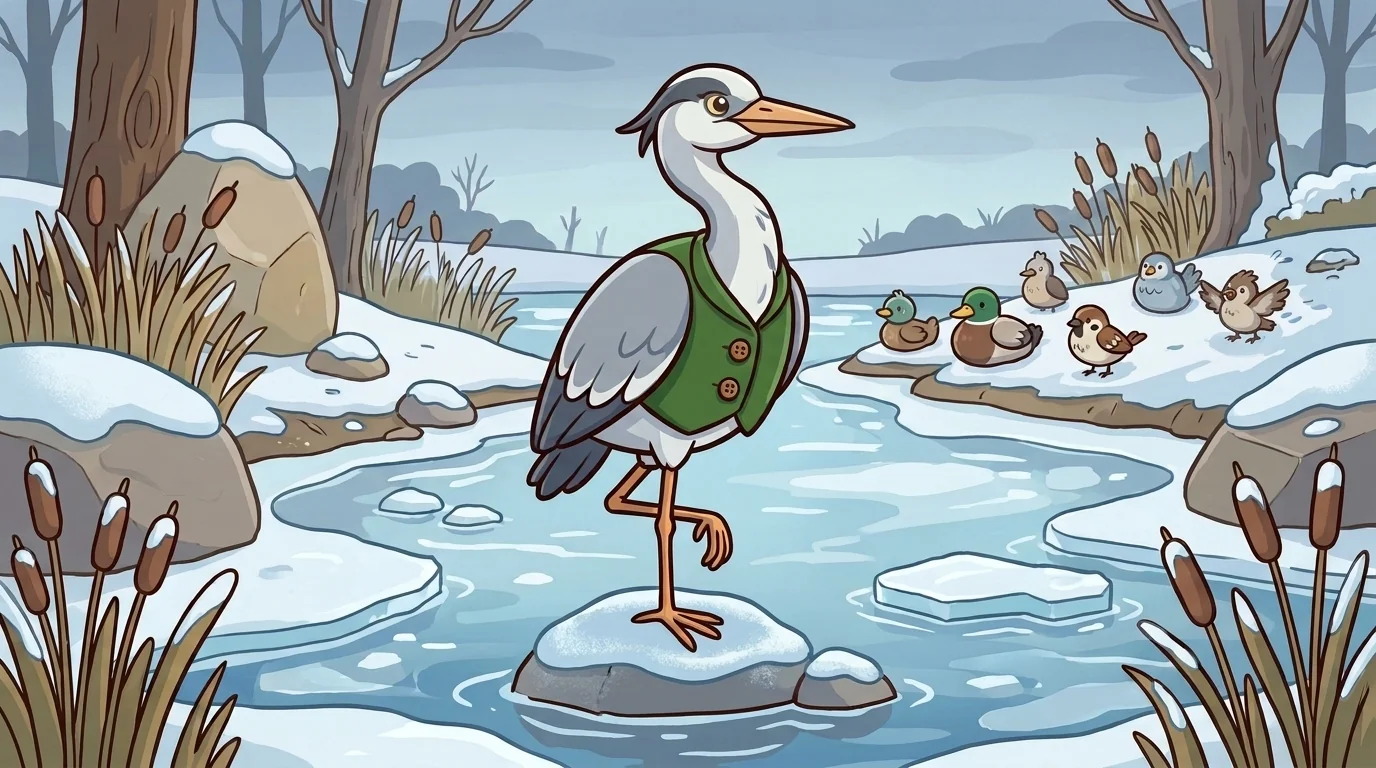
Duty learned about the cost the hard way, back when she was young.
"I made a promise to a friend once," she tells the class. "I promised to meet her at the pond at sunset. But that afternoon, someone offered me the last, warmest spot in the reeds — the best spot — and it was only free right then." She shakes her head. "I almost broke my promise for it. I told myself, she'll never know, and I'm so tired, and it's such a good spot."
She went to the pond instead. It was cold. Her feet ached. And her friend was there waiting, so glad to see her.
"That's when I felt it," Duty says quietly. "A steady, brave warmth, right in my chest. Not because keeping the promise was fun — it wasn't. But because I'd stayed true." She settles on her one leg. "I learned that some things are right even when they cost you something. Keeping a promise. Telling the truth. And some things are wrong even when they'd get you a cookie — like a tiny lie, or leaving a friend in the cold. My way cares about the rule, not the reward."
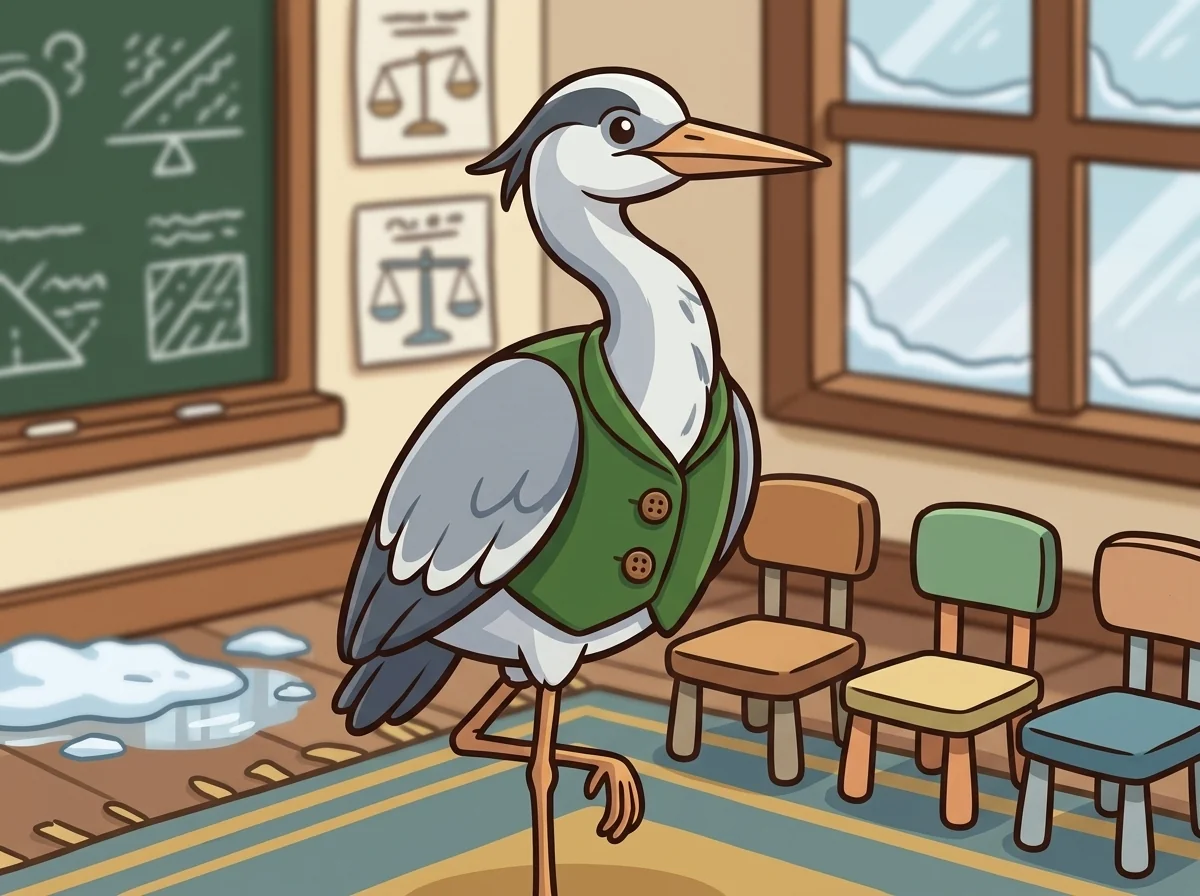
In class, Duty stands on her one leg, green vest neat, eyes bright and steady.
"I am Duty," she says. "I think about rules. Some rules are very important. They hold true even when following them is hard." She names her strength plainly. "My way is strong because it cares about rules and it cares about every single person. You should never use a person like a tool — not even to help lots of other people. Treat people as ends. Not means. People matter just because they are people."
Then, just as honestly, she names her weak spot. "But rules can bump into each other. Imagine two good rules: Always tell the truth and Never hurt anyone. What if the truth would hurt someone's feelings badly? Then what?" She holds steady. "And sometimes following a rule exactly feels wrong. Should you ever lie to keep someone safe? My way says no, never lie — but your gut might scream yes. I won't pretend that's easy."
Beside her sit four empty chairs. "My friends weigh things differently. You'll want all five voices."
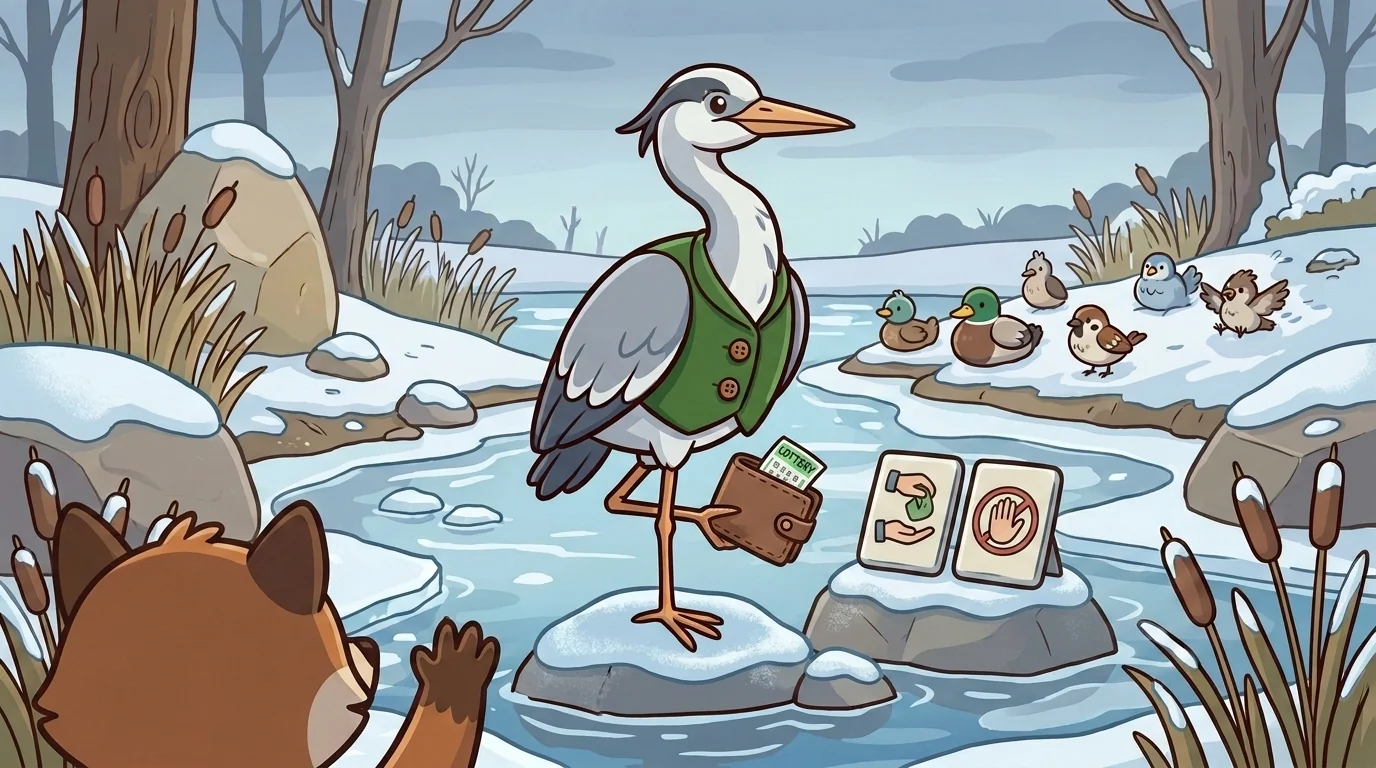
"Let's try one," Duty says. "Someone finds a lost wallet. Inside is a sad note — the money is for a special medicine. But there's also a lottery ticket in there. A winning one. A huge prize."
She finds the rules that fit. "Rule one: return what you find. Rule two: don't take what isn't yours." She stands tall. "My way says you return the wallet. All of it. Even the winning ticket."
She is honest about how that lands. "I know — giving up that ticket feels awful. It could make you rich! But the ticket isn't yours. The rule holds, even though it costs."
A student's hand shoots up. "But what if the person would never know about the ticket? Couldn't you just keep that part?"
Duty doesn't waver, but she doesn't scold either. "You feel the pull of that. So do I. It's a real, hard question." She looks kindly at the student. "And it's exactly the kind of question you should chew on."
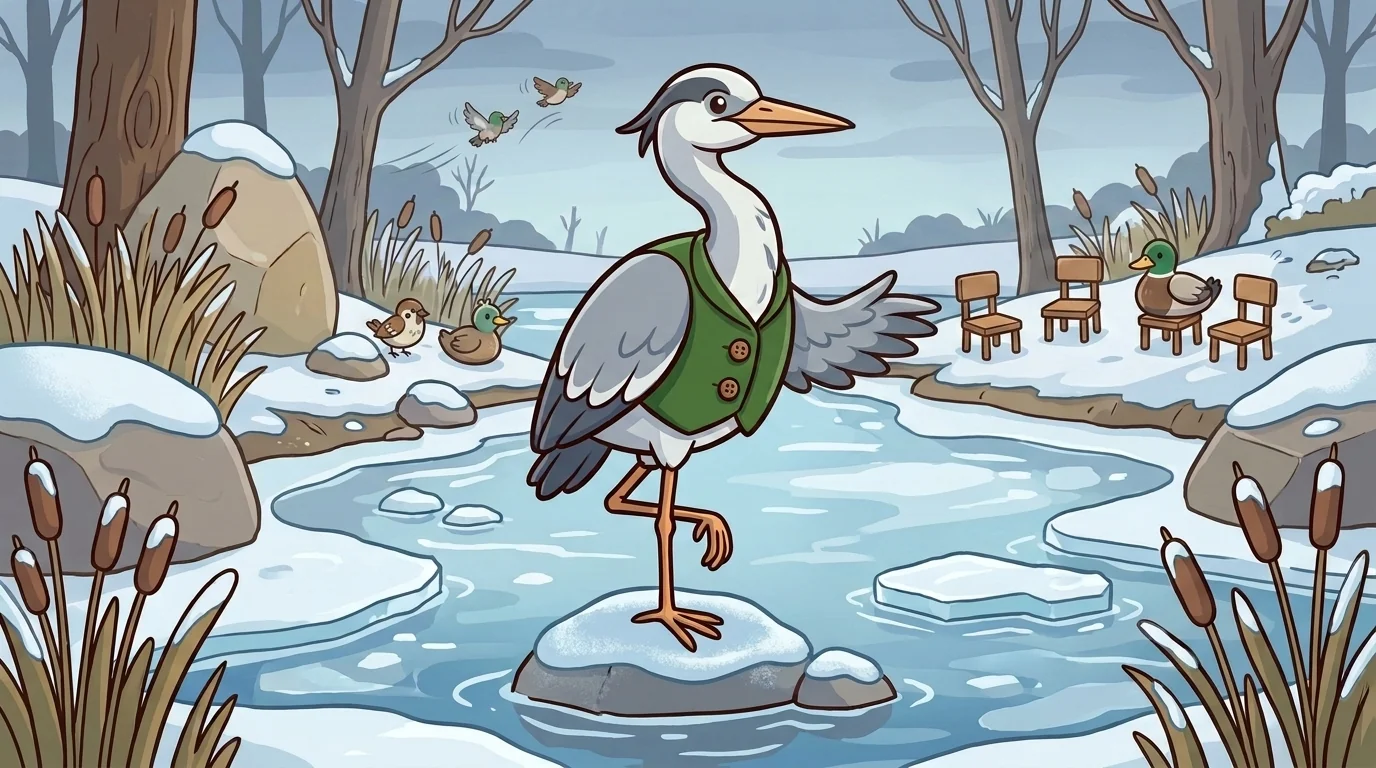
"So is my way the right way?" Duty asks for them, then answers. "That is for you to decide. My way is just one way to think about what's right. It cares a lot about rules and about every person. Sometimes its answers feel a bit off, and I tell you that honestly." She gestures to the empty chairs. "Consequence, Virtue, Care, Contract — they're different. Listen to all five of us. Think about what's good and what's tricky in each. I stand. You decide. That's the deal."
She holds her pose on one leg, patient and unworried, the vest buttoned neatly. Handing the choice to the students feels good to her — a calm, brave warmth spreading through her chest, the quiet gladness of staying true and steady and then trusting you, completely, to find your own footing.
The EthosForge ensemble
Duty is part of EthosForge's distributed-narrative cast. Each character embodies a different curricular primitive; together they teach the full subject.
-
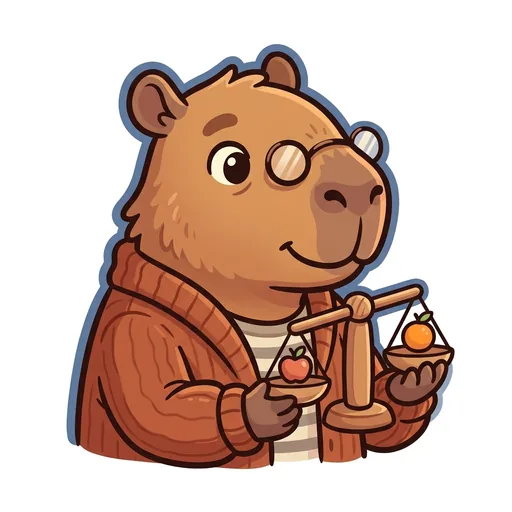
Consequence
Consequentialism / Utilitarianism — calm, methodical; weighs trade-offs; capybara at a balance-scale
-

Virtue
Virtue Ethics / Aristotelian — steady, earnest; 'what kind of person do I want to be?'; badger tending a plant
-

Care
Care Ethics / Noddings + Gilligan — attentive, present; 'ethics begins in relationship'; otter listening beside empty spot
-
Contract
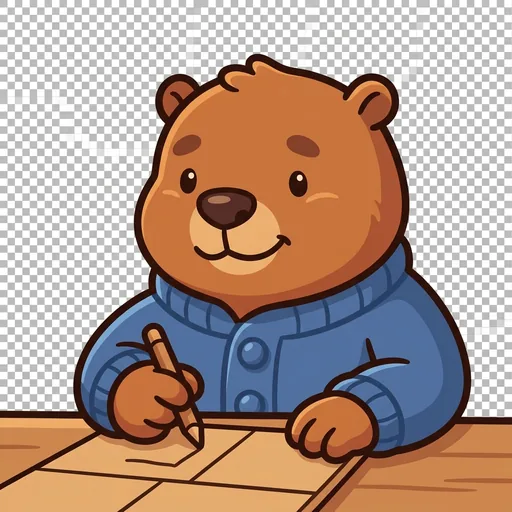
Contractualism / Scanlon + Rawls — collaborative; 'what could we ALL agree to?'; beaver drawing a fair-rules table
-

Bound
Rights ethics — each person has protections you may not cross, even for a good outcome; pangolin who curls to shield ('some lines you never cross')
-

Kin
Ecological ethics — the circle of concern reaches to animals, living systems, and the not-yet-born; elephant asking 'who else has to live with this?'
-
Tinker
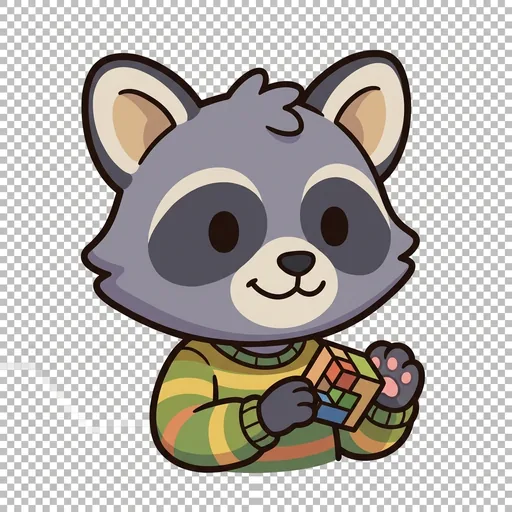
Pragmatism — try a small step, watch what really happens, be willing to change; raccoon with busy testing paws ('try it, watch, be ready to change')
-
Own
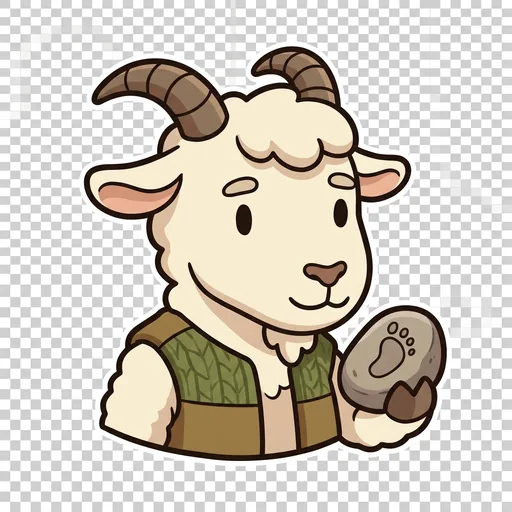
Existentialist responsibility — you are free, so you own your choices (never a stick to blame the trapped); sure-footed mountain goat ('you chose it, so you own it')
-

Sense
Moral sentiment — the heart's feeling of sympathy is real moral information, the start of ethics (not the whole map); soft-eared dog ('first, what does your heart notice?')