The Paper Door · Grower · ages 6-8
Listen along
Loading audio…
Read by an AI-generated voice. The words on this page are the transcript.
1. The Print Shop
The hammer rang once. A spark jumped off the anvil and did not go out. It waited. They followed.
It skipped across the Green and into the print shop. It stopped on the long table, next to a square of paper.
"Fold me, I won't mind," said Kami.
"Somewhere new, please," said Lan.
"Start with something you know," said Kami. "Start with a hat."
They folded Kami in half, then the two corners down, then the strips up. A little paper hat.
The last crease went flat, and the paper opened like a door.
2. Eight Little Plants
It was hot. That was the first thing. The sun was bright and the air smelled of jasmine and warm dust.
They stood in a garden behind a house with a deep, shady porch. A neem tree made a patch of shade. Big clay pots stood in a row.
One pot had a crack mended with a twist of wire. Beside the crack, someone had scratched a tiny hammer.
"India," said Kami softly. "Madras. The year is 1893."
A girl was kneeling by a flower bed. Beside her sat a tray of tiny marigold plants. Lan counted them. There were eight.
"I'm Meena," said the girl. "Grandmother wants these planted along the edge before she comes home. She said all the same space apart, so they grow in a straight line."
"So measure it," said Lan.
"My uncle took the tape measure to work," said Meena. "I only have this." She held up a long strip of paper. "Grandmother cut it to be exactly as long as the bed."
3. About Here
"I'll do it!" said Lan. "I promise. I'll just do it by eye." She grabbed a stick from the path. "One about here. One about there."
"Just guessing makes wobbly gaps," said Mark. He had been standing in the shade. "Lines don't lie, but eyes do. Read the line first, and let the paper draw it."
Lan stopped with the stick in the air. She looked at the bed. The holes she had imagined were all different sizes.
"I said I'd do it before I checked," she said. "Sorry, Meena."
4. The Drawing on the Desk
On the porch, a man in a white shirt sat at a wooden desk. He was folding a square of paper, slowly and carefully. Beside him lay pages of folding drawings.
He did not look up. He did not explain.
Mark went and looked at one drawing. It showed a square, folded edge to edge. The crease was marked with a dashed line.
"Read the drawing before your hands move," said Mark. "Fold one edge onto the other edge. Then the crease is exactly halfway. You don't need a ruler. The fold is the ruler."
5. End to End
"Bring it all the way over," said Cornelia. "End to end. Exactly."
Meena brought one end of the strip onto the other end. Cornelia looked closely. "Point to point, then hold."
Meena pressed it. Then she folded it in half again.
"It's eight!" said Inkling.
"It's four layers," said Lan, counting the edges. "Not eight. Not yet."
Inkling laughed. She had named it too soon.
6. The Slippery Fold
The third fold was hard. The strip was thick now, and it slipped. The ends did not meet.
"It's crooked," said Meena. "The last part will be too big."
"Crooked is just a first go," said Crinkle. "Smooth it out and try again. The crease remembers."
Meena opened the third fold. The old crease showed her where it had slipped. She held the ends together firmly and folded again. This time they met.
Now the strip was a fat little packet, eight layers thick.
7. Press It So It Shows
"Hold it still," said Presso. "Now press it flat. Run your thumbnail along every fold."
Meena pressed. She pressed every edge of the little packet, slowly and firmly.
"A fold you press is a fold that stays," said Presso. "When you open it, the creases will show."
8. Eight Parts
"Every fold makes me something new," said Kami. "Open it along the bed, and see."
Meena unfolded the strip and laid it along the edge of the bed. Seven creases ran across it. Between them were eight parts, all exactly the same size.
"Seven creases," said Inkling. "Eight parts. One more part than creases." This time she was right.
Meena planted one marigold in the middle of each part. Eight plants, in a straight, even row.
When Grandmother came home, she stood at the gate and looked. Then she smiled.
Lan found a plain square in her pocket. They unfolded it flat, and the door closed behind them.
The spark dimmed to a warm dot and settled back on the anvil. The Green was just the Green again.
Back on the Green
At the print shop, Lan had to cut a long cake into four fair pieces. She did not guess. She folded a paper strip as long as the cake in half, then in half again, and used the creases.
Tell the story back to someone. How many creases make eight parts?
Saved. The next chapter will be here whenever you come back.
Who you met
-
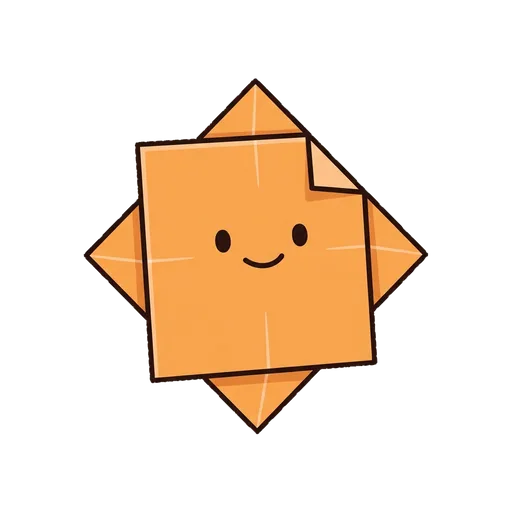 Kami Paper becomes a new shape with every fold, and it only cuts where it is told from CreaseTots
-
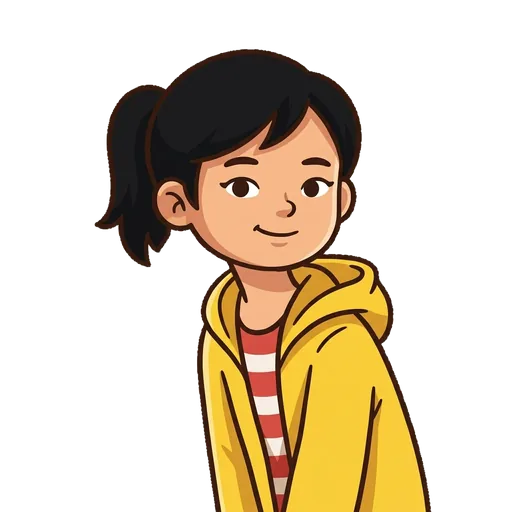 Lan a child of the Green Goes first; makes a friend in a minute
-
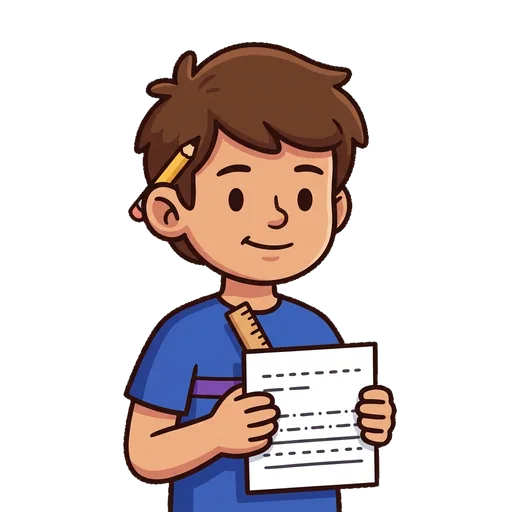 Mark The lines tell you what to do — dashes fold, solid lines cut from CreasePals
-
 Cornelia Bring one corner to meet the other corner, exactly from CreaseTots
-
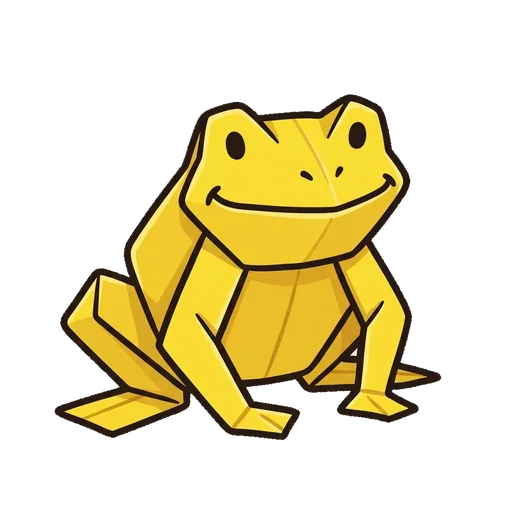 Crinkle Smooth a crooked fold out and try again; the crease remembers from CreaseTots
-
 Presso Hold the paper still and press the fold flat so it stays from CreaseTots
-
 Inkling a child of the Green Names what she notices
Every recurring character has a short tune, so you can tell who is on stage before a word is said. The tunes play only when you tap, and the Reading Access sound switch turns them off.
The Honest Page
Which parts of this story are true, stretched or made up?
True
- T. Sundara Row's book Geometric Exercises in Paper Folding was printed in Madras in 1893. It showed how to fold shapes and find lines and middles without a ruler or a compass. Source
- Row wrote that his idea came from a kindergarten paper-folding gift, from the same kindergarten folding that Fröbel's garden used. Source
- A famous German mathematician, Felix Klein, wrote about the book in 1895, and it was later printed in America too. Source
- Folding a strip in half three times makes eight layers. Opened out, it has seven creases and eight equal parts.
Stretched
- The man folding on the verandah in our story never says his name. What we simplified: We kept the real author in the background so the children and the cast solve the problem themselves; nobody knows where Row sat to fold.
- In our story the folding drawing on the desk shows a square folded edge to edge to find its middle. What we simplified: That is one of the first exercises in Row's book, but we drew our own simple version, not his page.
Made up
- Meena, her grandmother, her uncle and the paper door are made up. Kami, Mark, Cornelia, Presso and Crinkle are our own characters.