How our apps teach
Characters that ARE the curriculum
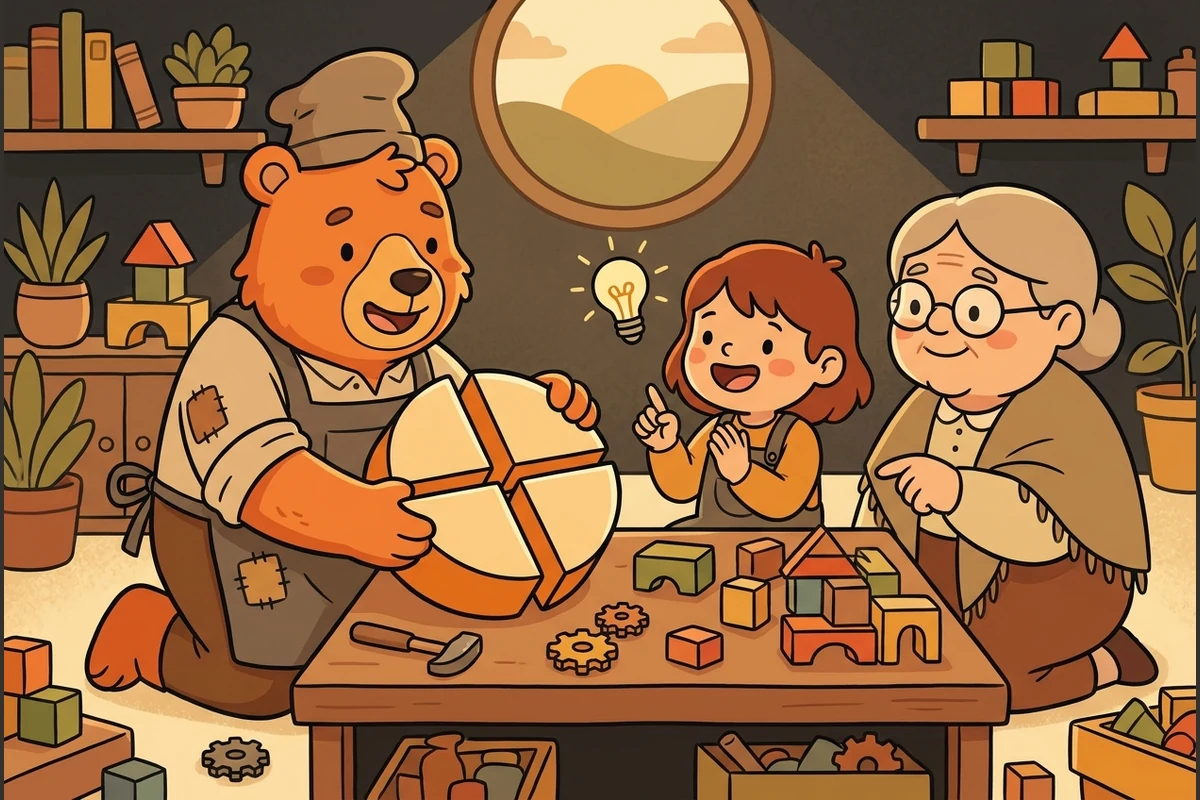
Most educational apps put a friendly mascot on the screen, then deliver a lesson. We do something different: in many of our apps, the characters themselves are the lesson. Each one shows up again and again across the app, demonstrating a single idea — a chess move, a logic mistake, a spelling pattern, a geometry rule — so your kid learns the idea by following the character's story.
If that sounds familiar, it should. It's the same story-first approach popularized by Story Time Chess, which teaches kids chess through a cast of characters. Researchers call this approach distributed narrative with intrinsic integration. The difference here: what that approach does for one game, Spark & Anvil does across every app in the library — math, reading, science, logic, and more.
Free. No ads. No tracking. Nothing to sign up for.
Watch, don’t read
Watch Sir Pinwell do a pin
In GambitTales, Sir Pinwell has one job: pins. He never explains them — he does them. Step through one move and watch a knight get trapped.
Meet the board. Sir Pinwell’s bishop sits on f1; Black’s king is on e8. Press Next.
- Meet the board. Sir Pinwell’s bishop sits on f1; Black’s king is on e8. Press Next.
- Sir Pinwell’s bishop slides from f1 to b5. Check!
- Black blocks with the knight: b8 to c6.
- Look along the line: b5, c6, d7, then the Black king on e8.
- The knight on c6 wants to move — but if it does, the king is in check. It can’t. That’s a pin. Sir Pinwell never explained it. He did it.
Most apps
A mascot cheers while a worksheet asks “What is a pin?”
Ours
Sir Pinwell pins the knight. The move is the lesson.
Why this works
Kids' brains are built for story. They'll remember the personalities, likes, dislikes and intentions of every animal in Frog and Toad longer than they'll remember a multiplication chart. Our approach borrows that strength: we turn the curriculum itself into a story with a recurring cast, so the abstract idea travels on a memorable character.
Stanley Greenspan gives many examples of the principle that we first learn from our emotional lives and then later generalize this understanding to a more abstract concept. We generalize from the personal context to a more generalized emotional meaning and then to abstract thinking itself. So much good teaching works from the personal to the general, from the individual example to the broader generalization, from our own emotion to those of other people — from the specific to the general. Stories resonate with us because we identify with the characters and relate to them from our own experience.
- Recurring, not random. The same characters appear across many lessons. Your kid sees Sir Pinwell in lesson 1, again in lesson 3, again in lesson 7 — each time showing the same kind of emotional dilemma and making the same move in a new situation.
- Behavior, not decoration. The character's actions are the rule. Sir Pinwell doesn't talk about pins. He does pins. Your kid learns the pattern by watching, not by being told.
- Small casts, not crowds. Each app uses about ten to twelve characters, never dozens. Kids can keep that many in mind — like a Pixar movie ensemble.
- Story carries the work. When kids care about a character, they remember what that character did. That memory is the curriculum.
The four pieces
What makes the method actually work
Researchers who study educational games found four things that make a story-driven learning app stick — and four things whose absence makes it fail. Our apps are designed to do all four at once. Here's what each piece does in plain language.
Piece 1
A cast that REPEATS
The story lives across many lessons, not in one place. Sir Pinwell shows up in lesson 1, again in lesson 3, again in lesson 7 — each time doing the same kind of move in a new situation. Spreading the story across the lessons gives your kid more chances to recognize the pattern.
Researchers call this “distributed narrative” — the story scattered across the whole game world, not stuck on the first screen.
Piece 2
Character + rule are the SAME thing
The character's actions ARE the lesson. Sir Pinwell doesn't talk about pins — he does pins. The story and the learning happen in the same place. The character is never a sugar coating around an unrelated drill.
Researchers call this “intrinsic integration” — the best-supported single design choice for whether an educational game actually teaches what it sets out to teach.
Piece 3
A small cast you can KNOW
About 10 to 14 characters per app, never dozens. Each character has a personality, a portrait, a backstory, a voice. When your kid cares about a character — actually cares — they remember what that character did. That memory IS the curriculum.
Researchers call this “empathetic characters” — we keep casts small so kids can hold the whole ensemble in mind.
Piece 4
Apps that NOTICE your kid
Our apps watch what your kid actually needs and adjust. When a kid gets stuck, the right character shows up to help — gently, without making a big deal. When a kid is racing ahead, the next lesson stretches a little farther. Everything stays on your kid's device. Nothing leaves it.
Researchers call this “adaptive storytelling” — the piece that turns a good story into a teacher who actually meets your kid where they are.
The four-piece framework comes from a review of two decades of research on narrative in learning games (Naul & Liu, 2020). Most kid-edu apps do one or two pieces well. Ours are built to do all four.
The AI mentor
The mentor asks — it doesn't answer
In 2025, a study in PNAS gave nearly 1,000 high-schoolers ChatGPT for math practice. They did better on the practice — then scored 17% worse on the exam they took without it, because the bot did the thinking. A second group used a version rebuilt to give hints, not answers; their exam scores didn't drop. Our mentor is built on that second model.
So in our apps your kid isn't asking a bot for the solution — your kid is the teacher, and a cast character is an eager novice who's still learning. Your kid explains the idea, spots the character's mistake, and helps it improve. Stanford and Vanderbilt researchers named this the protégé effect: kids who teach a character work harder and learn more, and the weakest students gain the most. It isn't a soft promise — the mentor offers questions and fading hints but structurally cannot type the answer, never opens a free-text chat, and runs entirely on the device, so nothing your kid says leaves the iPad.
It's also why our approach was designed for the 2026 rules rather than scrambling to meet them. It aligns with the FTC's updated COPPA Rule (in effect since June 2025; full compliance required from April 22, 2026) and the direction of proposed laws like the federal GUARD Act (passed committee in April 2026; not yet law as of September 2026), California's SB 243, and New York's AI-companion law (both in force). There's no open-ended companion chat, no persona to bond with, and no data leaves the device — so the behaviors those rules target aren't there. Safe by design, not a setting you have to remember to switch on.
Meet the cast. Each one does one thing.
About a dozen characters per app — a world small enough to know. Here are twelve, one idea each.
-
 Sir Pinwell Freezes a piece in place. GambitTales
 -
 Halver Cuts a whole into equal parts. FractionForge
 -
 Crest Finds the main idea. ReadQuest
 -
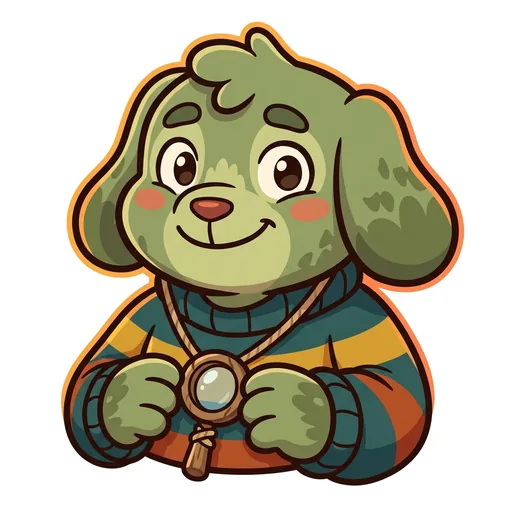 Notice Names what she sees first. CuriosityQuest
 -
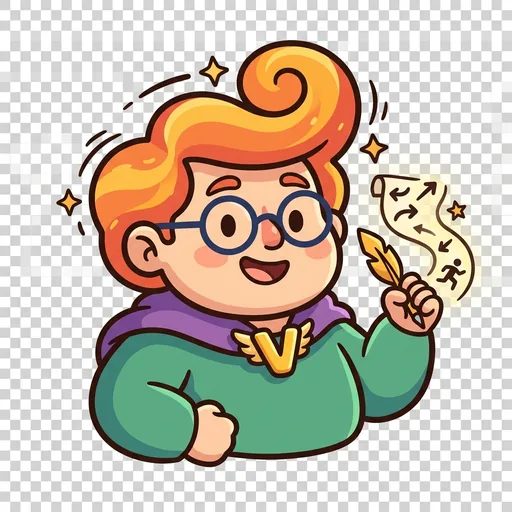 Verb Verity Is the action. GrammarForge
 -
 Master Hypotenuse Links a right triangle’s three sides. GeometryForge
 -
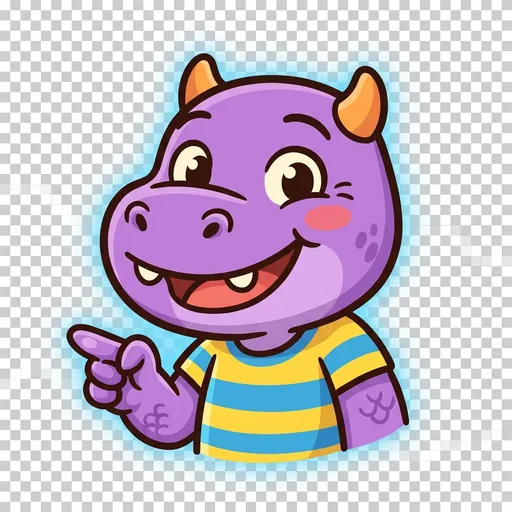 Ad Hominem Hannibal Attacks the arguer, not the argument. LogicQuest
 -
 Segwyn Slides a word into its sounds. DecodeForge
 -
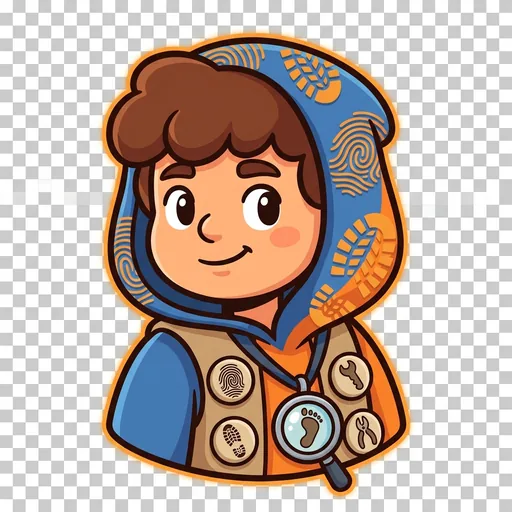 Loop Reads a fingerprint. SleuthLab
 -
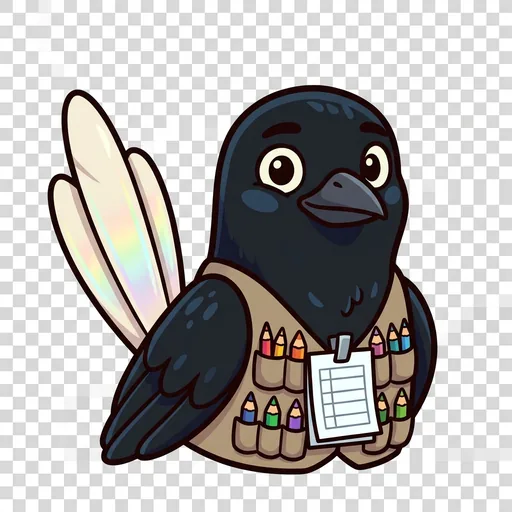 Tally Counts what happened. ChanceForge
 -
 Sing-Back Sings it back to you. MelodyMice
 -
 Hunch Reads between the lines. ReadQuest
Every portrait and audio drama here is made with AI tools directed by one person — that’s how a free, ad-free nonprofit can afford thousands of characters. Nothing here depicts a real person.
Emotion is where understanding begins
A developmental therapist who works with kids ages 9 to 14 recently read through our chapters and told us something we'd been working toward but hadn't yet named on this page: kids learn abstract ideas best when the ideas are connected to how the kid feels in the moment of meeting them.
That insight has a name. DIR/Floortime is a developmental approach to learning created in the 1980s by pediatric psychiatrist Stanley Greenspan, used by therapists and educators worldwide. Greenspan's starting point was a durable, simple idea: thinking always begins in feeling. A kid encounters an idea through their own emotional experience of it — curiosity, surprise, frustration, recognition — and that felt moment is what anchors the idea in memory long after the lesson ends.
Our chapters lean into this. Each character isn't only demonstrating a rule — they're feeling something while they demonstrate it. Sir Pinwell isn't a chess-mechanics tutorial; he's a knight who patiently holds positions in place, and that patient holding IS the pin tactic. The emotional posture and the rule arrive together. That pairing is what makes the rule stick.
We surface this at the page level too. Many of our chapter pages now end with a “Pause to think” callout — three or four short, italic prompts that invite your kid to notice their own reaction to the character. Not “what does the rule say” but “when in your life have you done what they did?” Those prompts aren't decoration. They're the moment where the abstract idea meets the kid's own feeling — which, in Greenspan's framework, is where learning actually happens.
For families, educators, or clinicians familiar with the framework: yes — this is FEDC Capacity 6 thinking (the “logical thinking and building bridges between ideas” capacity) meeting the chapter as a designed scaffold. The reflection prompts are the affect-anchor step; the recurring character carries the bridge.
The research behind it
This isn't a hunch. The approach combines well-established findings from educational and cognitive research:
- Emily Naul & Min Liu — the four-piece framework (2020). A systematic review of two decades of educational games identified four narrative features whose presence predicts whether a learning game actually teaches: a story spread across the lessons, characters whose actions ARE the rule, an empathetic cast you can remember, and a system that adapts to the learner. These are the four pieces above. Spark & Anvil apps are built to land all four together.
- Proven in the market — Story Time Chess (2018–present). This isn't only a research idea. Story Time Chess teaches young children chess through a cast of recurring characters and independently converges on the same four features — and it is used in schools and homes worldwide, showing the approach works at scale. Spark & Anvil's contribution is breadth: applying that same character-driven method across an entire library of subjects rather than a single game.
- Jerome Bruner — narrative-mode thinking (1986). Bruner showed that people have two distinct ways of making sense of the world: the logical-categorical mode (rules and definitions) and the narrative mode (stories and characters). Both teach, but formal subjects like math, grammar, and logic become much easier to grasp when bridged through narrative.
- Stanley Greenspan & Serena Wieder — emotion as the anchor of learning (DIR/Floortime, 1998). Greenspan's developmental framework, used by therapists and educators worldwide, holds that abstract reasoning is always rooted in emotional experience. Our recurring characters and our “Pause to think” prompts both operationalize this: an idea presented alongside how a character feels about it sticks; the same idea presented as a rule alone often doesn't. A practitioner working in this framework recently reviewed our chapters and named the connection between abstract concepts and emotional experience as the design choice that makes them work.
- Anna Sfard — learning as participation (1998). Sfard's influential framework reframed learning as joining a community of practitioners rather than acquiring facts. When Sir Pinwell IS the pin tactic, your kid isn't collecting a chess fact — they're participating in a community of practitioners (real and fictional) who use the move.
- Green & Brock — narrative transportation (2000). When readers are absorbed in a story, they remember more of its content, change their attitudes more, and counter-argue less. Stable, recurring characters maximize empathy and identification — the strongest single driver of that absorption.
- Jacob Habgood — intrinsic integration (2005). Habgood found that educational games work best when the story and the learning happen in the same place — when character behavior IS the rule, not a decoration around an unrelated drill.
- On-screen characters as teachers (2021–2025). A decade of studies on "pedagogical agents" (the formal term for on-screen characters in educational software) consistently finds small but reliable gains in retention, transfer, and motivation when the character has clear emotion, gesture, and a defined teaching role.
If you're a teacher, parent, or researcher who wants the full bibliography or per-app curriculum mapping, email educators@sparkanvil.org.
What we don't claim yet
Our approach is grounded in published research on how children learn — but we haven't yet run our own controlled study measuring test-score gains. The evidence is strong on the mechanism (why stories and characters help ideas stick) and honest about the rest. We're a young library, and we'd rather show you what we're building than promise an outcome we haven't measured.
The rules we build by
Fifteen design laws shape every app we make — honest dice, no streaks, a world that's a file you keep, a word that only counts once you mean it, a summary we audit against its source, and more.
See all 15 design laws →of our 480 free apps teach this way — characters that ARE the curriculum.
Last updated 2026-09-23 · numbers refresh every ship.
Where this lives today
Our Distributed-Narrative family is the first set of apps built this way from the start. Each one has its own cast where characters embody the patterns the app teaches — chess tactics, Go formations, music motifs, backgammon plays, bridge bidding partners.
Narrative-Driven Chess for Tweens — tactical patterns + piece movements as recurring character archetypes (10-character cast: tactics layer + world layer). Captain Castle rook mascot narrates a kingdom where Pin / Fork / Skewer / Discovered Attack / Double Attack / X-Ray live alongside King Pumble, King Sable, Pawn Patrol, Sienna & Bran, Trotter & Trundle, Gable & Garrett, Queen Vesper.
Master fractions, decimals, and place value through virtual manipulatives, number line challenges, and real-world problem contexts — following the research-backed Concrete-Representational-Abstract instructional model. Ages 8-12.
Build reading comprehension mastery through interactive passage analysis, evidence-based argument construction, and AI-generated comprehension challenges — with dual fiction and nonfiction tracks. Ages 9-14.
A daily-question adventure that builds curiosity into habit.
Recently shipped
We're extending this teaching style across the portfolio, app by app, wherever it fits. Recently shipped in the Logic cluster:
- LogicQuest Now live
A dozen friendly-but-flawed arguers (each making a different classic mistake) plus four logic detectives who teach kids to spot bad reasoning by example.
- EscapeForge Now live
Seven puzzle-archetype characters — one each for math, word, cipher, pattern, logic, connection, and sequence puzzles — where each character IS the kind of puzzle they stand for.
- DebateForge Now live
A five-member debate team — Build, Weigh, Steel, Reply, and Yield — who each act out one move of a good argument: making a case, weighing evidence, steelmanning the other side, responding, and conceding gracefully.
Where it doesn't fit
Not every app gets a cast. Apps where the whole point is your kid's own creativity — BeatForge for making music, SpectrumCanvas for drawing, PixelForge for pixel art, SoundSphere for sound design, SynaForge for combining the senses — stay open-ended. Imposing a recurring cast on those would get in the way of the thing that matters most there: your kid's own ideas.
We also keep the casts small, diverse, and reviewed for representation before any character ships. A storytelling approach amplifies whoever's on stage, so we're careful about who we put there.
See it for yourself.
Spark & Anvil is a nonprofit; our 501(c)(3) application is pending.
For parents
You don't need to know any of this for the apps to work. Your kid just plays — they'll meet the characters naturally, follow their stories, and pick up the patterns without anyone telling them they're learning. The method is built in. That's the point.