The Paper Door · Reader · ages 6-8
Listen along
Loading audio…
Read by an AI-generated voice. The words on this page are the transcript.
1. A Spark in the Print Shop
The hammer rang once. A spark jumped off the anvil and did not go out. It waited. They followed.
Lan saw it first, because Lan always went first. She was seven, and she ran across the Green with her shoelaces flapping. Inkling came behind her at a walk. Inkling was eight, and she liked to look at things properly before she ran at them.
The spark hopped over the grass like a tiny orange frog. It went past the mending shed and the small museum. It stopped at the door of the print shop and waited again.
"It wants to go in," said Lan.
"It wants us to go in," said Inkling. "That's different."
The print shop smelled of ink and old wood. There was a long table down the middle, with stacks of paper at one end. The spark floated over the table and settled next to a single square of paper. The square was orange on one side and cream on the other.
The square of paper sat up. It did not have a face, exactly, but it had a way of leaning that made you feel it was looking at you.
"Fold me, I won't mind," said Kami.
Lan and Inkling had met Kami before. Kami was a square of paper who became something new with every fold. Kami had been a hat, a boat and a very wobbly frog.
"What should we make?" asked Lan.
"Every fold makes me something new," said Kami. "Start with something you know. Start with a cup."
They knew the cup. Inkling turned Kami so a corner pointed at her. Lan brought the bottom corner up to the top corner. They folded the side corners across, one and then the other, and folded the top flaps down, one in front and one behind.
The last crease went flat, and the paper opened like a door.
2. A Yard With a Pine Tree
It was not a door you could knock on. It was more like the cup opening out, wider and wider, until the inside of it was a place.
Lan stepped through. Inkling stepped through behind her, still holding Kami's corner.
They were standing in a quiet yard. The ground was swept earth, smooth and pale. A wooden building with a curved roof stood at one end, and a pine tree leaned over a stone well. Somewhere a bell made one low sound and stopped.
The well had a wooden lid, grey with age, and one board in it was newer than the others, where somebody had mended it long before. Beside that board, small enough to miss, a tiny hammer had been scratched into the wood.
"Where are we?" whispered Lan.
Inkling looked at everything. The roof had wide, dark beams. Nobody wore trainers. A woman walked past carrying a bucket on a pole across her shoulders.
"A long time ago," said Inkling. "I think we're in Japan."
Kami crackled softly. "Kuwana," said Kami. "A town by the sea. The year is 1797."
On the steps of the building sat a monk in a plain robe. His head was shaved and his hands were very quick. Beside him on the step lay a pile of paper, and on the step below him stood a row of paper cranes.
They were not ordinary cranes. Some stood alone, but some were joined together. Two cranes touched at the tips of their wings. Three cranes made a little line. One sheet held a whole circle of cranes flying round and round, like a dance that could never come apart.
"How did he do that?" breathed Lan. "They're all one piece!"
The monk did not look up. He was folding another one.
Lan crept closer to watch. Inkling crept closer too, because watching was what she liked best.
The monk's fingers moved without hurrying, but they never stopped. He took a sheet, turned it, folded a corner. He ran his thumbnail along the crease, once, firmly. He turned the paper again. Every fold seemed to know where the next one would go. It was like watching someone walk down stairs they had walked down a thousand times.
Beside him lay a small knife with a wooden handle. Every now and then he picked it up and made one short, careful cut into a sheet. Then he put it down again and went on folding. He never cut more than he needed. Lan noticed that. She noticed that the cuts were always short, and that they always stopped.
"He cuts, but not much," she whispered.
"Every cut has a reason," Inkling whispered back. "I think. Or else he would just use lots of little squares."
A cloud moved, and sunlight fell across the step. All the cranes threw small shadows, and the joined ones threw joined shadows, like birds that were holding hands.
On a low table beside the monk there was a book, lying open. Its pages showed pictures of cranes, joined in all sorts of ways, with little poems written beside them. Inkling longed to look at it properly, but she did not dare touch a stranger's book. She looked at it from where she stood, and tried to remember everything.
3. Sayo's Long Sheet
A girl about Lan's age stood at the bottom of the steps. She had a blue cloth tied round her hair, and she was holding a long sheet of paper very carefully, the way you hold something you are not allowed to spoil.
"Hello," said Lan, who was never shy for long. "I'm Lan. This is Inkling. That's Kami."
The girl looked at the talking paper with very round eyes, and then decided not to mind.
"I'm Sayo," she said. "I want to fold two cranes that hold wings. For my grandmother."
"Why holding wings?" asked Inkling.
"She says joined cranes mean two people who stay together," said Sayo. "My grandfather is away at sea for the winter. She misses him. I want to give her two cranes that can't come apart."
She held up her sheet. It was a rectangle, twice as long as it was wide.
"The monk folds them," said Sayo. "But he only folds. He says I have to work it out with my own hands. I've been looking at it all morning."
The monk turned over another sheet and went on folding. He did not say anything at all.
4. The Scissors
Lan looked at the long sheet. She looked at the cranes on the step. Then she had an idea, and her ideas came out of her mouth before they had finished arriving.
"Easy!" she said. "A crane needs a square. Two cranes need two squares. This is two squares long. We cut it down the middle, and we've got two squares!"
There was a pair of iron scissors on the step, beside the monk's paper. Lan grabbed them. She opened them wide and put the long sheet between the blades.
"Not all the way through, please!" said Kami.
Lan froze.
"Leave me a bridge," said Kami. Its voice was crackly and small, but very clear. "If you cut me in two, I'm two pieces of paper. Two pieces can make two cranes. But two pieces can never hold wings. I'm still one piece of paper. Let me stay one."
Lan looked at the scissors. She looked at Sayo, who had gone pale. She thought about two cranes, separate, lying in the grandmother's hand. They would not be holding anything.
Lan's ears went hot. She put the scissors down very carefully on the step.
"I said easy before I checked," she said quietly. "Sorry, Sayo."
"You didn't cut it," said Sayo. "That's what counts."
5. Two Birds Over the Water
"Can I show you something first?" asked Sayo. "Before we fold. I want you to see why."
She led them out through the temple gate and down a narrow lane between wooden houses. Fishing nets hung drying on poles. A cat watched them from a doorstep and did not move at all. The lane sloped down, and then, all at once, there was the sea.
It was grey and wide and calm. Little boats lay pulled up on the stones. Further out, bigger boats with square sails were going somewhere far away. The wind smelled of salt and seaweed.
"That's where my grandfather's boat went," said Sayo, pointing out past the end of the harbour wall. "He carries rice up the coast. He goes every winter. He always comes back in spring."
"Always?" asked Lan.
"Always," said Sayo. "But Grandmother still stands on the wall in the evenings and looks."
Inkling was looking up instead of out. "Look," she said softly.
Two big white birds were flying low over the water. Their necks were long and straight. Their legs trailed behind them like ribbons. They flew close together, so close that their wing tips almost touched, rising and falling at exactly the same time.
"Cranes," said Sayo. "Real ones. People here say cranes keep the same partner all their lives. That's why joined paper cranes mean staying together."
The three of them watched until the birds were two white dots, and then one dot, and then nothing but sky.
Kami rustled in Inkling's hand. "Paper can't fly," said Kami. "But paper can hold on."
Lan scuffed her shoe on the harbour stones. She was thinking about the scissors, and how close she had come. She was glad, very glad, that Kami had spoken in time.
"Come on," she said. "Let's go and read that drawing properly."
They climbed back up the lane, past the cat, which still had not moved, and in through the temple gate.
6. The Drawing on the Wall
Inside the doorway, on the wooden wall, hung a sheet of paper with a drawing on it. It was one of the monk's drawings. It showed a long rectangle, crossed with lines.
Someone stepped out of the shadow beside it. It was Mark, who drew every fold line in the world and liked nothing better than a good drawing. Mark had a pencil behind one ear and a ruler in his hand.
"Read the drawing before your hands move," said Mark. "Every line on the drawing has a job."
They all crowded round. Kami leaned in too.
"Dashes mean fold," said Mark, and he traced a dashed line with his finger. "These are the creases. A solid line means cut." He touched one solid line across the middle of the rectangle. "And now the important bit. Look where the line stops."
The solid line ran across the middle of the long sheet, from one edge almost all the way to the other. Then, just before the far edge, it stopped. There was a tiny gap with no line at all.
"It doesn't go all the way!" said Lan.
"So you cut most of the way across," said Inkling slowly, "and leave a little bit. The little bit is the bridge."
"The bridge," said Kami happily. "That's me holding hands with myself."
Mark measured the drawing with his ruler. "Long side two, short side one," he said. "Two times one is two. One sheet makes two squares, and the bridge keeps them joined at one corner."
The drawing had dashes too, crossing each square. Inkling counted them. "Each square has the same dashes," she said. "So each square gets folded the same way."
Sayo took the scissors herself. She cut along the line, slowly, and stopped exactly where the line stopped.
Now there were two squares, side by side, joined at the corner by a strip no wider than a fingernail.
7. Corner to Corner
"Corners first, always," said Cornelia.
Cornelia was very particular about corners. She bustled up beside Sayo and pointed at the first square. "Make the corners meet exactly. Not near enough. Exactly."
Sayo brought the top corner down to the bottom corner. The square became a triangle.
"Point to point, then hold," said Cornelia. "Now the other two corners."
They folded the triangle in half again, corner to corner. Now it was a smaller triangle. Inkling held it up and looked at the edge. She could see the layers.
"Four layers," she said. "Fold once, two layers. Fold again, four."
"And each layer is a quarter of the square," said Mark, who liked numbers as much as lines.
Sayo did the same to the second square, careful of the bridge. Two small triangles lay on the step, joined at their corners.
Inkling clapped. "It's a crane!" she said.
There was a pause.
"It's a triangle," said Lan. "Cranes have necks. And wings. And it would be quite hard to fly as a triangle."
Inkling laughed at herself. She did that sometimes. She named things too soon, before they had finished becoming what they were going to be.
"It isn't a crane yet," she said. "It's on the way."
8. The Squash That Wouldn't Sit
The next fold had a funny name. On the monk's drawing it was only lines. But Kami knew it.
"It's a squash," said Kami. "You lift my top flap so it stands straight up. You open it from the bottom, like a little tent. Then you press it flat into a square, with its middle fold on the middle line."
Sayo lifted the flap of the first triangle. She opened it with one finger and pressed it down. It flattened into a neat little square. She turned the paper over and did the same on the back.
"There," said Cornelia, delighted. "A square base."
The second square did not go so well. Sayo lifted the flap and opened it, but the paper twisted. One side bulged. When she pressed, a corner stuck out the wrong way. She pressed harder. It bulged worse.
"It won't sit," said Sayo. Her voice wobbled. "I've ruined it. And it's joined to the good one."
Lan reached for the twisted flap to pull it straight.
"Wait," said Inkling. "If you pull, the bridge could tear."
Nobody said anything for a moment. The bell in the temple made its low sound again.
Then someone very cheerful came bouncing along the step. It was Crinkle, who loved mistakes almost as much as other people love cake.
"Crooked is just a first go," said Crinkle. "We can fix this one. Open it up gently."
Sayo opened the twisted flap, slowly, slowly, all the way back to the little triangle. The paper looked tired. It was covered in lines that went nowhere.
"Smooth it out and try again," said Crinkle. "Look. The crease remembers."
Inkling looked closely. Among all the messy lines, the first two folds were still there, sharp and straight. Corner to corner, and corner to corner again. They were like a path through long grass.
"The good creases are still there," she said. "We just have to follow them."
Sayo lifted the flap again. This time she opened it so the middle fold sat right on the middle line, the way Kami had said. She pressed down. It slid flat, all at once, like a door closing softly.
"Oh," said Sayo. "It just goes, when it's lined up."
Crinkle did a little bounce of joy. "See? First go, second go. That's all mistakes are."
9. Press, and Press Again
Now came the long part. Kami called it the petal fold. On the monk's drawing it was a little bundle of lines, very close together.
"First, fold the bottom edges to the middle," said Kami. "Then the top down. Then undo all three. You only need the creases."
Sayo did it, and unfolded it, and the paper wore a little kite of lines.
"Now lift the bottom corner of the top layer," said Kami, "up along the line across the middle. As it rises, let both sides fold in along their creases."
This was hard. The sides wanted to go anywhere but in. Lan held one side. Inkling held the other. Sayo lifted the corner.
That was when Presso arrived. Presso was big and slow and calm, with thumbs like warm stones.
"Hold it still," said Presso. Everyone held it still. "Now press it flat."
Presso showed Sayo how to run her thumbnail along each new fold, slowly, from the middle out. "Press slowly, press firmly," said Presso. "A fold you press is a fold that stays."
The sides came in. The edges met in the middle. The flap lay down long and thin, pointing up. They turned the paper over and did it all again on the back.
Then they did the whole thing again on the second square, which went better, because now their hands knew the way.
At last there were two long diamond shapes on the step. They were split at the bottom into two thin legs. They were joined at one corner by the tiny bridge.
Inkling looked from one to the other. She looked at the cranes on the step. She picked up one of the monk's finished cranes and, very gently, looked at it from underneath.
"They're the same," she said. "Every crane in this whole yard started as this shape. The circle of cranes. The line of three. The ones holding wings. They all start here."
"It's not a crane yet," said Lan, grinning, because she knew what Inkling would say.
"No," said Inkling. "It's the base. It isn't anything yet, and it could be lots of things. That's the best part."
The monk looked up then, for the first time. He looked at the two diamond shapes and nodded, just once. Then he went back to his folding.
10. Necks, Tails, Heads and Wings
"Read the drawing before your hands move," said Mark again. But this time he did not read it out. He stepped back and held the monk's drawing up for Inkling. The last marks were tiny arrows, pushing the thin legs up.
"Those are the neck and the tail," said Inkling slowly. "You open the thin point a little and push it up inside itself, between the wings. And this little push at the top of the neck makes the head." Mark nodded, very pleased.
Sayo opened the first thin leg and pushed it up. It folded inside itself along a new crease and stood up, a long neck. She did the other leg. A tail. Then she pushed the tip of the neck down, just a little. A head.
"It's a crane," said Inkling. Everybody looked at her. "Now it really is."
Sayo folded the second crane. When she pulled the wings gently apart, the body puffed out a little, the way a real bird fluffs its feathers.
Two cranes stood on the step. Their wing tips touched where the bridge joined them. They did not come apart. They could not come apart.
Sayo held them up to the light. The sun came through the paper and made the wings glow.
"Grandmother will love them," she said. "They're holding on."
She bowed to the monk, who bowed back, and she ran across the yard with the cranes held high, like a kite that did not need a string.
Lan and Inkling followed her as far as the gate. Down the lane, past the cat, they could see a small house with a blue cloth hanging in the doorway. An old woman stood outside it, shading her eyes and looking towards the sea.
Sayo ran to her and held out the cranes. The grandmother bent down. She looked at them for a long time. Then she touched the place where the wing tips joined, very gently, with one finger.
They could not hear what she said. But they saw her smile, and they saw her put the cranes inside her sleeve, close to her heart, where they would be safe until spring.
"She knows they can't come apart," said Lan.
"Because of the bridge," said Inkling. "And because nobody cut it."
11. Home Through a Square
The yard was quiet again. The bell rang once more.
"How do we get home?" asked Lan.
Kami crackled. "Fold me all the way, and the paper opens," said Kami. "Unfold me flat, and you are home."
Lan found a plain square in her pocket that she did not remember putting there. It had a little cup shape creased into it. She and Inkling unfolded it together, corner by corner, until it lay perfectly flat.
They unfolded the paper flat, and the door closed behind them.
They were standing at the long table in the print shop. The paper stacks were exactly where they had been. Kami lay on the table, a plain square again.
The spark dimmed to a warm dot and settled back on the anvil. The Green was just the Green again.
Back on the Green
The next day, the print shop was making stars for a window. Lan picked up the scissors, ready to cut fast.
She put them down again. She looked at the drawing first. She found the solid line, and she found where it stopped. Then she cut, and stopped exactly there.
When the stars were hung in the window, the light came through them and threw star shadows on the floor. Lan thought of the cranes on the temple step, and their joined shadows, and Sayo running down the lane.
Inkling held up a small folded square with a kite of creases on it. "Guess what this is," she said.
"A crane?" said Lan.
"Not yet," said Inkling. "It's the base. It could still be a crane, or a frog, or a flower. You decide."
Tell the story back to someone. Why did the cut have to stop, and what did both cranes start as?
Saved. The next chapter will be here whenever you come back.
Who you met
-
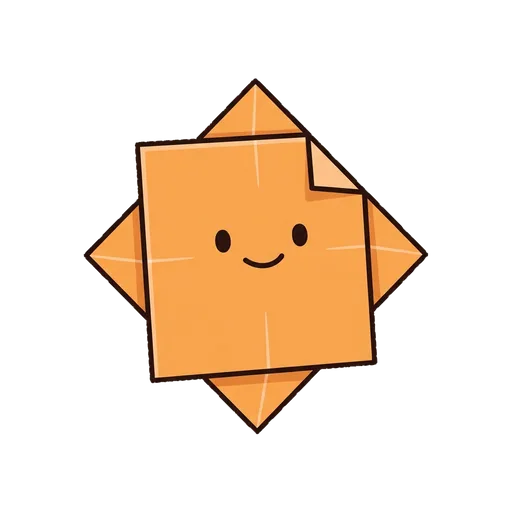 Kami Paper becomes a new shape with every fold, and it only cuts where it is told from CreaseTots
-
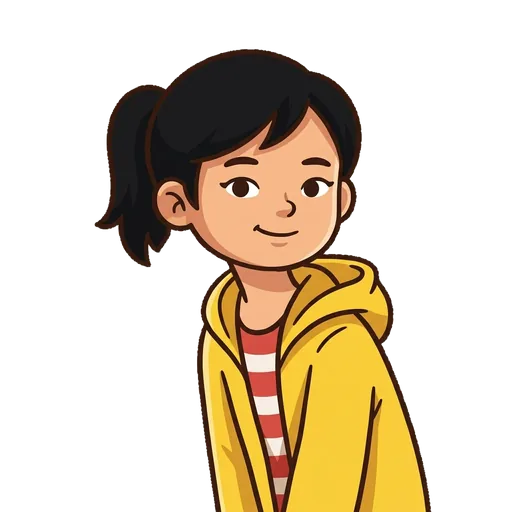 Lan a child of the Green Goes first; makes a friend in a minute
-
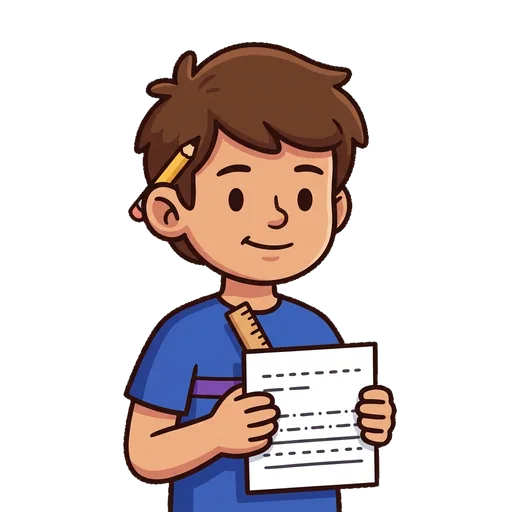 Mark The lines tell you what to do — dashes fold, solid lines cut from CreasePals
-
 Cornelia Bring one corner to meet the other corner, exactly from CreaseTots
-
 Crinkle Smooth a crooked fold out and try again; the crease remembers from CreaseTots
-
 Presso Hold the paper still and press the fold flat so it stays from CreaseTots
-
 Inkling a child of the Green Names what she notices
Every recurring character has a short tune, so you can tell who is on stage before a word is said. The tunes play only when you tap, and the Reading Access sound switch turns them off.
The Honest Page
Which parts of this story are true, stretched or made up?
True
- A book of joined cranes, Hiden Senbazuru Orikata, was printed in Kyoto in 1797. It is the oldest known book of folding for fun. Source
- Its cranes are folded from one sheet that is cut part-way, so they stay joined. They are still folded in Kuwana today. Source
- Two cranes joined at the wing can be folded from a sheet twice as long as it is wide, with one short cut. Source
- Folding a square corner to corner twice makes four layers, each a quarter of the paper.
- Most historians say the cranes were designed by a monk in Kuwana called Rokoan. One museum copy names a different man, so not everyone agrees. Source
Stretched
- We put a copy of the book beside the monk in the same year it was printed. What we simplified: Nobody knows whether he ever held one; we wanted the children to see the book where its cranes began.
- The monk in our story folds quietly and never says his name. What we simplified: We kept the real person in the background, so the children and the cast solve the problem themselves.
Made up
- Sayo, her grandmother, and the paper door are made up. Kami, Mark, Cornelia, Presso and Crinkle are our own characters.