Two Cranes, One Sheet
The idea: bases — the few first folds that open onto many models.
Read it
One story, three ways: Sprout for a new reader, Grower in short chapters, Reader as a full chapter book. Same plot, same ending.
Who is in this book
-
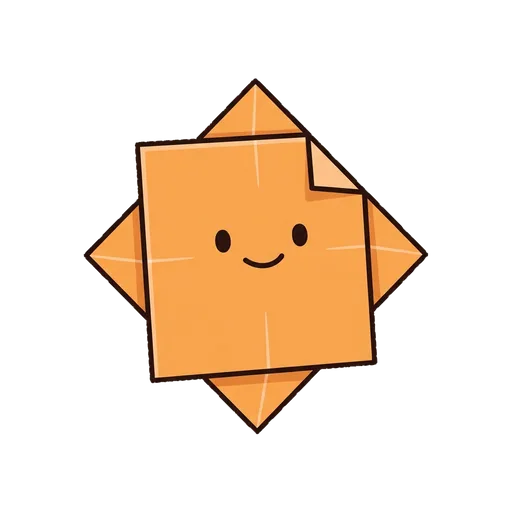 Kami Paper becomes a new shape with every fold, and it only cuts where it is told from CreaseTots
-
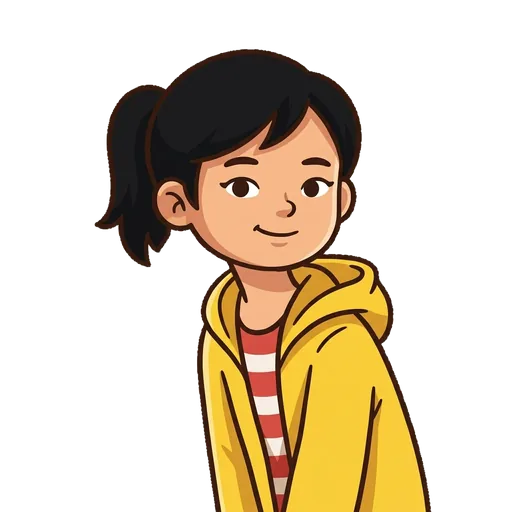 Lan a child of the Green Goes first; makes a friend in a minute
-
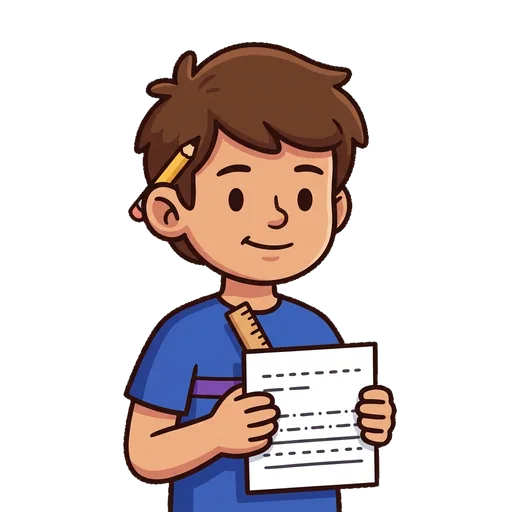 Mark The lines tell you what to do — dashes fold, solid lines cut from CreasePals
-
 Cornelia Bring one corner to meet the other corner, exactly from CreaseTots
-
 Crinkle Smooth a crooked fold out and try again; the crease remembers from CreaseTots
-
 Presso Hold the paper still and press the fold flat so it stays from CreaseTots
-
 Inkling a child of the Green Names what she notices
Every recurring character has a short tune, so you can tell who is on stage before a word is said. The tunes play only when you tap, and the Reading Access sound switch turns them off.
The Honest Page
Which parts of this story are true, stretched or made up?
True
- A book of joined cranes, Hiden Senbazuru Orikata, was printed in Kyoto in 1797. It is the oldest known book of folding for fun. Source
- Its cranes are folded from one sheet that is cut part-way, so they stay joined. They are still folded in Kuwana today. Source
- Two cranes joined at the wing can be folded from a sheet twice as long as it is wide, with one short cut. Source
- Folding a square corner to corner twice makes four layers, each a quarter of the paper.
- Most historians say the cranes were designed by a monk in Kuwana called Rokoan. One museum copy names a different man, so not everyone agrees. Source
Stretched
- We put a copy of the book beside the monk in the same year it was printed. What we simplified: Nobody knows whether he ever held one; we wanted the children to see the book where its cranes began.
- The monk in our story folds quietly and never says his name. What we simplified: We kept the real person in the background, so the children and the cast solve the problem themselves.
Made up
- Sayo, her grandmother, and the paper door are made up. Kami, Mark, Cornelia, Presso and Crinkle are our own characters.
Tell it back
Tell the story in your own words: who was there, what went wrong, and what they found out. Then a small folded square base the children carry home goes on your belt.
On your belt: a small folded square base the children carry home.
Your belt lives on this device. Nothing is sent anywhere.
Ring the hammer for someone
Pick this book for someone younger. The link carries only the book, and it will wait for them on the Green.