The Day Before · Reader · ages 6-8
Listen along
Loading audio…
Read by an AI-generated voice. The words on this page are the transcript.
1. The Flattest Place in the World
The hammer rang once. A spark jumped off the anvil and did not go out. It waited. They followed.
There were two letters on the side of the anvil now. A D, from the sand road and the sledge. And beside it a small round O, from the marsh and the houses on legs. Lan had shown them to Inkling so many times that Inkling had started to say "Yes, I know" before Lan even pointed.
"Two more," said Lan. "I counted the spaces. There's room for two more."
"You can't know that," said Inkling.
"I promise," said Lan, and then she laughed at herself, because she had done it again.
The spark took them to the sunniest corner of the Green, where the grass was dry and yellow at the tips and the bees were busy in the clover. Then it simply waited there.
Warm wind blew the Green away, and the ground under their feet was somewhere else, the day before.
The heat came first. It was a dry heat, the kind that makes the inside of your nose prickle. Then the light, very bright and white. Then the flatness.
Lan had never seen anywhere so flat. There were no hills. There were no mountains. There was not even a bump. The land went out and out in every direction, brown and green and gold, as flat as a table, until it met the sky in a long straight line. Far away, a few palm trees stood up like feather dusters. Even further away, there was a smudge that might have been a town, with something tall and stepped in the middle of it, like a staircase for giants.
"Where are we?" whispered Lan.
"Somewhere between two rivers, I think," said Inkling. "I can't see them. But everything's so green, there must be water."
There was. Right in front of them was a garden, and below the garden ran a canal. It was dead straight, as straight as a ruler, and full of slow brown water, and it went off into the distance in both directions. Other canals branched off it, smaller and smaller, like the veins on a leaf, carrying water out across the whole flat land. Every field along them was green. Every field away from them was dust.
The garden had been made with great care. Young date palms stood in a line along the top, each with a little ring of earth around it to hold water. Between them grew onions in tidy rows, and beans climbing up sticks, and something with big flat leaves that Lan did not recognise. Little channels had been dug between the rows, to carry water to every plant.
But the little channels were empty and dry. And the bank between the garden and the canal was steep, and high, right up to Lan's middle, and the water lay low at the bottom of it. The water was all down at the bottom. The plants were all up at the top.
A girl about Lan's age was climbing the bank. She had a big clay jar on her shoulder, full of water, and she was climbing very carefully, one foot at a time, with her free hand grabbing at the tufts of grass. Near the top, her foot slipped. Water slopped out of the jar and ran down her arm and down the bank.
She saw them, and stopped, and stared. They were in their own clothes, trainers and jumpers, and Lan's jumper was far too hot. But the girl did not seem to mind. She only looked worried.
"Are you from the town?" she said. "Have you come to help?"
"What are you doing?" said Inkling.
The girl put her jar down at the top of the bank and poured it carefully into the ring of earth around a young palm. It soaked away almost at once. Inkling saw that the jar had been broken once and mended. A crack ran round its neck, sealed with dark pitch, and beside the crack somebody had scratched a tiny hammer into the clay.
"Watering," she said. "All of it. Tonight." She pointed out across the flat land, away from the canal, to where the sky was a strange pale yellow colour. "The hot wind is coming. My grandmother says so, and she is never wrong. Tomorrow it will blow from the desert all day, hot and dry. If the young plants are dry when it comes, it will burn them. The palms are only two summers old. If they die, we have to wait years for new ones."
"All of it?" said Lan, looking at the long rows.
"All of it," said the girl. "Before the wind."
2. The Buzzing Machine
Lan knew. She had seen it. She was almost certain she had seen it, in a museum, on a school trip, behind glass. A long pole on a post, with a bucket on one end. She had read the card underneath it. It had a funny name. She could nearly remember the name.
"I know a machine for this!" said Lan. "It's brilliant. I saw it in a museum. I promise, you just need a long pole on a..."
The words came out as a buzz.
Bzzz. Bzzz, bzzz. Like a bee bumping against a window.
The girl looked at her, puzzled, and then a little worried, as if Lan might have sunstroke.
Lan shut her mouth tight.
"The door," whispered Inkling, very quietly. "You can't bring the answer. You can only bring the question."
Lan went pink, and then pinker. Third time, she thought. The sand road, the marsh, and now this. Third time I've promised before I've even counted. Third time I've buzzed.
"Never mind," she said to the girl. "Sorry. We'll help. What can we carry?"
3. Up the Bank
There were three more jars by the canal, waiting. Lan took one and Inkling took one, and the girl took her own again, and they went down the bank to the water.
Going down was easy. They slid most of the way. At the bottom they knelt on a flat stone at the edge of the canal and pushed the jars under the water until they glugged full.
Then they had to go back up.
A full jar of water was much, much heavier than Lan expected. She could not get it onto her shoulder the way the girl did. She had to hug it to her tummy with both arms, which meant she had no hands to grab the grass with. The bank was steep and the mud on it was wet from all the spilled water, and her trainers slid. She took three steps up and slid two steps back. Water slopped out over the top of the jar and soaked her jumper.
By the time she reached the top, the jar was only half full.
She poured it round a bean plant. The dry earth drank it up in one gulp.
"How many plants are there?" said Lan.
The girl did not answer. She was already going back down the bank.
They went down and up, down and up. The sun climbed higher and the heat climbed with it. Inkling's face went red. Lan's arms began to shake. Every jar was half spilled by the top. Every plant drank its half jar in one gulp and looked just as thirsty as before.
By noon, they had watered one row of onions. One. There were nine more rows, and the beans, and the big flat-leaved plants, and all the palms.
They sat down in the shade of a palm tree, panting. The girl brought them a bowl of water to drink, and they drank it all, and Lan felt guilty, because she knew how far it had come up the bank.
4. What Is Heavy?
Inkling did not lie on her tummy this time, though Lan half expected her to. She sat with her knees up, looking at the bank, and the canal at the bottom, and the dry garden at the top. Lan could tell she was asking herself questions.
"What is heavy?" said Inkling, out loud.
"The jars," said Lan.
"No," said Inkling. "The jars are easy when they're empty. It's the water that's heavy." She pointed. "And where does the water have to go?"
Lan thought. "Into the garden."
"But how far?" said Inkling. "It's not far along. The garden's right there. It only has to go UP. The height of the bank. That's all. Up."
Lan looked at the bank again. Inkling was right. If the garden had been at the same height as the canal, they could have just let the water run into the little channels, the way it ran along all the other canals across the flat land. The only hard part was the up.
"So the hard part is lifting," said Lan slowly.
"I think so," said Inkling. "I'm still looking."
5. The Pole
Just then, the girl's big brother came down from the house. He was older, tall and thin, with a long wooden pole on his shoulder and a strong stick in his hand that forked at the top into a Y, like a giant catapult.
He said something to his sister, and she answered, and he looked at Lan and Inkling, and then at the one watered row, and shook his head.
"He says jars are too slow," said the girl. "He says he will try something."
The brother pushed the forked stick deep into the earth at the very top of the bank, so that the Y stood up out of the ground about as high as his chest. Then he lifted the long pole and laid it across the fork, so that it balanced there, like a seesaw. One end of the pole stuck out over the canal. The other end stuck out over the garden.
On the end over the canal, he tied a bucket. It was made of leather, sewn together into a sort of deep bag, with a wooden ring at the top to keep it open, and a rope to tie it on.
"Push your end down," he said, and his sister explained. "The bucket goes down into the water when you let your end up. Then you push your end down, and the bucket comes up."
He showed them. He let his end of the pole rise, and the other end dipped, and the leather bucket went down into the canal and filled with a glug. Then he pushed his end down, hard, with both hands.
The bucket swung up out of the canal, full and dripping, all the way up past the top of the bank. He turned the pole on the fork a little, and tipped the bucket, and the water poured out into the little channel at the end of the onion rows and went running away between them.
The girl clapped.
"My turn," said Lan.
She let her end of the pole rise. The bucket dipped and filled. Then she pushed her end down.
It did not go down. It was so heavy. She pushed with all her might and leaned her whole weight on it, and instead of the bucket coming up, Lan's feet came off the ground. She hung on the end of the pole with her trainers kicking in the air, and the full bucket stayed down in the canal.
"Oh," said Lan, and let go, and sat down in the dust.
The brother laughed, kindly. He was much bigger than her. He could push it down. But Lan could see, now that she was looking, that it was hard work even for him. His arms were shaking a little by the time the bucket came up. You had to push the pole as hard as the bucket was heavy, every single time.
He did ten buckets, and then he rubbed his arms, and said something, and went back up to the house. He had his own work to do before the wind.
6. Near and Far
The pole was still there on its fork. Inkling went and stood beside it.
She did not try to push it down all at once. She put her hands on it in different places, and pushed a little in each one, and felt.
First she pushed right next to the fork, where the pole lay across the Y. She leaned on it with both hands. It did not move at all. It was like pushing a wall.
Then she moved her hands a bit further along, away from the fork. She pushed again. It moved, just a tiny bit.
Then she moved her hands right to the very end of the pole, as far from the fork as she could reach. She pushed. And the bucket end lifted, slowly, out of the water, and she had to let go before it came all the way up, but it moved.
"Lan," she said. "Come and feel this."
Lan came. Inkling showed her. Near the fork, the pole would not budge. At the end, it went down, still heavy, but it went.
"It's the same pole," said Lan. "And the same bucket."
"But it's not the same push," said Inkling. "I noticed something. Near the post, it's heavy. At the very end, far away, it's light. Lighter, anyway." She tried it once more, near and then far, just to be sure.
"I can name it now," said Inkling. "The further from the post you push, the less push you need."
The girl had been watching. She came and tried it too. Near, heavy. Far, lighter. She looked at Inkling with her eyebrows raised, impressed.
"But it's still too heavy," she said. "Even at the end. Even for my brother. And I can't do it all night."
7. The Warm Wind
They tried to use the pole anyway. Lan and Inkling pushed together at the very end, both hanging on it, and the girl helped, and the three of them could just about get the bucket up. Then they had to rest. Then another bucket. Then rest. It was faster than the jars, but not by much.
By late afternoon the sun was lower and redder. And the air had changed. Lan noticed it on her face first, a puff of breeze that should have been cool and was not. It was warm, like the air that comes out when you open an oven door. Then another puff.
"It's starting," said the girl. She looked out at the strange yellow sky. "It's early."
Half the garden was still dry. The palms at the far end were drooping in the heat, their fronds hanging down like tired hands.
The brother did not come back. The grandmother was at the house, too old to push a pole. The girl's arms were shaking, and so were Lan's, and so were Inkling's.
Lan sat down in the shade of the nearest palm and put her head on her knees.
"It's hopeless," she said. "We can't push it. Nobody can push it all night. Not even your brother. And the plants are going to burn, and it's my fault, because all I've done is buzz."
The girl sat down beside her and did not say anything. Inkling sat on the other side.
The warm wind puffed again, and the dry leaves of the beans rattled.
8. The Question
Lan looked at the pole on its fork. The long side over the garden. The short side over the canal. No, she thought. Not short. Both sides were about the same. The fork was in the middle.
She thought about what Inkling had found. Near the post, heavy. Far from the post, light. The further from the post you push, the less push you need.
Then she remembered the door. She could not bring the answer. The buzzing word was still sitting in her mouth, waiting to make a fool of her. But nobody had ever stopped her bringing a question.
She lifted her head.
"Pushing far from the post is easier," said Lan. "Inkling found that. So what if we were even further away? Could the post stand nearer the bucket? Then the stick on our side would be really, really long."
The girl stared at her.
Then she stared at the pole.
Then she jumped up and ran to the fork, and Lan could see her thinking, very fast, the way Lan's own thoughts went when she was racing. She grabbed the forked stick and wiggled it, and pulled it out of the ground. She lifted the pole off. She walked along the top of the bank, measuring with her eyes, and pushed the fork back into the earth much closer to the edge, much closer to the canal.
Then she laid the pole back across it. But this time, she did not put the middle of the pole on the fork. She slid the pole along until only a short piece stuck out over the water, just long enough for the bucket to reach down into the canal. All the rest of the pole stuck out the other way, long and long, over the garden.
Lan counted along the pole with her feet. From the fork to the bucket, one step. From the fork to the end on the garden side, two steps. Now that end stuck right up in the air, above their heads, so the girl tied a rope to it and let the rope hang down.
"Push," said the girl.
Lan let the long end rise. The bucket dipped into the canal and filled. Then she took hold of the rope and pulled the long end down.
It came down.
It came down without lifting her off her feet. It was still heavy, but it was half as heavy as before. She did not have to hang on it with her trainers kicking. She just pulled, hand over hand, and the full leather bucket rose up out of the canal and over the top of the bank, dripping.
Lan was so surprised she nearly let go.
"Again!" said Inkling.
They did it again. And again. The girl took a turn, and did it on her own, and laughed out loud in a way that sounded as if she had not laughed all day.
Then she stopped, and looked at the long end of the pole for a moment, and had her own idea. Nobody asked her a question. Nobody gave her a hint. She ran down to the edge of the canal, where the mud was thick, and dug out a great lump of it with her hands, and slapped it onto a flat stone in the sun. She found an old one that was already dry and hard, a big brown lump, and tied it with rope onto the end of the long side of the pole.
Now the weight of the mud pushed the long end down all by itself. The bucket rose up on its own. All she had to do was pull the empty bucket down into the canal by its own rope, and let go, and the mud lifted it full, and she steered the water into the channels.
"It does the pushing for me," she said, amazed.
Lan opened her mouth to say that she had seen exactly that in the museum, with a lump of something on the end. Then she closed it again. She did not need to buzz. The girl had worked it out herself.
9. By Moonrise
They worked until the moon came up. It was a big orange moon, low over the flat land, and the warm wind blew steadily now, rattling the palm fronds. But it did not matter any more.
Bucket after bucket swung up the bank. Water ran along the little channels between the onions and the beans, glinting in the moonlight, and soaked into the rings of earth around every young palm. The plants that had been drooping lifted their leaves again.
By the time the moon was high, every row in the garden was dark and wet.
The girl's grandmother came down from the house with a little clay lamp. She walked very slowly along the rows, looking at every plant. Then she came to the bank and looked at the pole on its fork, with the bucket at the short end and the lump of mud at the long end. She looked at it for a long time.
Then she laughed, a dry, delighted laugh, and said something to the girl, and patted her cheek.
"She says why did nobody think of it before," said the girl, grinning.
"Somebody did," said Inkling. "You did."
The grandmother sat down on the bank with her lamp, and the girl showed her how it worked, and the grandmother tried it herself, with one finger on the rope, and laughed again.
Nobody would ever write down the girl's name. Nobody would write down that her grandmother laughed, or that the hot wind came early that year. But the garden was wet, and the young palms would grow up tall.
Warm wind blew the day before away, and the grass under their feet was the Green.
The bees were still busy in the clover. Lan's jumper was dry, as if it had never been soaked. But her arms still ached.
She went straight to the anvil. On its side, beside the D and the round O, there was another letter, scratched just as small. A second O.
"Long," said Inkling. "For the long stick."
"D, O, O," said Lan. She frowned at the space after it. "One more."
The spark dimmed to a warm dot and settled back on the anvil. The Green was just the Green again.
Back on the Green
At home, Lan's little brother Tí was trying to get the lid off a tin of paint, because he wanted to paint his toy boat blue. He pulled and pulled and the lid would not come off.
Lan found a long metal spoon. She pushed the tip of it under the edge of the lid, and pushed down on the far end of the handle.
Pop.
Tí stared at the spoon as though it were magic. Lan showed him how to push near the tin, which was hard, and far away at the end, which was easy, and he did it all evening on every tin in the cupboard.
Tell the story back to someone. Why was pushing at the far end of the pole easier? What did the girl add that did the pushing for her?
Saved. The next chapter will be here whenever you come back.
Who you met
-
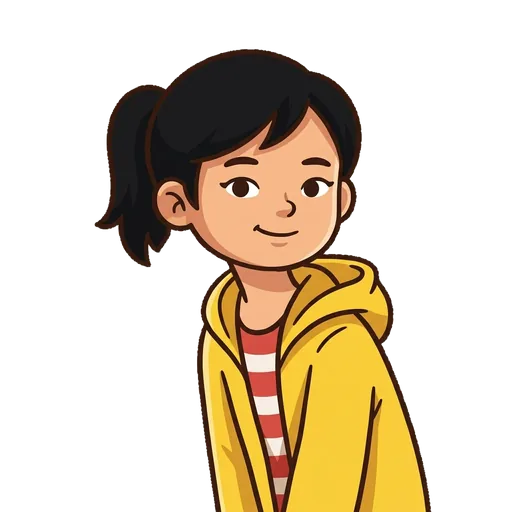 Lan a child of the Green Goes first; makes a friend in a minute
-
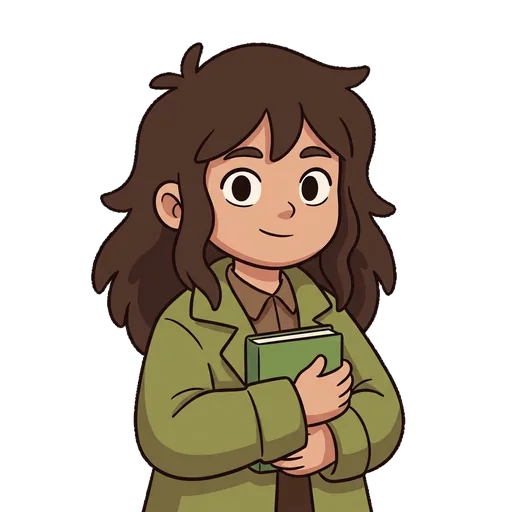 Inkling a child of the Green Names what she notices
Every recurring character has a short tune, so you can tell who is on stage before a word is said. The tunes play only when you tap, and the Reading Access sound switch turns them off.
The Honest Page
Which parts are true, stretched or made up — and what does nobody know?
True
- A shadoof is a long pole on a post, with a bucket at one end and a heavy weight at the other, for lifting water. The oldest known picture of one is on a cylinder seal from Mesopotamia, about four thousand two hundred years old. Source
- Shadoofs are still used in some places today. A painting in a tomb in Egypt from about 1250 BCE shows one too. Source
- A stick on a post balances when the weight times its distance on one side equals the push times its distance on the other. Twelve, one step away, balances six, two steps away. Twice as far, half the push.
Stretched
- In the story the bucket hangs on the short end of the pole. What we simplified: Real shadoofs usually hang the bucket on the long end and put a heavy lump of mud or stone on the short end, so the weight does the lifting and the bucket can rise higher. We kept the bucket on the short end to show the long stick most simply.
Made up
- Lan and Inkling, the spark, the buzzing words, the girl, her brother and her grandmother are made up. So is the hot wind that was coming tomorrow.
Nobody knows
- Nobody knows who made the first shadoof, or where. The oldest picture of one is on a seal; the seal does not say who thought of it. Source