The Stretched Page · Reader · ages 9-14
Listen along
Loading audio…
Read by an AI-generated voice. The words on this page are the transcript.
1. Last Month's Line
The Friday Paper went to print every Friday at four o'clock. It was the Green's own paper, one sheet printed on both sides in the print shop and pinned up on the notice board by the anvil. Danya worked on its desk most weeks. This week he had been in bed with a cold, and the paper had gone to print without him. It had the same things in it every week: who had lost a cat, what the Whetstone was baking, the times of the bus, and a column on the back called From the Real World.
Danya read the back first. He always did. He was twelve, and he had decided some time ago that the back of a paper was where people hid the things they hoped you would not check.
From the Real World had one true story in it every week, with a little Honest Page underneath. Each line on the Honest Page had a mark beside it. True meant somebody had a source. Stretched meant it was nearly true, but somebody had made it a better story. Made up meant made up.
This week's story was about a famous scientist. Danya read it, and then read it again, slowly, with his finger under the words, the way he read anything he did not like.
In 1666 an apple fell on Isaac Newton's head as he sat under a tree, and that is how he discovered gravity. And beside it, on the Honest Page, in neat black capitals: TRUE.
"That's not fair," said Danya.
Inkling was sitting on the step of the anvil with a bag of plums. She was eight. She looked up.
"What isn't?"
"This." Danya tapped the paper. "Last month they printed the same story, and the Honest Page said Stretched. I know it did. I cut it out."
He pulled his notebook out of his back pocket. It was a cheap notebook with a black cover, and it was empty, except for one thing taped inside the front cover: a little square of newsprint, cut out with nail scissors, a little crooked at one corner.
An apple hit Newton on the head. STRETCHED.
Inkling read it over his arm. "I can name it," she said. "Somebody fixed a mistake. Last month they got it wrong, and this month they got it right."
"Or last month they got it right," said Danya, "and this month somebody changed it."
"Why would anybody change it?"
"I don't know yet." Danya looked at the notice board, and then across the Green at the print shop, with its green door and its window full of type. "But I'm going to find out who did it."
2. The Print Shop
The print shop smelled of ink and warm paper. The printer was a tall woman with grey hair cut short and an apron that had once been white. She was feeding sheets into the big press by hand, one at a time, and she did not stop when they came in.
"You've got that look," she said, without turning round. "The one you get when something's wrong in the paper."
"Something is wrong in the paper," said Danya. He held up the Friday Paper and the cutting side by side. "Last month: stretched. This month: true. Same story. Who changed it?"
The printer stopped the press. She wiped her hands on her apron and looked at the two pieces of paper for a long time.
"I print what comes in the box," she said. She nodded at a wooden box by the door with a slot in the lid. Notes for the Friday Paper, said a card on the front. "People put in what they want printed. Lost cats. Cake. Corrections, if they think we got something wrong. I don't write From the Real World. People send it in."
"So someone sent in a correction," said Danya.
"Someone did." She went to a spike on the wall where old notes were kept and pulled one off. It was a slip of paper, torn from a notebook. On it was written: Apple story. Change Stretched to True. Everyone knows it hit him.
There was no name.
Danya looked at it very closely. The words had been written in pencil first, quite lightly. Then someone had inked over the pencil, carefully, following every letter, so the ink sat on top of the grey like a coat.
"Who writes in pencil and then goes over it in ink?" said Danya.
"Somebody who wanted to be sure," said the printer. "Or somebody who changed their mind."
"You printed it," said Danya. His face was hot. "You printed it without checking."
The printer looked at him. She did not look cross. She looked tired, and a little sorry.
"I've got one press, one pair of hands and a paper to get out every Friday," she said. "I trust people. Mostly that works." She held out the slip. "You check it. If you can show me it's wrong, I'll print the correction next week, and I'll print your name under it."
Danya took the slip. His ears were burning. He had been sure it was her. It wasn't her. It was somebody who knew where the box was.
"Sorry," he said.
"Nothing to be sorry for," said the printer. "Now, if you want to know where that story comes from, there's a big book on the table at the back. Famous stories, all the old ones. Newton's in it."
3. The Drying Room
The book on the back table was the biggest book either of them had ever seen. It was bound in cracked brown leather, and it was so heavy that the table it lay on had a slight dip in the middle. Someone had left it open at a page near the end. At the top of the page was a picture of a man in a long wig, sitting under a tree. An apple was falling. Underneath was a short paragraph.
The Apple. Inkling read the heading out loud.
Danya bent over the page.
The hammer rang once. A spark jumped off the anvil and did not go out. It waited. They followed.
They had not heard the hammer from inside the print shop before. They heard it now, one clear note across the Green, and the spark came in under the door, bright as a match head, and hopped once on the leather cover of the book, and then hopped off again, towards the green curtain at the back of the shop, and waited there.
The spark slid under the green curtain into the drying room, and the drying room went back much further than the shop did.
Inkling went first. She always did, and then wished she hadn't. Danya went second, holding his notebook.
Inside, the drying room was a long corridor, as tall as a room and as long as they could see, with lines of printed pages pegged up overhead like washing. There were doors along it, and each doorway had a little card beside it, like the cards in a museum, with a year written on it.
The doors near them had recent years. The doors further away had older ones. Far down the corridor, so far it was hard to read, Danya could make out a card that said 1752.
"The oldest telling is always at the back," said a voice. "That's the rule in here."
They turned round. Standing behind them, with a notebook sticking out of the pocket of a green cardigan, was a curly-haired boy about Danya's age. He had a pencil behind his ear and a cheerful, patient sort of face.
"I'm Trace," he said. "I live back here, with the old pages. Most people walk straight past."
"Danya," said Danya. "This is Inkling. Someone's changed a line in the paper. An apple hit Newton on the head. Last month it was stretched. Now it's true."
"Ah," said Trace. "The apple. That's a busy corridor." He looked down it. "Where did they get it from?"
"Who?"
"Whoever says it's true. Where did they get it from?"
4. The Front of the Corridor
The first door was the newest. Inside it was a cartoon, painted on the wall as big as a cinema screen. A man in a wig sat under a tree. An apple bounced off his head. Little stars circled round him. In a speech bubble he said: That's it! Gravity!
The next door had a children's book open on a stand, with a picture of an apple bonking a wig. The next had a poster for a science museum. The next had a page from a schoolbook from a long time ago, with old-fashioned pictures. All of them had the apple. Nearly all of them had it hitting him on the head.
Inkling ran from door to door, counting.
"Seven," she said. "Eight. Nine! Danya, it's in all of them. It hits him in nine. It's in all of them, so it's true!"
She held up her fingers, both hands, nearly all ten.
"I can name it," she said. "It's a fact. Lots of people say it."
Danya hesitated. Nine was a lot. He had never seen nine of anything agree before.
Trace did not hurry. He leaned against the wall between two doors and took the pencil from behind his ear.
"A copy is not a source," he said.
"But they're not copies," said Inkling. "They're all different. That one's a cartoon. That one's a book. That one's a poster."
"Different paintings of the same thing," said Trace. "Look at the cartoon. Who painted it?"
"It doesn't say."
"Where did the painter get the story?"
Inkling thought. "From a book, probably."
"And where did that book get it?"
"From another book?"
Trace nodded. "So if a hundred people copy one person, how many people saw the apple?"
Inkling opened her mouth. Then she closed it.
"One," said Danya slowly. "Or none."
"Keep going back," said Trace. He set off down the corridor. "Who wrote it down first? That's the only one who counts. The others are echoes."
Inkling put her hands down. Her face had gone pink. She had been so sure. Nine was a big number.
"Counting is good," said Trace kindly, as she caught up. "You count the right things later. You just counted echoes first. Everybody does."
5. Fell or Hit
They walked. The doors went by. The years on the cards got older: a museum poster, a radio programme, a book of famous scientists from long before their grandparents were born.
Halfway down the corridor, a young bear in a striped scarf and a blue cardigan was sitting on a stool with a pot of glue and a stack of paper strips. She was sticking the strips into a scrapbook, very neatly, and underlining words on them in red.
"Visitors," she said, without looking up. "Good. What exactly does it say?"
"The paper says an apple fell on Newton's head," said Danya, "and that's how he discovered gravity. And it says that's true."
"Say the claim in one sentence," said the bear.
"I just did."
"You said three things." She held up a paw and counted on her claws. "One. An apple fell. Two. It hit his head. Three. That's how he discovered gravity. Those are three claims. Any of them could be true, and the others false."
Danya stopped. He had not thought of it like that.
"I'm Claim," said the bear. "I underline. That's all I do. You can't check a story until you know exactly what it says." She pushed a strip of paper and the red pencil across to him. "Write them out. One claim per line."
Danya wrote:
1. An apple fell from a tree near Newton.
2. The apple hit him on the head.
3. That is how he discovered gravity.
"Fell, or hit?" said Claim. "Those are different claims. Underline the exact words."
Danya underlined fell in the first line and hit in the second. They looked very different, written down. A falling apple was something you might see out of a window. An apple hitting you on the head was a joke with stars round it.
"Now," said Claim, "which one did your paper change?"
Danya looked at his cutting. An apple hit Newton on the head. STRETCHED.
"The second one," he said. "Last month the hitting was stretched. This month someone says it's true."
"Then that's the one you're checking," said Claim, and went back to her glue. "Underline it twice."
Danya did.
6. A Garden in Kensington
The corridor got quieter as they went back. The doors were further apart, and older. One had a card that said 1830 and a book that called Newton a genius who learned the secret of the heavens from an apple. One said 1790. Danya looked in each one, and each time he asked the same thing he had heard Trace ask: where did they get it from? And each time, if they looked closely, there was a little note in the corner, or a line in the text, that pointed further back.
Then the corridor ran into a door with a card that said 1752.
Inside was a room lit by a window, with a desk and a large handwritten book open on it. The handwriting was old-fashioned and loopy, with long s letters that looked like fs. Next to the book, written on a card in modern letters, was a note:
Memoirs of Sir Isaac Newton's Life, by William Stukeley. A friend of Newton's, writing down what Newton told him.
Trace was already leaning over it.
"This one's a source," he said. "Look. He isn't copying anyone. He's saying what he heard with his own ears."
Danya read the page slowly, with Inkling breathing on his elbow. It was hard to read at first, with the long s and the strange spellings, but after a while he got used to it.
Stukeley wrote that on a spring day in 1726 he had dined with Newton at his house in London, in Kensington. After dinner the weather was warm, and they went out into the garden and drank tea under the shade of some apple trees. And amid other talk, Newton told him that he was in just the same situation when the notion of gravitation came into his mind.
The next words were underlined already, very faintly, by someone a long time ago. Danya read them out.
"'Occasion'd by the fall of an apple, as he sat in a contemplative mood.'"
He stopped.
"Fall," he said. "It says fall."
"What exactly does it say?" said a voice, and Claim was there in the doorway with her red pencil, as if she had been there all along.
"'Occasioned by the fall of an apple,'" said Danya. "'As he sat in a contemplative mood.' Contemplative means thinking."
"Does it say the apple hit him?"
Danya ran his finger along the line, and the line after, and the paragraph after that.
"No," he said. "It doesn't say it hit him. It says he saw it fall. Or, it says it fell. It doesn't say where."
"Underline the exact words," said Claim.
Danya did.
7. Who Was There
"So the apple's real," said Inkling. "I was right. I was nearly right."
"Who was there?" said a slow voice behind them.
They turned. An old bear with round glasses and a long blue scarf wound twice round his neck was lowering himself onto a bench by the window. He did it carefully, the way old bears do everything.
"I'm Weigh," he said. "Who was there, in 1666? When the apple fell."
Danya thought.
"Newton," he said. "Just Newton. He was in the garden on his own. Stukeley wasn't there. Stukeley was at the dinner sixty years later."
"How long after did they say it?" said Weigh.
Danya opened his notebook and wrote it out as a sum. 1726 take away 1666.
"Sixty years," he said.
"Sixty years," said Weigh. He nodded slowly. "How old was the man telling it?"
"Born in 1642," said Trace, from the doorway. He had the date in his notebook. "So when he told Stukeley, in the spring of 1726, he was eighty-three."
"An old man in a garden," said Weigh, "telling a friend about something that happened when he was twenty-three. In a position to know is not the same as remembering right."
"But he's Newton," said Inkling. "He's the cleverest man in the world. He wouldn't get it wrong."
"Whoever is famous is not always right," said Weigh mildly. "And a good witness can still be a long way off. Sixty years is a long way."
Danya sat down next to him on the bench. His legs were tired from the corridor.
"So he might have made it up?"
Weigh thought about that for a long time. He was not a bear who could be hurried.
"I didn't say that," he said. "I said weigh it. Don't count it. He was the only one there. He told it himself, more than once, to more than one person. Nobody who knew him says he invented it. But when we tell a story about ourselves for sixty years, it gets smoother. The bumps come off. Maybe there was an apple. Maybe there were many apples, every autumn, and one of them got remembered. Maybe the apple came first and the idea came a little later, and the two got stuck together in his memory. Maybe it happened just as he said."
"So which is it?"
"Nobody knows," said Weigh. "That's allowed. You can write that down."
Danya wrote it down.
8. The Niece and the Frenchman
"There's another room," said Trace. "Earlier than this one. Not by much."
He led them a little further back, to a door with a card that said 1727. It was a small door. Inside was a printed page in English, written by a Frenchman called Voltaire, a famous writer who had lived in England for a while.
Voltaire's page said that Newton, walking in his garden, had his first thought about gravity on seeing an apple falling from the tree.
"Seeing it falling," said Claim, underlining. "Falling from the tree. Not hit."
"But this one's earlier than Stukeley's book," said Inkling. "So it's the first one. So it's the source!"
"Older isn't the same as first," said Trace. "Check the date." He pointed to the card. "Stukeley's book is dated 1752, but the dinner was in 1726. He heard it in 1726. He just didn't finish writing it down until 1752."
"And Voltaire?"
"Voltaire says where he heard it. Read the bottom."
This page did not say. But pinned beside it was another page, from a book Voltaire wrote some years later, and at the bottom of that one he said he had the story from Newton's niece, who had kept house for her uncle.
"Who was there?" said Weigh, from the bench in the corridor.
"Not the niece," said Danya. He had already looked it up in the next door along, where a family tree hung on the wall. "She was born after 1666. She wasn't there either. She heard it from Newton. Then Voltaire heard it from her."
"So that's a copy too," said Inkling.
"A copy with a name on it," said Trace. "That's better than most. You can follow it back. It goes back to the same person every time."
"To Newton," said Danya.
There was one more room. A man called John Conduitt, who had married Newton's niece, had written notes about his uncle's life, using what Newton had told him. In his notes, Newton was sitting in a garden in 1666, thinking, and it came into his mind that the force that brought an apple down from a tree might reach much further, up to the Moon.
"Apple," said Claim. "Brought down. Not hit."
Danya wrote it in his notebook. Stukeley. Voltaire. Conduitt. Three people. Every one of them pointing back to one old man in one garden. And not one of them said the apple hit him.
"So where does the hitting come from?" said Danya.
They all looked down the corridor, towards the front, where the cartoon was.
"Somewhere up there," said Trace. "Long after he died. Somebody told it with a bonk, because a bonk is funnier. And then everybody copied the bonk."
"Who?"
"Nobody knows who did it first," said Trace. "I've looked. It's a busy corridor."
9. Twenty Years
Danya sat on the floor of the drying room with his notebook on his knees and looked at his three underlined claims.
1. An apple fell from a tree near Newton.
Stukeley said so. Conduitt said so. Voltaire said so, though he heard it second-hand. All of them heard it from Newton. One witness, a long way off, who told the same story many times and never seems to have changed it much.
2. The apple hit him on the head.
Nobody who knew him said that. It came much later.
3. That is how he discovered gravity.
He had not thought about the third one. He looked at it now.
"Weigh," he said. "Stukeley said the apple made him think about gravity. Did he work it all out that afternoon?"
Weigh, who had come and sat on the floor beside him with some difficulty, took off his glasses and polished them on the end of his scarf.
"How long after did he publish it?" he said.
Trace knew. Trace always knew dates. "His big book about gravity came out in 1687."
Danya did the sum in his notebook. 1687 take away 1666. "Twenty-one years," he said.
"Twenty-one years," said Weigh. "What do you think he was doing for twenty-one years?"
Danya thought about it. "Sums," he said. "Checking. Being wrong and trying again. Arguing with people by letter." He looked at the third line. "So the apple might have started it. It didn't finish it."
"Hm," said Weigh, which was as close as he ever came to saying yes.
"So number three is stretched too," said Danya.
"What exactly does it say?" said Claim.
Danya read it out. "'That is how he discovered gravity.'"
"Is it false?"
Danya thought. "Not exactly. It's how he started thinking about it. If he told the truth. But it makes it sound like one afternoon. It was twenty-one years."
"Then it's stretched," said Claim, satisfied. "It's nearly true, and someone made it a better story."
Inkling had been quiet for a long time. She was sitting with her knees up, looking back at the corridor.
"So the people who drew the cartoon," she said. "Were they lying?"
"Did they think it was true?" said Weigh.
"Probably."
"Then they weren't lying," said Weigh. "They were telling a better story. People like a better story. The witnesses weren't lying either. That's what's hard about it. A story grows because people like it, not because anyone is wicked."
"Stretching is honest," said Trace, "when you say that you did it."
"That's what the Honest Page is for," said Danya. He looked at the cutting taped inside his notebook. Stretched. Last month somebody had said that they had stretched it. This month somebody had taken that away.
He knew what to write now.
10. The Line, Fixed
He wrote it out on a clean page, in pencil first, and then, because the printer would need to read it, in ink over the top.
He stopped with the pen in the air. Pencil first, then ink over the top. Just like the note on the spike.
He looked at it for a moment. Lots of people wrote in pencil and then inked over it. It didn't mean anything. He finished the line.
From the Real World — a correction.
In 1726, when he was eighty-three, Isaac Newton told his friend William Stukeley that the idea of gravity first came to him in 1666, "occasioned by the fall of an apple". TRUE. (Stukeley's memoir; Voltaire and John Conduitt heard the same story from Newton's family.)
The apple hit him on the head. STRETCHED. Nobody who knew Newton says so. The bump was added much later.
That is how he discovered gravity. STRETCHED. The apple may have started him thinking. The work took twenty-one years.
Who was there in 1666: only Newton. He told it sixty years later. NOBODY KNOWS exactly what happened in the garden.
He showed it to Claim. She underlined fall and told and nodded.
He showed it to Trace. Trace checked the dates against his notebook and said, "Keep going back. Yes. That's right."
He showed it to Weigh. Weigh read it twice, slowly, and handed it back.
"Weighed," said the old bear. "Not counted. Good."
Inkling read it over his shoulder.
"I counted nine," she said. "In the doors. I counted echoes."
"You counted," said Danya. "That's not nothing. I didn't count at all. I just got angry with the printer."
"You did get quite angry with the printer," said Inkling.
On the inside of his notebook's cover, under last month's cutting, Danya wrote one word in small letters, the first page of something: FELL.
The spark slid back under the curtain, and the drying room was just a cupboard again.
They were standing at the back table of the print shop. The big book lay open at the picture of the man in the wig under the tree. Danya noticed, for the first time, that in the picture the apple was in the air. It had not reached him. It was only falling.
He took the correction to the printer. She read it all the way through, very carefully, with her finger under each line. Then she looked up.
"Next Friday," she said. "With your name under it."
"And the note on the spike?" said Danya. "The one in pencil, inked over?"
"Still no name," said the printer. "Somebody knows where the box is." She shrugged. "But a line is only stretched for as long as nobody checks it. You checked it."
The spark dimmed to a warm dot and settled back on the anvil. The Green was just the Green again.
Back on the Green
That evening, Danya was sitting on the steps of the Whetstone when Tí came running across the grass with an apple from Bà Tư's tree.
"Danya! Tell me the apple story!"
"Which apple story?"
"The one where it bonks the man and he says gravity!"
Danya opened his mouth. The story was right there, the funny version, with the bonk and the stars, and Tí would laugh at it.
"Once there was a man called Newton," he said. "And one day, when he was a young man, he was sitting in a garden thinking, and an apple fell off a tree."
"On his head!"
"That's the stretched bit," said Danya. "He said it fell. He never said it hit him." He took the apple and held it up and let it go. It dropped into the grass. "It made him wonder why apples always fall down and never up, or sideways. And whether the same pull that brought the apple down reached all the way up to the Moon."
Tí looked at the apple in the grass, and then up at the sky, where the Moon was just showing, pale, over the print shop.
"Does it?"
"Yes," said Danya. "But it took him twenty-one years to show it."
Tí picked up the apple and dropped it again, and then again, watching it fall every time, as if it might decide to go up.
Danya took out his notebook and, under FELL, in pencil, he wrote: Told Tí. Nearly said bonk.
Saved. The next chapter will be here whenever you come back.
Who you met
-
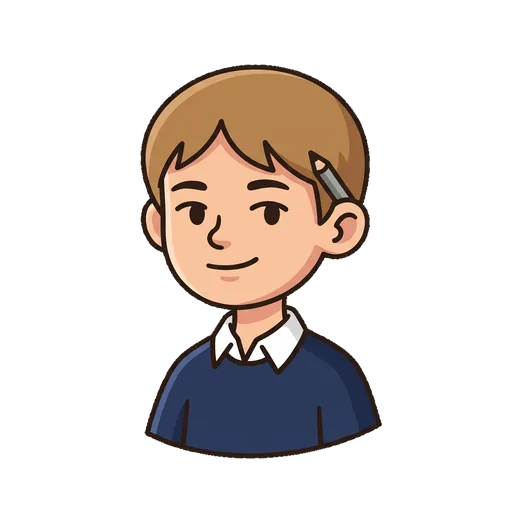 Danya a child of the Green Asks "how do we know?"
-
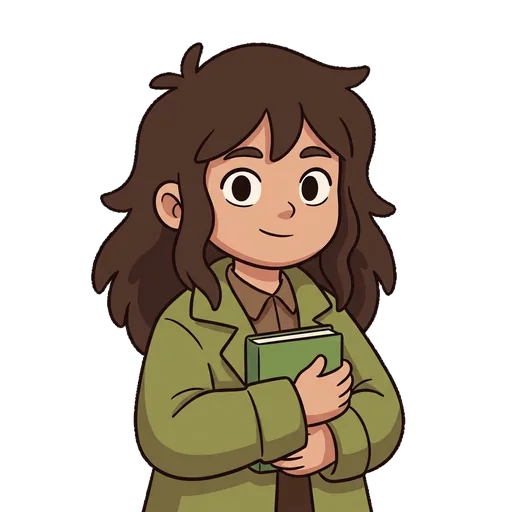 Inkling a child of the Green Names what she notices
-
 Trace Follow a story back to where it started; copies are not sources from TruthQuest
-
 Claim Before you check a story, say exactly what it claims from TruthQuest
-
 Weigh Ask who was in a position to know, and when they said it from TruthQuest
-
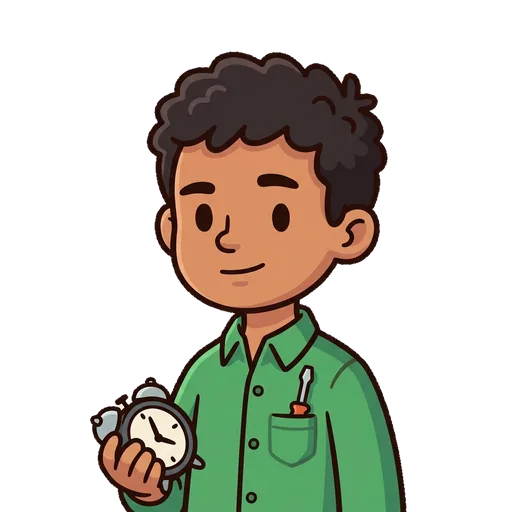 Beto a child of the Green Takes things apart
-
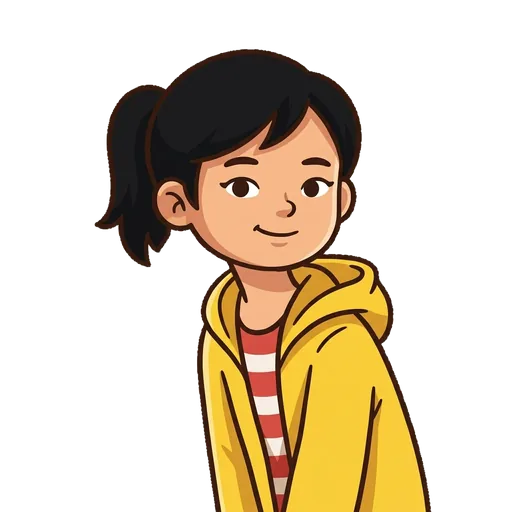 Lan a child of the Green Goes first; makes a friend in a minute
- Tara a child of the Green Listens longest, speaks last
Every recurring character has a short tune, so you can tell who is on stage before a word is said. The tunes play only when you tap, and the Reading Access sound switch turns them off.
The Honest Page
Which parts are true, stretched or made up — and what does nobody know?
True
- William Stukeley wrote that in 1726 Newton told him, in a garden under apple trees, that the idea of gravitation had come to him 'occasion'd by the fall of an apple, as he sat in a contemplative mood'. Stukeley does not say the apple hit him. Source
- In 1727 Voltaire wrote that Newton had his first thought of gravitation on seeing an apple fall from a tree; he later said he had the story from Newton's niece. Source
- John Conduitt, the husband of Newton's niece, wrote that in 1666, musing in a garden, Newton thought that the power which brought an apple down might reach as high as the Moon. Source
- Newton told the story in 1726, sixty years after 1666, when he was eighty-three. His book on gravity, the Principia, was published in 1687, twenty-one years after the garden.
Stretched
- An apple hit Newton on the head. What we simplified: No one who knew Newton says the apple hit him; the bump appears in retellings long after he died.
- An apple is how Newton discovered gravity. What we simplified: By his own account a falling apple set him thinking. The theory took him more than twenty years of work.
Made up
- The drying room, the corridor of doors, Claim, Trace and Weigh as people in it, the Friday Paper and the note in the box are made up. Stukeley, Voltaire, Conduitt and their words are real.