The Apple That Fell
The idea: the oldest account says an apple fell, not that it hit him, and the story was told sixty years later.
Read it
Who is in this book
-
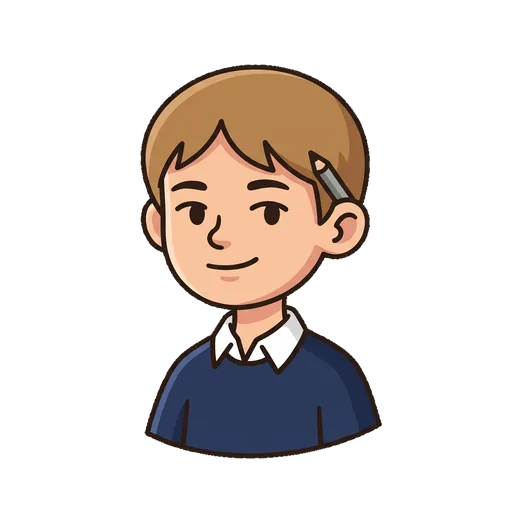 Danya a child of the Green Asks "how do we know?"
-
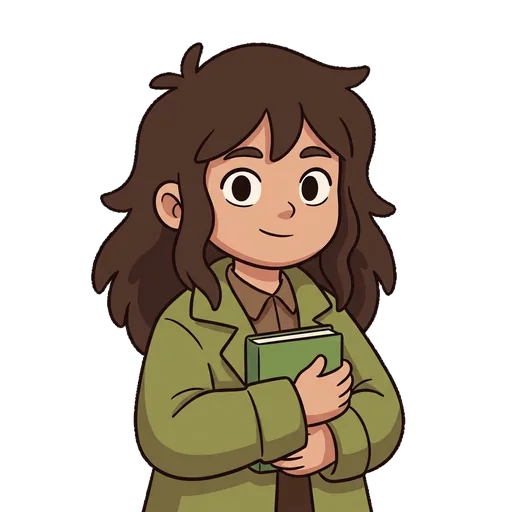 Inkling a child of the Green Names what she notices
-
 Trace Follow a story back to where it started; copies are not sources from TruthQuest
-
 Claim Before you check a story, say exactly what it claims from TruthQuest
-
 Weigh Ask who was in a position to know, and when they said it from TruthQuest
-
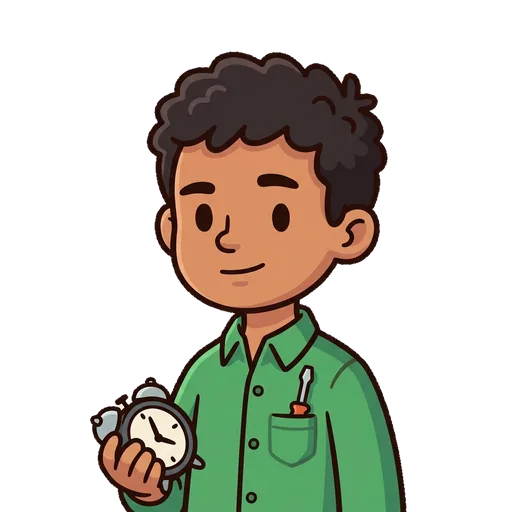 Beto a child of the Green Takes things apart
-
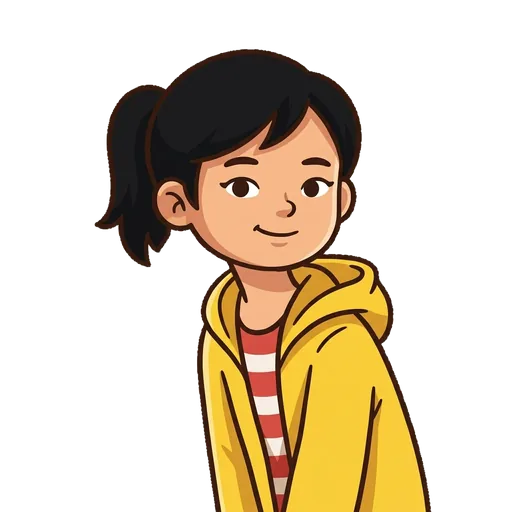 Lan a child of the Green Goes first; makes a friend in a minute
- Tara a child of the Green Listens longest, speaks last
Every recurring character has a short tune, so you can tell who is on stage before a word is said. The tunes play only when you tap, and the Reading Access sound switch turns them off.
The Honest Page
Which parts are true, stretched or made up — and what does nobody know?
True
- William Stukeley wrote that in 1726 Newton told him, in a garden under apple trees, that the idea of gravitation had come to him 'occasion'd by the fall of an apple, as he sat in a contemplative mood'. Stukeley does not say the apple hit him. Source
- In 1727 Voltaire wrote that Newton had his first thought of gravitation on seeing an apple fall from a tree; he later said he had the story from Newton's niece. Source
- John Conduitt, the husband of Newton's niece, wrote that in 1666, musing in a garden, Newton thought that the power which brought an apple down might reach as high as the Moon. Source
- Newton told the story in 1726, sixty years after 1666, when he was eighty-three. His book on gravity, the Principia, was published in 1687, twenty-one years after the garden.
Stretched
- An apple hit Newton on the head. What we simplified: No one who knew Newton says the apple hit him; the bump appears in retellings long after he died.
- An apple is how Newton discovered gravity. What we simplified: By his own account a falling apple set him thinking. The theory took him more than twenty years of work.
Made up
- The drying room, the corridor of doors, Claim, Trace and Weigh as people in it, the Friday Paper and the note in the box are made up. Stukeley, Voltaire, Conduitt and their words are real.
Tell it back
Tell the story in your own words: who was there, what went wrong, and what they found out. Then the first page of Danya's two-column notebook goes on your belt.
On your belt: the first page of Danya's two-column notebook.
Your belt lives on this device. Nothing is sent anywhere.
Ring the hammer for someone
Pick this book for someone younger. The link carries only the book, and it will wait for them on the Green.