Gullwick, the Island That Shares · Reader · ages 6-8
Listen along
Loading audio…
Read by an AI-generated voice. The words on this page are the transcript.
Chapter 1. Autumn
The hammer rang once. A spark jumped off the anvil and did not go out. It waited. They followed.
It was autumn on the Green. The leaves on the big chestnut tree had gone gold, and every morning Tí collected conkers in his pockets until his trousers fell down. Grandmother had started lighting the stove in the evenings. The days were getting short.
Lan had begun to worry that the spark would not come again before winter. Three spans of the bridge were built. One was left. What if the storms came first and took the whole thing away again?
So when the hammer rang, on a cold bright Saturday, she did not even stop to put her coat on properly. She ran down the lane with one arm in a sleeve, and Beto ran after her with his scarf trailing.
The ferry horn blew once.
"One means leaving," said Beto, out of breath.
"I know," said Lan. She grinned at him. "You say it every time."
"It's true every time," said Beto.
The ferry chugged out into the autumn fog. It was thicker than in summer, and colder. Then Gullwick came out of it the way it always did: gulls first, then the lighthouse, then the bridge.
Three spans now. FAIR, then LIKELY, then ENOUGH. Lan could read all three words from the ferry if she squinted. After the third span, the bridge stopped. One gap was left, and the grey sea ran through it.
Chapter 2. Nothing Came Back
Poppa Pike was waiting at the end of the third span. He had a woolly hat on over his round glasses, and he looked tired.
"You came," he said. "Good. The last one's the hardest."
"Is it longer?" asked Beto.
"Same as the first," said Poppa Pike. "Eight planks, and not one fewer. Then she's a whole bridge again, for the first time since the storm."
"Then where are the planks?" asked Lan.
Poppa Pike looked back at the island, at all the little houses with their smoking chimneys and their sheds.
"In people's sheds," he said.
They walked up to the Commons store by the lighthouse. Ambo was there, sitting on the step with the big iron key in his paws. He stood up slowly when he saw them, and unlocked the door, and pushed it open.
Lan remembered the Commons store from the very first span. It had been a stone room full of things that belonged to everybody: ladders and lanterns, rope and pots, the big pot for festival soup, and a stack of planks for when a roof blew off. It had been the room that saved the bridge.
Now it was empty.
The shelves were bare. The hooks were bare. One lantern hung on a nail with no candle in it, swinging a little in the draught from the door. Even the festival soup pot was gone.
"What happened?" whispered Lan.
"All summer, things went out," said Ambo. His voice was low and sad. "A ladder for a roof. Rope for a boat. Planks for a fence the wind knocked down. That's what the room is for. That's fine."
"But nothing came back," said Ambo.
"Why not?" asked Lan.
Ambo thought about it for a long time. Ambo always thought for a long time.
"Nobody said it should," he said. "Nobody wrote anything down. Some people took one thing. Some people took two, or three. Nobody knew who had what. And when the room got empty, people stopped wanting to put things in. Why give your spare plank to an empty room, if you don't know you'll ever see a plank come back?"
Beto walked round the bare shelves, running his hand along them.
"So the spares are still on the island," he said. "They're just in sheds."
"In sheds," said Poppa Pike, "and people are holding on to them."
Chapter 3. Lan Writes a Rule
Lan sat down on the step outside the Commons. She was thinking hard, and when Lan thought hard she usually ended up doing something.
The problem was simple. People had spares. People weren't giving them. What people needed was a rule.
"I know what to do," said Lan, jumping up. "I'll do it!"
"Do what?" said Beto.
But Lan was already running down the lane to the bakery. The baker, the hedgehog in the floury apron, lent her a pencil and a big sheet of white paper from the back of the shop. Lan sat at the bakery table and wrote in her biggest, clearest letters:
EVERYBODY MUST GIVE TWO PLANKS TO THE COMMONS.
She underlined MUST twice. Then she ran back up the hill and pinned the paper to the Commons door with a drawing pin.
She stood back and looked at it. It looked very good. It looked like a real rule, the kind there are in schools and libraries.
"There," said Lan. "Now everybody will know what to do."
Beto read it. He frowned, but he did not say anything yet. Beto liked to see how a thing worked before he said whether it was broken.
Chapter 4. Shut Doors
The first person to come up the lane was Vera.
The young fox stopped in front of the door and read the notice. Lan watched her face. It went from curious, to worried, to sad.
"Oh," said Vera. "I'd love to help. But it's my only one."
"Your only plank?" said Lan.
"The one by my door," said Vera. "It holds the door shut when the wind blows. If I give it away I'll have no door all winter. Ask me for a spare. I haven't got two of anything."
Lan opened her mouth to say that the rule was for everybody. Then she remembered the very first span, and Rafi flying down between them, gentle but firm. That's her last one.
Her rule would take Vera's last.
Vera went away down the lane with her tail low.
Other islanders came, one by one, and read the notice. A rabbit read it and frowned. A heron read it and laughed, not very nicely. A family of mice read it and looked at each other, because between the whole family they had only one plank, and it was their front step.
Nobody gave two planks. Nobody gave any.
Instead, one by one, they went home. Lan heard doors shutting all over the island. Click. Click. Click. Even Gilly, who never sat on spare goods, walked past with her nose in the air and went into her boat shed and shut that door too.
By the middle of the afternoon, Lan was standing in front of the Commons door on her own. Her notice was flapping in the wind. Her ears were so hot they hurt.
"I don't understand," she said to Beto. "It's a perfectly good rule. It's really clear."
"It's clear," said Beto carefully. "But nobody said yes to it."
"Why should they have to say yes? It's a rule."
Beto looked at the notice for a long time.
"Who made it?" he asked.
"I did."
"So it's your rule," said Beto. "For everybody else."
Lan did not answer. She walked out to the end of the third span and sat with her legs dangling over the last gap. The water underneath was grey and cold and in a hurry. Poppa Pike came and sat beside her. For a while neither of them said anything.
"When the old builders made this bridge," said Lan at last, "how did they get everyone to give planks?"
"I don't know," said Poppa Pike. "It was before my time. Before my grandfather's time." He looked at the three carved planks behind them, FAIR and LIKELY and ENOUGH. "But I know one thing. Every span had a word. And the words weren't orders. None of them say MUST."
Lan looked. It was true. FAIR wasn't an order. Neither was LIKELY, or ENOUGH. They were more like things you agreed on.
"Do you know what the last word was?" she asked.
"No," said Poppa Pike. "The storm took it. We'll find out when we build it."
"If we build it," said Lan.
"When," said Poppa Pike. "I've been building bridges a long time. They always look impossible right before the last span."
Chapter 5. Ring the Bell
There was a noise coming down the lane. It was a bell. A brass hand bell, ringing and ringing.
A gull came round the corner in a blue and white striped apron, swinging the bell. This was Gully, who called the market on swap days and knew every islander by name.
"Gather round, gather round!" called Gully. "Ring the bell, hear the island!"
Doors began to open again. Faces looked out. Gully went right through the village, ringing, and the islanders came out in ones and twos to see what it was about, and followed the bell down to the long beach.
Lan and Beto followed too.
On the beach, Gully made everyone stand in a big circle on the sand. Rabbits and herons. The mice. The baker in her apron. Gilly, still looking cross. Vera, at the back. Ambo with the key. Poppa Pike with his woolly hat.
"Right," said Gully. "We have a problem. The Commons is empty, and the bridge needs eight planks. And somebody has written a rule."
Everyone looked at Lan. Lan wanted to sink into the sand.
"Now, it's not a bad rule," said Gully kindly. "It's just a rule one person wrote for everybody else. A rule nobody helped make is just a sign on a door. So we're going to make one together."
"How?" asked a rabbit.
"Everyone gets a turn to talk," said Gully. "One voice at a time, please. Nobody interrupts. And nobody is in charge of the answer, not even me."
Chapter 6. Round the Circle
So they went round the circle.
It took a long time. Lan had never stood in a circle so long. Her feet got cold. But she made herself listen.
The baker said she'd taken the soup pot for the harvest supper and forgotten to bring it back, and she was sorry. The heron said he had given two ladders to the Commons in spring, and then never seen a ladder again, and he was sick of being the only one who gave. The mice said they had only one plank and it was their front step. A rabbit said that when the Commons was empty, nobody trusted it any more, so why would you put anything in?
Gilly said, "I never sit on spare goods. But I'm not putting my spares in an empty room for somebody to walk off with."
Then it was Beto's turn. He talked about the bridge. "A bridge only holds if every plank holds," he said. "If one plank is missing, nobody can cross. It's the same for everybody, even people who didn't give a plank."
"Who hasn't had a turn yet?" said Gully.
It was Lan.
She took a deep breath. "I'm sorry about my notice," she said. "I wrote it on my own and I didn't ask anybody. And it would have taken Vera's door."
Nobody laughed. Gully just nodded, and rang the bell once, softly, to say the turn was done.
Chapter 7. Fair for the Giver
A builder stepped into the middle of the circle. He wore a canvas apron with a trowel tucked into the belt, and his paws were rough from work.
"Mason," said Gully. "Go on."
"I'll say it straight," said Mason. "I've got spare wood in my yard. More than I need. I'll give it gladly. I'm keen. But I won't give my tools, because without my tools I can't build anything for anybody."
He looked round the circle.
"Fair for the giver too, mind," said Mason. "That's what was wrong with the notice. It was fair for the bridge, but it wasn't fair for Vera. A rule has to work for me as well. Nobody should give till it hurts."
"So the rule says spares," said Gully slowly. "Only spares. Never your last."
At the back of the circle, Vera's ears pricked up.
"Never your last?" said Vera. "Even if it's for the bridge?"
"Even for the bridge," said Mason. "Check it's fair both ways round. If the rule makes you give your door away, it's a bad rule, however clear it is."
The heron put up his wing. "But what about me?" he said. "I gave two ladders and got nothing back. How do I know I won't be the only one giving again?"
That was the hard part. Lan could feel the whole circle thinking about it.
Chapter 8. The Book
Then Ambo came forward. He was holding something under one arm: a big old book with a cracked leather cover and a strap round it. Lan had not even seen him go to fetch it.
"This is the Commons book," said Ambo. "It was in the bottom of the cupboard. Nobody had looked at it in years."
He undid the strap and opened it. The pages were thick and yellow. On them, in lots of different handwriting, were lines and lines of writing.
Lan turned back to the very first page. The writing there was round and careful, the writing of somebody about her own age. The corner of the page had been torn once and sewn back together with blue thread. Beside the stitches, drawn in pencil, was a tiny hammer.
"Who was here before us?" asked Lan.
Beto bent close. He had seen that hammer before, scratched on a post at the edge of the water, and on a mended stick, and on the lid of Coin's cash box. "Children," he said slowly. "Children who mended things, and didn't put their names on them. Only that."
"Long ago, everyone wrote in it," said Ambo. "Look. 'One ladder, taken for the roof. Brought back Tuesday.' 'Two planks, put in. Spare from the new fence.' 'Soup pot taken for the wedding.' Then it was brought back, see, with a tick."
"Why did they stop?" asked Lan.
"Somebody lost the pencil, I think," said Ambo, and some people laughed.
"Why does it matter?" asked the heron. But he was leaning forward to look.
"Because then everyone can see the room is fair," said Ambo. "If you write what you take, and what you put back, anybody can open the book and look. Nobody has to wonder whether they're the only one giving. It's not a punishment. It's just open."
The heron read the old page for a long time. Then he nodded.
"I'd give my ladders back," he said, "if it was written down."
Chapter 9. Twelve of Twelve
Gully rang the bell.
"Lan," said Gully. "Will you write the rule? But only what everybody said. Not what you think it should say."
Lan took the pencil Ambo gave her. Her hand was a bit shaky. She opened the Commons book to the first clean page, and she listened, and she wrote down what the circle said, and when somebody wanted a word changed she changed it.
When they had finished, it said this:
Take what you need. Put back what you can spare. Never your last. Write it in the book.
It was not as big or as bossy as her notice. It did not have MUST underlined twice. But every single word in it had come out of somebody in the circle.
Gully read it out loud, slowly, twice.
"Hands up," said Gully, "if this is our rule."
Hands went up. Paws went up. Wings went up. The mice all put up both arms, which made them fall over. Lan counted under her breath. Eleven households had their hands up straight away.
Lan looked across the circle at the heron, who had been so cross about his ladders. His wing was up highest of all. She looked at Gilly, whose nose was not in the air any more. She looked at the mice, still lying on their backs in the sand with all their arms up, giggling.
It was the same island that had shut its doors on her notice. The same people. The only thing that had changed was who had written the rule.
Only Vera, at the back, was still thinking.
Everybody waited. Nobody hurried her.
"Never your last," said Vera at last, and she put her paw up too. "Then yes."
"Eleven and one," said Beto. "Twelve."
"Twelve of twelve," said Gully, and rang the bell so hard it nearly flew away.
Chapter 10. Spares
"Spares!" said Gilly, and she was smiling again. "Who's got spares?"
This time it was different. The islanders went home, and the doors opened, and they came back carrying planks.
Mason brought two, from the yard behind his house. The baker brought one, an old shelf she didn't need. The heron brought three, and his two ladders as well. Gilly brought two from her boat shed. Vera brought nothing, because she had nothing spare, and nobody minded at all.
Lan went over to her. Vera was standing at the edge of the pile of planks, looking a little left out.
"I'm sorry about the notice," said Lan. "I didn't think about your door."
"That's all right," said Vera. "You didn't know about my door. That's why everyone has to have a turn, I suppose. So somebody knows about the doors."
Lan had not thought of it like that. Her notice had been clear, but it had only had one person's thinking in it. The circle had had everybody's. Nobody on the whole island could know about every door. But between them, they did.
"I can't give a plank," said Vera. "But I can carry. Can I carry?"
"Yes," said Lan. "Carrying counts."
So Vera carried. She carried Mason's planks down to the bridge, two trips, and the baker's old shelf, and one of the heron's planks, and by the end she was out of breath and smiling, with sawdust on her nose.
Lan counted them onto the sand, touching each plank as it was laid down. She did not say a word about enough until she had finished. "Two, one, three, two," said Lan. "Eight!"
"Eight," said Poppa Pike, and took off his woolly hat.
Ambo sat on the Commons step with the book on his knees and wrote every one down. Mason, two planks. Baker, one plank. Heron, three planks and two ladders. Gilly, two planks. Then he hung the book on a nail by the door, with the pencil tied to it on a long string, so it could never get lost again.
The Commons store was not full yet. But it was not empty any more. Somebody had put a candle in the lantern on the nail. Somebody else had brought back the festival soup pot, a bit dented, and set it on the bottom shelf with a note that said SORRY, in very small writing. Ambo wrote that down too.
Chapter 11. Ours
"Everybody lays one," said Poppa Pike. "This is the last one. So everybody lays one."
They carried the eight planks out along the three spans, all the way to the last gap. The water was grey and choppy. The wind was cold.
Mason laid one, and made sure it was level. Vera laid one, even though it wasn't hers, because everybody lays one. Ambo laid one. Gilly laid one, quickly. Gully laid one and rang the bell. The baker laid one, and so did the heron.
Lan laid the last.
When she turned it over, there was a word carved on the end, the same as the other three. She already knew what it would be before she looked. Somehow she knew.
It said OURS.
Poppa Pike drove the last nail. The fourth span stretched across the last gap. And for the first time since the storm, the bridge reached all the way from the bakery side to the mill side, whole.
The baker walked across first, carrying a tray of hot bread. Then the miller came the other way with a sack of flour. They met in the middle and laughed, and swapped, a loaf for a bag, right there on the bridge.
Beto walked the whole length of it, reading the last plank of each span out loud.
"Fair," he said. "Likely. Enough. Ours."
"It's a sentence," said Lan.
"What does it say?"
Lan thought about it. About Vera's door, and the seven patch, and Gilly's lemons, and the circle on the beach.
"It says how to build a bridge," she said. "Swap fair. Count the likely. Take enough, not the most. And make the rules together, so they're ours."
"Ours means everyone wrote it," said Poppa Pike.
The ferry horn blew twice.
They ran back across the bridge. The whole bridge, this time, all four spans. The spark was waiting on the ferry rail. Lan looked back as the ferry pulled away. In the fog, the island got small: the gulls, then the lighthouse, and last of all the bridge, whole, with a line of lanterns along it that somebody had lit from the Commons.
The spark dimmed to a warm dot and settled back on the anvil. The Green was just the Green again.
Back on the Green
At home the biscuit tin kept going empty, and everybody blamed everybody. Lan said Tí ate them. Tí said Lan ate them. Grandmother said she had no idea, and looked at the ceiling.
So Lan called a meeting at the kitchen table. Everybody had a turn to talk, one at a time, even Tí. Nobody interrupted. Lan wrote down only what everybody said.
Their rule was: one biscuit each after school, and whoever takes the last one tells Grandmother. Tí drew the rule, because he couldn't write yet. It was mostly a picture of a biscuit with a face.
It worked. Nobody knew why, except Lan.
Tell the story back to someone in your own words. Then cover the names on one page and guess who is talking. Why did the rule on the beach work when the notice on the door didn't?
Saved. The next chapter will be here whenever you come back.
Who you met
-
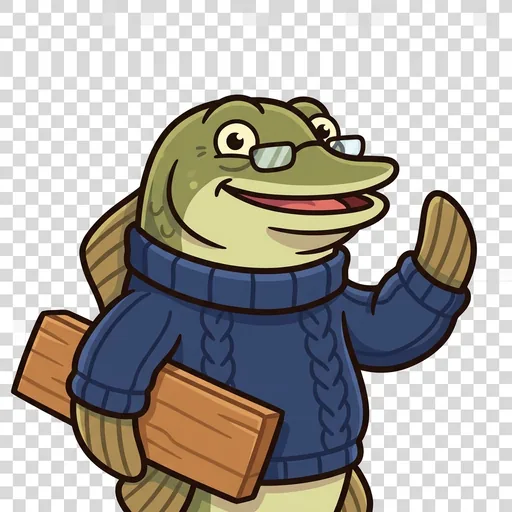 Poppa Pike The bridge is built by everyone laying one plank from IslePals
-
 Ambo The commons — whoever has the most can give one so nobody is left short from IslePals
-
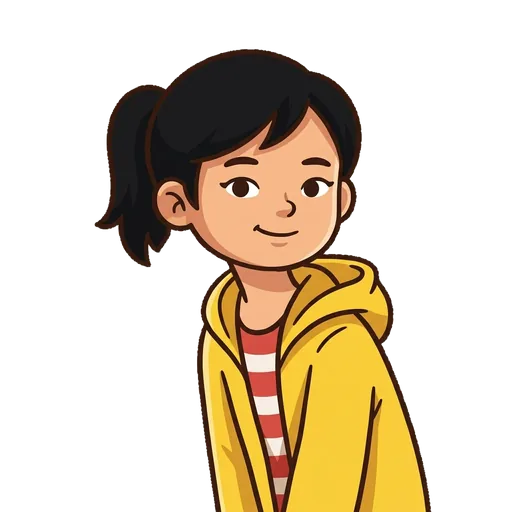 Lan a child of the Green Goes first; makes a friend in a minute
-
 Vera Give from what you can spare from TradePals
-
 Gilly Know your spares before you swap from IslePals
-
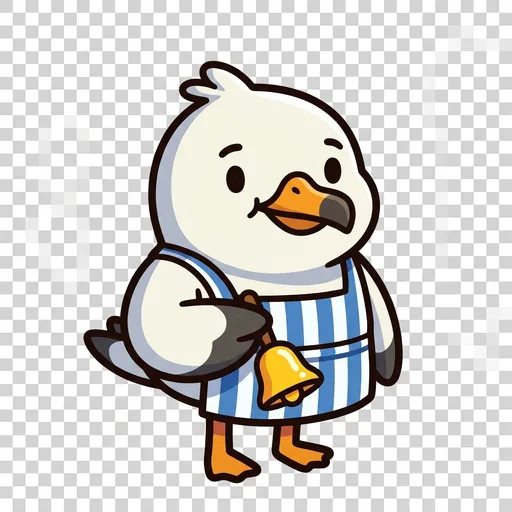 Gully A meeting where everyone gets a turn to speak from IslePals
-
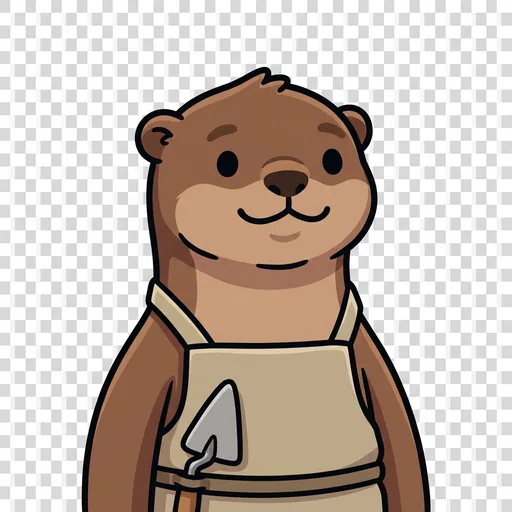 Mason A fair rule has to be fair for the one who gives, too from TradePals
-
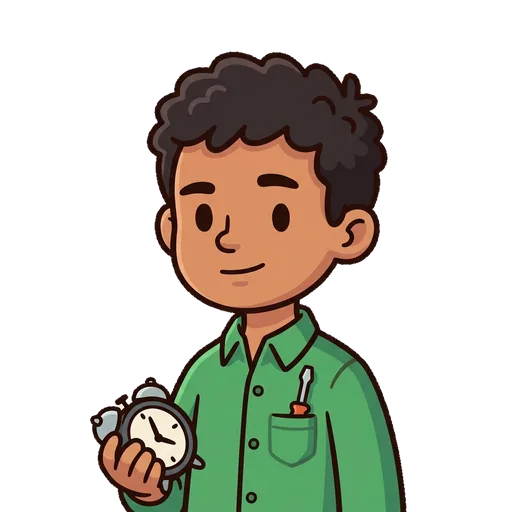 Beto a child of the Green Takes things apart
Every recurring character has a short tune, so you can tell who is on stage before a word is said. The tunes play only when you tap, and the Reading Access sound switch turns them off.
The Honest Page
Which parts of this story are true, stretched or made up?
True
- Groups that share something, like a fishing ground, a forest or a water supply, often look after it best when the people who use it make the rules together. Source
- Shared stores that work usually keep track of who takes what, out in the open where everyone can see. Source
- Two, one, three and two planks make eight. Eleven households and one more make twelve.
Stretched
- The island agrees its rule in one afternoon on the beach. What we simplified: Real communities usually take many meetings, and keep changing their rules as they learn what works.
Made up
- Gullwick, its Commons store, its book and its talking islanders are made up.