← The Game With Everything in It
The Fair on the Green · Reader · ages 6-8
Listen along
Loading audio…
Read by an AI-generated voice. The words on this page are the transcript.
1. Back to the Booth
The hammer rang once. A spark jumped off the anvil and did not go out. It waited. They followed.
The autumn fair stayed on the Green for four weekends that year, one for every weekend of October. Every Sunday night the stalls folded themselves up and drove away down the lane. Every Friday they came back, and the Green filled up again with bunting and toffee smells and the sound of somebody almost winning the hoopla.
This was the second weekend. Lan had a plain wooden die in her pocket, the one Trial had given her. She had carried it all week. She had taken it to school and back, to bed and back, to the bath and back, though she had kept it dry. Every few minutes her fingers went into her pocket to check it was still there. It always was.
"You'll wear the dots off," said Inkling.
"I won't," said Lan. "I'm only checking."
The spark did not stop at the cake stall, though the lemon buns were back. It did not stop at the hoopla, though Lan had decided this was the weekend she would get a ring on a peg. It went straight down the row to the very end, where the bunting ran out, and slipped under the curtain of the striped red-and-white booth.
The sign was the same as before: ANY GAME YOU WISH, WHILE YOU WAIT.
Lan and Inkling ducked inside.
The booth's striped curtain swung shut behind them, and the noise of the fair went soft. One leg of Trial's workbench was newer than the others, and a tiny hammer was scratched beside the joint.
Trial was on her stool by the workbench, exactly where they had left her. The round little capybara had the same canvas apron with its dozens of tiny pockets, and the same pencil behind her ear. She looked, if anything, even sleepier than before.
"You again," she said, and her whiskers lifted into something that was nearly a smile. "Good. I'll build it exactly as you wish. You know the rule: the fair packs up on Sunday night."
"It's my turn to wish," said Inkling, before Lan could open her mouth. "Lan had her turn last time. I've been thinking about my wish all week."
Lan opened her mouth anyway, and then closed it. It was fair. She had gone first last time. She went first most times.
"Go on, then," said Trial.
2. Everything in It
Inkling took a deep breath. She had clearly practised this.
"I wish for a game with everything in it," she said. "Dice. And cards. And a spinner with colours on it. And flags you can plant. And tokens you collect. And a long track that goes round and round. And a maze in the middle, with doors that open and shut. And a treasure at the very end, in a little box."
"Everything," said Trial.
"Everything," said Inkling. "Because a game with more things in it must be more fun. That's just counting."
Trial did not say that was a strange wish, or a greedy one. She only nodded, the way a baker nods when you ask for a cake with three kinds of icing, and reached into her box.
Out came the track, and it was long. She curled it round and round the bench like a sleeping snake. Out came a pack of cards with pictures of keys and boots and clouds on them. Out came a spinner with eight colours. Out came a handful of tiny cloth flags, a bag of round tokens, a cardboard maze with doors that really swung, and a little wooden box with a lid. Out came Lan's own die, because Lan held it out and said, "You can use mine." Out came a second die, so there would be two.
When Trial had finished, the game covered the whole bench and a bit of the stool. Lan had never seen so many things in one place.
"Wow," said Lan.
"Wow," said Inkling, very pleased.
Then Trial wrote out the rules. She wrote them on a long card in small neat letters, and when she had finished she held it up. It went almost down to the floor.
"Twenty rules," she said. "Exactly as you wished. A game with everything in it needs a rule for everything."
So they read the rules. They read slowly and carefully, because they wanted to get it right. Rule one was about who went first. Rule two was about the spinner. Rule three was about what the colours on the spinner meant. Rule four was about the cards, and rule five was about when you were allowed to look at the cards, and rule six was about what happened if you landed on a door.
They read about one rule a minute. By the time they reached rule twenty, the hoopla man outside had shouted "Three rings for a penny!" so many times that Lan had stopped hearing it.
Twenty rules, at one a minute. It was twenty minutes before anybody moved a single piece.
3. Which Rule?
"Right," said Inkling at last. "Lan, you go first. That's rule one. The youngest goes first."
Lan picked up both dice. Then she stopped.
"Wait," she said. "Do I roll first, or spin first?"
They looked at the card. Rule two said you spun first, to find out what colour your turn was. But rule seven said that if you were on the track, not in the maze, you rolled first.
"I'm not in the maze yet," said Lan. "So I roll."
"But rule two comes before rule seven," said Inkling.
"Does that matter?"
They did not know. They read rule two again, and rule seven again. In the end Lan rolled, and moved five, and landed on a square with a little key drawn on it.
"Pick up a card," said Inkling. "Rule four."
Lan picked up a card. It had a boot on it.
"What does a boot do?"
They looked at the card. Rule nine was about keys. Rule ten was about clouds. Nobody had written a rule about boots, because Trial had built it exactly as Inkling wished, and Inkling had not wished anything about boots.
"Maybe it means you get an extra turn?" said Lan hopefully.
"Maybe it means you go back," said Inkling.
They argued about the boot for quite a long time. Then it was Inkling's turn, and she landed on a door, and they had to read rule six again, and then rule twelve, which turned out to be about doors as well, but a different sort of door.
Every turn, somebody stopped to ask which rule. Every turn took longer than the turn before.
Once, a boy from the games tent put his head round the curtain to see what they were doing. He looked at the long track and the cards and the spinner and the maze with its doors, and his eyes went round.
"Can I play?" he said.
"Of course," said Inkling, delighted. "First you have to learn the rules. There are twenty."
The boy looked at the rules card, which went almost down to the floor. He read rule one. He read rule two. Then somebody outside called his name, and he said, "Maybe later," and was gone. He did not come back.
"He'll come back," said Inkling. "When he's finished at the hoopla."
Lan was not so sure. She had seen his face when he looked at the card. It was the face her little brother Tí made when he was told to tidy his whole room at once.
They went on playing. Inkling reached the maze and had to read rules thirteen, fourteen and fifteen, which were all about the maze. One door could only be opened by a key card. Another could only be opened by a red spin. A third could be opened by anybody, but only on an even roll, and they spent a long time deciding whether a two on one die and a four on the other counted as one even roll or two.
After half an hour, Lan had had two turns. Inkling had had two and a half, because they could not agree on whether the boot counted. The spinner sat in the middle of the bench, and Lan stared at it, and could not for the life of her remember what it was for.
4. Rule Twenty-One
Inkling stood up very straight. She had noticed something, and she knew exactly what to call it.
"I noticed something," she said. "It's stuck because the rules are muddled. That's the problem. So the answer is easy. We need rule twenty-one."
"Another rule?" said Lan.
"A special one," said Inkling. "A card that explains all the other rules. Which one comes first, and what a boot means, and what to do on the doors. Then it won't be muddled any more." She turned to Trial. "I wish for rule twenty-one."
Trial took the pencil from behind her ear. She looked at it. Then she put it back behind her ear.
She did not say Inkling was wrong. She did not say anything about rules at all.
"Watch what she does, not what she says," said Trial, and nodded towards Lan.
Inkling turned round.
Lan was not looking at the board. She had the long rules card in both hands, and she was reading it again, from the top, with her lips moving. Rule one. Rule two. Rule three. Halfway down, her eyes went heavy, and she opened her mouth in the biggest yawn Inkling had ever seen.
Then Lan noticed them both looking at her.
"Sorry," she said. "I'm still having fun. I promise. I just need to remember what the spinner does."
Inkling looked at the card in Lan's hands. It went almost down to the floor. She thought about a twenty-first rule at the bottom of it, explaining the other twenty.
She sat back down on the edge of the stool, and for a while she did not say anything at all.
5. What They Did
Trial opened her little notebook. She turned past the pages from last weekend, and past a page with a drawing of a race track on it, until she came to a clean page. At the top she had already written: THE EVERYTHING GAME.
"Can I tell you what I wrote?" she said.
Inkling nodded.
"You have been playing for thirty minutes," said Trial. "Not counting the reading at the start. In those thirty minutes, you spent twenty-five reading the card and asking each other which rule. You spent five minutes moving pieces."
"Only five?" said Inkling.
"Thirty take away twenty-five," said Trial. "Five."
Lan counted it on her fingers to be sure. It was five.
"But we said we liked it," said Inkling. "Lan said she was having fun. She promised."
"She did," said Trial. "I don't write down what you say. I write down what you do. When people like a game, they move the pieces. When they don't, they read about moving the pieces."
She closed the notebook gently.
"Why don't you go and look at the games tent," she said. "Things look different from a little way off. The game will still be here."
6. One Breath
The games tent was warm and busy and smelled of grass. The ladybird was there at her garden game with the two dice, and the fennec fox was rolling her plain die behind the tent pole, and children were everywhere.
But the busiest table of all was in the corner, and Lan and Inkling had not noticed it last weekend.
It was a little table with a little sign: ONE BREATH.
Behind the table sat a brown duck in a green sweater vest with a white collar. She had a small board in front of her with a short track on it, two counters and a die. A girl and her granny sat down on the bench opposite, still in their coats.
The duck took one breath.
"Roll, move, first one home wins. One breath. Go," said Primer.
And they went. The girl rolled and moved. Her granny rolled and moved. Nobody read anything. Nobody asked which rule. By the time the girl had wriggled one arm out of her coat sleeve, her granny had won, and they were both laughing, and the girl said, "Again!" with her other arm still in her coat.
Another family sat down. "Roll, move, first one home wins," said the duck. "One breath. Go."
Inkling watched three families sit down and start before she said anything. She was learning to look first.
"How do you make them so short?" she said at last.
The duck looked at her with bright black eyes.
"If you can't teach it in one breath, it's too big," said Primer. "Say it short, then play."
"But what about all the other things?" said Inkling. "The cards and the spinner and the maze? Don't they make it more fun?"
"Some do," said Primer. "Some don't. Every rule has to earn its place. If a rule makes people stop and read instead of play, it hasn't earned it." She tilted her head. "What do you DO on a turn? That's the question. If you can't say what you do on a turn in one breath, nobody will want a turn."
Lan whispered, "What do you do on a turn in the everything game?"
Inkling opened her mouth to say it, and found that she couldn't. You rolled, or spun, or picked a card, or opened a door, or read rule six, depending. It took a lot more than one breath.
7. Sunday Evening
They did not go back to the booth straight away. Inkling wanted to think. They watched the ladybird's garden game, and Lan threw three rings at the hoopla and did not get one on, and they shared a lemon bun on the bench outside the cake stall. Then it was Saturday night, and then it was Sunday, and on Sunday the rain came and nobody went to the fair much at all.
Lan spent most of Sunday at the kitchen window, watching the rain run down the glass. She had wanted to go back to the booth. But she also had a strange feeling she did not like, a feeling a bit like having eaten too much cake. Every time she thought about the everything game, she thought about the long card, and her head went heavy.
Inkling came round after lunch with her raincoat dripping. She did not say much. She sat at the kitchen table and drew on the back of a shopping list. She drew a track, and then she drew a maze on top of it, and then she rubbed the maze out, and then she drew it in again.
"What are you doing?" said Lan.
"Thinking," said Inkling. "I don't know about what yet."
On Sunday evening the rain stopped. The hoopla man was taking down his pegs. The cake stall had two buns left and a sign that said HALF PRICE.
The spark was waiting for them by the striped booth. They ducked inside.
The everything game was still there, covering the whole bench and a bit of the stool. The long track curled round and round. The maze doors stood half open. The little treasure box sat at the very end, and nobody had ever reached it.
Trial was yawning over her box of parts.
Inkling sat down on the stool and looked at it all.
"I spoiled it," she said, in a small voice. "I put everything in. I thought more things would be more fun. And nobody wants to play it. Not even me."
Lan sat down next to her. For once, she did not say anything quickly. She put her hand in her pocket and held the die.
"It's not spoiled," she said finally. "It's just full."
8. Taking Away
Inkling looked at the full bench for a long time.
Then she did something she did not usually do. She did not name it straight away. She counted first.
She counted the things on the bench. A track. Two dice. Cards. A spinner. Flags. Tokens. A maze. A treasure box. Then she counted the things they had actually used when they were having fun, in those five minutes out of thirty. The track. The die. And, once, when Lan had planted a flag by mistake and they had both laughed, the flags.
"Primer said every rule has to earn its place," she said slowly. "Most of these didn't earn it."
She picked up the spinner and put it back in Trial's box. She put the cards back. She put the tokens back, and the second die, and the cardboard maze with its swinging doors. She hesitated over the treasure box, because it was the best part, and then she put that back too. Lan watched her with wide eyes.
Then Inkling picked up the long rules card. She took Trial's pencil, with Trial's nod, and she crossed out rules. She crossed out the spinner rules and the card rules and the door rules and the maze rules and the boot rule that had never been a rule. She crossed out seventeen rules altogether.
Three rules were left.
"Roll the die," she read out. "Move that many spaces. First one home wins."
She looked at Lan. "That fits in one breath," she said. "I checked."
"It's a bit plain," said Lan.
Inkling nodded. She had thought that too. She looked at the little cloth flags, which were the one thing they had laughed at. And then she thought of something nobody had shown her, not Trial, not Primer, nobody.
"One flag each," she said. "Once a game, you can plant your flag in front of the other player. Then they have to wait a turn."
"Only once?" said Lan.
"Only once," said Inkling. "So you have to choose when."
They put the track straight. They put two pieces at the start. They each took one flag. Lan rolled her own die, the plain wooden one, and moved four.
They played.
It was quick. It was fast. And it was not plain at all, because every turn they were both thinking about the flag. When should you plant it? Now, when the other player was nearly home? Or should you save it? In the first game Inkling planted hers too early, and Lan won. In the second game Lan saved hers so long that she forgot she had it, and Inkling won. In the third game Lan planted her flag exactly when Inkling was one space from home, and laughed so loudly that the hoopla man looked in through the curtain to see what was going on.
Halfway through the second game, the boy from the games tent put his head round the curtain again.
"Is it still the twenty-rule one?" he said warily.
"Three," said Inkling. "Roll, move, first one home wins. And one flag each, to make someone wait a turn, but only once."
The boy sat straight down on the floor by the bench. He did not even take his hat off. He played the winner of the second game, which was Inkling, and he planted his flag on his very first turn, which was a terrible idea, and they all laughed about it, and he did not mind at all.
They played three games before the hoopla closed. They would have played a fourth, but the lamp in the booth was getting low.
9. The Second Piece
Trial had watched the third game. She had watched every roll and every flag. She had not written anything down. She had only sat very still, the way she did, and smiled.
When the game was over, she reached into one of the tiny pockets of her canvas apron and took out a small cloth flag. It was a plain one, with nothing on it, just like the ones in the game.
"For you," she said, and gave it to Inkling.
Inkling held it for a moment. Then she held out her hand to Lan, and Lan understood, and opened her pocket. Inkling dropped the flag in, beside the plain wooden die.
"We keep them together," said Inkling.
That was the second piece.
"What will you build next weekend?" said Lan.
"Whatever you wish," said Trial, and yawned. "Exactly."
The curtain swung open, and the Green was full of fair again. The bunting was dripping from the rain, and the last two lemon buns had gone, and somebody had finally got a ring on a peg at the hoopla, and was cheering.
The spark dimmed to a warm dot and settled back on the anvil. The Green was just the Green again.
Back on the Green
At home, Lan's little brother Tí wanted a game. Inkling made one up on the back of an envelope. It had a track drawn in pencil and just two rules. She said them in one breath.
Tí was playing before his coat was off. He planted a pencil like a flag, which was not one of the rules, and they all decided it could be.
Tell the story back to someone. Why did nobody want to play the everything game? What did Inkling take away, and what did she add?
Saved. The next chapter will be here whenever you come back.
Who you met
-
 Trial Watch what players do, not what they say from TableForge
-
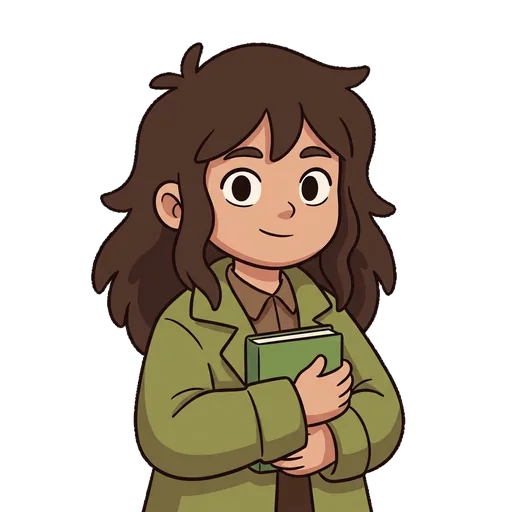 Inkling a child of the Green Names what she notices
-
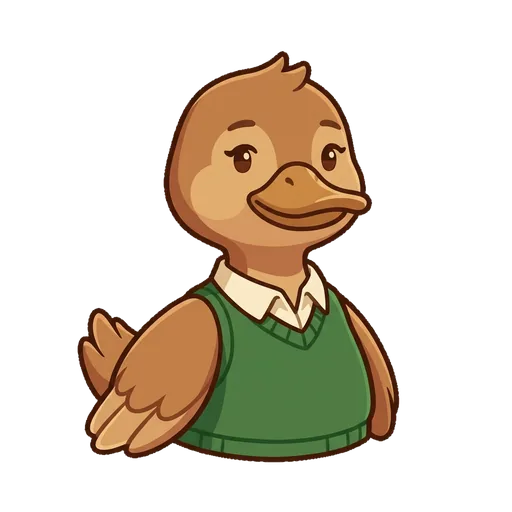 Primer A game you can teach in one breath is a game people start from TableForge
-
 Lan a child of the Green Goes first; makes a friend in a minute
Every recurring character has a short tune, so you can tell who is on stage before a word is said. The tunes play only when you tap, and the Reading Access sound switch turns them off.
The Honest Page
Which parts of this story are true, stretched or made up?
True
- Game makers test a new game before anyone buys it, to find the places where it goes wrong. This is called playtesting. Source
- Twenty rules read at one a minute take twenty minutes. Three rules take three.
Stretched
- If you can't teach a game in one breath, it's too big. What we simplified: Big games with many rules can be wonderful for older players who like learning them. The point is that a game should fit the people playing it.
Made up
- The wishing booth, Trial's notebook, the ONE BREATH table and the fair's animal stall-keepers are made up.