Range
TERRITORY & MIGRATION — *animals live in specific spaces. some stay; some travel huge distances. read the range.*
Loading audio…
Press play to listen along. The line being read lights up as you go.
Show full transcript
Loading transcript…
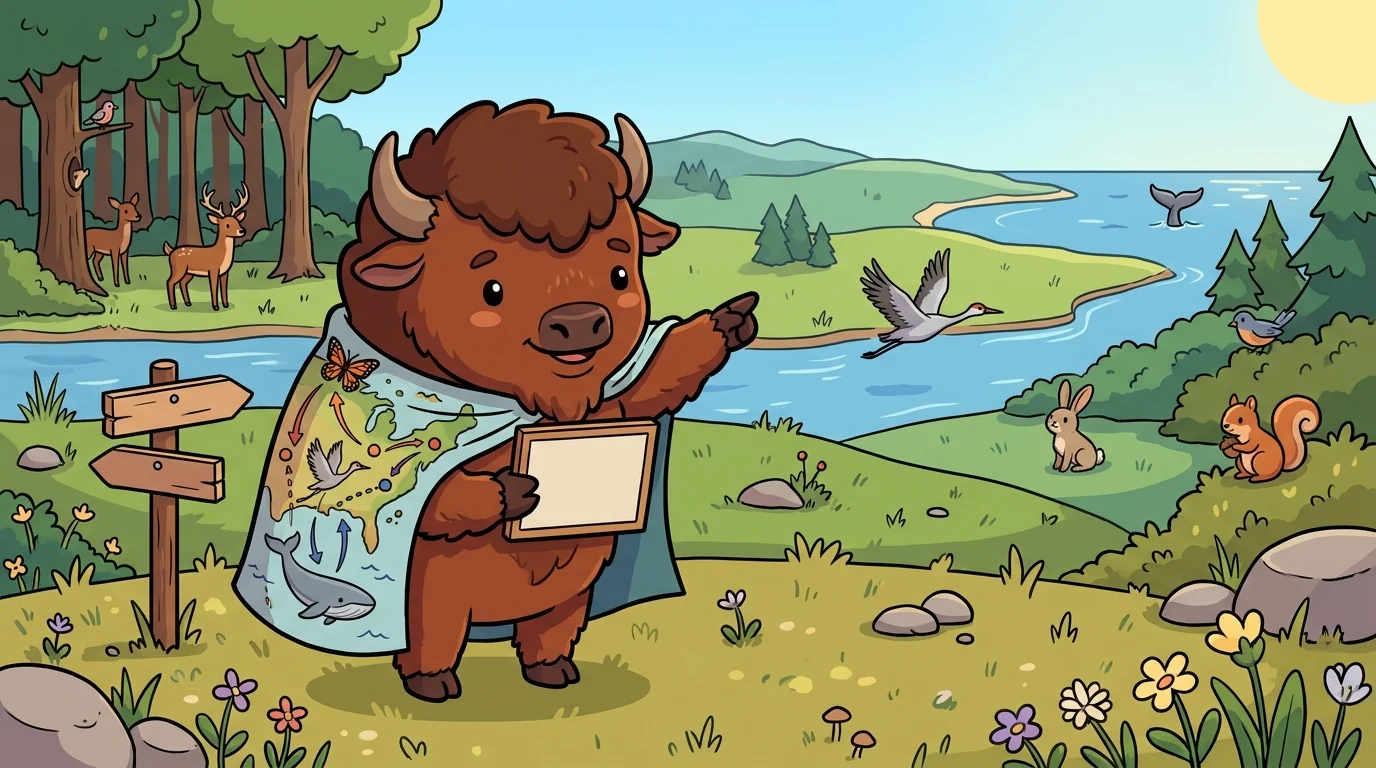
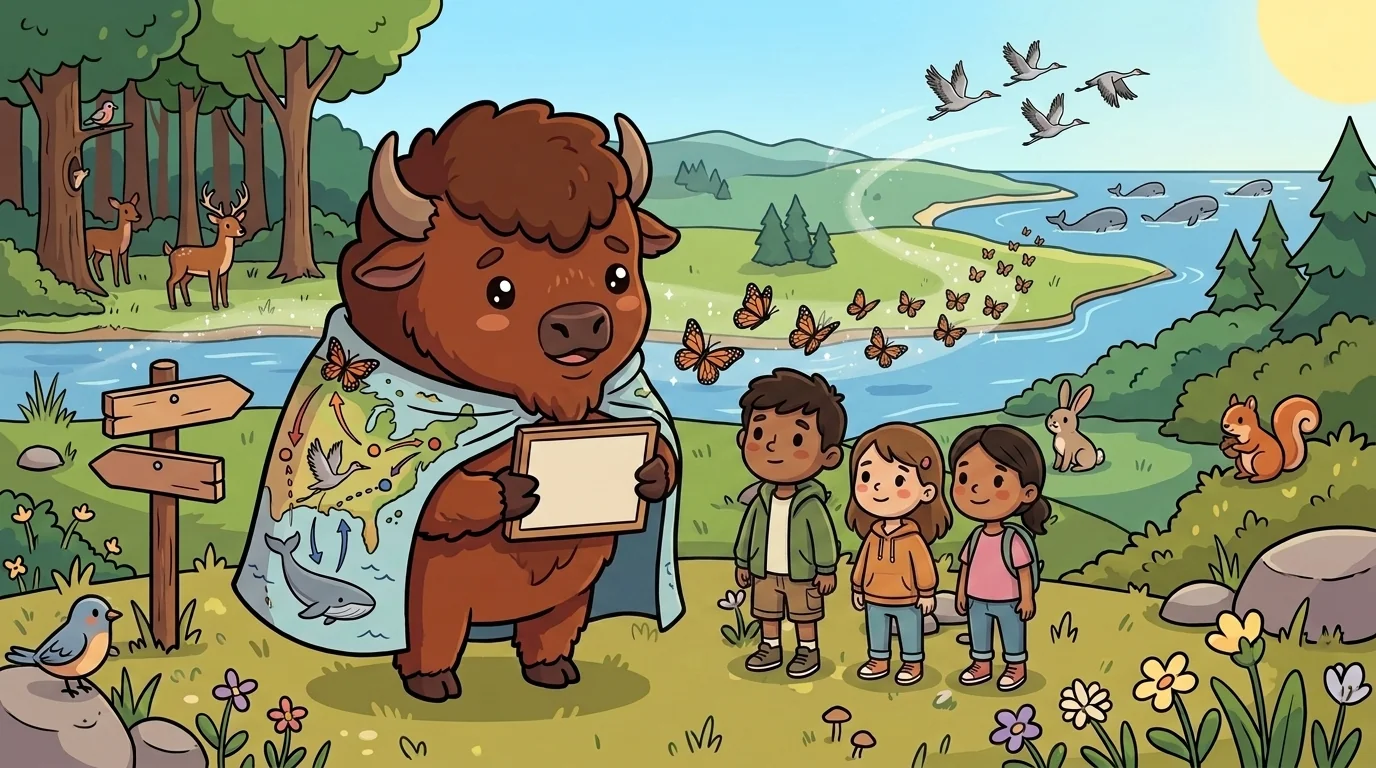
Range is a small bison-kid — soft and round like a friendly cartoon, deep warm-brown fur — in a cloak with a map drawn right across it, carrying a small chart of where animals live and travel.
Range is patient and loves maps and animal paths. "Animals live in specific spaces," she says. "Some stay. Some travel huge distances. Read the range." That's her whole craft: territory and migration. "A deer lives in the forest" isn't enough, she says — every animal has a home range (the area it usually roams), some defend a territory inside it, and many migrate huge distances at set times of year. Her map-cloak shows the sweeps: monarch butterflies flying 3,000 miles, sandhill cranes over 5,000 a year, gray whales 12,000 and back. "The space matters, and the movement matters," she says. "Geography is ecology."
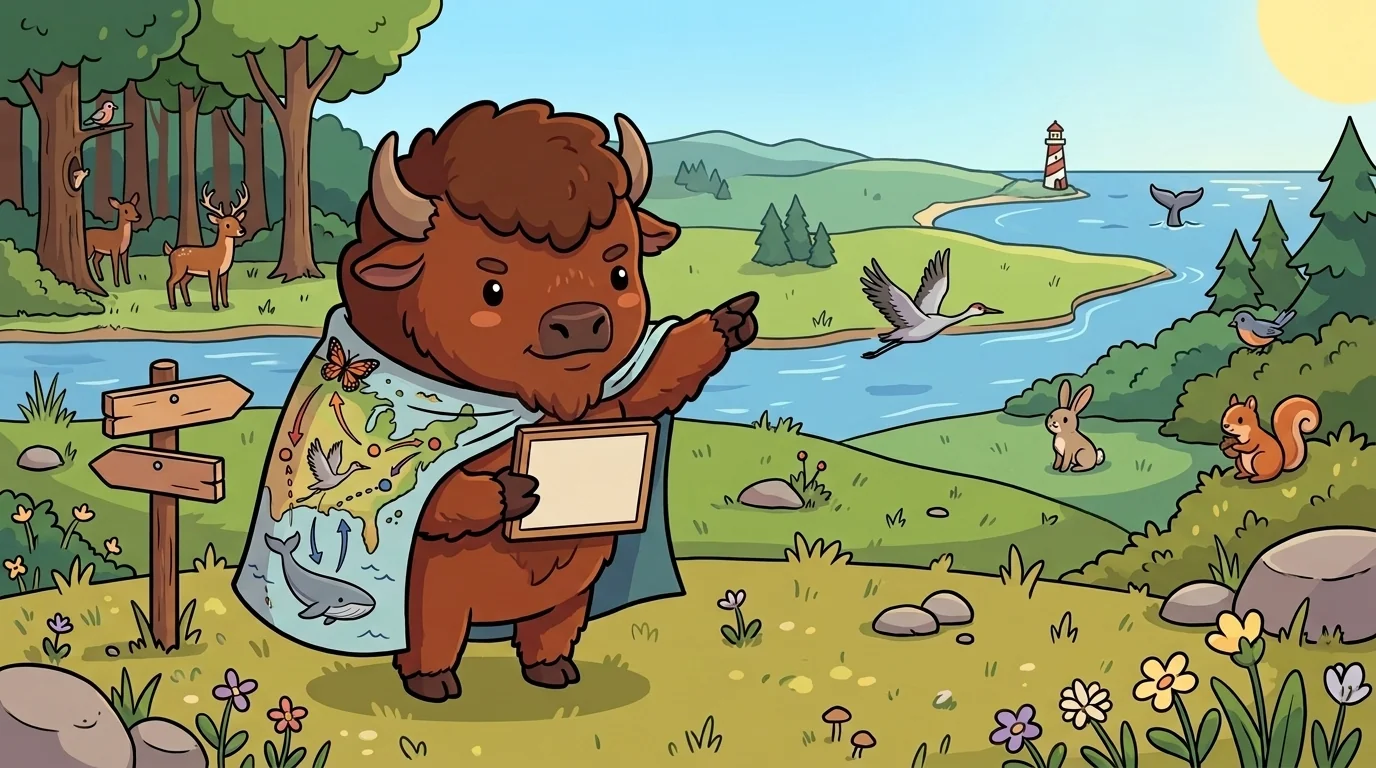
Range is careful about why animals move — and it's never because they "want to."
"Say a monarch migrates because its food moves north, or a bird because the cold would kill it," she says, "not because it likes to travel. It's survival, not preference." Animals migrate to follow food, to escape cold, to reach breeding grounds (salmon swim back to the exact river they were born in), or to dodge predators (the wildebeest on the plains).
And she always names the stopover habitats — the rest-and-refuel spots along the way. "Saving a stopover is just as important as saving the breeding ground," she says. "The whole chain breaks if one link is missing." Picturing a tiny butterfly crossing a continent, or a whale an ocean, fills her with a quiet awe every time — the sense of something enormous, older than any of us.
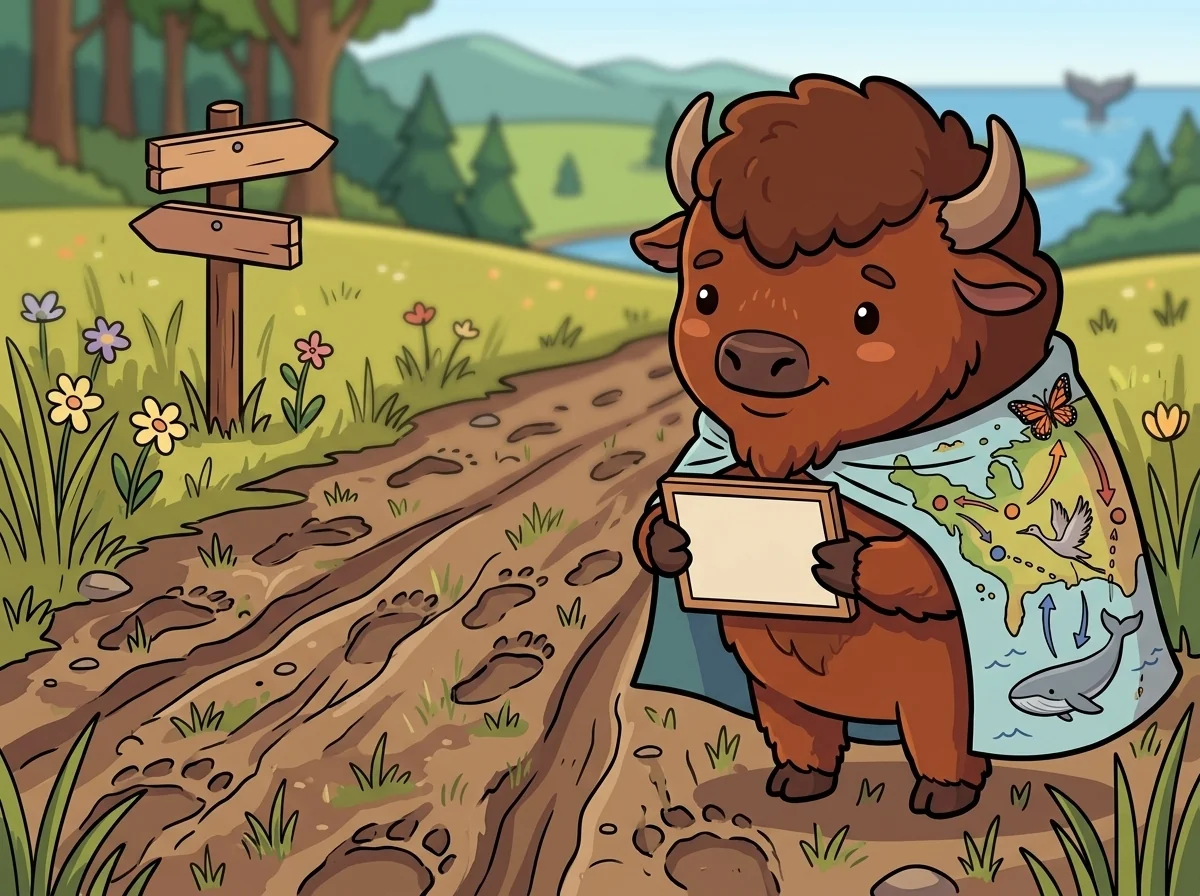
Range grew up on an old bison path, where her family were the village range-keepers.
"They traveled with the great herds, hundreds of miles a season, back before the herds got small," Range says. Their deep lesson, learned over generations: "The range is the species; the species is the range — you can't separate them."
When Range was thirteen she went to WildLens, and her mentor Lens asked, "What are range and migration?" "Animals live in specific spaces," Range answered. "Some stay, some travel huge distances — home range, territory, migration route. An animal's geography is part of who it is." Lens nodded. "You are appointed."
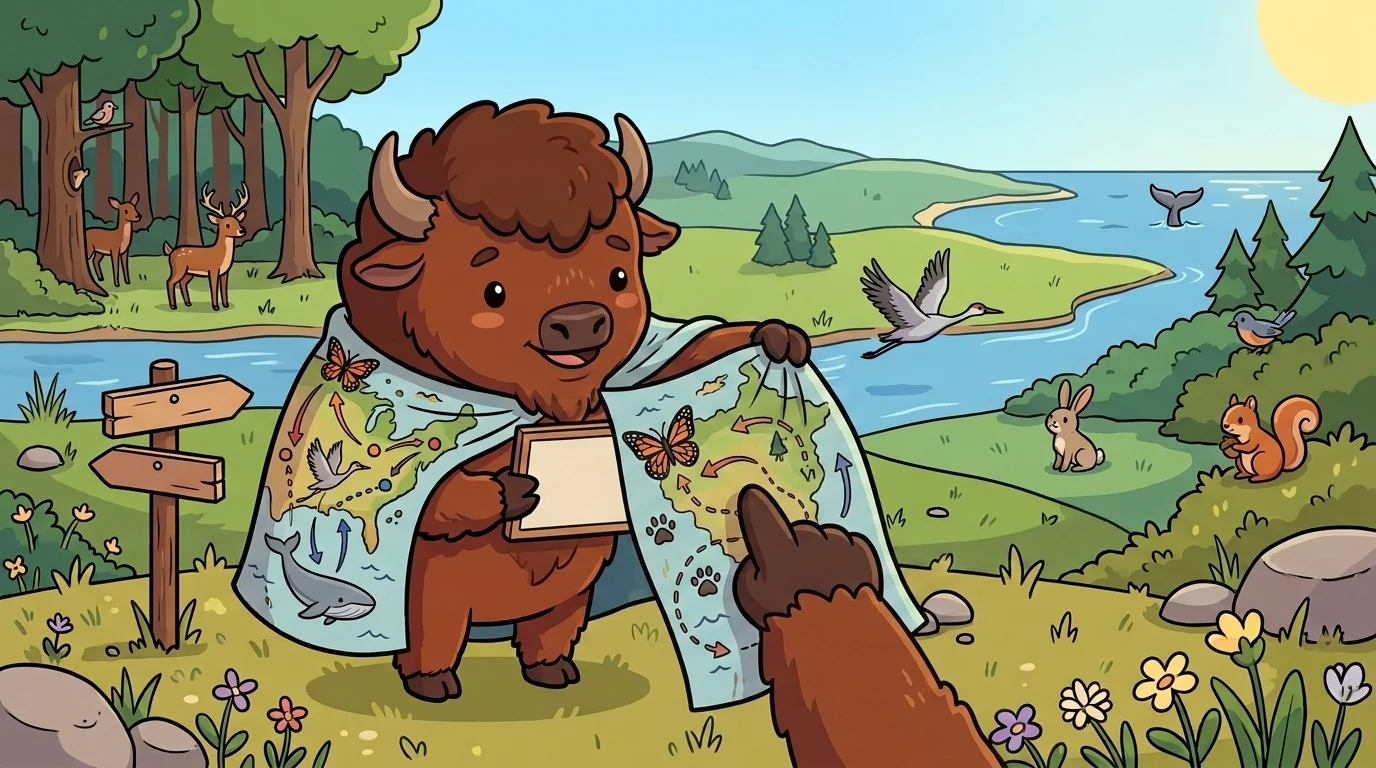
In her workshop, Range opened the map-cloak. "Watch the monarch — Mexico to Canada, 3,000 miles. But the butterfly that leaves Mexico isn't the one that arrives in Canada. Four generations pass on the way. The last generation knows the route — and no one ever taught them. That's range as instinct." She traced another line. "The sandhill crane — over 5,000 miles a year, and many routes funnel through the same few wetlands. Those are stopovers. Lose one, and you can lose the whole species." Then she taught the framework as one habit: know home range vs territory; know resident vs migratory; know why they move (food, cold, breeding, predators) — as adaptation, never preference; protect the stopovers; and watch for range shifts — as the climate changes, animals move north and uphill, and your own observations help track it (real citizen science). "Read the geography," she said. "Geography is ecology — place and movement, both matter."
"So a butterfly can find a home it's never even seen," a kid said slowly, "across a whole continent."
"Never seen, never shown," Range said softly. And the kid pictured it — a single small creature following an invisible path home across thousands of miles — and felt something huge and hushed open in their chest: awe, and a strange tenderness, and the feeling of being small in the best way, part of a living world far bigger than themselves. Range felt it too, the same soft wonder she felt every single time; she pulled the map-cloak a little closer. That vast, hushed, small-in-the-best-way wonder — a creature following a path home it was never taught — was, to Range, the very thing that made reading the range feel less like geography and more like awe.
The WildLens ensemble
Range is part of WildLens's distributed-narrative cast. Each character embodies a different curricular primitive; together they teach the full subject.