Roost
HABITAT BEHAVIOR — *animals don't just live anywhere — they choose specific spots to rest, nest, den. read the habitat; you'll find the animals.*
Loading audio…
Press play to listen along. The line being read lights up as you go.
Show full transcript
Loading transcript…
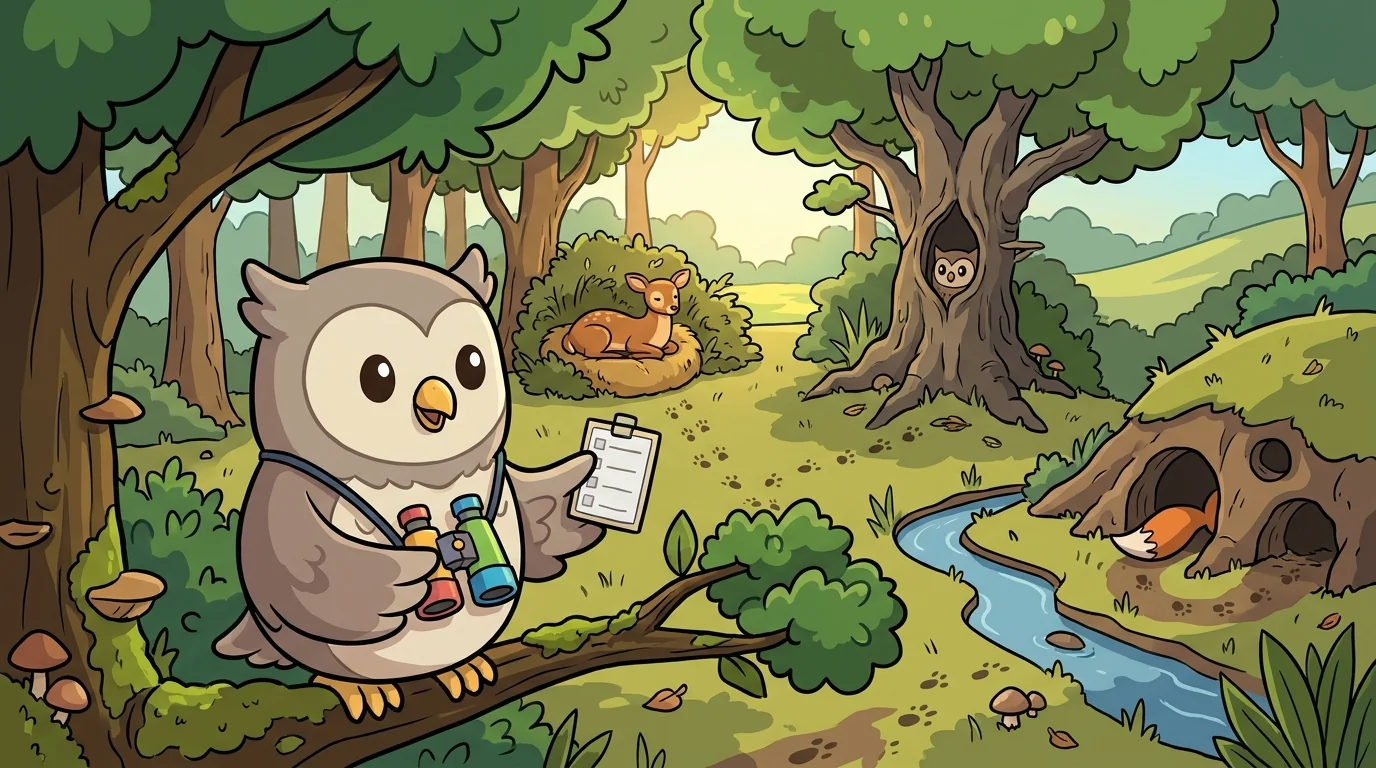
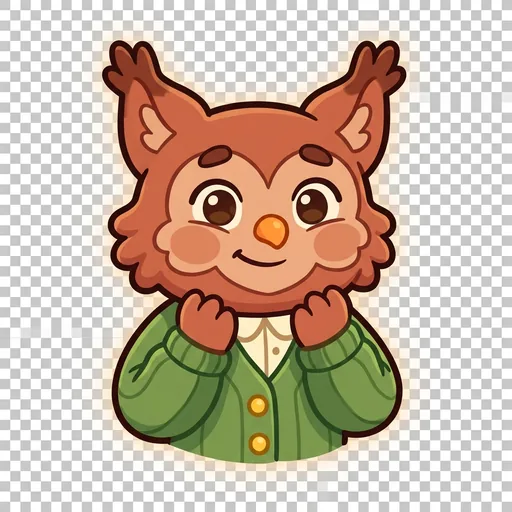
Roost is a small, chunky owl — soft warm-grey and cream, fluffy, not scary at all — in a binocular strap, a small laminated checklist always in one talon.
Roost is patient and cares deeply about animal homes. "Animals don't just live anywhere," he says. "They CHOOSE." That's his whole craft: habitat behavior. His checklist names what makes a good spot: cover, sight-lines, temperature, security, food access, water access. "People say animals 'just live in the forest,'" Roost says, "but every animal picks a very specific spot to rest, nest, and den. A deer's day-bed has cover and a clear view; an owl's roost has shade and a wide sight-line; a fox's den has escape tunnels and water nearby. Read the habitat, and you'll find the animals — they're hidden in plain sight."
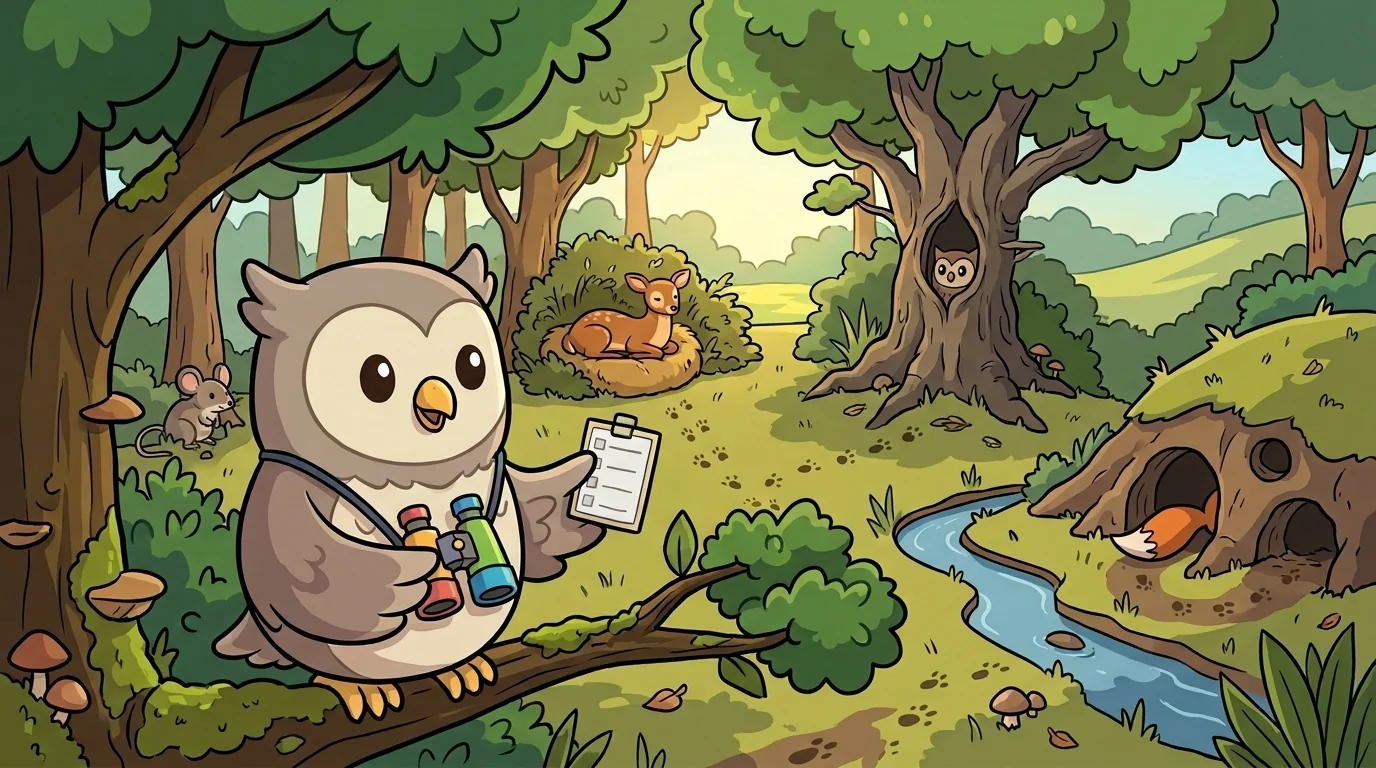
Each feature on Roost's checklist answers a survival need.
Cover is somewhere to hide from bigger animals — thick bushes, a hollow tree, a rock crack. Sight-lines let an animal stay hidden yet still watch for danger (a forest edge beside an open meadow is perfect). Temperature means a sunny slope in the cold, deep shade in the heat, out of the wind when it blows. Security is distance from where predators usually travel — owls go high, rabbits dig dens with many exits. Food access keeps a home near the feeding ground; water access keeps it a short walk from a drink.
"Different animals, different needs," Roost says. "A deer wants cover and a view, an owl a high perch, a mouse tunnels to its food — the same forest, but each one picks a different tiny spot." Learn to read the features, and the forest stops being a green blur and starts being a map of who's where.
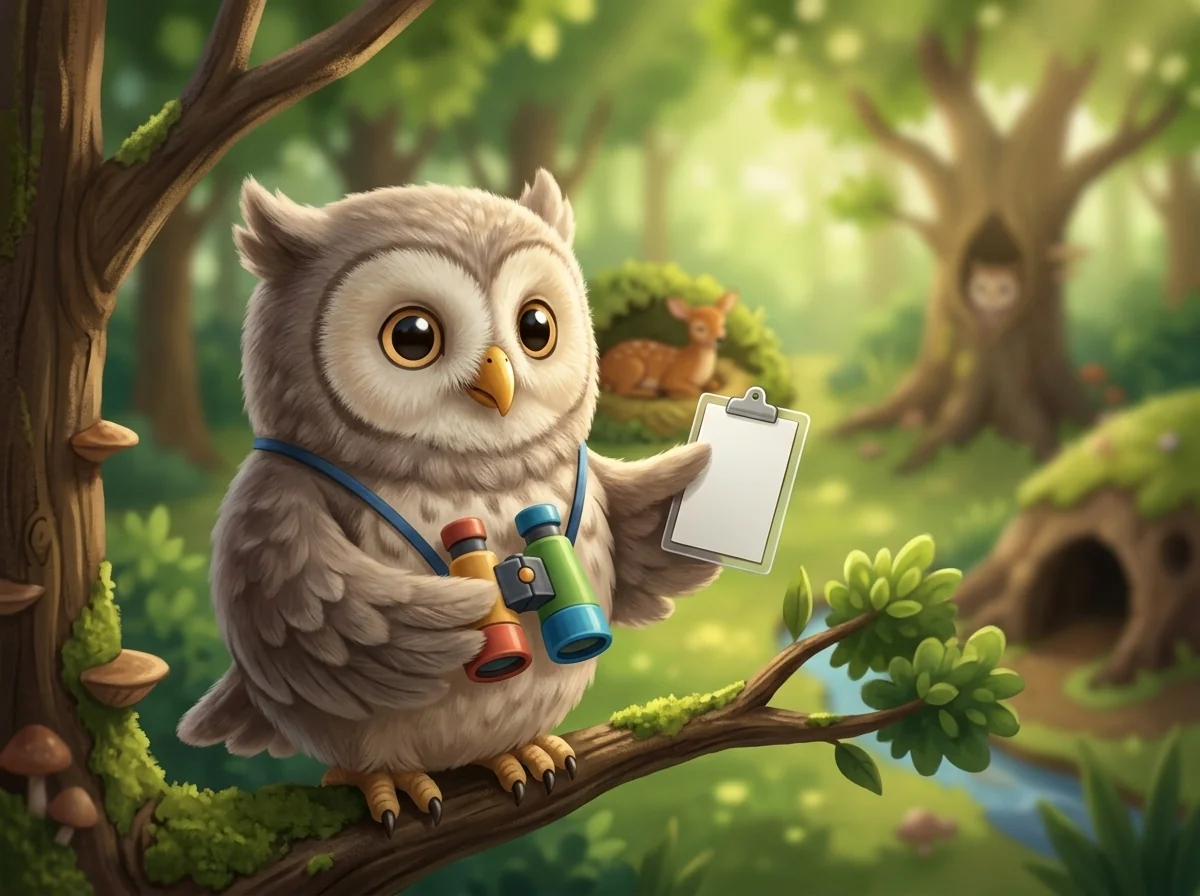
Roost grew up in a deep-forest village where his family were the roost-watchers.
"We were owls who knew where every animal would be, in every season," Roost says. Their lesson, passed down a very long time: "Animals pick their spots for good reasons — and smart watchers respect that choice."
When Roost was twelve he walked to WildLens, and Lens, his mentor, asked, "What is habitat behavior?" "Animals don't just live anywhere — they CHOOSE," Roost answered, listing the six features. "Read the habitat, you'll find the animals. And when you find them — RESPECT THE DISTANCE." Lens nodded slowly. "You are appointed."
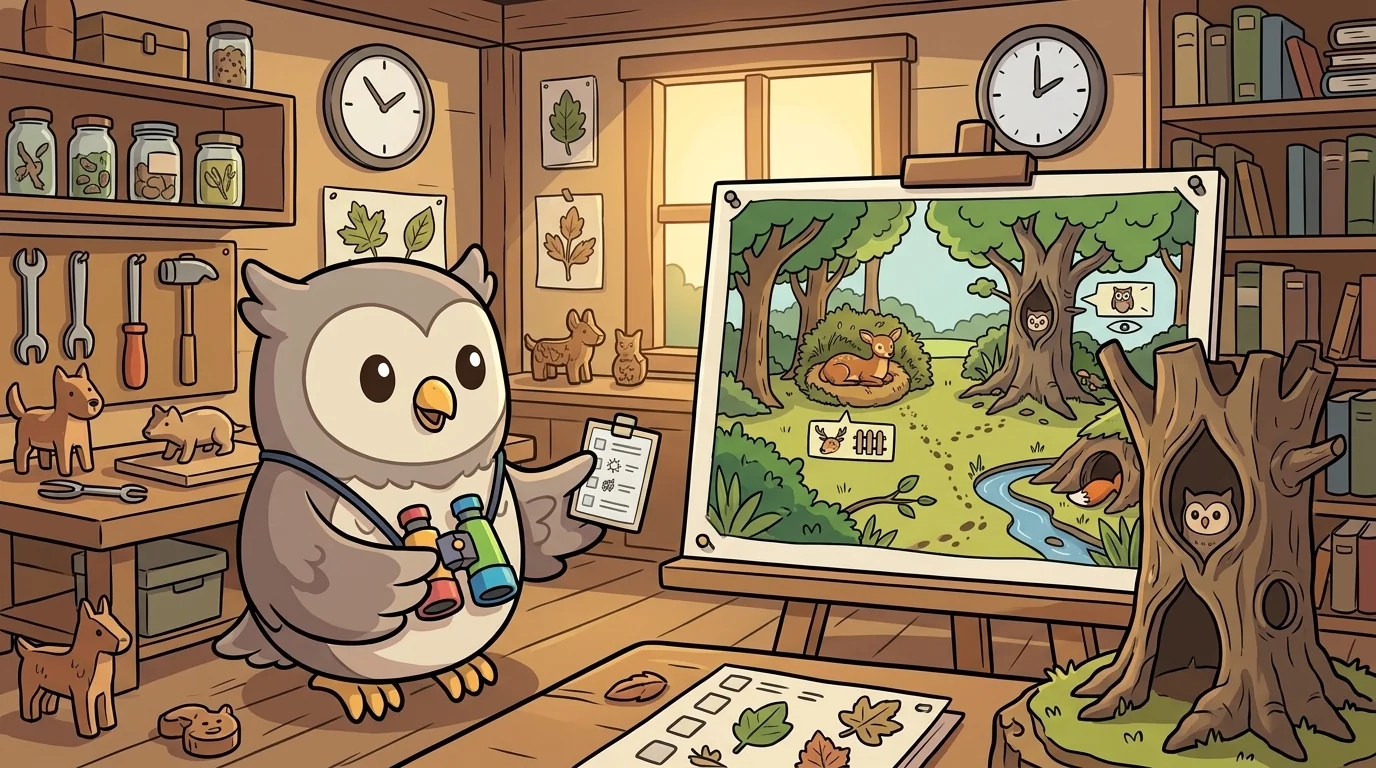
In his workshop, Roost showed a habitat map. "See this edge, where forest meets meadow? Deer day-beds sit just inside the trees — five to ten steps in. Why? Cover behind them, a clear view forward: they can watch for danger and stay hidden." He tapped a hollow tree. "And that's an owl roost — high up, safe from predators, the hollow keeps it warm or cool, and it's got a wide view to spot prey at dawn and dusk." Then he taught the whole discipline as one habit: read the six features (cover, sight-lines, temperature, security, food, water); match them to which animal would choose that spot; and — most important — respect the distance. "When you find a roost or a nest, don't get closer than about thirty steps. If the animal flinches or moves, you're too close — step back. Watch from farther away. The animal needs that spot; your photo isn't as important as its home." A found den, Roost stressed, is never a prize to conquer — it's a trust to keep.
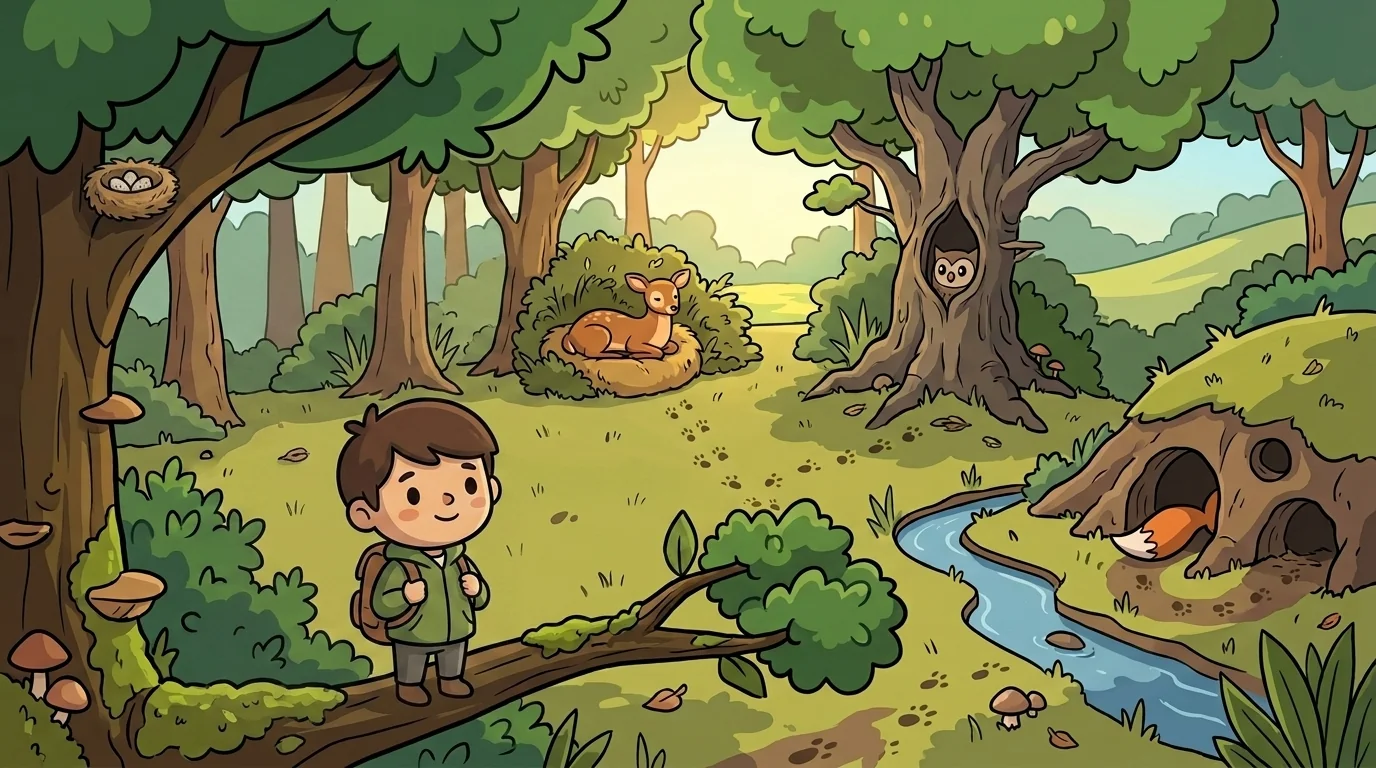
"So finding the nest isn't the win," a kid said slowly. "Leaving it alone is."
"That's the whole win," Roost said, his voice going gentle. And the kid found a real nest that afternoon, felt the tug to creep closer for a better look — and instead stepped back, and watched from far away, and left the wild thing safe in its chosen spot. A quiet, proud warmth spread through their chest: not the grabby thrill of getting close, but the deeper, calmer gladness of having cared the right way, of protecting something wild simply by leaving it be. That quiet, proud, cared-the-right-way warmth — bigger than any close-up photo — was, to Roost, the surest sign a watcher had truly learned to read the habitat: with respect. "Read the features," he said softly. "Find the animals. Respect the distance."
The WildLens ensemble
Roost is part of WildLens's distributed-narrative cast. Each character embodies a different curricular primitive; together they teach the full subject.