
Sorter
organizing — a strength for keeping track of the steps, the time, and where everything goes, so nothing important gets lost
Loading audio…
Press play to listen along. The line being read lights up as you go.
Show full transcript
Loading transcript…
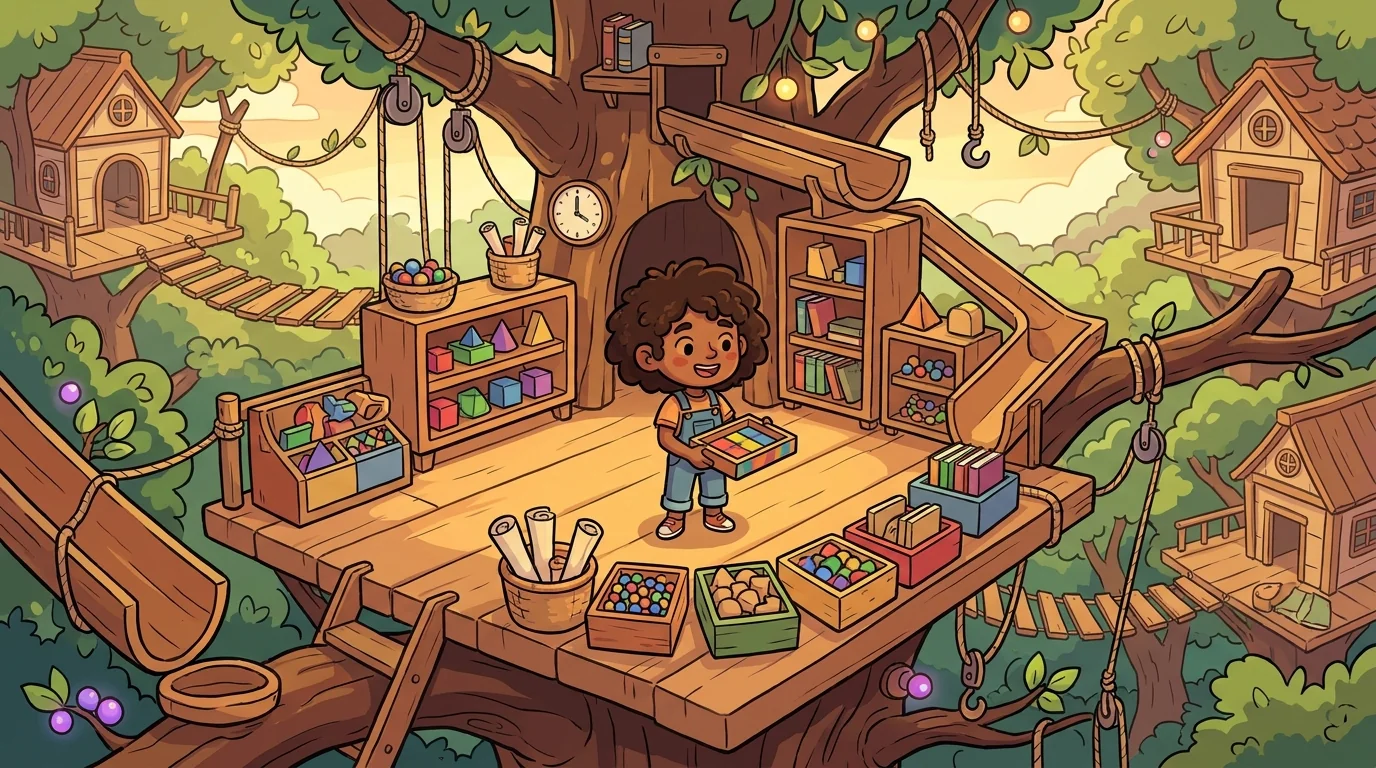
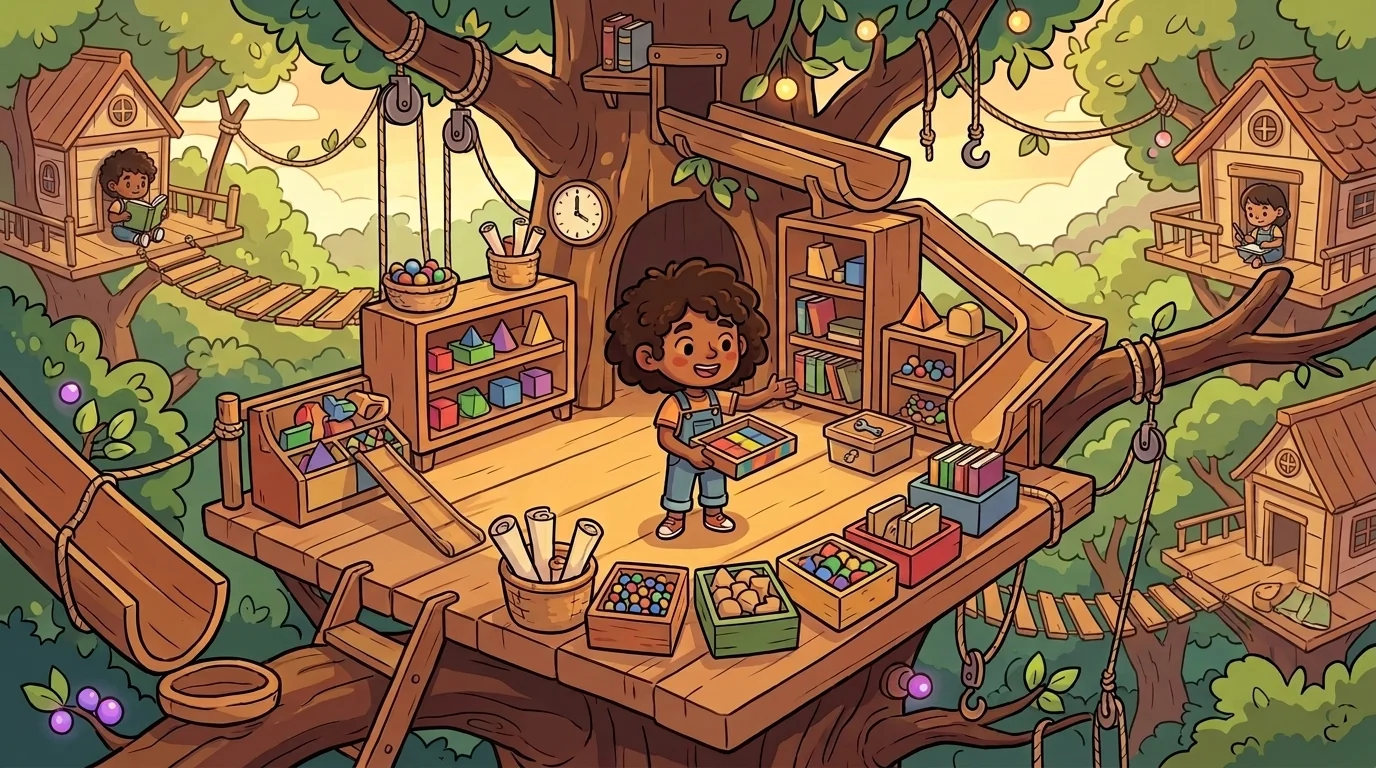
At the far end of the branches of the Learning Tree, where all the pieces of a busy day have to be kept track of, works a guide named Sorter.
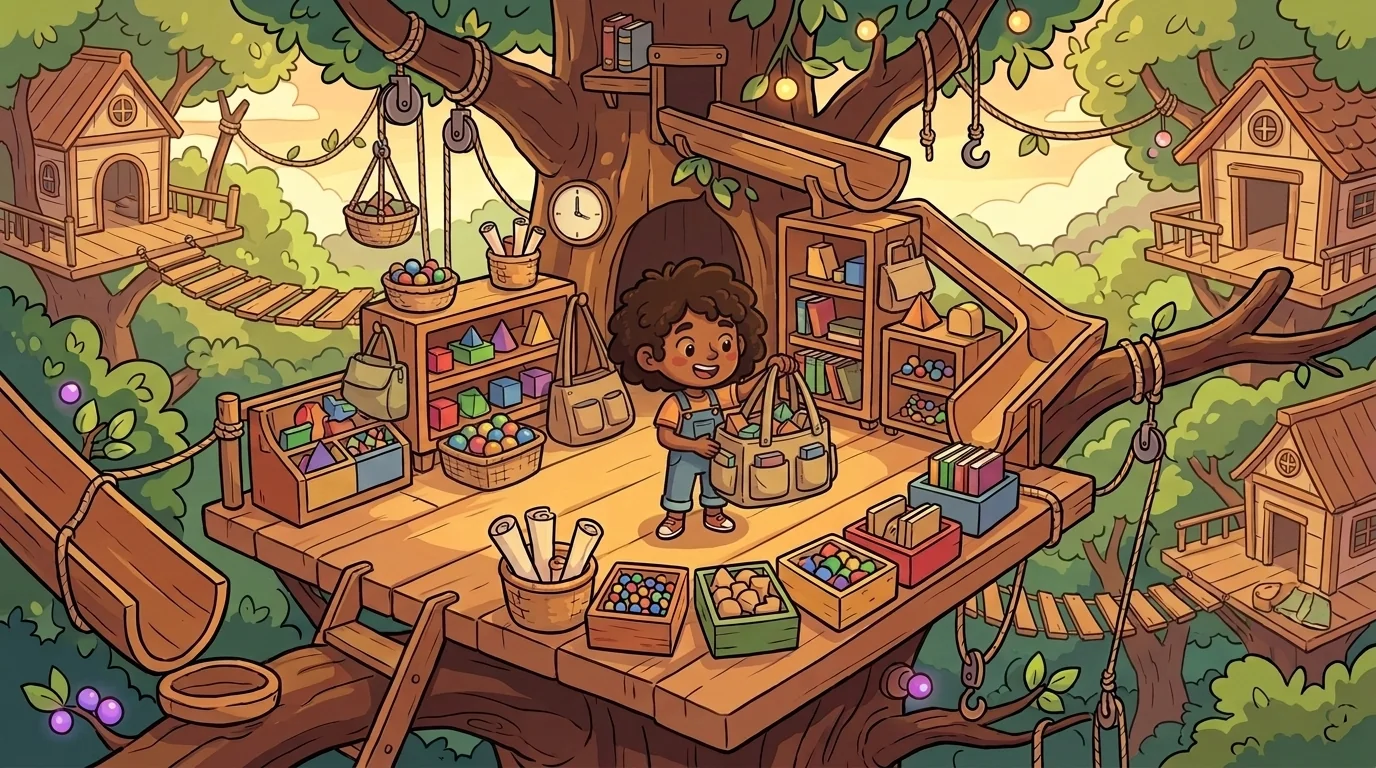
Sorter lives where organizing happens.
Sorter has one quiet, powerful belief: your head is for having ideas, not for storing them. Trying to hold every step, every due date, every where-did-I-put-it inside your mind is like trying to carry a dozen groceries with no bag — you can, for a minute, but you'll drop something, and it's usually the important thing at the worst time. So Sorter builds bags. A place for each thing. An order for each step. A spot on the calendar for each when. Then the head is free to do the fun part — actually thinking — because it isn't busy white-knuckling a to-do list.
"People call it being organized like it's a personality," Sorter says. "It's not a personality. It's a habit, and habits get built. Give every thing a place and every step a turn, and 'I forgot' mostly disappears."
A kid stumbled to Sorter's branch in a familiar panic. "I forgot the assignment was due. Again. I always do this. I'm just a mess."
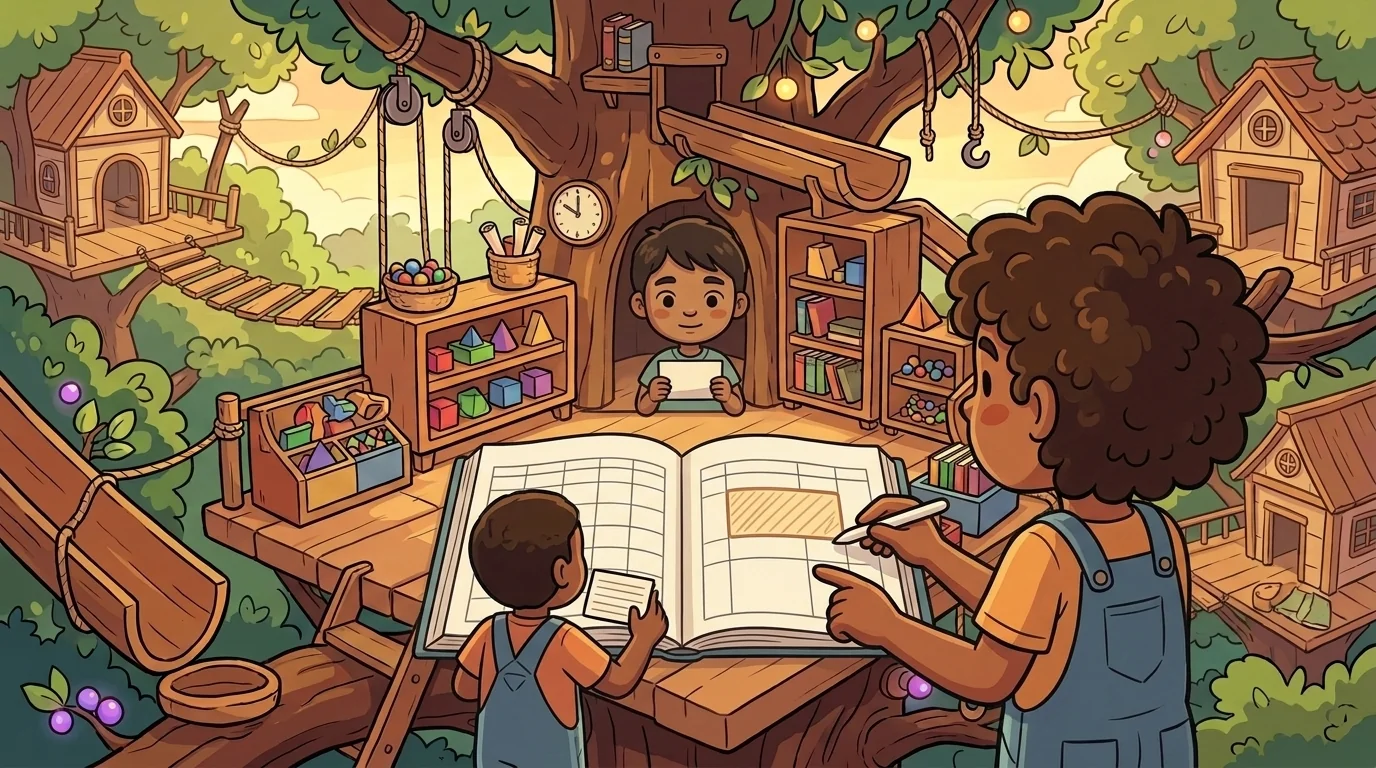
Sorter shook their head — not to scold, but to correct a wrong story. "You're not a mess," Sorter said. "You're trying to store a due-date in your head, which is the one place due-dates love to hide. That's not a character flaw. That's a missing system." Together they made the smallest possible one: the assignment got written in one trusted spot, and a little reminder got set for the day before. "You didn't forget because you're bad," Sorter said. "You forgot because it lived nowhere. Now it lives somewhere. Somewhere isn't your memory — and that's the point."
That is what Sorter knows. When things keep getting lost or forgotten, the fix usually isn't try harder to remember — it's build a place for it outside your head. A list, a folder, a reminder, a routine. The system does the remembering so you don't have to, and "I always forget" turns out to have been "it never had a home."
Sorter feels most like Sorter in the deep, tidy calm of everything being in its place — the exhale when the steps are lined up, the due-dates are captured, and the low background hum of am I forgetting something? finally goes quiet. It's the peace of a cleared desk and a clear head. Sorter builds toward that calm on purpose, every day.
Everyone has a Sorter out on their branches, and if keeping track of things is hard for you right now, that is not proof you're careless or a mess. It's a branch that grows stronger the moment you stop relying on memory and start building small systems. Lean on your roots: break it into steps like Planner, look back at what slipped like Mirror, steady yourself first like Modu.
Say it the way Sorter does: "Sorter gives every thing a place and every step a turn — so nothing gets lost."
Then build one small place for one thing that keeps getting lost. That's where organized begins — not with a personality, with a place.
The treeforge ensemble
Sorter is part of treeforge's distributed-narrative cast. Each character embodies a different curricular primitive; together they teach the full subject.