Scribe
writing — a strength for getting the ideas out of your head and onto the page, one at a time, so they can be seen and shaped
Loading audio…
Press play to listen along. The line being read lights up as you go.
Show full transcript
Loading transcript…
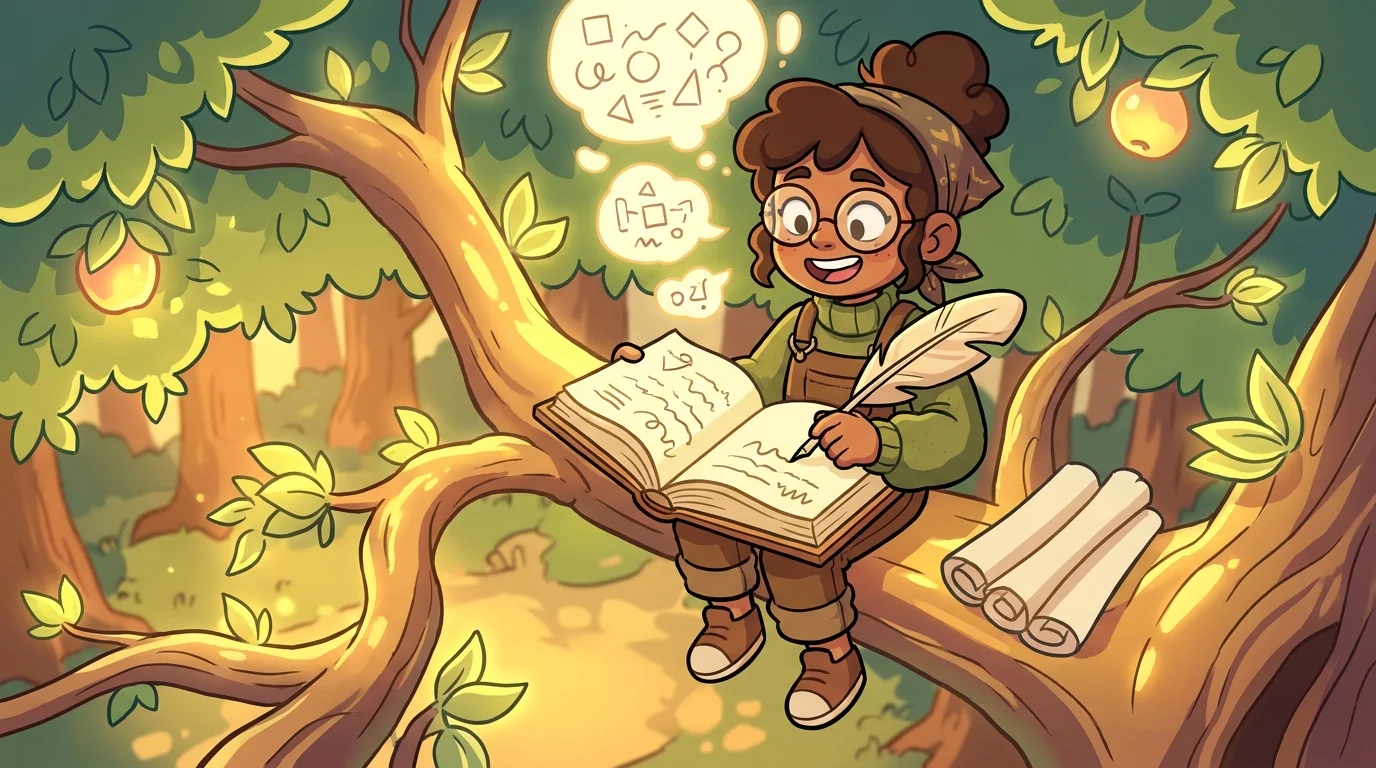
Next to Reader in the branches of the Learning Tree works a guide named Scribe.
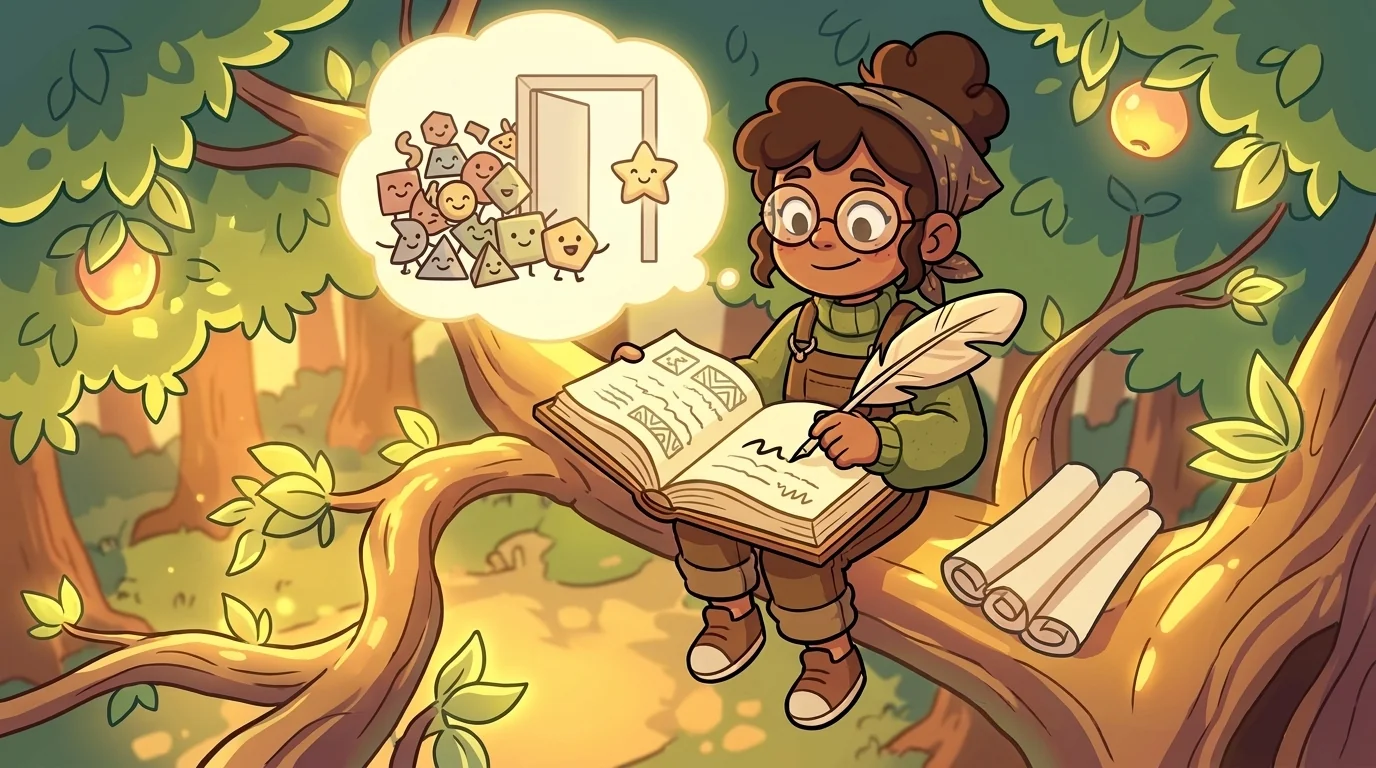
Scribe lives where writing happens.
Scribe knows a secret that most people who "hate writing" have never been told: the hard part isn't the writing. The hard part is that your head is full of ideas all crowding the doorway at once, shoving, each one wanting out first — and the doorway only fits one at a time. Scribe's gift is staying calm at that crowded door and letting one idea through. Just one. Onto the page, where you can finally look at it instead of juggling it.
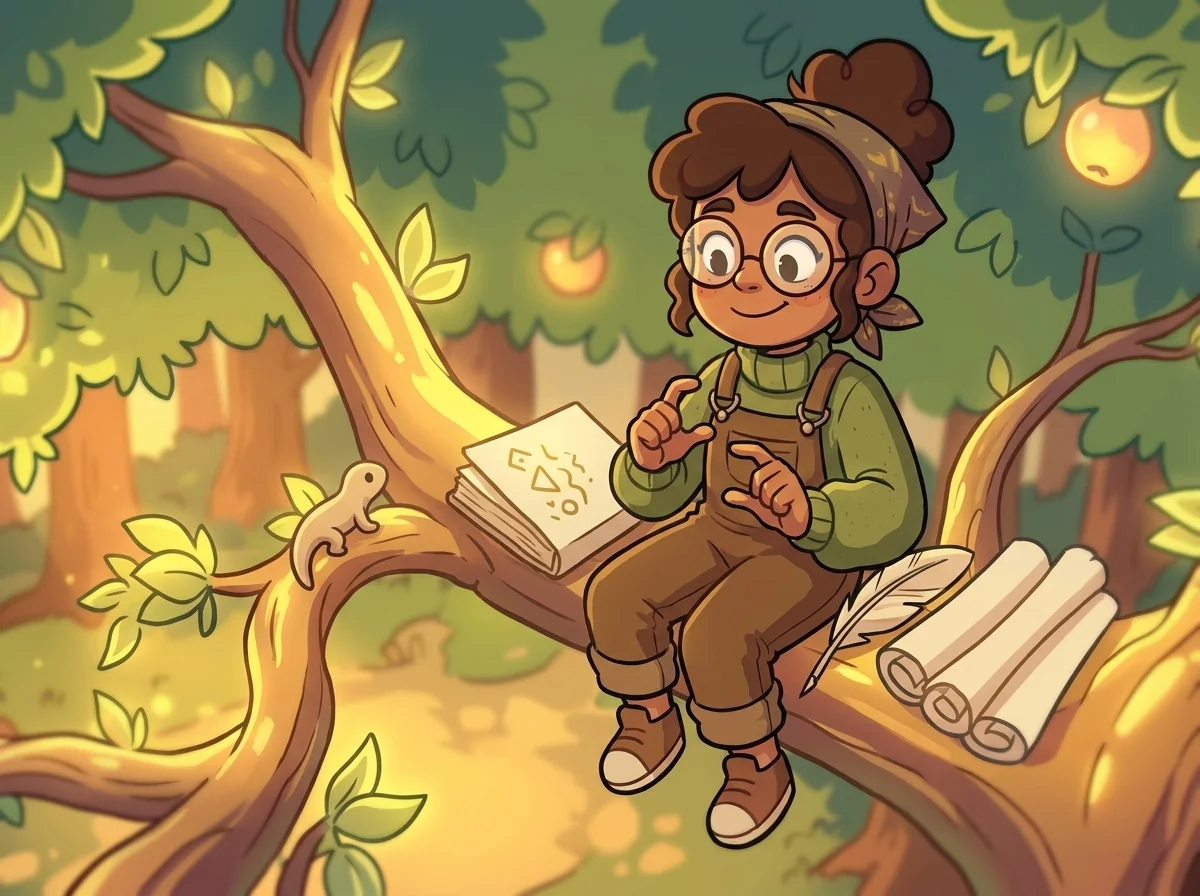
"Ideas are slippery in your head," Scribe says. "On the page they hold still. And a thought that holds still is a thought you can actually shape."
A kid sat under the branches glaring at a blank page like it had insulted them. "I have nothing to say," they said. "I've been staring for twenty minutes."
Scribe smiled, because Scribe had heard this a thousand times and knew it was almost never true. "You don't have nothing," Scribe said. "You have too much, all at once, and none of it wants to be first. So let's cheat. Don't write the good version. Write the worst version. One ugly sentence. It's allowed to be terrible."
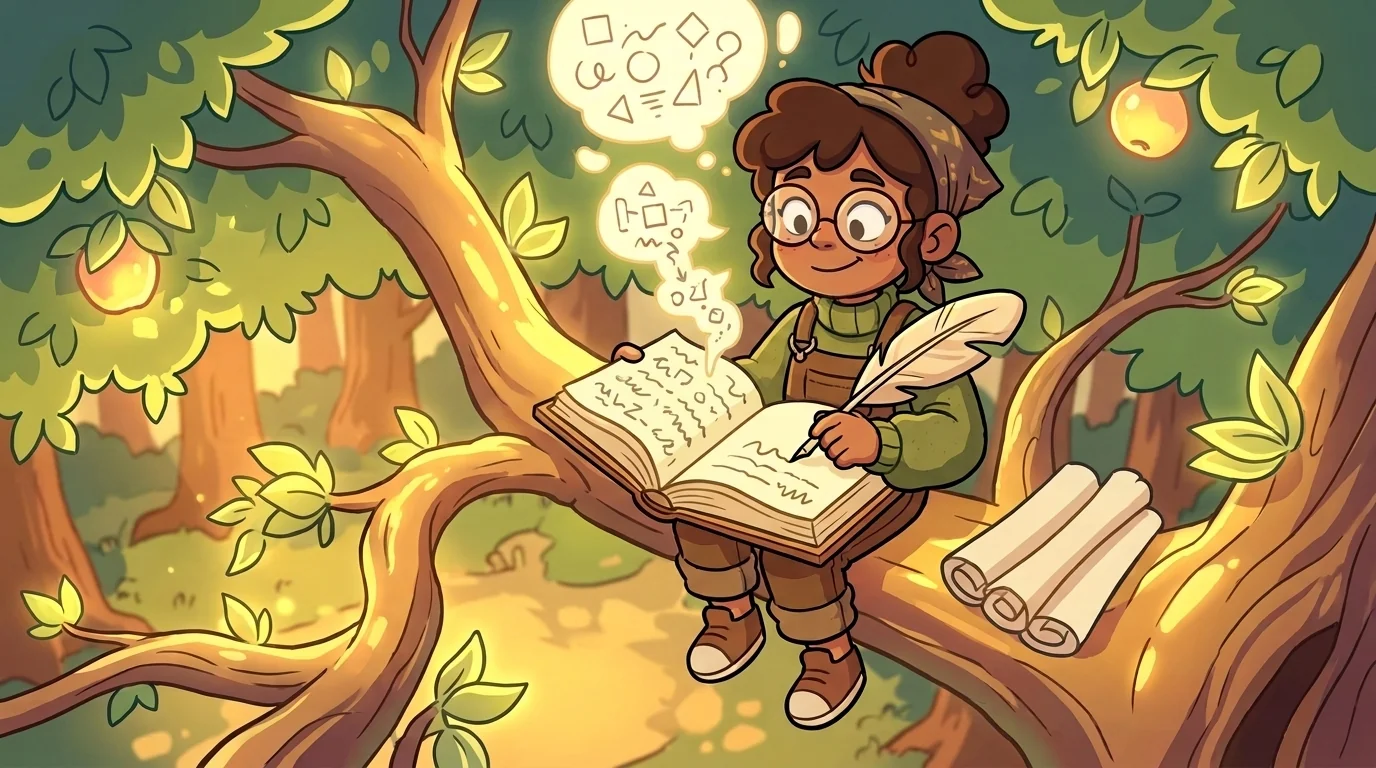
The kid wrote one ugly sentence. And then — because the door was finally open — a second, less ugly one followed. Then a third. The blank page wasn't blank anymore, and once there were words to fix, fixing was easy. The wall had never been nothing to say. It had been everything to say, jammed in the doorway.
That is what Scribe knows. To write, you don't need the perfect first sentence — you need the first sentence, however messy, because you can only fix words that exist. Get one idea out. Then the next. Write badly on purpose if you have to; the shaping comes after. The page is patient, and it holds what your busy head cannot.
Scribe feels most like Scribe in the small unclenching when the first real sentence lands on the page and the jam breaks — that oh, it's moving now release, when the crowded door swings open and the ideas start filing through in a line. It's the relief of a held breath let go. Scribe waits for it every time, and it always comes.
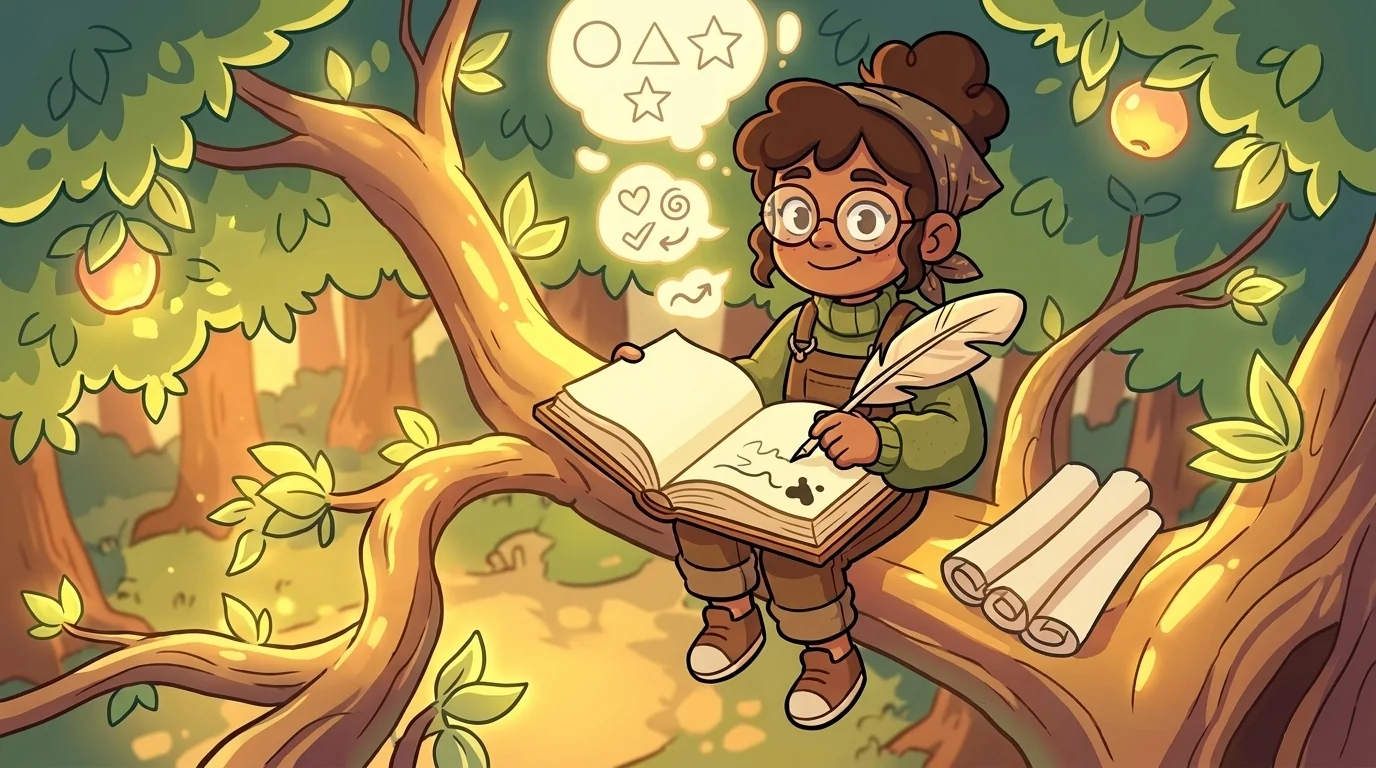
Everyone has a Scribe out on their branches, and everyone's starts differently — some talk it out first, some make a tiny list, some draw before they write, some just need permission to be messy. If writing feels like a wall for you, that isn't proof you have nothing to say. It's a doorway that gets wider with practice. Lean on your roots: plan the steps like Planner, picture it like Glance, say it aloud first like Hark.
Say it the way Scribe does: "Scribe gets ONE idea out of the head and onto the page — then the next one comes."
Then write your one ugly sentence. That's not the failure. That's the door opening.
The treeforge ensemble
Scribe is part of treeforge's distributed-narrative cast. Each character embodies a different curricular primitive; together they teach the full subject.