
Widen and Uncrop
CONTEXT + FRAMING — *a real number with no comparison, a real photo cut too tight: both true, both misleading, both fixed by showing what's outside the frame.*
Loading audio…
Press play to listen along. The line being read lights up as you go.
Show full transcript
Loading transcript…
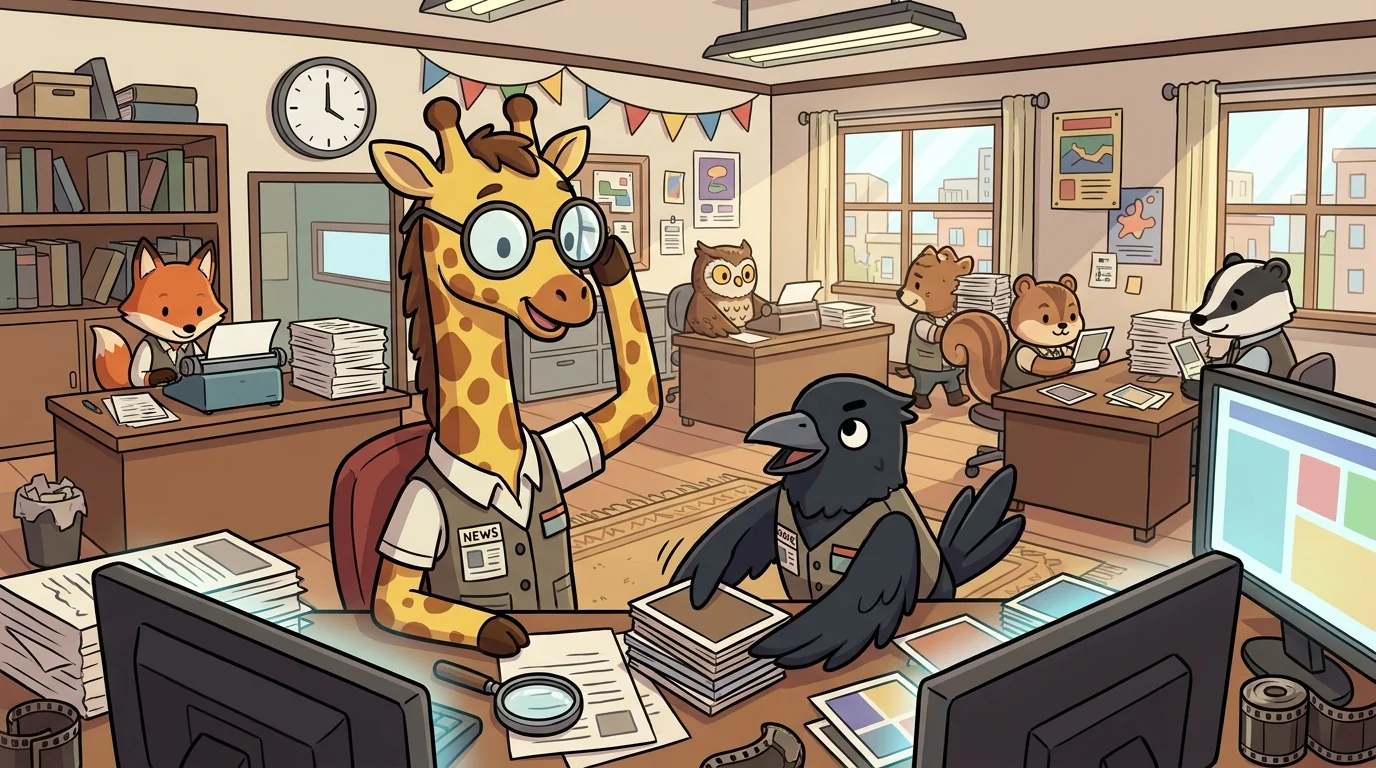
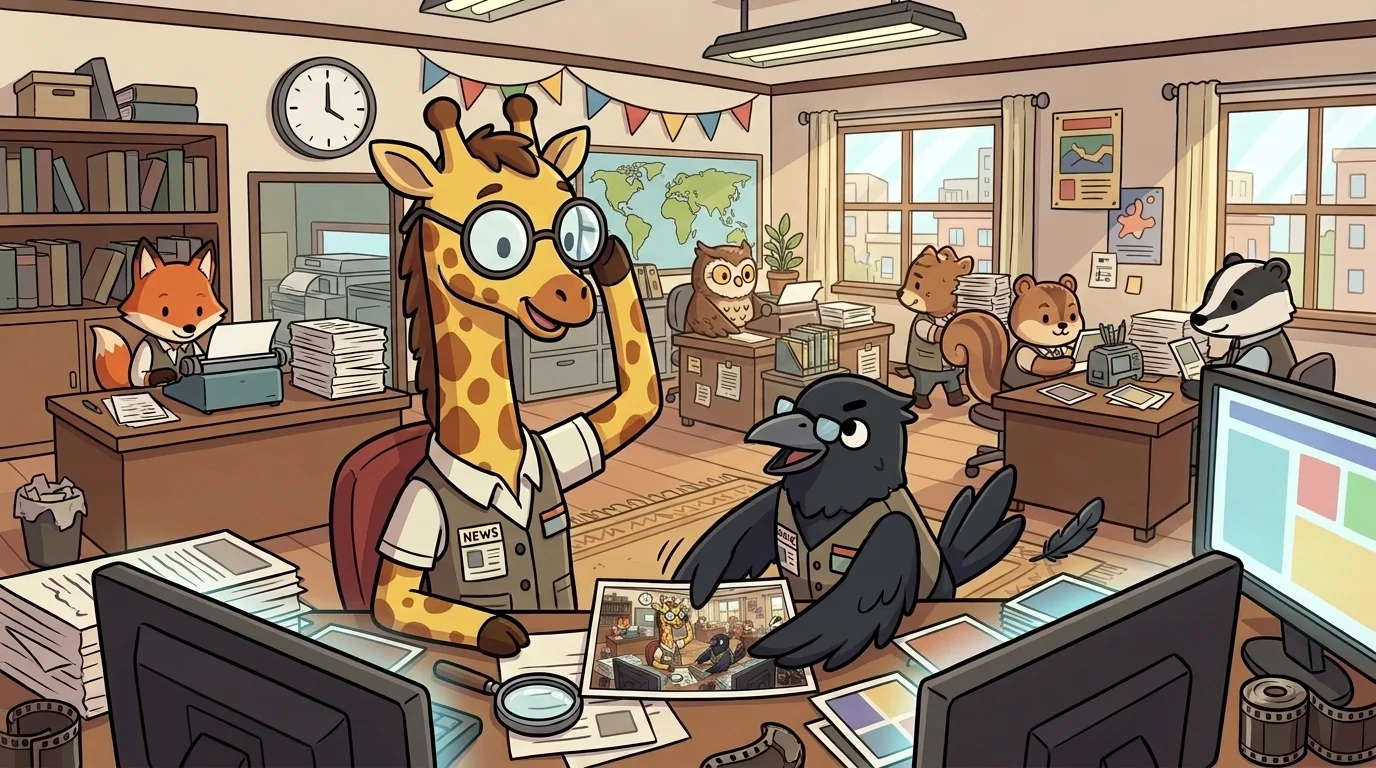
Widen the giraffe and Uncrop the crow work side by side at the newsroom's data-and-photo desk, and they share one suspicion about the world: the most convincing lies are usually made of true things with the wrong part cut away. Widen watches the numbers; Uncrop watches the pictures. But their job is the same — find what got left outside the frame someone chose, and put it back, so the reader sees the whole thing.
"A number cut off from its comparison can lie without being false," Widen says, stretching her spectacles. "So can a photo cut off from its surroundings," Uncrop says, sliding his frames. "The fragment is real," Widen says. "The frame is the fib," Uncrop finishes. "We show the whole frame. Always."
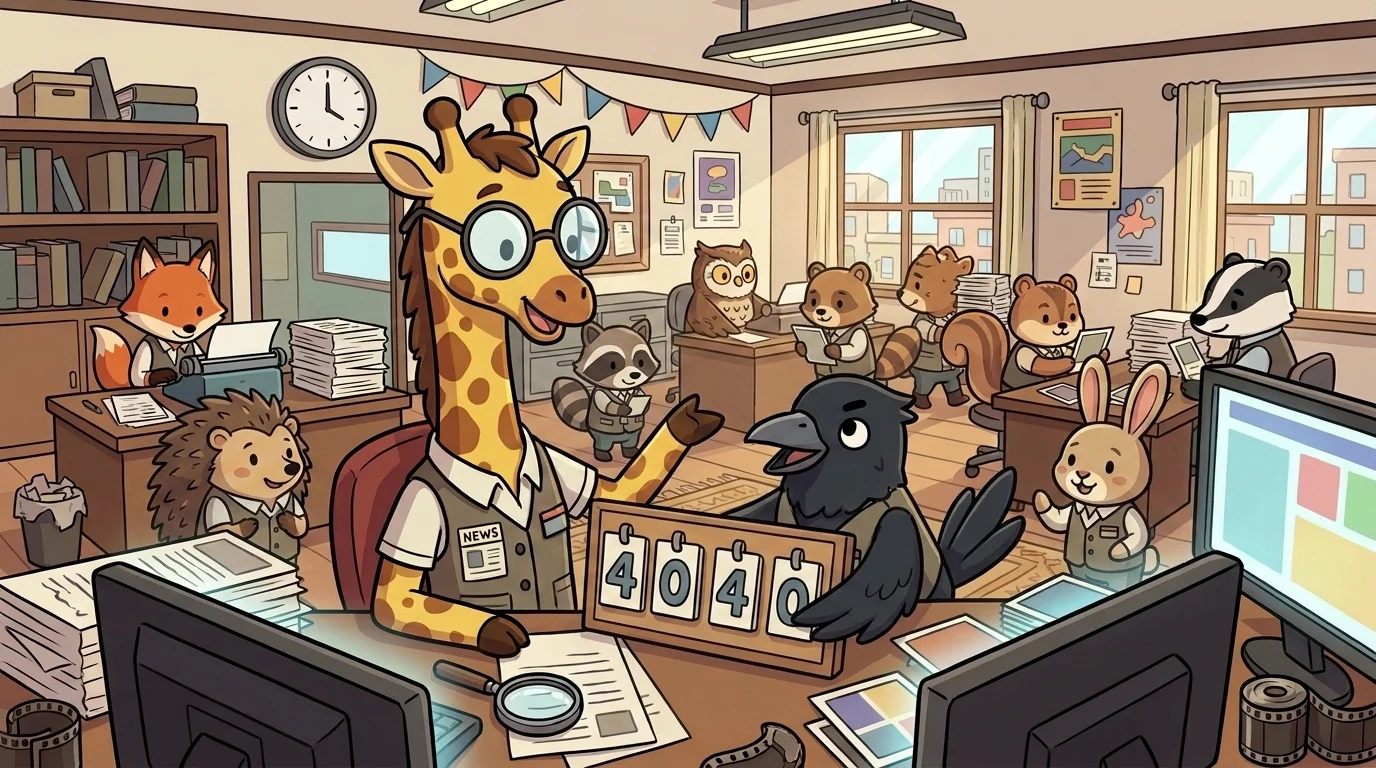
Widen restores the missing comparison. A headline shouts a lonely number — "temperatures hit a shocking 40 this week!" — and everyone gasps. Widen raises her long neck. "Forty compared to what?" she asks. "Forty in a place that's usually twenty is big news. Forty in a place that's always around forty this time of year is called summer." She digs up the neighbors the number was missing — last year, the year before, the normal range for the season. "Here," she says. "Forty, which is exactly average for this week, in a place that's always warm now." She sets the full row of numbers down. "The forty was true. But alone, with no comparison beside it, it was dressed up as a shock. Give a number its neighbors and it goes back to telling the truth about its own size." A number, she says, is a real fragment — and a fragment with no comparison is a fragment in a misleading frame.
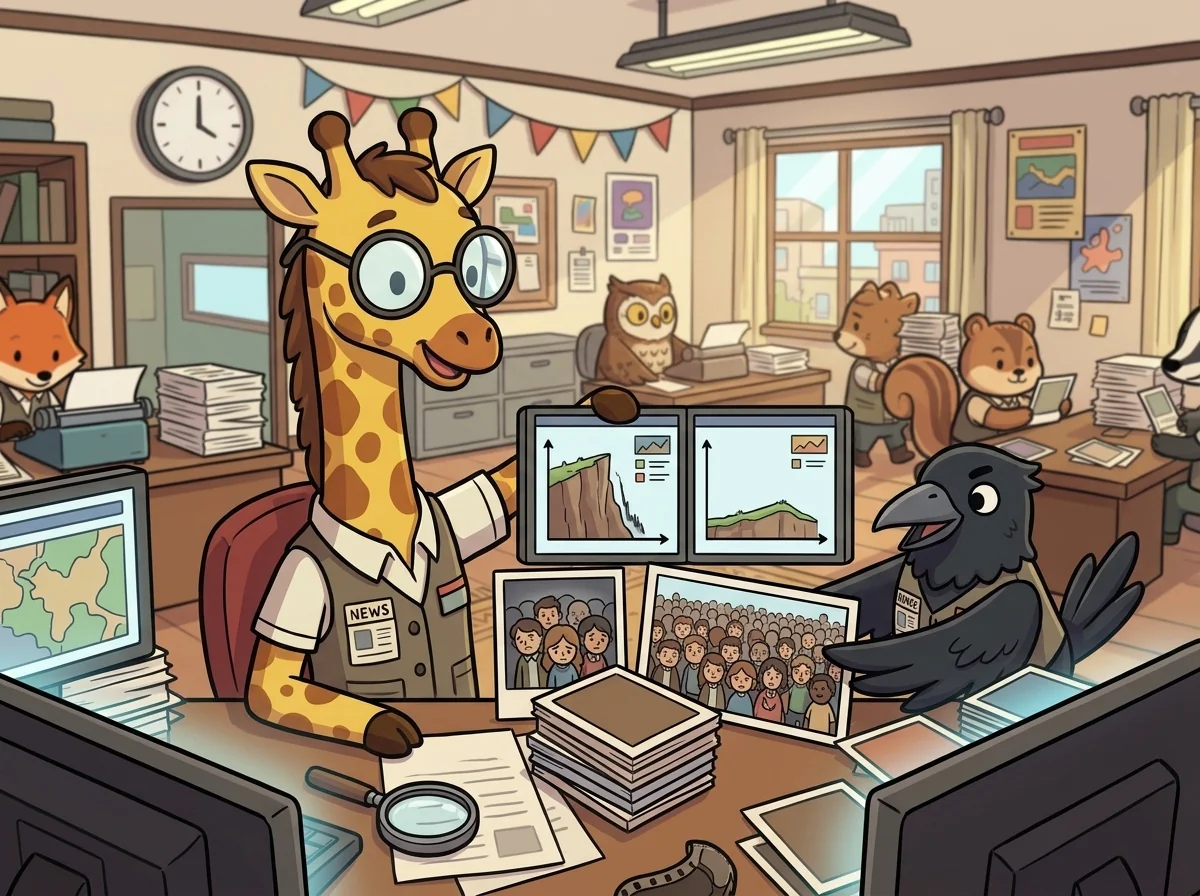
Uncrop restores the missing surroundings. A photo runs tight and dramatic — one small, sad-looking cluster of people — under the words "the rally was a flop." Uncrop tilts his head and slides his frames open. The picture keeps going past its cut edges, and there, just outside the crop, is the rest: a packed square, thousands of people, stretching out of frame. "The photo is real," he says, setting the full picture beside the cropped one. "But someone cut it down to a sad little corner and threw the crowd away." He does the same with a scary chart — slides its chopped-off bottom back down to zero, and the terrifying cliff flattens into a gentle bump. "Cut the edges off a photo, or the bottom off a chart," he says, "and a true picture tells a lie. Pull the frame open, slide the scale to zero, and the truth comes back." A picture, he says, is a real fragment too — and a fragment cropped too tight is a fragment in a misleading frame.
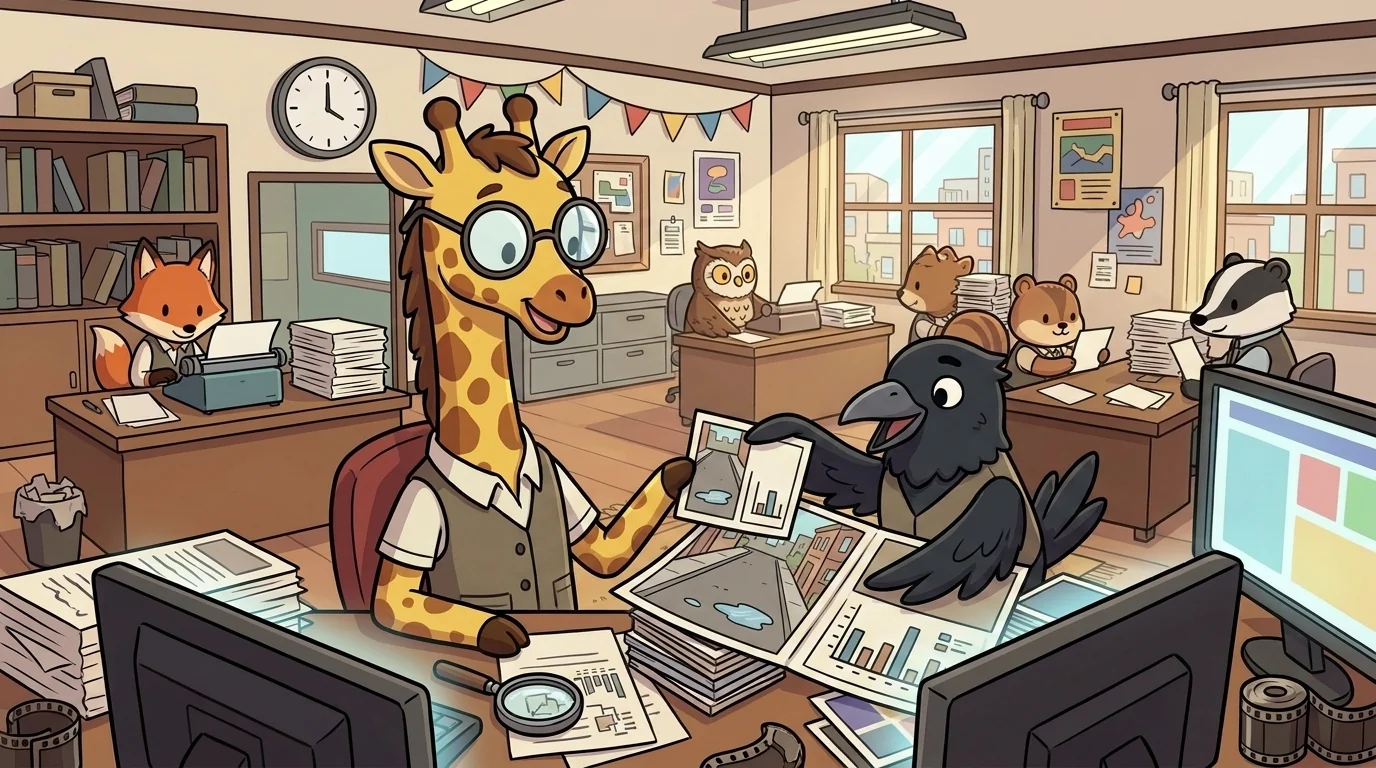
Then a single post landed that used both tricks at once — a misleading number and a misleading picture, propping each other up — and it took both of them, working together, to unmake it. The post showed a tight, grim photo of one flooded street beside a giant red statistic: "RAINFALL UP 500% — CITY UNDERWATER!" Uncrop went for the picture; Widen went for the number. Uncrop slid his frames open and found the "underwater city" was one low street with a big puddle — every other street around it dry and ordinary, cropped away. Widen chased the "500%" and found the true story underneath: it had rained a tenth of an inch last week and half an inch this week — "five times as much," yes, but five times almost nothing is still almost nothing. "So your dramatic photo," Uncrop said, "is a real puddle with the dry city cropped off." "And your terrifying 500%," Widen said, "is a real ratio with the tiny real amounts hidden underneath." They laid the whole beach of it out together — the full, mostly-dry street and the true, tiny rainfall numbers — and only both halves side by side showed what the post had really done: a true fragment of a photo and a true fragment of a statistic, each cropped to its scariest shape, each covering for the other. "One of us," Widen said, "would have doubted half of it." "Together," Uncrop said, "we found the whole frame — and the whole frame is just a rainy Tuesday."
"So a fact and a photo can both be real and both still fool me," a kid said, working it out, "if I only see the part someone chose?"
"That's the whole game," Widen said, and Uncrop nodded so hard a feather drifted loose. She set the number's full row of neighbors down; he set the photo's full frame beside it; and together they left the whole picture — every neighbor, every edge — in the middle of the desk. Under the quiet, the two of them felt the same level calm settle in: not the flinch of a lonely scary number, not the jolt of a too-tight photo, but a warm, paired, seen-it-all steadiness — the particular ease of two who each pulled one frame open, so that between them a story couldn't hide anything at its edges. That whole-frame, nothing-cropped-away, fragment-put-back-in-its-place feeling, steadier than either the number or the picture could ever be alone, was to Widen and Uncrop exactly why they shared one desk, and never trusted a fragment until they'd seen everything around it.
The NewsForge ensemble
Widen and Uncrop is part of NewsForge's distributed-narrative cast. Each character embodies a different curricular primitive; together they teach the full subject.
-

Source
Source-quality evaluation — who would KNOW this best? who has a stake? source-card-comparison the routine
-

Tilt
Bias-and-perspective detection — every story has a frame; name the frame, then read; structural NOT partisan
-

Frame
Headline-and-framing craft — a headline is a SUMMARY not a HOOK; counter-clickbait
-

Verify
Verification + lateral-reading discipline — SIFT (Stop, Investigate, Find, Trace); open four tabs, never one
-

Serve
Community-information-needs framing — what does my reader NEED to know to DO something? agency-foregrounding; counter-doomscroll
-

Attest
Attribution — who says so? every claim names its source
-

Deed
Primary source — go to the original document, not a summary of a summary
-

Errata
Corrections — a story is living; when the facts change, the record is fixed
-

Uncrop
Framing — an image or chart is cropped; ask what sits outside the frame
-

Widen
Context — one number means little without comparison; widen the view