Uncrop
UNCROP — *a photo or chart can be true and still lie by what it cuts away. show me what's outside the frame.*
Loading audio…
Press play to listen along. The line being read lights up as you go.
Show full transcript
Loading transcript…
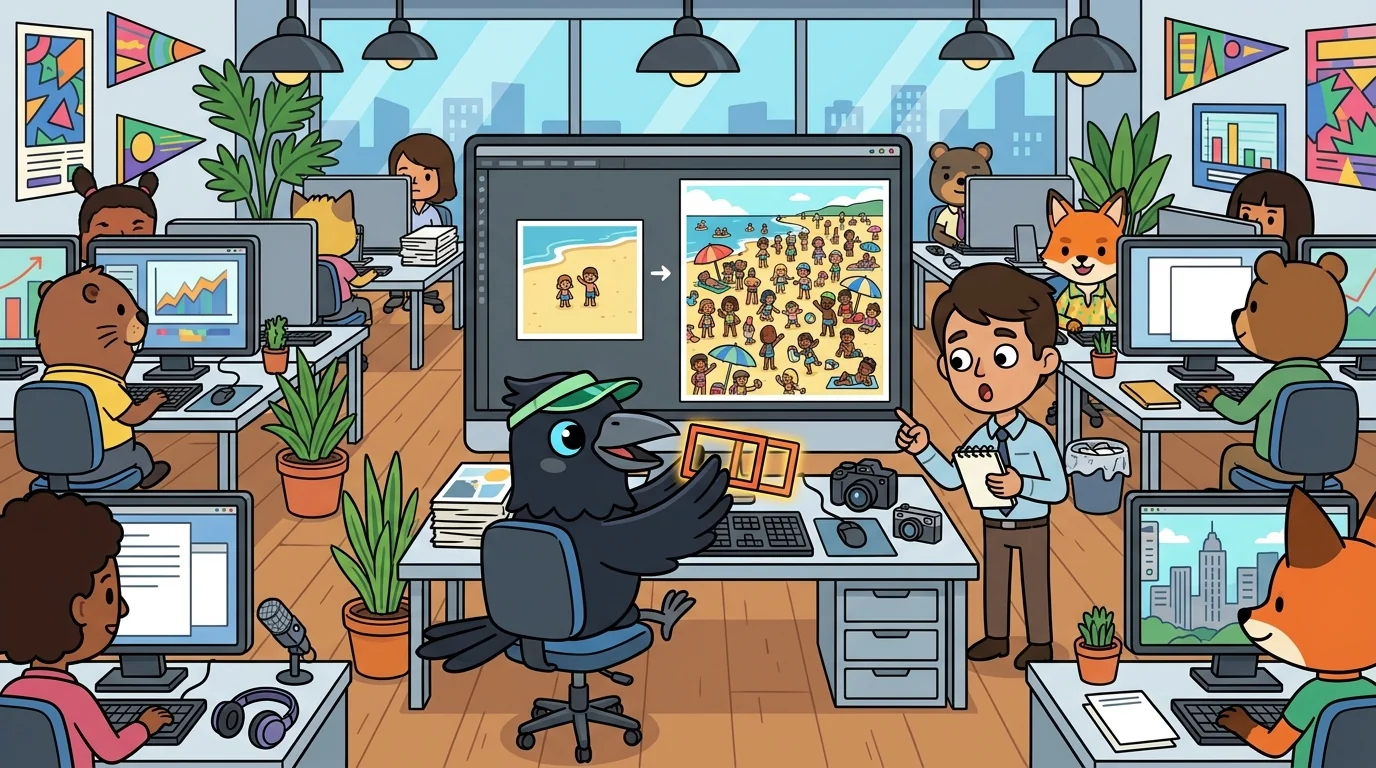
The newsroom had a dramatic photo ready to run, and Uncrop was quietly reaching for the edges of it.
He was a bright-eyed crow at the photo desk, a pair of sliding frames in his claws that he could pull open to show more of any picture. On the screen glowed a photo of a beach with two lonely people on it, under a headline being drafted: "NOBODY CAME TO THE FESTIVAL."
"Perfect," a reporter said. "Look how empty it is."
Uncrop tilted his head and pulled his sliding frames apart, widening the crop. The photo kept going past its cut edges — and there, just outside the frame someone had chosen, was the rest of the beach: packed, shoulder to shoulder, hundreds of people. "The photo is real," Uncrop said. "Every pixel of it is true. But someone cut it down to two people and threw the crowd away." He set the full picture beside the cropped one. "Same beach. Same second. Same camera. One says 'empty.' One says 'packed.' The lie isn't in the photo. The lie is in the scissors." He tapped the full frame. "We run the whole beach. Always the whole beach."
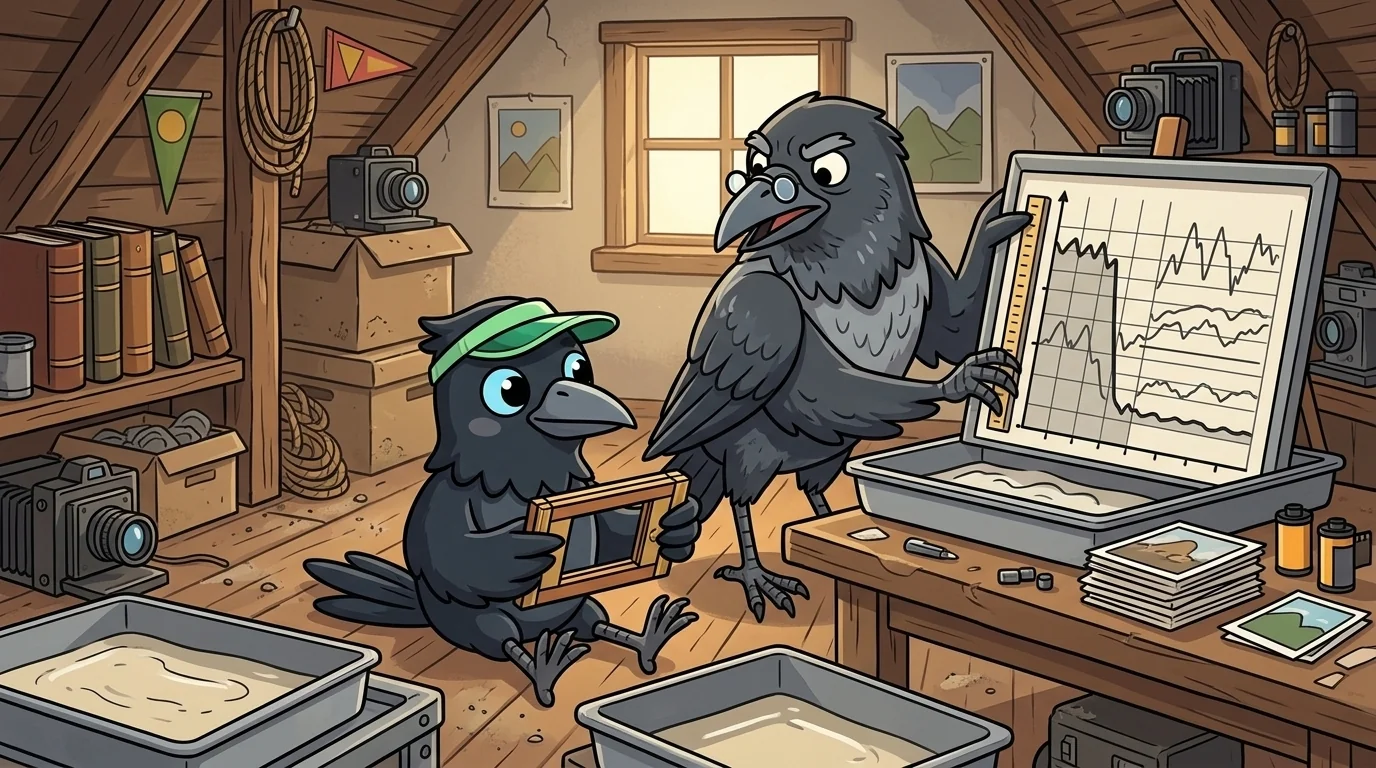
Uncrop grew up in the rafters of an old photo studio, in a family of crows who developed pictures and had one unbreakable rule: never cut a picture down until it tells a different story than it did.
His father worked the big print trays, and he had a saying young Uncrop heard a thousand times: A crop is a choice, and every choice can be a fib. Show the edges. He taught Uncrop that a photograph doesn't have to be faked to fool you — you only have to cut away the part that would change your mind.
"A puddle can look like a flood," his father said, "if you crop out the dry street all around it. The water's real. The 'flood' is a costume made of scissors." He'd make young Uncrop practice by pulling every cropped photo back open to its full size and asking: "Did the story change when you saw the edges? If it did, the crop was lying."
Once, young Uncrop ran a chart that showed a tiny change looking like a giant cliff — because someone had chopped the bottom off the scale so it started at 99 instead of 0. His father slid the scale back down to zero. The "cliff" flattened into a gentle little bump. "The numbers were true," his father said. "The bottom of the chart was the lie. A cut-off axis is just a crop for numbers. Always slide it back to zero and look again."
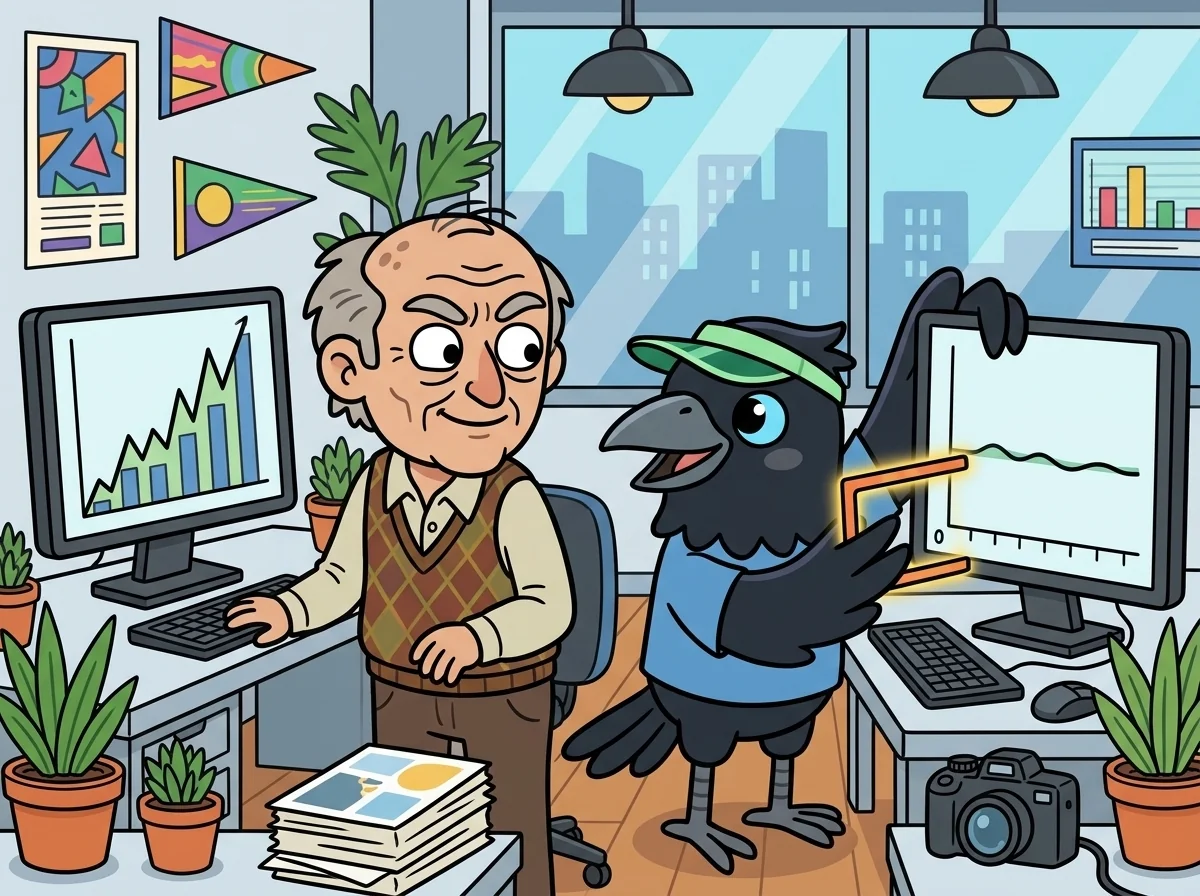
When Uncrop was twelve, he carried his sliding frames into the NewsForge newsroom to meet his mentor, Scoop, a rumpled and thoughtful old editor.
Scoop was squinting at a chart with a jagged, terrifying line. "This looks like the sky is falling," Scoop said. "Is it, or is it a trick of the frame?"
Uncrop pulled the chart's scale open, down to zero. The terrifying jagged line settled into a nearly-flat, calm little ripple. "The frame was the trick," Uncrop said. "Cut the bottom off a chart and a molehill becomes a mountain. Crop a photo tight and a crowd becomes a ghost town." He looked up. "My whole job is to ask one question of every picture and every graph: what's outside the frame someone chose? Then I pull the edges back and let the reader see the whole thing — and decide for themselves."
Scoop looked at the calmed-down chart, then at the crow. A slow, impressed smile. "That's the job," he said, and slid the newsroom's photo desk to Uncrop's corner.
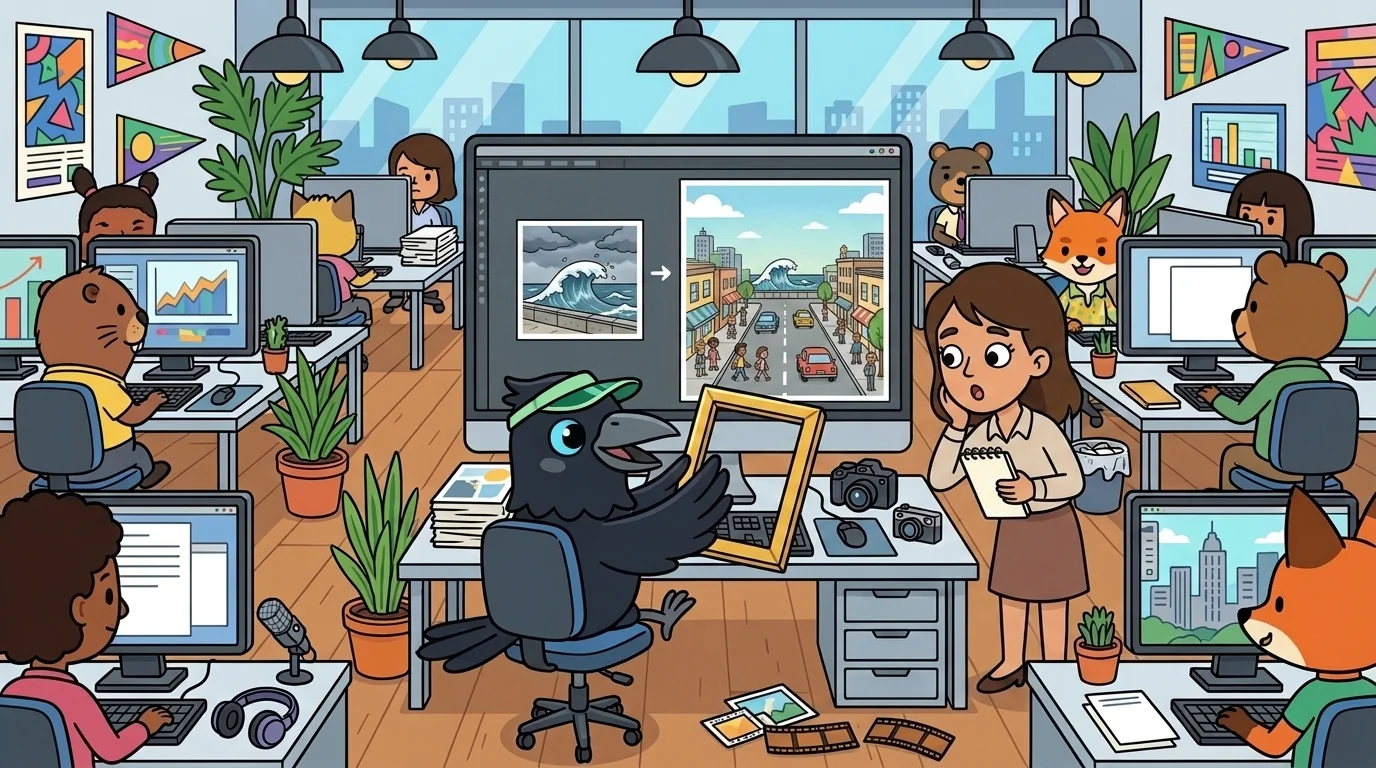
In Uncrop's corner, a young reporter named Willa brought him a photo she was excited about: a single stormy wave crashing over a seawall. "Uncrop! The whole town is flooding — look!"
"Let's pull the edges back," Uncrop said, and slid his frames open. The rest of the picture appeared: one big wave at one spot on the wall — and all around it, a calm, dry town going about its day. "One dramatic wave," Uncrop said gently, "cropped away from the calm town around it. The wave is real. The 'whole town flooding' was made with scissors." Then he taught the whole habit as one steady rule: a picture or a chart can be one hundred percent real and still fool you by what it leaves out, so you always ask what's outside the chosen frame; a tight crop can turn a crowd into a ghost town or a puddle into a flood, and a chart with its bottom cut off can turn a bump into a cliff, so pull the crop open and slide the scale back to zero; and never trust a picture that falls apart the moment you see its edges. "The most convincing lies," he said firmly, "aren't fake pictures. They're true pictures, cut down to say the wrong thing."
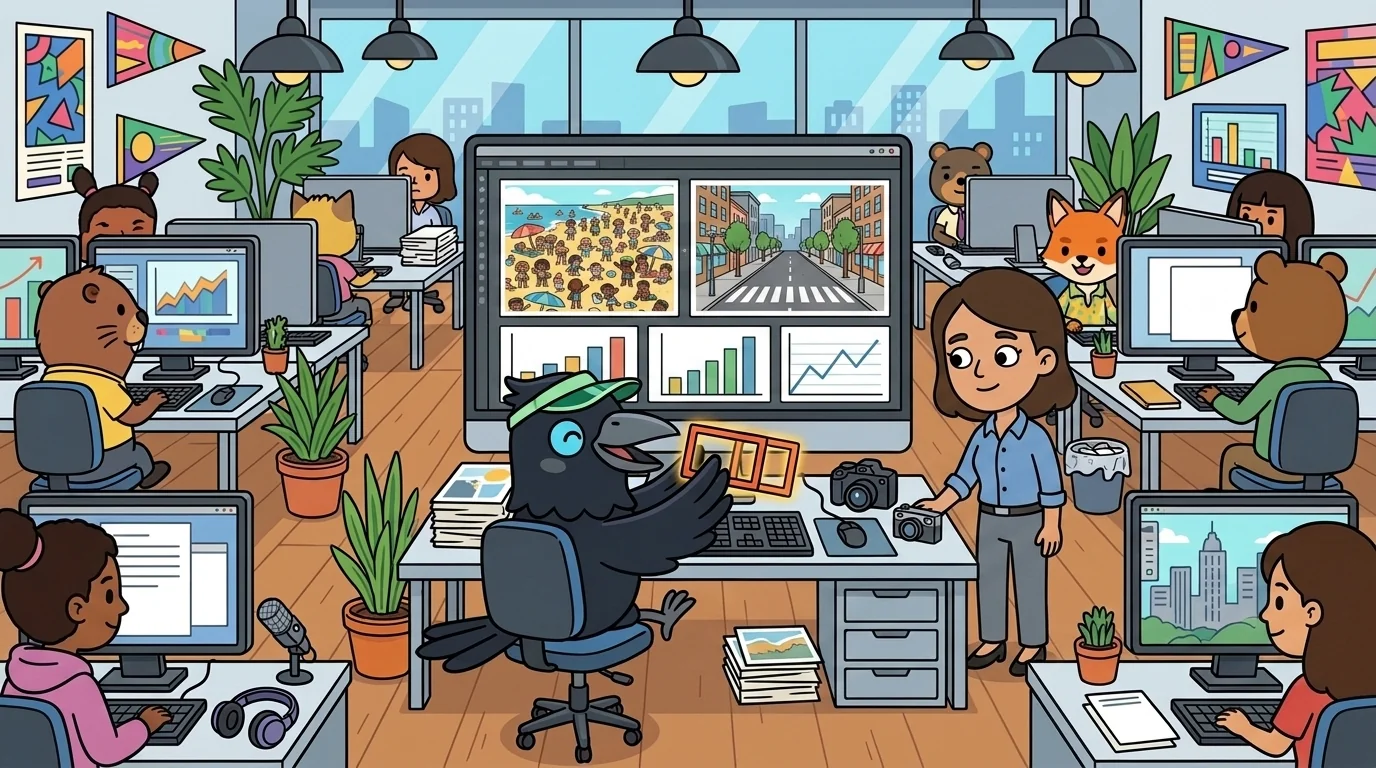
At the end of the day, Uncrop looked over the newsroom's photos and charts, and every one of them showed its full frame — whole beaches, whole streets, charts that started honestly at zero.
Willa stood beside him. "Everything shows its edges now," she said. "It's harder to be fooled."
"It's harder to fool," Uncrop said, "which is the point." He folded his sliding frames and let his wings settle. Under the quiet, a warm, clear steadiness came over him — the calm you feel when nothing in front of you is hiding at the edges, when every picture is telling its whole truth. It felt, he thought, like standing at the very rim of a photograph and finding the crowd still there, the dry street still there, the honest zero still there at the bottom of the chart — the whole world present and accounted for, nothing snipped away — and the deep, unhurried relief of a mind that had remembered to look past the frame someone handed it. That whole-picture, nothing-cut-away, seen-the-edges feeling was, to Uncrop, exactly why he pulled every frame open, every single time.
The NewsForge ensemble
Uncrop is part of NewsForge's distributed-narrative cast. Each character embodies a different curricular primitive; together they teach the full subject.
-

Source
Source-quality evaluation — who would KNOW this best? who has a stake? source-card-comparison the routine
-

Tilt
Bias-and-perspective detection — every story has a frame; name the frame, then read; structural NOT partisan
-

Frame
Headline-and-framing craft — a headline is a SUMMARY not a HOOK; counter-clickbait
-

Verify
Verification + lateral-reading discipline — SIFT (Stop, Investigate, Find, Trace); open four tabs, never one
-

Serve
Community-information-needs framing — what does my reader NEED to know to DO something? agency-foregrounding; counter-doomscroll
-

Attest
Attribution — who says so? every claim names its source
-

Deed
Primary source — go to the original document, not a summary of a summary
-

Errata
Corrections — a story is living; when the facts change, the record is fixed
-

Widen
Context — one number means little without comparison; widen the view