Deed
PRIMARY SOURCE — *don't quote the story about the document. find the document.*
Loading audio…
Press play to listen along. The line being read lights up as you go.
Show full transcript
Loading transcript…
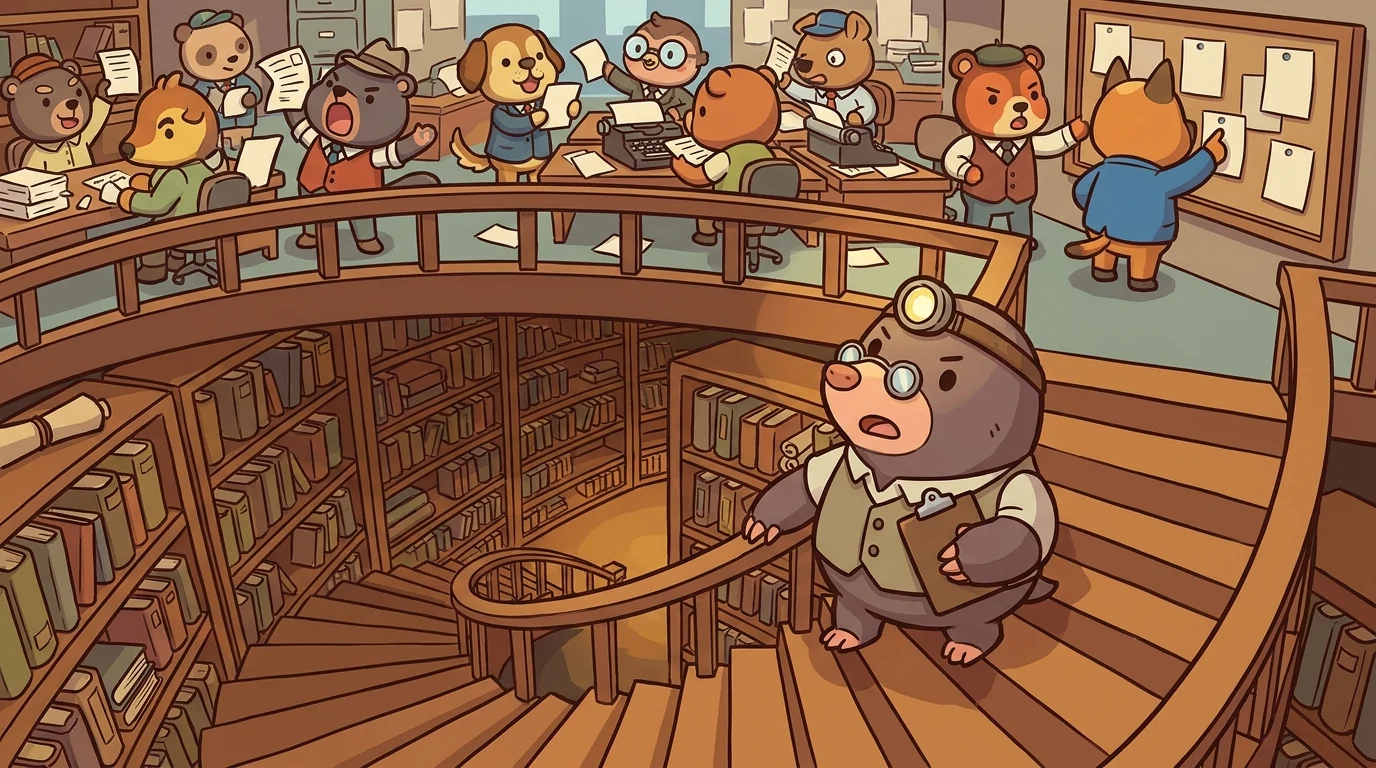
The newsroom was buzzing about a report, and Deed was already halfway down the archive stairs.
She was a small archivist mole in a dust-colored vest, round spectacles pushed up on her nose, a little lantern strapped to her head for reading in the deep shelves. Up above, a reporter was shouting the day's exciting item: "A blog said a magazine said the town council voted to close the library!"
Deed stopped on the stairs. "Which blog?"
"Does it matter? Everyone's sharing it."
"It matters more than anything," Deed said, and kept climbing down. "A blog quoting a magazine quoting someone is a story that's been copied three times. Every copy is a chance for a word to slip." She reached the archive floor and lit her lantern. "So I'm not going to read the story about the vote. I'm going to find the vote."
Deep in the shelves she pulled out a plain folder — the actual council record — and opened it under her lantern. She read it slowly. "Here's the real thing," she called up. "They didn't vote to close the library. They voted to move it to the new building on Cedar Street. Somewhere in the copying, 'move' turned into 'close.'" She held the record up to the light. "Same council. Same meeting. Completely different story. This one's the first true copy — and it's the only one I trust."
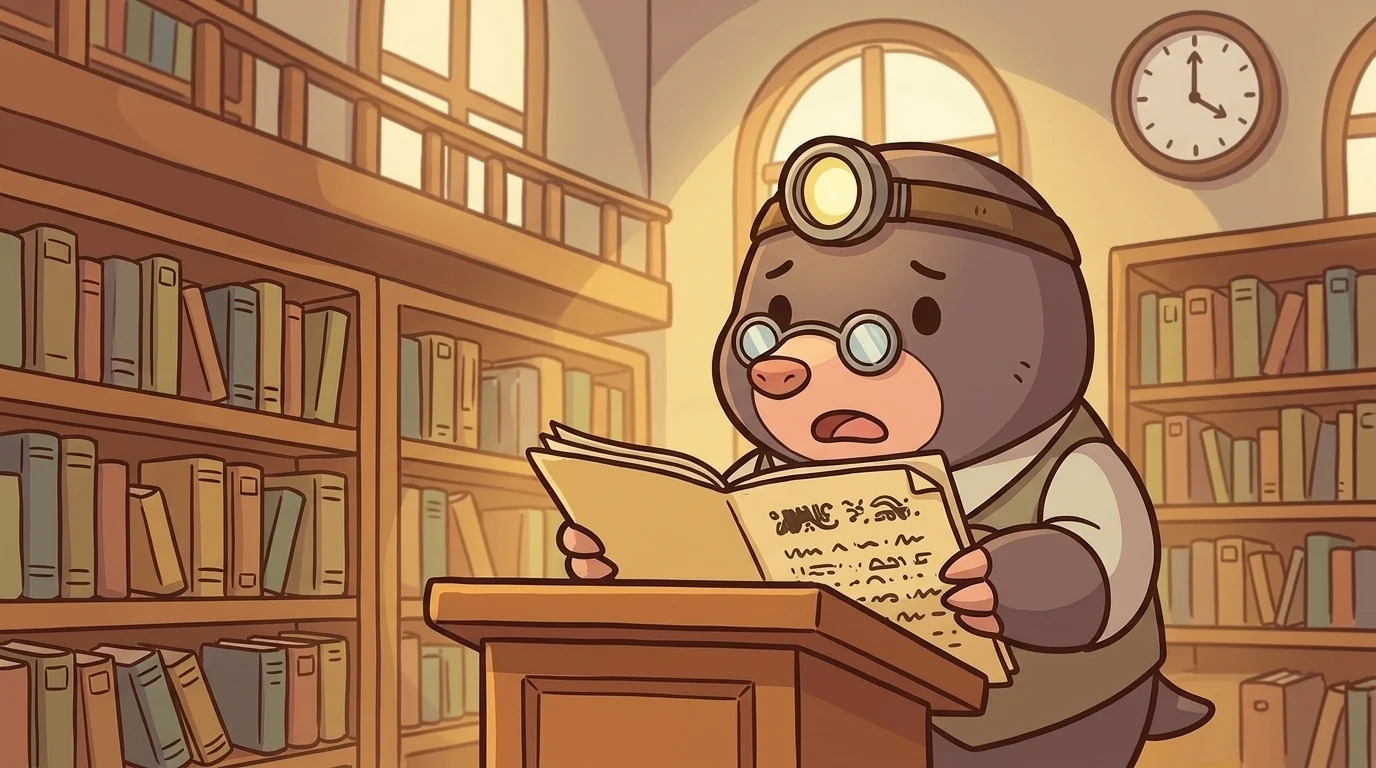
Deed grew up in the reading room of an old records-house, in a family of moles who kept every original document a town ever made.
Her grandfather ran the deepest stacks, and he had a saying he repeated until it lived in her bones: A retelling is a rumor with good manners. Go find the deed. He would send young Deed to fetch an original whenever anyone repeated a claim, and he'd make her compare the two.
"What did the story say," he'd ask, "and what does the record say?"
More often than she expected, they didn't match — not from lying, usually, but from the slow drift of a fact passed hand to hand. "People don't mean to change it," he told her. "But a story told five times is a story changed five times. The document doesn't change. That's why we keep it."
Once, in a hurry, Deed reported a claim from a summary of a summary without going down to check the original. It turned out the summary had dropped a single word — proposed — so a plan that was only suggested got reported as decided.
Her grandfather didn't scold her. He just walked her down to the stacks, pulled the original, and set it in her paws. "Read it yourself," he said. "Always read it yourself. The person between you and the document might be honest and still be wrong."
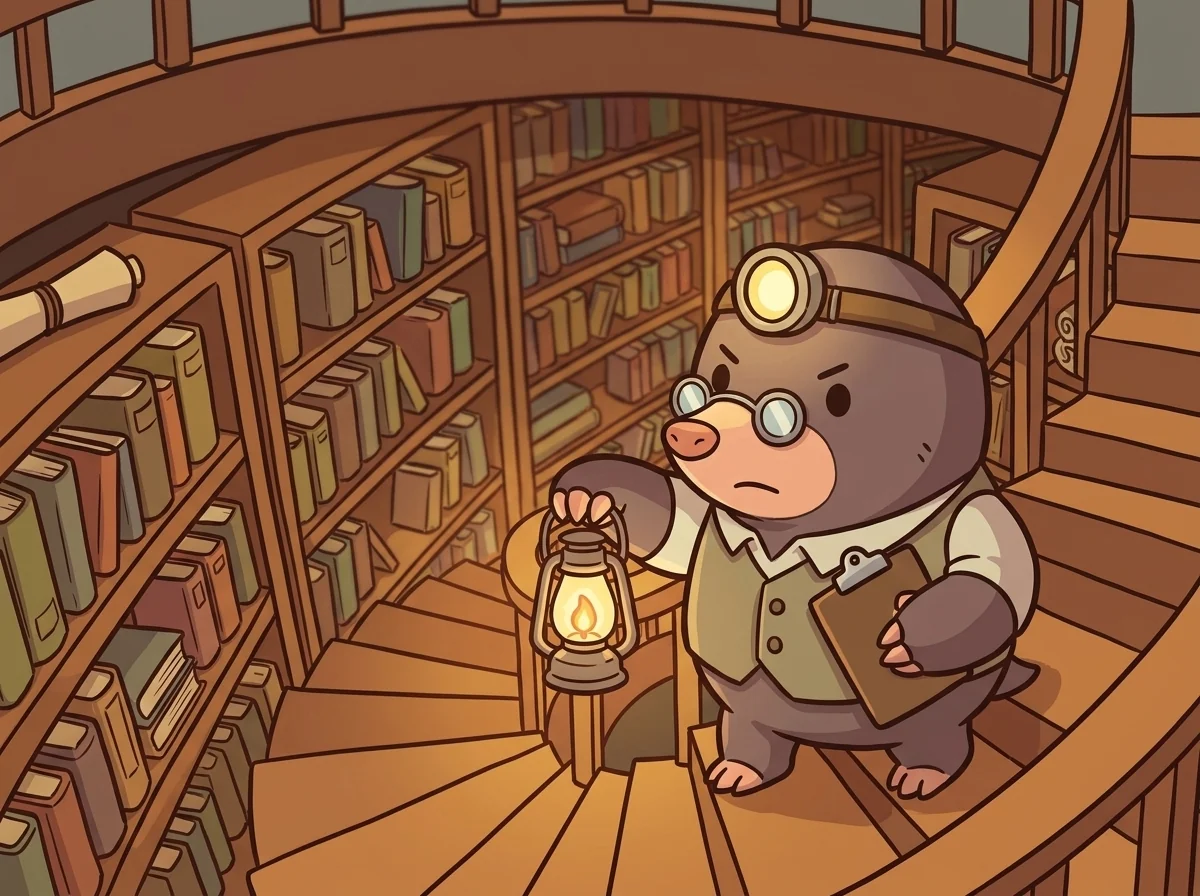
When Deed was twelve, she carried her lantern into the NewsForge newsroom to meet her mentor, Scoop, a rumpled and thoughtful old editor.
Scoop was frowning at a stack of articles that all cited each other in a circle. "Everyone's quoting everyone," he said. "Nobody's quoting the thing. How do you break the circle?"
Deed lit her lantern. "You climb out of it," she said. "Every claim came from somewhere first — a document, a study, a real record. I follow the quotes back, past the blog, past the magazine, past the summary, all the way to the original. Then I read the original with my own eyes." She tapped her spectacles. "The story about the document is somebody's telling. The document is the thing itself. I want the thing."
Scoop looked at the circle of articles, then at the mole with the lantern. A slow smile. "That's the job," he said, and handed her the newsroom's archive key.
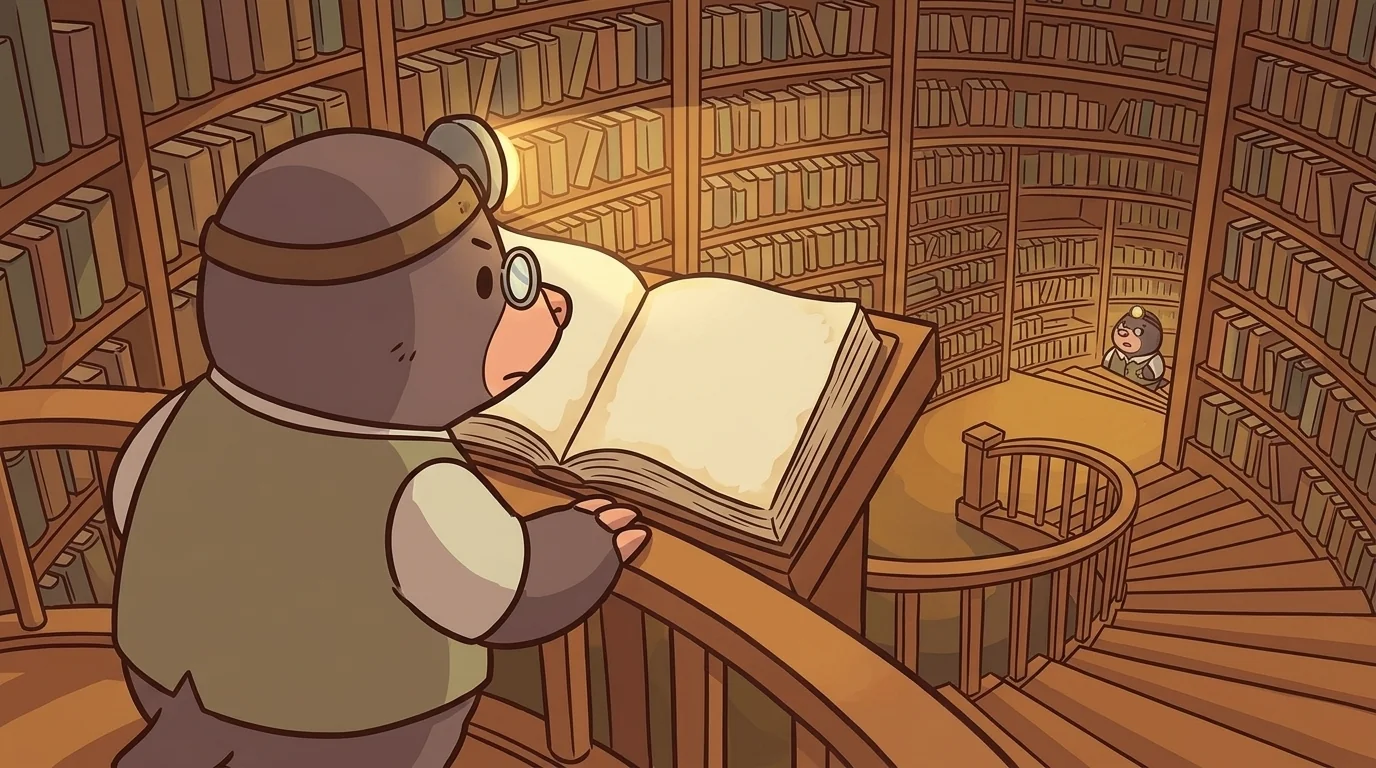
In Deed's corner, a young reporter named Willa arrived breathless. "Deed! A post says a famous scientist said our river is perfectly safe to swim in — it's got a hundred thousand shares!"
"Where did the scientist say it?" Deed asked.
Willa paused. "The post... doesn't say. It just says 'a famous scientist said.'"
"Then we don't have a scientist yet," Deed said. "We have a sentence about a scientist." She led Willa down to the archive. "Let's find where this actually started. Is there a report? A study? A named person who wrote it down?" They followed the shares backward, link by link, until they reached — nothing. The trail ended at a post that quoted a post that quoted no one at all. "See?" Deed said gently. "No document at the bottom. No original. This isn't a claim from a scientist. It's a claim wearing a scientist's coat." Then she taught the whole habit as one steady rule: a retelling can be honest and still be wrong, so you always trace a claim back to its first source; the story about a document is not the document, and a quote of a quote of a quote is just a rumor in nicer clothes; and when you follow the trail down and find nothing at the bottom — no record, no study, no named original — that emptiness is the answer. "A claim with no first source," she said firmly, "isn't a small claim. It's not a claim at all."
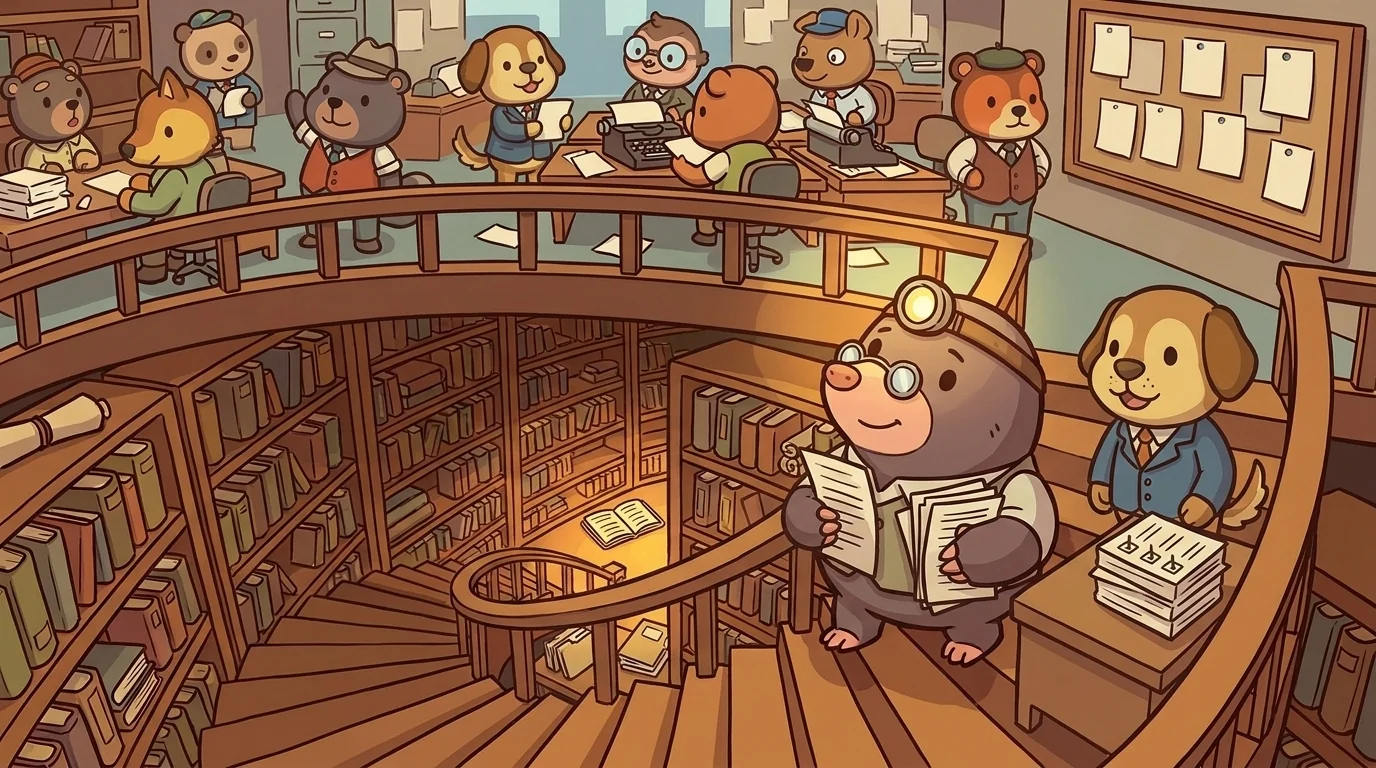
At the end of the day, Deed climbed back up from the archive with an armful of originals, each one checked against the stories that had been told about it.
Willa met her at the top of the stairs. "You always go all the way down," she said. "Even when everyone's already sure."
"Especially then," Deed said. She set the originals on the desk, straightened her spectacles, and let her lantern dim. Under the quiet, a warm, settled steadiness rose in her — the calm you feel when you've held the real thing in your own two hands instead of trusting a hand-me-down. It felt, she thought, like the deep, unhurried relief of standing at the very bottom of the stairs, in the lantern-light, with the first true copy open in front of her — nothing between her and what was actually written, and nothing left to wonder about. That grounded, gladly-patient, read-it-myself feeling was, to Deed, exactly why the long climb down was always, always worth it.
The NewsForge ensemble
Deed is part of NewsForge's distributed-narrative cast. Each character embodies a different curricular primitive; together they teach the full subject.
-

Source
Source-quality evaluation — who would KNOW this best? who has a stake? source-card-comparison the routine
-

Tilt
Bias-and-perspective detection — every story has a frame; name the frame, then read; structural NOT partisan
-

Frame
Headline-and-framing craft — a headline is a SUMMARY not a HOOK; counter-clickbait
-

Verify
Verification + lateral-reading discipline — SIFT (Stop, Investigate, Find, Trace); open four tabs, never one
-

Serve
Community-information-needs framing — what does my reader NEED to know to DO something? agency-foregrounding; counter-doomscroll
-

Attest
Attribution — who says so? every claim names its source
-

Errata
Corrections — a story is living; when the facts change, the record is fixed
-

Uncrop
Framing — an image or chart is cropped; ask what sits outside the frame
-

Widen
Context — one number means little without comparison; widen the view