Settle
SELF-MANAGEMENT — regulation, impulse, stress. The CASEL competency that builds on self-awareness (Inside) and applies the noticed-state through a pause-before-act practice.
Loading audio…
Press play to listen along. The line being read lights up as you go.
Show full transcript
Loading transcript…
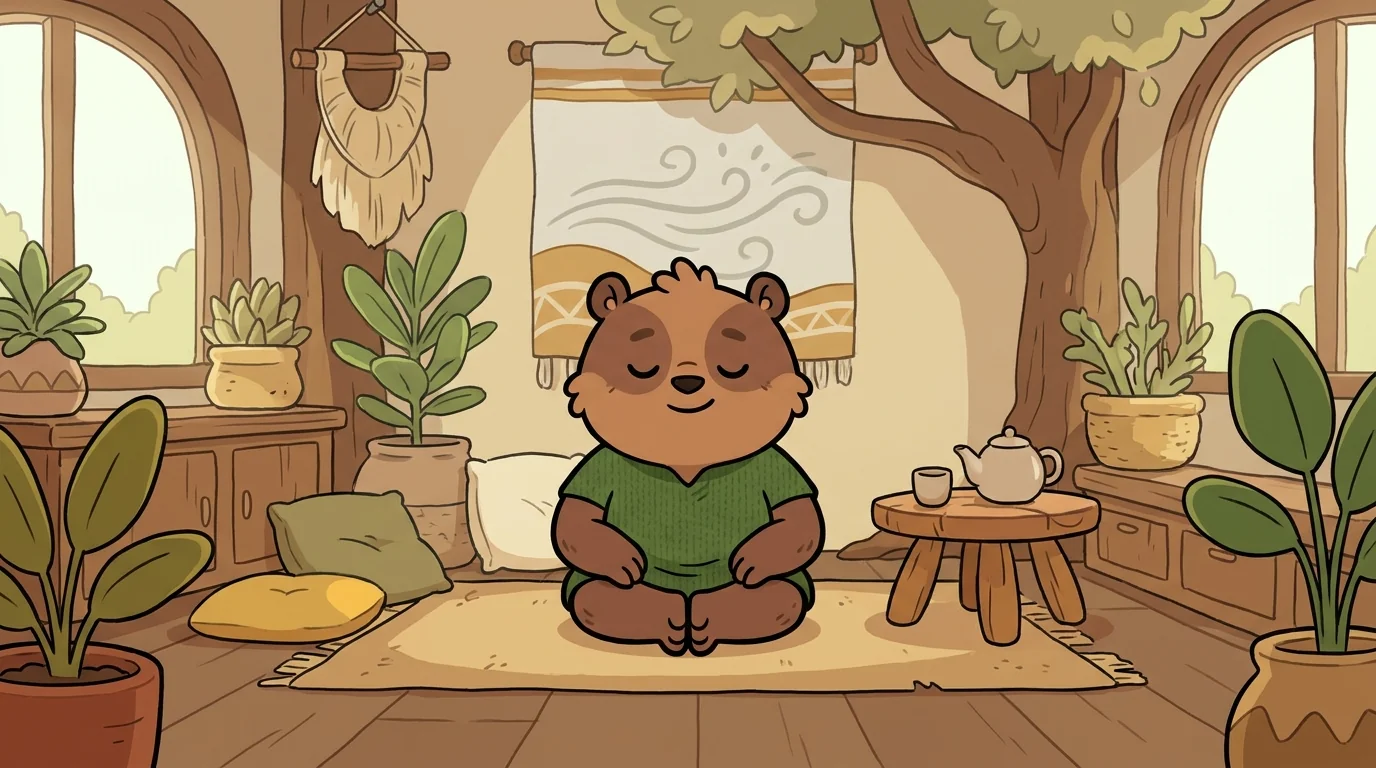
Settle is a small, grounded creature, and the first thing you notice is how settled she is. She doesn't slump and she doesn't stiffen — she holds herself with a kind of attentive stillness. When she sits, she settles fully: her weight resting evenly, her hands on her knees, her shoulders in their natural place. When she stands, the same settling shows — feet planted, weight even, breath unhurried.
That settled body is her whole teaching. Settle teaches self-management — what happens between noticing a feeling and acting on it. Her one big idea: one breath, then I choose. She never teaches students to not feel, and she never teaches them to squash a feeling down. She teaches them to slip one breath between the impulse and the action. The breath is the regulation. The pause is where the choice lives.
And like all the MindForge cast, Settle never once says calm down. Her breath isn't there to shrink the feeling — it's there to open a small space beside it. The feeling stays. The space is what lets you choose.

Settle grew up in a small herding village, in a family of shepherds — her grandmother had been the village's senior shepherd. And the shepherd's craft, Settle understood by the time she was five, was exactly the practice she would one day teach.
Because when a sheep startled and bolted, the shepherd could not go chasing after it in a panic — that only frightened the sheep more and sent it further. The shepherd had to do something much harder first: take one breath, settle her own posture, and then move, slow and steady. And the strange, wonderful thing was that when the shepherd settled herself, the sheep could find its way back to the flock. The shepherd's inside-steadiness was what let the outside situation settle.
When Settle was nine, she came home stomping, furious at a younger sibling. Her grandmother didn't tell her to stop being angry. She crouched down and said: "You felt frustrated. Good — that's the noticing. Now: one breath. Settle your shoulders. Then choose what to do. You can still be frustrated — the breath isn't to stop the frustration. The breath is to give you one moment to choose your action, instead of the frustration choosing it for you." Settle practiced that, over years, until the pause-and-choose came almost as naturally as breathing.

Grown, Settle walked to the MindForge academy. Sage, the senior mentor, asked her in the interview: "What is self-management?"
"It's what happens between feeling and acting," Settle said, settling her shoulders as she spoke. "One breath. Then I choose. The breath doesn't stop the feeling — it gives me a moment to decide my action."
Sage nodded. "You are appointed. You'll be our self-management teacher — the one who shows them the breath."
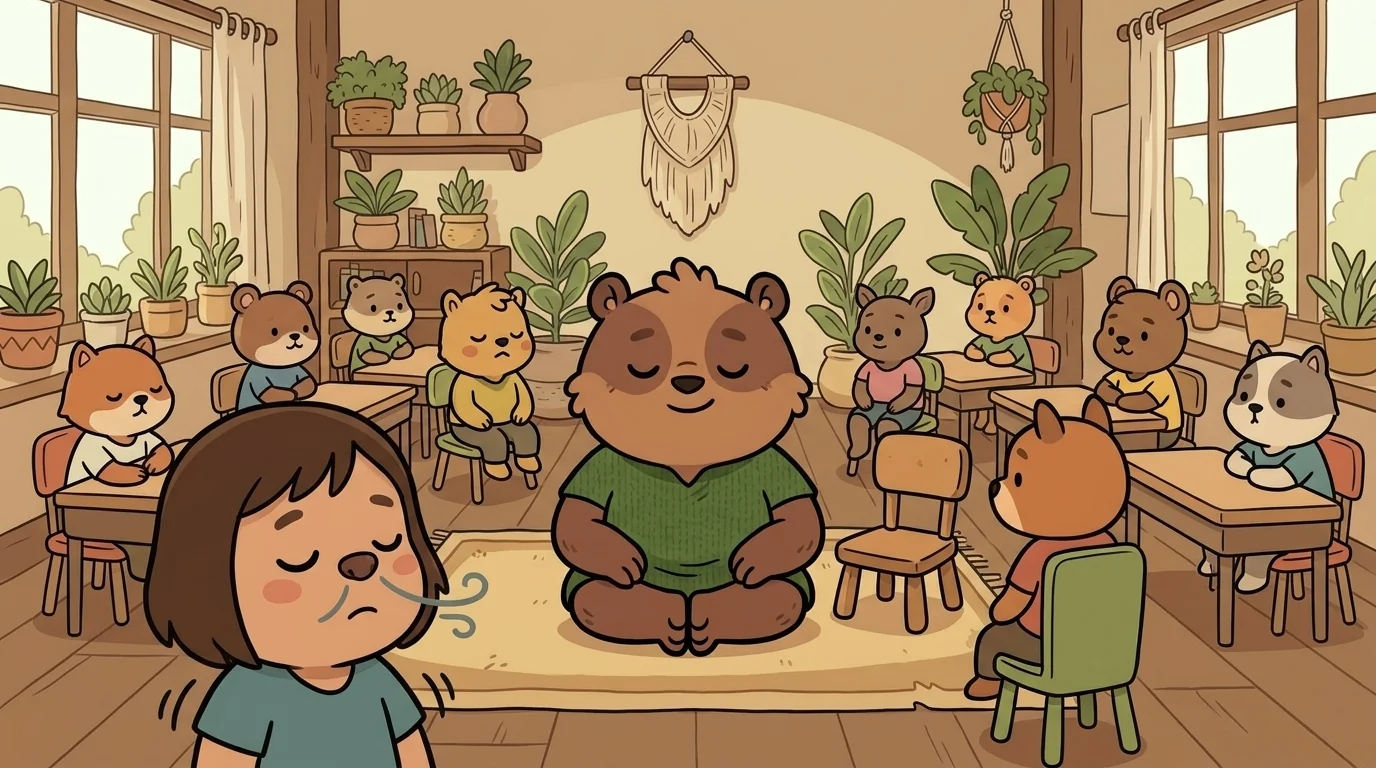
In her classroom, Settle begins every first day the same way. She sits on a small chair, and she settles — weight even, shoulders resting, hands on her knees. The students watch it happen, plain as day.
"I am Settle," she says. "My work is the breath between feeling and acting. Notice the feeling — Inside taught you that. Then take one breath. Then choose your action. The breath is the regulation." She turns to a student. "Think of a recent time you felt really frustrated." The student nods, remembering. "You felt it — that's the notice. Now: one slow breath, in through the nose, out again. Let your shoulders come down. Now — what do you want to do?" Often the answer changes. Without the breath: I wanted to yell. With it: I want to walk away for a minute, then come back and talk. Same feeling. Same situation. But the breath has opened a space where a choice can fit.
She shows them the small settlings that help: shoulders down (not up by the ears), breath slow, feet grounded on the floor, eyes resting — not locked, not hiding. Each is a tiny physical settling that makes room for the mental one. And she never tells them not to feel frustrated or sad or angry. "The feeling is welcome," she says. "The settling is just what makes the choice possible."
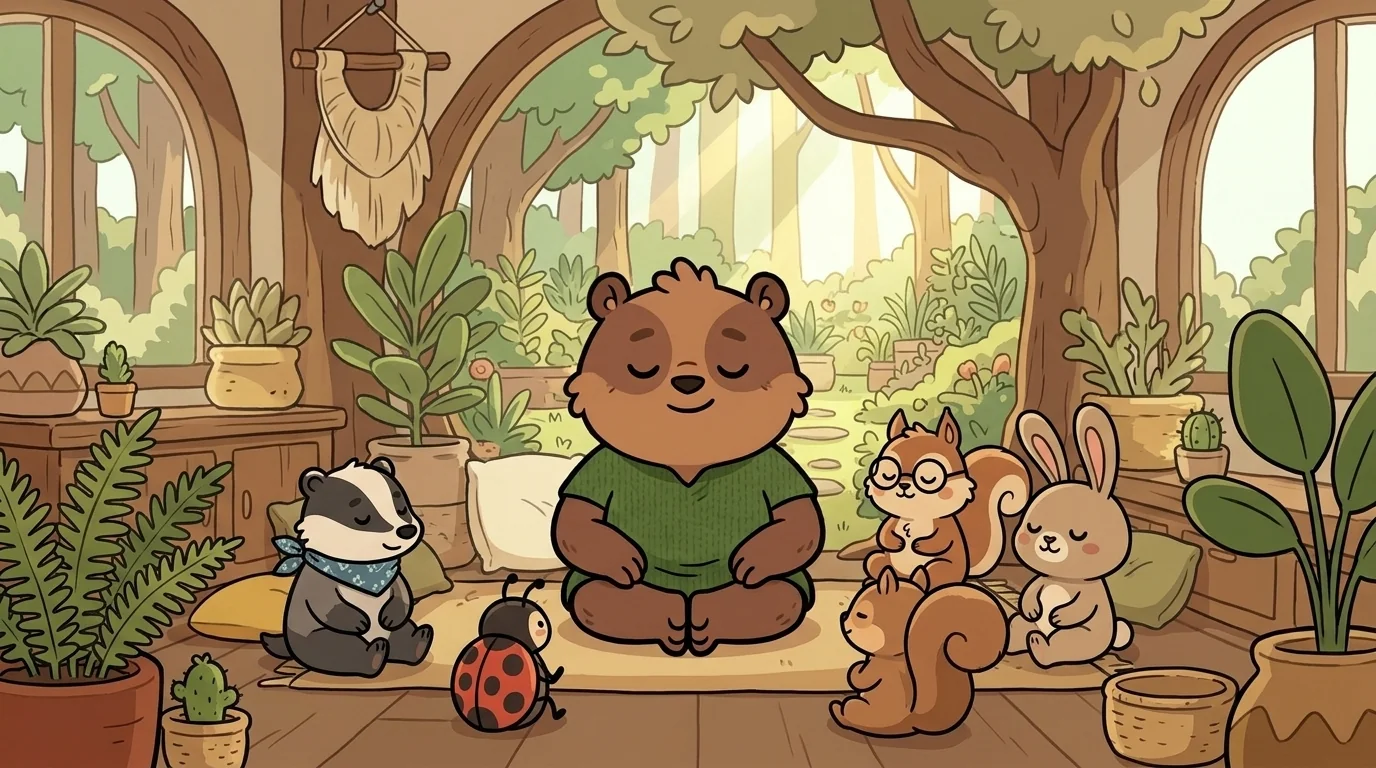
By the end of the lesson, the students have often begun, without meaning to, to settle their own shoulders — mimicking her without a word.
"Is self-management hard?" one asked her once. Settle gave her steady answer. "It isn't hard. It's one breath. Notice the feeling. Take the breath. Settle the shoulders. Then choose. The breath doesn't stop the feeling — it gives you a moment to choose what to do with it."
She stayed, all through the lesson, in her settled, unhurried posture — and slowly the whole room settled around her. Shoulders eased down from ears. Breathing slowed and evened out. And a steady, grounded warmth spread through the students' chests, the quiet relief of discovering that a big feeling doesn't have to grab the wheel — that there's a small, calm breath of space, always there if you reach for it, where you get to choose what happens next.
The MindForge ensemble
Settle is part of MindForge's distributed-narrative cast. Each character embodies a different curricular primitive; together they teach the full subject.
-

Inside
Self-awareness — emotion + thought + body awareness; 'Notice. Don't fix.'
-

Open
Social awareness — perspective + empathy + context; 'Their world. Then ours.'
-

Touch
Relationship skills — communication + boundaries + repair; 'Say it small. Listen big.'
-

Choose
Responsible decision-making — values + consequences + action; 'What matters? Then I act.'
-

Vane
Names the exact feeling, not just good or bad, because the precise word points the way to what actually helps.
-

Ballast
Helps you stay steady inside a big feeling, like the weight that keeps a boat from tipping while the wave passes.
-

Vantage
Climbs to where someone else is standing, so you can see what they see instead of guessing.
-

Darn
Mends a small everyday rift early, before a little tear becomes a big hole.
-

Forecast
Looks down the road of a choice to see where it leads, so your future self gets a vote too.