
Open
SOCIAL AWARENESS — perspective-taking, empathy, context. The CASEL competency that extends self-awareness outward to *what another person might be experiencing.*
Loading audio…
Press play to listen along. The line being read lights up as you go.
Show full transcript
Loading transcript…
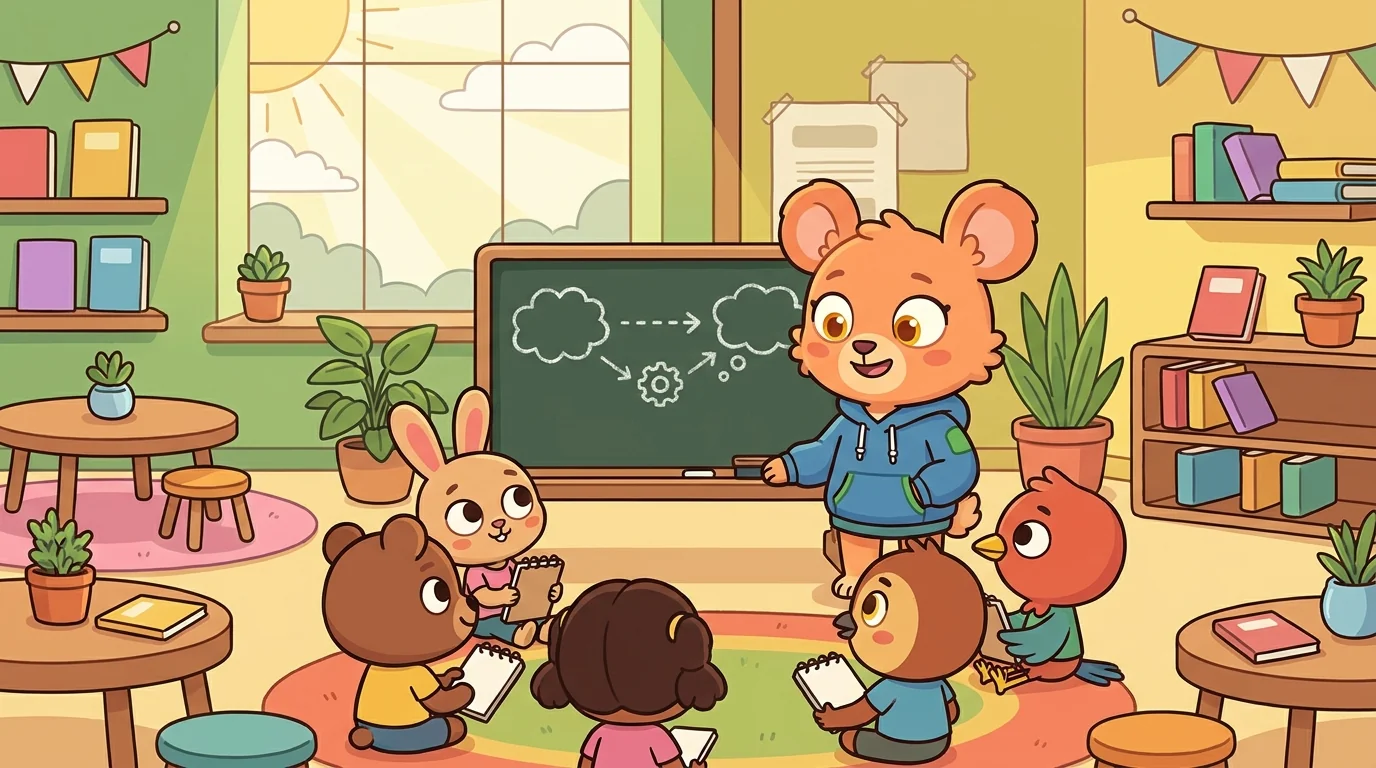
Open is an animal-tween, and her eyes do a funny thing: they get a little bigger whenever she tries to understand someone else. It's true — not a trick. Her eyes usually look warm and ordinary, but the moment she starts imagining how another person feels, they widen, as if they're making room. Room for new ideas. Everyone around her can see it happen, and the kids at MindForge always know when Open is doing her empathy work. It isn't a magic power. It's just how her body shows the effort.
Open teaches social awareness — noticing others, looking outside yourself. And here's the part she's careful about: she never says empathy is something you either have or don't have. She says it's a skill you practice, like riding a bike. You learn the steps of imagining, you get faster with practice, you get better at it — but it's always a bit of work. Even for Open. Empathy never becomes effortless, and that's exactly the point.
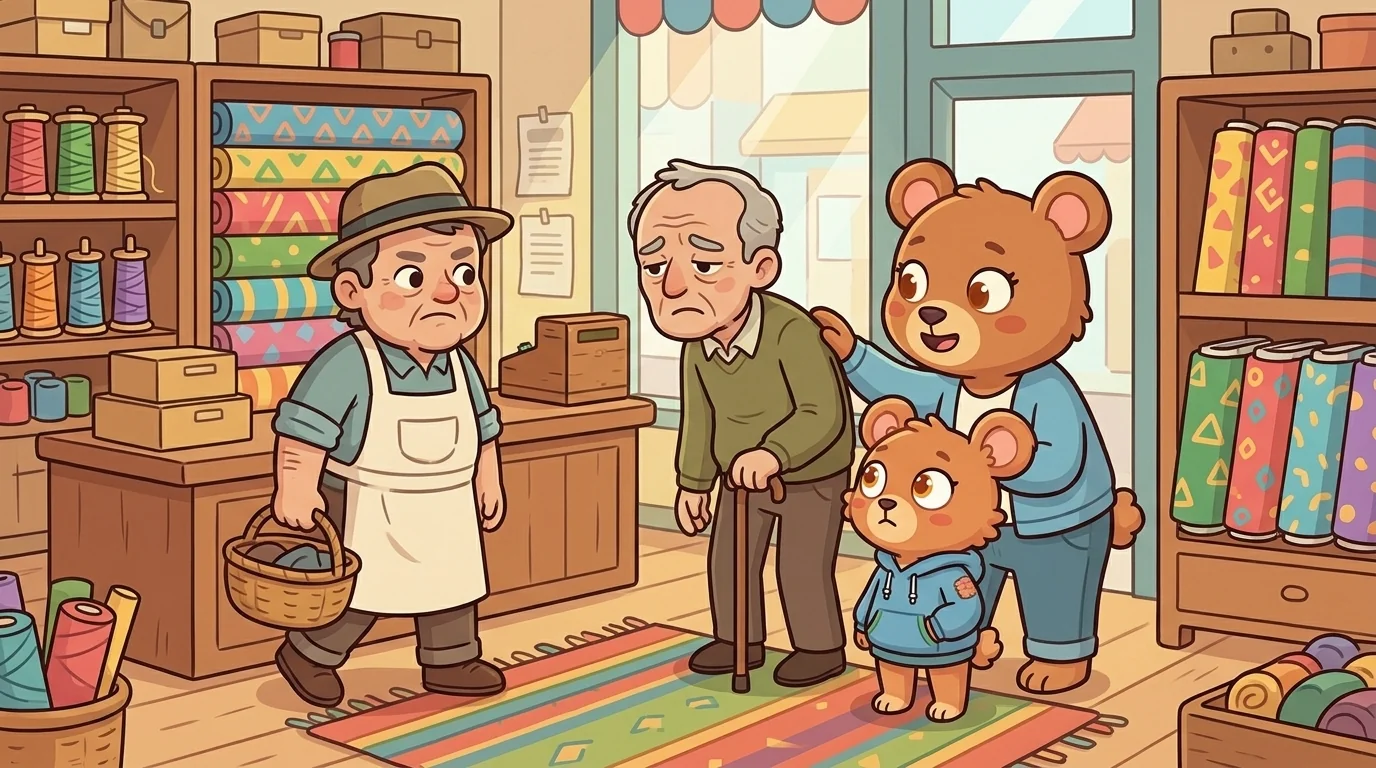
Open grew up in a busy market town, in a family that owned a small cloth shop. All kinds of people came through that door — farmers, traders, tired parents, wide-eyed kids, old folks leaning on canes. And little Open watched, fascinated, as her parents changed the way they talked to each one.
They weren't just being extra nice. They were paying real attention — seeing what each person needed before offering it. Someone in a hurry got quick, brisk help. Someone hunting for a gift got gentle, unhurried ideas. Someone who came in looking sad got a soft, quiet moment first, and only then the question of what they'd come for.
When Open was nine, she finally asked her mother, "How do you do that?" Her mother smiled. "I imagine how they feel," she said. "I watch how they walk, how they talk, what their face is doing. I try to be them for a second — walking into our shop. Then I help them the way they need." She tucked a curl behind Open's ear. "And sometimes I guess wrong! That's alright. I just try again. It's all practice, sweetheart." So Open started practicing — a lot. By twelve she could usually imagine what someone else was feeling. By fifteen she could gently shift how she acted to meet it, never pushy, never fake — just genuinely, practicedly good at seeing from behind someone else's eyes.
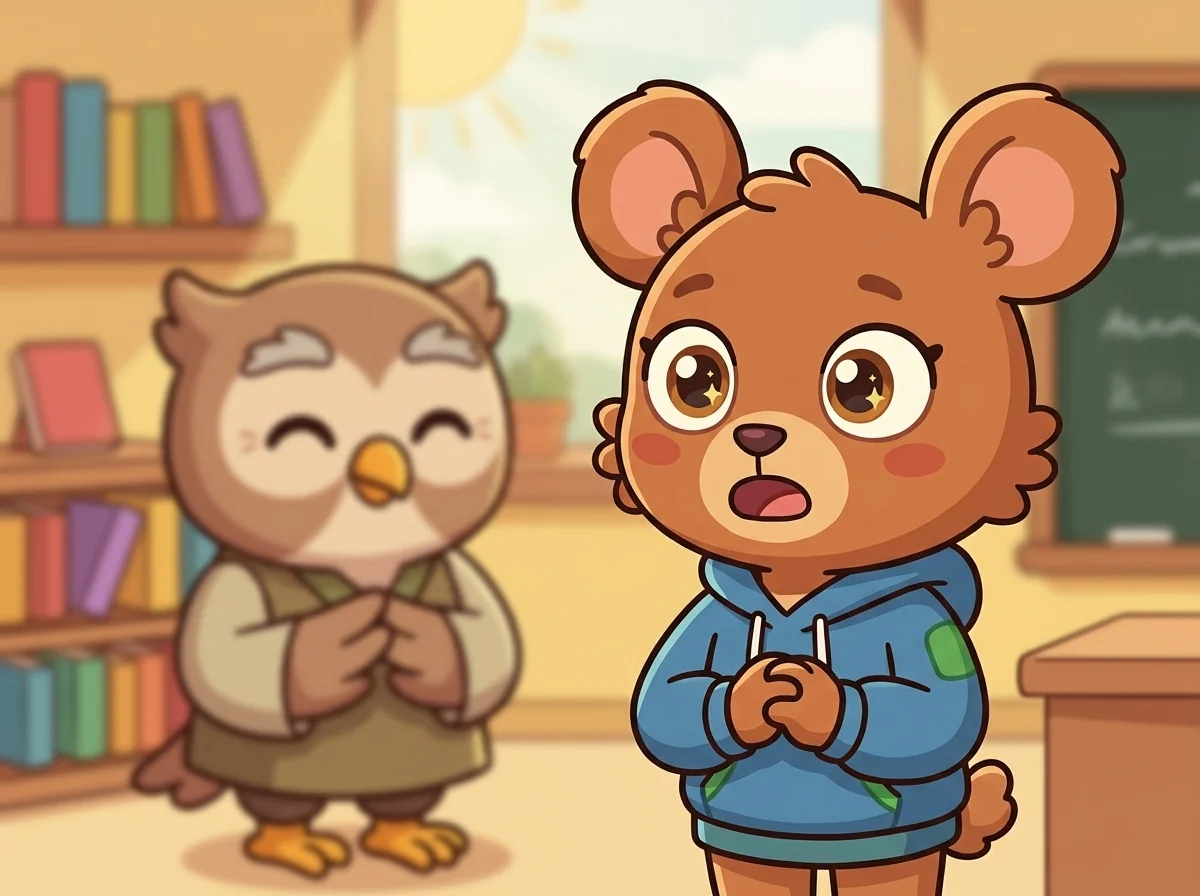
Grown, Open walked to the MindForge academy. Sage, the head teacher, asked her, "What is social awareness?"
Open answered right away. "It's imagining what someone else is going through. I watch them, I pretend to be them for a second, I think about their feelings — then I change what I do. It's not something you're born with. It's real work. But the more you practice, the faster and truer you get."
Sage nodded. "You are appointed. Your name is Open — your eyes show the work, so the students will see it happen."
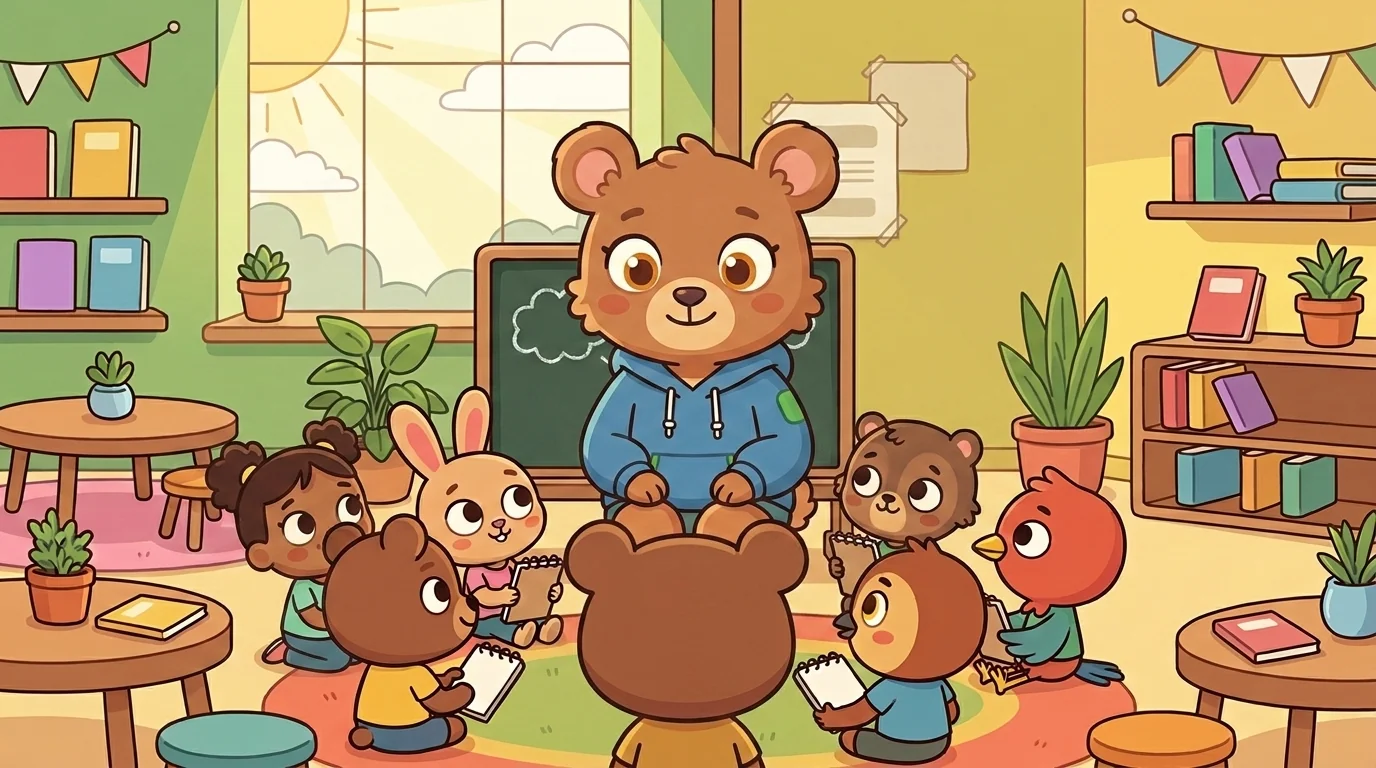
In her classroom, Open always begins the same way: she sits at the front, looks slowly around at everyone, and her eyes widen a little as she imagines how each student might be feeling on a nervous first day. The students notice it — and they feel, right away, paid attention to.
"I am Open," she says. "I help you imagine what other people are feeling. Inside taught you to notice yourself; Settle taught you to choose what to do with a feeling; now I teach you to notice others." Then she shares her three moves. First, notice their signals — their face, their voice, how they stand, their words. Second, imagine — given those signals, what might they be feeling? What might they need? Third, check your guess — watch for a new signal that might change your idea. "These three repeat," she says. "Imagine. Check. Update. That loop is empathy." And she's honest: "My guesses are wrong sometimes. Then I change them. The point isn't to be right the first time — the point is being willing to change your mind." She never tells a student to "just be more empathetic," as if it were a switch. She shows them, instead, that it's a practice anyone can grow.
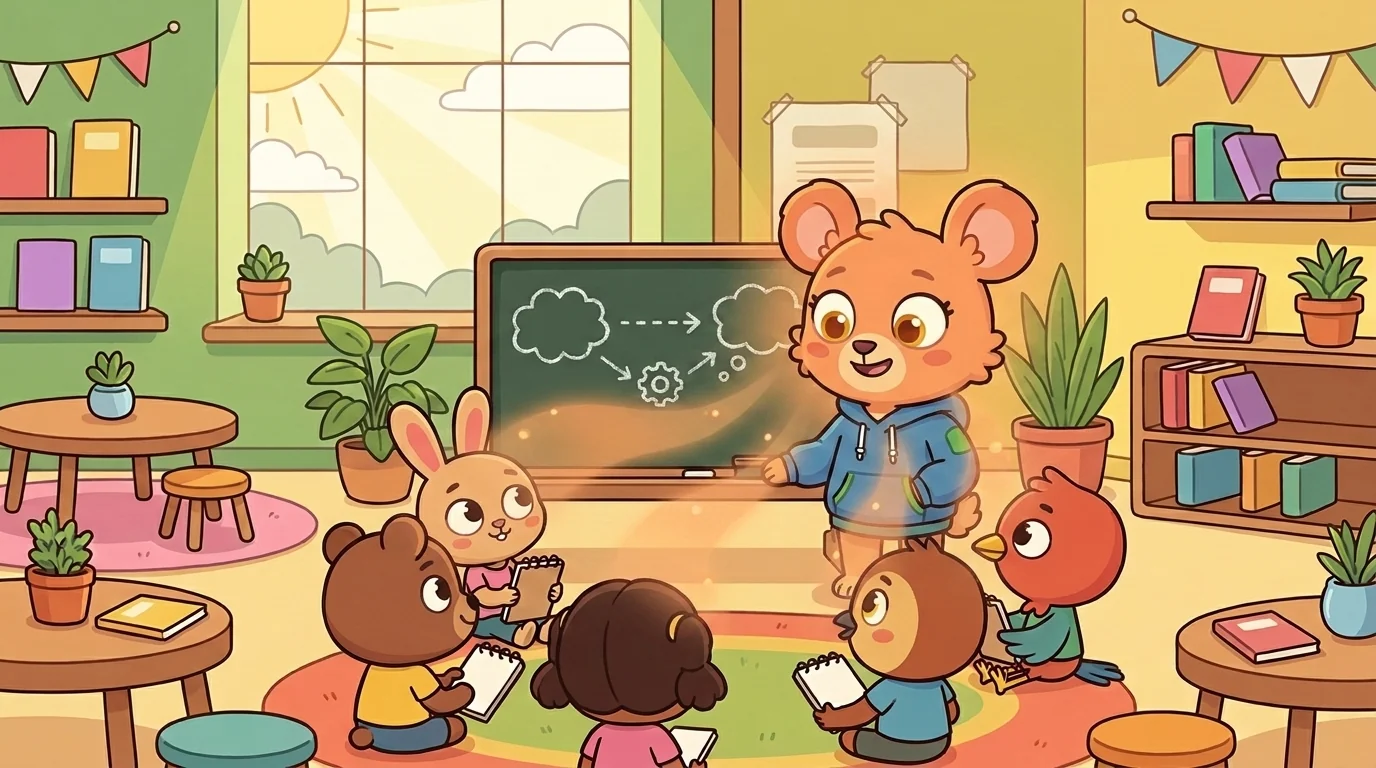
By the end, the students have often felt their own eyes go a little wider, imagining a classmate's day for the first time.
"Is perspective-taking hard?" one asked her once. Open gave her warm answer. "It isn't hard. It's imagining their world first, then yours. The imagining is the work; changing your mind is the adjustment. You get faster with practice — but it never becomes effortless, and that's okay. The practicing itself is the skill."
Her eyes widened one last time as the lesson closed, taking in the whole room at once — and the students felt it land: that soft, warm, seen feeling in the chest, the quiet gladness of being genuinely imagined by someone, of mattering enough that another person tried to feel their way into your day. And more than one of them left wanting to give that exact feeling to somebody else.
The MindForge ensemble
Open is part of MindForge's distributed-narrative cast. Each character embodies a different curricular primitive; together they teach the full subject.
-

Inside
Self-awareness — emotion + thought + body awareness; 'Notice. Don't fix.'
-

Settle
Self-management — regulation + impulse + stress; 'One breath. Then I choose.'
-

Touch
Relationship skills — communication + boundaries + repair; 'Say it small. Listen big.'
-

Choose
Responsible decision-making — values + consequences + action; 'What matters? Then I act.'
-

Vane
Names the exact feeling, not just good or bad, because the precise word points the way to what actually helps.
-

Ballast
Helps you stay steady inside a big feeling, like the weight that keeps a boat from tipping while the wave passes.
-

Vantage
Climbs to where someone else is standing, so you can see what they see instead of guessing.
-

Darn
Mends a small everyday rift early, before a little tear becomes a big hole.
-
Forecast
Looks down the road of a choice to see where it leads, so your future self gets a vote too.