The Wandering Forge · Reader · ages 6-8
Listen along
Loading audio…
Read by an AI-generated voice. The words on this page are the transcript.
1. One Bell
The hammer rang once. A spark jumped off the anvil and did not go out. It waited. They followed.
It was very early, and the Green was wet with dew. Inkling was sitting on the bench with her two tools in her lap. She swung the tick-weight and counted under her breath, then tapped the tally-peg against her knee. Beto was walking the edge of the grass with his even-rule, laying it against the paving stones one by one to see if they matched.
"That one's crooked," said Beto, mostly to himself.
The spark skipped across the dew, leaving tiny steaming dots, and dropped into the forge on Fiddle's cart at the end of the lane. The coals woke up orange, then gold.
Fiddle's striped tail came out from under the canvas first, then the rest of her. She was a young raccoon with soot on her nose, and she was holding a cracked iron ring.
"There you are," said Fiddle. "I was starting to think you'd overslept."
"We never oversleep," said Inkling. "Where are we going?"
"Somewhere that has broken something," said Fiddle. "That's all the spark ever tells me."
"What did they break?" said Beto.
"Try it and see," said Fiddle.
Beto had known she would say that. He climbed up on the right. Inkling climbed up on the left. Their belts clinked: Inkling had two tools hanging there now, and Beto had one.
"I'm one behind," said Beto.
"Every belt has room," said Fiddle. "And nobody is racing but you."
She tugged the cord. The cart's bell rang once, and the wheels began to turn.
2. The Town on the Marsh
The road went down and down, and the air got softer and wetter. Soon there were reeds on both sides, taller than the cart, rustling and whispering. Frogs plopped into ditches as the wheels went by.
"It smells like a pond," said Inkling.
"It smells like a very big pond," said Beto.
The cart rolled into Reedmere. It was a little town built right on the edge of a marsh. The houses stood on wooden legs, and the paths between them were made of planks. Beyond the last house, the marsh stretched out flat and brown and green, all the way to a far bank.
On that far bank stood a mill. It was tall and white, with a great wooden wheel on its side. But the wheel was not turning.
A woman came down the planks with a lantern, even though it was morning. She was old and wiry, with a grey shawl and a face like a walnut.
"You're the forge," said the woman. "Thank goodness. I'm the ferry keeper, or I was. The miller needs you. His axle has cracked, and nobody in town can grind flour until it's mended."
"Then we'll take the forge over," said Fiddle. "Where's your ferry?"
The ferry keeper pointed at a flat boat tied to the jetty. It was half full of water.
"It leaks like a basket," said the ferry keeper. "There are stepping stones across the marsh. People used to walk them every day. But the reeds have grown up, and nobody's crossed in years, and now nobody remembers which way they go."
"Is there a map?" said Beto.
"There's a map," said the ferry keeper. She sighed. "Come and see."
She led them to the town hall, a round wooden room that smelled of old rope. On the wall hung a big painted map of the marsh. The town jetty was on one side. The mill bank was on the other. In between, the marsh was covered in little marks. Some were filled-in dots. Some were hollow circles. Some were wavy lines, like ripples.
But the bottom corner of the map was torn away. There was just a ragged edge.
"That's where the key was," said the ferry keeper. "The little box that tells you what the marks mean. It got torn off when we cleaned the map last spring. And look out there."
She opened the door. While they had been inside, a soft white fog had started to creep in over the reeds.
3. Dots Are Stones
Inkling studied the map. She looked at the dots and the circles. She did not need very long.
"Dots look solid," said Inkling. "Dots are stones. I can name it! And look, there's a straight row of dots going all the way across. That's the way."
She was already out of the door and running down the planks to the jetty.
"Inkling, wait," said Beto.
But it was not Beto who stopped her. A grey fox in a striped jumper was sitting on the end of the jetty, as if she had been waiting there all morning. She stood up and stepped into Inkling's way.
"How do we know that?" said Aska. "Who made this map?"
Inkling skidded to a stop. "I don't know who made it."
"Then how do we know a dot means a stone?" said Aska. "It could mean anything. A tree. A duck. A puddle."
"It looks like a stone," said Inkling. But her voice had gone smaller.
"Lots of things look like other things," said Aska. "Let's check before we trust it."
Inkling looked down at the brown water beside the jetty. It was dark and still, and she could not see the bottom. A cold feeling crept into her tummy.
She had named it too soon. She had done that before, at the clock and at the bridge. But those times, being wrong had only been a little bit embarrassing. This time, being wrong could have been very wet.
"I nearly ran out there," said Inkling quietly.
"But you didn't," said Aska. "Because you stopped to listen. That counts."
Beto arrived, puffing, with Fiddle behind him.
"Who's this?" said Beto.
"This is Aska," said Fiddle. "She's good at asking questions people would rather not answer."
"Only the useful ones," said Aska.
4. What Does the Marsh Tell You?
"So which marks are the stones?" said Beto. "Fiddle, you must know. You know everything."
"I know almost nothing about marshes," said Fiddle. "But I know where to look for an answer."
"Where?" said Inkling.
"What does the marsh tell you?" said Fiddle.
Beto frowned. Then he looked around the jetty. Leaning against a post was a long wooden pole, the kind the ferry keeper used to push her boat along. It was taller than three Betos.
"We could test it," said Beto. "From here. Without stepping on anything."
He picked up the pole. It was heavy, and it wobbled, so Fiddle held the back end to steady it. Inkling ran back up the planks to the town hall and stood in the doorway, where she could see the map.
"The first dot on the straight row is just in front of the jetty," Inkling called. "Straight ahead. About as far as the pole."
Beto pushed the pole out over the water. Through the fog he could see something green and round floating there. He poked it.
The pole went down. Down through the green leaves, down into the water, down into soft squishy mud, until Beto had to grab it to stop it slipping away.
"That's not a stone," said Beto. "That's a lily pad! It's just floating. It would never hold anybody."
"Now try a circle," said Fiddle.
"There's a circle just to the right," called Inkling. "Look a bit to the right."
Beto swung the pole over and poked again. Clunk. The pole stopped dead, and the sound came back hard and flat.
"That's stone," said Beto. "Proper stone."
He tried two more marks to make sure, a dot further away, and a circle next to it. The dot sank. The circle went clunk.
"How does it work?" said Beto. "I think it's the other way round from what it looks like. The dots are lily pads. The circles are stones."
Inkling came back down to the jetty. Her face had gone pink.
"The straight row was all dots," she said. "If I'd stepped on the first one..."
"You'd have been the wettest apprentice in the world," said Fiddle cheerfully. "But you didn't. Testing is how you find out what a thing really is. A guess is only where you start."
5. Who Made It?
"A pole is good," said Aska, "but we can only poke as far as the pole reaches. We need the whole map to be true, not just the bits next to the jetty."
"So we need the key," said Beto. "But the key's gone."
"Is it?" said Aska. "Who made this map?"
They all looked at the ferry keeper, who had followed them down.
"I did," said the ferry keeper. "Oh, years and years ago, when I was young. I walked every stone and painted every mark."
"Then where does a torn corner go," said Aska, "when somebody tears it off a map they made themselves?"
The ferry keeper opened her mouth. Then she closed it. Then she hurried back up to the town hall, and they all followed.
Under the map was a wooden chest of drawers. The ferry keeper pulled open the top one. It was full of string, candle stubs, and buttons. The second one was full of fishing hooks. In the third one, folded in half and a bit crumpled, was a ragged corner of painted paper.
"I put it away safe," said the ferry keeper, "and then I forgot I'd put it away."
They spread it on the table. It was the key. In neat old letters, it said:
○ stone. ● lily pad. ~ deep water.
"That matches the pole," said Beto. "Circles are stones. Dots are lily pads."
"Two different checks, and they agree," said Aska. She nodded slowly. "Now I'll trust it. Not before."
"You don't trust anything, do you?" said Inkling.
"I trust lots of things," said Aska. "After I've checked them."
6. North First
Beto held the torn corner up against the map. He wanted to see where it fitted. But it would not fit. The ragged edge of the corner went one way, and the ragged edge of the map went the other.
"That's odd," said Beto. "It's like it belongs on the opposite corner."
There was a flutter of red wings, and a cardinal landed right on the top of the map's frame. He was very red and very upright, and he looked down at them with great importance.
"North first, always north," said Cardi. "Before you read a map, you turn it to match the world."
"What's wrong with it?" said Inkling.
"It's hung upside down," said Cardi. "Somebody cleaned it and put it back the wrong way up. The north arrow is pointing at the floor."
They all tilted their heads. There, in the bottom corner where nobody had looked, was a tiny painted arrow with an N beside it. It was pointing down.
"So the jetty on the map isn't where our jetty is at all," said Beto.
"Exactly," said Cardi. "You'd be reading it backwards. Left would be right and up would be down. Now, where is north out there?"
"How do you find north without the map?" said Inkling.
Cardi fluffed his feathers. "The sun rises in the east," said Cardi. "Look out of the door. Where is the bright patch in the fog?"
They looked. Over the reeds, the fog glowed pale gold on one side, where the morning sun was trying to push through.
"That's east," said Cardi. "So if east is there, north is a quarter-turn to the left of it. Over towards the mill, and a bit beside it."
The ferry keeper lifted the map off its nail. Together they turned it all the way round, until the little N arrow pointed the same way as north out in the marsh. Then Beto held up the torn corner again. This time it fitted exactly.
"Now the paper and the world are facing the same way," said Cardi. He looked very satisfied. "North first. Always north."
7. You Are Here
They carried the map down to the jetty and laid it flat on an upturned crate, with stones on its corners so the damp breeze would not flip it over. North on the map pointed north into the fog.
"Right," said Beto. "Now which stone do we start on?"
They all looked at the map. The jetty was drawn at the edge of the marsh. But there were two little piers drawn there, one by the town hall and one further along by the boathouse.
"Which one are we on?" said Inkling.
A small map pin with a round red head was stuck into the corner of the crate. It hopped up onto the map.
"You are here," said Pinnet. "Pin it before you plan."
"How do you know where here is?" said Beto.
"Look around," said Pinnet. "What can you see that's on the map too?"
Beto looked. Behind them was the round town hall. On the map, the round town hall was drawn next to the left-hand pier. The boathouse was much further along.
"We're on the left one," said Beto. "By the town hall."
Pinnet jumped down and stood on the left-hand pier on the map, very firm and very straight.
"Then this is your start," said Pinnet. "The first stone on the map is the stone right in front of your feet. Start from the pin."
Inkling put her finger on the map next to Pinnet. Then she pointed out into the fog, at the hard grey stone Beto had found with the pole.
"That's it," she said. "That's the very same stone."
It was a strange feeling, Beto thought. A map was just paint on paper. But now that it faced north and had a pin in it, the paper and the marsh were joined together. A finger on the map was a foot on a stone.
8. Guess First
An Arctic tern came swooping low over the reeds and landed on the corner of the crate. She had a sharp black cap and a tail like a pair of scissors.
"Before you go," said Ternwick, "guess first. Which way is farther across?"
"The straight row," said Inkling at once. "It goes straight across. Straight is always shortest."
"Count it and see," said Ternwick.
Beto ran his finger straight across the map from Pinnet, along the row of dots. "One, two, three, four, five," he said. "Five steps across."
"And the safe way?" said Ternwick. "On the circles only."
The circles did not go straight. They went forward, then turned north, then forward again, then forward again, then turned south, then forward once more to the mill bank. It was a zig-zag, like a staircase lying down.
Beto counted carefully, touching each circle with his finger. "One, two, three, four, five, six, seven. Seven steps."
"Was your guess close?" said Ternwick.
"I guessed the straight way was shorter," said Inkling, "and it is. Seven take away five is two. It's two steps shorter."
"It is," said Ternwick. "So why not take it?"
Inkling looked at the dots on the straight row. "Because the third step is a lily pad," she said slowly. "And so is the first. Shorter doesn't matter if you fall in."
"Two more steps," said Ternwick, "and every one of them dry. Guess first, then count. Then decide."
The ferry keeper uncoiled a long rope from the jetty post. She tied one end to the post and wrapped the other round her own waist.
"I'll go first and I'll keep the rope tight," said the ferry keeper. "Everybody holds on, all the way across. Nobody lets go."
Fiddle packed the forge's tools into a canvas bag and slung it over her back. Beto took the map, folded so the crossing showed. Inkling held the rope with both hands.
They stepped out onto the first stone. Somebody had set it in cement long ago, so the river could never roll it away, and scratched into its top, worn almost flat, was a tiny hammer.
Beto stopped. Inkling stopped behind him. Neither of them said anything, because it was cold and the fog was waiting and there was a mill to mend. But they both looked at it for a long time.
"Four towns," Inkling whispered at last. "Somebody mended here before us. Every single time."
"Who?" said Beto.
Nobody knew. They stepped on to the second stone. The marsh was quiet except for the reeds. Pinnet rode on Beto's shoulder. Cardi and Ternwick flew above.
They reached the fourth stone. And then the fog came down.
9. North, Then East
It came all at once, thick and white, like stepping inside a cloud. Beto could see the ferry keeper's shawl in front of him and Inkling's hand on the rope behind him, and that was all. Cardi and Ternwick were only voices now, calling somewhere overhead.
"I can't see the next stone," said Inkling. Her voice wobbled. "I can't see anything."
Beto's heart thumped. He wanted very badly to just step forward and hope. But hoping was what Inkling had nearly done at the jetty.
"Don't guess," Beto said, to himself as much as anyone. "Use the map."
He held the map up close to his face. It was damp, but he could still read it.
First, north. He could not see the sun now, but the map had been turned to north on the jetty, and the ferry keeper had walked them straight. He kept the map facing the same way they had been walking.
Second, the start. He found Pinnet's pier, then counted along the circles with his finger. "One, two, three, four. We're on the fourth stone."
Third, the key. He looked at the marks next to the fourth circle. Straight ahead of it was a dot. A lily pad. Beside it, to the north, was a circle.
"The next one isn't straight ahead," said Beto. "Straight ahead is a lily pad. The next stone is north. Then it goes east again."
"Which way is north?" called the ferry keeper. "I've lost it in this fog."
"Your left," said Beto. "The way the reeds are leaning. That's the way we've been walking all along, so left is north."
The ferry keeper reached out with her foot, slowly, keeping the rope tight. "Stone," she said. "It's here. You're right."
They stepped across one by one, each holding the rope. Beto checked the map again.
"Now east. Straight on, towards the mill."
Another stone. Then another. And then, as if somebody had opened a door, the fog thinned and rolled back, and there in front of them was the mill bank, green and solid, with the great wheel standing still beside it.
Inkling jumped off the last stone onto the grass and sat down on it, laughing.
"Seven stones," she said. "I counted. Exactly seven."
The miller came running out of the mill, covered in flour, and shook everybody's hand at once.
That afternoon, when the fog had gone, the whole town came out with pots of paint. They took the old map down, and right across the bottom, big and bright where nobody could ever tear it off again, they painted a new key: a circle for stone, a dot for lily pad, a wavy line for deep water. Then they painted a big red arrow pointing north, and a little red pin at the town hall pier that said YOU ARE HERE.
"Now anyone can read it," said the ferry keeper. "Even me, when I'm a hundred."
10. The Fourth Tool
Inside the mill, Fiddle got to work. The cracked axle was a huge wooden beam with an iron band around it, and the iron band had split.
Fiddle lit the little forge she had carried across. She heated a new strip of iron until it glowed. The miller held the beam steady. Beto worked the bellows, and Inkling handed over the tongs whenever Fiddle held out a paw.
"Push it, pull it, twist it, see," said Fiddle, as she bent the glowing strip around the beam and hammered it tight.
When it cooled, it held. The miller pulled the lever. Slowly, creakingly, the great wheel began to turn, and the water splashed, and somewhere inside the mill the grinding stones began to rumble.
The miller laughed out loud.
Before they left, Fiddle took a small flat piece of brass from her bag.
"Every town gives you something," said Fiddle. "What did this one give you?"
"A map needs a key," said Beto. "Or the marks don't mean anything. And it needs north, and a start."
"Then stamp it," said Fiddle.
She heated her smallest stamps, and Beto pressed them into the brass, one at a time: a circle, a dot, a wavy line. Underneath each one, Inkling scratched what it meant. Then Fiddle punched a hole in the top, and Beto hung the key-tag on his belt.
It clinked against his even-rule. Two tools each.
"We're even now," said Beto.
"You always were," said Fiddle. "But it's nice to hear it."
They walked back across the stepping stones in the clear afternoon light, all seven of them, with the new map in Beto's hand and the ferry keeper waving from the far bank.
The cart's bell rang twice, and the road ran home.
The spark dimmed to a warm dot and settled back on the anvil. The Green was just the Green again.
Back on the Green
The next week, Beto's cousin came to stay, and she didn't know the way from the house to the Green.
"I'll draw you a map," said Beto.
He took a big piece of paper. First he drew an arrow and wrote N, and he turned the paper so the arrow pointed the right way out of the window. Then he drew the front door and put a little red X next to it: YOU ARE HERE. Then he drew the path, and the trees, and the bench, and the anvil.
"What are all the shapes?" said his cousin.
"That's the best bit," said Beto. In the corner, very carefully, he drew a box. Inside it, he wrote: circle, tree. Square, bench. Star, the anvil.
"There," said Beto. "Now the marks mean something."
Tell the story back to someone. What three things does a map need before you can trust it?
Saved. The next chapter will be here whenever you come back.
Who you met
-
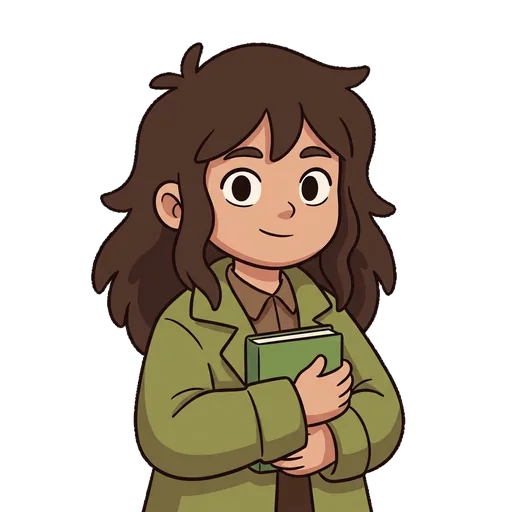 Inkling a child of the Green Names what she notices
-
 Aska Ask who made it and check the source before you trust it from CompassQuest
-
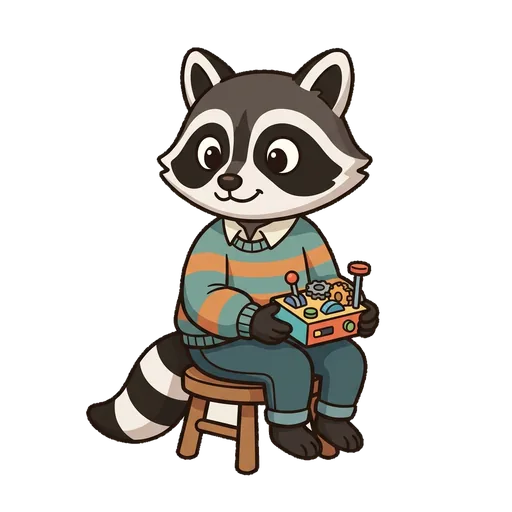 Fiddle You learn what a thing does by trying it — the playing is the learning from AweForge
-
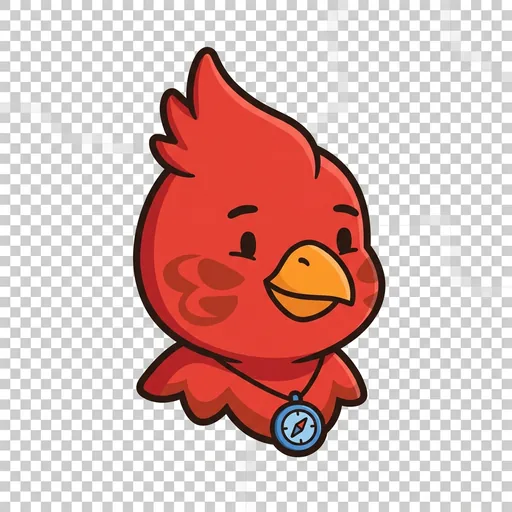 Cardi Turn the map so north on the paper points north in the world from CompassQuest
-
 Pinnet Mark where you are, so the map can tell you where to go from GlobePals
-
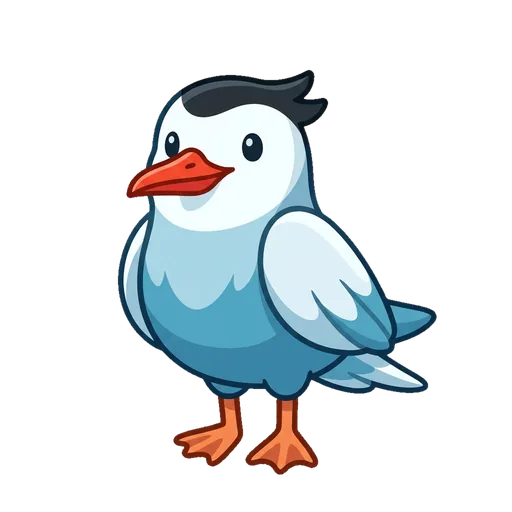 Ternwick Guess which is farther first, then count it and see from GlobePals
-
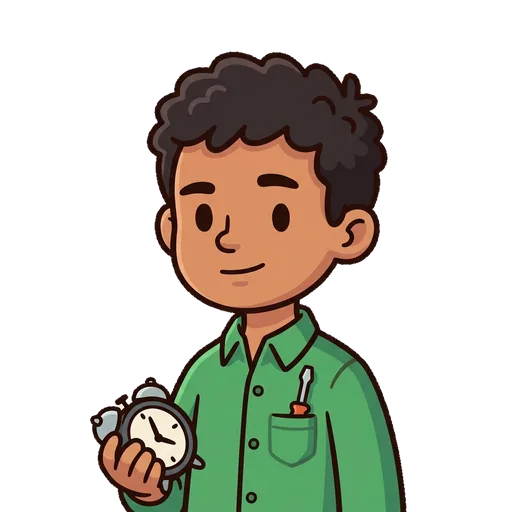 Beto a child of the Green Takes things apart
Every recurring character has a short tune, so you can tell who is on stage before a word is said. The tunes play only when you tap, and the Reading Access sound switch turns them off.
The Honest Page
Which parts of this story are true, stretched or made up?
True
- A map key (also called a legend) tells you what each mark on the map means. Source
- Maps are usually drawn with north at the top. Turning a map so it matches the land is called orienting it. Source
- The straight line crosses a lily pad; the seven-stone zig-zag reaches the far bank on stones only. Seven is two more than five.
- From the real world: in orienteering, people race across fields and forests with only a map and a compass, and the first skill they learn is turning the map to match the land. Source
Stretched
- In the book, Cardi finds north from the morning sun. What we simplified: The sun rises roughly in the east, not exactly, and the direction changes through the year. A compass is more exact.
Made up
- Reedmere, its marsh and its talking map-makers are made up. Never cross real water on stepping stones without a grown-up.