← The Town That Could Not Agree
The Wandering Forge · Reader · ages 6-8
Listen along
Loading audio…
Read by an AI-generated voice. The words on this page are the transcript.
1. One Bell
The hammer rang once. A spark jumped off the anvil and did not go out. It waited. They followed.
It was a grey, windy afternoon, and the Green was nearly empty. Inkling was practising with her tick-weight, counting swings under her breath. Beto was folding and unfolding his even-rule, checking things: the bench, his shoe, a leaf. Was the leaf's left half the same as its right half? Almost. Not quite.
The spark hopped over the wet grass to Fiddle's cart at the edge of the lane and dropped into the forge. The coals woke up orange.
Fiddle put her head out from under the canvas. She was holding a broken umbrella and a piece of wire.
"Oh, good," said Fiddle. "Another town. Another broken thing."
"Only one this time?" said Beto.
"Try it and see," said Fiddle, which was not an answer, and which was exactly what Beto had expected.
They climbed up. Inkling sat on the left of Fiddle and Beto sat on the right, and the cart creaked as it took their weight.
"Three tools to go," said Inkling, touching her tick-weight.
"Two for me," said Beto, touching his even-rule. "I mean, two more for me. One more each."
"Every belt has room," said Fiddle. "Nobody is counting but you."
She tugged the cord. The cart's bell rang once, and the wheels began to turn.
2. Four Broken Things
The road climbed over a bare hill and came down into a small town where four lanes met in a little square. In the middle of the square stood a stone water pump with a long iron handle. Round the edge of the square were benches, a noticeboard and a bakery with a red door.
"Fourways," said Fiddle, reading a signpost with four arms.
Each arm of the signpost pointed down a different lane, and each lane was a little different. The swing lane had chalk drawings on the cobbles and a skipping rope left on a wall. The bakery lane smelled of flour, and of bread that had not risen. The goat lane had a muddy track and a lot of hoofprints. And the fourth path, the narrowest one, went up the steep hill behind the square, between stone walls, towards three small white houses near the top.
"Four lanes, four of everything," said Inkling. "I bet they have four of every argument too."
"You don't know that yet," said Beto.
"No," said Inkling, and grinned. "I'm practising not knowing."
The town was quiet. Too quiet. Then they saw why.
In the first lane, under a big chestnut tree, hung a wooden swing. One of its ropes had snapped, and the seat dangled sideways. Small children stood looking at it sadly.
In the second lane, behind the bakery, the big brick bread oven had a cracked iron door that would not shut. The baker was trying to hold it closed with a broom.
In the third lane, the gate to the goat field had lost its top hinge and hung crooked. Three goats were already halfway down the lane.
And in the square, the water pump's long handle flopped up and down uselessly. The little iron pin that held it to the pump had snapped clean in two.
"Can you mend them all?" said a mother with a bucket.
Fiddle didn't answer. She walked to the back of the cart and lifted out the coal sack. Then she held it out to Inkling and Beto.
"Feel it," said Fiddle.
They lifted it together. It was light. Far too light. Beto opened the top and looked inside. There was only a small heap of coal at the bottom, enough to fill two hands.
"What does the fire tell you?" said Fiddle.
Beto looked at the coal. He had watched Fiddle work the forge in Tickwell and in Halvingford. He knew how much coal it took to heat iron red enough to bend.
"There's only enough for one mend," said Beto slowly. "Before the coals go cold. One mend, not four."
"So the town has to choose," said Inkling.
Fiddle put the sack down and sat on the step. She looked very interested, and said nothing.
3. Hands Up
The news went round the four lanes quickly. Soon everybody in Fourways was in the square: parents, grandparents, children, babies, and three goats.
A white duck in a blue shirt waddled to the middle and climbed onto an upturned bucket.
"Hands up! I'll count," said Majori. "One hand for every house. That's the rule in Fourways. Count them again, every hand, if anybody asks."
There were thirteen houses in Fourways. Each house sent one person to put up one hand.
"Who wants the swing?" said Majori.
Five hands went up. They were mostly from the swing lane, where the little children lived.
"Who wants the oven?" said Majori.
Four hands. The bakery lane.
"Who wants the pump?" said Majori.
Three hands. Three people at the very back, near the path that went up the hill.
"Who wants the gate?" said Majori.
One hand. The goat farmer, chasing a goat.
Majori counted on her feathers. "Five and four and three and one," she said. "Thirteen hands. Thirteen houses. Every house has voted."
Inkling checked with her tally-stick finger in the dust: five, four, three, one. Thirteen. It was right.
"That's five hands for the swing," said Majori, very loudly. "The biggest number is the winner."
The swing lane cheered.
4. Most Votes Wins
Beto was already moving. He had seen Fiddle's tongs leaning against the forge, and he grabbed them.
"Most votes wins it!" said Beto. "Let's mend the swing. Quick, before the coals go cold!"
"Wait before we decide," said a gentle voice.
A young deer stepped out from the crowd. She had long thin legs, big brown eyes and a blue neckerchief round her neck. She did not stand in Beto's way. She just stood next to him, so he had to look at her.
"I'm Consenna," said the deer. "Most is a start, not the end."
"But the swing got the most," said Beto. "Five is the biggest number. Majori said so."
"Five is the most," said Consenna kindly. "Is five more than half?"
Beto stopped. He thought about it. There were thirteen houses. What was half of thirteen? Thirteen was an odd number, so half of it wasn't a whole number. Half of twelve was six. Half of fourteen was seven. Half of thirteen was in between: six and a half.
Five was less than six and a half. Much less.
"Five isn't more than half," said Beto slowly. "Eight houses didn't choose the swing. That's more than half of them."
"So most of the town wanted something else," said Inkling. "They just didn't all want the same something else."
Beto put the tongs down. His face went hot. He had been so sure. He liked counting, and Majori had counted, and the numbers had seemed to say "swing". But the numbers had only said "most". They hadn't said "more than half".
"Why?" said Beto, mostly to himself. "Why did I think most was enough?"
Majori had climbed down off her bucket. She looked a little ruffled.
"I only counted," said Majori. "I counted every hand. I didn't count wrong."
"You didn't count wrong," said Consenna. "You counted right. Counting is always the first step. We couldn't know anything without it."
Majori smoothed her feathers and looked a bit better.
"Because most is often enough," said Consenna. "It's a fine first step. But the first step isn't the end of the walk."
5. Can Everyone Use It?
"Here is my check," said Consenna. "A winner still has to pass it. Can everyone use it?"
"What do you mean?" said Inkling.
"Let's go and see," said Consenna. "Who is left out?"
So they walked round all four lanes, with half the town following.
At the swing, Consenna asked who used it. The little ones, said the parents. The little ones of the swing lane, mostly, because the other lanes had their own climbing tree.
At the oven, Consenna asked who used it. The bakery lane, said the baker. The whole town buys bread, said somebody else, but they could buy it from the next village for a week if they had to. It was a long walk, but it was possible.
At the gate, Consenna asked who used it. Only the goat farmer, who looked embarrassed.
Then they came back to the square, to the pump with the flopping handle.
"And who uses this?" said Consenna.
Nobody answered. They all looked at each other.
Inkling was good at noticing, and now she noticed something she should have noticed straight away. In front of every single house in Fourways, by every door, stood a bucket. Some were wooden and some were tin. Some were big and some were small. And every bucket in town was empty.
"I noticed something," said Inkling. "Everybody has a bucket. Every bucket comes here."
"Everybody uses the pump," said Beto. "Every single house."
"Then the pump passes my check," said Consenna quietly. "Can everyone use it? Yes. The swing, the oven and the gate are all good things. But not everyone uses them."
6. The Small Side
At the very edge of the square, by the path up the hill, stood a small field mouse in a yellow jumper. She was holding a wooden bucket that was almost bigger than she was.
"There are only a few of us up the hill," said the mouse. Her voice was very small. "Three houses. I'm Fairling."
Everybody turned to look at her. She went pink under her fur but kept talking.
"The others in town have a stream at the bottom of their lanes," said Fairling. "It's muddy, but they can use it for a few days. Up the hill there's no stream. Our water comes from that pump. There isn't any other."
"How long since you had water?" said Inkling.
"Since yesterday morning," said Fairling. "We've been very careful."
She told them about the walk. From the three houses at the top of the hill, the path came down between the stone walls, steep and slippery, round two bends and over a stile. It took a grown-up a quarter of an hour. It took Fairling, with her short legs, much longer. Coming down, the bucket was empty and light. Going up, the bucket was full and heavy, and water slopped over the side at every step.
"By the time I get home, the bucket is half empty," said Fairling. "So I go down twice."
"Every day?" said Beto.
"Every day," said Fairling. "Until yesterday. Yesterday there was nothing to carry."
The square went quiet. Even the goats were quiet.
"Why didn't you say so?" said Beto. "When we voted?"
"We did vote," said Fairling. "We put up three hands. But there are only three of us. We can't win a vote alone. Not against five, or four." She held her bucket tighter. "Please listen to the small side."
Beto felt something drop in his tummy. He had wanted to mend the swing. Up the hill, three houses had no water at all.
"Thank you for hearing us," said Fairling, although nobody had done anything yet.
7. Say Why First
A calm green turtle in a yellow jumper made her way slowly into the middle of the square. Nobody had noticed her before, but now everybody did.
"I'm Reason," said the turtle. "May I ask something? Before you vote again?"
"Again?" said Majori. "We already voted."
"We voted before we knew why," said Reason. "Tell us why first. Say your reason out loud. Then vote."
So each lane said why.
A girl from the swing lane stood up. "The little ones are bored," she said. "They have nowhere to play. They keep getting under everyone's feet."
"That's a real reason," said Reason. "Thank you."
The baker stood up. "The bread comes out flat," he said. "The oven door won't shut, so the heat gets out. We can buy bread from the next village, but it's a long walk."
"That's a real reason too," said Reason.
The goat farmer stood up. "The goats get out," he said, and three goats walked past him to prove it. Everybody laughed, even him.
Then Fairling stood up, holding her bucket.
"We have no water," said Fairling. "Not muddy water. Not any water. Since yesterday."
Nobody laughed at that.
"A vote with a reason is a better vote," said Reason. "Now we know why. Vote again."
"Can I change my mind?" said a man from the bakery lane. "I mean, is that allowed? Changing your vote?"
"Why that one?" said Reason. "Why do you want to change it?"
"Because I didn't know about the hill," said the man. "I thought everybody could use the stream. Now I know they can't."
"Then that's a reason," said Reason. "Changing your mind because you learned something is not cheating. It's thinking."
Beto stood very still. He had changed his own mind today, about the swing. He hadn't thought of it as thinking. He had thought of it as being wrong. Now he wasn't so sure there was a difference between the two that mattered.
8. Taken Away
But the swing lane's children were not happy. They stood together under the broken swing with their arms folded and their bottom lips sticking out.
"We had the most hands," said the biggest girl. "We won. Now it's being taken away."
"It's not fair," said a small boy.
Majori shuffled on her bucket. Consenna looked sad. Even Reason did not seem to know what to say.
Inkling went and sat on the grass with the swing lane's children. She didn't tell them they were wrong. She didn't tell them they had to share.
"I know how it feels," said Inkling. "In Tickwell, I was sure I knew how to fix the clock, and I didn't. In Halvingford, I was sure about the bridge, and I wasn't. Being sure and then being told to wait is horrible."
"It IS horrible," said the biggest girl.
"But the swing isn't gone," said Inkling. "It's waiting. Waiting isn't the same as losing."
The small boy looked up at the swing. "It needs a rope," he said. "Not a forge."
Beto stared at him. Then he went to look at the swing. That was what Beto did. He went to see how it worked.
"How does it work?" said Beto, running his hands along the snapped rope. "It's only rope. It's not iron. You don't need a forge to fix rope."
The swing lane's children looked at each other.
9. Count Again
Majori hopped back up on her bucket.
"Count them again, every hand," said Majori. "One hand for every house. Who wants the swing?"
Three hands went up.
"Who wants the oven?"
Two hands.
"Who wants the pump?"
Eight hands. Eight hands, including the three at the very back by the path up the hill, and two from the bakery lane, and, after a long moment, the biggest girl from the swing lane, with her chin up.
"Who wants the gate?"
No hands. The goat farmer shrugged and smiled.
"Eight and three and two," said Majori. "Thirteen hands. Every house has voted again."
Beto did it in his head. Half of thirteen was six and a half. Eight was more than six and a half. He checked it the other way, to be sure: eight and eight are sixteen, and sixteen is more than thirteen. So eight was more than half.
"Eight is more than half," said Beto. "That's a majority. A real one."
"And everyone can use it," said Consenna.
"And we said why first," said Reason, looking pleased with the whole town.
Majori looked down at her feathers, where she had kept the count.
"The first time, the biggest number was five," she said. "The second time, it was eight. It's the same town. The same thirteen houses. Why did the number change?"
"Because people knew more the second time," said Inkling.
"Count them again, every hand," said Majori thoughtfully, as if she were hearing her own words for the first time. "I always say that. I think I'll keep saying it. But I'll say 'tell us why' first."
Fiddle lit the forge with the last of the coal. She let Beto hold the broken pin in the tongs over the coals until it glowed red. Then she let Inkling hammer the end of a new iron pin from the scrap box into shape, tap, tap, tap, until it fitted the hole in the pump. It took both of them, and a good deal of puffing.
When they knelt to fit it, Beto saw that the iron round the hole was not the pump's own iron. It was a patch, riveted on long ago and worn smooth by a hundred thousand hands. Scratched into the patch was a tiny hammer.
"Three towns," said Beto quietly. "The clock. The bridge. The pump. Who keeps getting here first?"
Fiddle was busy with the bellows. If she heard, she did not say.
Beto slid the new pin into place. The baker worked the handle. Up, down. Up, down. There was a gurgle, and a cough, and then cold clear water gushed into the trough.
The whole town cheered. Then the whole town picked up buckets, filled them, and carried them up the hill path, one after another, in a long line, to Fairling's house and the two houses beside it.
Inkling and Beto carried a bucket between them, one hand each on the handle. The path was even steeper than Fairling had said. Round the first bend, their arms ached. Round the second bend, they had to stop and rest on the stile. Water slopped onto their shoes.
"You do this twice a day?" said Beto to Fairling, who was walking beside them with her own small bucket.
"Every day," said Fairling. "But not today. Today everybody is doing it."
At the top, the three white houses stood in a row, with a view over all four lanes of Fourways. An old mouse sat on a doorstep with an empty cup. When she saw the long line of buckets coming up the path, she put her paws over her mouth.
"Please listen to the small side," said Fairling to Beto, softly. "That's what I said. And you did."
Beto didn't know what to say to that. So he poured his half of the bucket into the old mouse's water jar, very carefully, and didn't spill a drop.
And the swing lane? The children asked Fiddle for a length of rope from the cart. She gave it to them. Then, with the goat farmer's help, they knotted it to the swing seat and threw the other end over the branch, and tied it tight. They mended the swing themselves. It did not need a forge at all.
10. The Third Tool
When the last bucket had gone up the hill, the coals in the forge were glowing low and red.
"Every mend makes a tool," said Fiddle. "What should this one be?"
Inkling thought about Majori counting hands. She thought about Consenna's check, and Fairling's three houses, and the second vote.
"Something to count with," said Inkling. "But not only the biggest number. Every house."
So with the very last heat, Fiddle let them hammer out a short brass peg. Then Beto filed thirteen little notches along it, one for every house in Fourways. They were exactly the same distance apart; he checked with his even-rule.
It was a tally-peg. It went on Inkling's belt, next to her tick-weight.
"Three tools," said Beto. "Two for you, one for me."
"One more each, or one more for you?" said Inkling.
"Nobody is counting but you," said Fiddle, which made them both laugh.
Fairling came down the hill to say goodbye, with a full bucket. She did not need to carry it anywhere. She just wanted to hold one, she said, to feel how heavy water is when you have enough of it. Inkling thought that was the best reason anybody had given all day. Majori honked. Consenna dipped her head. Reason waved one slow green foot. The swing lane's children were swinging, high.
"Push it, pull it, twist it, see," said Fiddle. She tugged the cord.
The cart's bell rang twice, and the road ran home.
The spark dimmed to a warm dot and settled back on the anvil. The Green was just the Green again.
Back on the Green
That evening, Beto's family had to choose a game to play after supper. There were six of them, so Beto took charge of counting.
"Hands up for tag," said Beto. Four hands. "Hands up for hide and seek." Two hands.
Four was the most. Four was also more than half of six. Beto nearly said "tag wins". Then he stopped.
"Can everyone play?" said Beto. "Who is left out?"
His little cousin was sitting on the floor with her knees up. She couldn't run fast yet, and in tag she was always "it" and never caught anybody.
"Tell us why first," said Beto. So everybody said why. The cousin said, very quietly, that she liked hiding.
They voted again. Hide and seek won, five to one, and everybody played, and the cousin hid under the stairs and was the last one found.
Afterwards Beto took out his even-rule and Inkling's tally-peg, which she had lent him, and laid them side by side on the table.
"Can I tell you a story?" said Beto.
Tell the story back to someone. Why wasn't most votes enough?
Saved. The next chapter will be here whenever you come back.
Who you met
-
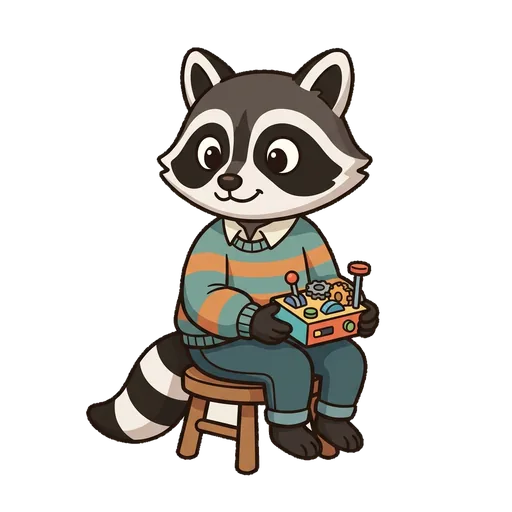 Fiddle You learn what a thing does by trying it — the playing is the learning from AweForge
-
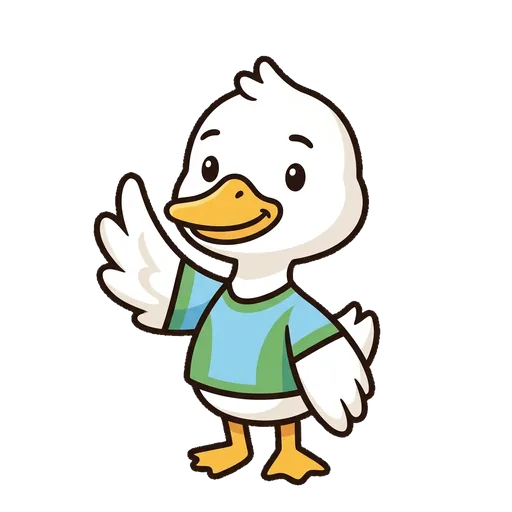 Majori Count the hands and name the choice with the most votes — the easy first step from VotePals
-
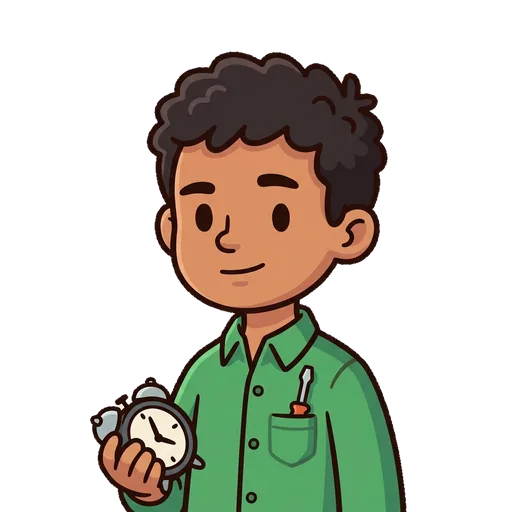 Beto a child of the Green Takes things apart
-
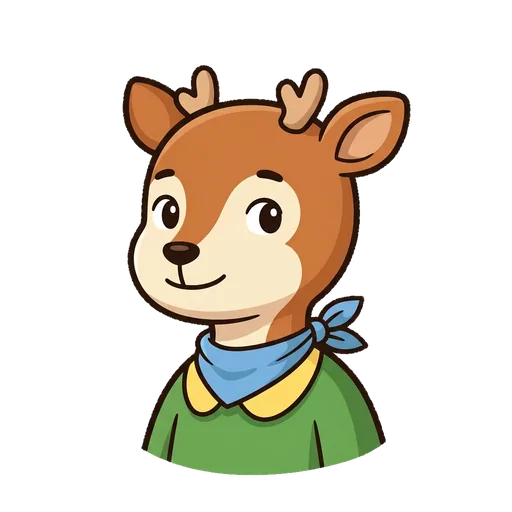 Consenna A winner still has to pass a check — can everyone use it? from VotePals
-
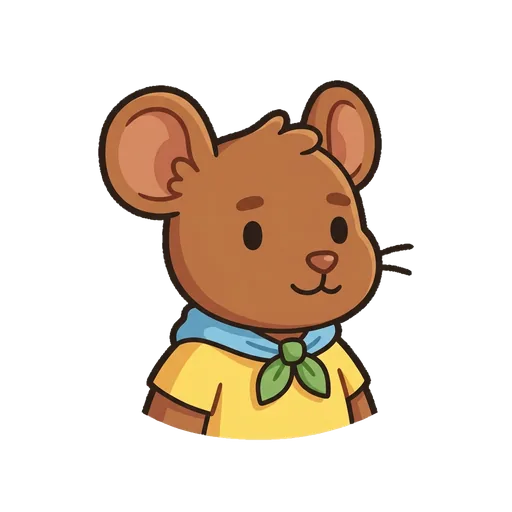 Fairling The smallest group has a voice that a fair rule protects from VotePals
-
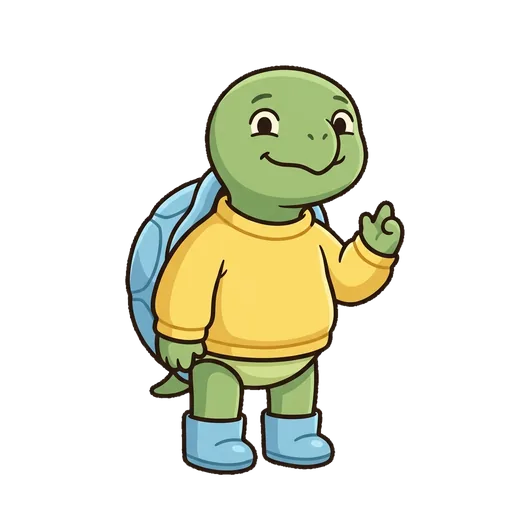 Reason Say why before you vote, so a vote is a thought-out choice from VotePals
-
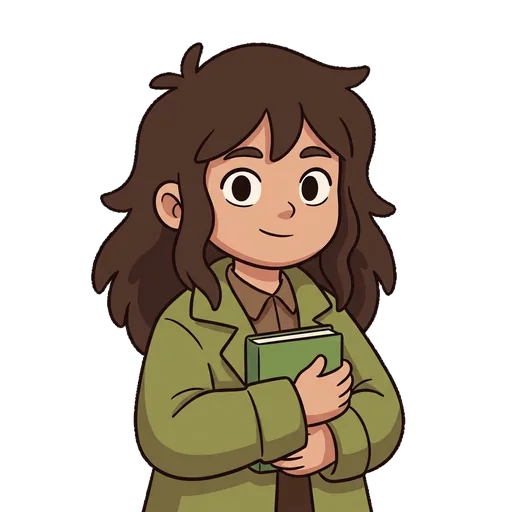 Inkling a child of the Green Names what she notices
Every recurring character has a short tune, so you can tell who is on stage before a word is said. The tunes play only when you tap, and the Reading Access sound switch turns them off.
The Honest Page
Which parts of this story are true, stretched or made up?
True
- A majority means more than half. Five of thirteen is the most votes here, but it is not a majority; eight of thirteen is. Source
- Five, four, three and one make thirteen. Eight, three and two make thirteen too.
- Many groups talk through their reasons before they vote, so people can change their minds. Source
- From the real world: in many small towns in New England, everyone who lives there can come to a town meeting and vote on the town's business together. Source
Stretched
- In the book, everyone who heard the reasons changed their vote in a sensible way. What we simplified: Real people don't always agree after talking. Talking first gives a vote a better chance, not a promise.
Made up
- Fourways, its talking VotePals and a forge that holds heat for exactly one mend are made up.