The Lending Museum · Grower · ages 9-14
Listen along
Loading audio…
Read by an AI-generated voice. The words on this page are the transcript.
1. Six Cords
The hammer rang once. A spark jumped off the anvil and did not go out. It waited. They followed.
It rolled into the little museum on the Green and settled on the loan desk.
The cracked desk still had its brass plate and the tiny hammer scratched on it.
Ledger lifted a bundle from its box with gloved hands and laid it out flat. One thick cotton cord. Six thinner cords hanging down from it. Every cord was tied with small knots.
"Gloves on," said Ledger. "And the slip first."
Lan looked for a long time before she wrote anything.
One thick top cord. Six thin cords hanging from it, pale, some a little brown. Knots in groups. The groups are at three different heights. The bottom knot on each cord is long, like a coil.
On the second line she wrote: I think it is a kind of writing.
The note in the box said: A replica khipu, made by a weaver for teaching. Andean record-keepers once wrote numbers like this.
2. Fourteen
Beto counted the first cord. Three knots up high. Four knots in the middle. One long knot at the bottom, with seven turns.
"Fourteen," he said.
A big soft loaf of bread with kind, sleepy eyes was sitting at the end of the desk. This was Loaf, who had come over from the bakery with a crate of tens.
"Where a knot sits is what it's worth," said Loaf. "Count them all again from one, and you lose the tens."
Beto frowned. "A knot is a knot."
"Is a one in your number the same as the one in a hundred?" asked Loaf.
Beto thought about 100. The one at the front was not really one. It was one hundred.
3. Hundreds, Tens and Ones
"Tens first, then the ones," said Loaf, and put a crusty finger at the top. "These three, up high: hundreds. Three hundred."
Loaf moved down. "These four in the middle: tens. Forty."
Loaf touched the long knot at the bottom. "And this coil, with seven turns: ones. Seven."
"Three hundred and forty-seven," said Beto slowly.
"Ten ones make one ten," said Loaf. "So the cord doesn't need forty knots for forty. Just four, in the tens place."
Lan was already reading the next cord. Up high, one knot. In the middle, two. At the bottom, a coil of five. "A hundred and twenty-five."
4. The Top Cord
Lan read the third cord. Two knots up high. One in the middle. No coil at the bottom at all.
"Two hundred and ten," she said. "The empty space is the zero."
Then she looked at the thick top cord. It had knots too. Six up high. Eight in the middle. A coil of two at the bottom.
"Six hundred and eighty-two," said Lan.
Beto added up the three cords. Three hundred and forty-seven, and a hundred and twenty-five, and two hundred and ten.
"Six hundred and eighty-two," he said. "The top cord is the total."
"Long ago," said Ledger, reading the note, "a record-keeper called a khipukamayuq could read a whole village's count like this. How many people, how many llamas, how much maize. And check it with the top cord."
5. The Back of the Slip
Lan finished the slip. Object returned, condition good. Learned: where a knot sits is what it is worth. The top cord holds the total.
Then she turned the slip over.
"What are you writing?" asked Beto.
"The question nobody can answer yet," said Lan.
She wrote: What do the colours mean? Did some cords tell stories as well as numbers?
Ledger stamped it. It was the third slip in the children's folder.
Back on the Green
The spark dimmed to a warm dot and settled back on the anvil. The Green was just the Green again.
At home, Beto found an old piece of string and tied two knots near the top and three at the bottom.
"Twenty-three," he told his sister.
Saved. The next chapter will be here whenever you come back.
Who you met
-
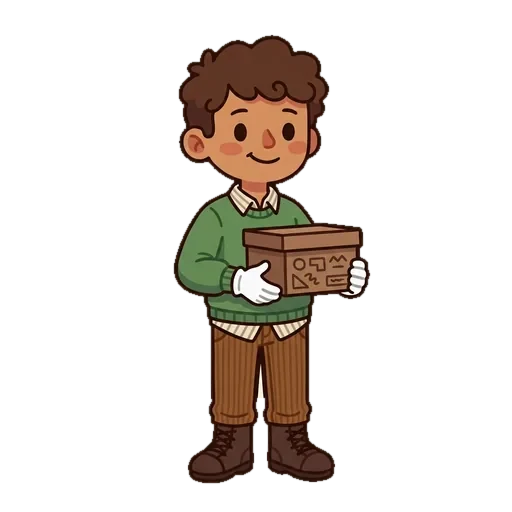 Ledger No object leaves without a slip that says what you saw, before what you think from BackstageQuest
-
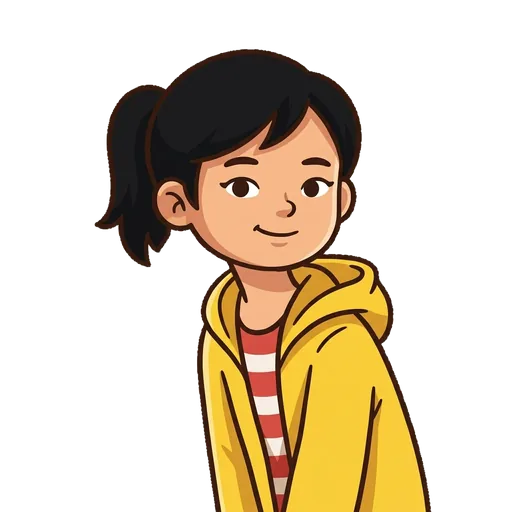 Lan a child of the Green Goes first; makes a friend in a minute
-
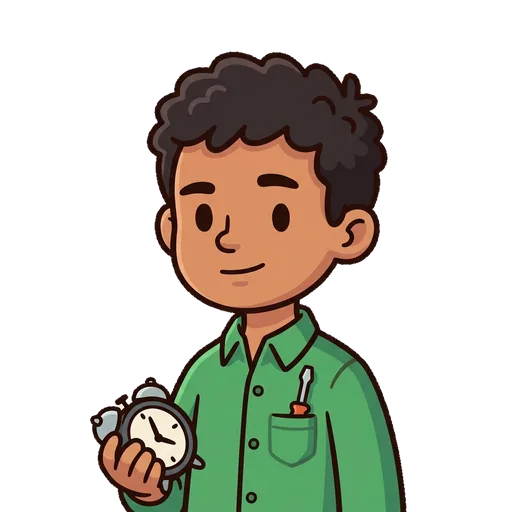 Beto a child of the Green Takes things apart
-
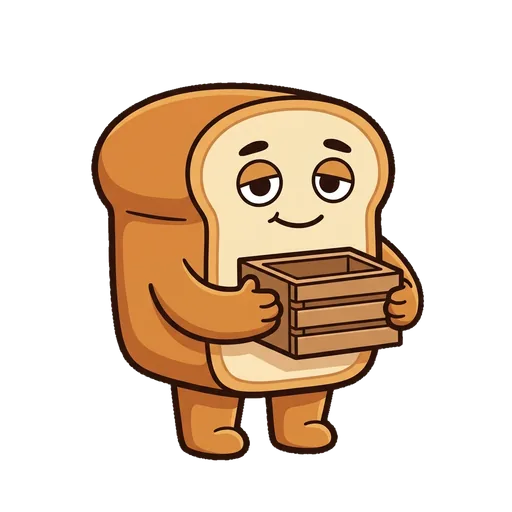 Loaf Ten ones squish into one ten, so a big count is tens and ones from CarryPals
Every recurring character has a short tune, so you can tell who is on stage before a word is said. The tunes play only when you tap, and the Reading Access sound switch turns them off.
The Honest Page
Which parts are true, stretched or made up — and what does nobody know?
True
- Andean peoples recorded numbers on knotted cords called khipu (quipu). The Inka state used them for counts such as people, llamas and harvests, kept by record-keepers called khipukamayuq. Source
- Knots on a khipu cord stand for ones, tens, hundreds and more by where they sit, and on many khipu a top cord holds the total of the cords below it. Source
- 3 hundreds, 4 tens and 7 ones is 347, and 347 + 125 + 210 = 682.
Stretched
- Every knot on the cords is easy to read. What we simplified: Real khipu use different kinds of knot (single, long and figure-eight), colours and the way cords are attached, and they are fragile; only experts handle the old ones.
Made up
- The Lending Museum and this replica are made up. Ledger comes from BackstageQuest and Loaf from CarryPals.
Nobody knows
- Whether some khipu recorded words or stories as well as numbers. Researchers are still working on it. Source