Dawn and Shore
NAME IT, THEN KNOW YOUR LINE — an uncomfortable feeling is the first signal that a boundary is being crossed. Dawn's naming ("this feels wrong; I feel uneasy") turns a vague bad feeling into a clear one, and that clear feeling is exactly what Shore uses to locate her line and hold it. You cannot set a boundary you cannot first name the feeling behind.
Loading audio…
Press play to listen along. The line being read lights up as you go.
Show full transcript
Loading transcript…
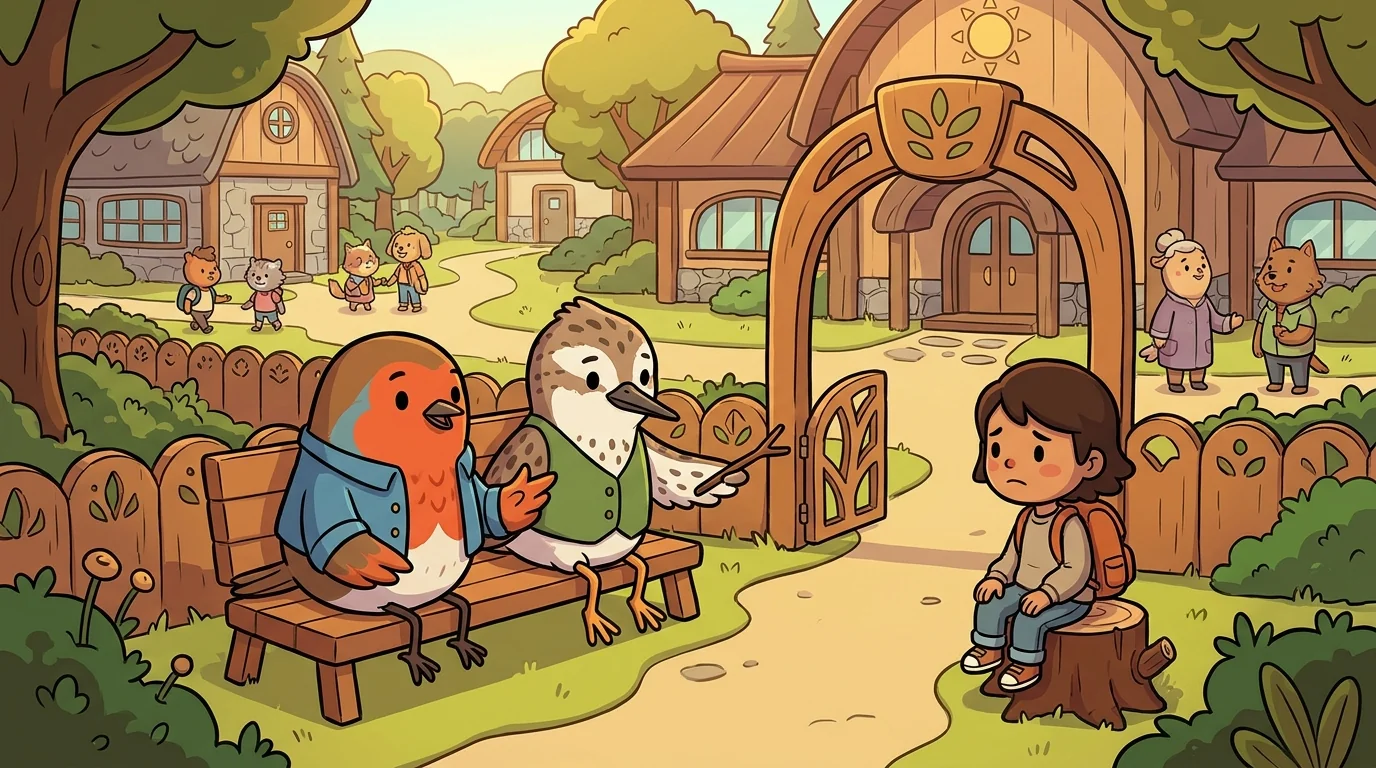
A young student came to the WellnessForge academy one afternoon with a puzzle that had been bothering her. A friend had been doing something — sitting too close, borrowing her things without asking, a bit too much of it — and she had a bad feeling about it but couldn't figure out what to do, or even quite what the feeling was.
So she asked Dawn, the robin-tween who named feelings, and then Shore, the sandpiper-tween who knew about lines — and the two of them, who usually taught at different ends of the day, sat down together with her.
And at first, each thought her own skill was the whole answer.
There was no alarm in it. Neither Dawn nor Shore made the situation scary. They spoke calmly, gently, about an ordinary, everyday thing: an uneasy feeling, and what it might be telling her.
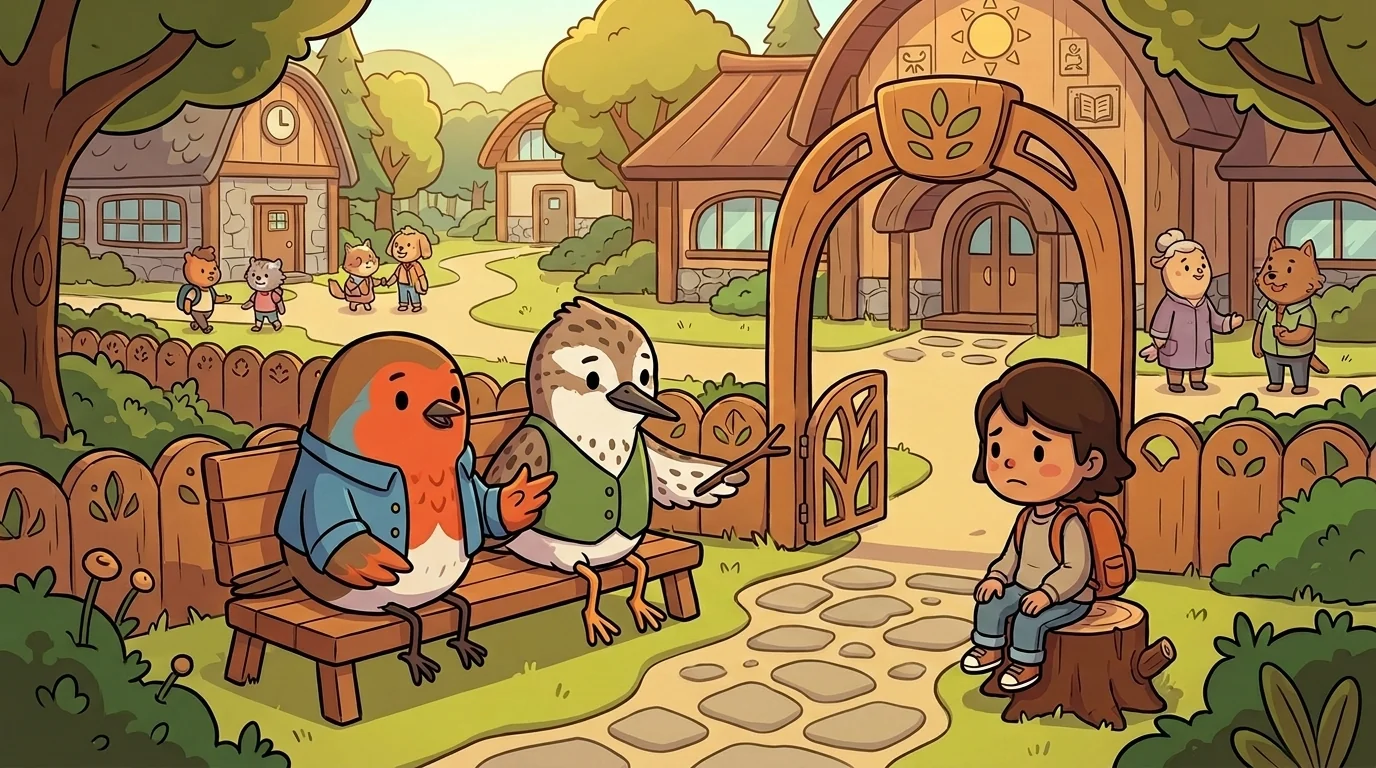
Dawn went first. "Let's start with the feeling," she said softly. "Right now it's just a vague bad — a knot, a discomfort. That's hard to act on, because you can't see it clearly. So let's name it. When your friend does that thing, do you feel annoyed? Crowded? Uncomfortable? A little disrespected?" The student thought, and something clicked. "…Crowded," she said slowly. "And kind of disrespected, when they take my things without asking." And just like that, the vague knot became a clear, nameable thing. "There," said Dawn, gently. "Now you can see it. It's clearer already."
The student did feel clearer — the feeling had a name now. But she still didn't know what to do about it. Naming it hadn't, by itself, changed anything with her friend.
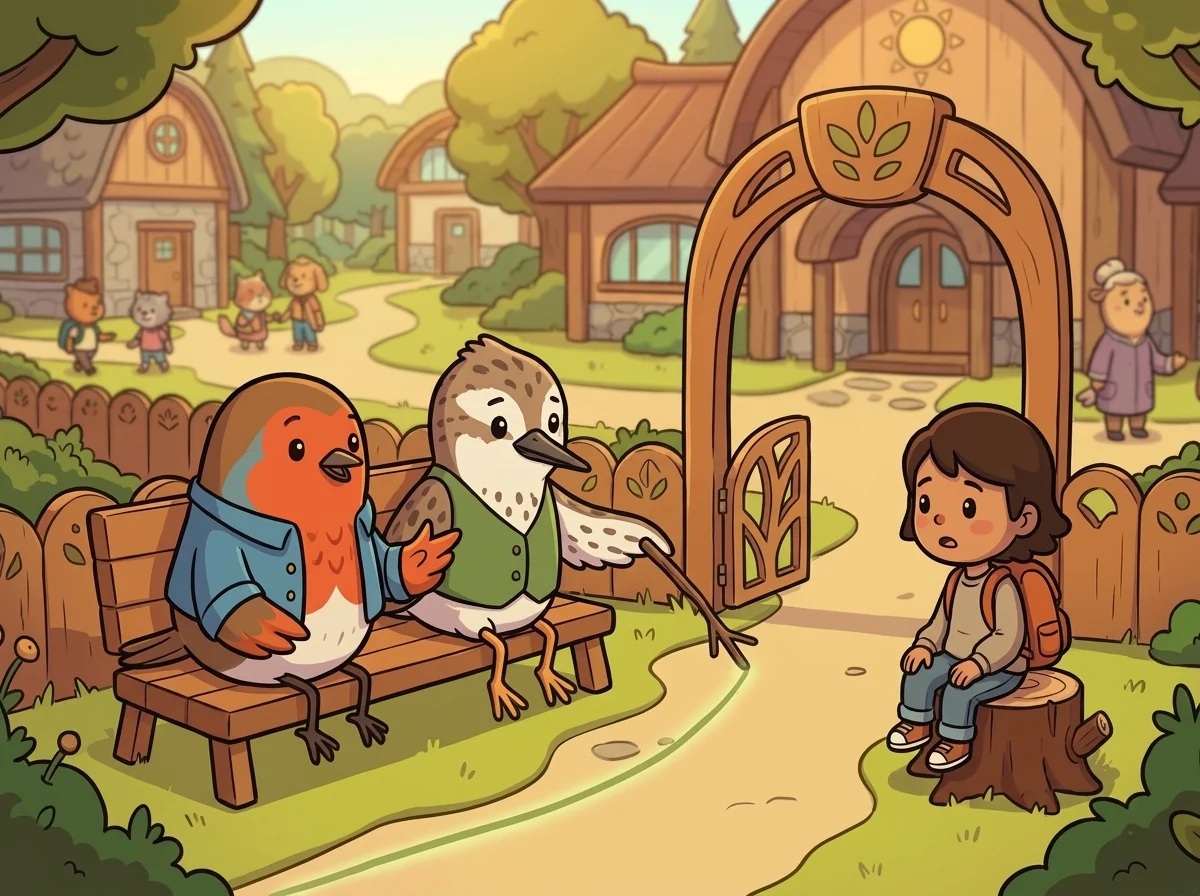
Shore had been listening, and now she spoke. "Dawn's naming is exactly the first step," she said, "and here's why it matters so much: that feeling you just named — crowded, disrespected — is a signal. It's your body telling you that a line is being crossed. That's my half. A boundary isn't something you invent out of nowhere; it's something you discover, by noticing where the uncomfortable feeling starts. You felt crowded — so your line is about space. You felt disrespected when your things were taken — so your line is about asking first. The feeling showed you exactly where your shore is."
The student's eyes widened, because now she could see how the two fit — the feeling pointed to the line.
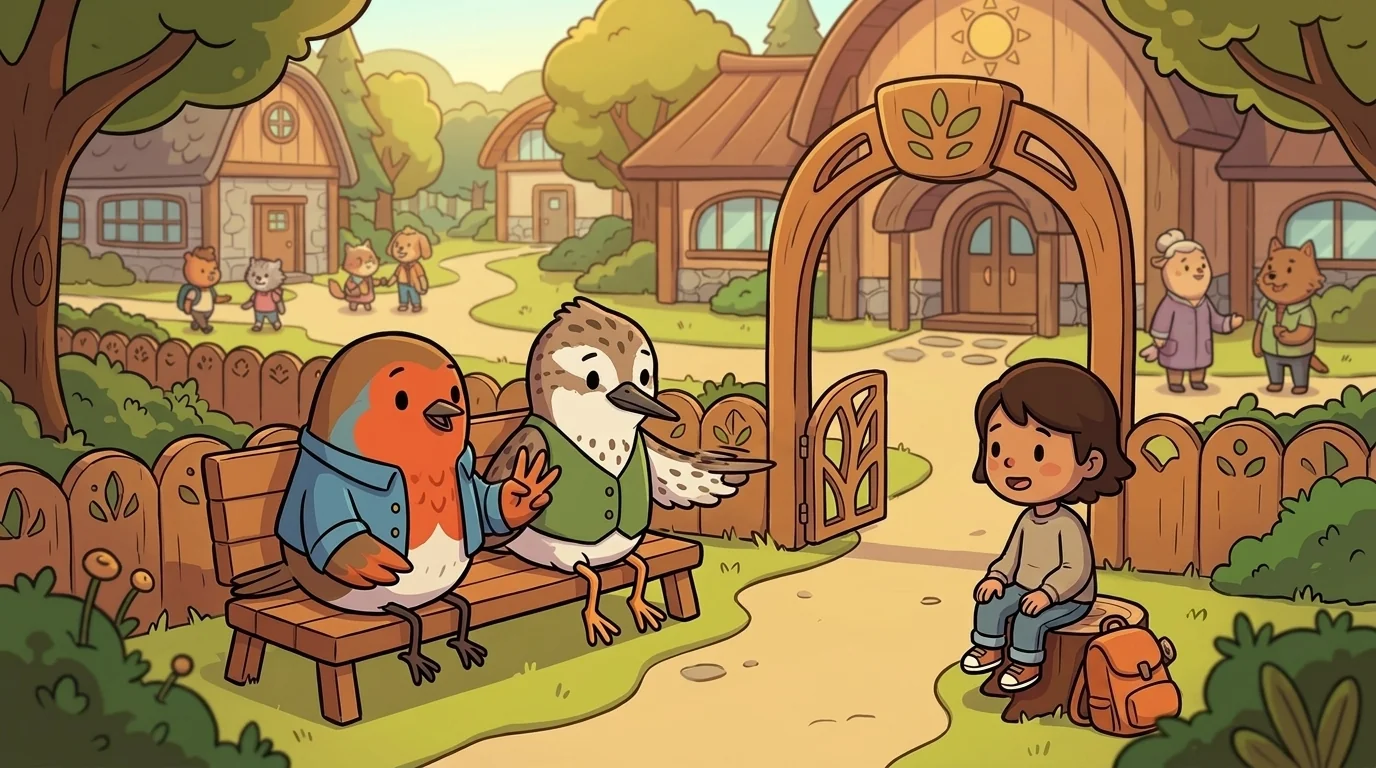
And then the two of them showed her the whole path together — feeling to name to line to words — so she could feel how one skill flowed straight into the next.
"Walk it through," said Shore. "One — you have an uneasy feeling." "Two," said Dawn, "you name it — I feel crowded; I feel disrespected." "Three," said Shore, "that named feeling shows you your line — I need more space; I need to be asked first." "And four," said Dawn gently, "now you can say it, calmly, because you know what it is: 'Hey — I need a little more space,' or 'Please ask me before you borrow my things.'" The student practiced it aloud, and felt, for the first time, that the whole thing was doable — because the bad feeling was no longer a fog she was lost in, but a signal she could name, that pointed to a line she was allowed to hold. "You can't hold a boundary you can't name the feeling behind," said Shore. "And a named feeling is only fully useful," said Dawn, "when it shows you what you need." The naming and the line were not two separate lessons. They were one path, walked together.
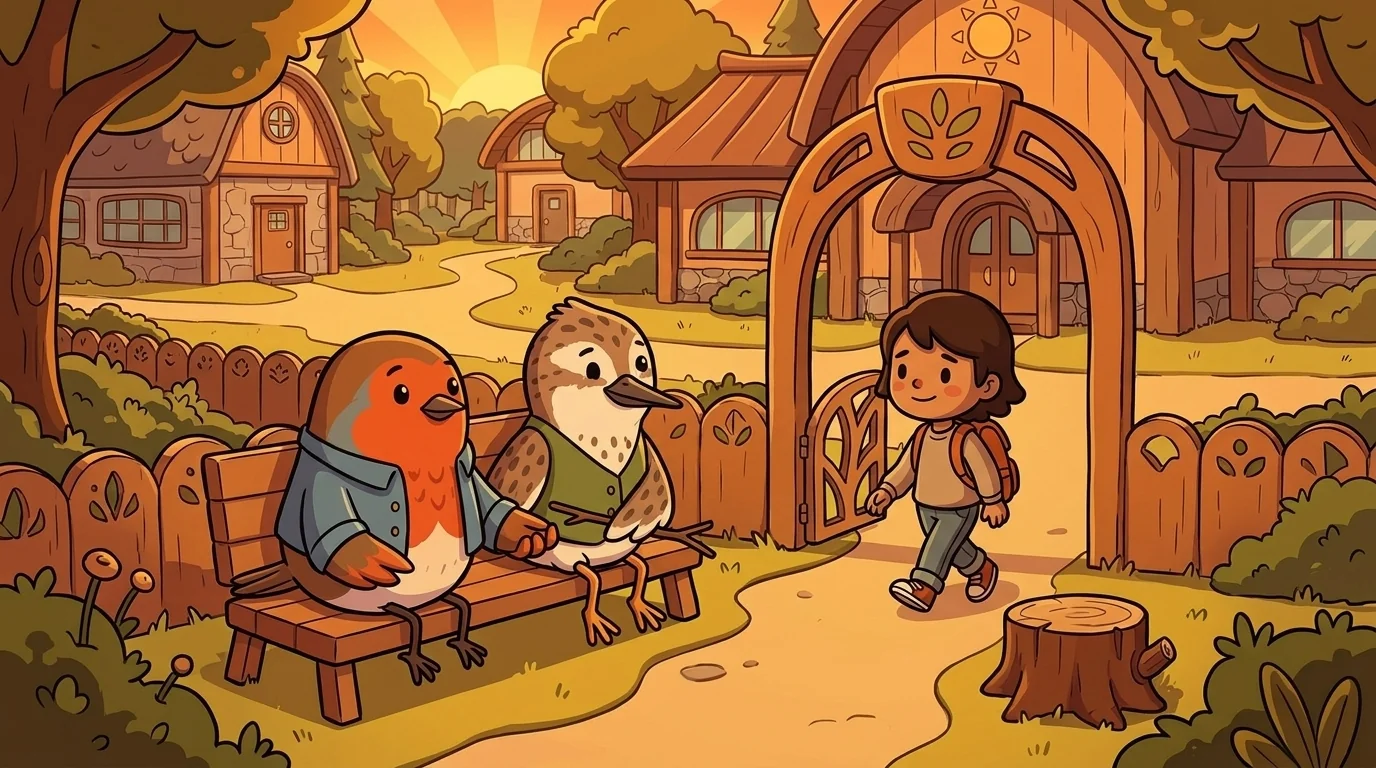
Afterward, watching the student head off to talk calmly with her friend, Dawn admitted she'd sometimes thought naming a feeling was the whole of it — that once you knew what you felt, you were done. And Shore admitted she'd thought a boundary could just be decided, without noticing that it always started with a feeling that had to be named first. Neither was true. A named feeling with nowhere to go stayed just a word; a boundary with no feeling behind it had no idea where to stand. It took the two of them — name the feeling, then find the line it points to — to turn a vague bad feeling into a calm, clear, doable "here's what I need."
They began teaching the feeling-and-boundary path together after that, one skill flowing into the next. And the students who learned it that way carried something important past the academy: that an uncomfortable feeling is not something to ignore or be ashamed of — it is a signal, a message from yourself about what you need — and that the path from bad feeling to calm, clear "here's my line" runs straight through naming it. Dawn and Shore, who had taught at opposite ends of the day for years, found they had always been one gentle sentence: name what you feel, and it will show you where your line is.
The WellnessForge ensemble
Dawn and Shore is part of WellnessForge's distributed-narrative cast. Each character embodies a different curricular primitive; together they teach the full subject.
-
Read
Nutrition-label literacy — what the package actually says vs. claims
-

Pause
Refusal craft — practiced 'no' moves under social pressure
-
Steady
Stress-regulation primitives — breath / ground / reframe before deciding
-

Mend
First-aid response — assess / call / care framing
-
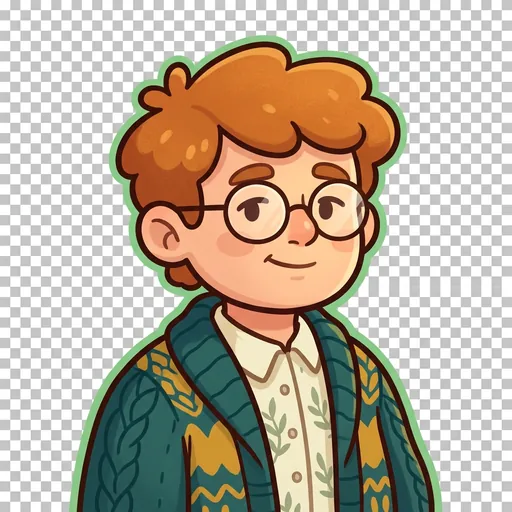
Ask
Help-seeking — trusted-adult identification + crisis-resource awareness
-

Dawn
Naming feelings — putting a word to what you feel
-

Drowse
Sleep + rest — treating rest as fuel, not laziness
-

Relish
Gratitude + savoring — noticing the small good things
-

Romp
Joyful movement — moving your body because it feels good
-
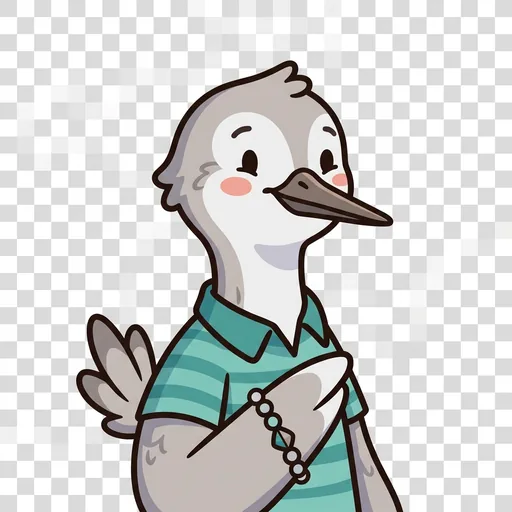
Shore
Boundaries + consent — your body, your yes and your no