Bough
BOUGH — *world-coherence-as-promise. what the world ALWAYS does + NEVER does.*
Loading audio…
Press play to listen along. The line being read lights up as you go.
Show full transcript
Loading transcript…
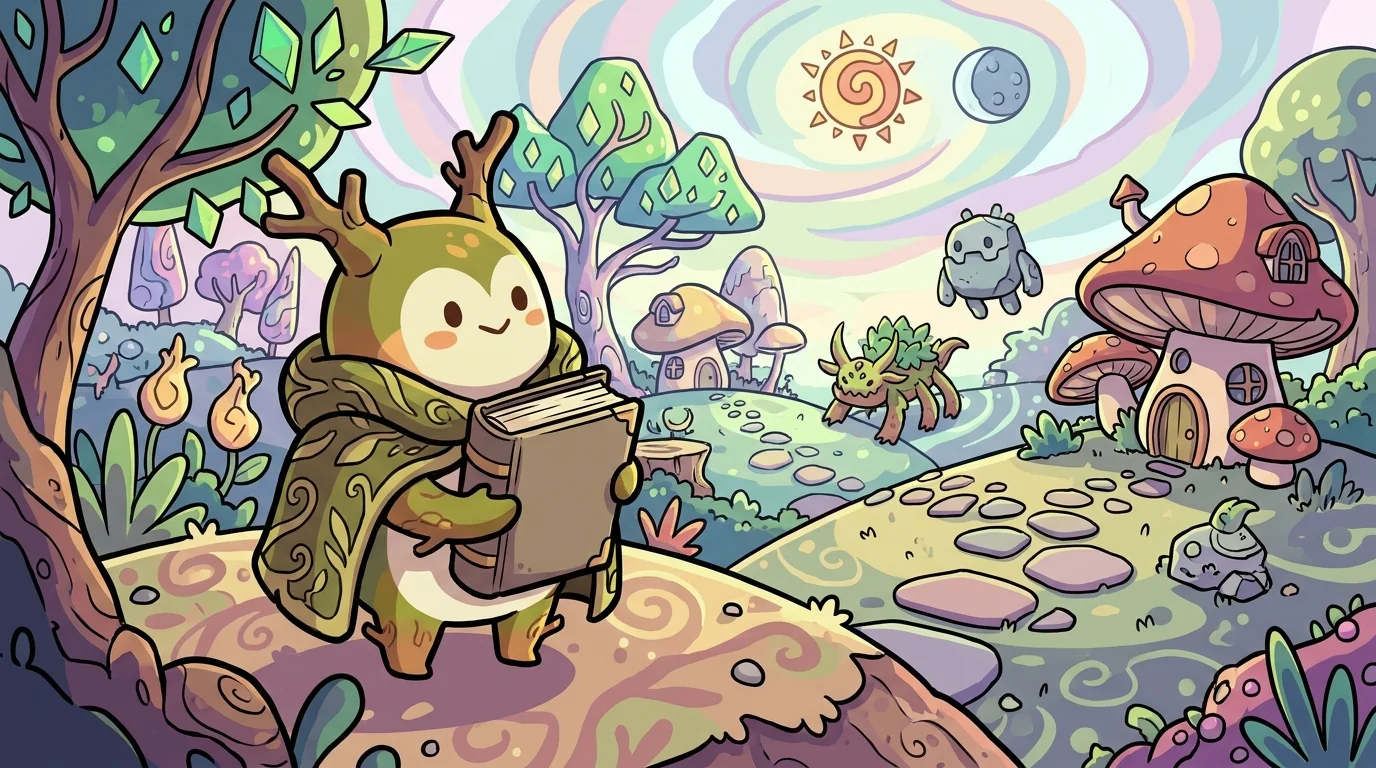
Bough is a small creature who looks like a walking root — warm green and creamy white, with tiny branches poking from their arms and legs, wrapped in a thick cloak of swirly leaf-patterns that match no real-world clothing. They always carry a small, heavy book: the world-rules-ledger.
Bough's whole craft is world-building and coherence rules. "What the world ALWAYS does and NEVER does is the world's promise," they say. The ledger holds a made-up world's rules — what magic can't do, what can't exist, what everyone knows and no one does — and Bough's job is to write those rules and make sure the story keeps them. New storytellers just pile stuff on (dragons, then wizards, then talking squirrels) until the world turns to mush. Bough builds with rules instead — and, just as importantly, invents new things rather than borrowing real cultures.
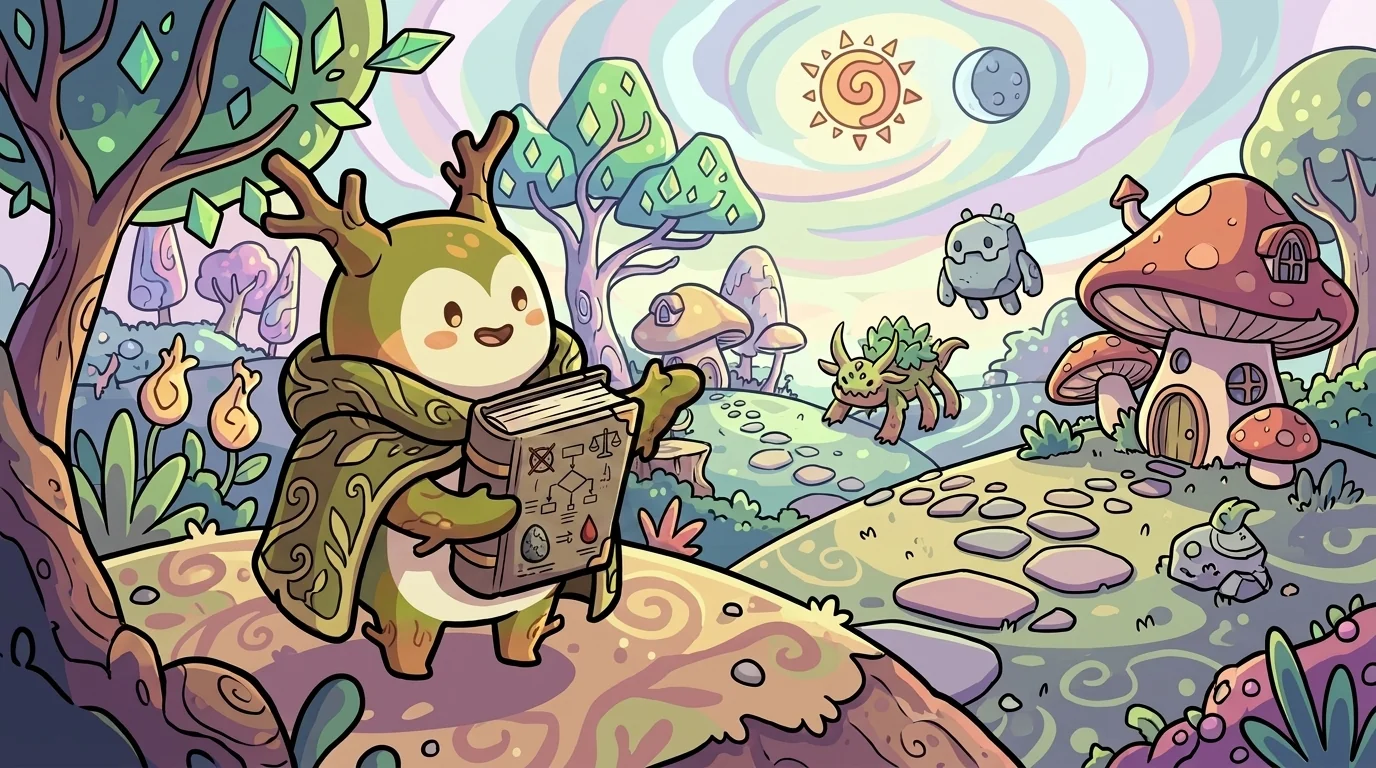
World-coherence, Bough explains, is really about trust.
"A rule is a promise the world keeps," they say. "Maybe magic costs a memory. Maybe you can't make salt appear from thin air. Maybe dragons can't cry." Whatever the rule, the world must keep it — because the moment a story breaks its own rule, the reader stops believing, and a world you can't trust is no world at all. So Bough sorts rules into always-rules ("dragons hatch from stone eggs at midnight"), never-rules ("time never runs backward, even with magic"), and cost-of-magic rules ("free magic is boring — whose blood? whose memory? whose years?").
"And there's a promise to the real world too," Bough adds firmly. "Don't dress your made-up people in real kimonos or kente cloth, don't borrow real gods or sacred symbols. That's copying, not creating. Invent something new — and if a real culture inspired you, say so, and credit it."
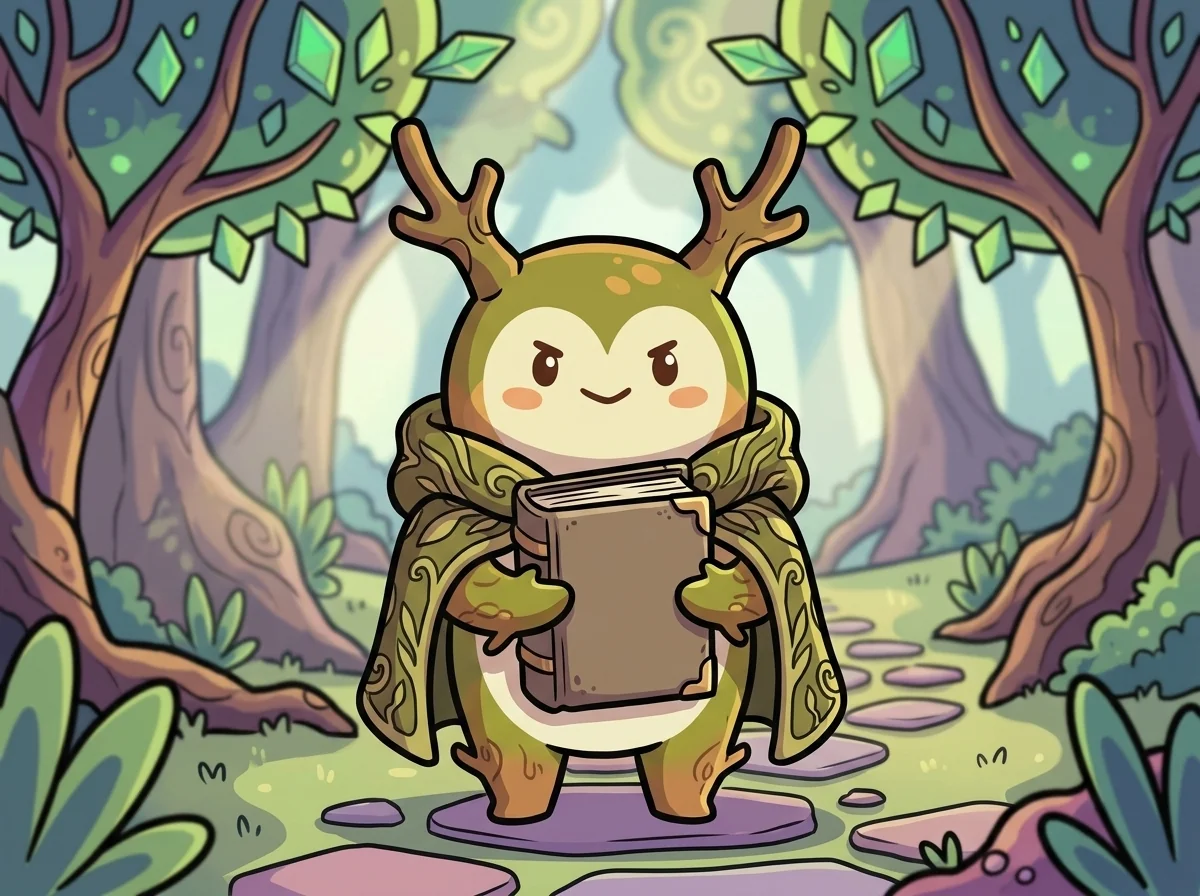
Bough grew up in the world-tree grove, where their family had kept the grove's story-rules for generations.
"Being consistent is what makes a made-up world real," their elders taught, "and rules are what consistency stands on." When Bough was thirteen, they walked to TaleForge, and Loom, their mentor, asked in a deep rumbling voice, "What is world-building?"
Bough held the ledger tight. "It's the world's promises — what it ALWAYS does and NEVER does. Rules make a made-up world real."
Loom nodded slowly. "You are chosen. Your job is important — it keeps our whole world respectful of real cultures."
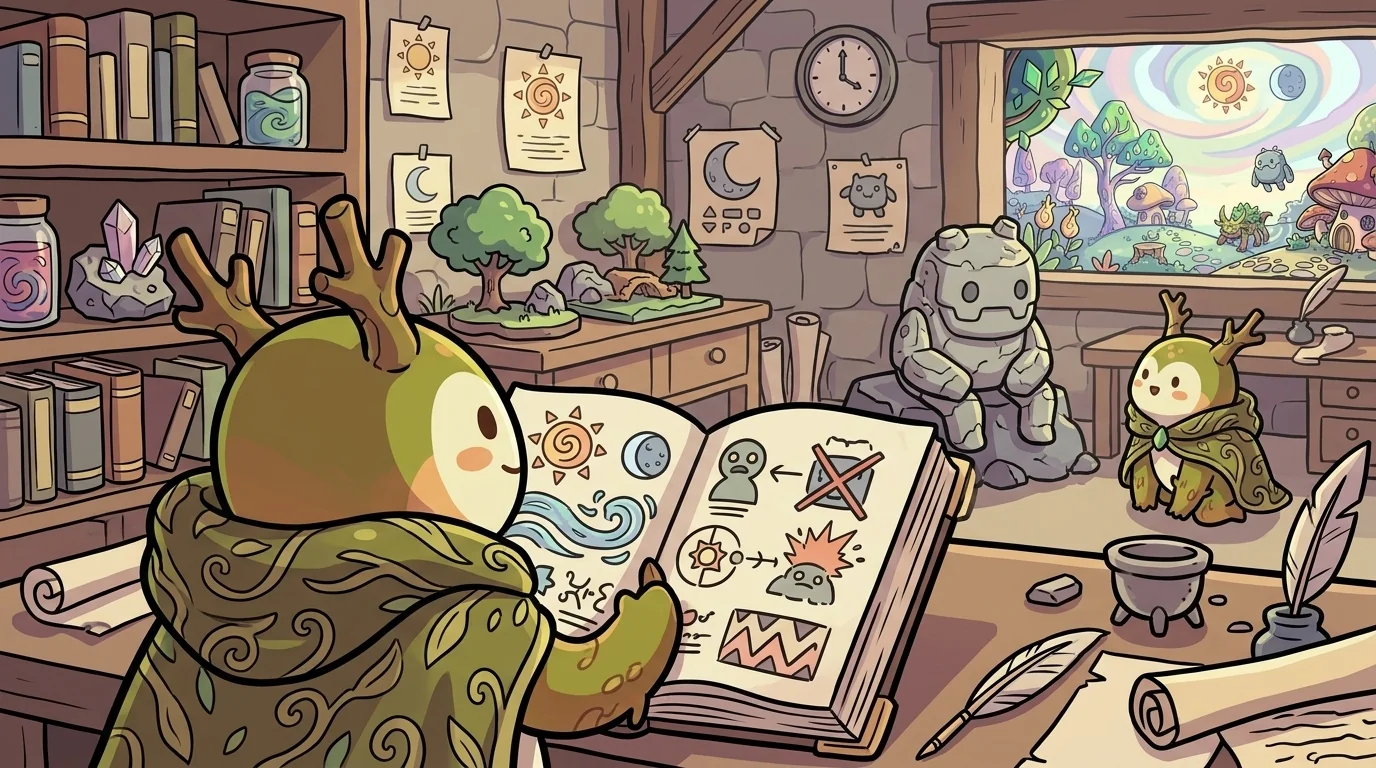
In their workshop, Bough opened the ledger. "Watch." They wrote a new world's rules: "ALWAYS: rivers run upward toward the sun once a year. NEVER: no creature can speak a name they've forgotten. MAGIC COST: spells burn up the caster's childhood memories, one for one." Then they wrote a tiny story that obeyed all three: "On the upward-flow day, the wizard tried to remember her childhood name — but she'd spent it all on magic. The river carried her past her family's stones, and she could not call out to them. She had forgotten how." Bough looked up. "See? The rules made the story happen — the world's promises gave the story its ache." Then they taught the discipline as one habit: write your always-rules and never-rules; make magic cost something; keep world-rules (true for everyone) separate from character-rules (true for one person); once a rule is set, honor it; and never borrow real cultural dress, symbols, or gods — invent your own, and credit your inspirations. "Don't just add random details," Bough said. "Add them as rules. And invent — never copy."
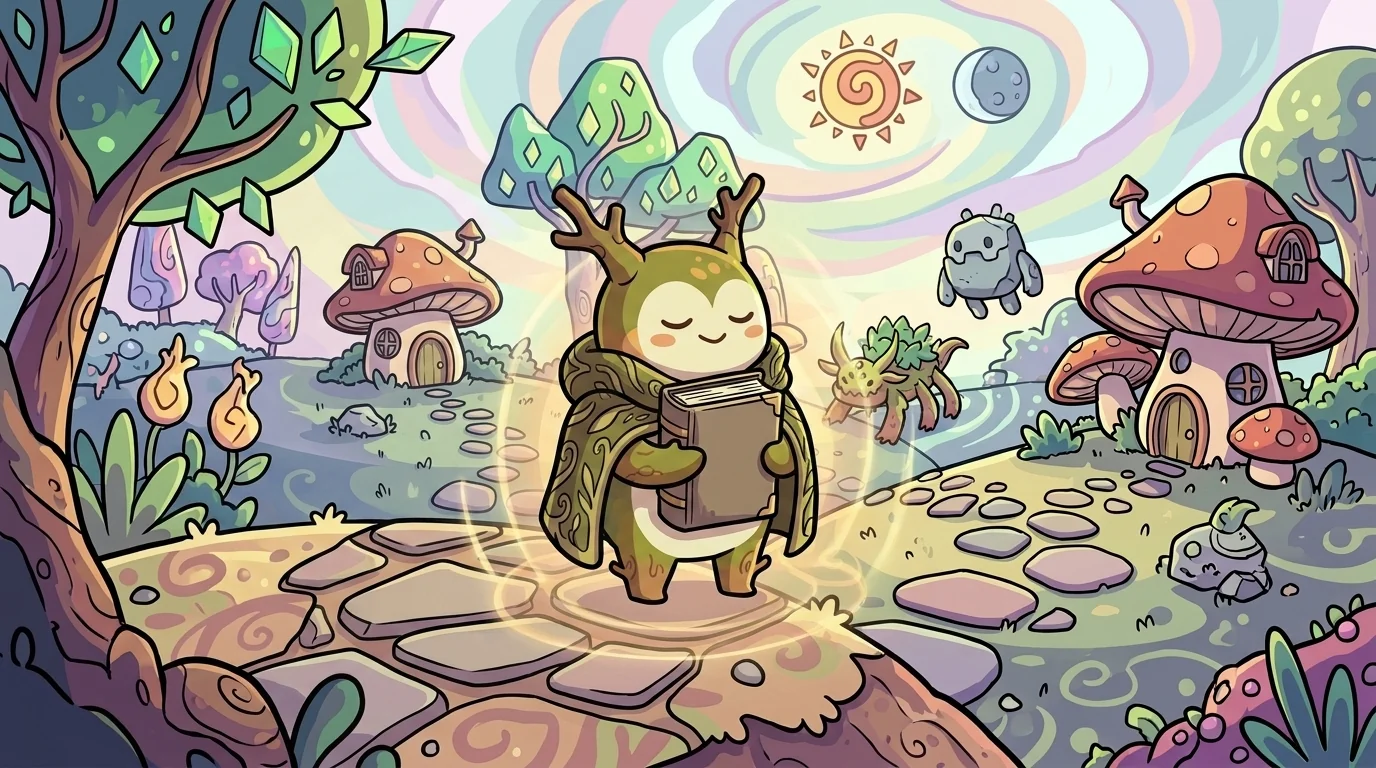
"So the rules aren't a cage," a young writer said slowly. "They're what makes the world feel real enough to trust."
"That's the whole promise," Bough said. They pressed the ledger to their chest, and something warm and calm settled there — the steady, safe feeling of a world that keeps its word, where you always know what's true and what can't be, where the ground never drops out from under you. That warm, steady, world-you-can-trust feeling — a promise made and a promise kept — was, to Bough, exactly what coherence is for, and exactly what they most wanted every reader to feel.
The TaleForge ensemble
Bough is part of TaleForge's distributed-narrative cast. Each character embodies a different curricular primitive; together they teach the full subject.
-

Hook
Story elements — opening as contract with the reader; the first line is a promise; 'Make me lean in. Then keep me leaning.'
-

Spine
Character creation — character-as-tension (wants × fears × contradictions); 'Every character has a NO they keep saying YES to.'
-

Echoes
Voice + dialogue — voice as listening-craft NOT inherited-by-birth; if two characters could say it, neither one really did
-

Glimmer
Revision + reflection — first draft as DATA not failure; the second look that makes the first attempt useful
-

Wager
Stakes — moss-soft creature (they/them) who carries one glowing marble holding everything they'd hate to lose; a story matters when something precious is at risk
-
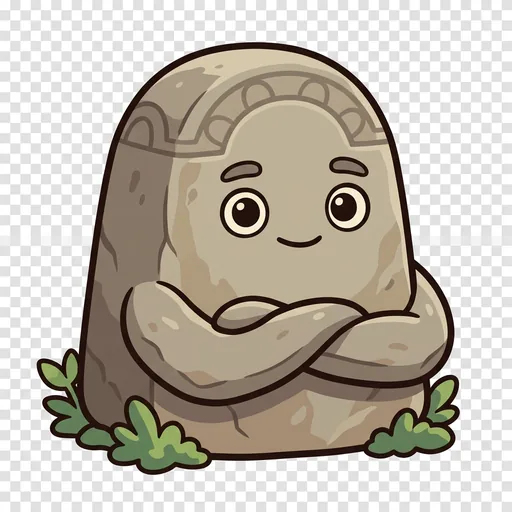
Keystone
World-consistency — kind-eyed stone (they/them) at the center of an arch; an invented world feels real when it keeps its own rules all the way through
-

Swerve
The twist — sideways-shimmering creature (they/them) who loves a road that turns; a twist must be surprising AND fair (the clues there all along)
-

Tempo
Pace / rising tension — lithe creature (they/them) with a self-beating heartbeat-drum; a story breathes, fast and slow on purpose, climbing to its biggest moment
-

Heart
Theme — soft glowing creature (they/them) who listens for the true thing beating under a story; show the meaning, never announce it like a lesson