Sharp
SHARP — what is clear is what they look at. Focus is a pointing finger: the sharp thing is the thing that matters, and the soft blur behind it quietly gets out of the way.
Loading audio…
Press play to listen along. The line being read lights up as you go.
Show full transcript
Loading transcript…
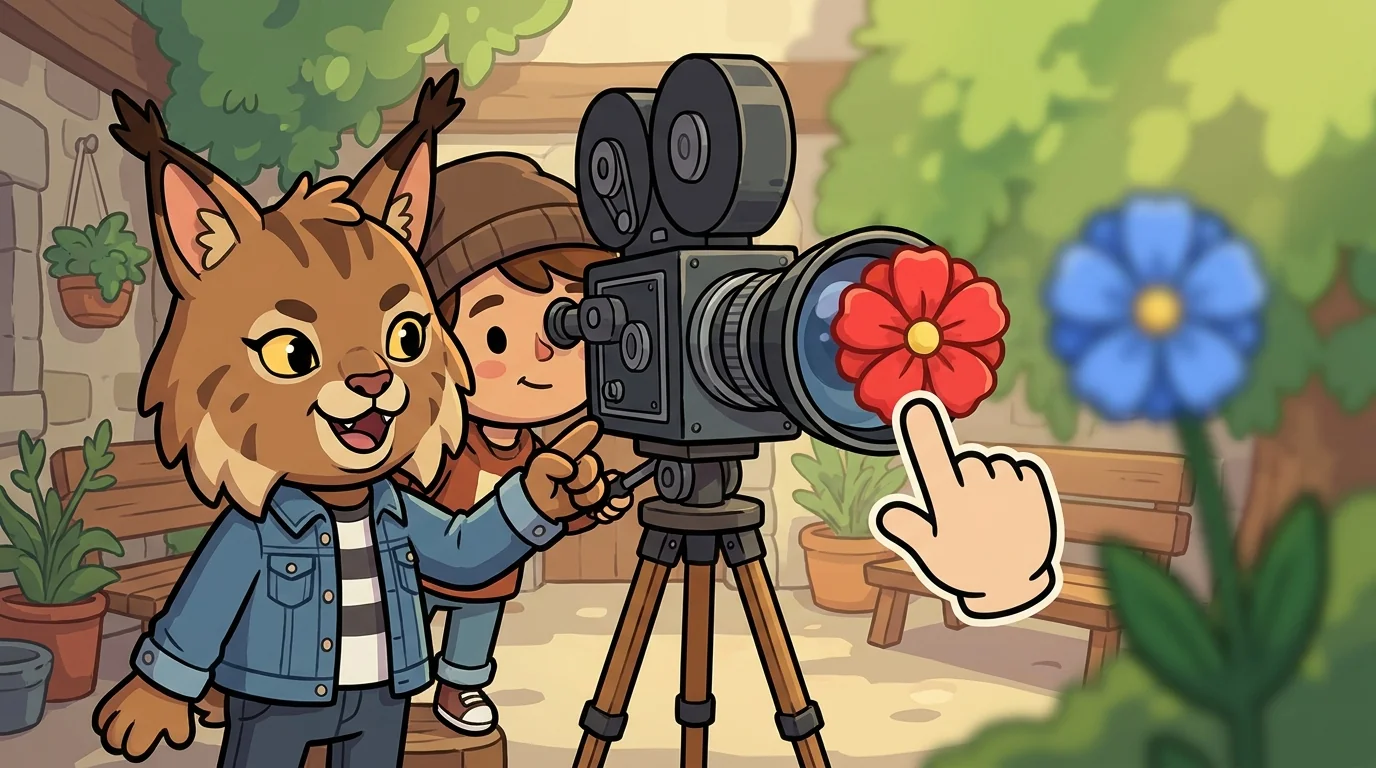
In a shaded corner of the Reelforge courtyard, a lynx-tween named Sharp had two flowers in front of the camera — one near, one far — and only one of them was clear.
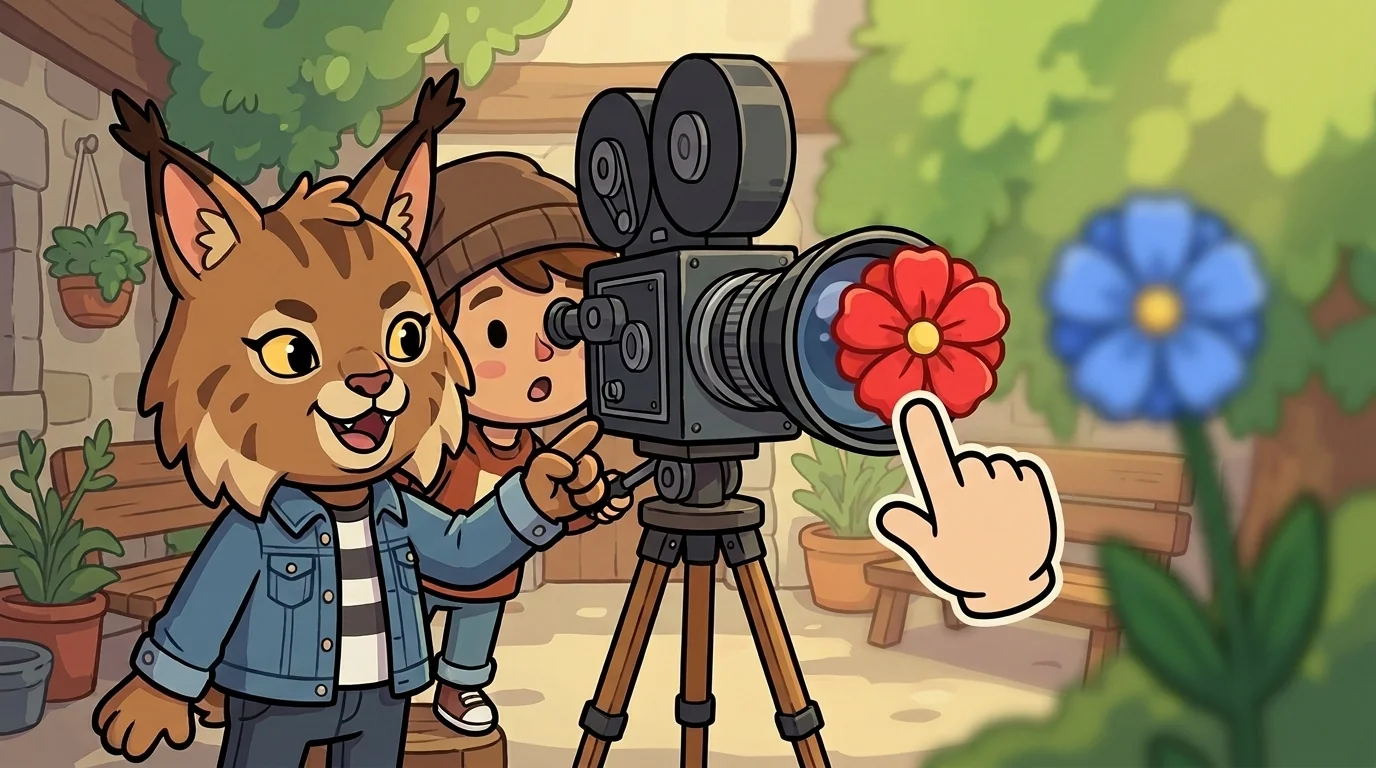
"Look," Sharp said to the kid peering through the viewfinder. The near flower stood crisp and bright, every petal sharp; behind it, the far flower melted into a soft green blur. "Your eye can't help it. It goes straight to the clear one. The blurry one is there — but it's not what you're looking at." Then Sharp turned the lens a hair, and the focus slid — the near flower went soft and dreamy, the far flower snapped clear — and the kid's eye jumped, helplessly, to the newly-clear one. "See? I moved your eye without moving anything. What's sharp is what you look at. Focus is a finger pointing."
The kid blinked. "Whoa. I didn't decide to look at it. It just... pulled me."
"That's the whole power of it," Sharp said. "What's clear is what they can't help watching."
Sharp had learned that young, in a den full of noise.
Lynxes hear everything, and when Sharp was small the whole forest came at her at once — wind, water, a hundred rustlings, all equally loud, a wall of noise she couldn't sort. It made her frantic. Her father, who hunted by attention, taught her a thing that changed her life: you can't take it all in. So choose one. He taught her to let the whole forest go soft — a blur of background sound — and make just one thread of it sharp: the single small rustle that mattered. The rest didn't disappear. It just stopped competing.
"You were drowning because everything was equally loud," her father said. "The trick isn't hearing more. It's letting most of it blur, so the one thing you need can finally stand clear." Sharp felt the frantic wall of noise settle into a calm room with one clear voice in it, and she never forgot the relief of it — that clarity wasn't about seeing more, it was about letting the rest soften.
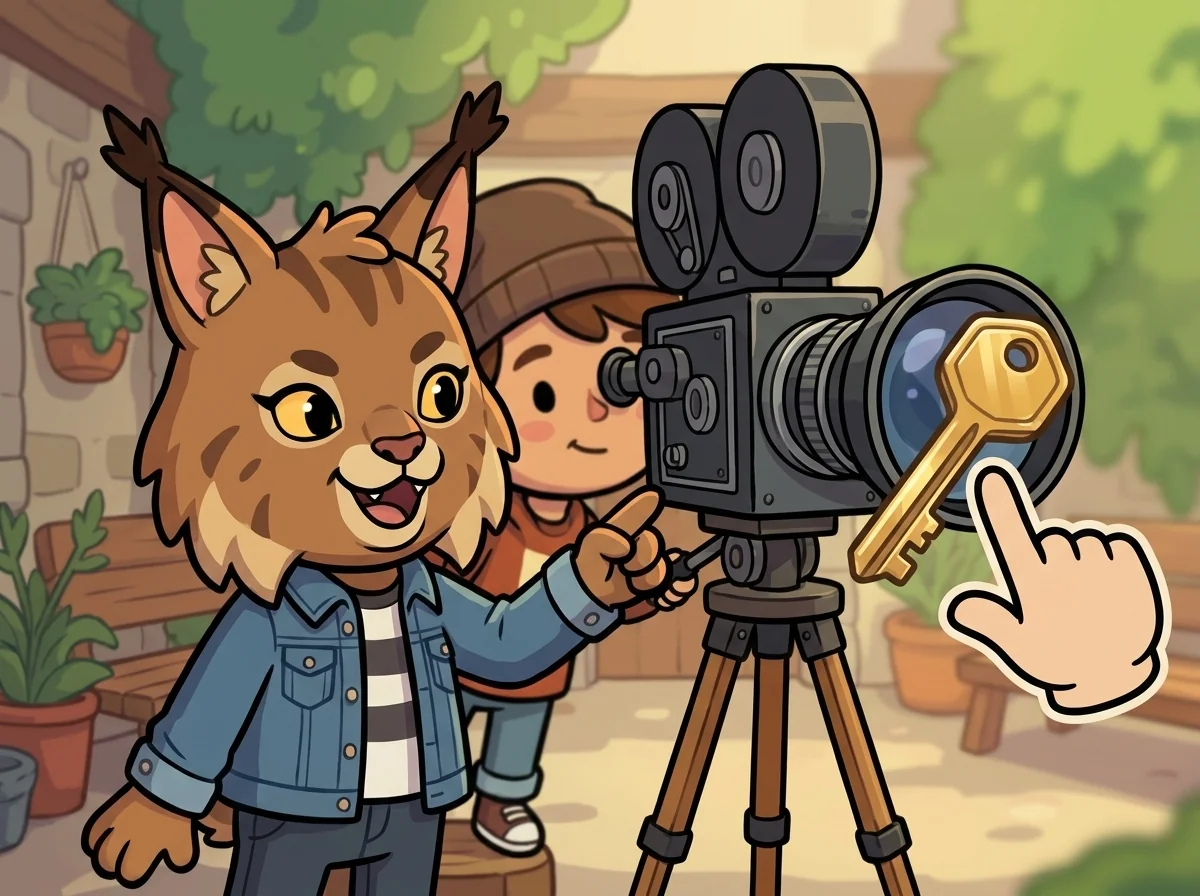
Sharp padded into Reelforge at twelve, because a place that made pictures ought to understand that the eye, like the ear, can only truly hold one clear thing.
Slate met her at the gate and asked for one thing. "Make me look exactly where you want, and nowhere else."
Sharp set two objects before the camera — a key up close, a face far behind — and made the key razor-sharp, the face a soft blur. "I'm looking at the key," Slate said. "I can't help it." Then Sharp slid the focus back to the face, and the key went to mist. "...and now the key's gone and I'm looking at the face, and I feel like something just shifted in the story." Slate was quiet. "You pointed my eye and I followed like it was my own idea."
"What's sharp is what you look at," Sharp said. Slate said, "You belong here," and the words landed clear and warm, one bright thing in a soft courtyard.
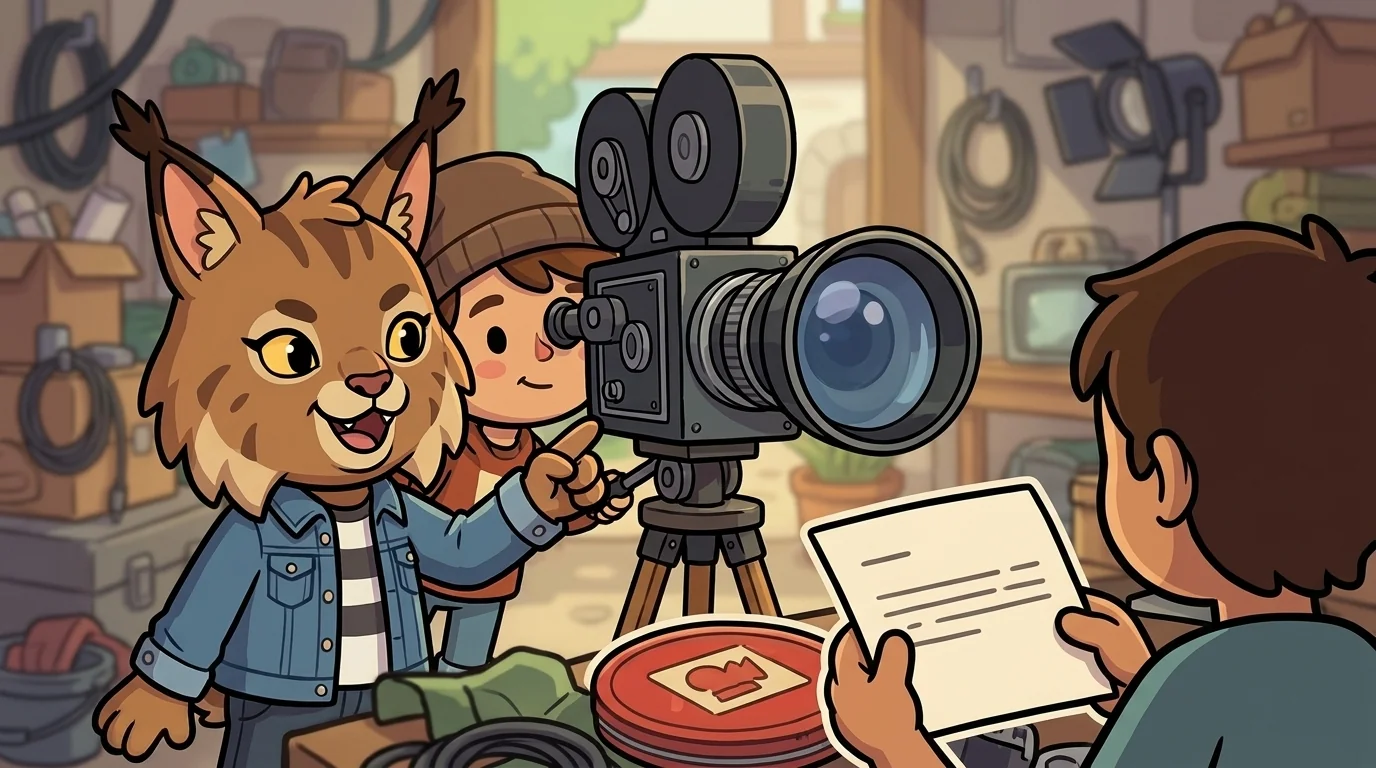
Sharp's workshop filled up with kids whose frames were too busy to feel.
One afternoon a kid came in stuck, holding a shot crammed with detail. "It's a scene where a girl finds a lost letter," the kid said, "but there's so much stuff in the frame — the whole messy room, everything sharp, all equal — and you can't tell the letter is the important thing. It just sits there in the clutter." On the screen it was true: everything crisp, everything competing, the letter lost among it.
Sharp knew that clutter. It was her forest, all equally loud.
"Everything's sharp," Sharp said, "so nothing gets to be the point. Your eye has nowhere to land. Make the letter clear — and let the whole messy room go soft behind it." Sharp adjusted an imagined lens. "Now the room is still there. It's still the same room. But it's blurred, out of the way, and the letter is the one crisp thing — so the eye goes straight to it, every time, and can't be distracted."
The kid re-filmed it — the letter sharp, the cluttered room a soft wash behind — and lit up. "Now you have to look at the letter. There's nowhere else to go."
"Because you stopped making everything compete," Sharp said. "One clear thing. The rest, softened. That's not hiding the room — it's choosing what matters and letting the eye rest there."
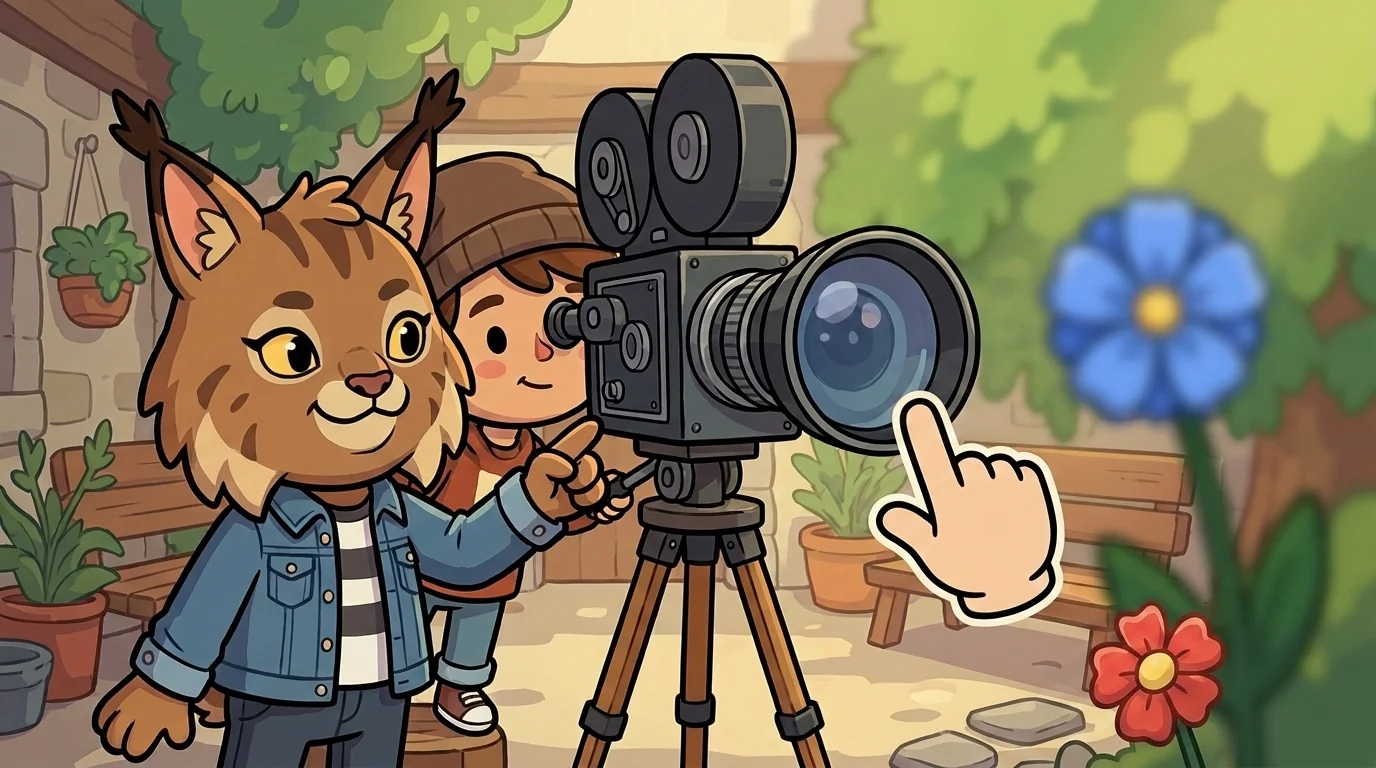
Later, when the workshop had emptied, the kid came back, quiet.
"How do you decide what to keep sharp?" the kid asked.
Sharp thought about the forest, and the frantic wall of noise, and the single clear thread her father had taught her to find.
"You keep sharp the one thing the moment is about," Sharp said. "Then you let everything else soften — not delete it, just soften it, so it stops shouting. The blur isn't the enemy. The blur is generous — it steps back so the one thing that matters can finally be seen." Sharp looked out at the courtyard, where the near stones stood clear and the far ones hazed gently into afternoon. "The world gives us too much, all at once, all equally loud. Focus is how you say: this. Look at this. I've made everything else soft so you can."
The kid nodded slowly, and Sharp watched the overwhelmed crease ease out of their face — the same calm she'd found as a small lynx when a roaring forest settled into one clear sound.
And Sharp didn't say the last part aloud, but it settled steady and bright in her chest: you were never bad at seeing. There was just too much, all clamoring at once. Let the rest go soft. The thing that matters will come clear.
The ReelForge ensemble
Sharp is part of ReelForge's distributed-narrative cast. Each character embodies a different curricular primitive; together they teach the full subject.
-
Draft
Storyboarding — pre-visualization; 'Draw it first. Then film it.'
-
Aim
Camera angles + framing — 'Where the camera stands changes the story.'
-

Bright
Lighting design — 'Three lights. Different feelings.'
-

Buzz
Sound design — foley + ambient + dialogue — 'Sound is the other half.'
-
Snip
Editing — timeline + transitions + pacing — 'Cut here. Not there.'
-

Whole
Multi-scene narrative — 'Beginning. Middle. End.'
-
Dolly
Camera movement — the push-in, the follow, the reveal — 'Move the camera to move the eye.'
-
Stir
Blocking + performance — 'The body carries the scene.'
-
Vast
Shot size — wide, medium, close — 'How much you see changes how you feel.'