Dolly
DOLLY — a moving camera moves the feeling. Pushing slowly in pulls the audience closer to a heart; drifting back lets them go; following alongside keeps them walking with you.
Loading audio…
Press play to listen along. The line being read lights up as you go.
Show full transcript
Loading transcript…
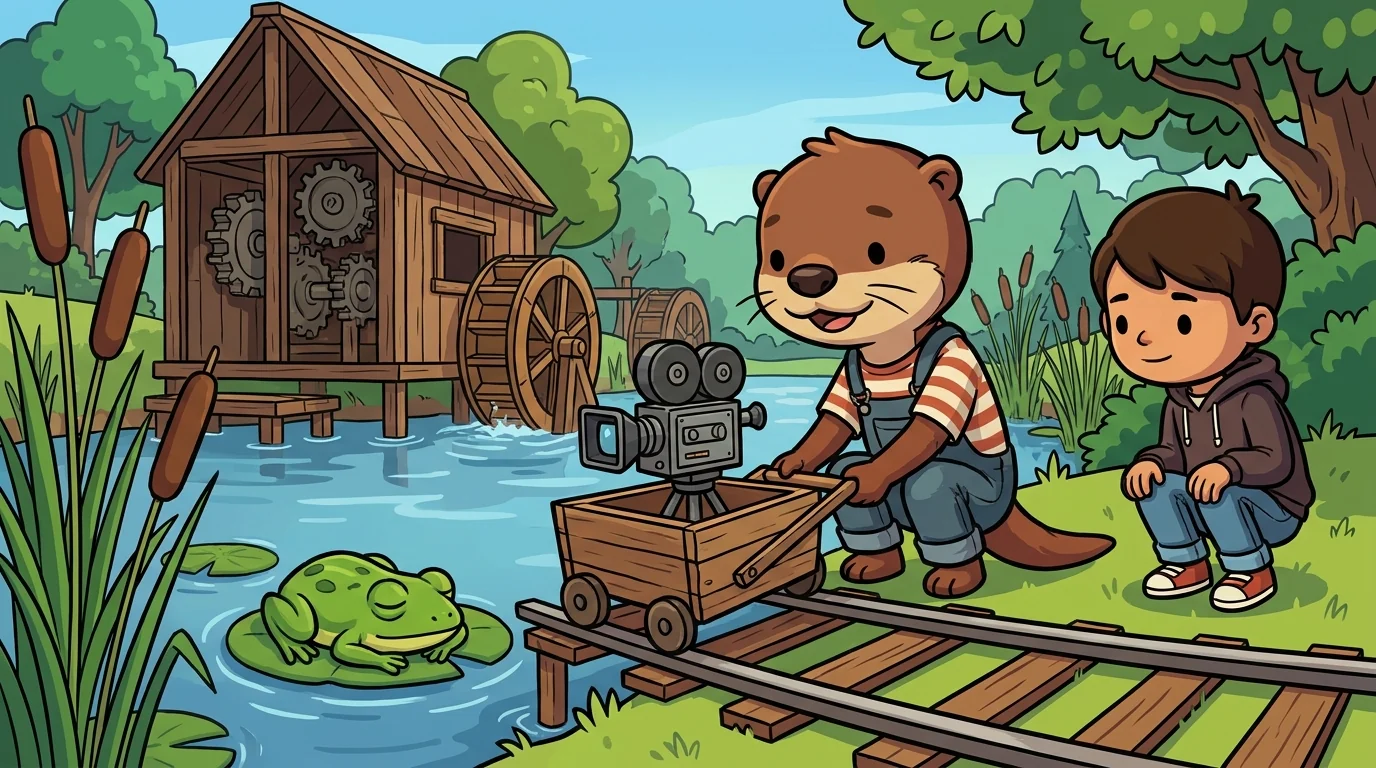
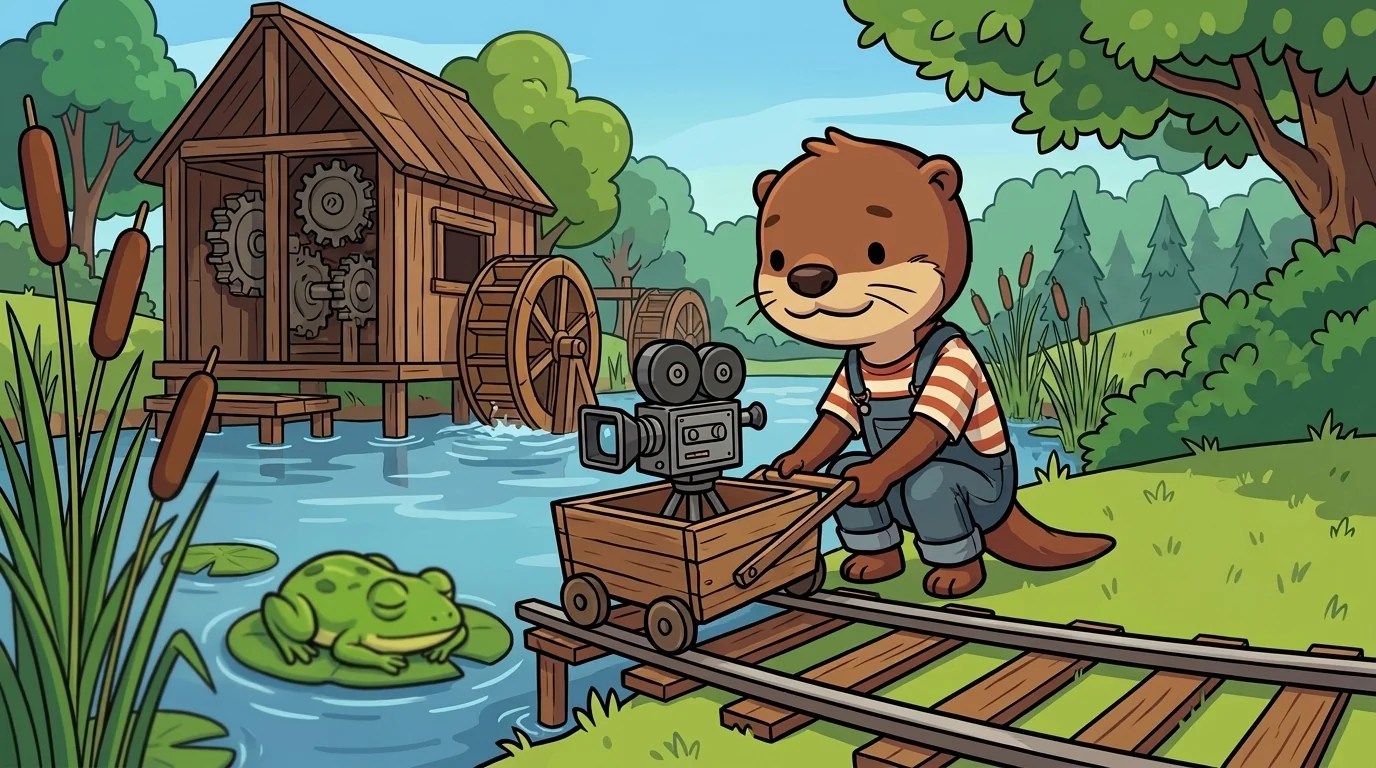
Down at the edge of the Reelforge millpond, an otter-tween named Dolly had built a little cart with wheels, set a camera on it, and was rolling it slowly toward a sleeping frog.
"Watch what the moving does," Dolly said to the kid crouched beside the pond. The camera crept in — slow, smooth, closer and closer to the frog — and the kid felt something tighten in their chest, a quiet lean-forward feeling, as if they were sneaking up on a secret. "I didn't cut. I didn't change the shot. I just moved," Dolly said. Then she rolled the cart gently backward, away, and the tight feeling eased and let go, like stepping back from something private. "A still camera shows you a thing. A moving camera feels its way toward it, or away. The movement is the feeling."
The kid watched the cart glide. "The pushing-in felt like... caring more. The pulling-back felt like letting go."
"That's it exactly," Dolly said. "A moving camera moves the feeling."
Dolly had learned that in the water, before she ever touched a camera.
Otters, Dolly's family always said, don't rush. When Dolly was small and frightened of the deep part of the pond, her mother never grabbed her and pulled her in. Instead her mother would slip into the water and drift, slowly, slowly, closer — not fast enough to scare, just a steady nearing — until she was right alongside, and Dolly would find she'd stopped being afraid without noticing when. And when Dolly needed room to be brave on her own, her mother would drift just as slowly back, giving space without ever leaving.
"The speed of coming close is the whole message," her mother told her once. "Rush in and you frighten. Drift in slow and you comfort. Same distance, opposite feeling — it's all in the moving." Dolly carried that in her body long before she had a word for it: that how you move toward someone says more than the fact that you did.
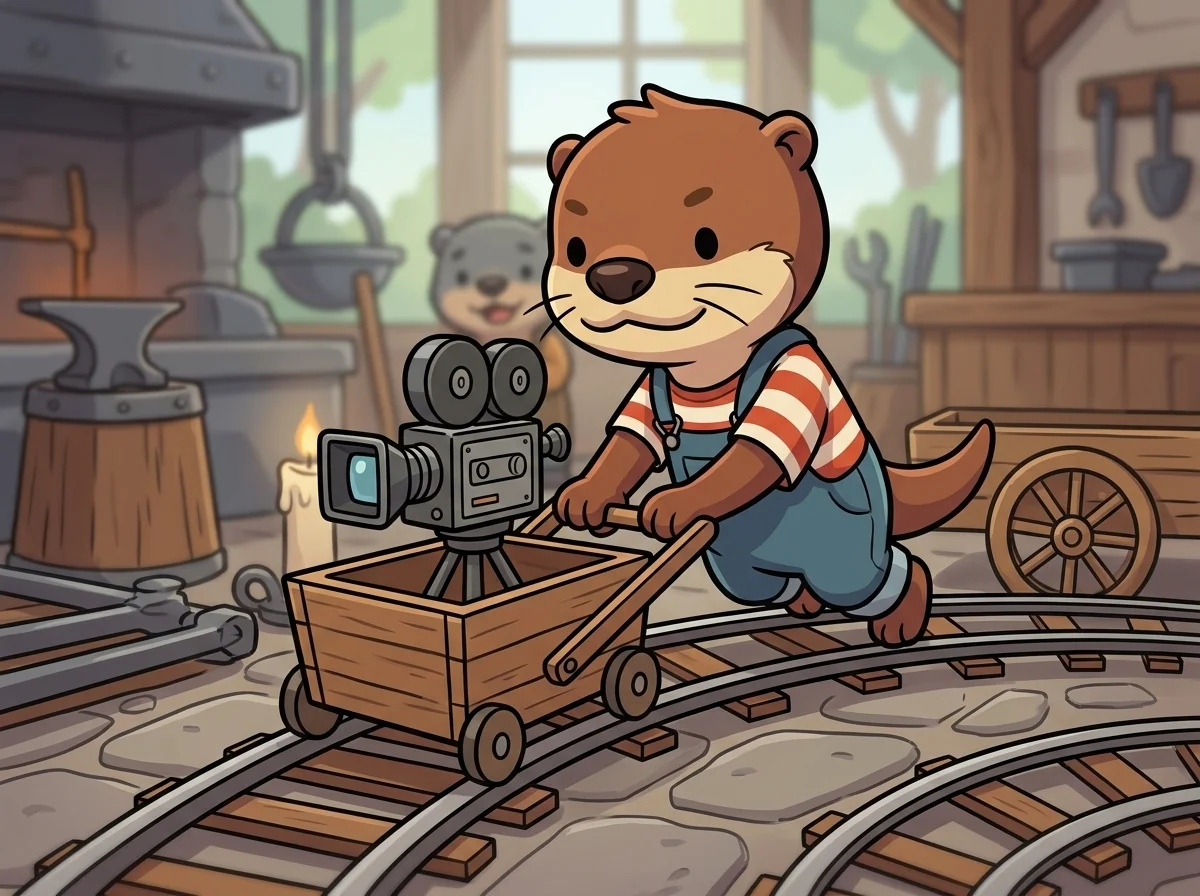
Dolly rolled her little camera-cart all the way to Reelforge at twelve, because a place that made feelings out of pictures ought to understand that movement is one of them.
Slate met her at the gate and asked for one thing. "Move a camera. Make me feel two different things with the same shot."
Dolly set her cart on the flagstones, pointed the camera at a candle, and pushed in — slow, patient, closer to the small flame until it filled the frame and trembled. "Tender," Slate said. "Like leaning in to protect it." Then Dolly rolled back, unhurried, until the candle was a lonely dot in a wide dark hall. "...and now it feels abandoned," Slate said. "You never cut. You just moved, and the feeling turned over."
"The moving did it," Dolly said. Slate said, "You belong here," and Dolly's chest did the warm otter-lean it did in good water.
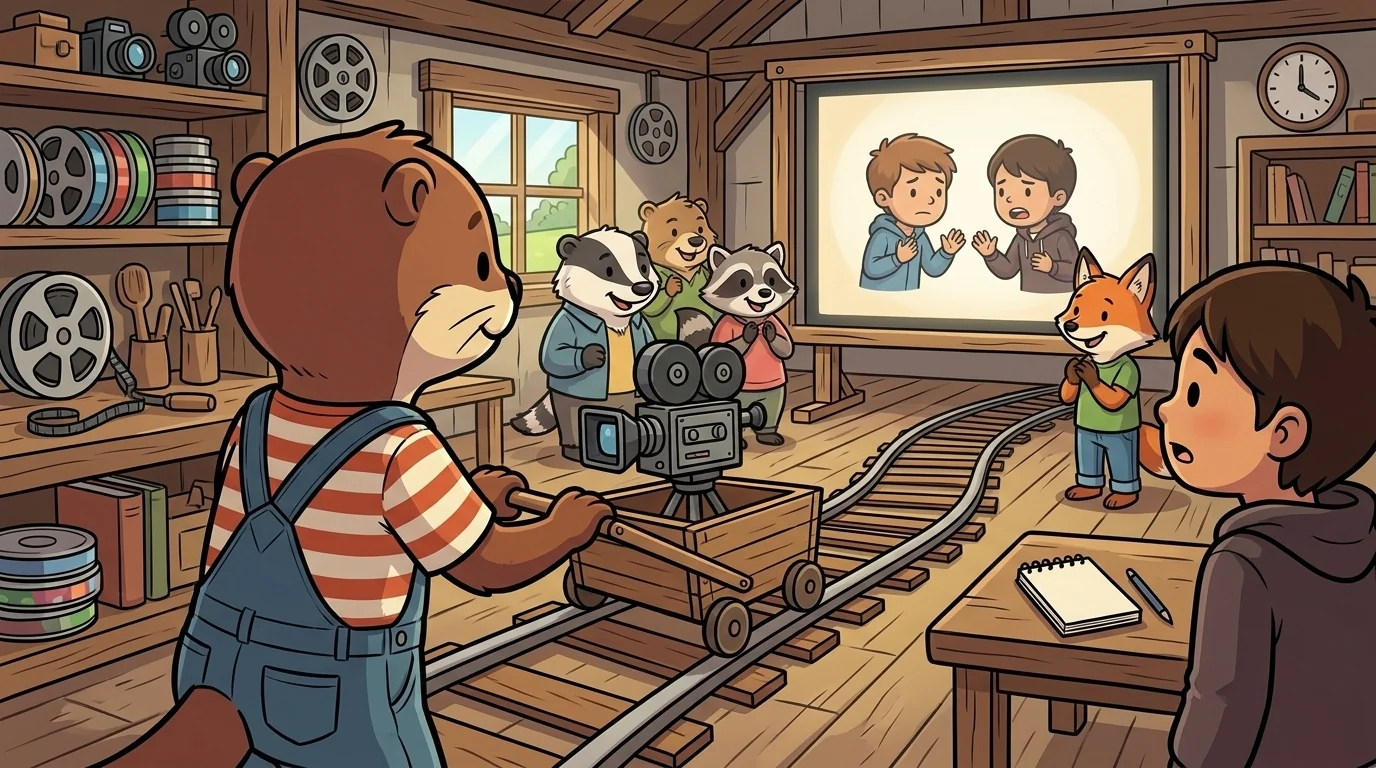
Dolly's workshop filled up with kids whose scenes sat still and cold.
One afternoon a kid came in stuck, holding footage of two friends making up after a fight. "They say sorry," the kid said, "and it should be the big warm moment, but the camera just sits there, far away, and it feels flat. Nothing happens." On the screen the two friends made peace at a cold distance, the camera frozen and uninvolved.
Dolly knew that flatness. It was the pond before anyone moved.
"Your camera is a stranger right now," Dolly said. "Standing back, watching, not part of it. What if it cared? What if, as they say sorry, the camera slowly leaned in — the way you lean in when you're moved?" Dolly set the cart down and rolled it, slow and smooth, toward an imagined pair. "See? The push-in is the audience's own heart moving closer. The moment they say sorry, the camera drifts in — and everyone watching leans in with it, without knowing why."
The kid re-filmed it, rolling the camera gently in on the reconciliation, and their eyes went wide. "It feels like I'm getting closer to them. Like I care now."
"Because the camera moved for you," Dolly said. "A slow push-in is the audience deciding to come nearer. Move the camera, and you move everyone behind it."
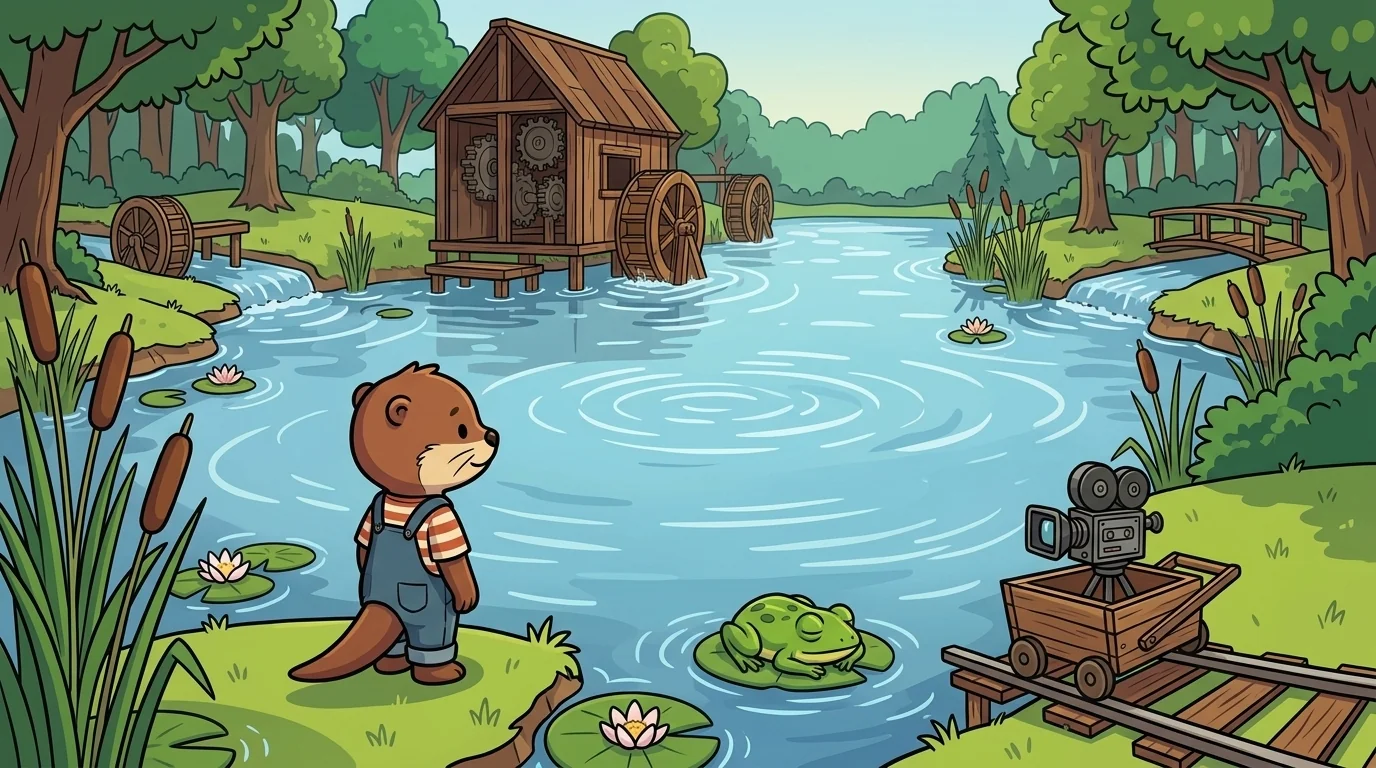
Later, when the workshop had emptied, the kid came back, thoughtful.
"How do you know when to move it?" the kid asked. "And how fast?"
Dolly thought about her mother in the water, and the slow drift that had melted her fear without her noticing.
"You move it when the feeling moves," Dolly said. "When a moment wants you closer — a truth, a face, a small brave thing — you drift in, slow, and you take everyone with you. When a moment wants to let go — an ending, a goodbye, a loneliness — you ease back and give it space. And slow is almost always the answer, because a fast move startles and a slow move comforts, and most of what we're doing is helping someone feel safe enough to feel." Dolly looked out at the millpond, at the ripples spreading soft and wide. "A moving camera isn't a trick. It's the camera caring out loud — coming closer, or letting go, at exactly the speed a heart would."
The kid nodded slowly, and Dolly watched the stuck flatness lift off their face — the same easing she'd felt as a small otter when the water stopped being frightening and became a place someone had drifted quietly close in.
And Dolly didn't say the last part aloud, but it settled warm and steady: you don't have to grab a moment to hold it. Sometimes you just move toward it, slow enough to be trusted, and it lets you in.
The ReelForge ensemble
Dolly is part of ReelForge's distributed-narrative cast. Each character embodies a different curricular primitive; together they teach the full subject.
-
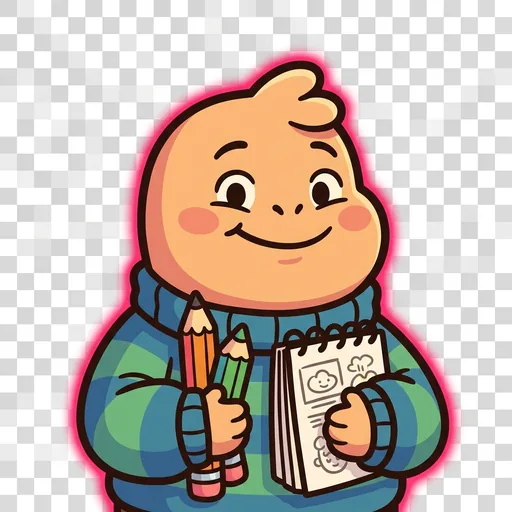
Draft
Storyboarding — pre-visualization; 'Draw it first. Then film it.'
-
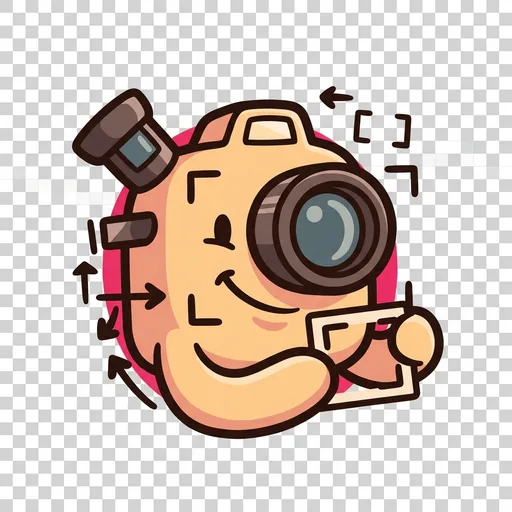
Aim
Camera angles + framing — 'Where the camera stands changes the story.'
-

Bright
Lighting design — 'Three lights. Different feelings.'
-
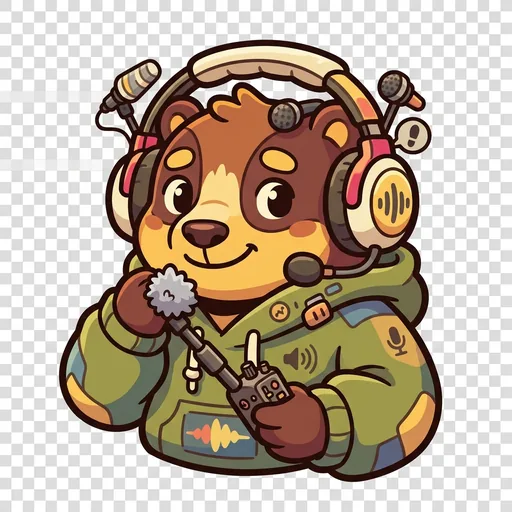
Buzz
Sound design — foley + ambient + dialogue — 'Sound is the other half.'
-

Snip
Editing — timeline + transitions + pacing — 'Cut here. Not there.'
-

Whole
Multi-scene narrative — 'Beginning. Middle. End.'
-
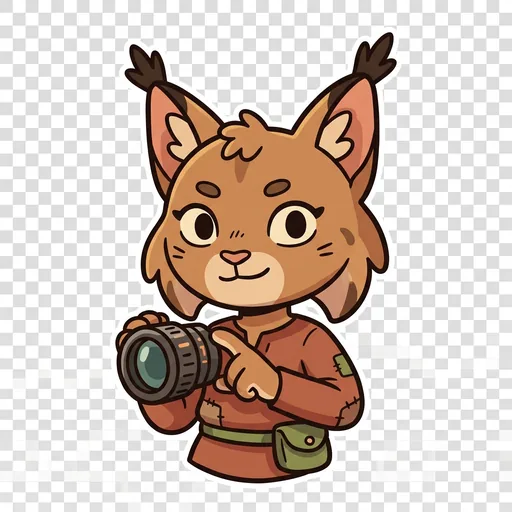
Sharp
Focus + depth of field — 'Where the eye lands.'
-
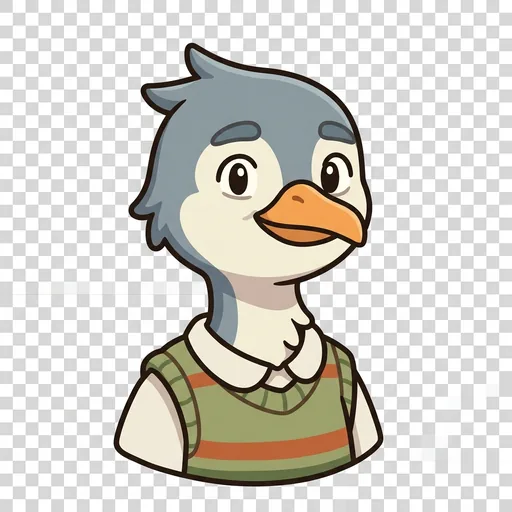
Stir
Blocking + performance — 'The body carries the scene.'
-
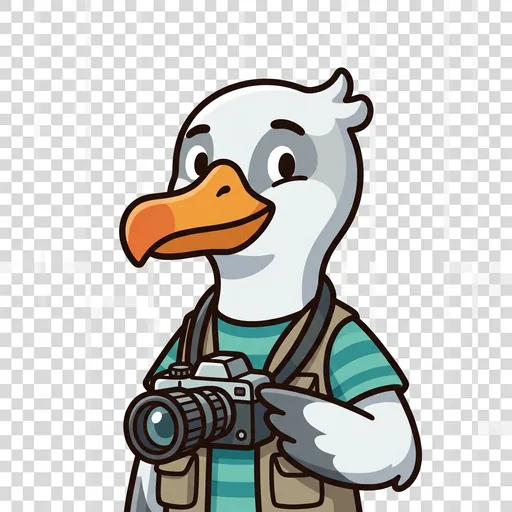
Vast
Shot size — wide, medium, close — 'How much you see changes how you feel.'