Aim and Vast
BUILDING A SHOT — a shot is made of two choices at once: where the camera stands (Aim's angle — low, high, level) and how much it shows (Vast's size — wide, medium, close). Low-and-close makes a subject tower and intimate; high-and-wide makes it tiny and alone. The two choices multiply into the feeling.
Loading audio…
Press play to listen along. The line being read lights up as you go.
Show full transcript
Loading transcript…
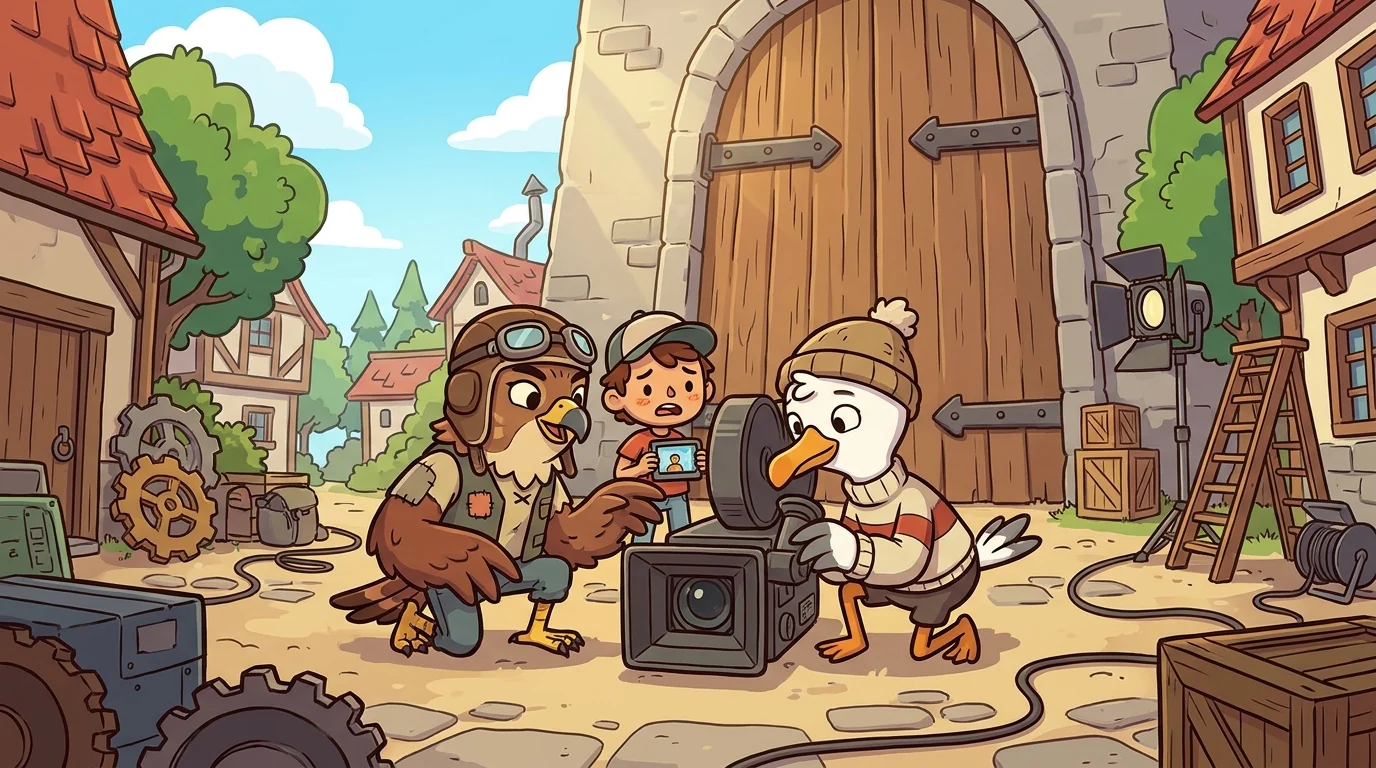
A kid came to the Reelforge courtyard one morning with a single problem and, without meaning to, brought two teachers to the same spot.
The kid was filming a scene about a small child standing before a towering, ancient door — a moment meant to feel enormous, the child brave and tiny at the threshold of something huge. But the footage felt like nothing. And so the kid went first to Aim, the falcon-tween who knew where a camera should stand, and then, still stuck, to Vast, the albatross-tween who knew how much a camera should show — and the two of them, who had always worked in different corners of the yard, ended up crouched over the same viewfinder.
Aim looked at the flat footage. Vast looked at it too. And each of them, at first, was sure they alone had the fix.
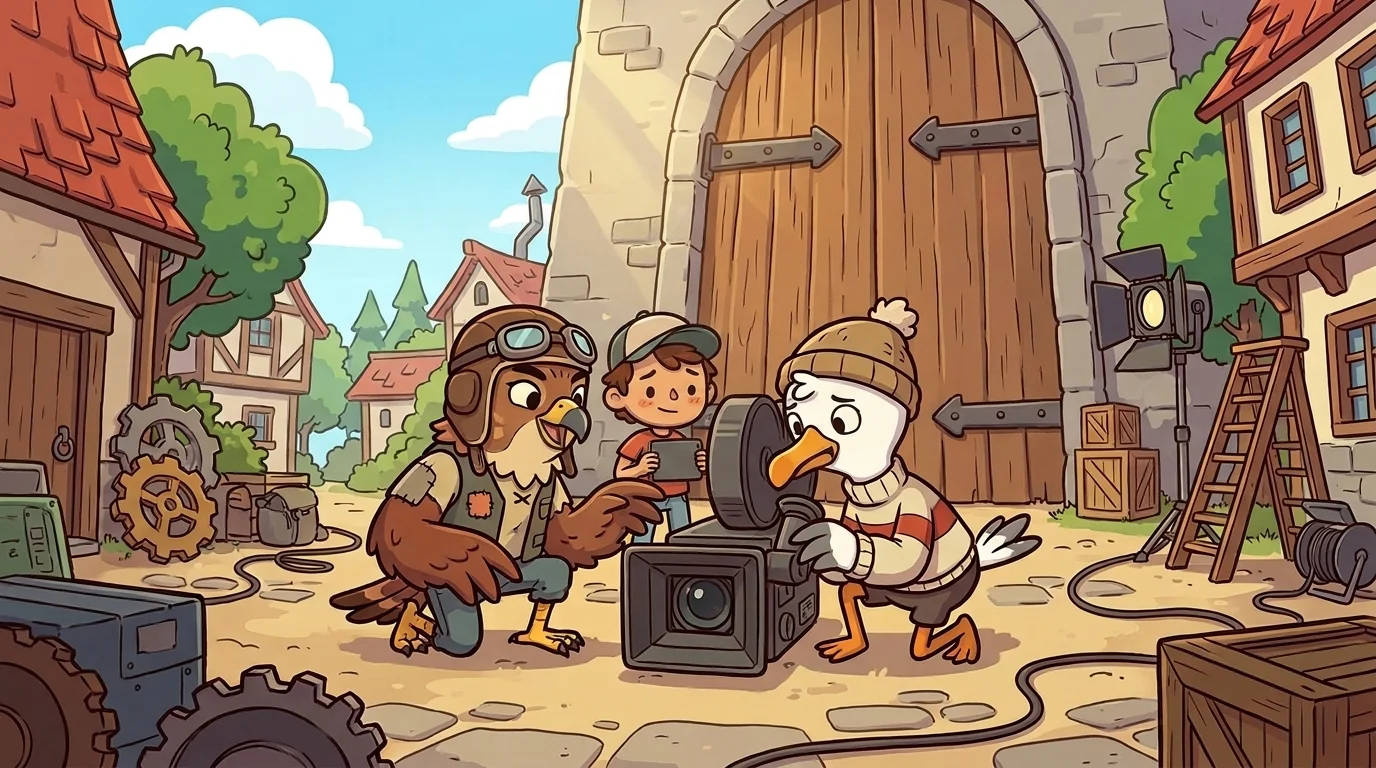
Aim spoke first, because angle was her craft. "The trouble is where you stand," Aim said. "You filmed it at eye-level, straight on — and eye-level says these two are equal, the child and the door the same size. But this isn't equal. The door is huge; the child is small. So don't stand level. Stand low, down by the child's feet, looking up at that door." She set the camera low. Through the lens the door reared up, vast and looming. "A low angle makes a thing tower. Now the door feels enormous."
The kid leaned in — it was better — but something still wasn't landing. The door towered, yes. But the child had somehow vanished from the feeling.
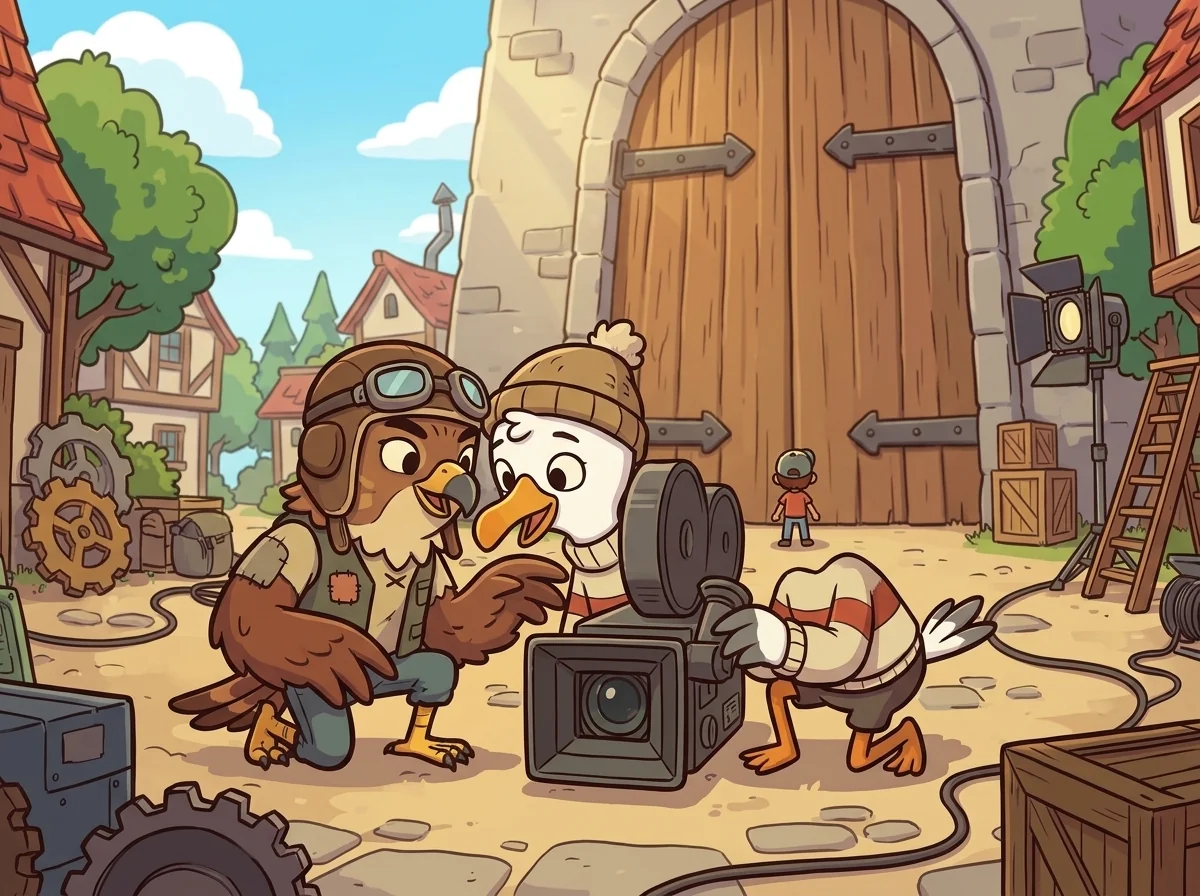
Vast had been watching, and now she saw the missing half. "Your angle's right," Vast told Aim, "but look — from down low, you've filled the whole frame with door. We can't feel the child at all, because we can't see how small she is against it. That's my half: not where you stand, but how much you show. Pull the frame wide. Keep Aim's low angle — but widen it, so we see the whole towering door and the tiny child at its foot, small in all that space." She widened the imagined frame. "Now the door is huge and the child is small within it. The wideness is what makes the smallness felt."
The kid saw it — but now, oddly, it felt a touch cold, the child a bit lost. Two half-fixes, each true, each incomplete.
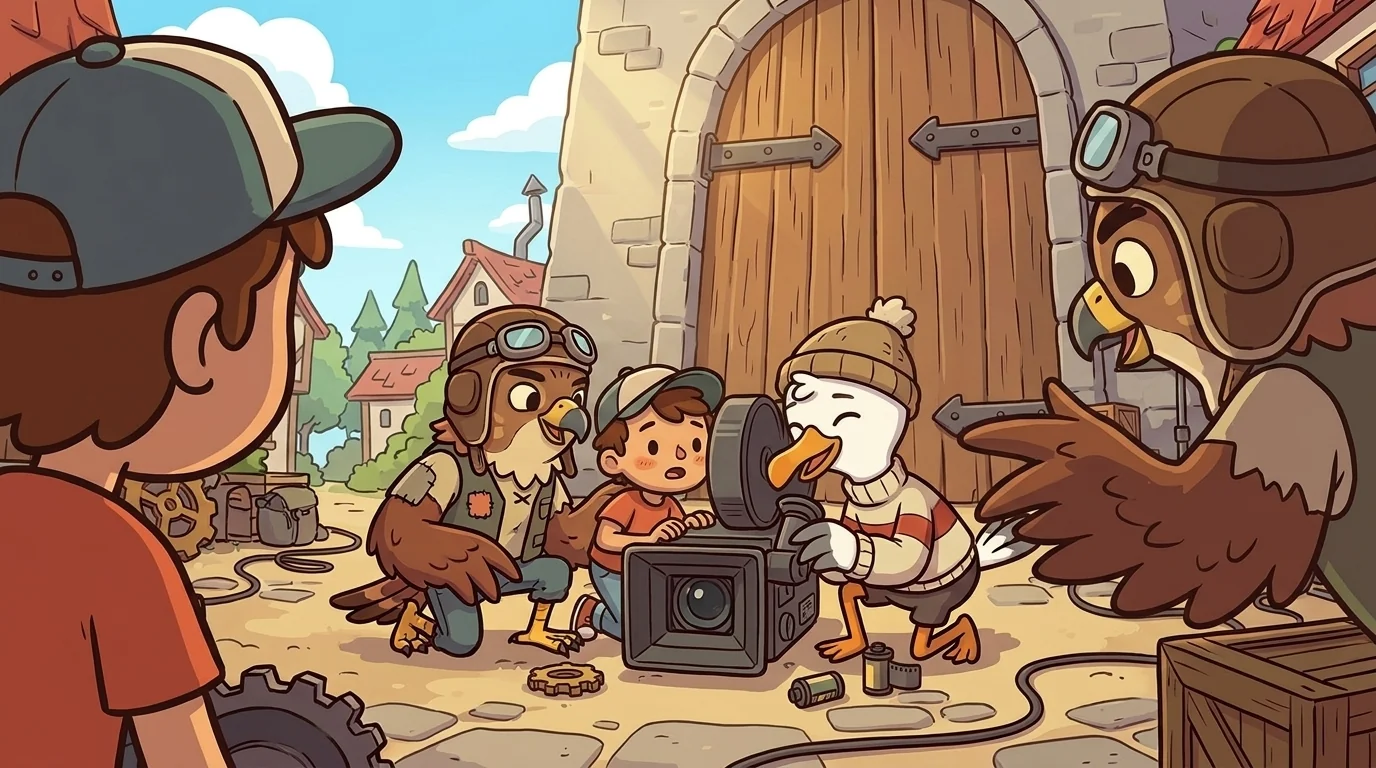
And then, crouched over the one viewfinder, the two of them built the shot together — and had the kid build it, hands on the camera, to feel the two choices multiply.
"Both choices, at once," Aim said. "That's the thing we kept missing alone." So they layered them. First, Vast's wide and Aim's low: the establishing shot — the huge door, the tiny brave child at its foot, small in all that space. Feel how big the moment is, and how small she is in it. Then — and this was the two of them thinking as one — they changed both choices together for the next shot: Aim swung to a slightly-low angle right up close on the child's face, and Vast tightened the size all the way in. Low-and-close. Now the same child towered with quiet courage, filling the frame, brave and near. "Wide-and-low told them the world is huge and she is small in it," Vast said. "Close-and-low tells them she is facing it anyway, and she is not small at all." The kid filmed both and gasped — the two shots together, the two choices multiplying, said the whole feeling that neither half had managed alone: tiny before something huge, and brave enough to face it. Where-you-stand and how-much-you-show weren't two lessons. They were two dials on one feeling.
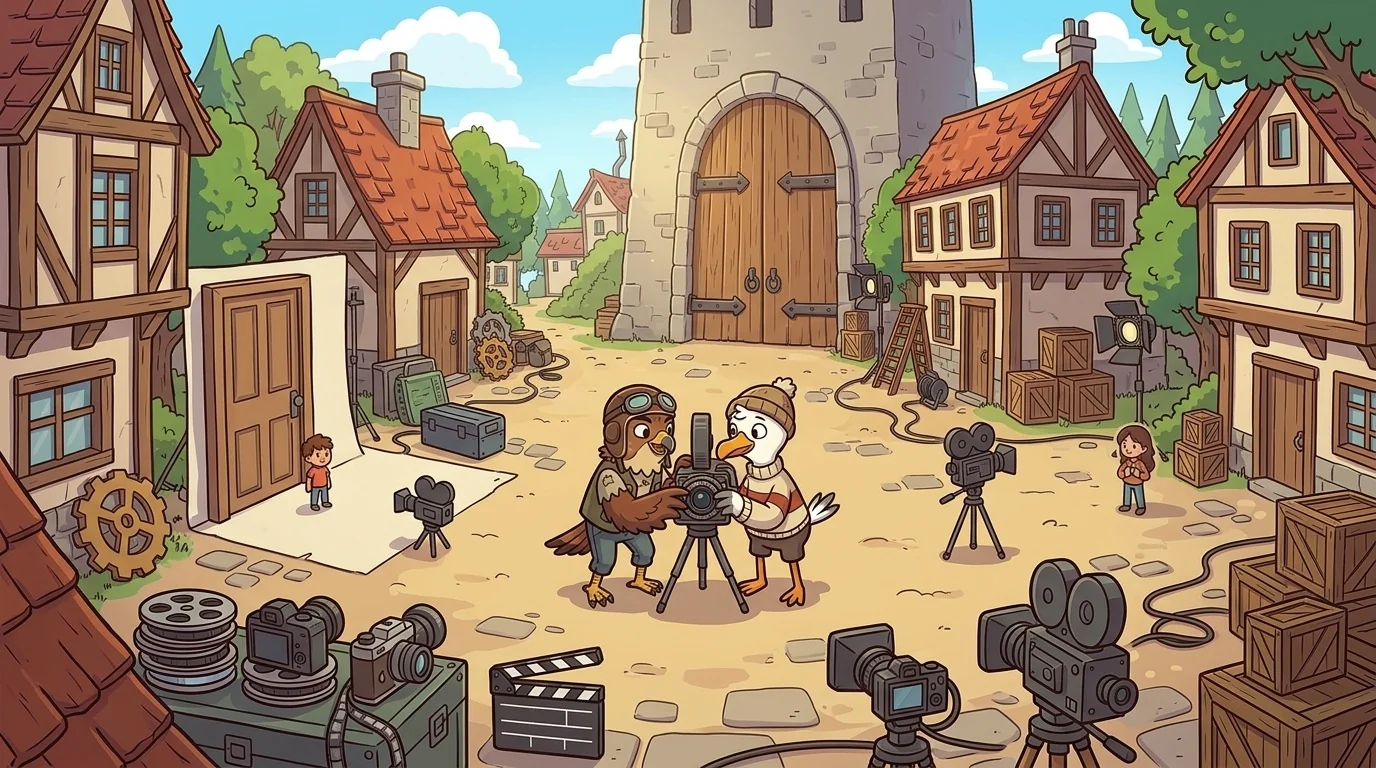
Afterward, watching the kid run off to re-film, Aim admitted she'd spent years thinking the angle was the whole of a shot — that once she'd chosen low or high, the job was done. And Vast admitted she'd thought the same about size — that wide or close was the shot. Neither was true. A low angle at the wrong size, or a wide shot at the wrong angle, fell flat. It was only the two choices together — the standing and the showing, multiplied — that made a feeling land.
They started teaching the framing-lesson side by side after that, one camera, two dials. And the kids who learned it that way carried something past the courtyard: that some things need two choices working together to be said, and that the pride of doing your half well is only complete when it meets the other half. Aim and Vast, who had worked in separate corners of the yard for years, found that every single shot had always been the two of them at once — where you stand, and how much you show — and that neither had ever really built a shot alone.
The ReelForge ensemble
Aim and Vast is part of ReelForge's distributed-narrative cast. Each character embodies a different curricular primitive; together they teach the full subject.
-
Draft
Storyboarding — pre-visualization; 'Draw it first. Then film it.'
-
Aim
Camera angles + framing — 'Where the camera stands changes the story.'
-

Bright
Lighting design — 'Three lights. Different feelings.'
-

Buzz
Sound design — foley + ambient + dialogue — 'Sound is the other half.'
-
Snip
Editing — timeline + transitions + pacing — 'Cut here. Not there.'
-

Whole
Multi-scene narrative — 'Beginning. Middle. End.'
-
Dolly
Camera movement — the push-in, the follow, the reveal — 'Move the camera to move the eye.'
-
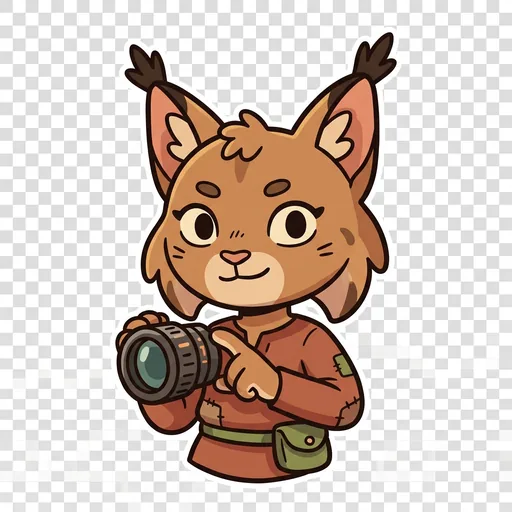
Sharp
Focus + depth of field — 'Where the eye lands.'
-
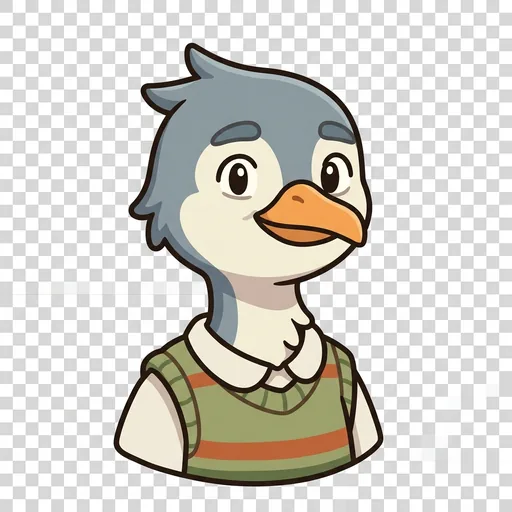
Stir
Blocking + performance — 'The body carries the scene.'
-
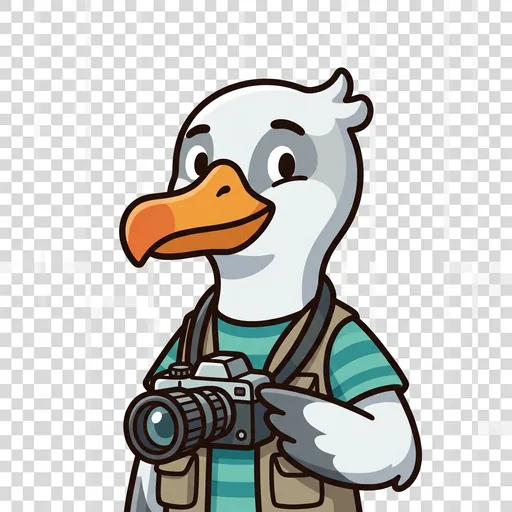
Vast
Shot size — wide, medium, close — 'How much you see changes how you feel.'