Naught
THE INVENTION OF ZERO — the bold idea of giving nothing a name and a number, first as a full number in India and, on their own, by the Maya; the mark for nothing that made big numbers easy.
Loading audio…
Press play to listen along. The line being read lights up as you go.
Show full transcript
Loading transcript…
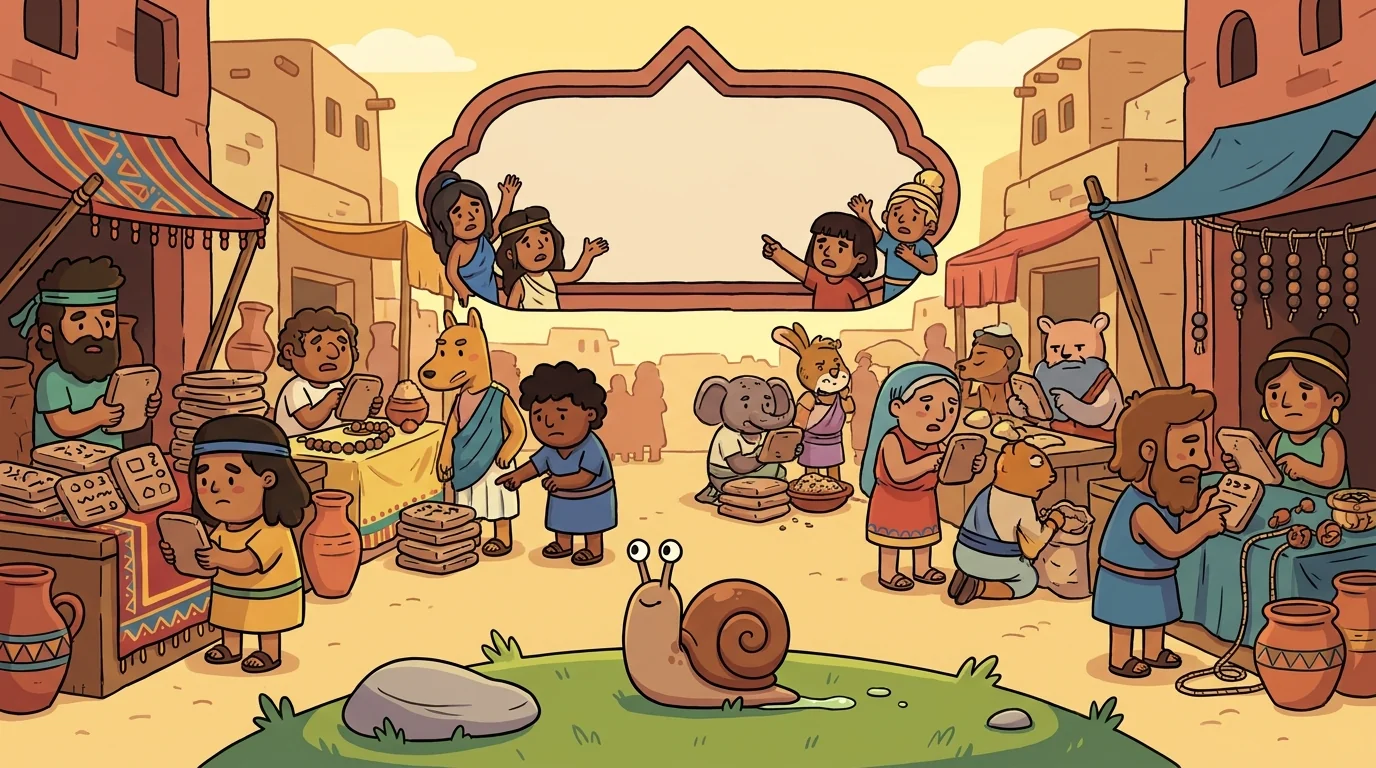
Naught was a small, quiet snail. People walked right past him. "There's nothing there," they'd say, and step over the space where he sat. For a long time, Naught believed them. He felt like a nobody. A nothing.
Then he learned the most surprising thing in all of math. Nothing is a something. And it might be the most important something there is.
Here is how he learned it. Naught watched people try to write big numbers. And he saw them get stuck. Someone wanted to write "one hundred and five." They wrote a 1 for the hundred. They wrote a 5 for the five. But the middle — the tens place — had nothing in it. So what did they write?
If they wrote nothing at all, they got "15." Fifteen! Completely wrong. The empty place needed a mark. A name for nothing. Without it, you could not tell 15 from 105 from 150.
"The empty place needs me," Naught realized, slowly, the way snails realize things. "Nothing needs a name."
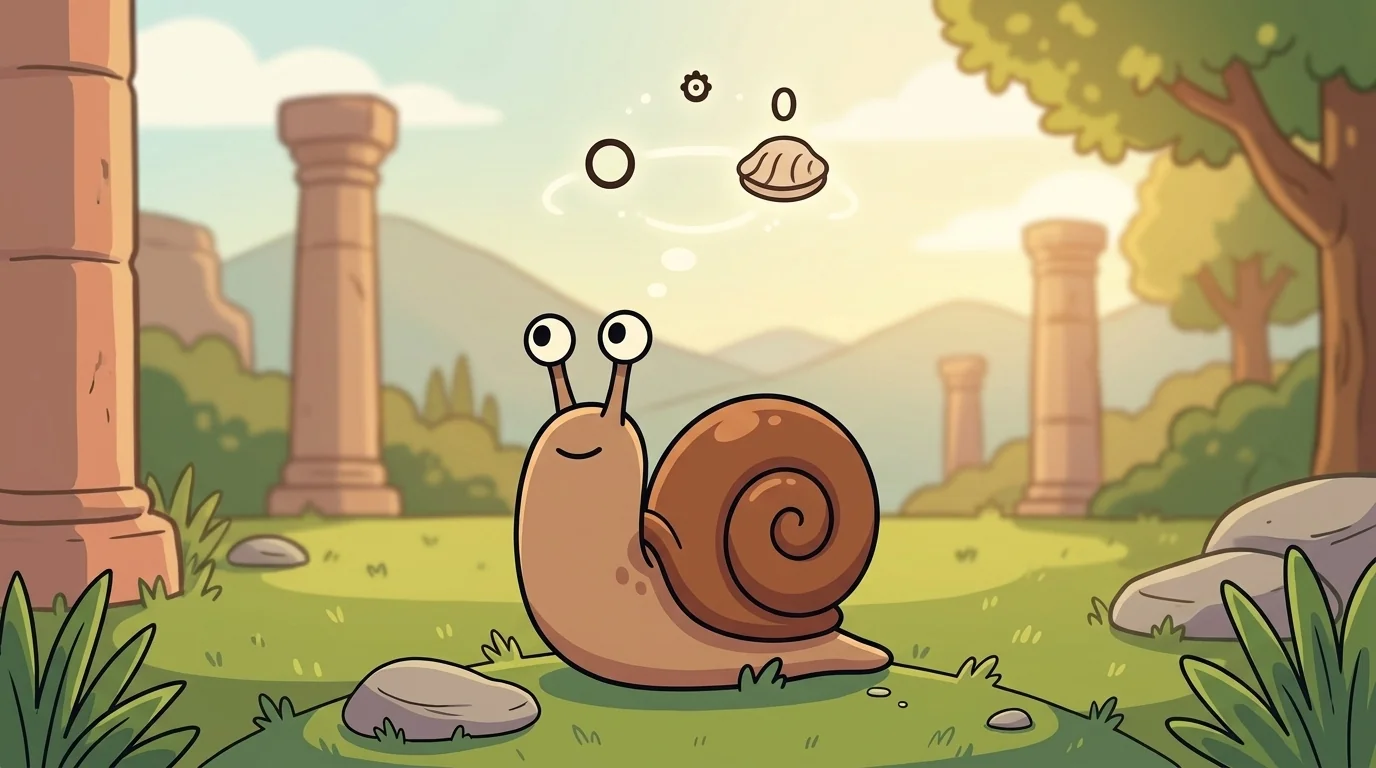
Naught had felt like a nothing his whole small life. So this idea landed deep in his heart.
He learned that long ago, in India, mathematicians did a bold and beautiful thing. They gave nothing a name and a number: zero. A scholar named Brahmagupta even wrote down rules for it — how to add it, how to subtract it, what it meant. Nothing became a something you could work with.
And far across the world, with no way to have heard of India at all, the Maya people did it too, entirely on their own. They needed a zero for their great calendar, and they made one — a little shell-shaped mark — because they, too, had discovered that an empty place must be named.
Naught thought about this for many quiet days. Two peoples, oceans apart, both bold enough to give nothing a name. It made him feel, for the first time, that being small and easily-overlooked was not the same as being unimportant. Nothing, it turned out, was worth naming. And so, perhaps, was he.
When he was older, Naught made his slow way to the MathLore hall, where they gather the stories of how math grew. They had been hoping for someone who could tell the story of zero.
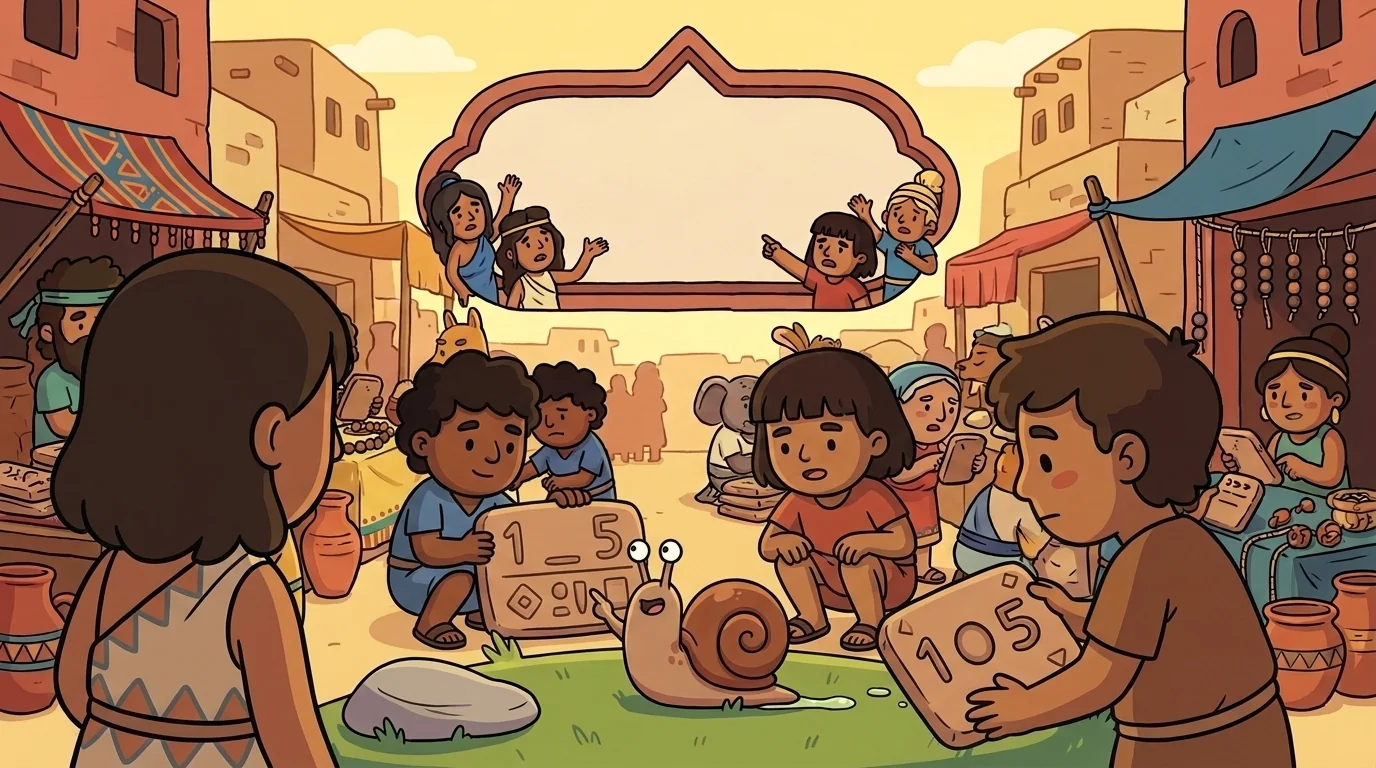
He teaches the children the power of the empty place.
"Try to write one hundred and five without me," he says. The children write 1 and 5. "Now read it." They read fifteen, and laugh, and see the problem. "The tens place is empty. But 'empty' still has to be shown." He slides a 0 into the gap. 105. "There. Now the 1 knows it's a hundred, because zero is holding the tens place open. Zero doesn't count anything itself. It holds the places, so all the other numbers know where they stand."
"So zero is like a placeholder," a girl says.
"A placeholder, and more," says Naught. "It took bold people — in India, and among the Maya — to look at nothing and decide it deserved a name. Before zero, big sums were a nightmare. After zero, they became easy. The whole world does math the smoother way now, because someone was brave enough to name the empty place."
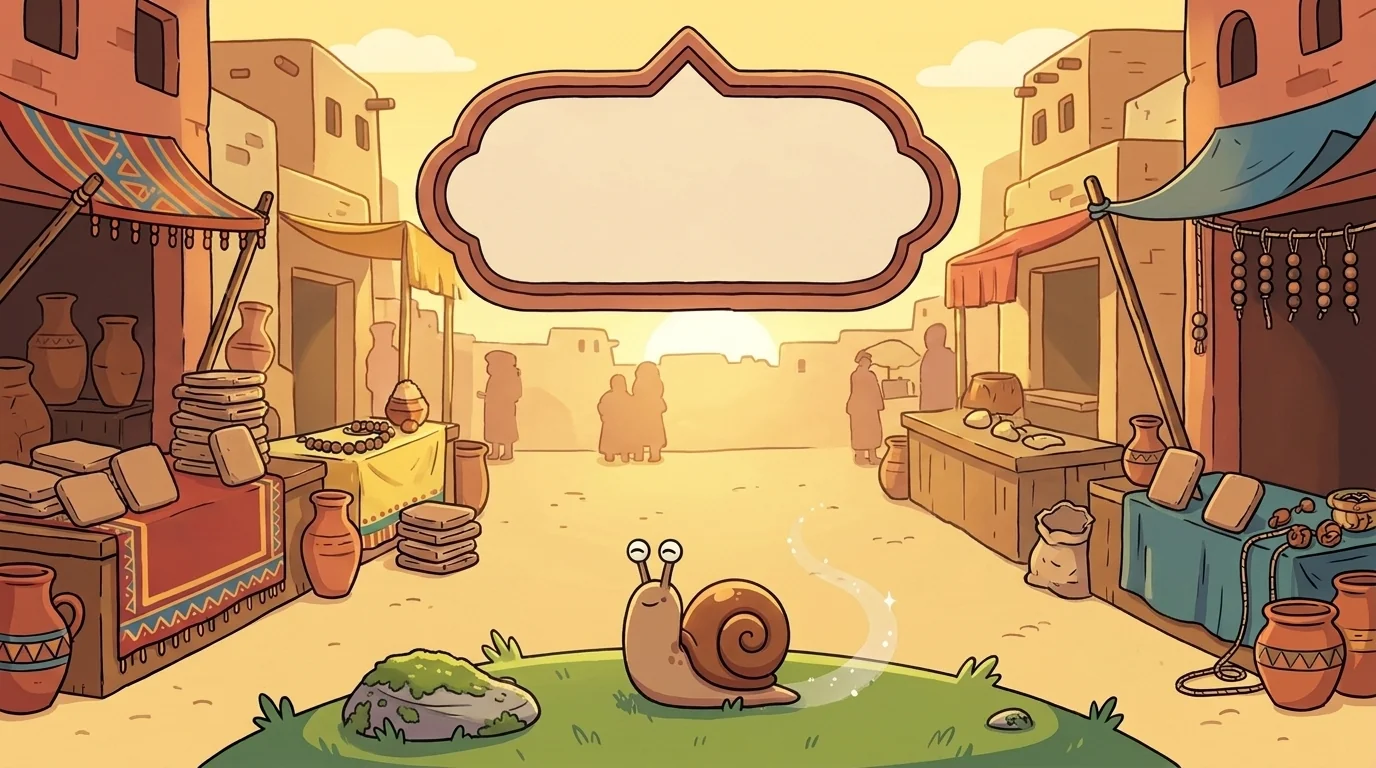
He still moves slowly, and people still sometimes step over him. But Naught doesn't feel like a nobody anymore.
The thing Naught hopes the children carry is that being quiet, or small, or easily-overlooked, is not the same as not mattering — that even nothing, once someone is brave enough to give it a name, can turn out to hold everything else up. Every empty-seeming thing might be a something, waiting to be seen.
"Nothing needs a name," he tells them, in his slow snail voice. "Give the empty place its mark, and watch how it holds up all the rest."
When the hall empties, Naught sits a while in the quiet, in a space people would say has nothing in it, and feels a deep, warm gladness he could never have felt as a young snail who believed them: that he was never a nobody, and neither is any empty place — because nothing, named with courage, is one of the most important somethings there is.
The MathLore ensemble
Naught is part of MathLore's distributed-narrative cast. Each character embodies a different curricular primitive; together they teach the full subject.
-

Heap
Counting-as-first-story — every people figured out their own way to count
-

Spire
Pattern-as-discovery — patterns are everywhere when you slow down enough to see them
-

Vouch
Proof-as-shared-knowledge — show me why; if your why holds up, I'll build on it
-

Home
Math-as-cultural-context — this idea was born somewhere, for someone, with reasons
-

Carry
Cultural-transmission — the idea traveled; every place it visited, it grew
-

Dozen
Number bases (counting in twelves, tens, or twos — the base is a choice)
-
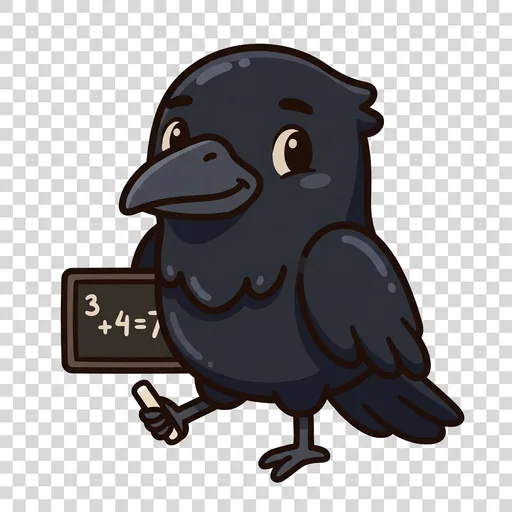
Etch
The invention of notation (writing math down so ideas can travel across time)
-

Frontier
Mathematics is unfinished (there are still open questions no one has answered)
-
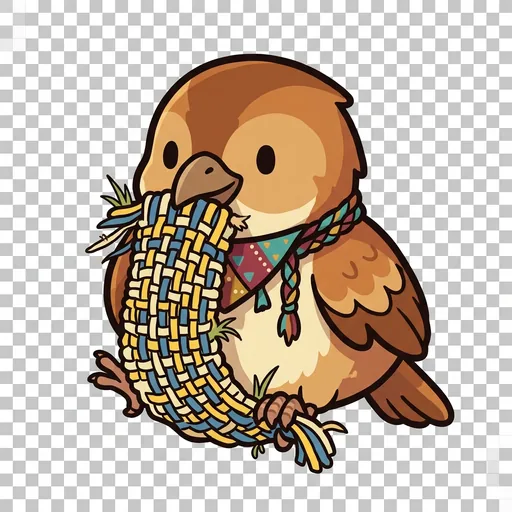
Warp
Math in everyday craft (the geometry hidden in weaving, building, and making)