Dozen
NUMBER BASES — counting means bundling into groups, and how big your bundle is is your base; peoples chose different bundles — ten for most, twenty for the Maya, sixty in Babylon (which is why we still keep sixty minutes in an hour).
Loading audio…
Press play to listen along. The line being read lights up as you go.
Show full transcript
Loading transcript…
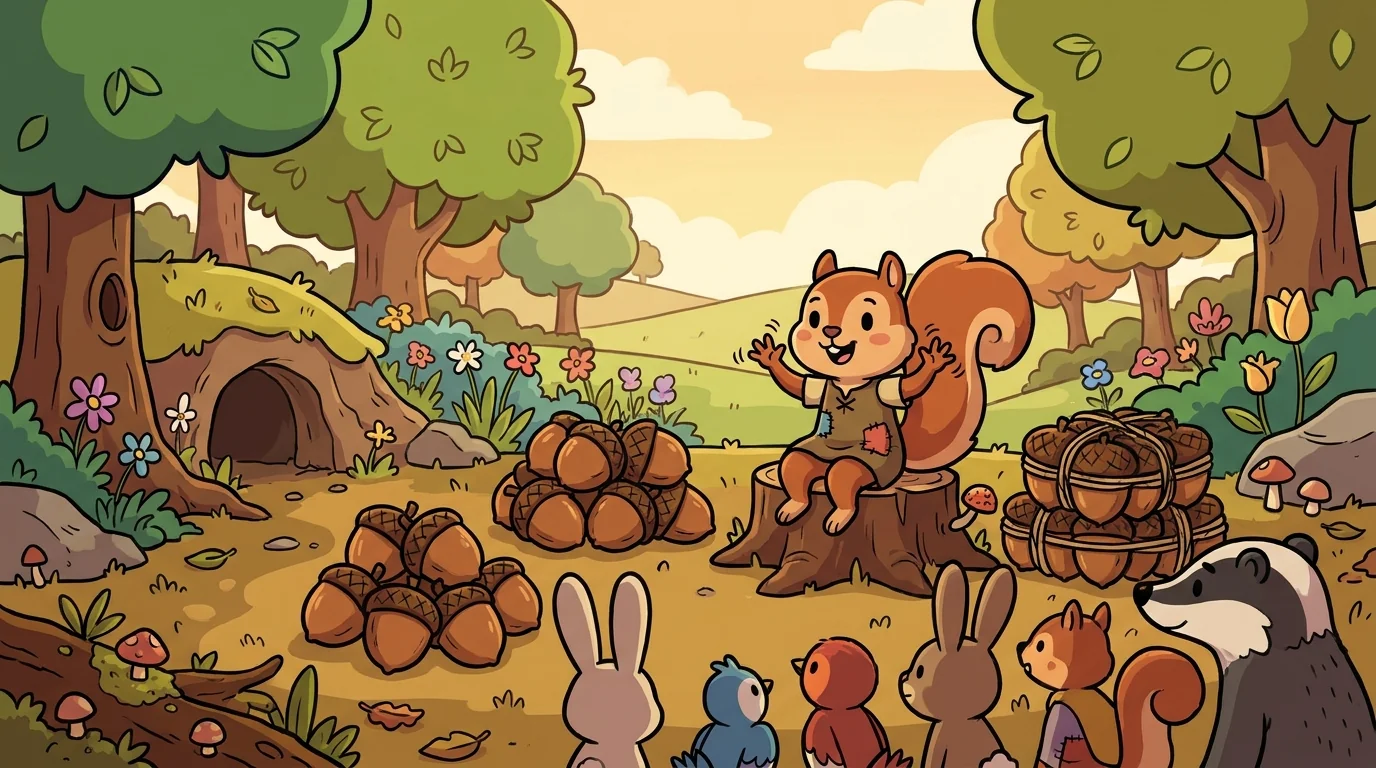
Dozen was a busy squirrel-tween who never counted acorns one at a time when she could count them in bundles. Ten here, ten there, and then count the bundles. It was faster, and Dozen liked fast.
She learned that this — bundling — is what counting really is. When a number gets big, you don't keep track of every single thing. You group them into bundles, and then count the bundles, and then bundle the bundles.
"How big is your bundle?" Dozen would ask. "That's the whole question. We mostly bundle by ten. Ten ones make a ten. Ten tens make a hundred. Why ten?" She held up her paws and wiggled her fingers. "Because that's how many fingers most of us have. We counted on our hands, so we bundled by ten. The size of our bundle came from our own two paws."
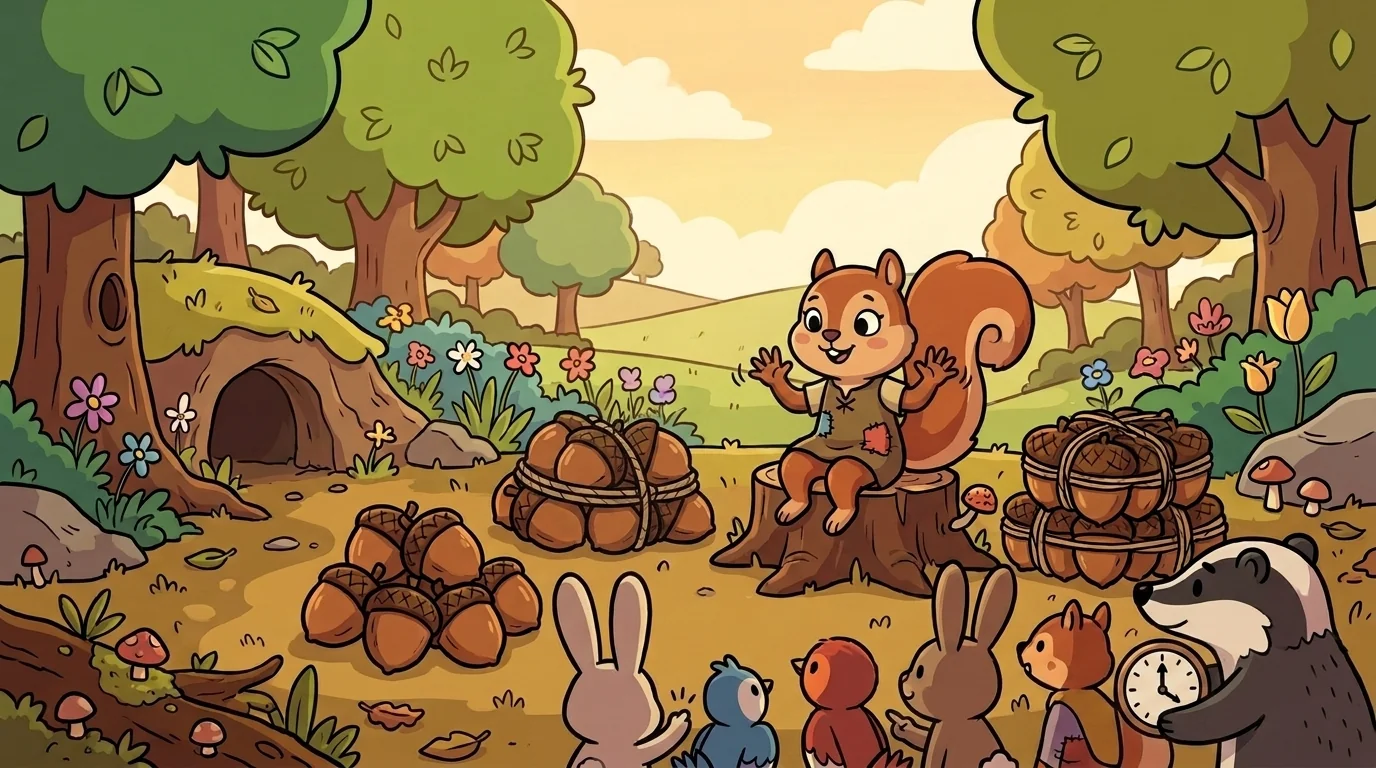
Dozen had grown up thinking ten was simply the way to count — until she learned it was only one choice among many.
She discovered that long ago, the Maya people bundled by twenty. Not ten — twenty. Because, Dozen delighted to learn, they counted on their fingers and their toes. Ten fingers, ten toes, twenty in all. So their whole number system stepped in twenties, and it worked beautifully, and it was no more "wrong" than counting by ten.
And in ancient Babylon, people bundled by sixty. Sixty! An enormous bundle. It sounds strange — until you look at a clock. Sixty seconds in a minute. Sixty minutes in an hour. And a circle split into three hundred and sixty degrees — six sixties. Those are gifts from Babylon, thousands of years old, still ticking on every clock and turning in every circle today.
Dozen sat with that for a long while. Different peoples, different bundles, all of them clever, none of them wrong. It made her feel that the way she had always counted was not the only right way — just her own people's good idea, one among many.
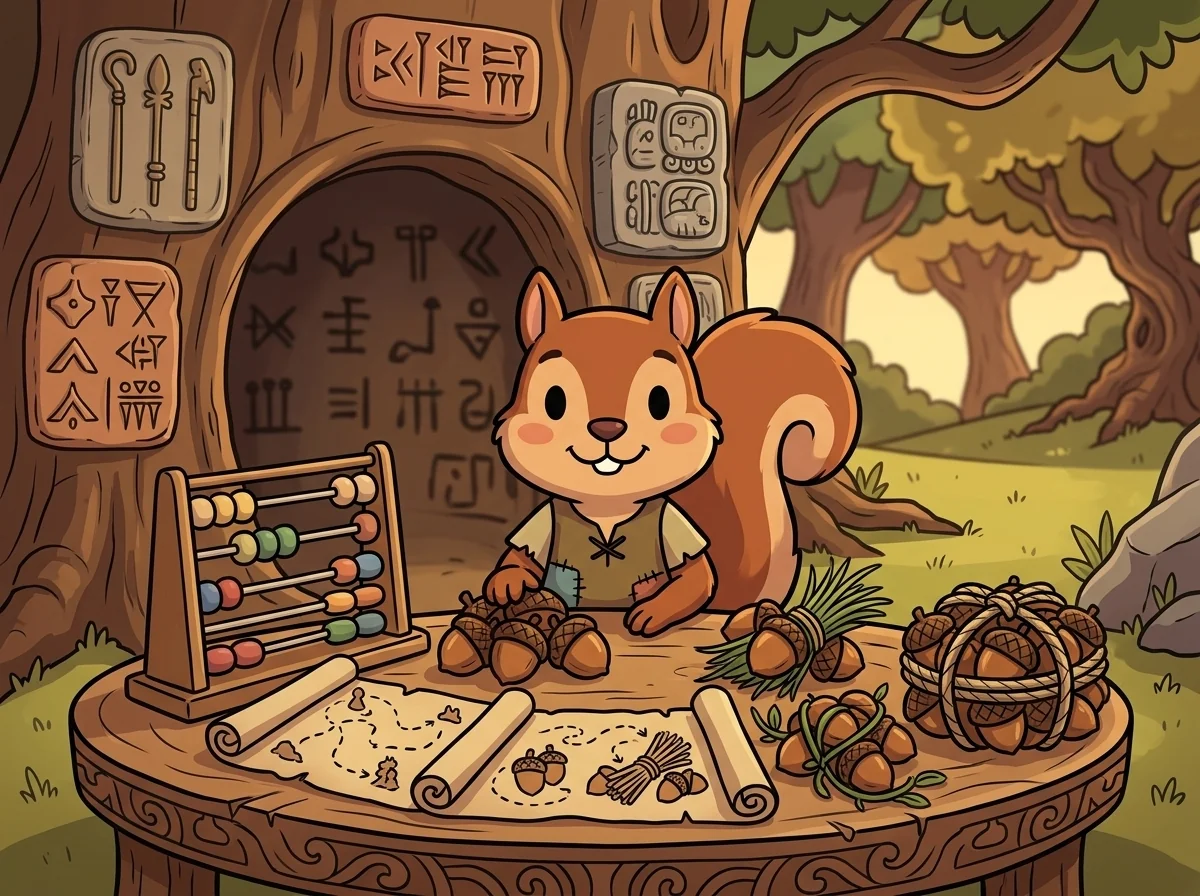
When she was older, Dozen scampered to the MathLore hall, where the stories of how math grew are kept, and where they had been hoping for someone to explain the size of a bundle.
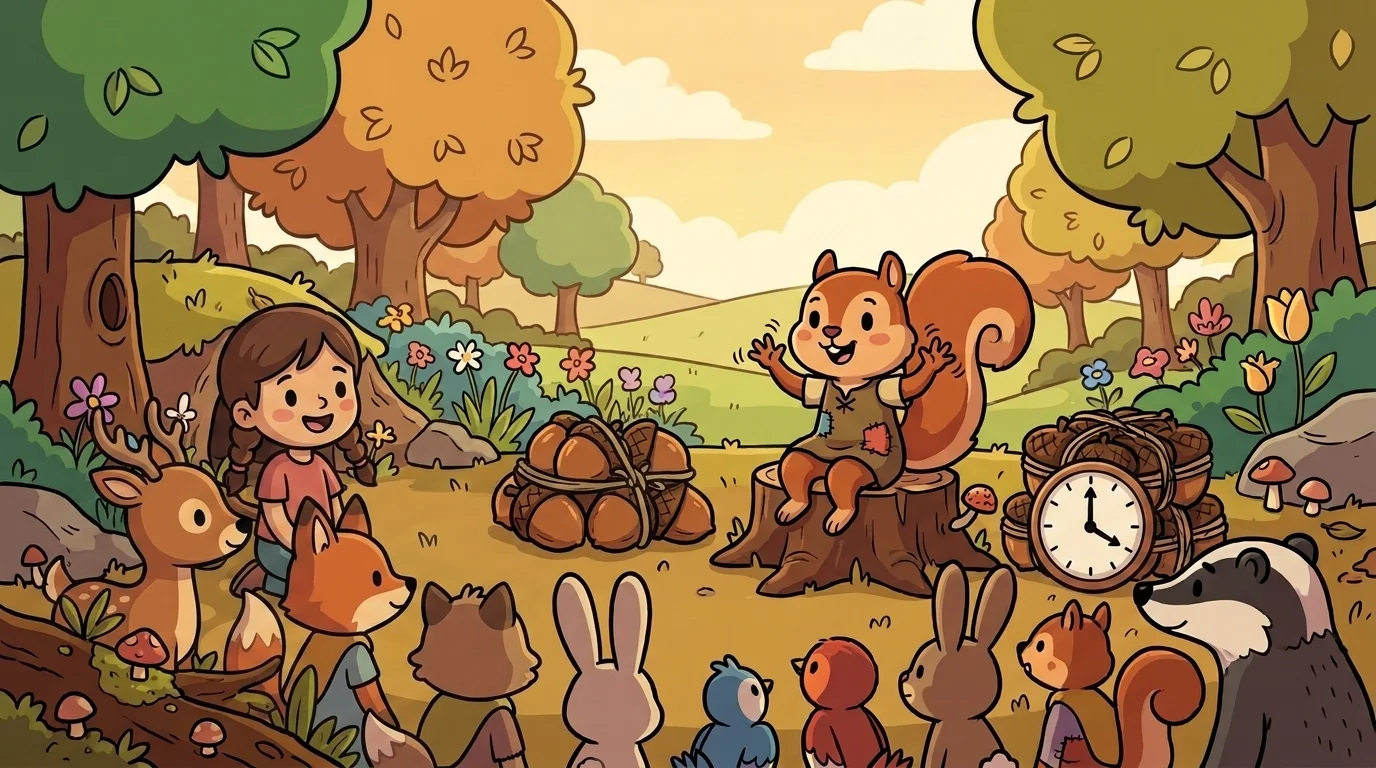
She teaches the children that counting is bundling, and the bundle can be any size.
"We bundle by ten," she says, gathering ten acorns into a little heap. "Ten ones, one ten. That's base ten, and it's how most of the world counts, because most of us have ten fingers." Then she grins. "But the Maya bundled by twenty — fingers and toes. And the Babylonians bundled by sixty. Same idea — group, then count the groups — just a different bundle size."
"So there's no single right way to count," a girl says.
"No single right way," says Dozen warmly. "Just different clever peoples, choosing different bundles that suited them. And here's the wonderful part —" she points at the wall clock — "we still use Babylon's sixty, every single day, on every clock and in every circle. Their idea outlived them by thousands of years. When you say 'quarter to four,' you're speaking a little Babylonian."
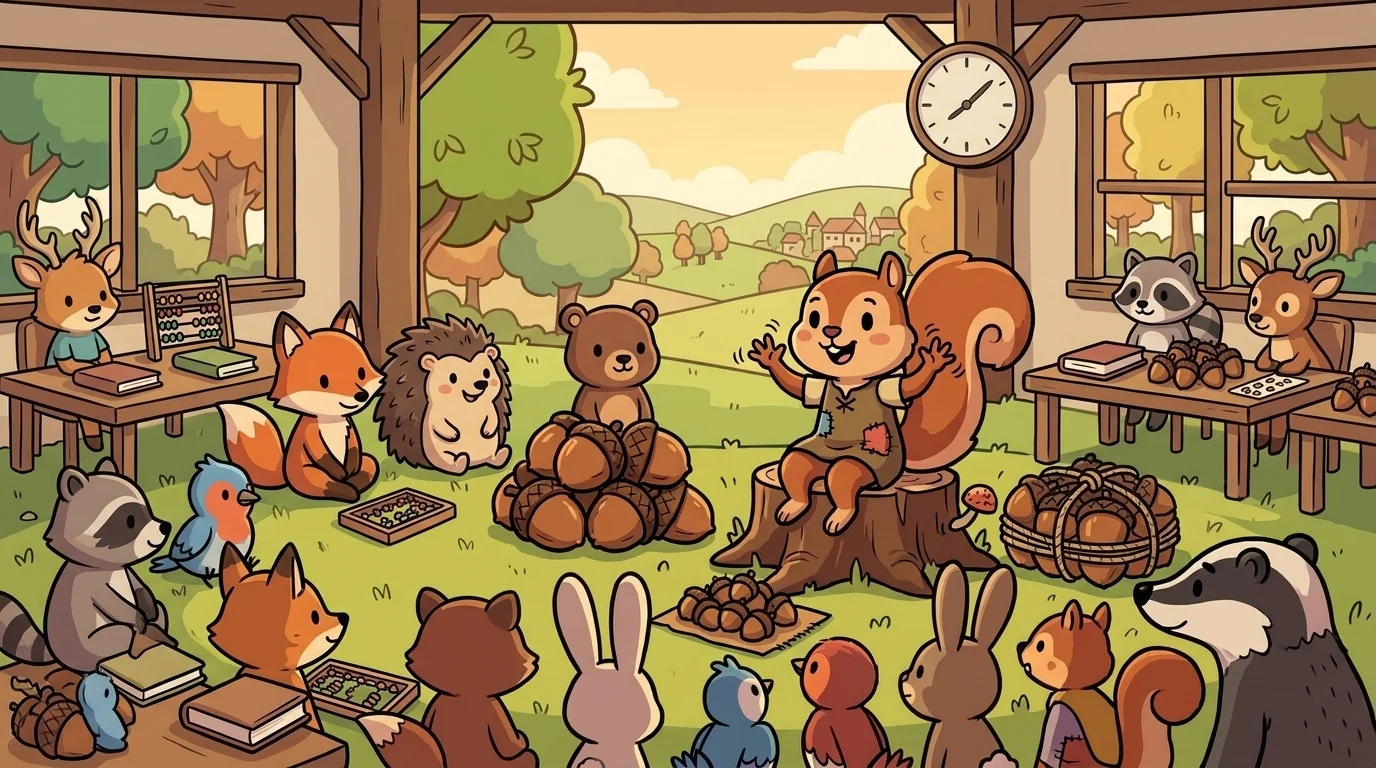
She still bundles everything she counts, and still can't look at a clock without thinking of Babylon.
The thing Dozen hopes the children carry is that there is rarely just one right way to do an everyday thing — that different peoples, all clever, made different good choices, and that some of those ancient choices are still quietly woven into the ordinary day. To count is to join a very long, very human story.
"How big is your bundle?" she asks them. "Ten, or twenty, or sixty — every people chose, and every choice was clever. And some of those choices are still ticking on your wall."
When the hall empties, Dozen gathers the loose acorns into tidy bundles of ten out of habit, glances up at the sixty-minute clock, and feels the warm, connected gladness she first felt learning that ten was only her people's good idea: that every time she counts, she is doing a thing that humans all over the world, across all of time, each found their own clever way to do.
The MathLore ensemble
Dozen is part of MathLore's distributed-narrative cast. Each character embodies a different curricular primitive; together they teach the full subject.
-

Heap
Counting-as-first-story — every people figured out their own way to count
-
Spire
Pattern-as-discovery — patterns are everywhere when you slow down enough to see them
-
Vouch
Proof-as-shared-knowledge — show me why; if your why holds up, I'll build on it
-

Home
Math-as-cultural-context — this idea was born somewhere, for someone, with reasons
-
Carry
Cultural-transmission — the idea traveled; every place it visited, it grew
-
Etch
The invention of notation (writing math down so ideas can travel across time)
-

Frontier
Mathematics is unfinished (there are still open questions no one has answered)
-

Naught
The invention of zero (a symbol for nothing that changed everything)
-
Warp
Math in everyday craft (the geometry hidden in weaving, building, and making)