Strawman Stella
STRAWMAN — *misrepresenting the opponent's argument.* The fallacy of *substituting a weaker, easier-to-attack version of an argument for the actual argument and then defeating the weaker version.*
Loading audio…
Press play to listen along. The line being read lights up as you go.
Show full transcript
Loading transcript…
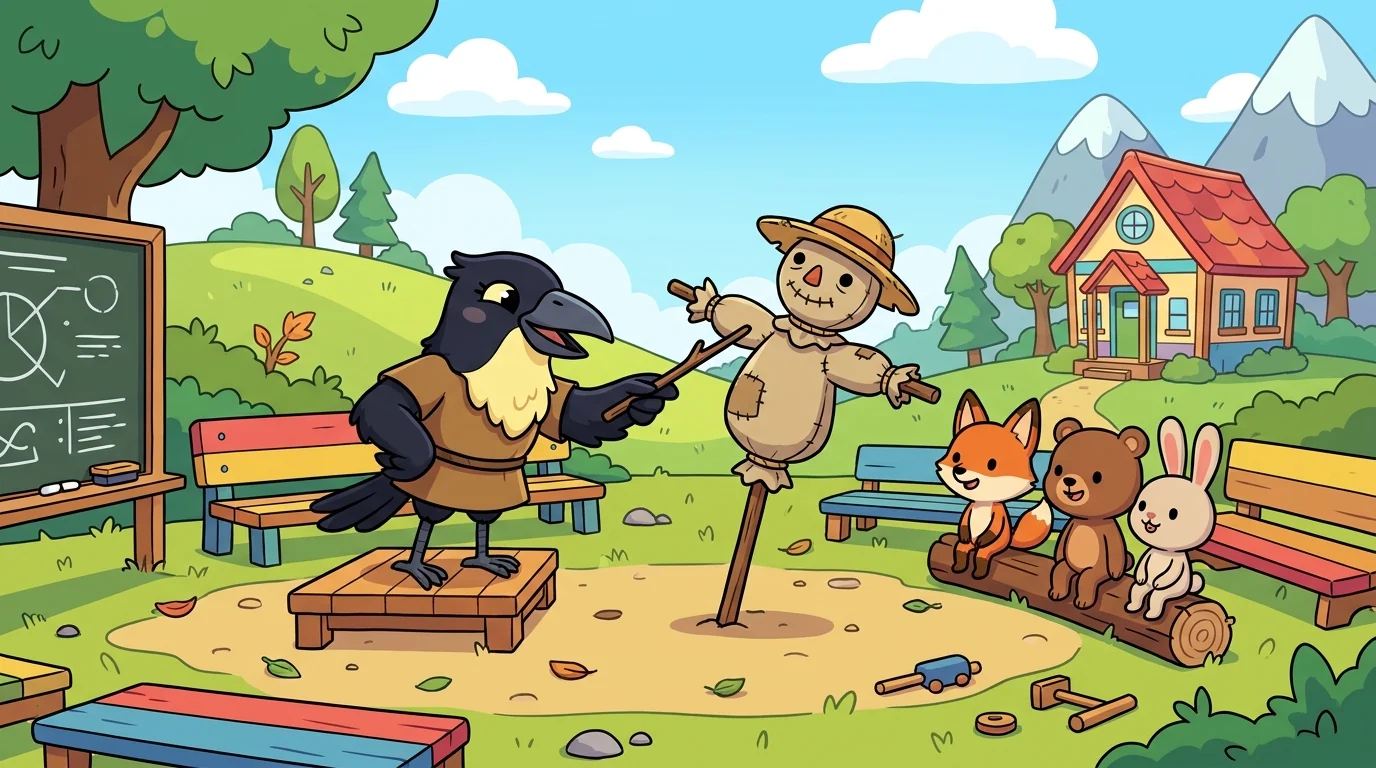
Stella was a raven — glossy black with a creamy chest and clever, darting eyes that were always hunting for an opening. She had a quick, tricky habit: when someone offered an idea, Stella would repeat it back twisted — weaker, sillier, easier to knock over — and then triumphantly beat up that twisted version.
She wasn't mean. She was a teacher, and she made ideas into scarecrows right out in the open, so you could feel the sting of having your words bent — and learn to catch the bend, in others and in yourself. Think of a scarecrow: easy to knock down. Stella turned real arguments into scarecrows, and then knocked them down, and it looked like winning.
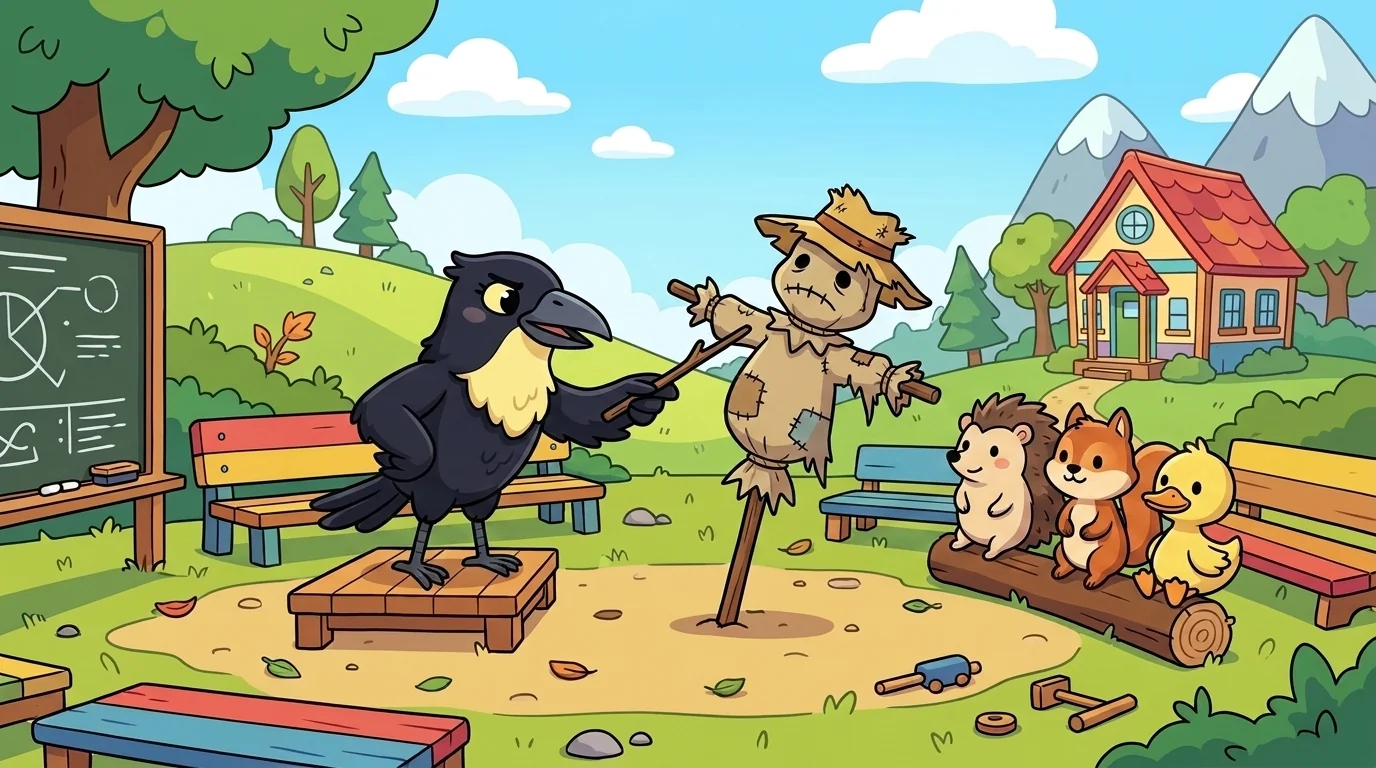
Stella's twist came from a hungry place: she loved to win, and winning was hard when the other idea was good. So somewhere along the way she'd discovered a shortcut. If she couldn't beat what someone actually said, she could quietly swap it for a floppier version — one nobody would defend — and beat that instead. It felt like victory, and it was fast.
The trouble crept up on her slowly. Stella won and won and won, and noticed, eventually, that she never actually learned anything, and neither did the folks she beat. She'd never once wrestled a real idea — only scarecrows of her own making. And the people she'd twisted just walked away stung and unheard. Her wins were made of straw. Stella decided she'd rather teach people to see the trick than keep pulling it.
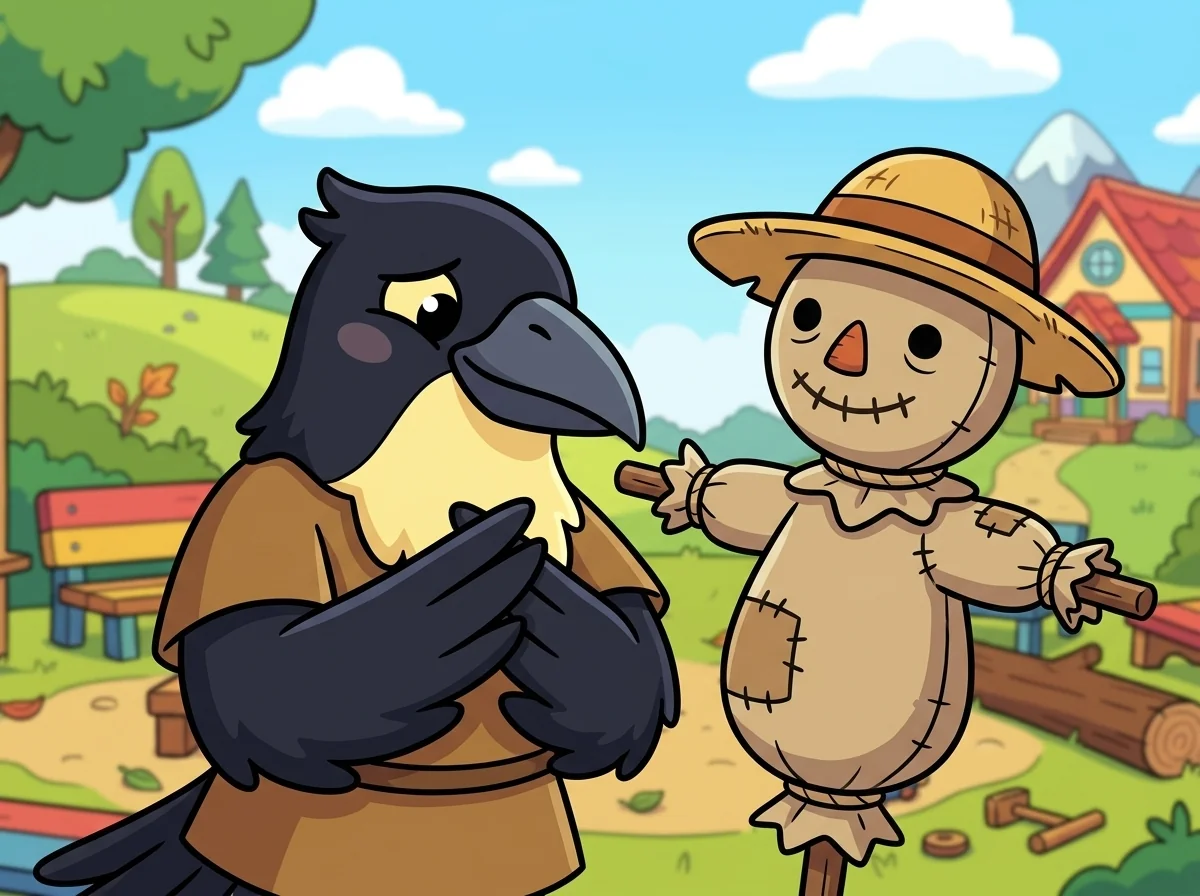
Stella flew into LogicQuest and folded her wings in front of Inspector Logos.
"What is a strawman?"
"It's swapping someone's real argument for a weaker, sillier version," Stella said, "then knocking that down and calling it a win. You never touch what they actually said." Her clever eyes dropped a moment. "I do it when I really want to win and their real point is hard to beat. Twisting it is tempting. The skill is arguing against what they actually said — even when the floppier version would be easier."
Inspector Logos nodded. "The opposite of a strawman is a steelman — you rebuild their argument in its strongest form, then take that on. Do that and every discussion gets honest." She smiled. "Hired. No more scarecrows."
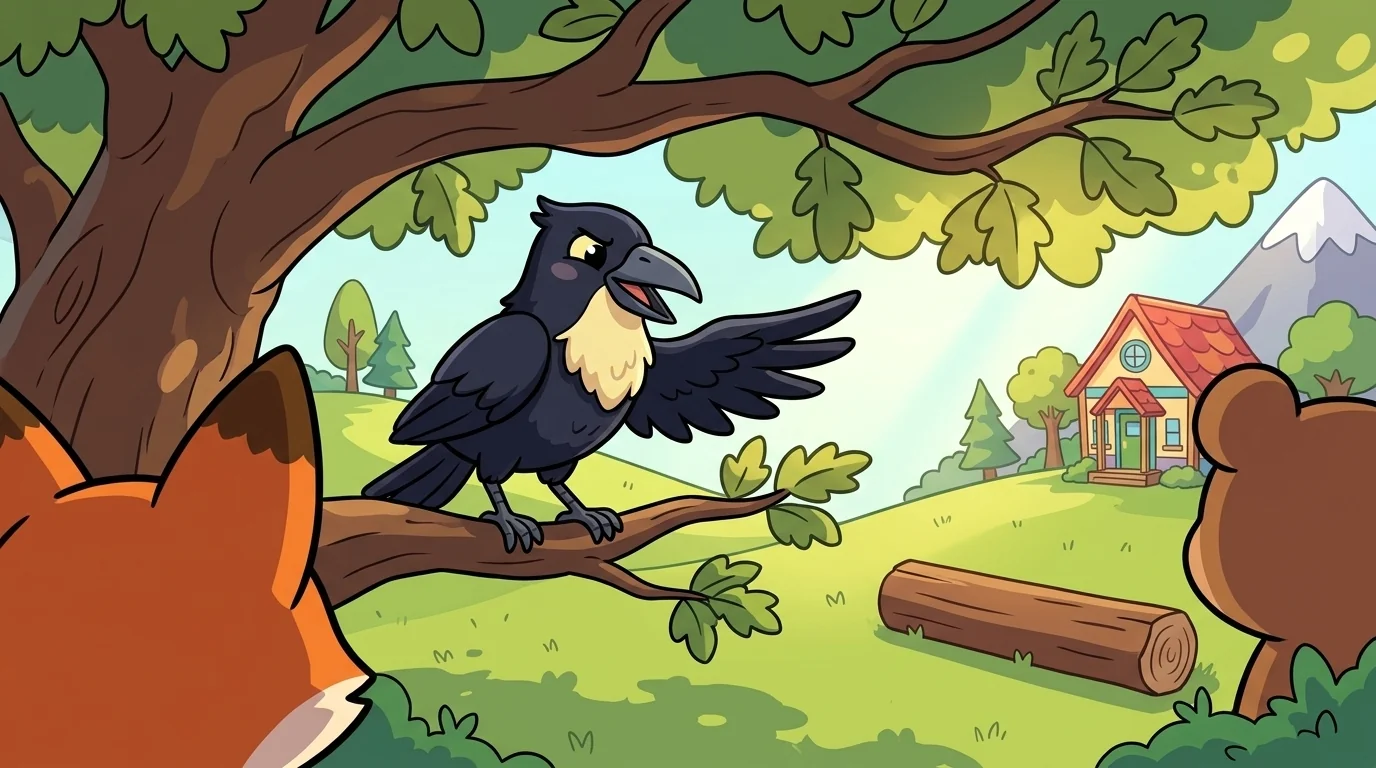
Stella's lesson landed one afternoon under a big oak, where Leo and Maya were planning a club game.
"I think everyone should get at least two turns," Leo said, "before anyone gets a third."
Stella swooped to a low branch, eyes glinting. "Oh, so Leo wants to hog all the turns? He wants to make sure he always wins and nobody else gets a chance?"
Leo's beak — er, mouth — dropped open. "What? No! That's not what I said!"
"He said at least two turns each," Maya said, frowning. "Not only he gets turns."
And Stella, mid-crow, caught herself, and hopped down, because this was the whole lesson. "You're right, Maya. Freeze — look what I just did. Leo said something perfectly reasonable, and I swapped it for a greedy scarecrow version he never said, because the scarecrow's easy to knock over." She spread a wing. "So here's how you catch it. First: did the person actually say the thing being attacked? Try to quote their real words. Leo never said 'hog all the turns' — I put that there. Second: is the attacked version weaker than the original? A strawman is almost always the floppier one. Third — and this is the fix — use the charity principle: when you repeat someone's idea, build the strongest version they could mean, not the weakest. Steelman it. Then argue with that." She ruffled, a little rueful. "Engage what they said — not what would've been easier to attack."
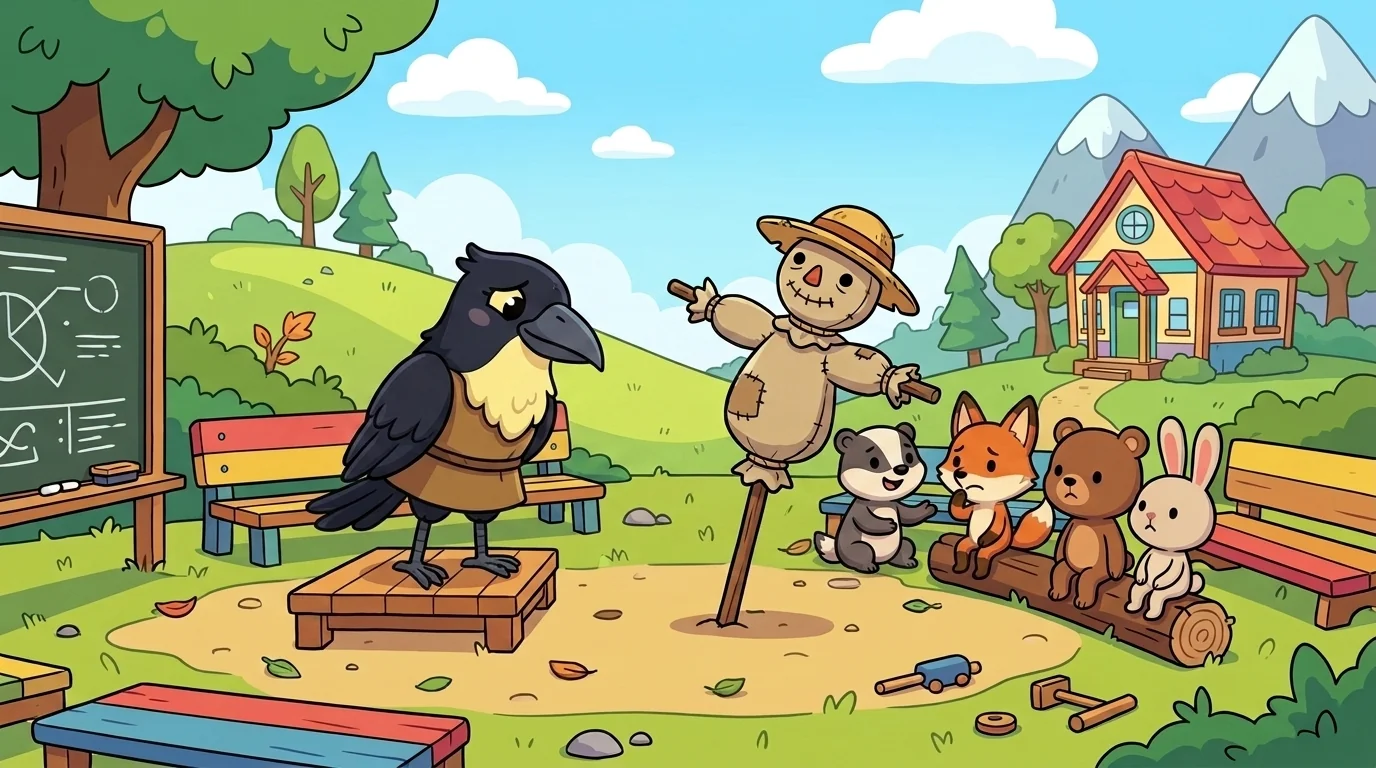
Later, Leo was still rubbing at the sting of it. "It felt awful," he admitted. "You made me sound greedy and selfish in front of everyone. I never said any of that."
"I know," Stella said quietly, and she meant it. "That stung, unfair, that's-not-what-I-meant feeling — being turned into a scarecrow of yourself — it's one of the worst feelings in an argument. I've handed it to a lot of people. I'm sorry I handed it to you." She hopped closer. "But feel the other thing too. Feel what it's like when Maya repeated your idea right — at least two turns each — strong and fair, the way you actually meant it."
Leo did feel it — a warm, settled, seen feeling. Like being heard.
"That," Stella said. "That's the reward of steelmanning. When you take someone's idea at its strongest, they feel heard, and the argument actually goes somewhere real. Engaging what they truly said is the skill. But that heard, respected, standing-on-solid-ground feeling — for both of you — that's the one worth chasing. Chase that. And catch me whenever I reach for straw."
The LogicQuest ensemble
Strawman Stella is part of LogicQuest's distributed-narrative cast. Each character embodies a different curricular primitive; together they teach the full subject.
-

Ad Hominem Hannibal
Attacking the arguer, not the argument
-

Slippery-Slope Sam
Chaining dire consequences from a small first step
-

Appeal-to-Authority Auntie
Citing irrelevant / unqualified authority as proof
-

Red-Herring Reggie
Deflecting to an irrelevant topic
-

Circular-Reasoning Cici
Assuming the conclusion in the premise
-

False-Dichotomy Fia
Presenting only two options when more exist
-

Bandwagon Bran
Truth-by-popularity
-

Sunk-Cost Cyril
Refusing to change course because of past investment
-

Whataboutism Wanda
Deflecting criticism via someone else's wrongdoing
-

Equivocator Eva
Sliding a word's meaning mid-argument
-

Tu-Quoque Tessa
"You too!" — dismissing criticism by accusing the critic of the same thing
-

Modus-Ponens Mo
If P then Q; P; ∴ Q
-

Modus-Tollens Tara
If P then Q; ¬Q; ∴ ¬P
-

Syllogism Solon
All M are P; all S are M; ∴ all S are P
-

Disjunctive-Syllogism Dior
P ∨ Q; ¬P; ∴ Q