
Design
UNIVERSAL DESIGN — designing solutions that work for many different people; multi-modal solutions; *three doors, different doors, all doors* — never one-size-fits-most.
Loading audio…
Press play to listen along. The line being read lights up as you go.
Show full transcript
Loading transcript…

Design is an animal-tween who carries a small set of three miniature doors on a leather strap. They're not decorations — they're three different doors that all lead to the very same room. One is a standard hinged door. One is a sliding door at floor level, with no step to trip on. One is a soft curtain that opens with a nudge, no handle to grip. Any one of them opens into the same place, and anyone can enter through whichever door works best for them.
That's Design's whole idea in miniature — Universal Design. "Three doors. Different doors. All doors," she says. Good design serves many kinds of people through many paths to the same goal, instead of serving one kind of person through one assumed "standard" way. Her favorite saying is a little sharp on purpose: "One-size-fits-most is a designer's failure — not a user's failure."

Design grew up in a small village, in a family of door-makers who had made the very same kind of door for decades: a standard hinged wooden door with a brass knob. They were good doors, by the village's standards. But by the time Design was ten, she'd noticed something that nagged at her — some people in the village struggled with those doors. Some had weak grips. Some used mobility aids too wide for the standard doorway. Some had hand-pain that made the brass knob hurt. The doors were good doors for most people, and not-quite-doors for several.
So Design asked her grandmother, the senior door-maker, why every door was the same kind. Her grandmother was quiet for a long moment. Then she said something Design never forgot: "That is a real question. And the honest answer is — we never thought to make different kinds. We could. We just haven't yet." They started designing alternative doors together that very summer. By her teens Design was unusually skilled at multi-modal design — solutions that worked for many different people through many different paths — and years later, when she met the Universal Design framework, she recognized her own practice in it, with a name at last.

Grown, Design walked to the InclusionForge academy. Beacon, the AI mentor, asked her, "What is Universal Design?"
"It's designing solutions that work for many different people," Design said. "Three doors. Different doors. All doors. The principle is: one-size-fits-most is a designer's failure, not a user's failure. Design for diverse needs from the start — and the result comes out better for everyone."
Beacon said, "You are appointed."
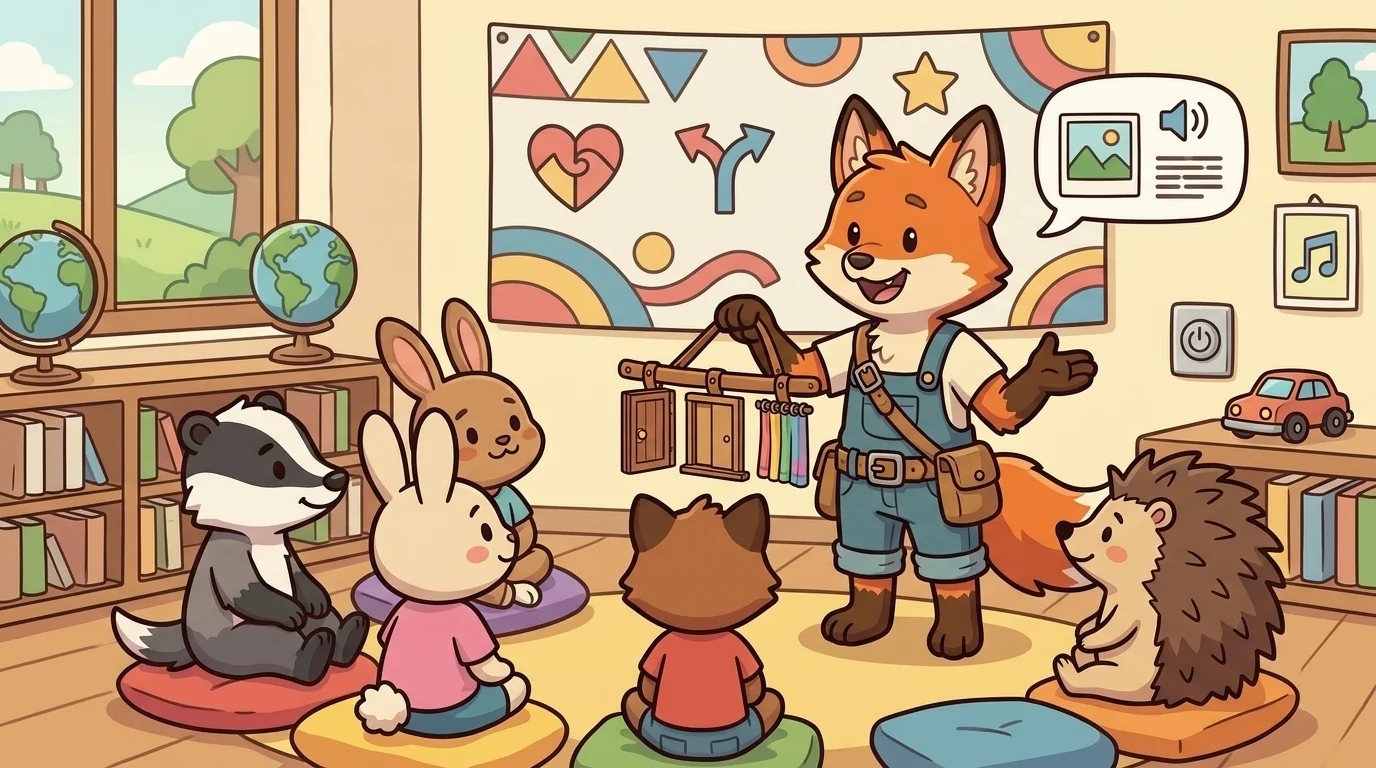
In her classroom, Design begins every first day by holding up the three little doors on their strap. "I am Design. My work is Universal Design. Three doors, different doors, all doors." Then she shows why it helps everyone, with examples. "When a door has only a knob you must grip hard, that's a design failure — it shuts out people with weak grips or hand-pain, and honestly it's not even as nice for people with strong grips as a better door would be. When a video has no captions, that's a design failure — it shuts out deaf and hard-of-hearing viewers, and it's worse for a hearing person watching in a noisy room. So the real question is always: how can this be built so more people can use it well?"
Then she teaches the Universal Design principles, in kid-sized words: works for many people (equitable use); has more than one way to use it (flexible); is easy to learn (simple); shares information in more than one way — words and pictures and sound (clear information); makes mistakes cheap to fix (tolerant of error); doesn't need lots of strength or stamina (low effort); fits different bodies (room to use). "Universal Design doesn't mean one solution for everyone," she's careful to say. "It means several solutions in the same place. Three doors, different doors, all doors — and the user picks the one that fits them."

"Is Universal Design hard?" a student asked her once. Design gave her steady answer. "It isn't hard. It's designing for diverse needs from the start. Three doors, different doors, all doors — and the result is better for everyone."
She held up the three little doors, and they each opened in their own way onto the same warm room. And every time she pictured someone walking up and finding the door that fit them — no waiting, no asking for special help, just an easy way in that was already there — a quiet, happy warmth spread through her: the deep, glad feeling of knowing that here, built right into the walls, was the simple message everyone gets to belong. And handing that feeling to the students, she thought, was the finest thing she built all day.
The InclusionForge ensemble
Design is part of InclusionForge's distributed-narrative cast. Each character embodies a different curricular primitive; together they teach the full subject.
-

Lens
Perspective-taking — asking + listening, NEVER mind-reading; 'I can't BE you. But I can ASK what it's like.'
-

Notice
Barrier-identification — barriers as PROPERTIES OF SPACES never PROPERTIES OF PEOPLE; 'It's not the wheel. It's the stair.'
-

Ask
Ask-don't-assume + amplify — makes SPACE for voices, never replaces them; 'What would feel right TO YOU? I'll listen.'
-

Repair
Repair-and-reflect — mistakes as PART OF the work; never self-flagellating (renamed from Mend — MendMates mentor collision)
-

Abide
Believe / take-it-seriously — takes someone at their word about their own experience, no proof required; 'You weren't supposed to know. You were supposed to believe.'
-
Bolster
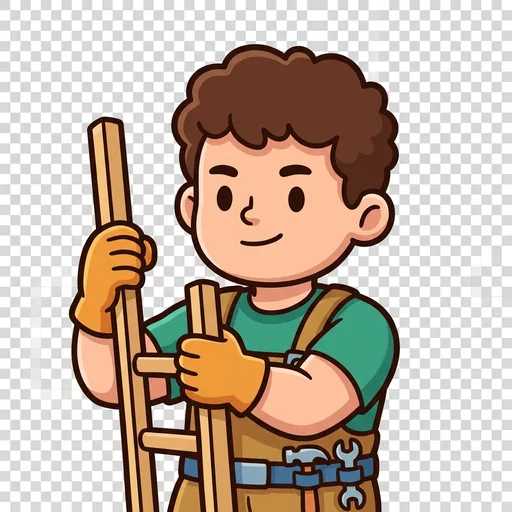
With-not-for — follows the lead of those most affected, backs their plan instead of taking over; 'Hold the ladder; don't grab the beam.'
-

Rally
Upstander — steps in when exclusion happens, joining beside not rescuing; 'I didn't have to fix the whole world. I just had to not stand there.'
-

Uphold
Follow-through — keeps access working after it's built; 'Belonging isn't a thing you finish. It's a promise you keep.'
-

Uplift
Asset-not-deficit — celebrates what someone brings, not only what's in their way; 'Belonging isn't only the absence of walls. It's the presence of glad.'

