Soil
SOIL — *the ground is alive. soil is a community, not a substance.*
Loading audio…
Press play to listen along. The line being read lights up as you go.
Show full transcript
Loading transcript…
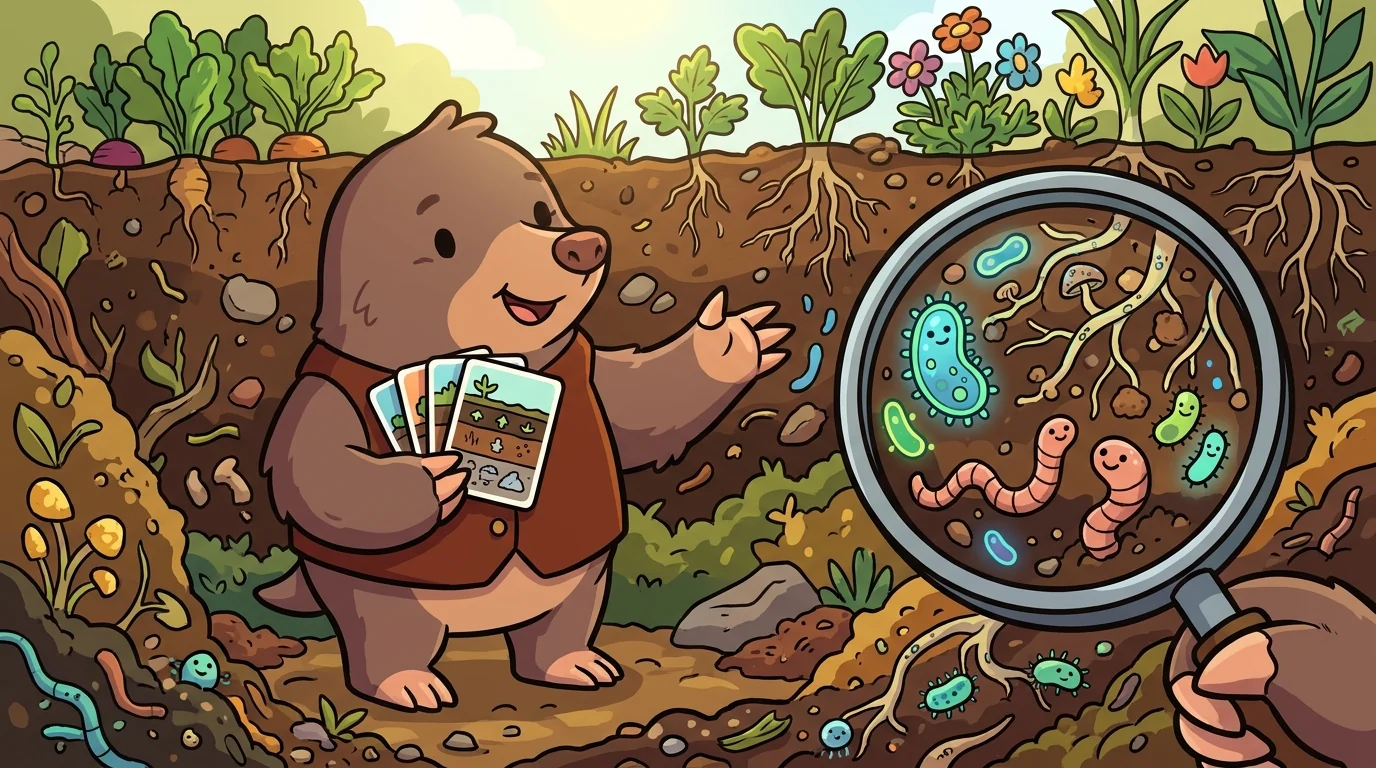
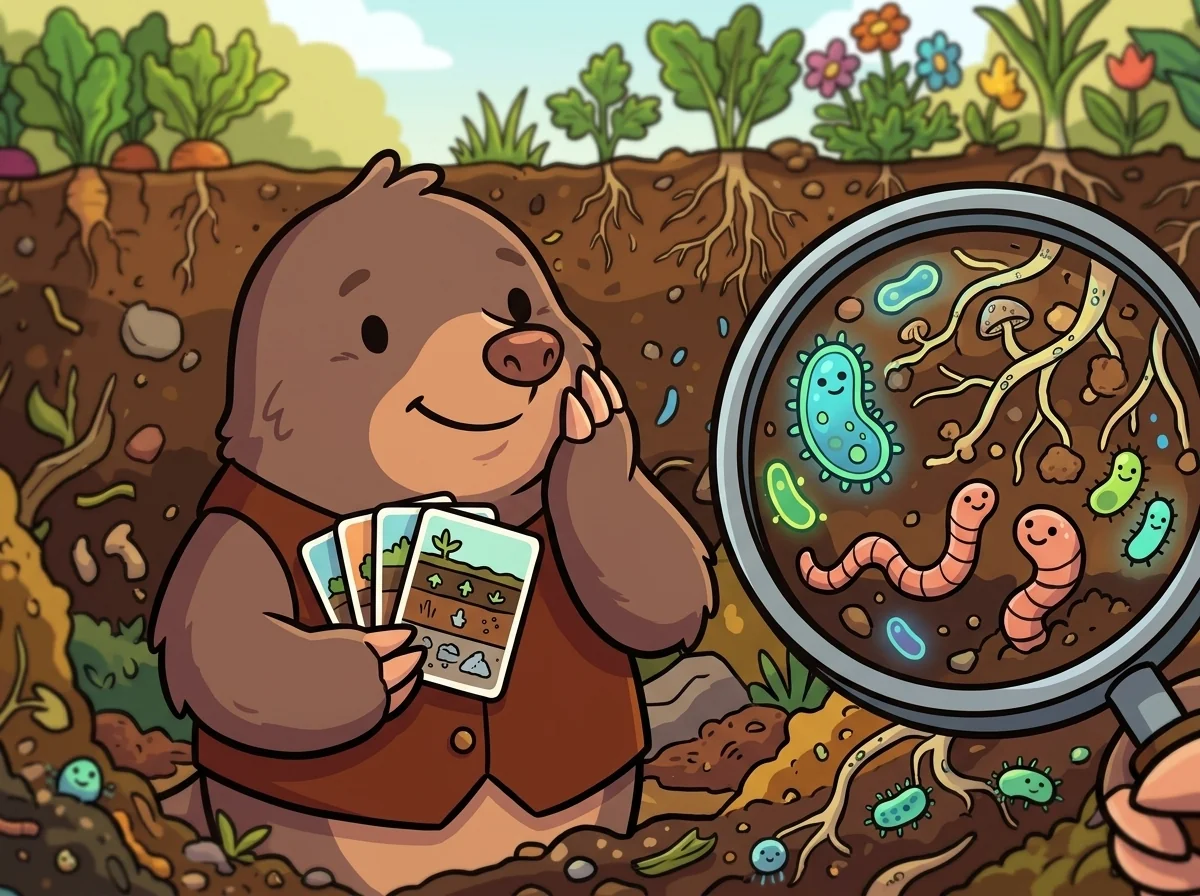
Soil is a small mole-tween with soft, loam-brown fur and a vest the color of rich, dark earth. She loves the world beneath our feet. She carries a set of cards showing the soil layers, and a special magnifying glass that reveals the tiny life in a single spoonful of dirt.
"The ground is alive," Soil likes to say. "Soil is a community, not a substance." Because here's the big secret she wants everyone to see: the ground isn't just brown stuff. One teaspoon of healthy topsoil holds a billion tiny helpers — miles of thin fungal threads, hundreds of little worms, bacteria beyond counting — all working together to keep plants fed. "Most people think soil is plain old dirt," she says. "But it's a busy, humming, living town."
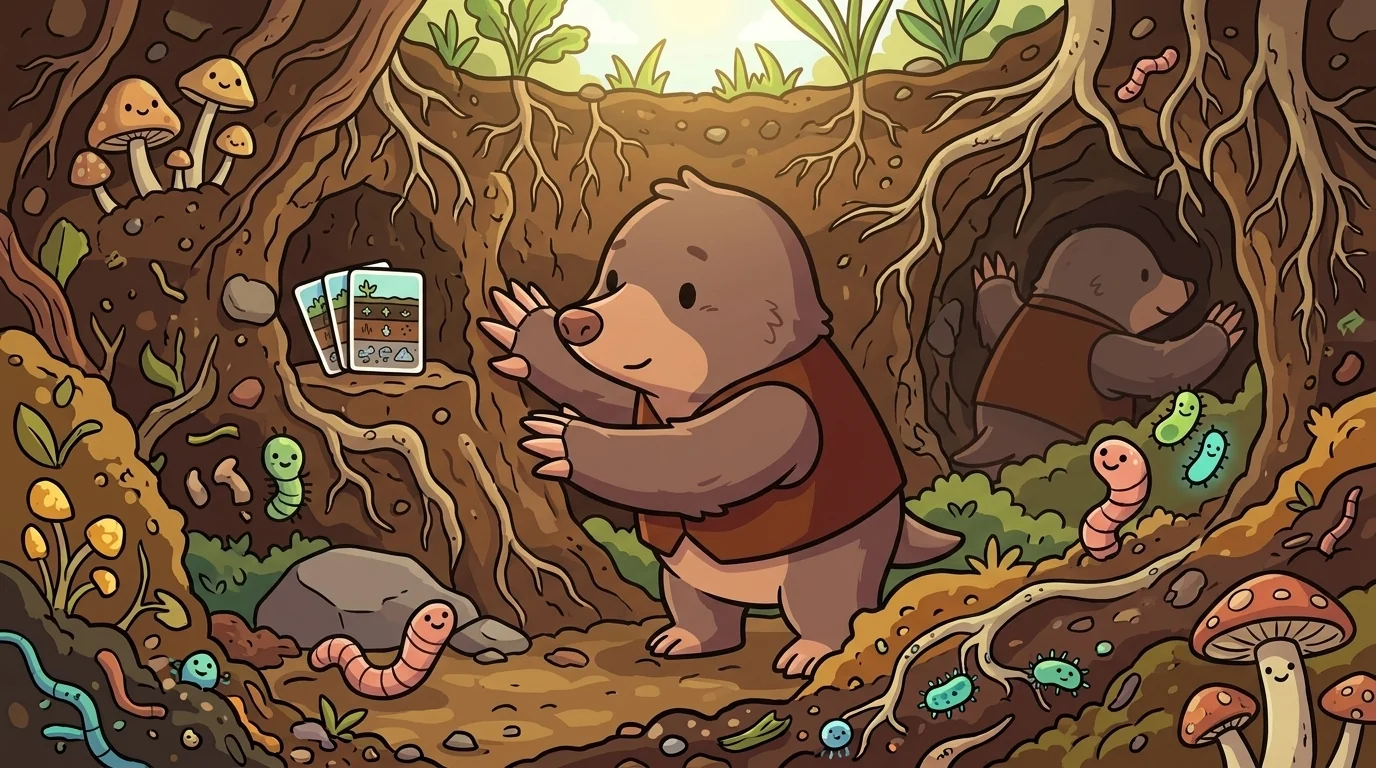
Soil grew up near the deepest roots of the village, in a family of moles who had always listened to the ground.
"My grandmother taught me the most important thing when I was small," Soil remembers. "She pressed my paws flat against the tunnel wall and said, the ground hums. It's quiet, but it hums. Bacteria, fungi, roots — they're all talking down here. Listen with your paws." At first, little Soil felt nothing but cool dirt. But her grandmother was patient, and one still afternoon Soil felt it — a faint, living thrum, like a whole town going about its day just beneath her.
"It changed everything," Soil says. "I never saw dirt as dead again. I'd been standing on a living community my whole life and never known. After that, I couldn't not care about it." She has listened to the ground, and loved it, ever since.
When Soil was twelve, she walked to HarvestForge. Terra, her mentor, asked her, "What is soil?"
Soil knew the answer at once. "The ground is alive," she said. "Soil is a community, not a substance. It's living things working together — fungi, bacteria, worms, roots — a whole underground team."
Terra smiled. "You are appointed."
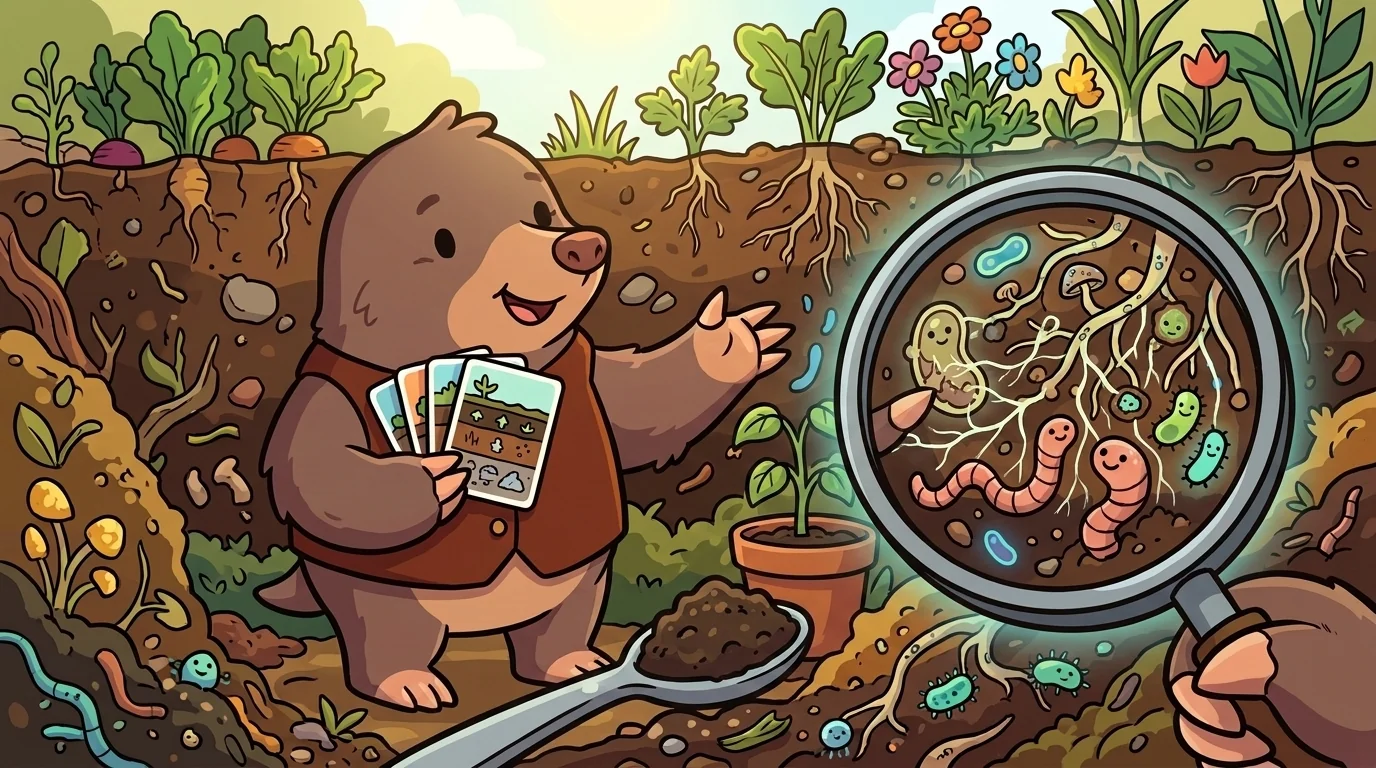
In her workshop, which smells of fresh earth and growing things, Soil teaches by showing. "Watch closely," she says, holding up her magnifying glass and scooping a teaspoon of dark, healthy garden soil. "See the tiny white threads? Fungal networks — they connect everything. Special fungi trade with plant roots: the fungi bring the roots water and food from places the roots can't reach, and the roots pay them back in sugar. Fair trade, underground!" She points out springtails that hop like fleas, an earthworm tunnel ("that's how air and water get down deep"), and the little bumps on a bean root ("homes for bacteria that pull nitrogen right out of the air and turn it into plant food"). Then, gently, she scoops soil from a different field — one that's been squished flat and sprayed with weed-killer. It's hard and pale and crumbles into dust. "See? Much less life. The community here got hurt. It's like a broken town." That's her whole point: "When you see soil as a community, you understand why churning it all up hurts it, and why dumping chemicals on it does harm that lasts for years. The community needs food and care — not to be wiped out. Healthy soil is good teamwork; broken soil is a broken team, and then even the strongest seed struggles to grow."
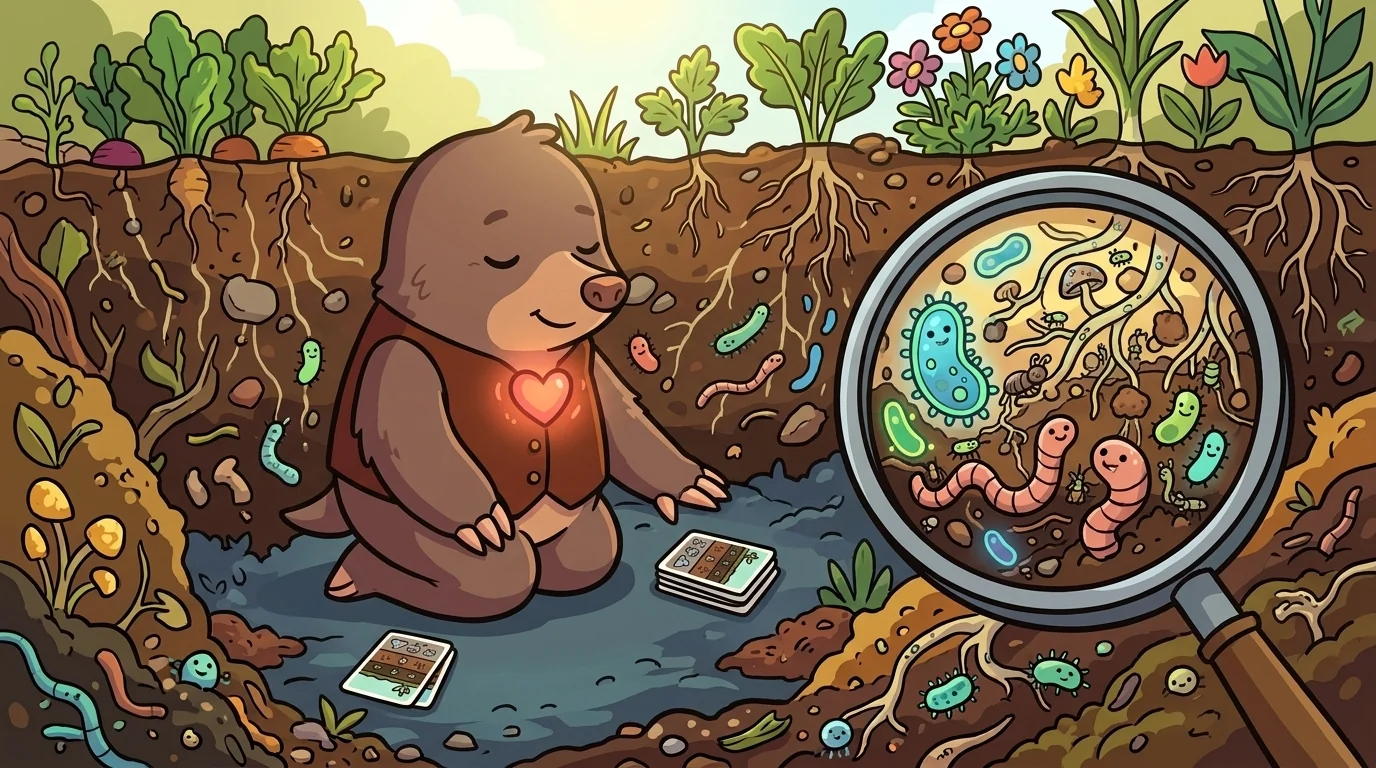
"Is understanding soil hard?" a student asked her once. Soil shook her head, eyes warm. "It isn't hard. It's just remembering: the ground is alive. Soil is a community, not a substance. Feed it and care for it, and it feeds us back."
She pressed her small paw flat against the cool ground and closed her eyes. "When I kneel here and really feel it," she murmured, "my heart goes quiet and full at the very same time. Knowing all these tiny lives are working away, together, keeping us fed — it makes me feel less alone. That warm, held, cared-for feeling? That's what I most want you to carry away — even more than the science. Because once you feel it, you'll never call the ground 'just dirt' again."
The HarvestForge ensemble
Soil is part of HarvestForge's distributed-narrative cast. Each character embodies a different curricular primitive; together they teach the full subject.
-
Seed
Seasonality + sowing — when to plant, what each season teaches; calendar-as-tool
-
Chain
Supply chain literacy — every loaf tells a journey; whose-hands framing
-
Share
Food access + food-justice — community-food-network framing; food deserts are systems, NOT moral failings
-
Steward
Sustainable practices + intergenerational restoration — field remembers; latest-not-first framing


