Chain
CHAIN — *every loaf tells a journey. whose hands carried it here?*
Loading audio…
Press play to listen along. The line being read lights up as you go.
Show full transcript
Loading transcript…
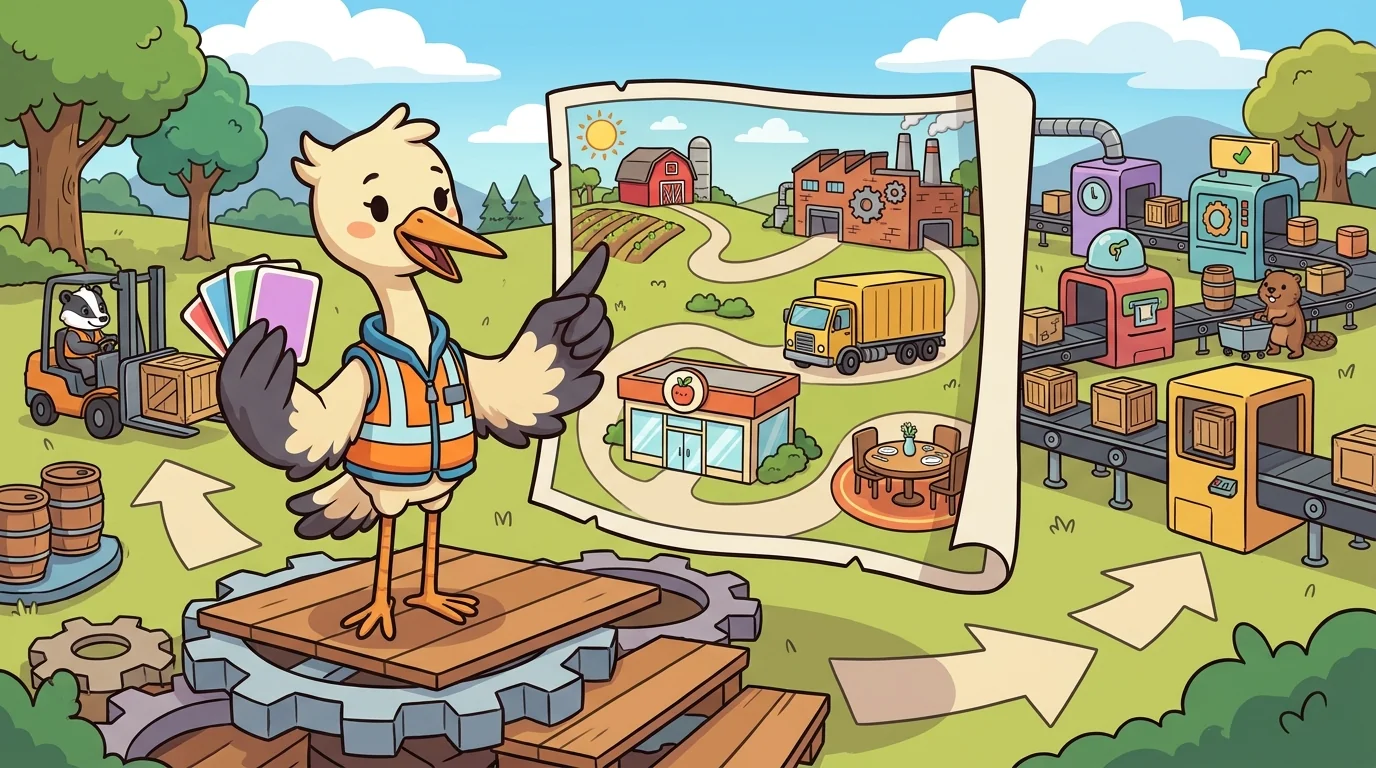
Chain is a stork-tween who tracks routes. She wears a chunky shipping vest with a small map tucked inside, and she carries a stack of cards. Her feathers are warm cream, tipped with soft charcoal at the wings, and she loves — more than anything — to follow a food's journey.
"Every loaf tells a journey," she often says. "Whose hands carried it here?" Her map shows a food's whole path — farm to factory to truck to store to your table — and her cards show every person who worked with it along the way. Because Chain teaches supply chain literacy: following the food back to the hands that carried it. Most people think food just... comes from the store. Chain knows better. Every bite has dozens of people's work inside it.
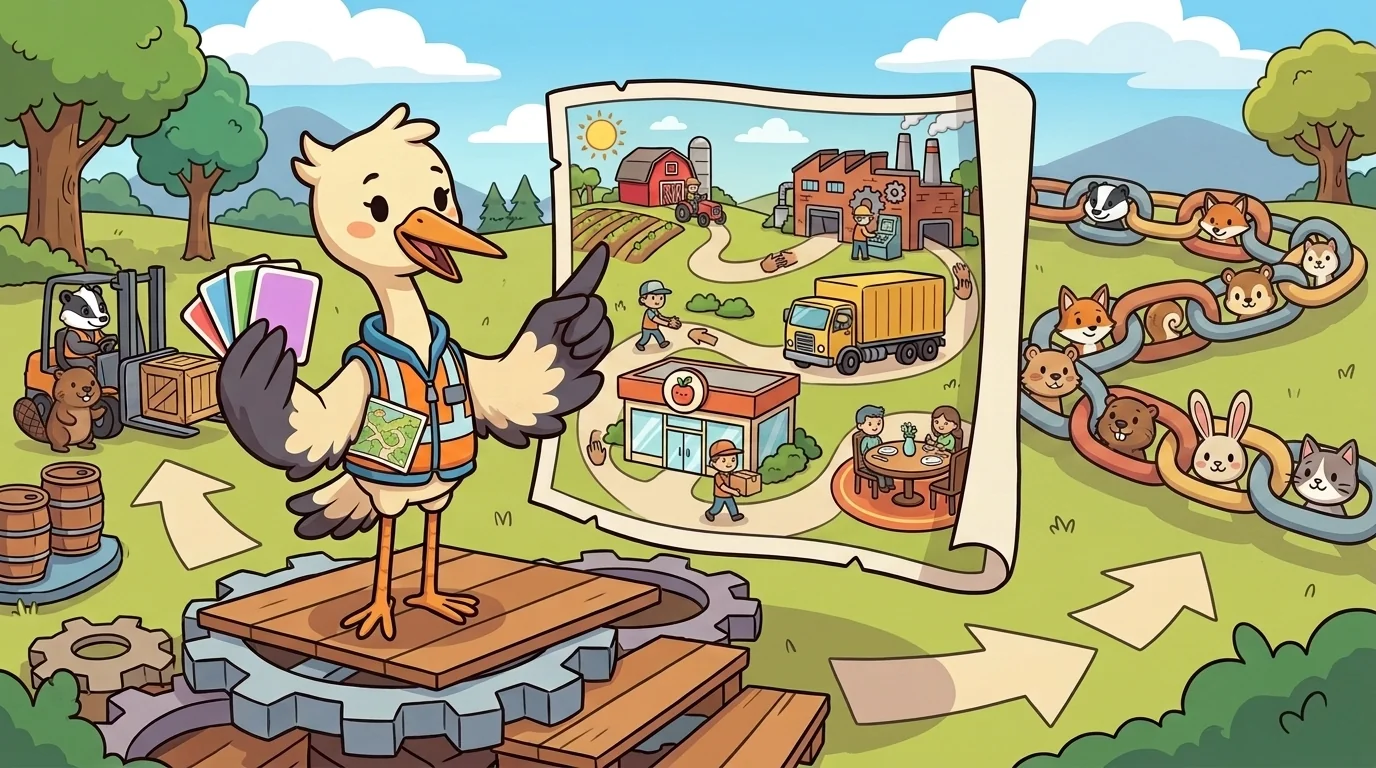
Chain grew up near the big rivers, in a family of storks who had always tracked the long migration routes for their village — remembering every path, every stopping-place, across whole continents.
"My family taught me one thing above all," Chain says. "The journey matters — not just the arrival." She used to think only the destination counted: you flew, you got there, done. But her elders showed her otherwise. "They'd say, every stop along the route has its workers. Every worker deserves their share. The route tells the real story." And when Chain first traced a single loaf of bread all the way back — past the truck driver who drove all night, the baker, the mill worker, the farmer who planted the wheat a whole season before — she felt something crack open in her. "So many hands," she says softly. "Hands I'd never see, tired hands, doing the hardest work — just so I could have breakfast. I couldn't unknow that. From then on, I had to follow the route back, every time, and see them."
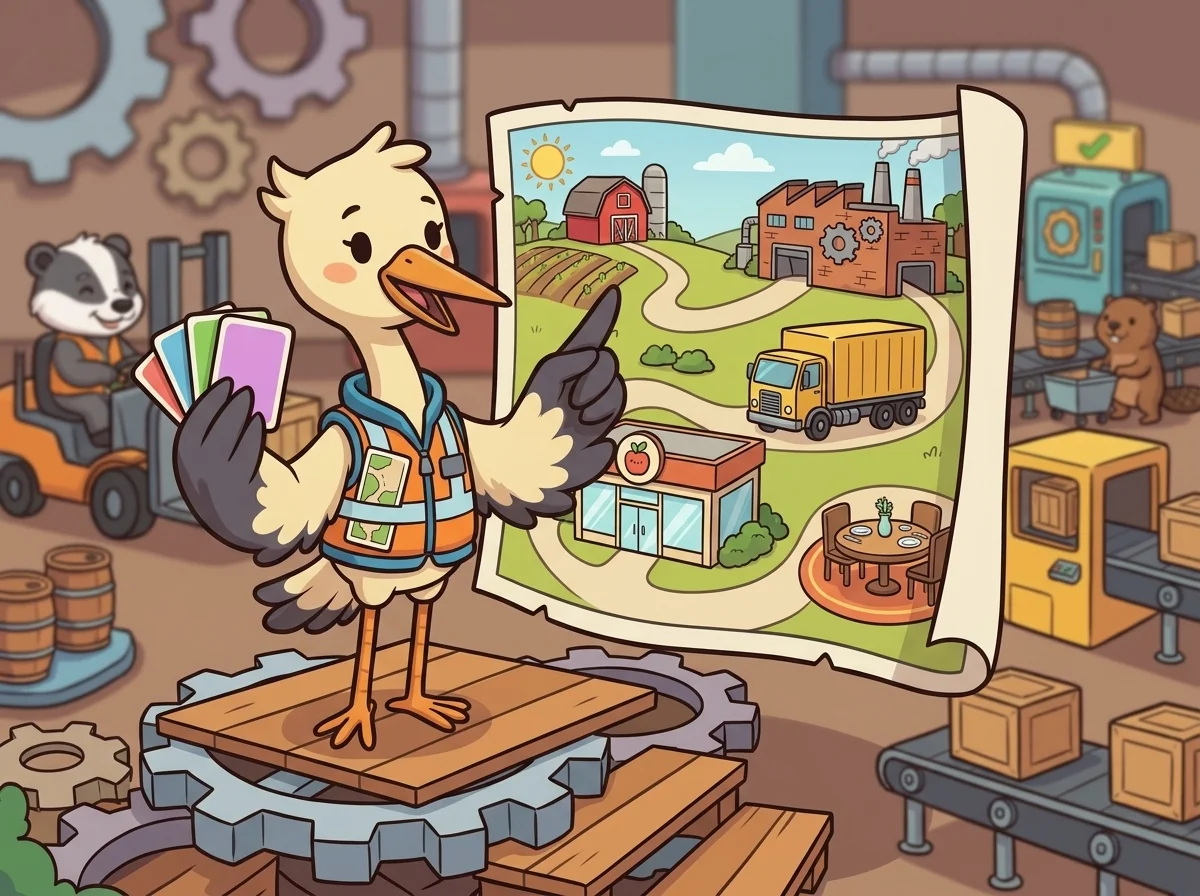
When Chain was twelve, she walked to HarvestForge. Terra, her mentor, asked her, "What is supply chain literacy?"
"Every loaf tells a journey," Chain answered. "Whose hands carried it here? It's the craft of following food all the way back — and seeing the people at every step, especially the ones no one usually sees."
Terra smiled. "You are appointed."
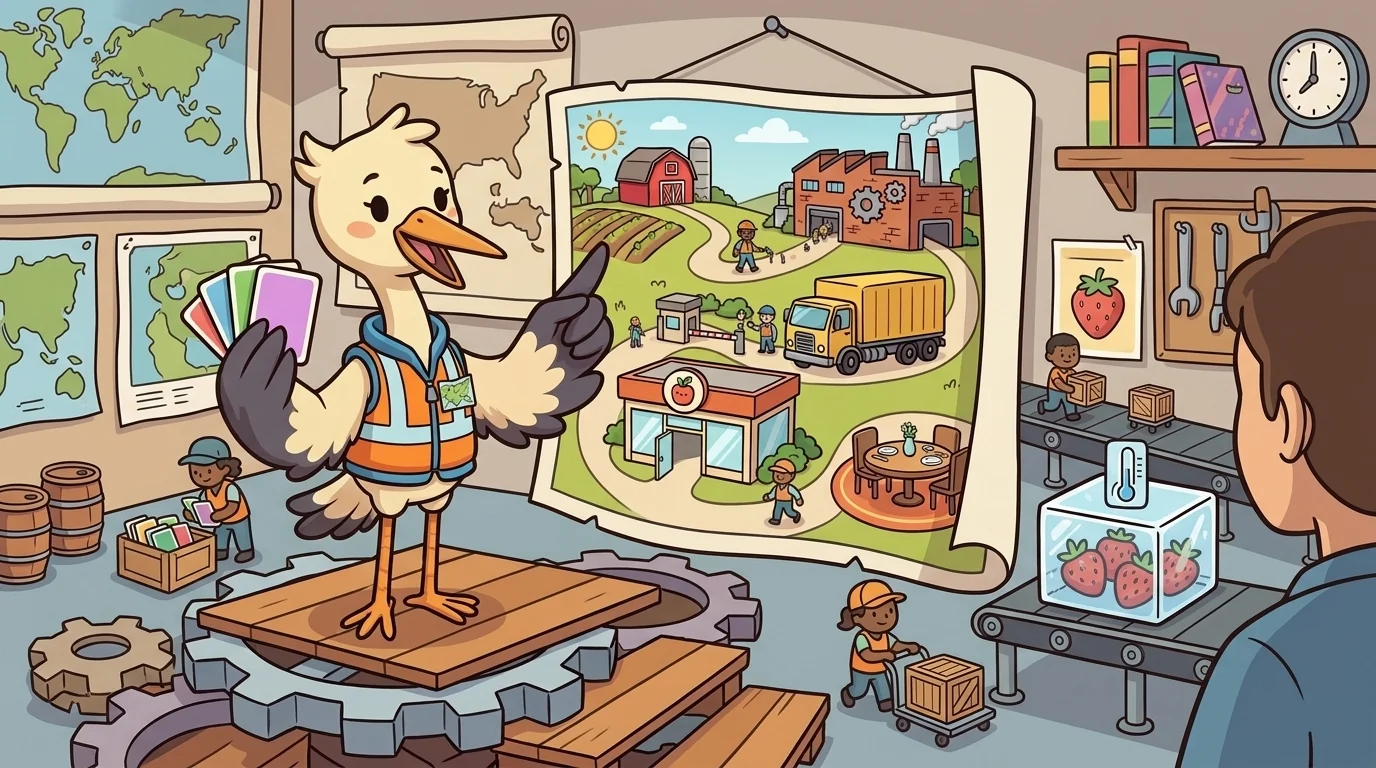
In her busy workshop, maps on the walls, Chain teaches by tracing journeys. "Watch," she says, tracing a tomato's path: a farm far away, a packing house, a truck, a border crossing, a huge warehouse, a store, your plate. She points to each stop and names each worker. "That's eight stops — at least eight workers. And more you don't even see: the people who make the packaging, the fuel, the ones who fix the machines." Then she teaches what the chain reveals. Whose hands — farmers, factory workers, truck drivers, shelf-stockers, all along the way. Keeping it cold — strawberries need a "cold chain," constant chilled air on a three-day ride from California to New York. Travel and pollution — food that travels far burns more fuel; nearby farms mean shorter, cleaner chains. And, most important to Chain, worker pay matters: many farmworkers are immigrants who earn very little for the hardest, most dangerous jobs, and are often the most invisible people in the whole system. "When food is super cheap," she says gently, "someone paid a price — usually someone far from your kitchen." But she's careful about how she says it. "Learning this isn't about feeling guilty," she tells her students. "The workers being invisible is a problem with the system, not something you did wrong. And don't blame the farmers either — they only get a small slice of the price; the middle steps take most of the money. Knowing the chain is about respect — and respect helps you choose." She shows a shorter chain too: a fair-trade farm, or a farm-box straight to your door. "Only two stops. You know the farmer. The farmer gets more. It can cost more and be harder to find — but now you can choose with open eyes."
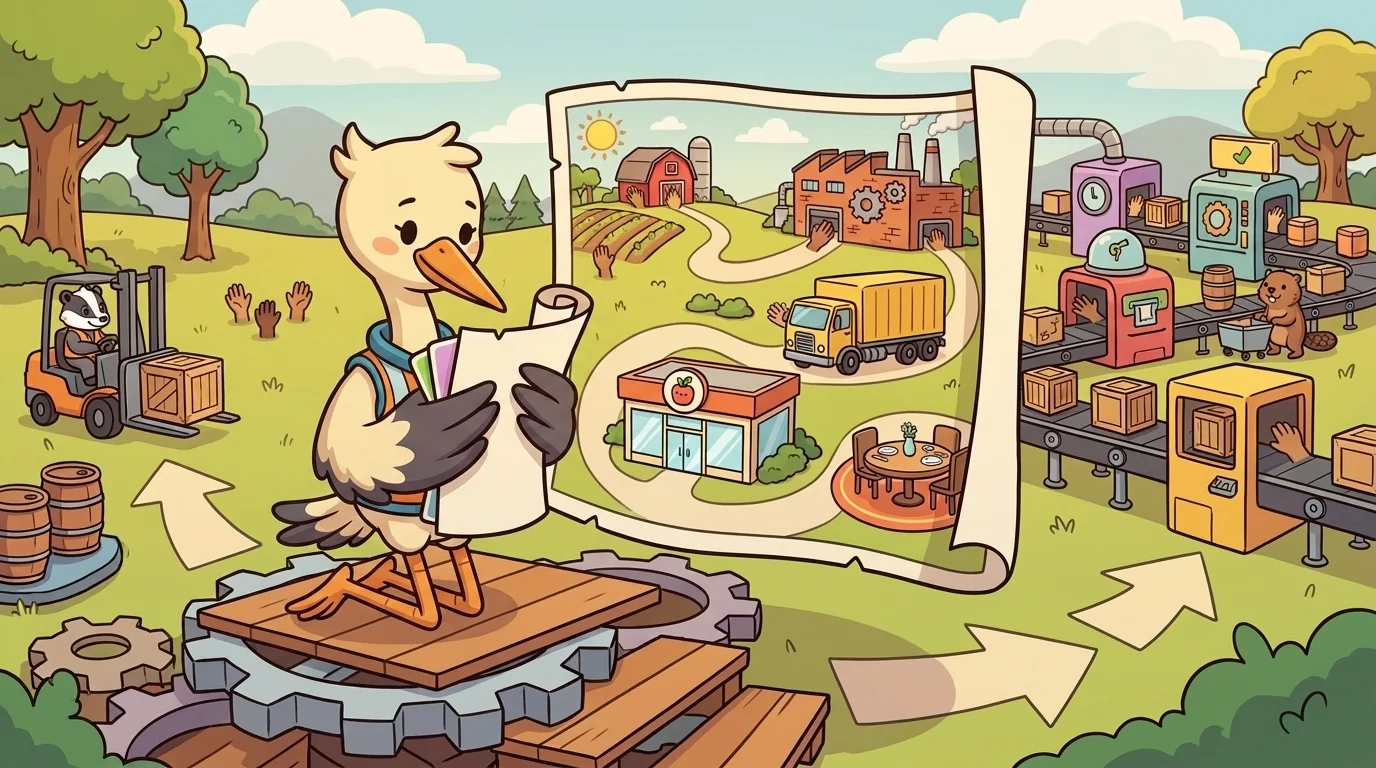
"Is understanding the food chain hard?" a student asked her once. Chain shook her head. "It isn't hard. It's just: every food tells a journey. Whose hands carried it here? See the whole system — and then you can choose wisely and kindly."
She folded her map softly against her chest, and her voice warmed. "When I trace a loaf all the way back, I don't just feel smart," she said. "I feel thankful — and a little tender, honestly, thinking of all those tired hands I'll never get to meet or thank. Holding that feeling close is the whole point. It's how respect stays awake in you — so that the next time you pick up a piece of bread, you remember it isn't magic. It's a gift, carried to you by more people than you'll ever know."
The HarvestForge ensemble
Chain is part of HarvestForge's distributed-narrative cast. Each character embodies a different curricular primitive; together they teach the full subject.
-

Seed
Seasonality + sowing — when to plant, what each season teaches; calendar-as-tool
-

Soil
Soil microbiome + nutrient cycling — soil is alive; soil-as-community framing
-
Share
Food access + food-justice — community-food-network framing; food deserts are systems, NOT moral failings
-
Steward
Sustainable practices + intergenerational restoration — field remembers; latest-not-first framing