Vale the Wayclearer
CLEARANCE — move your own piece off the line, even by giving it up, so the powerful piece waiting behind it can finally reach the target
Loading audio…
Press play to listen along. The line being read lights up as you go.
Show full transcript
Loading transcript…
Between the two halves of the Slow Lake valley ran the Long Cart Road, and the Long Cart Road was only ever as good as the person who kept it clear, and for many years that person was Vale.
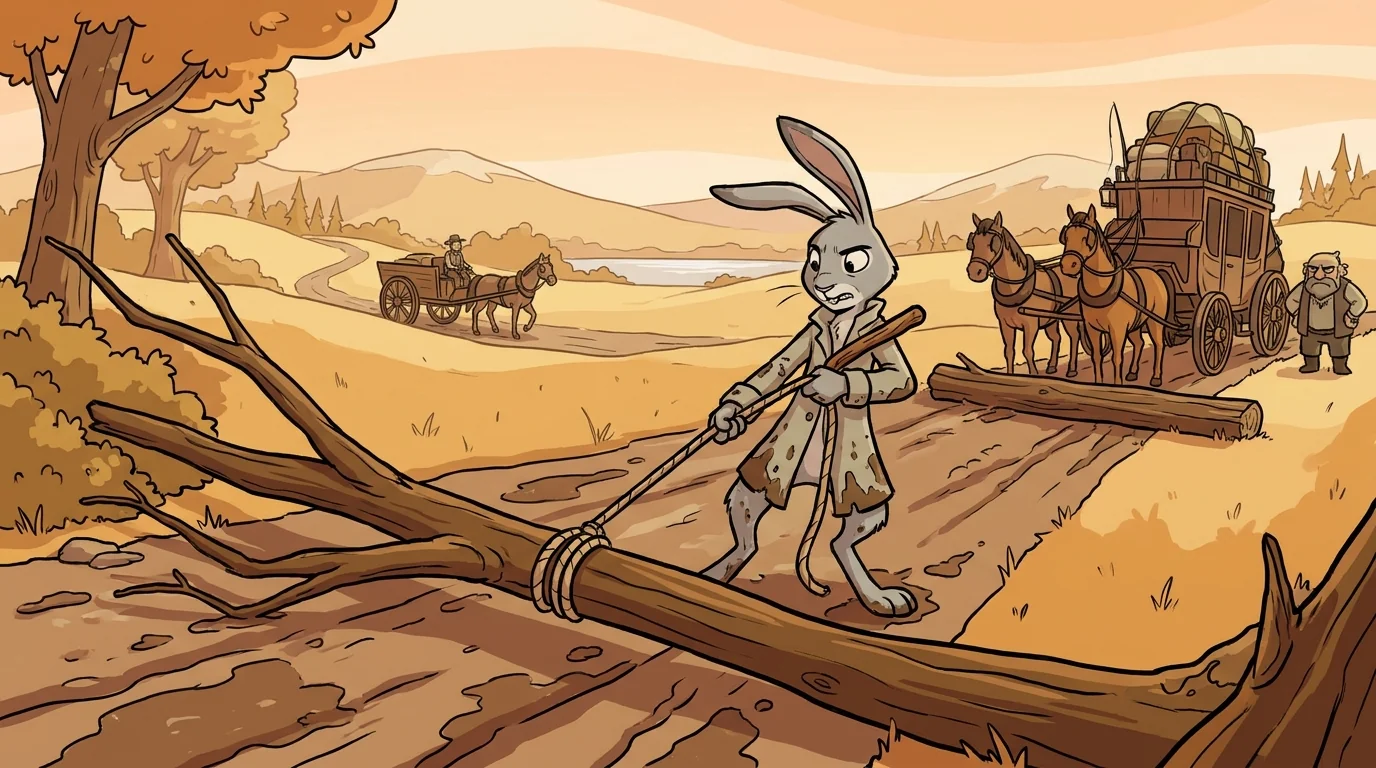
Vale was a lean grey hare in a mud-spattered coat, and her work was the least admired and most necessary in the valley. She cleared the way. After every storm she walked the road with a rope and a stout stick, and where a branch had fallen across it, she hauled the branch off; where a stone had rolled down, she levered the stone aside; where the mud had heaved up a root, she cut the root back. She did not build anything. She did not carry anything to market. She simply moved what was in the way so that everyone else's carts could roll.
She had noticed, over her years of hauling, a truth that most travellers never thought about: the strongest cart in the valley — old Bellow's great four-horse wagon, loaded high — was completely, hopelessly stopped by a single fallen log no bigger than a leg. All that power, all those horses, and it could go nowhere until the small thing in front of it was gone. The wagon did not need to become stronger. It needed the road cleared. And more often than anyone liked to admit, the thing blocking a cart was a bit of the cart's own load, shaken loose and dropped in its own path.
Vale had never given this a name. She simply walked the road, and moved what was in the way, and let the great wagons roll through behind her.
It would take a young mouse named Cricket to name it.
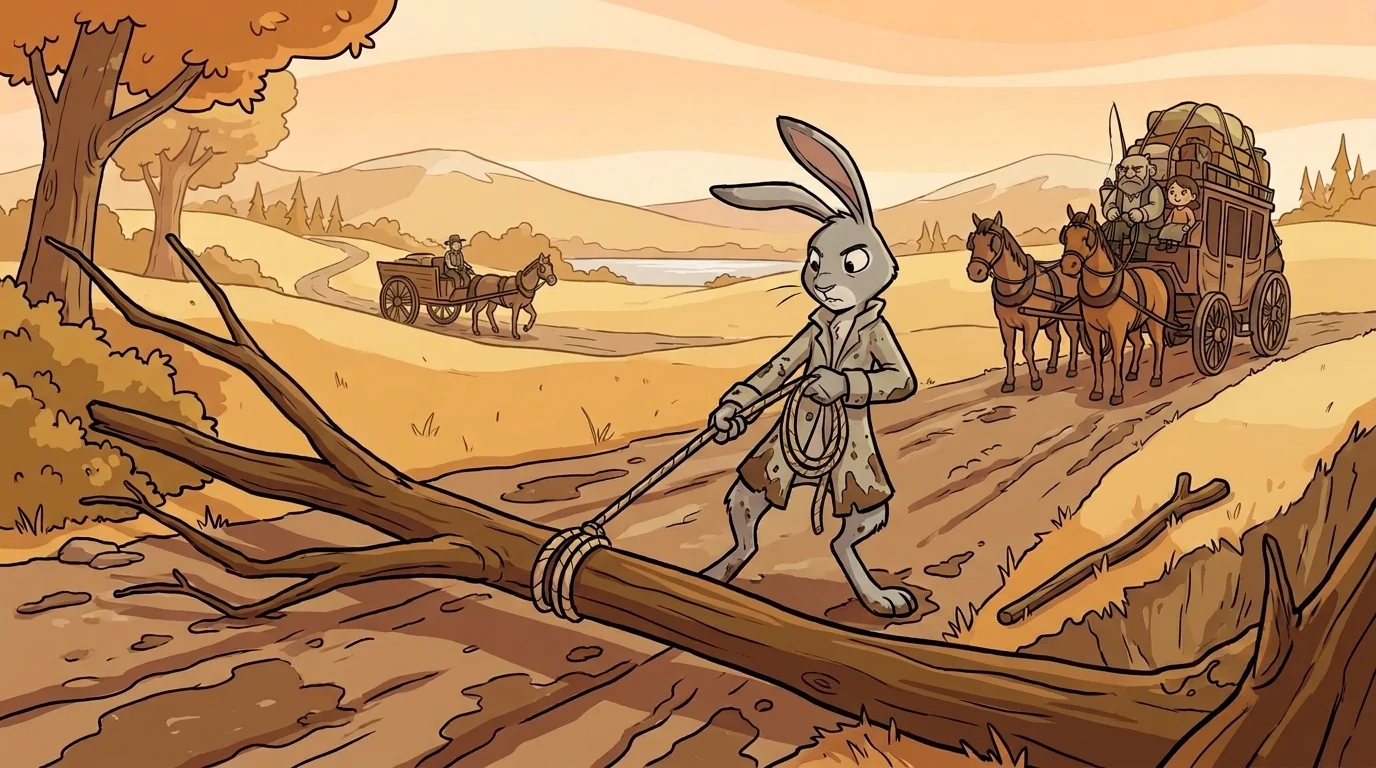
Cricket was six, and rode up front on old Bellow's great wagon, and one morning the wagon stopped dead because a long birch had come down across the road in the night.
Bellow shouted at the horses. The horses strained. The wagon did not move an inch, because you cannot pull four horses' worth of anything through a birch tree.
Then Vale came walking up with her rope, hooked the birch, and hauled it off into the ditch — a small hare moving a small log — and the moment it was gone, the great wagon rolled forward as if it had never stopped at all.
Cricket stared. "You did more than the horses," she said. "There's four of them and one of you."
"The horses were never the problem," said Vale, coiling her rope. "The horses were fine. The road was the problem. All that pulling power was stuck behind one little log. I didn't add anything. I only took the log away — and then the power that was already there just… arrived."
Cricket looked from the tiny hare to the enormous wagon. "You cleared the way," she said. "You got the thing out of the road so the big one could come through."
Vale leaned on her stick and, for once, allowed herself a small smile.
"Cleared the way," she said. "That is my whole trade in three words. I move the small thing so the great thing can arrive."
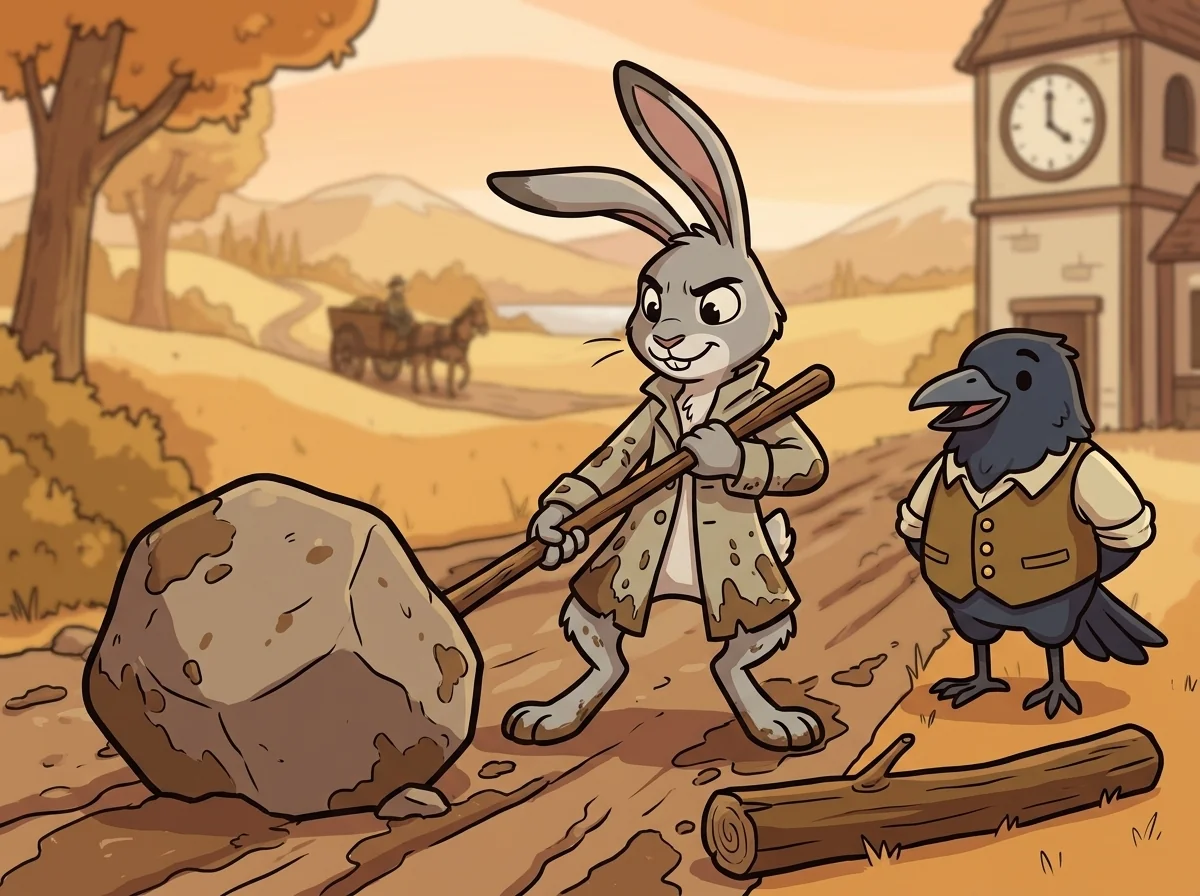
Some winters later, a chunky cheerful rook in a brass-buttoned waistcoat found her levering a boulder off the Long Cart Road.
Captain Castle introduced himself and said he ran an academy where children learned the game of sixty-four squares, and that his students had a curious blind spot: they would line up a powerful rook or bishop aimed straight at a winning square, and then never fire it, because one of their own pieces stood in the way — and it never occurred to them to simply move their own piece aside, even at a cost, to clear the shot.
Vale set down her lever.
"I have spent my life," she said, "hauling small logs off roads so that greater things could roll. A board of sixty-four squares must have roads too, and logs on them. Often, I'd wager, logs of your own."
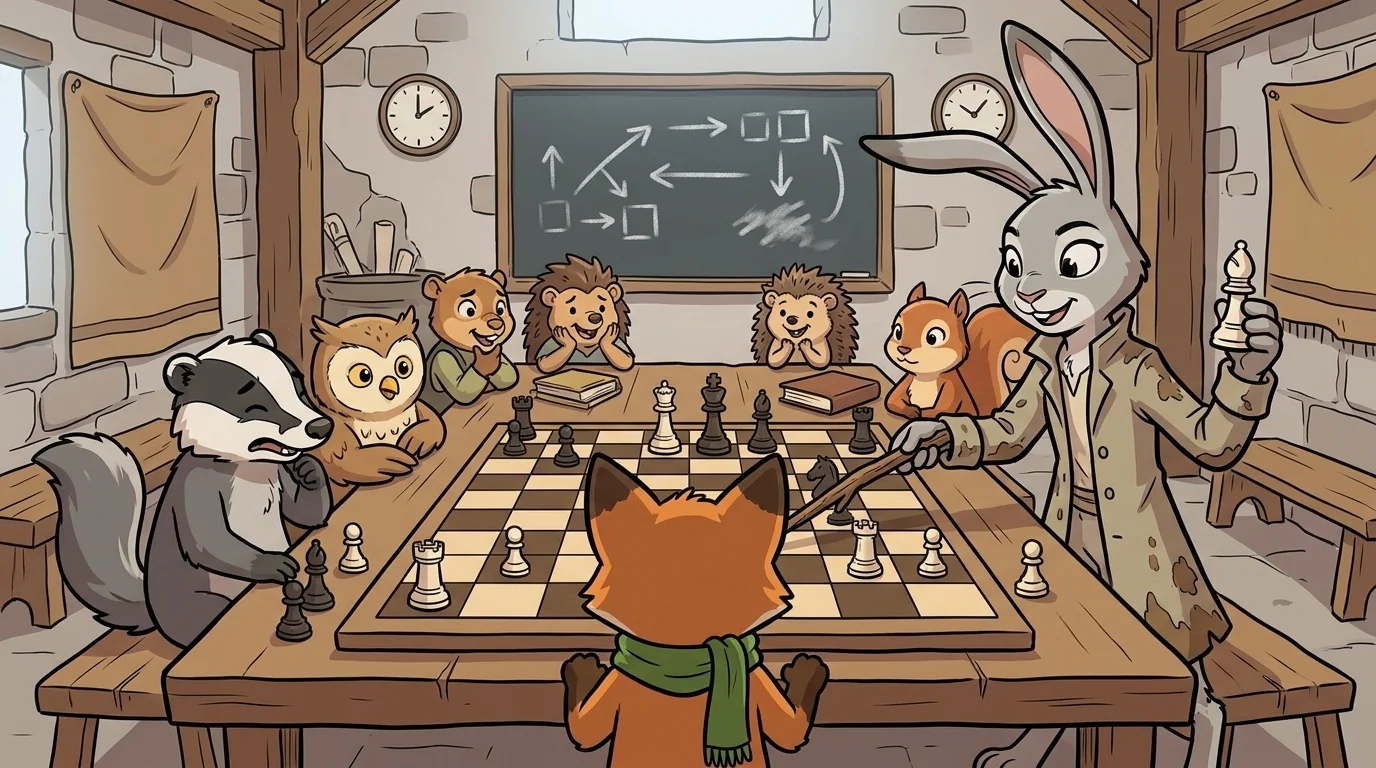
The chessboard, Vale found, was the Long Cart Road folded into a square.
She met her first class on a raw morning. Captain Castle set a position: a white rook stood on a file aimed dead at the black king's back rank — a winning shot — except that a white bishop of their own sat squarely in the file, blocking it.
The children groaned. "Our own bishop's in the way," said a fox in a green scarf. "The rook can't see the king. Nothing to do."
"Nothing?" said Vale. "The rook is aimed perfectly. All its power is pointed at exactly the right square. There is only one small thing between it and the win — and it is ours." She picked up the blocking bishop. "So I move it. I send it off the file — even somewhere it can be captured, I don't much mind — because the instant it steps aside, the road is clear." She set the bishop down on a square where it gave check itself, then, on the next move, slid the freed rook down the open file to the king's back rank. "There. I didn't make the rook stronger. The rook was always strong. I only cleared its road — and the power that was already there arrived."
"But you put your own bishop in danger," said the fox.
"I did," said Vale, evenly. "A cleared road is worth a small log. The bishop's job was to get out of the way of the greater piece — and it did that job perfectly, whatever happens to it next."
The fox in the green scarf wrote sometimes the thing in the way is your own — so move it in her notebook, and underlined "your own." Captain Castle nodded from the road-side.
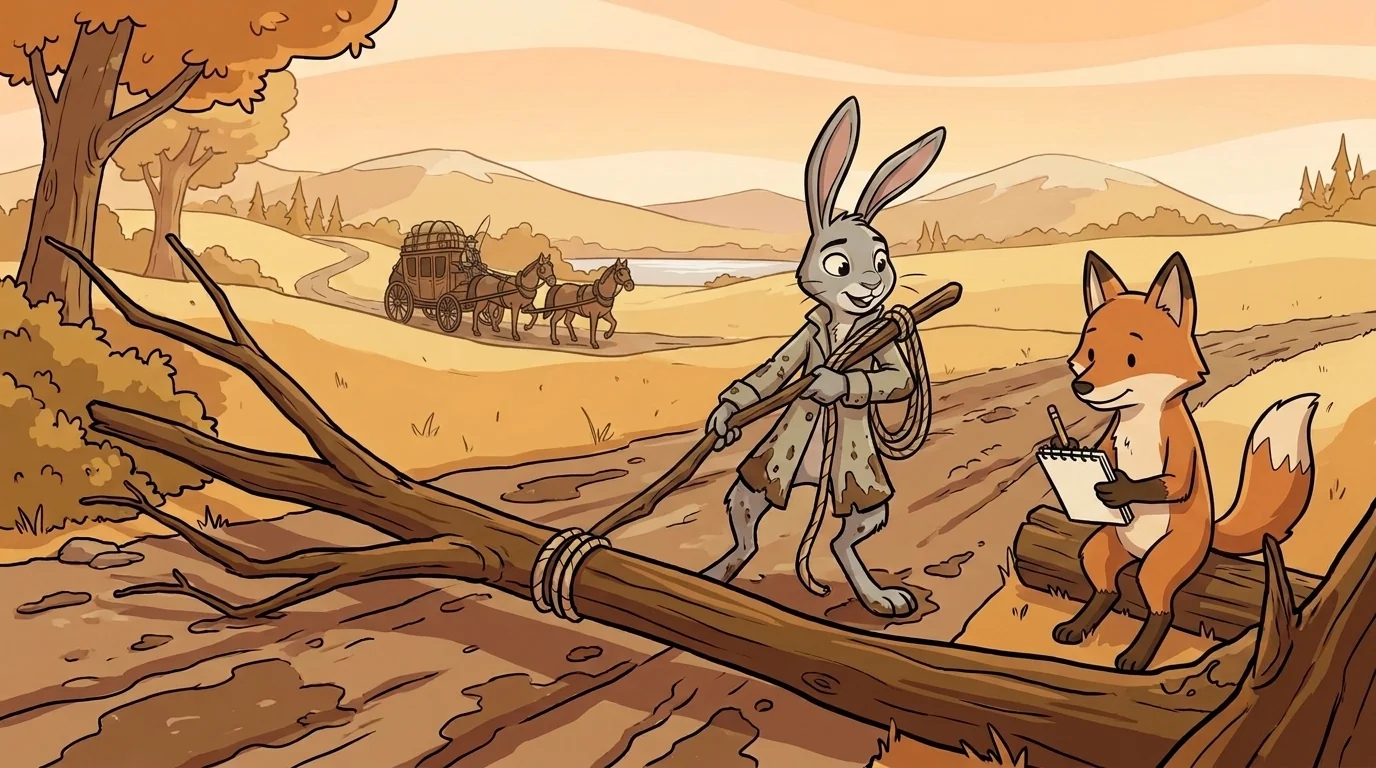
She still walks the road at dawn, rope over her shoulder, moving what has fallen in the night.
But when the lessons end and the children have gone home, Vale studies the folded board the way she studies the Long Cart Road — looking for a great piece aimed true but stopped, and for the one small thing standing in its road, and asking, always, whose log is that? Could it be mine to move?
Sometimes the fox with the notebook stays behind, and asks, "Doesn't it hurt to give up your own piece just to get it out of the way?"
And Vale will lean on her stick, and consider, and say:
"When a strong piece is aimed at a win but cannot fire, look at what is blocking it — and be brave enough to check whether the block is your own. If it is, move it, even at a cost, even into danger. Its finest job may be simply to get out of the road. Clear the way, and the power you already had comes rolling through."
The fox writes it down. Vale watches her, and feels — in a way she would never say plainly — the deep, tired satisfaction of a road-mender at dusk, every log hauled clear and every wagon home. She closes the board. She walks the road home in the dark.
The GambitTales ensemble
Vale the Wayclearer is part of GambitTales's distributed-narrative cast. Each character embodies a different curricular primitive; together they teach the full subject.
-

Sir Pinwell
Pin pattern — freezes pieces along a line
-

Twin Knights of Fork Hill
Fork pattern — attack two targets at once
-

Lady Skewer
Skewer pattern — force a valuable piece out of the way
-

Veil & Vow
Discovered attack — step aside to reveal a hidden threat
-

Captain Crossfire
Double attack — one move threatens two targets
-

The Glass Lantern
X-ray attack — light pierces through to the piece behind
-

King Pumble & King Sable
Two kings — librarian and gardener; one step at a time
-

Queen Vesper
Queen — ranger-messenger; any direction, any distance
-

Captain Castle
Mentor + narrator — rook archetype; the mascot who introduces the cast + scaffolds the lesson
-

The Pawn Cohort
Ensemble piece — the four pawn-paired sets (Pawn Patrol + Sienna & Bran + Trotter & Trundle + Gable & Garrett) acting as one in the world layer
-
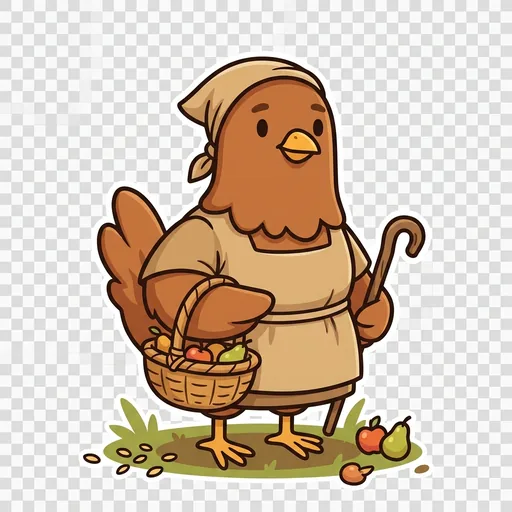
Merle the Gleaner
Hanging Piece — a piece with no defender is a free piece
-

Sir Sidetrack
Deflection — chase the guard off its duty, then take what it protected
-

Warden Snare
Trapped Piece — a piece with no safe square falls where it stands
-

Mason the Interposer
Interference — cut the line between a defender and its charge
-
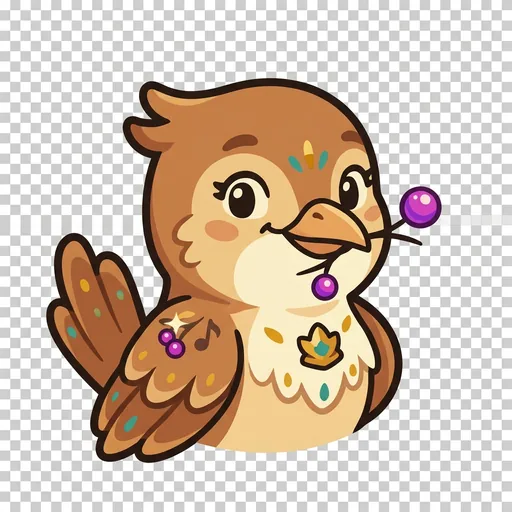
Siren Lyra
Attraction — lure a piece onto the square where your next move wins it
-

Kester the Finisher
Checkmate — a check the king cannot escape, block, or capture
-
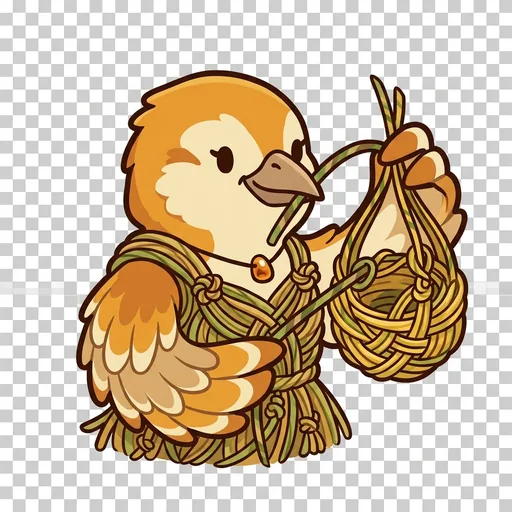
Linnet the Netweaver
Checkmate in Two — the first move forces the reply, the second springs the mate