Mason the Interposer
INTERFERENCE — step a piece into the line between a defender and its charge, and the charge falls even if your blocker can be taken
Loading audio…
Press play to listen along. The line being read lights up as you go.
Show full transcript
Loading transcript…
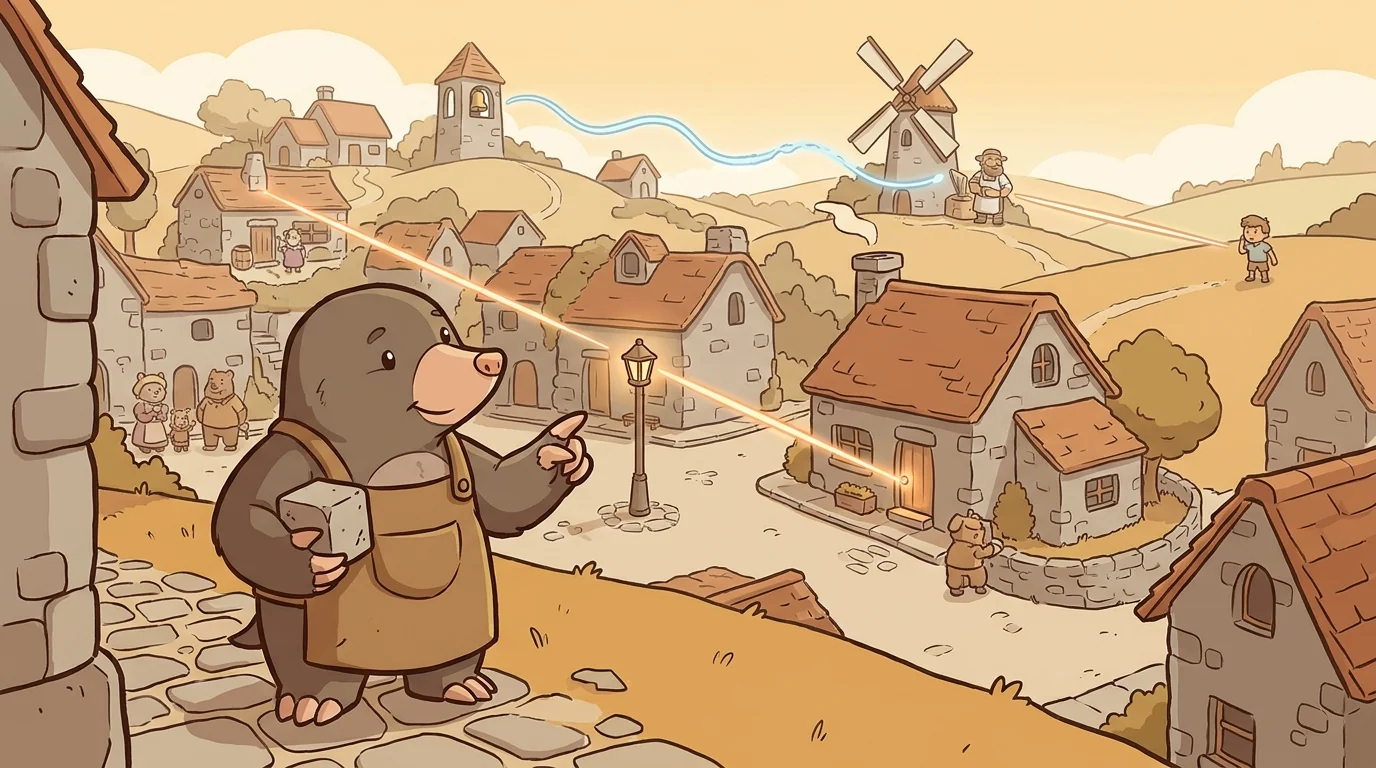
In the hill town of Cairn, where every house was built of the same grey stone, there lived a mason named Mason, which his mother had thought was funny and which everyone else eventually forgot was a joke.
Mason was a mole in a dusty apron, and he built walls — good, square, honest walls — and he was better at it than anyone in Cairn. But the thing that made Mason unusual was not the walls he built. It was the lines he saw.
Where other townsfolk saw only rooms and roads, Mason saw the invisible lines that ran between things. He saw the straight line of light from the lamp in the square to the doorstep it lit, so that a wall built across it would leave the doorstep dark. He saw the line of sound from the bell tower to the far cottage, so that a barn raised in the middle would leave that cottage unable to hear the hour. He saw the line between the miller and the mill-boy who watched him work — and he understood that if you built so much as a low wall between them, the mill-boy could no longer be watched at all, no matter how hard the miller stared.
Mason found these lines everywhere, and he found that a wall — even a small one, even one that might be knocked down again the next day — could cut a line completely for as long as it stood. A defender who cannot see the thing it defends is no defender at all, wall or no wall, tall or short. The connection was the thing. Break the connection, and the far end was on its own.
He had never named this. He was not much for names. He simply built where the line needed cutting, and left the rest to look after itself.
It would take a very small vole named Tuck to name it for him.
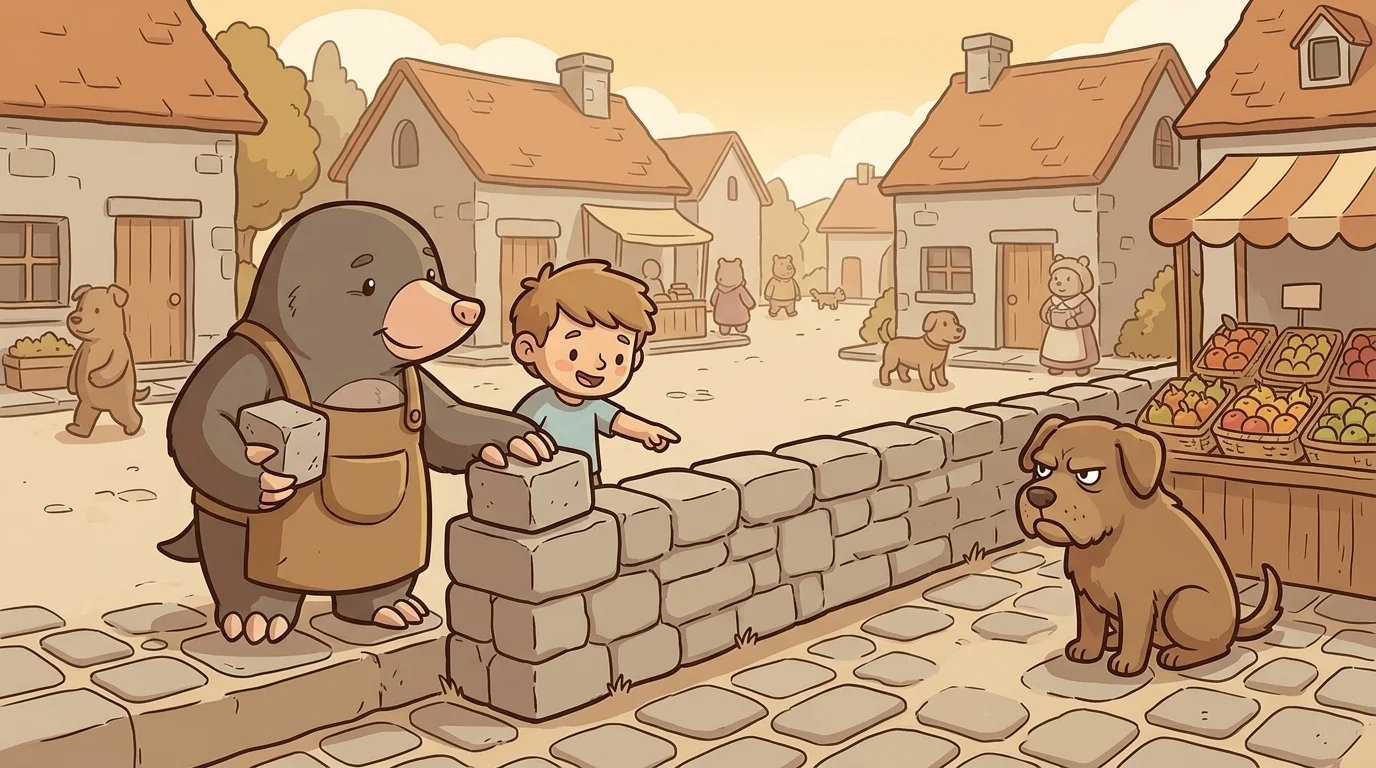
Tuck was six, and he liked to watch Mason work, and one afternoon he watched Mason build a low stub of a wall in the market square that seemed to serve no purpose at all — it held up nothing, it fenced in nothing, it just stood there, half the height of a door, between the fruit stall and the old dog who guarded it.
"That wall's silly," said Tuck. "It doesn't do anything."
"Watch the dog," said Mason.
Tuck watched the dog. The dog, who had spent every market day glaring across the square at anyone who came near the fruit stall, was now glaring at a wall. The stall, on the far side, sat plain and unwatched. The dog could not see past the stone. It was still a very good guard dog. It simply could not guard what it could no longer see.
"You blocked its look," said Tuck, delighted. "You didn't move the dog. You put a wall in the way of its looking."
"I did," said Mason.
"But someone could knock your wall down. It's only little."
"They could," Mason agreed, patting the stub of stone fondly. "And by the time they had, the moment I wanted would already be over. A wall does not need to last forever. It needs to last for the one instant the line must be cut."
Tuck turned this over in his small head. Then he said: "You got in the way on purpose. You interfered."
Mason set down his trowel, which for Mason was a great and rare pause.
"Interfered," he said. "In the way, on purpose. Yes. That is the exact shape of it."
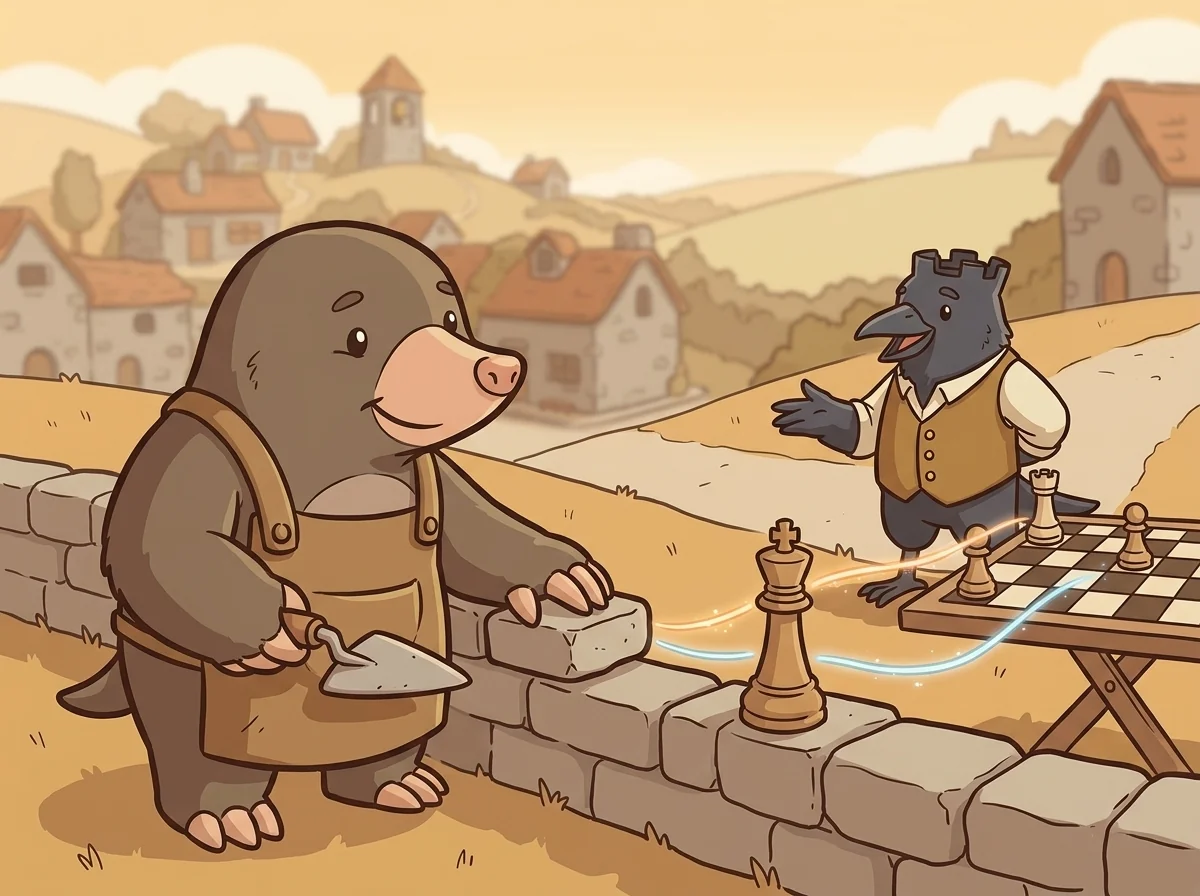
Several winters after, a chunky cheerful rook in a brass-buttoned waistcoat came up the hill road and found Mason laying the last course of a garden wall.
Captain Castle introduced himself and said he ran an academy where children learned the game of sixty-four squares, and that his students had a habit he could not break: when an enemy piece was defended, they gave up on taking it, because a defended piece is safe. "They never think," said Captain Castle, "to ask whether they might simply step something into the line between the guard and its charge — even a piece the guard could capture — and cut the defence for the one move they need."
Mason smoothed the last stone flat.
"I have spent my life," he said, "putting walls across lines that others could not even see. A board of sixty-four squares must be full of lines. I should like to cut a few."
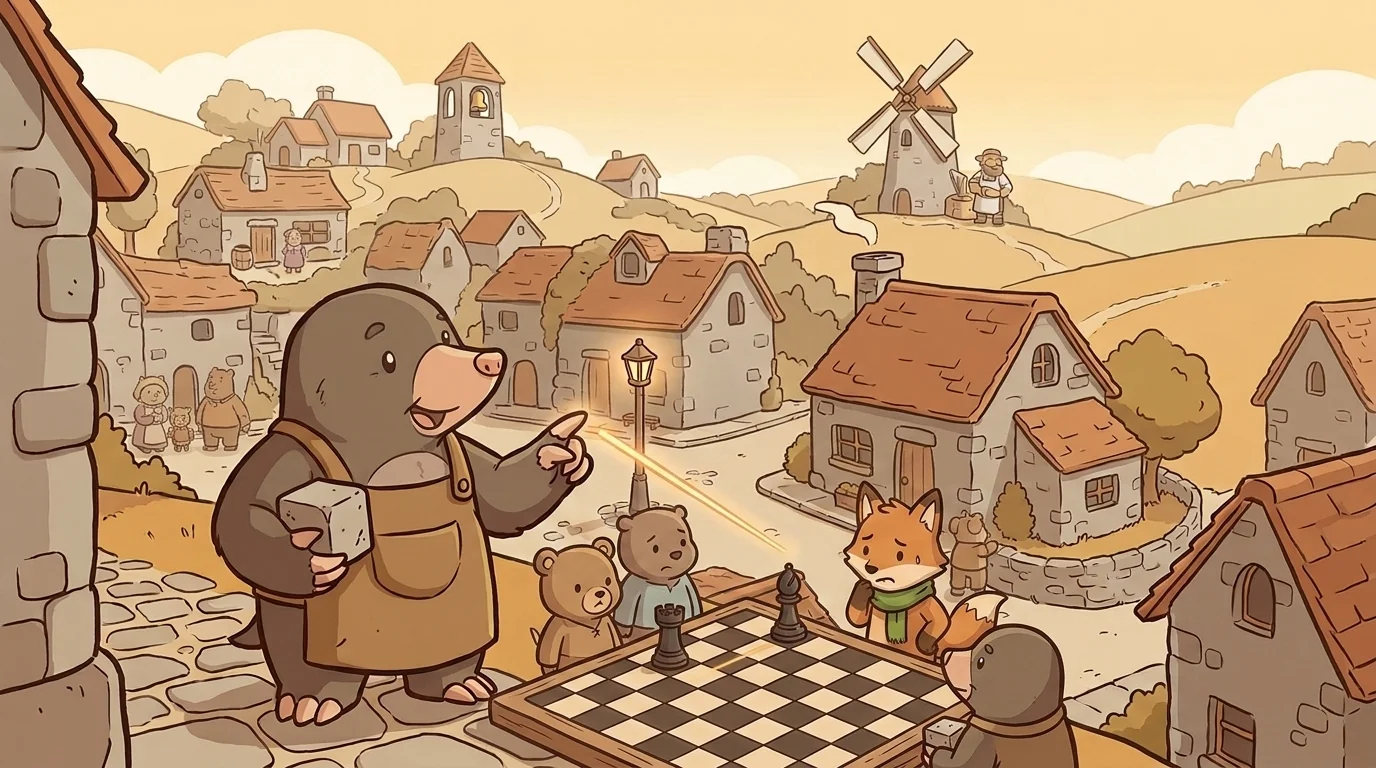
The chessboard, Mason discovered, was a town drawn in straight grey lines.
He met his first class on a cold bright morning. Captain Castle set a position: a black rook stood ready to be captured, but it was defended along a rank by a black bishop, so the children shook their heads and looked elsewhere.
"Can't take the rook," said a fox in a green scarf. "The bishop's guarding it, all the way down the row."
"Is it?" said Mason. He pointed, slowly, at the empty squares between the bishop and the rook — the line along which the bishop was looking. "The bishop guards the rook along this line. Watch what happens if I stand one of my own pieces in the middle of it." He moved a knight into the line, square in the bishop's path. "Now the bishop cannot see the rook at all. The wall is up. The line is cut."
"But — they can just take your knight!" said the fox.
"They can," said Mason, calmly. "But not this move. This move, they must choose: recapture my knight and let me have the rook, or save the rook and let me keep the plan. For one instant, the wall stands — and one instant is all a wall must last." He lifted the undefended rook off the board. "The bishop was a fine guard. It simply could not guard through a wall."
The fox in the green scarf wrote a guard cannot guard through a wall — even a wall that falls next move in her notebook, and sat very still. Captain Castle nodded from the doorway.
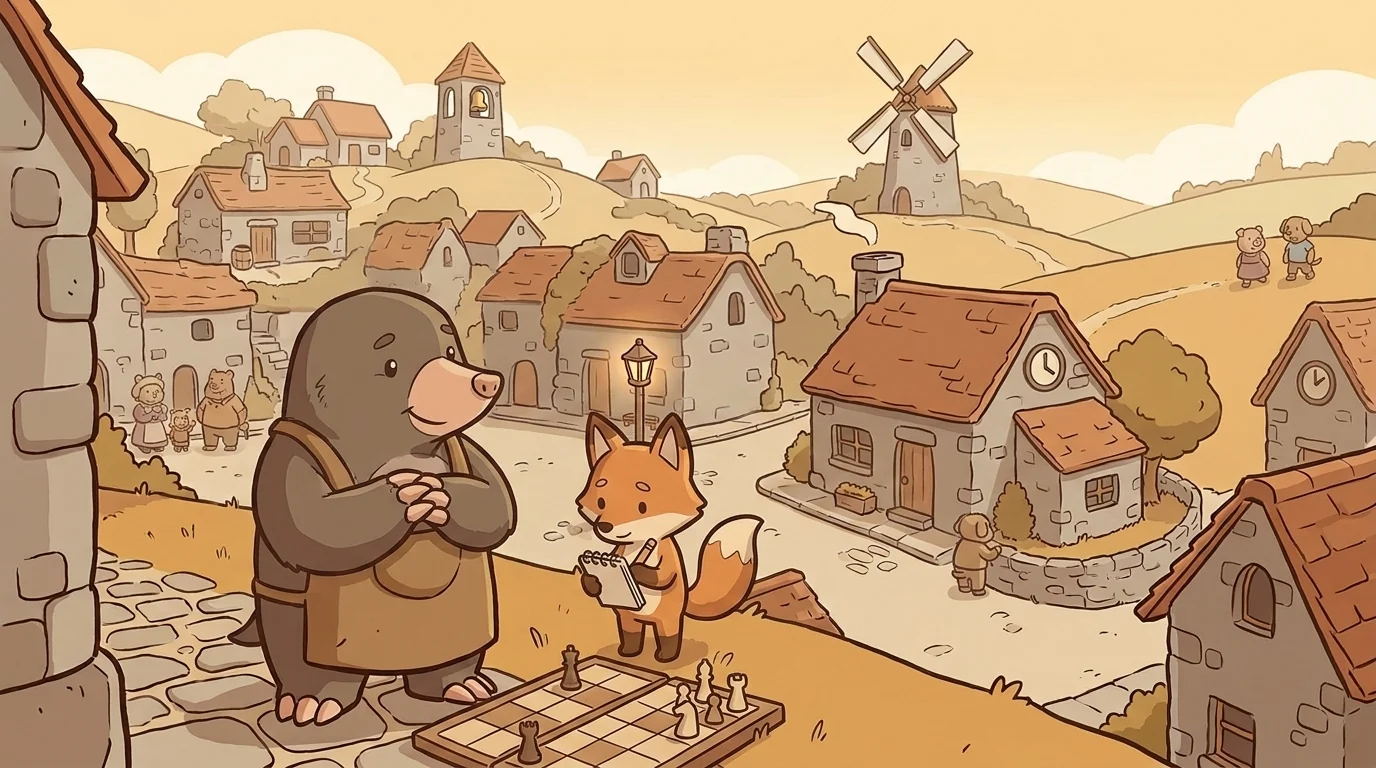
He still builds walls, when the town needs them, good and square and honest.
But when the lessons end and the children have gone home, Mason walks the folded board the way he walks the streets of Cairn — not looking at the pieces themselves, but at the invisible lines running between them, and at where a small wall, standing for just one moment, would cut a line that mattered.
Sometimes the fox with the notebook stays behind, and asks, "Why build a wall they can just knock down, Mason?"
And he will fold his dusty paws, and consider, and say:
"A defended piece feels safe, but the defence is only a line — a line of sight, a line of reach — and a line can be cut. Step something into the middle of it, even something they can capture, and for one move the guard is blind. You do not need a wall that lasts forever. You need a wall that lasts exactly one move longer than they expect. Then you take what the guard could no longer see."
The fox writes it down. Mason watches her write, and feels — in a way he would never announce — the deep quiet of a builder who has set the last stone true. He closes the board. He walks home up the hill.
The GambitTales ensemble
Mason the Interposer is part of GambitTales's distributed-narrative cast. Each character embodies a different curricular primitive; together they teach the full subject.
-

Sir Pinwell
Pin pattern — freezes pieces along a line
-
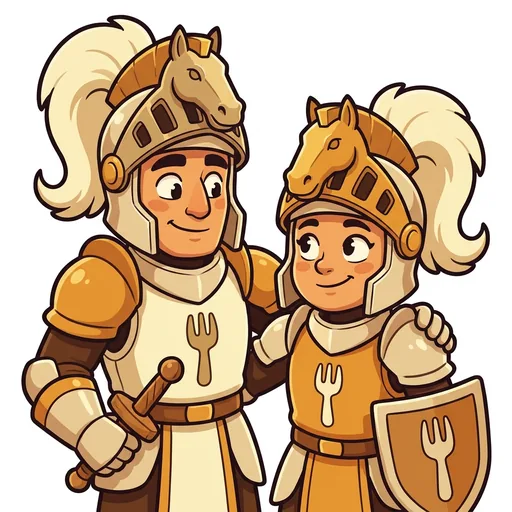
Twin Knights of Fork Hill
Fork pattern — attack two targets at once
-

Lady Skewer
Skewer pattern — force a valuable piece out of the way
-

Veil & Vow
Discovered attack — step aside to reveal a hidden threat
-
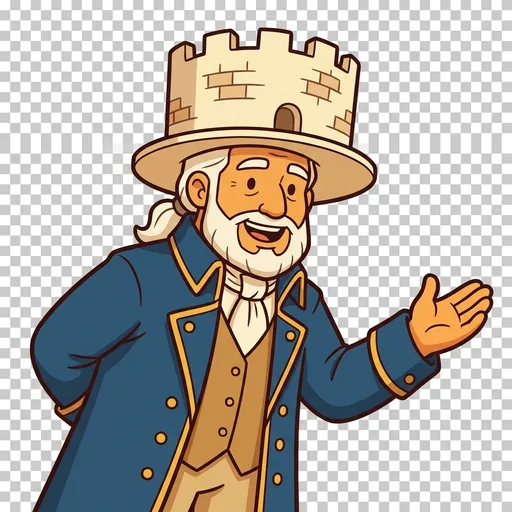
Captain Crossfire
Double attack — one move threatens two targets
-

The Glass Lantern
X-ray attack — light pierces through to the piece behind
-

King Pumble & King Sable
Two kings — librarian and gardener; one step at a time
-

Queen Vesper
Queen — ranger-messenger; any direction, any distance
-
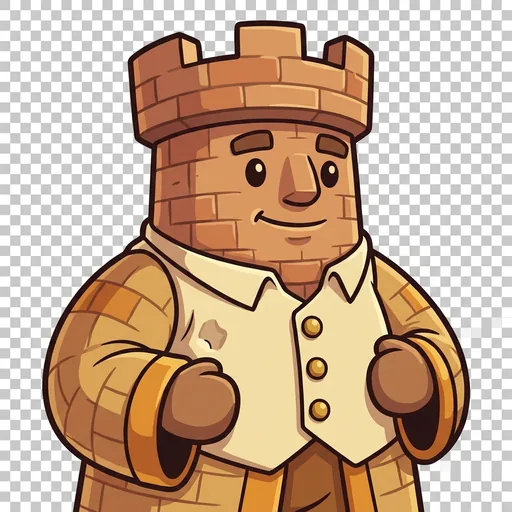
Captain Castle
Mentor + narrator — rook archetype; the mascot who introduces the cast + scaffolds the lesson
-

The Pawn Cohort
Ensemble piece — the four pawn-paired sets (Pawn Patrol + Sienna & Bran + Trotter & Trundle + Gable & Garrett) acting as one in the world layer
-
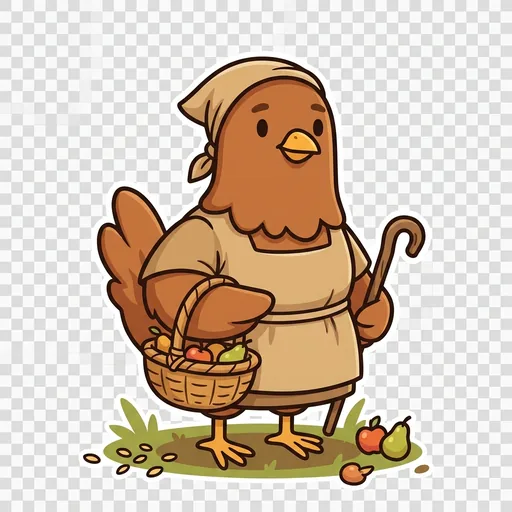
Merle the Gleaner
Hanging Piece — a piece with no defender is a free piece
-

Sir Sidetrack
Deflection — chase the guard off its duty, then take what it protected
-

Warden Snare
Trapped Piece — a piece with no safe square falls where it stands
-

Siren Lyra
Attraction — lure a piece onto the square where your next move wins it
-

Vale the Wayclearer
Clearance — move your own piece off the line so the power behind lands
-

Kester the Finisher
Checkmate — a check the king cannot escape, block, or capture
-
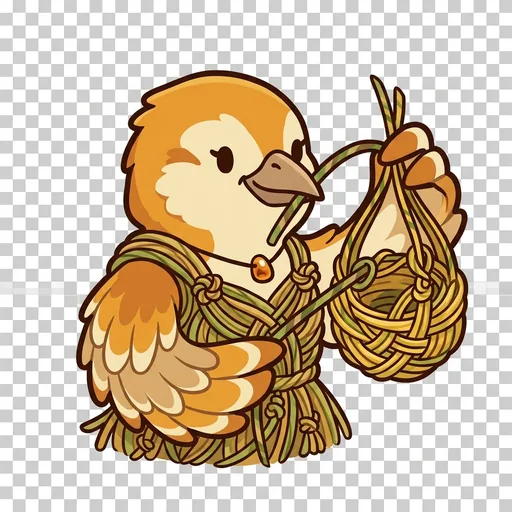
Linnet the Netweaver
Checkmate in Two — the first move forces the reply, the second springs the mate