Throw & Kick
SEND — *step, rotate, release. the arm and the foot both send it the same way.*
A story read by Throw & Kick
Loading audio…
Press play to listen along. The line being read lights up as you go.
Show full transcript
Loading transcript…
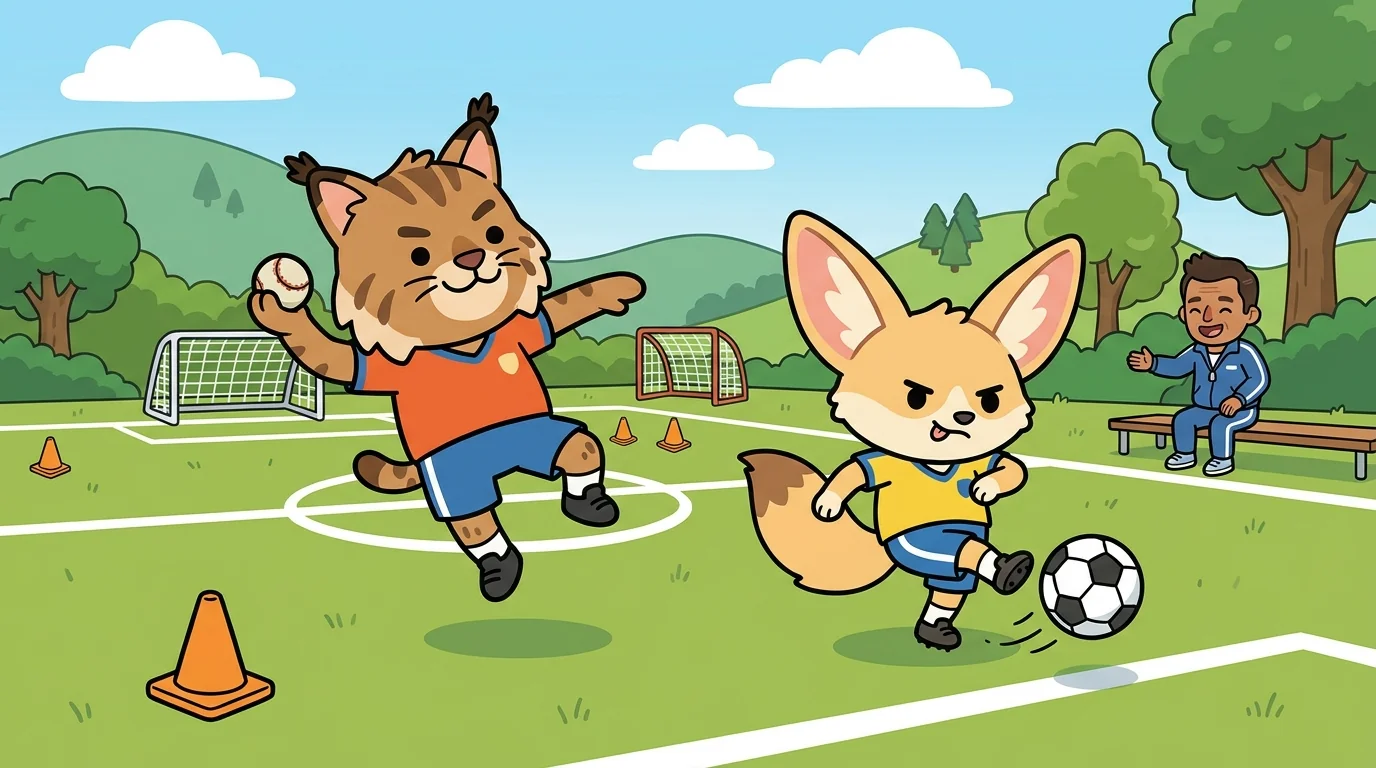
In the far corner of the ActiveForge field, Throw the bobcat and Kick the fennec fox were arguing — friendly, but arguing — about who had the harder job.
"Sending a ball with your arm is way harder," Throw said, sending a ball whistling across the field with a smooth overhand throw. "You've got to aim way out there."
"Sending it with your foot is harder," Kick shot back, striking a clean low pass that rolled true and fast. "The foot's clumsier than the hand — everybody knows that."
Coach Echo, watching from the sideline, just smiled. "You two are arguing," she said, "and you don't even see that you're doing the exact same thing."
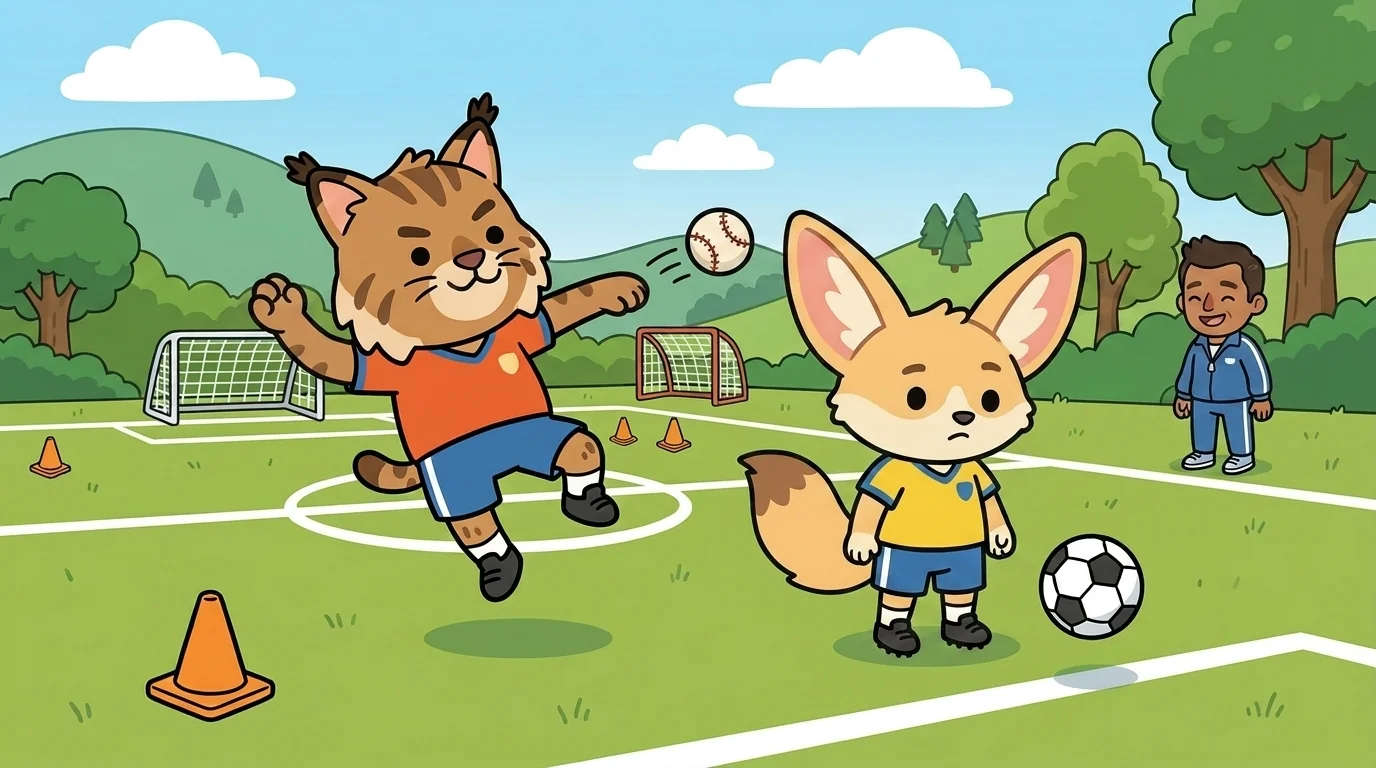
Throw folded his arms. He'd been the field's best thrower for as long as anyone could remember — sideways stance, step, rotate, snap. "There's no way a kick is like a throw," he said. "One's an arm. One's a leg. They're nothing alike."
Coach Echo asked him to throw the ball again, slow, and feel it. Throw stepped his front foot toward the target, twisted his hips and shoulders back, then unwound — hips first, then chest, then arm, then a snap of the wrist at the very end. The ball flew far and straight. "Now," Coach Echo said, "tell me the order."
Throw thought about it. "Step… then my hips turn… then my shoulders… then my arm comes through last." He said it slowly, surprised to hear himself. "The power kind of… rolls up through me. Bottom to top."
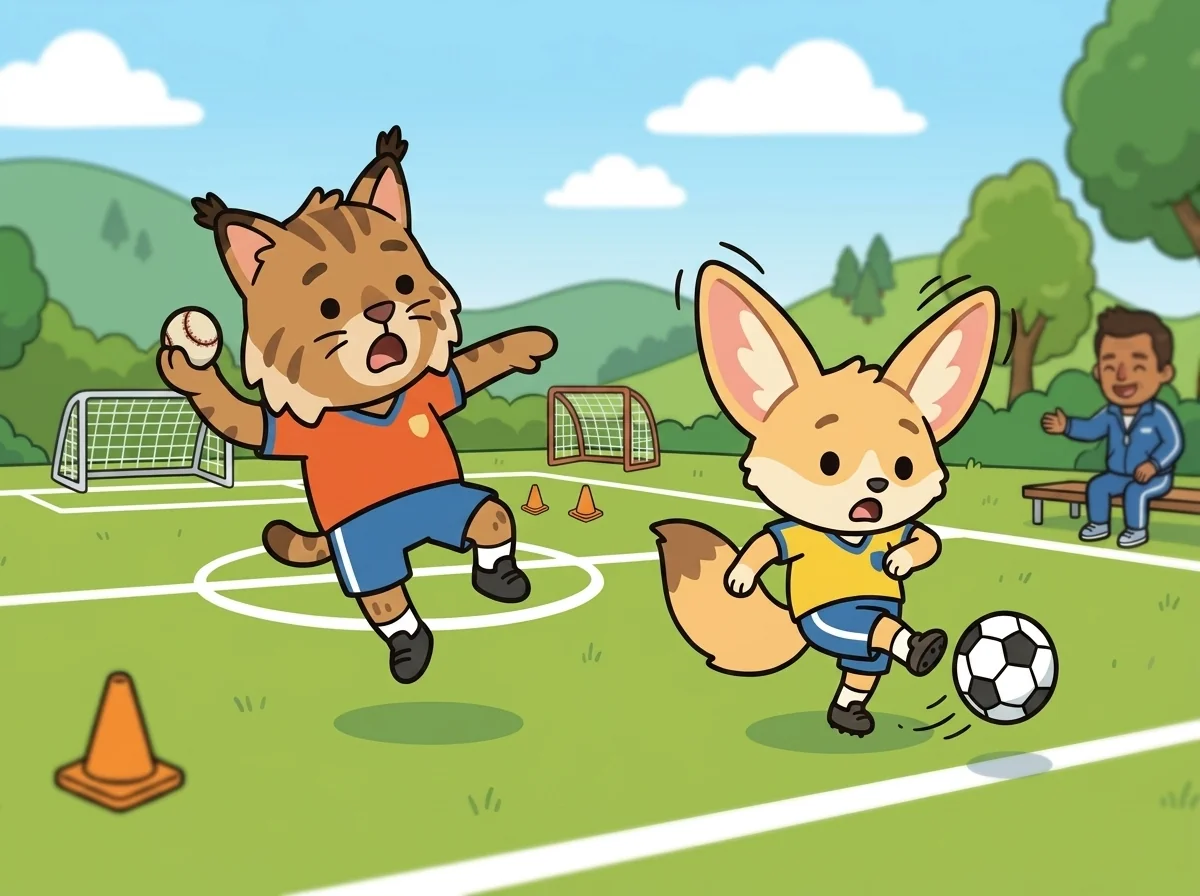
Kick had been listening, her big ears twitching. She set a ball down and struck a hard, clean kick with her instep — and stopped, blinking. "Wait," she said. "That's… that's what I do." She kicked again, feeling it this time. "I step my other foot next to the ball — then my hips turn — then my kicking leg comes whipping through last. Step. Hips. Leg." She looked at Throw, astonished. "It's the same order. Step, rotate, release. You just release with your arm and I release with my foot."
Throw's mouth fell open. He tried a slow throw, then Kick tried a slow kick, right beside each other, and they watched — the same wind-up, the same twist of the hips leading the way, the same whip of the last part at the very end. "It really is the same," Throw breathed. "The power starts low, rolls up through the body, and snaps out the end — whether the end is a hand or a foot."
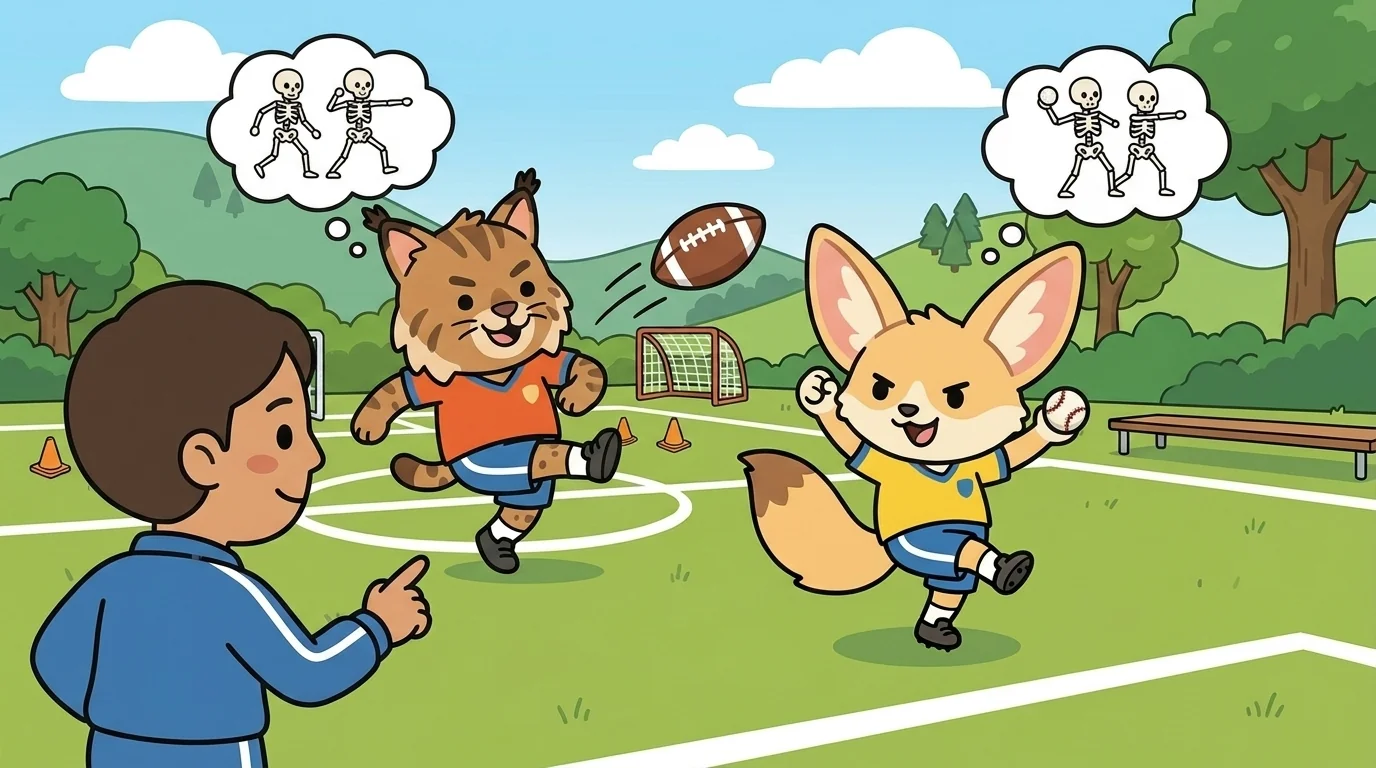
"That's the secret," Coach Echo said, walking over. "It's called sending — step, rotate, release — and your body sends a ball the same way no matter which limb finishes the job. The hips are the engine; the arm or the foot is just the last inch." She had them try it: Throw practiced his kick using his throwing rhythm — step, rotate, and let the leg snap through last — and his kicks suddenly flew far and true, better than they ever had. Then Kick threw a ball using her kicking rhythm — step, hips, snap — and her throw sailed clean across the field. "Whoa!" Kick laughed. "I got better at throwing by thinking about kicking!" "And I got better at kicking by thinking about throwing!" Throw whooped. Neither of them was suddenly stronger — they'd just found the one power sequence hiding inside both skills, so getting better at one made them better at the other, for free. And it belongs to everyone, Coach Echo said — every body sends with the same step-rotate-release, so a kid who learns to throw has already half-learned to kick. People all over the world send things this way: a cricket bowler, a soccer striker, a baseball pitcher, a martial-arts kicker — different limbs, one hidden sequence.
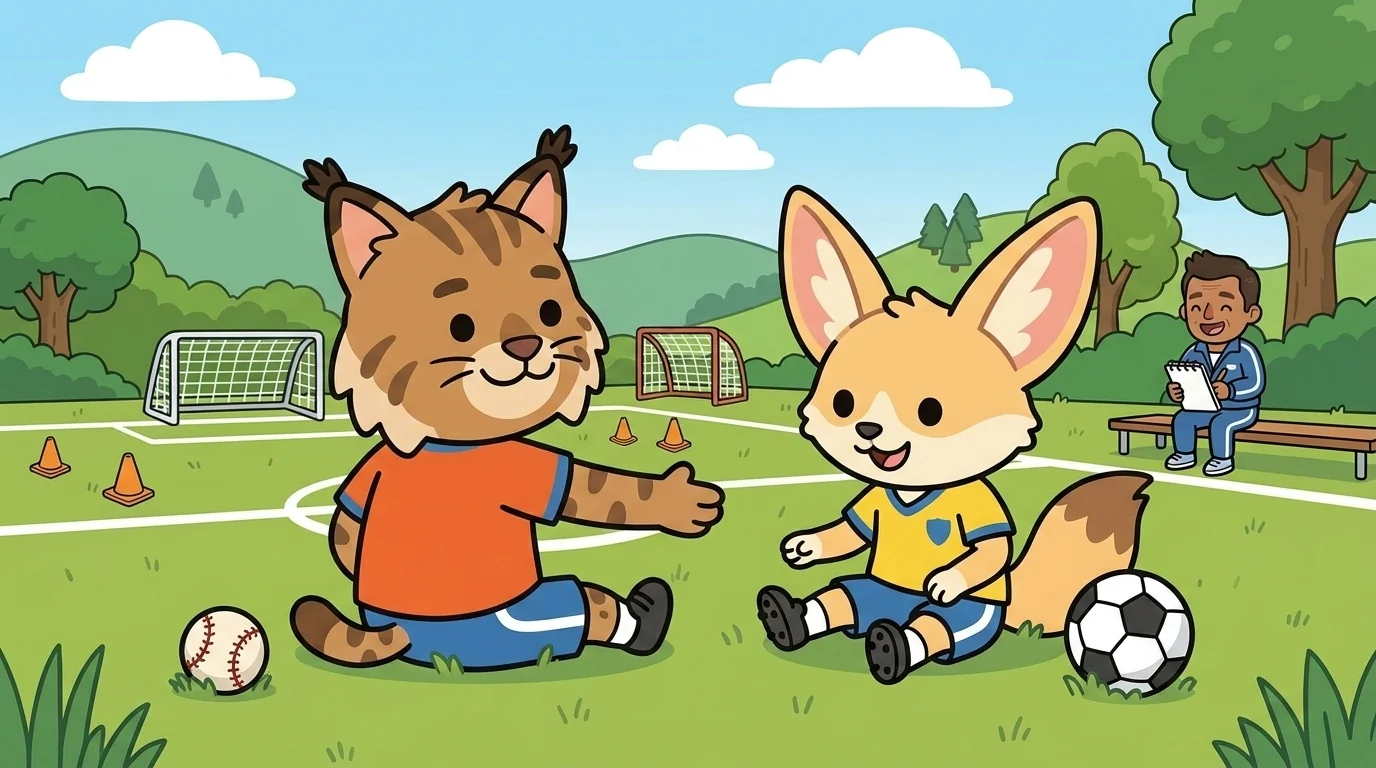
Throw and Kick sat down in the grass together, a little dizzy from the discovery, and started teaching each other on purpose now — Throw showing Kick how far he could aim, Kick showing Throw how low and precise she could place it — trading the two ends of the one same secret.
"I thought we were rivals," Throw said, grinning. "Turns out we're the same move, just wearing different shoes."
A warm, connected, we're-on-the-same-team feeling settled over them both — the surprise of an argument dissolving into a shared secret. It felt good, that click of oh, we were never actually opposites — better than winning the argument ever could have. That warm, glad, we-belong-together feeling — two friends discovering the same power running through both of them — was, to Coach Echo watching from the grass, the very best thing the whole field could grow.
The ActiveForge ensemble
Throw & Kick is part of ActiveForge's distributed-narrative cast. Each character embodies a different curricular primitive; together they teach the full subject.
-

Throw
Overhand-projection motor pattern — targeted-force-at-distance trained-through-practice never-aptitude-test
-

Kick
Lower-body projection — foot-language with five-different-parts-of-foot for different kicks
-
Dodge
Spatial-perception + agility — read-the-space-and-move-EARLIER not-faster; perception-game not speed-game
-
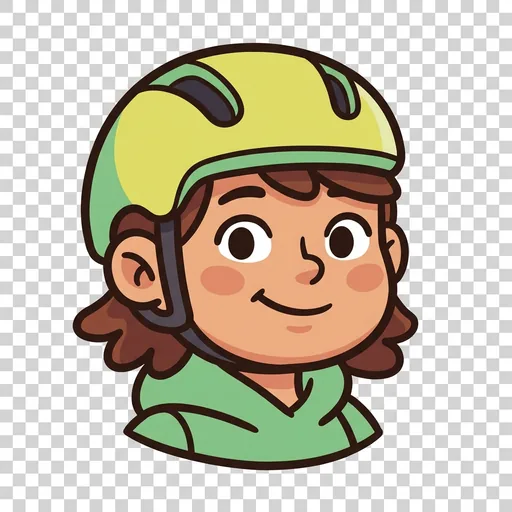
Roll
Tumbling + safe-fall + parkour-shoulder-roll — visible adaptive-PE helmet signals all-bodies-belong
-
Cheer
Sportsmanship + bystander-presence-in-play — learnable-skill not personality-trait
-
Lunge
Lunge — power lives low: sink the hips, load the back leg, then rise
-
Poise
Poise — stillness is a move: find the base, then you can go anywhere
-
Prance
Prance — land light, spring high; heavy feet can't fly
-
Rally
Rally — the second wind is real: spend, recover, spend again
-
Swing
Swing — let the limb fall and rise like a rope; momentum is free power