Spread
SPREAD — *when something pulls apart, something new is forming in the middle.*
Loading audio…
Press play to listen along. The line being read lights up as you go.
Show full transcript
Loading transcript…
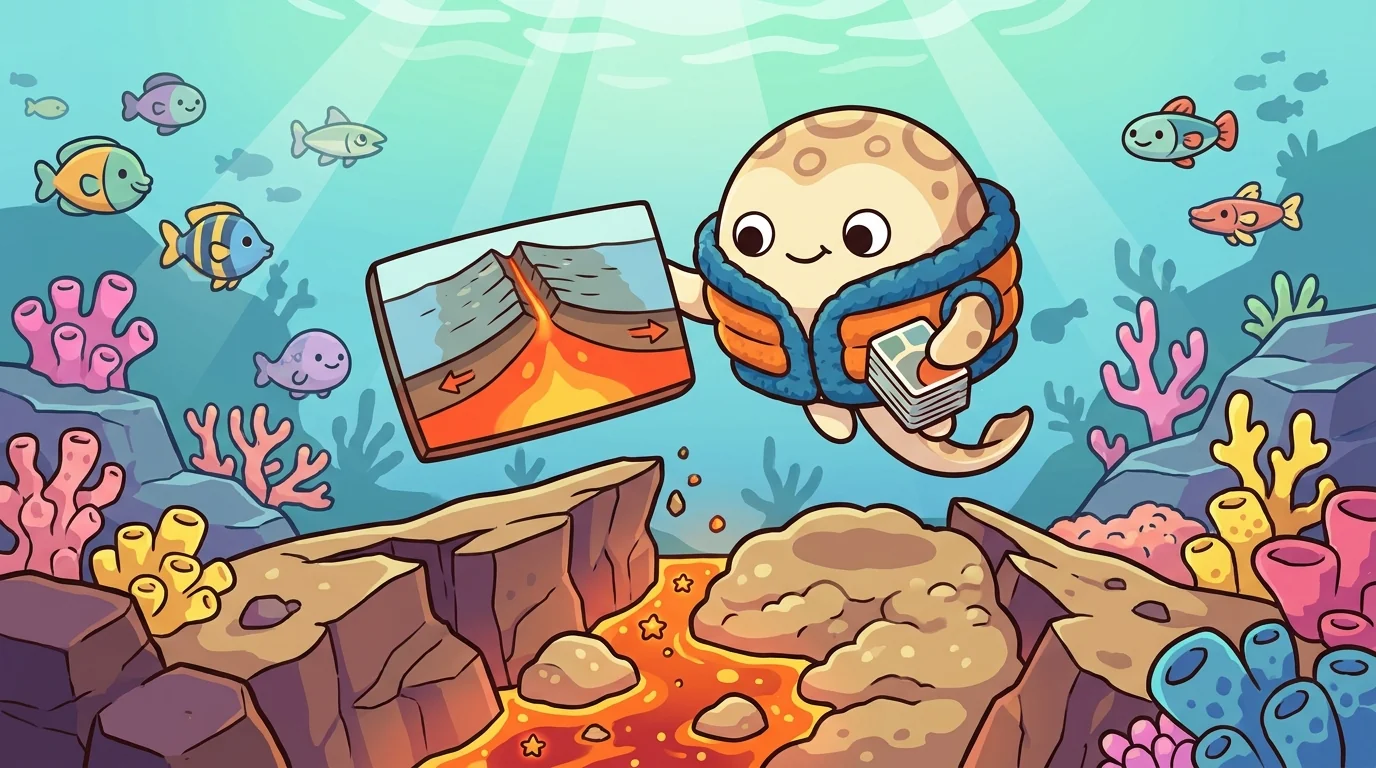
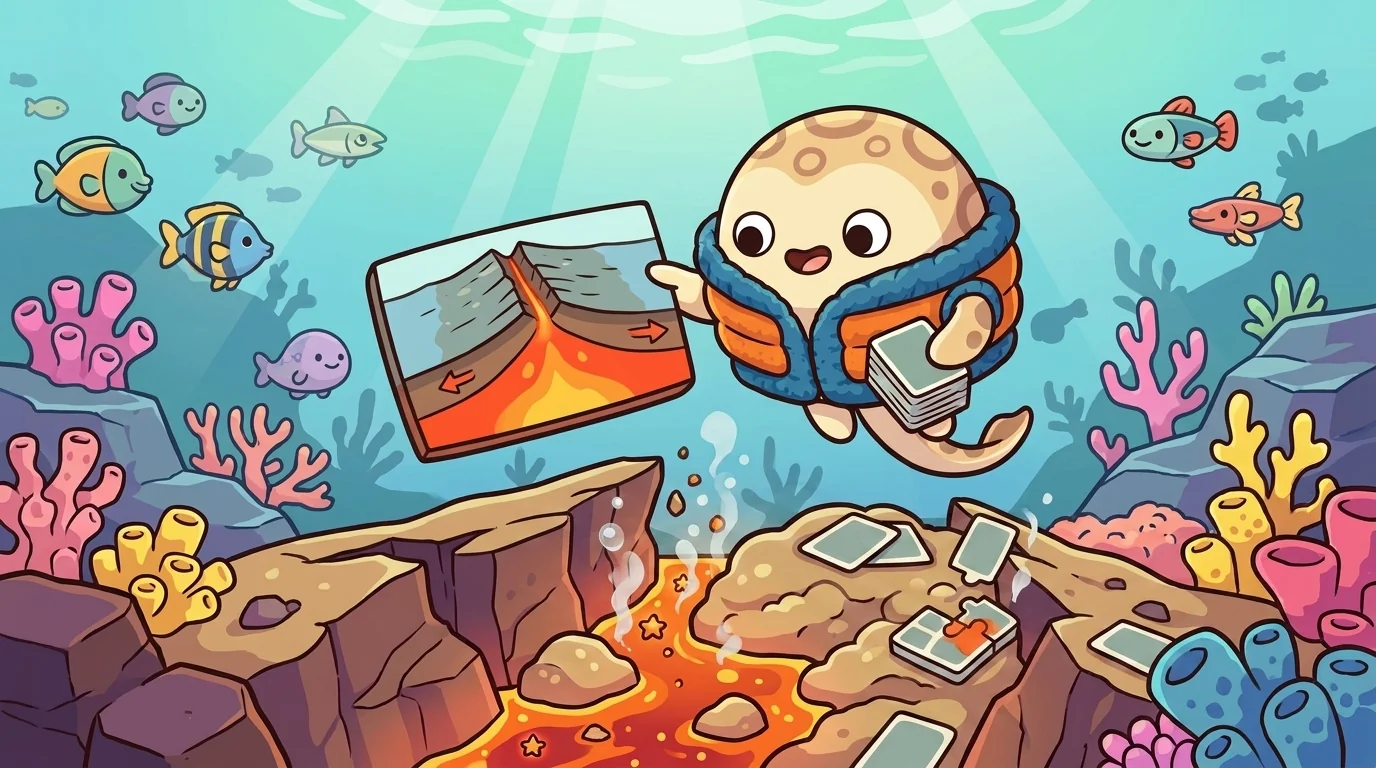
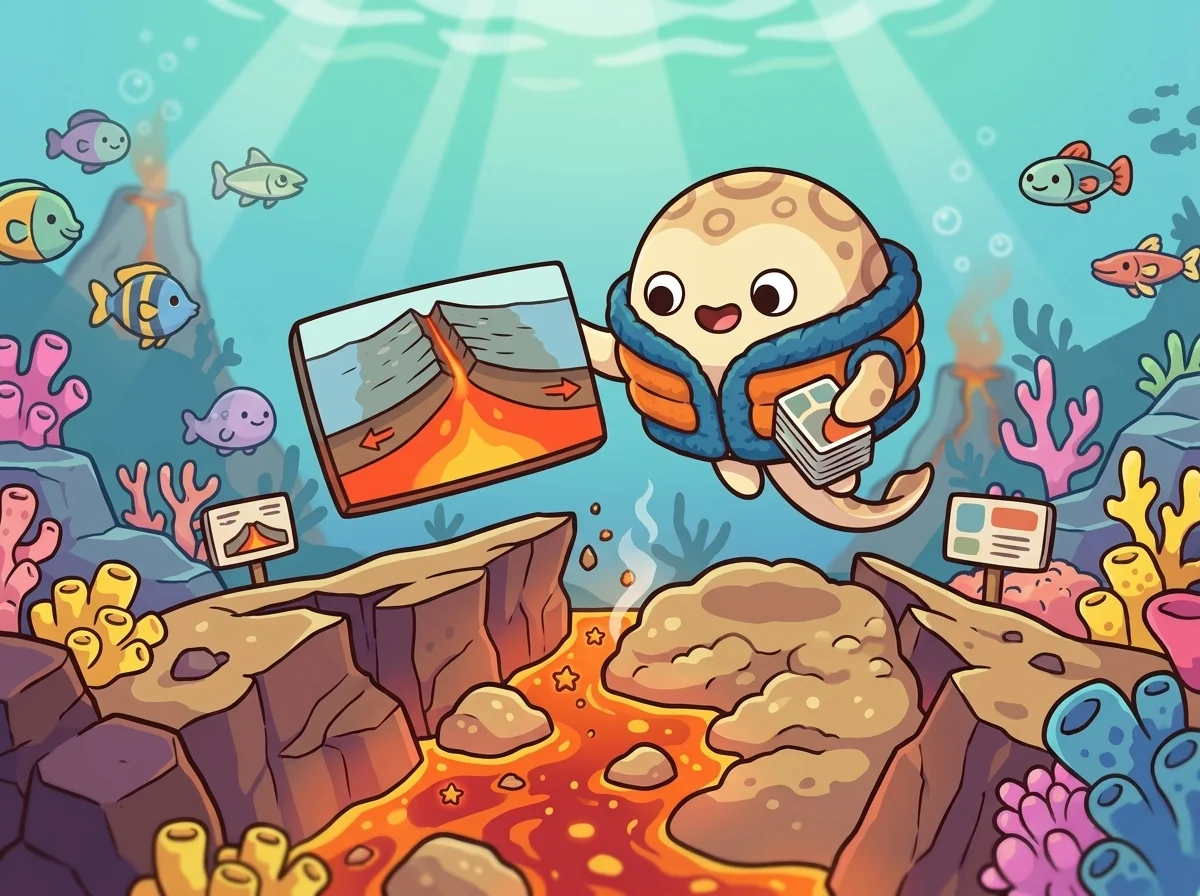
Spread laid both fins on the two halves of his mid-ocean-ridge model and drew them apart — gently, a whisker's width — and from the widening crack between them a thin ribbon of red light welled up like a held breath finally let go. He was a small ocean-skate, flat and round as a cream-coloured stone, brown-patterned across the back, and when the glow rose he leaned in so close his nose nearly touched it. The red line cooled as he watched, darkening to fresh black rock along both new edges. He nudged the halves a fraction wider. More light welled up. More rock.
"See that?" he whispered to the octopus tween beside him. "I pulled the middle apart. So the middle made more." He beamed. "It doesn't leave a hole. It fills the hole with something brand new."
The octopus tilted her head. "So splitting builds?"
"Splitting builds," Spread said, like it was the best secret in the ocean.
He'd first understood it as a very young skate, on the coast where he grew up — a shore carved by an ancient rift, land that had begun tearing apart long before anyone alive could remember. His family were floor-watchers, flat-bodied skates who spent their lives close to the ground, reading the seams in the rock.
One evening his father took him to a place where a hairline crack ran through the beach stone, thin as a pencil line. Spread had thought it was damage — the land breaking, wearing out.
"Watch it across a season," his father said. So Spread watched. Slowly the crack widened. And in the widened gap, where he'd expected only emptiness, a fringe of fresh pale mineral had crusted up from below, filling the seam with new stone even as the old stone drew apart.
"The floor is always moving," his father told him. "Always growing. Where the old splits, the new is born. That's not a wound, little one. That's the Earth making more of itself." Spread put his fin on the fresh mineral and felt the whole shape of the idea land in him at once: an ending and a beginning stitched into the same line. He never got over it. He never wanted to.
At twelve he carried his ridge model to TectonicForge. Geo, the old mentor, gave him a slab split down the centre and asked, "Show me what a rift does."
Spread didn't recite. He set the slab on the table, drew its two halves apart, and slipped a strip of glowing paper up through the gap so it caught the light and looked, for a moment, exactly like rising magma. "It pulls apart here," he said, tracing the seam, "so new crust forms right in the middle, and pushes the old rock out both ways." Geo watched the glowing strip fill the parting slab, and the corners of his ancient eyes creased. He let Spread through without another word.
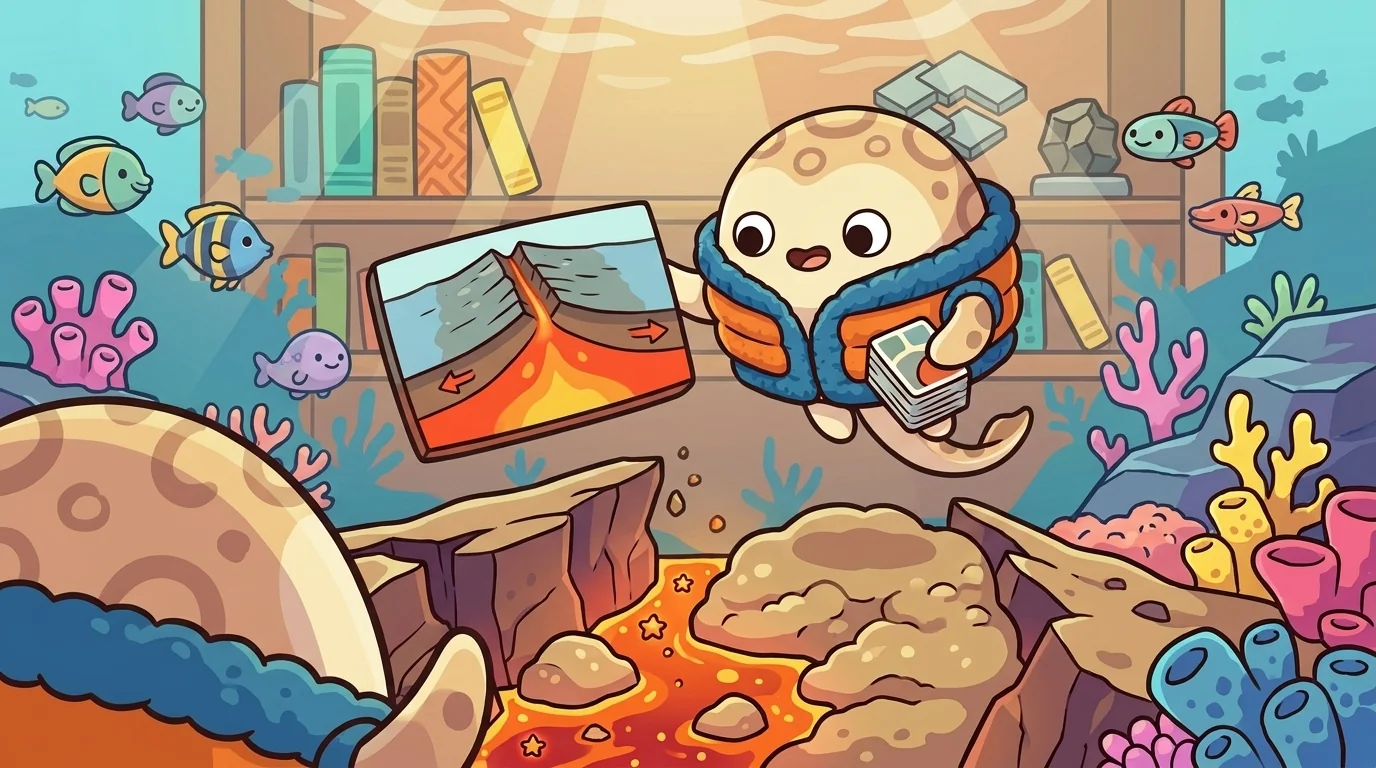
In his own workshop, Spread pulled his fins across the ridge model again and the red light rose. "This is the Mid-Atlantic Ridge," he told the octopus and the others crowding close. "North America drifts one way, Europe drifts the other, two and a half centimetres a year — slower than your fingernails grow. And right in the gap, magma rises, cools in the cold dark water, and becomes new basalt. The Atlantic is getting wider while we sit here. You're watching an ocean grow."
He slid the halves further and shuffled his cards to show the fresh rock riding outward. "The old floor doesn't get destroyed — it gets carried, pushed aside by the new stuff born behind it. That's sea-floor spreading. And here's the proof I love best." He held up a striped card. "Earth's magnetic field flips now and then, and every strip of new crust freezes in whichever way the field pointed when it cooled. So the seafloor is striped like a barcode, matching on both sides of the ridge — twin records of the same slow birth. You can't fake that. The stripes are the growing."
Then he tugged out a second model, a landmass cracking down its length. "It happens above water too. Africa is splitting along the East African Rift, so slowly you'd never feel it — but give it millions of years and a whole new ocean could pour into that gap." He pointed last to tiny smoking chimneys along his ridge. "And where the new magma meets the cold, hydrothermal vents grow, and creatures crowd around them living on chemicals instead of sunlight — the smoky towers you've seen in DepthQuest Smoke. New crust doesn't just build land. It builds homes."
"So the pulling-apart is the good part," the octopus said slowly.
"The pulling-apart is where the making happens," Spread said.
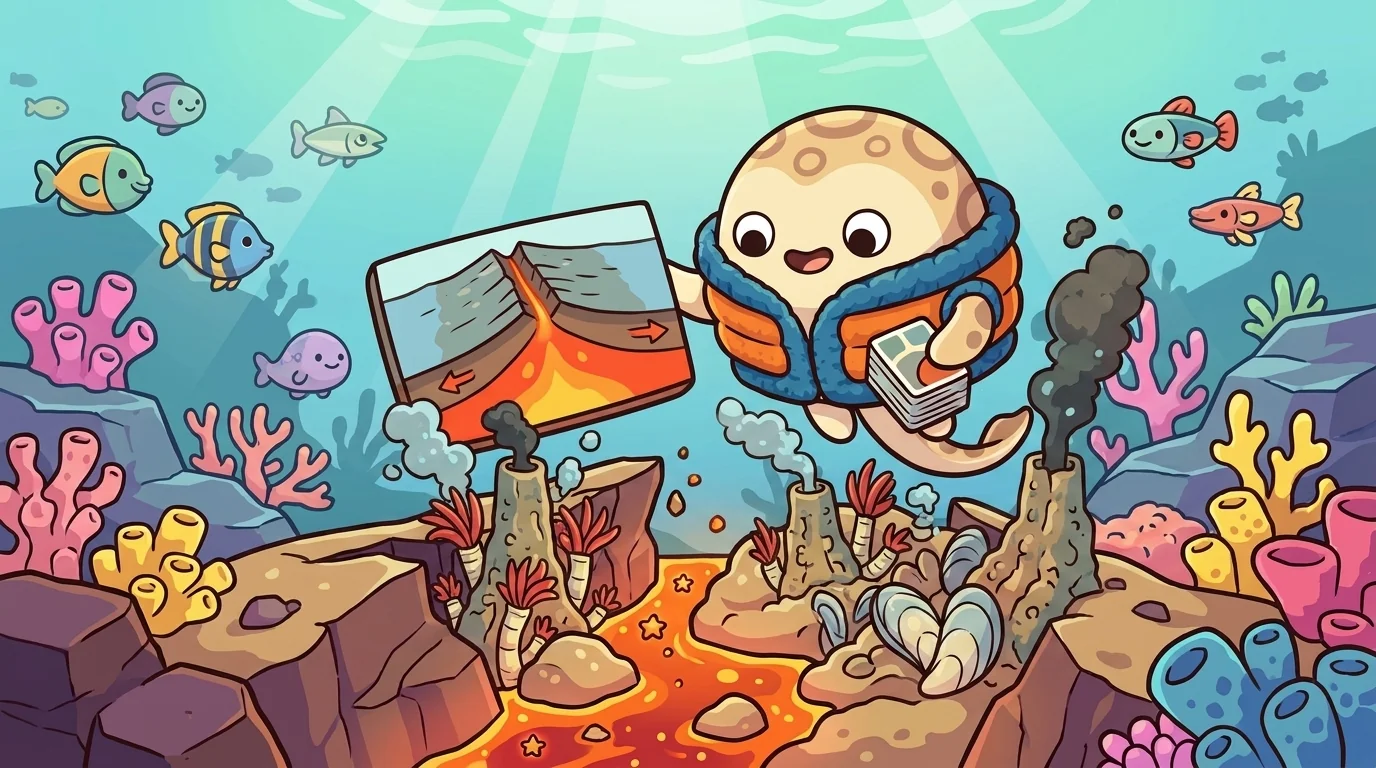
The others drifted off. The octopus stayed, one arm curled around the ridge model, watching the last of the red glow fade to cool black.
"But doesn't it make you sad?" she asked. "That the old floor gets pushed away. That things end."
Spread was quiet a moment. He drew the model halves apart one final time and let the light rise between them. "I used to think a crack meant something was over," he said. "My father showed me the crack was where the new thing came in." He looked at her, gentle. "When something you love pulls apart, it can feel like only losing. But somewhere in that middle, quiet and dark and slow — something is already forming. You just can't see it yet." And as he said it, his flat little body settled into a soft, contented glow, warm all the way through, the calm that comes when you truly believe that endings can also be beginnings, and that somewhere, always, something good is quietly being born, even in the deep and hidden places you will never see with your own eyes.
The TectonicForge ensemble
Spread is part of TectonicForge's distributed-narrative cast. Each character embodies a different curricular primitive; together they teach the full subject.
-

Sink
Convergent/subduction boundary — the heavier plate finds its way down; it takes a long time; that's okay
-

Slide
Transform boundary + stored energy — two plates sliding past; they catch, they hold, then they let go
-

Vent
Volcanism + magma chemistry — eruptions tell us what was happening below
-

Tremor
Seismology + earthquake preparedness — earthquakes are the Earth telling its story; we can read the lines; we can be ready
-
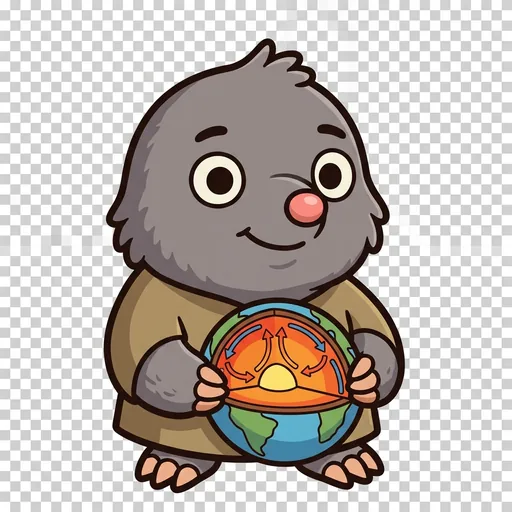
Churn
Mantle convection — the engine that drives the plates — 'Deep heat moves the whole map.'
-

Heave
Mountain-building — folding + uplift at collisions — 'Push long enough and mountains rise.'
-
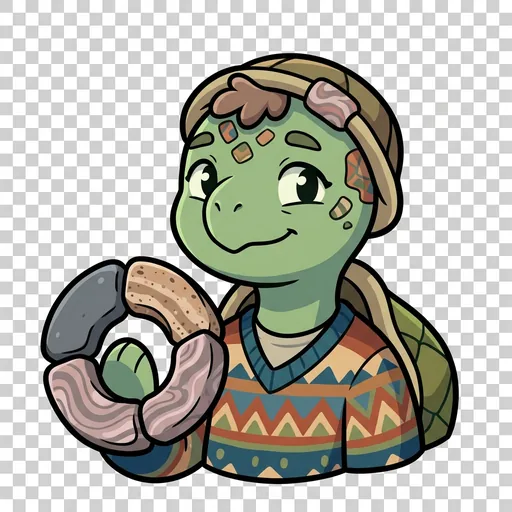
Remake
The rock cycle — igneous, sedimentary, metamorphic — 'Nothing is ever really finished.'
-

Scour
Weathering + erosion — wearing down the land — 'Water and time win.'
-
Silt
Deposition + strata — reading rock layers as time — 'Every layer is a page.'