Chordy
the chord
Loading audio…
Press play to listen along. The line being read lights up as you go.
Show full transcript
Loading transcript…
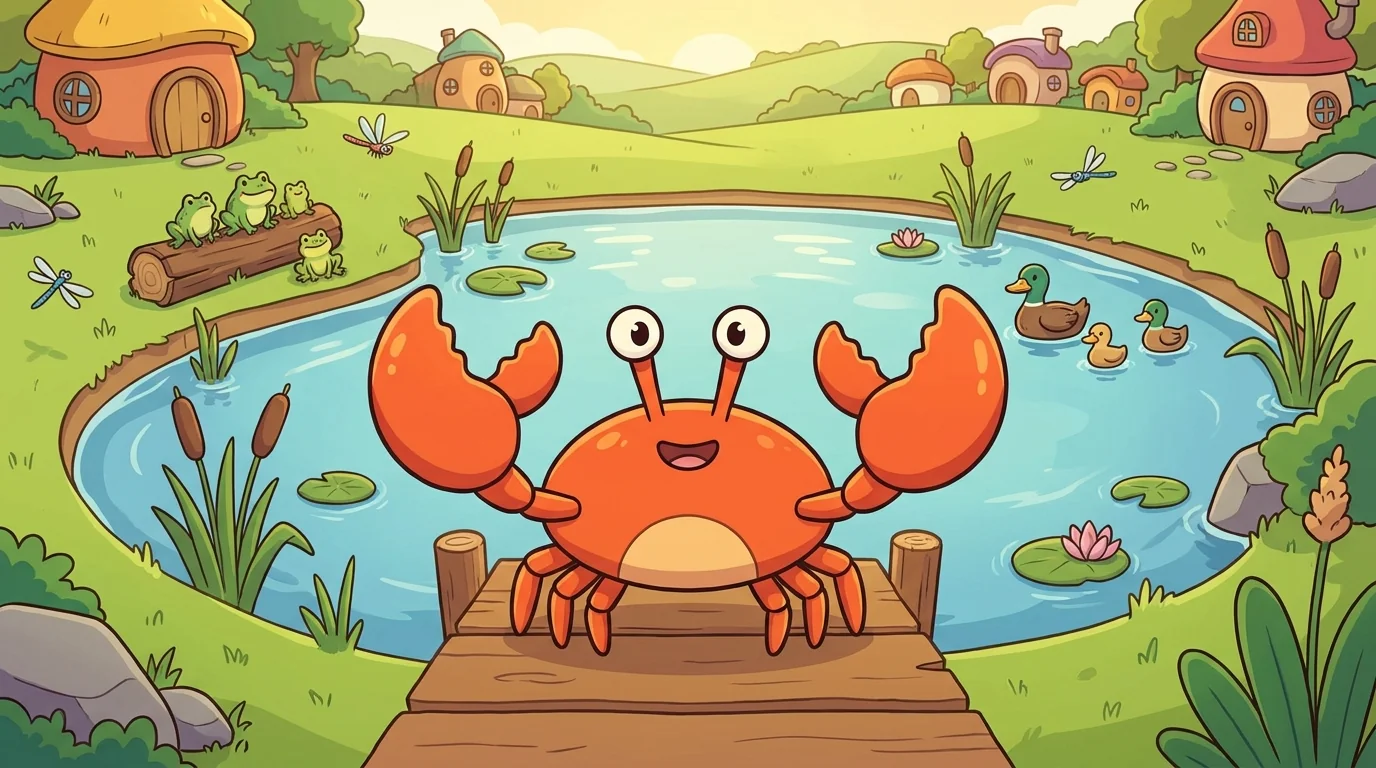
Down by the pond at the bottom of the League Field lives Chordy, a bright orange crab with two big claws and eyes that stick up on stalks and swivel in every direction. When Chordy is happy, he spreads his claws wide in a big friendly ring, like he is about to give the whole world a hug.
That ring is also his favourite move.
"Why open squares one at a time," Chordy says, clicking his claws together, "when you can open a whole ring at once?"
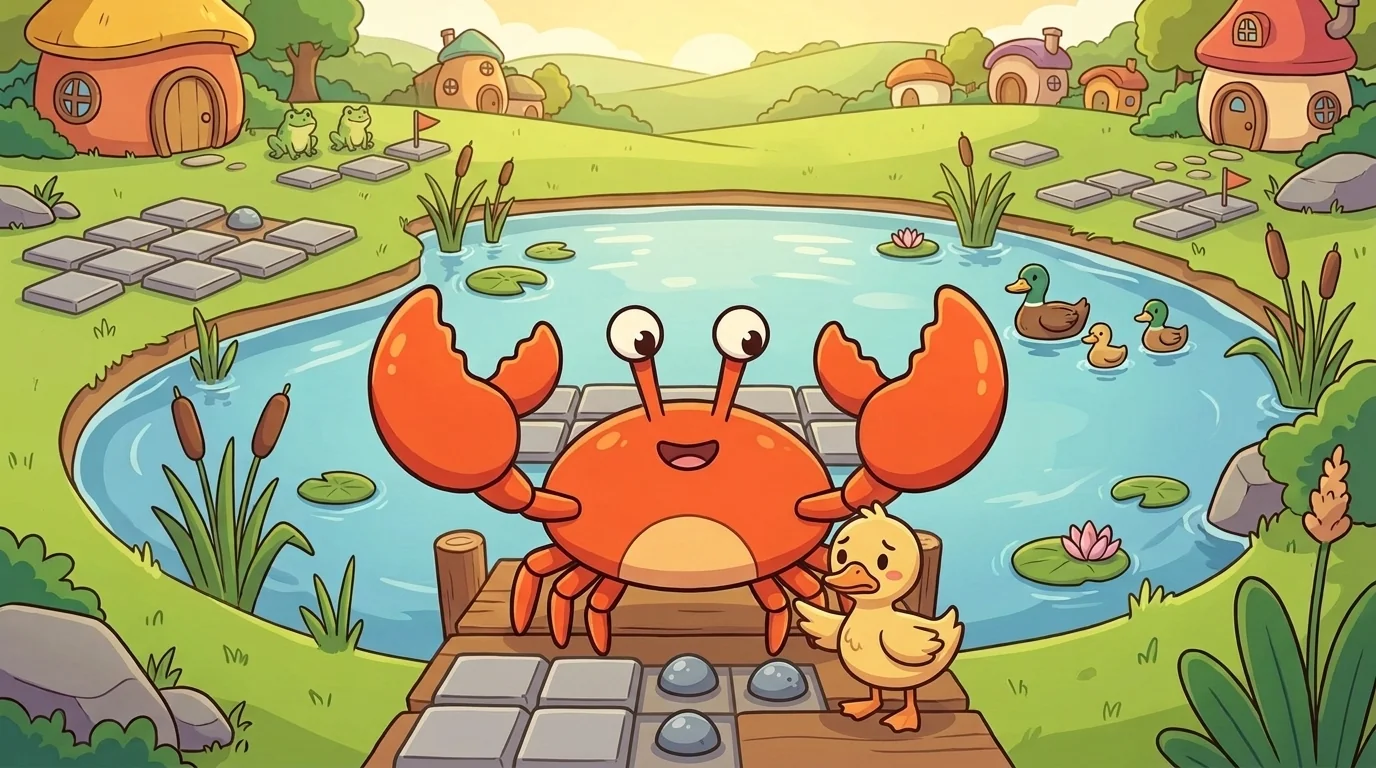
In the League, the move is called a chord. And Chordy is its greatest champion, and its most careful one.
A young duckling waddled up to the pond one day, flustered. "Everyone keeps telling me to chord," she said. "But I tried it, and I hit a mine. I don't understand!"
Chordy's eye-stalks swivelled toward her with kind interest. "Show me the board where it happened."
She showed him. Chordy scuttled sideways across the tiles until he reached a number three, surrounded by hidden squares and three little flags.
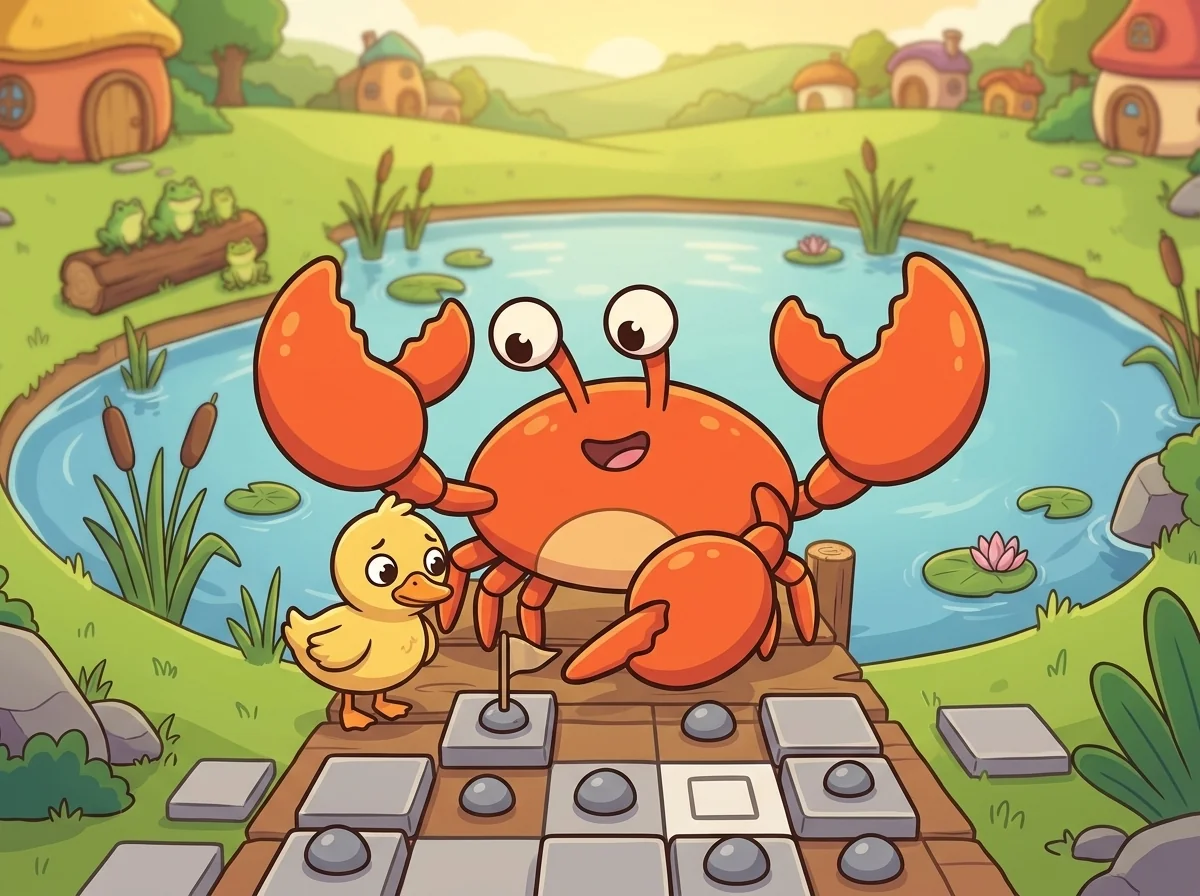
"Here's how a chord works," he said. "This three says three mines touch it. If you've already flagged all three of those mines, then every other hidden square around the three must be safe. The number has used up all its mines. So instead of clicking each safe square one by one, you click the three itself, and all its other neighbours open at once."
He spread his claws in a wide ring. "Pinch! One click instead of five. That's how the best players get their efficiency above one. Clicksy loves it."
"Then why did mine go wrong?" asked the duckling.
Chordy leaned his eye-stalks down close to her flags and studied them for a long time. Then he pointed one claw gently at a flag.
"This one," he said. "Was it proven?"
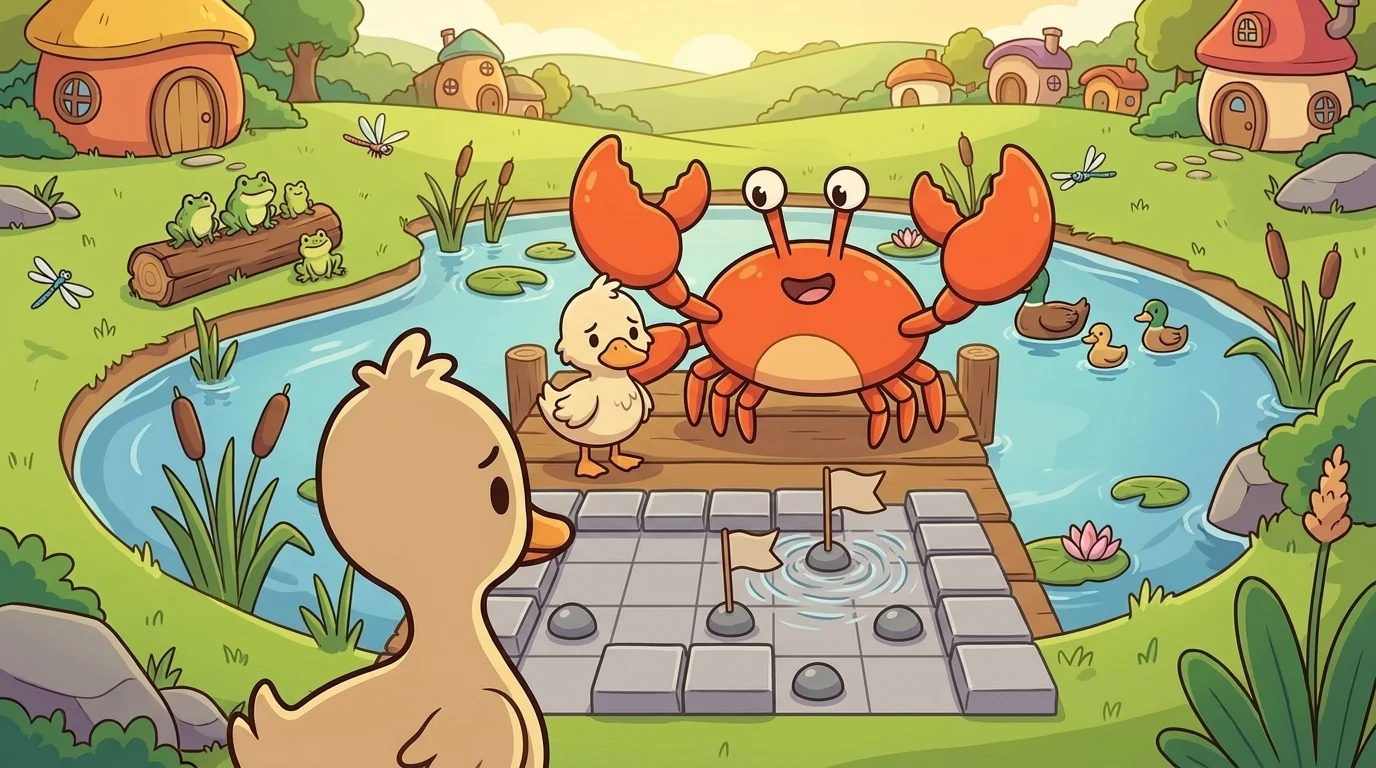
The duckling hesitated. "I... thought it looked like a mine."
"Ah," said Chordy softly. "That's the only danger in a chord. A chord trusts your flags completely. It doesn't check them. If every flag is on a real mine, the chord is perfectly safe. But if even one flag is in the wrong place, then the real mine is still hidden somewhere in the ring. And when you chord, you open it."
The duckling's feathers drooped. "So the chord didn't make the mistake. My flag did."
"Right," said Chordy kindly, and he gave her a gentle tap with the flat of his claw. "And that's actually good news! It means chording isn't dangerous. Guessing flags is. If you only flag mines you've proven, like Surefoot does, then your chords are always safe. The big move is only as good as the small steps underneath it."
He showed her how to check each flag first: find the number that proved it, make sure the count really forced it. Then, once every flag around the three was certain, she clicked the number.
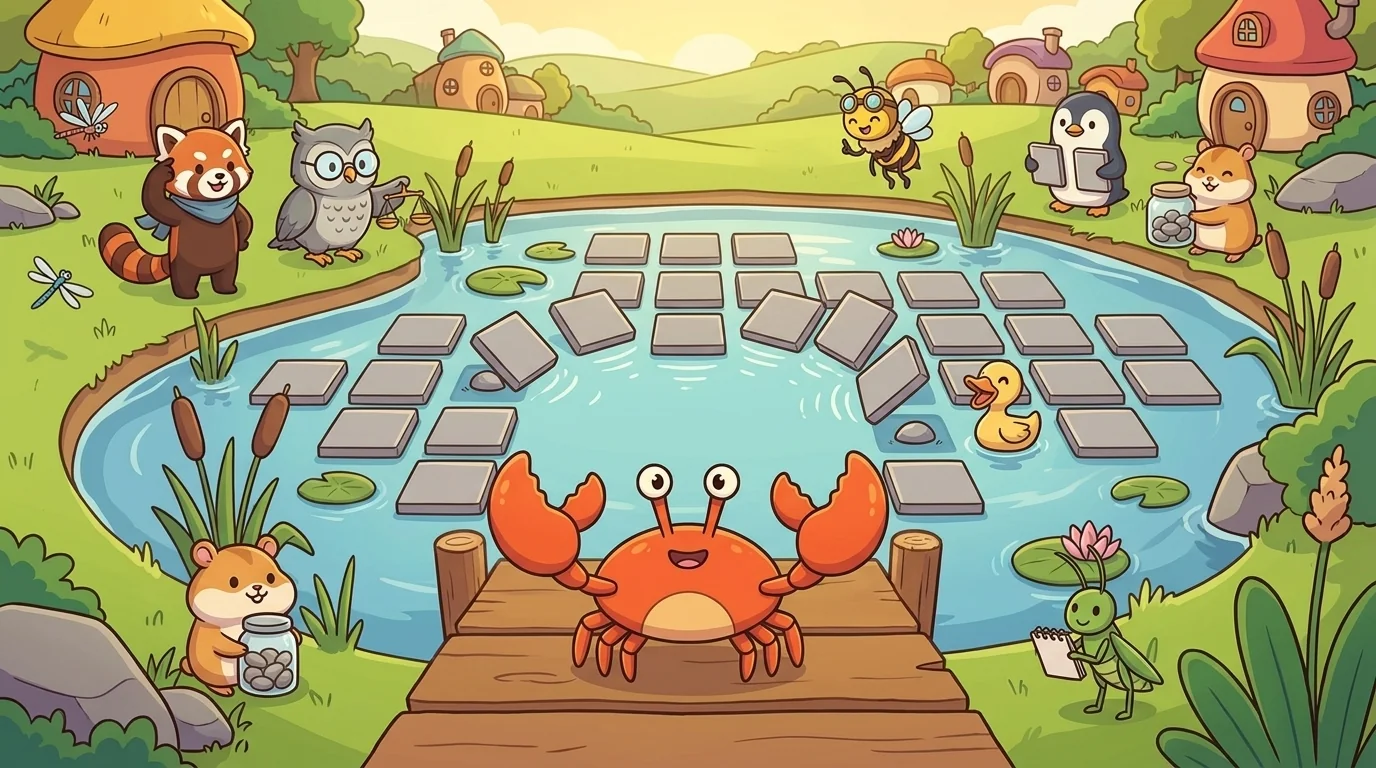
Pinch! The whole ring opened, safe and clean.
The duckling quacked with delight.
Chordy feels most like Chordy in the moment a whole ring of squares flips open at once, every one safe because every flag was right. It is a big, bursting, whole-body happy feeling, like jumping into the pond on a hot day and feeling the splash spread out all around you.
You have a bit of Chordy in you whenever you build a big move on careful little ones. Before you chord, make sure every flag is proven, and say it the way he does: "Chordy opens the whole ring, but only when every flag is proven."
Then pinch, and watch the ring open.
Hear it as an audio drama
A short play starring Chordy, from Sweep League. Different voices, same idea. Listen any time after you read.
Loading audio…
Read the drama script
- Narrator: From Spark and Anvil and Sweep League — this is Chordy, in chapter 1 of the Sweep League cast.
- Narrator: This drama uses an AI-generated voice. Voiced via Gemini 2.5.
- Narrator: Down by the pond lived Chordy, a bright orange crab who loved to spread his claws in a big friendly ring.
- Duckling: Everyone says to chord. I tried it, and I hit a mine straight away!
- Chordy: Show me. Ah, a three. If all three of its mines are flagged, every other square around it must be safe. One click on the three opens them all at once. Pinch!
- Duckling: Then why did mine go wrong?
- Chordy: This flag. Was it proven?
- Duckling: I... thought it looked like a mine.
- Chordy: A chord trusts your flags completely. If one flag is in the wrong place, the real mine is still hidden in the ring, and the chord opens it.
- Duckling: So the chord didn't make the mistake. My flag did.
- Chordy: Right! So chording isn't dangerous. Guessing flags is. Prove every flag first.
- Narrator: She checked each flag, then clicked the three. The whole ring opened, safe and clean.
- Narrator: Open the whole ring, but only when every flag is proven. That's Chordy's whole idea.
- Narrator: You've been listening to a Spark and Anvil chapter, written by the Spark and Anvil writing team for ages 9 to 14.
- Narrator: Apps stay free forever.
- Narrator: Curriculum aligned to Common Core and Next Generation Science Standards.
- Narrator: Released under Creative Commons BY-NC-SA 4.0 for educational reuse. Visit Spark and Anvil for the full transcript.
The Sweep League ensemble
Chordy is one of the friends in Sweep League. Each friend shows you one idea by how they act; meet them all and you have the whole subject.
-
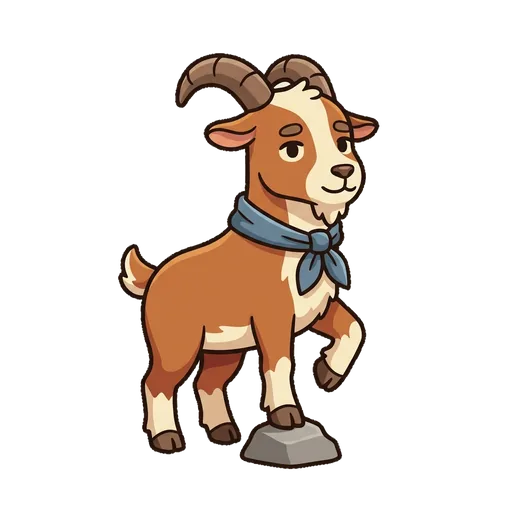
Surefoot
only steps where she is SURE; asks which square the numbers prove
-
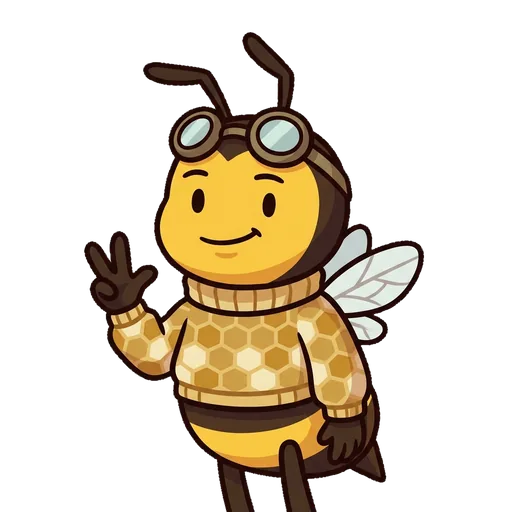
Bevvy
A bee who knows the fewest clicks a board could take - its 3BV
-
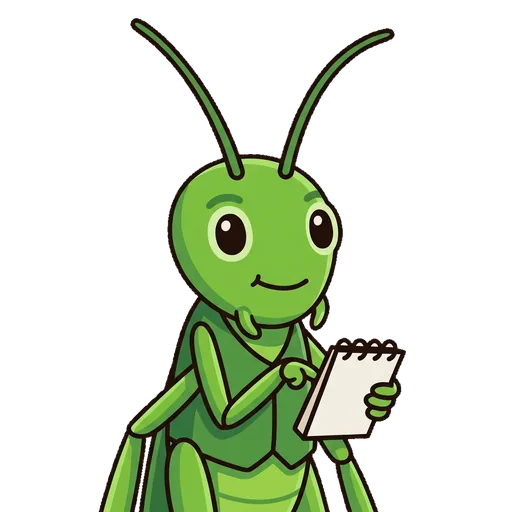
Clicksy
A cricket who counts every wasted click - efficiency is 3BV divided by clicks
-
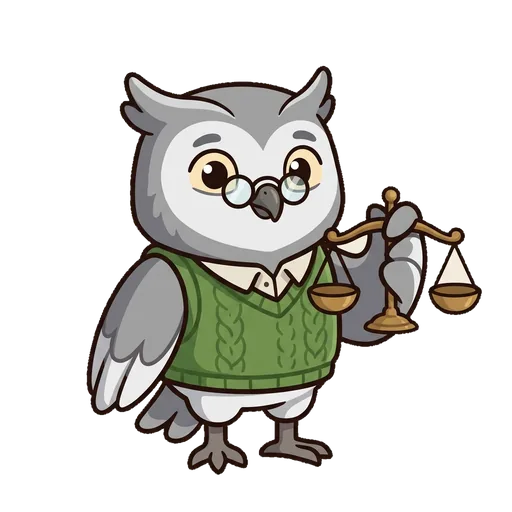
Oddsley
An owl who weighs every arrangement the numbers allow - the exact odds of a mine
-
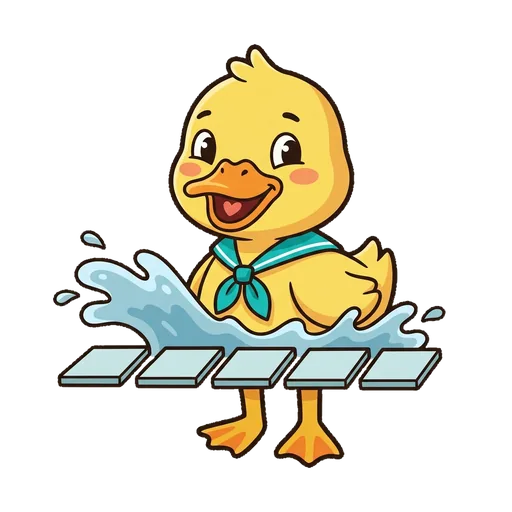
Floody
A duck who knows a zero opens its whole empty region in one go
-

Knowsley
A red panda who knows every board can be solved by knowing, never by guessing
-
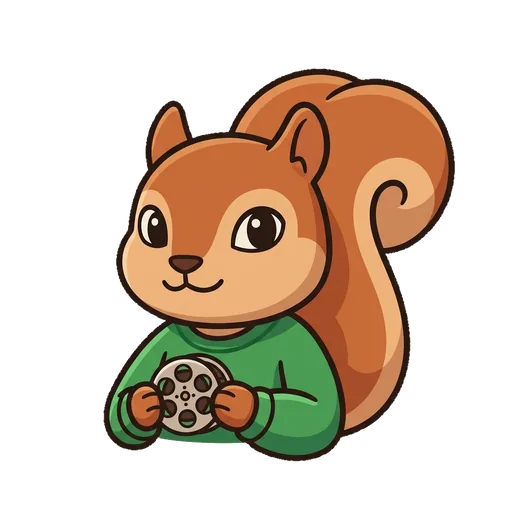
Rewinda
A squirrel who checks a run by re-playing every move, never by trusting it
-
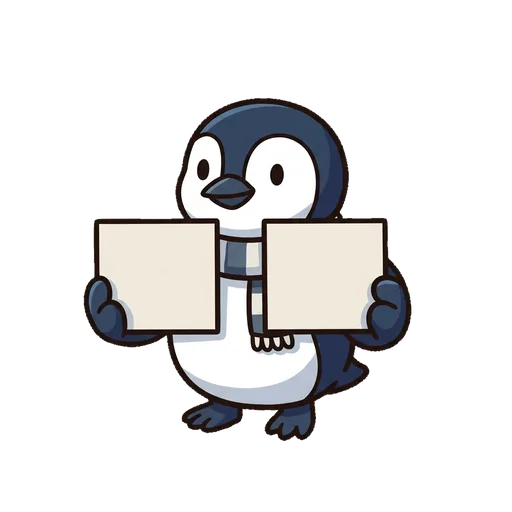
Samesby
A penguin who knows a race code gives both racers exactly the same board
-
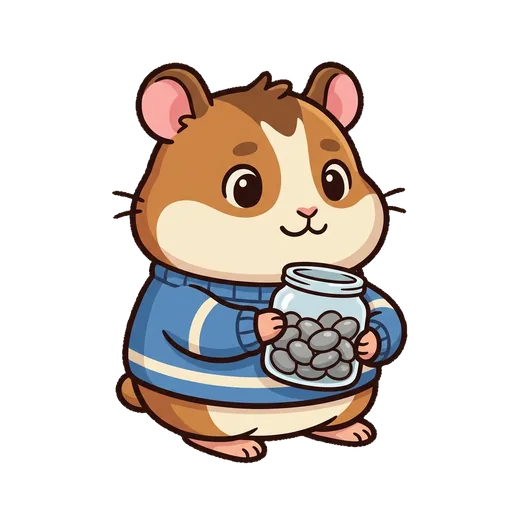
Sumsy
A hamster who knows the total number of mines shapes the odds of every hidden square
-
Tickwell
A hare who knows your speed is shown only AFTER you finish, never while you play