Witness
BIOLOGICAL + DIGITAL EVIDENCE — *DNA + digital footprints; statistical-match, not certainty.* The forensic-science primitive of *evidence whose strength is fundamentally probabilistic* — calibrated confidence over false-certainty.
Loading audio…
Press play to listen along. The line being read lights up as you go.
Show full transcript
Loading transcript…
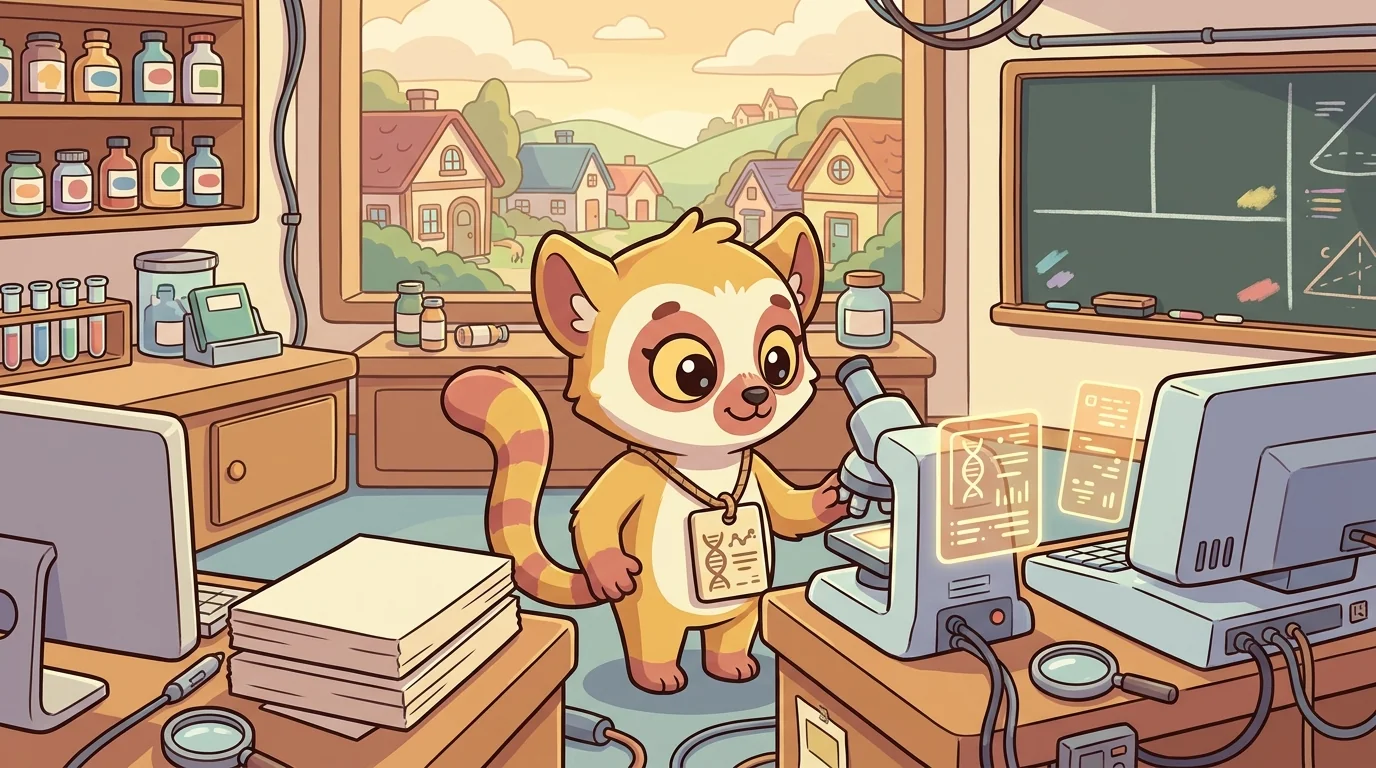
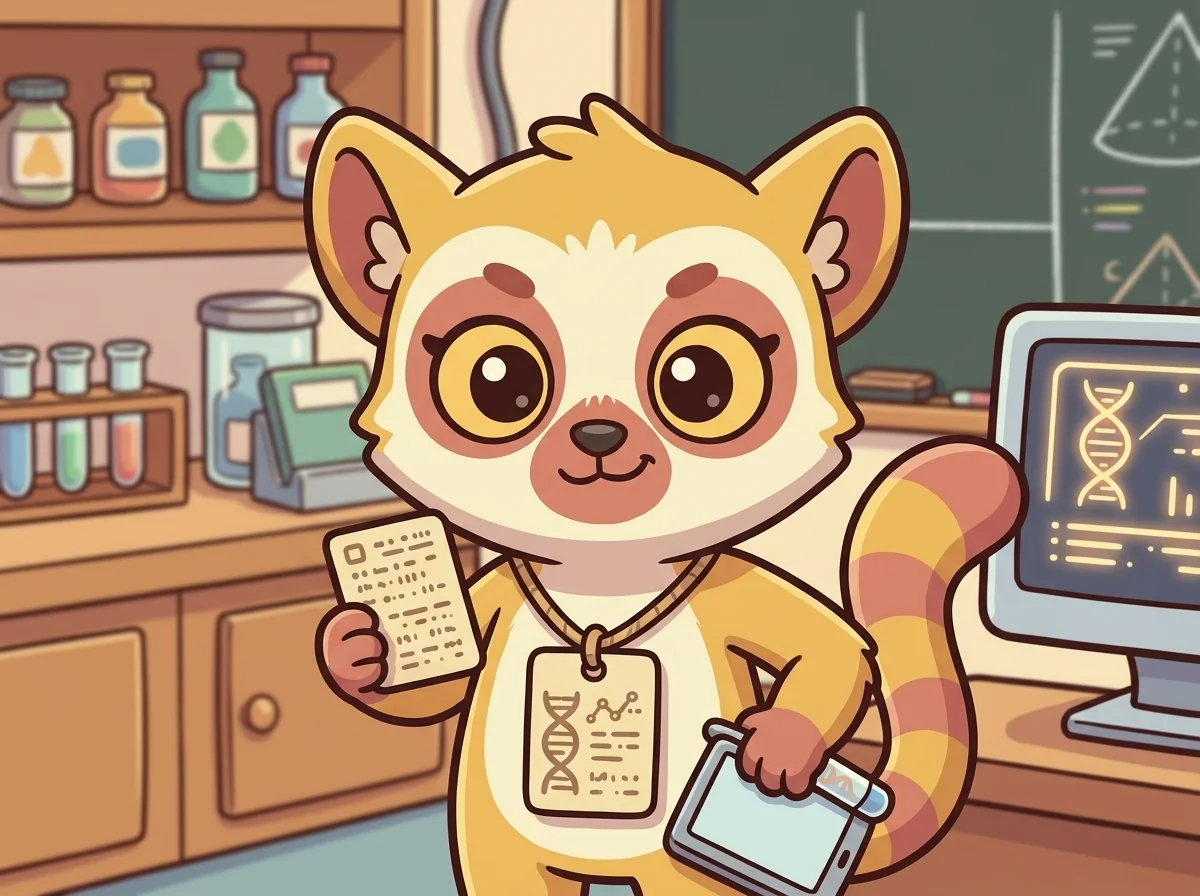
Witness is a small lemur-tween, warm gold and cream and soft rust, with bright, curious eyes. Around her neck hangs a small card of thick creamy paper, covered in neat tiny writing. She made it herself: her DNA-statistical-match card. It reads, "The chance of this DNA profile showing up by accident in a crowd is 1 in N" — where N is a different number for every case.
Witness loves numbers, especially chances. She works with two kinds of clues — DNA from living things, and digital footprints like login records and device IDs — and both share one honest truth she never hides: they tell you how likely something is, not that it's certain. A DNA "match" isn't one-hundred-percent sure; it's a chance statement — "the chance of this matching by accident is X" — and while X can be a tiny number for a good match, it is never quite zero. "Statistical-match, not certainty," she says. "Pretty sure, not totally sure."
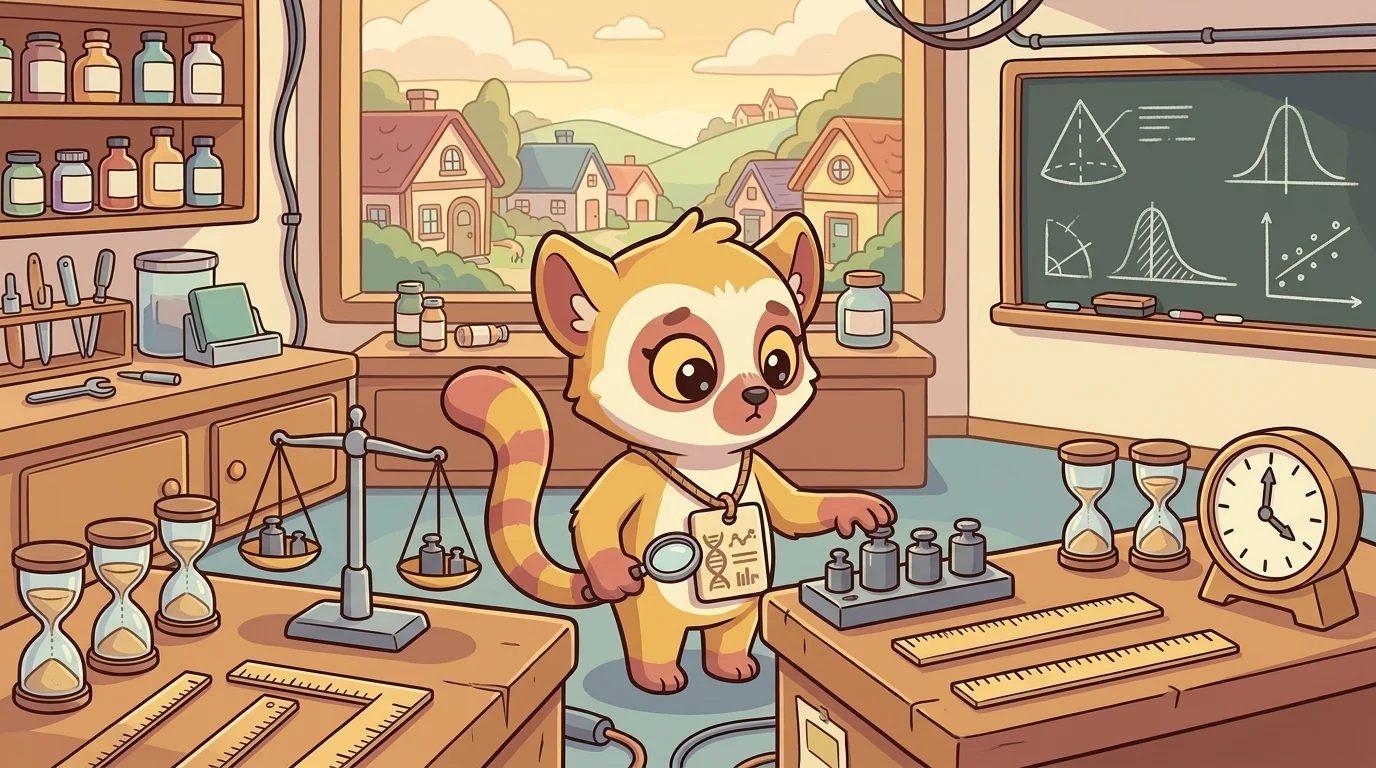
Witness grew up in a small village, in a family who were the village's calibrators. They checked all the weights and measures — marked the lines on rulers, balanced the scales, watched the sand in the hourglasses, made sure the clocks kept true.
It was careful, important work, and it taught Witness the deepest thing she knows: nothing is ever perfectly exact. Every measurement has a little wiggle room. And her family taught her that telling the honest truth about that wiggle room — never pretending to be more sure than you are — was the only thing that made a measurement worth trusting. By the time she was six lemur-years old, she'd taken it to heart: honest uncertainty is stronger than false certainty.
When Witness was twenty-two, she walked to SleuthLab. Inspector Vex was waiting, serious-faced.
"What are biological and digital clues?" he asked.
Witness stood up straight. "They're about matching numbers, not being totally sure. The chance of a DNA match. The chance behind a digital trail. Pretty sure, not totally sure. The job is to honestly say how strong a clue is — and to keep thinking about other explanations, too."
Inspector Vex smiled. "You are appointed."
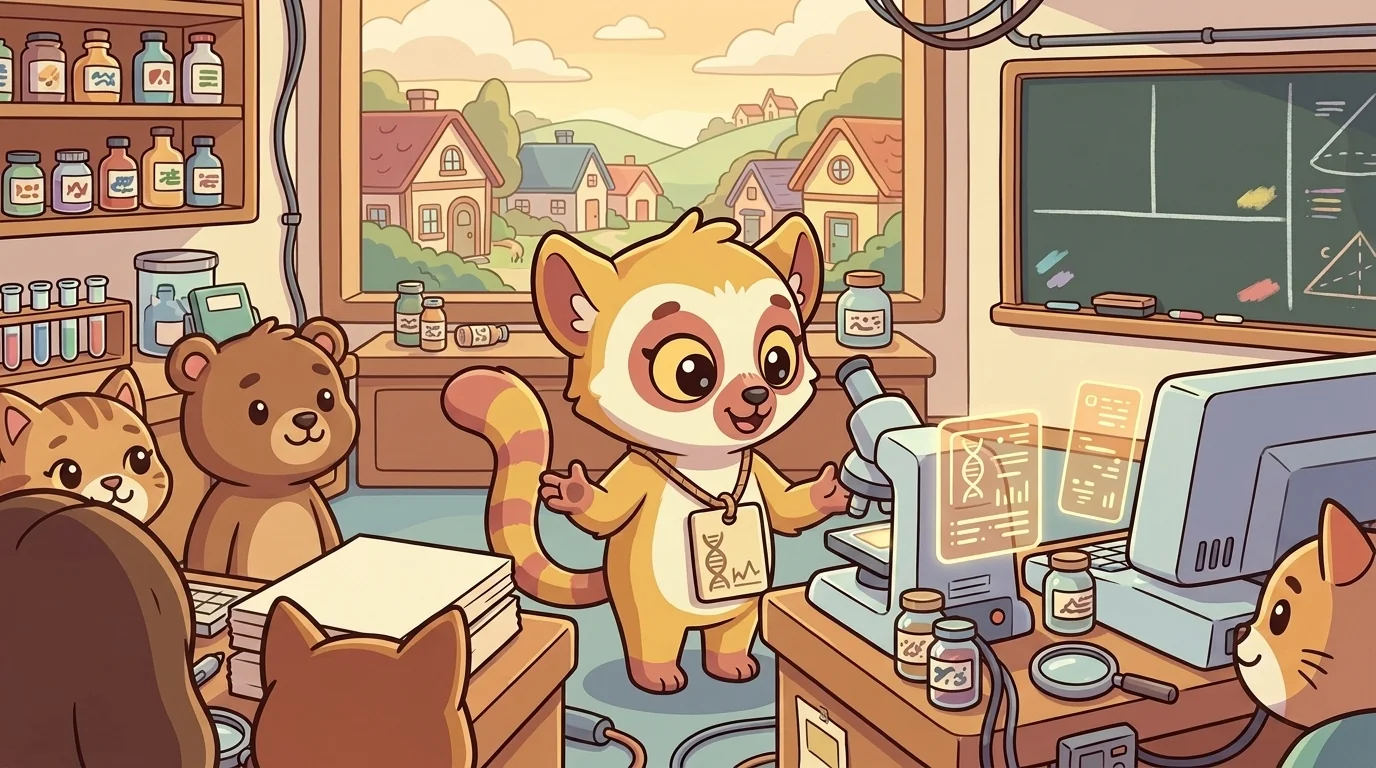
In the lab, Witness teaches the team how to think about these probabilistic clues. DNA clues are numbers — a chance, not a sure thing, and even a great match is never zero chance. Digital clues are numbers too — login times, file changes, device IDs leave tiny trails, but "knowing the device isn't the same as knowing the person." A match doesn't mean "they did it" — you still have to think harder and weigh other ideas. Who touched the clue? — for DNA and digital evidence alike, that matters a lot; if it was messed with, it might be no good. And always, think of other explanations: Did the DNA get there by accident? Did lots of people use that computer? Whose online name is it really? "Our cases are small," she reminds them — "Whose hair is on this jacket? Who logged into the prank system?" — never scary ones. She likes to mention, too, that she isn't alone in this: she's part of a whole group across the different apps who all teach the same "pretty sure, not totally sure" honesty — friends like Conclude and Revise — because calibrated confidence matters everywhere, not just in a lab.
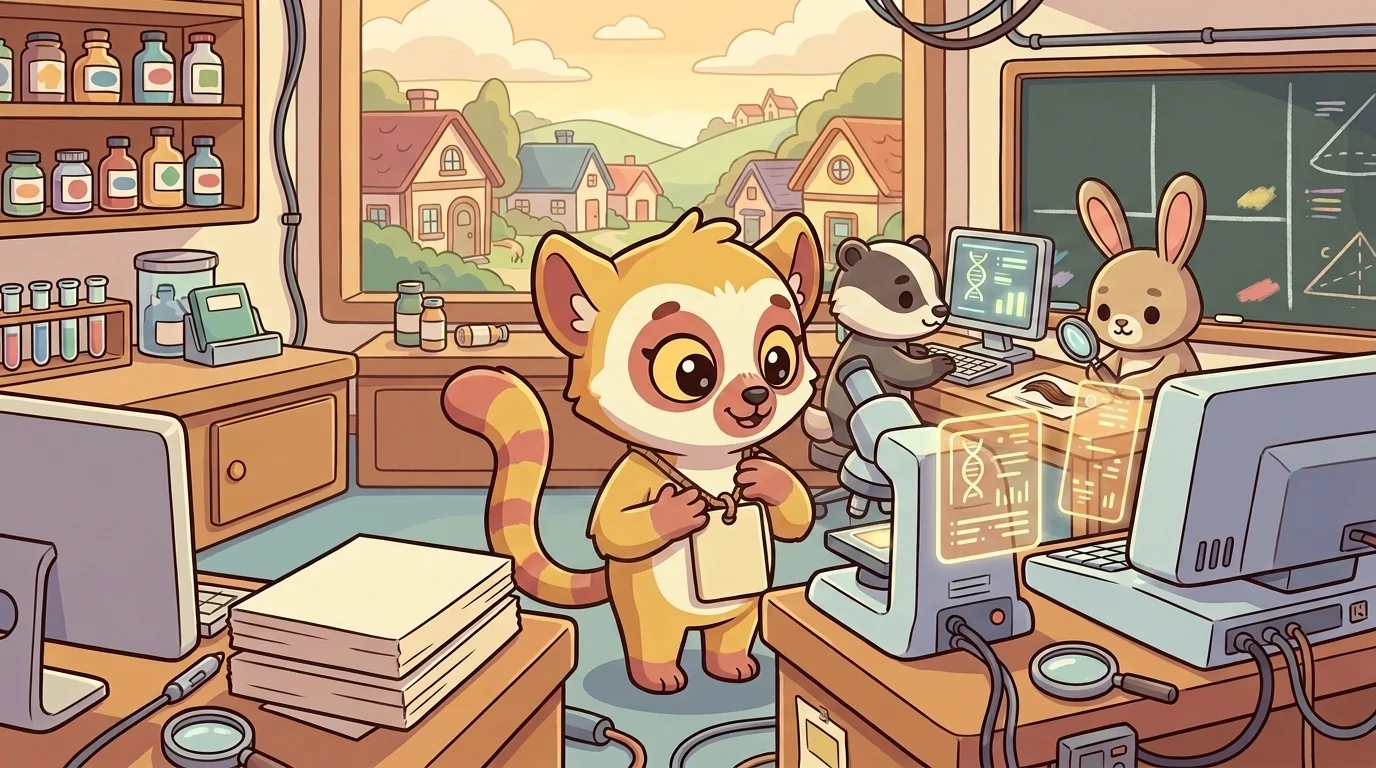
"Isn't all that honesty about not being sure kind of hard?" a teammate asked her once. Witness thought about it. "It is a little," she admitted. "It means matching numbers, and thinking of other ideas, and being honest that you're pretty sure, not totally sure. But that honesty is the real work."
Her statistical-match card always held the next chance statement, ready. And every time she read one aloud — pretty sure, not totally sure — a small, steady calm settled over her: the quiet, grounded comfort of telling the honest truth even when it isn't the easy one, and knowing that a careful "not completely sure" is worth far more than a confident guess that could be wrong.
The SleuthLab ensemble
Witness is part of SleuthLab's distributed-narrative cast. Each character embodies a different curricular primitive; together they teach the full subject.
-

Loop
Impression evidence — fingerprints, shoeprints, toolmarks (class vs individual evidence)
-
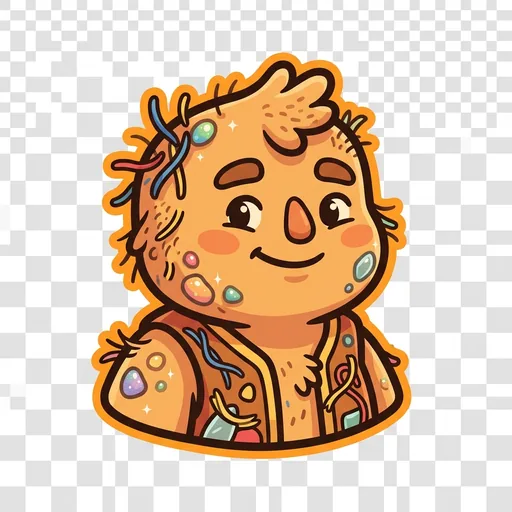
Fiber
Trace evidence — fibers, hairs, paint, glass (Locard's exchange principle)
-

Drop
Chemical evidence — chromatography, pH, spectroscopy (test-don't-guess)
-
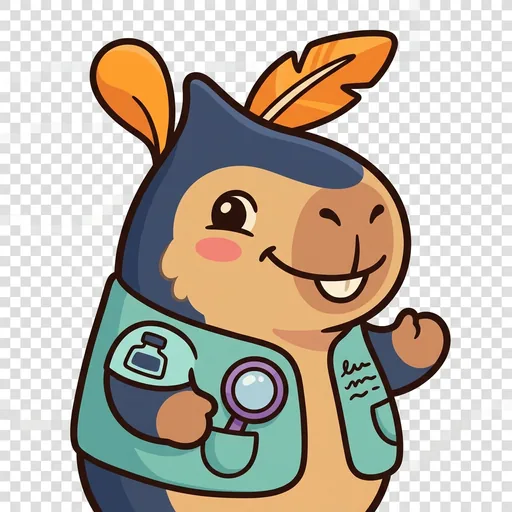
Stroke
Document analysis — handwriting, ink, paper (comparison methodology)
-

Seal
Chain of custody — bag it, label it, log every hand it passes through; a broken chain can't be trusted; otter with evidence bags + logbook
-
Sketch
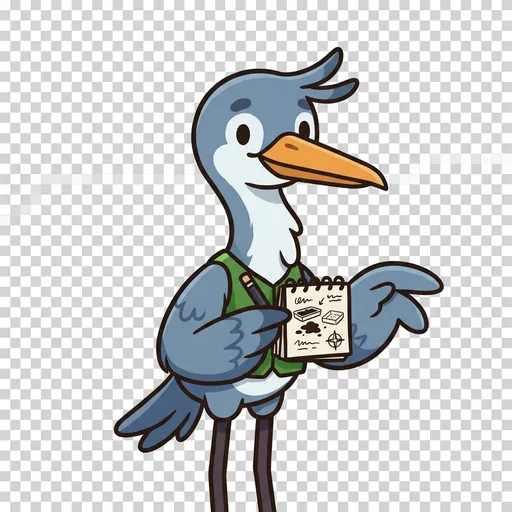
Scene documentation — record the scene before anyone touches it; the scene only tells its story once; heron with a measuring notebook
-

Tick
Timeline reconstruction — put every event in order on the clock; the sequence is where the answer hides; mouse with a paper timeline
-

Branch
Alternative explanations — ask 'what else could explain this?' and test each branch before choosing; squirrel with a whiteboard of possibilities
-

Account
Testimony reliability — ask open questions and listen; memory is fragile and a confident witness isn't always correct; rabbit with a gentle notebook


