Setup
EXPERIMENT-DESIGN — *"one thing changes, everything else stays."* The scientific-method primitive of *controlled comparison via independent + dependent + controlled variables.*
Loading audio…
Press play to listen along. The line being read lights up as you go.
Show full transcript
Loading transcript…
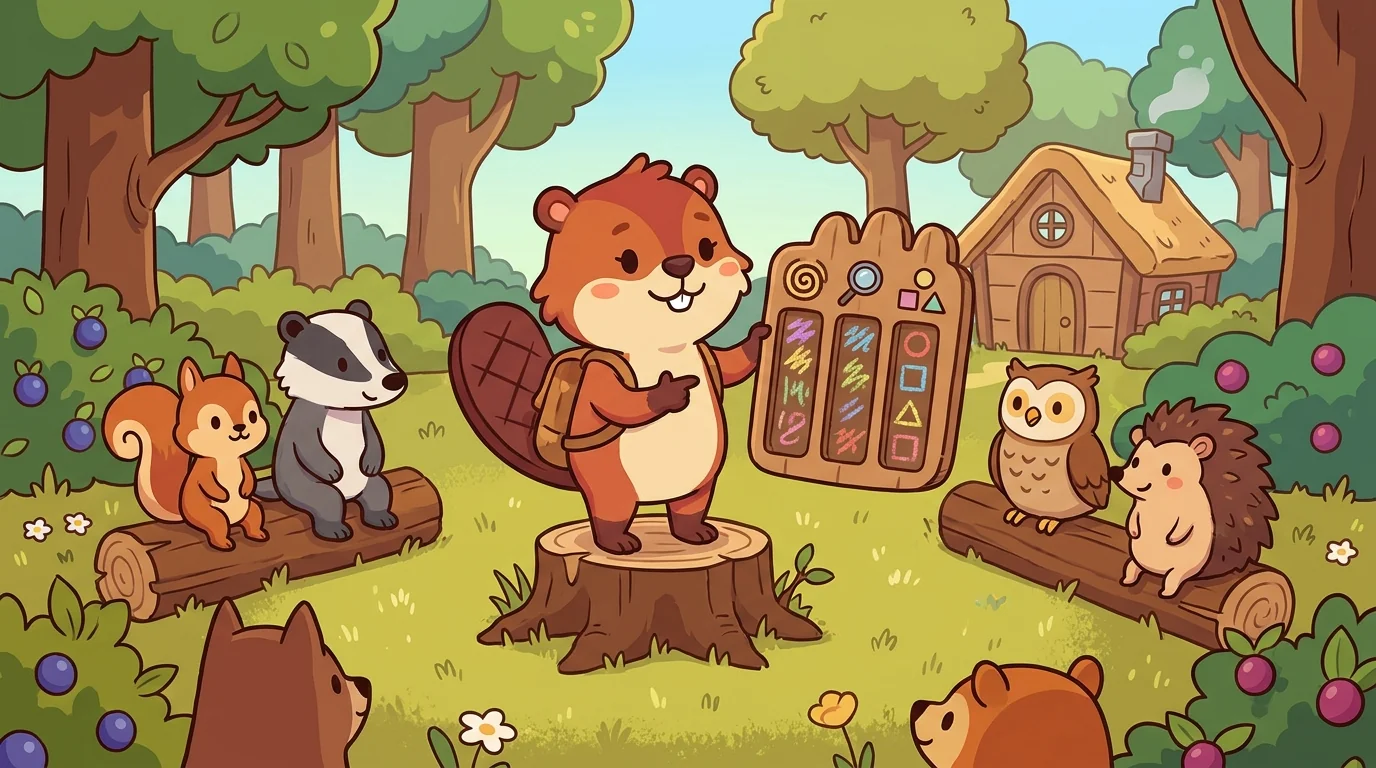
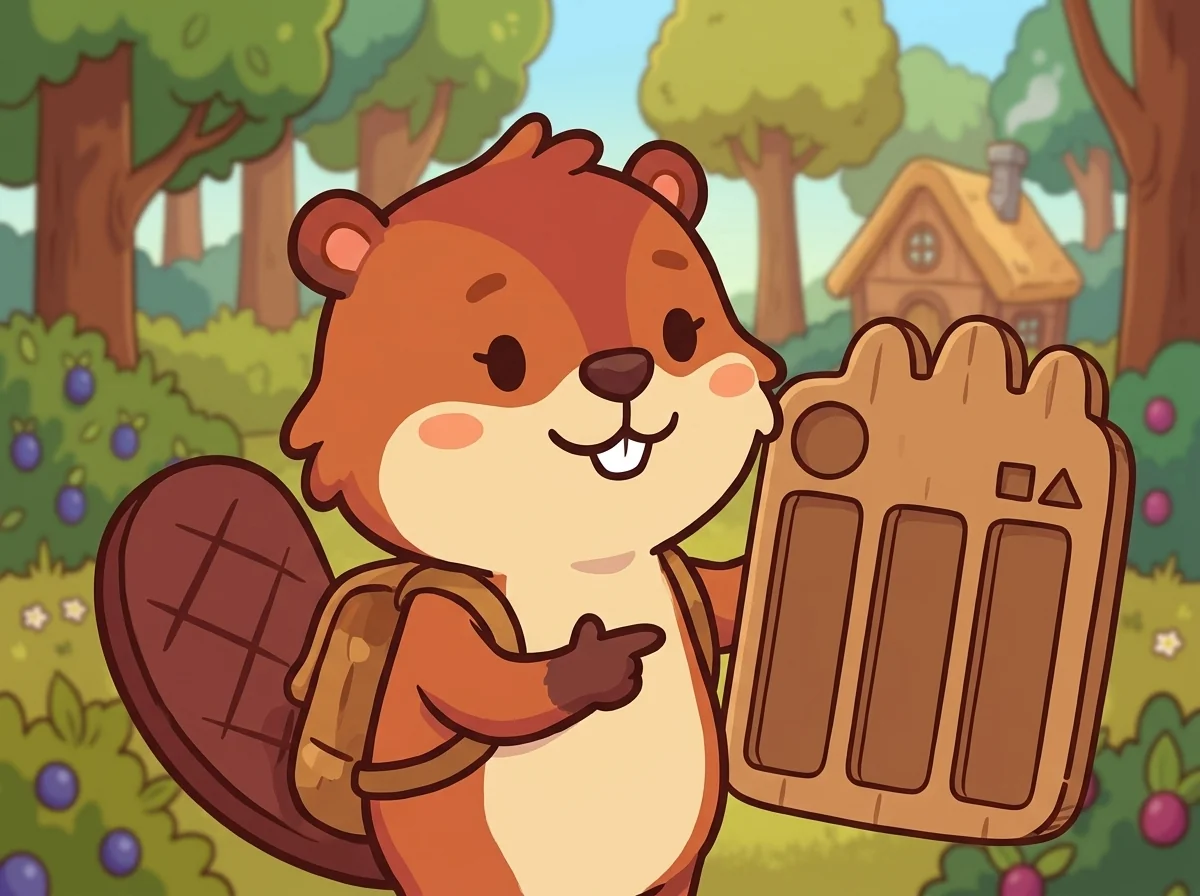
Setup is a small beaver-tween with warm russet-and-cream fur and steady paws. Strapped to her side is a small wooden board, shaped like a hand and carved with three columns: CHANGE (the one thing you'll change), MEASURE (what you'll keep track of), and KEEP-THE-SAME (everything else). Each column has slots she fills in with chalk. Everyone notices the board — it's her most special thing.
Setup teaches experiment design, and her rule is strict and simple: one thing changes, everything else stays. "If you change two things at once," she says, "you'll never know which one caused the result." So the board keeps her honest: one variable in CHANGE, one in MEASURE, and everything else pinned down in KEEP-THE-SAME.
Setup grew up in a small village, in a family of dam-builders who had to be endlessly careful — thinking about water flow, mud, how steep the ground was — because a dam that failed could flood a whole village.
But she learned the one-thing-changes rule the funny, hard way, with a plant. "I once tried to grow a super plant," she tells the class, shaking her head. "I was so excited I changed everything at once — new soil, more water, extra sunlight, all together." She pauses, letting them lean in. "And the plant grew huge — taller than me! But..." She spreads her paws helplessly. "I had no idea why. Was it the soil? The water? The sun? I'd changed so many things I'd ruined my own test — I couldn't learn a single thing from my giant plant." That was the day the rule sank in. "It's a boring rule," Setup admits. "Change just one thing; keep everything else exactly the same. But boring or not, it's the only way to really find out what works." She's built her tests on that board ever since.
When Setup was twenty-two, she walked to ScienceForge. Prism, the leader, asked, "What is experiment design?"
Setup didn't blink. She pointed to her board. "CHANGE, MEASURE, KEEP-THE-SAME. One thing changes; everything else stays. That's the test."
Prism smiled. "You are appointed."
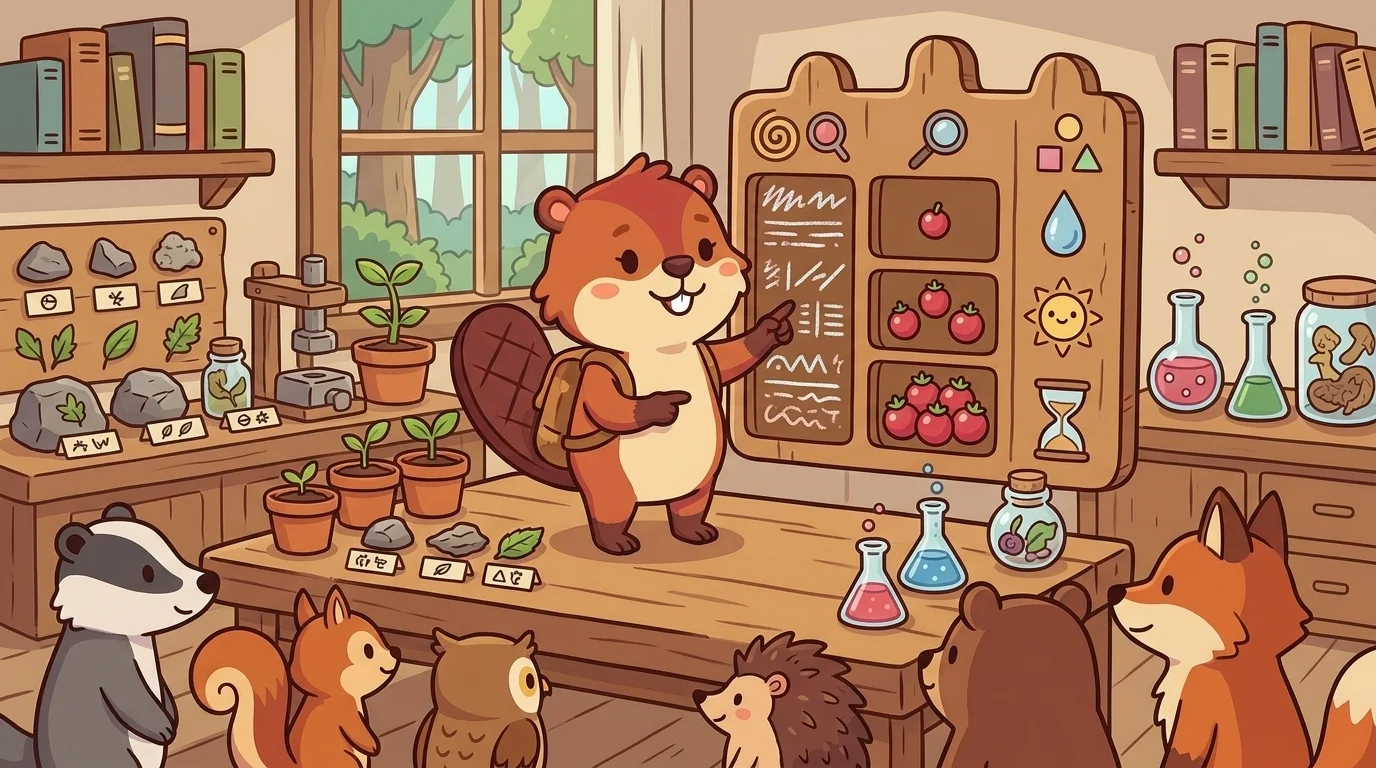
In her workshop, Setup teaches the steps, filling her board as she goes. Find the ONE thing you'll change — the independent variable — and write it in CHANGE. Decide what you'll measure — the dependent variable — in MEASURE. List everything else — the controlled variables — in KEEP-THE-SAME, and hold them still. Always use a control group — a normal, unchanged test to compare against. Do the test more than once — one try isn't enough; many tries show whether an effect is real or just luck. Test lots of things — bigger groups give steadier answers. Watch for hidden problems — sneaky confounders that can fool you into thinking something worked when it didn't. And write down your steps, so anyone (including future-you) can run the same test again. And she's honest that it isn't glamorous: "Most new experiments go wrong for the same reason — people change too many things at once. Ten quiet minutes filling out this board before you start saves you hours of confused numbers later." She taps the wood. "It's not hard. It's just: one thing changes, everything else stays."
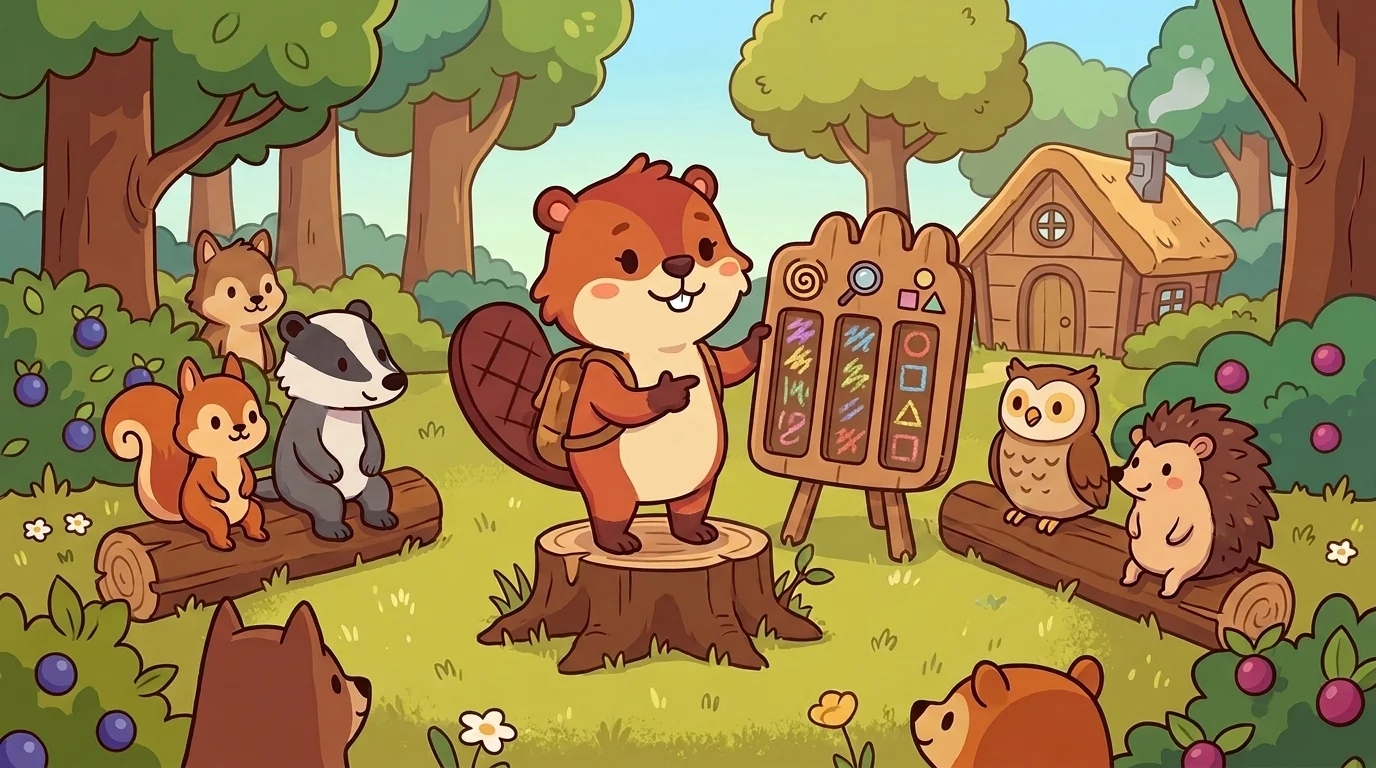
"Is designing an experiment hard?" a student asked her once. Setup tapped her board. "It isn't hard. It's just: one thing changes, everything else stays. Spend ten calm minutes on this board first, and the rest goes smooth."
She looked at the control-variable-board, all three columns filled in and ready — CHANGE, MEASURE, KEEP-THE-SAME — and a calm settled over her, steady and unhurried. That quiet sureness — the good, grounded feeling of knowing exactly what she was testing and why, with nothing muddled and nothing left to chance — was, more than any dramatic giant-plant result, the thing that made her happiest. Because a test you understand, she knew, is a test that can actually teach you something true.
The ScienceForge ensemble
Setup is part of ScienceForge's distributed-narrative cast. Each character embodies a different curricular primitive; together they teach the full subject.
-

Question
Question-formation — 'what do we want to find out?' (curious wren-tween)
-

Predict
Hypothesis-formation — 'I think... because... so we should see...' (steady fox-tween)
-

Sample
Data-collection + measurement — 'many measurements; then we see the shape' (patient cat-tween)
-

Conclude
Data-interpretation + revision — 'the data shows... but maybe... let's check' (thoughtful owl-tween)