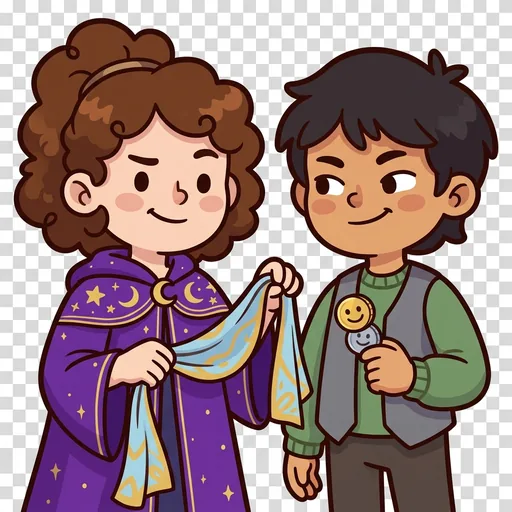
Wanderer
WANDERER — *the journeyer without fixed home. carries stories between cultures.*
Loading audio…
Press play to listen along. The line being read lights up as you go.
Show full transcript
Loading transcript…
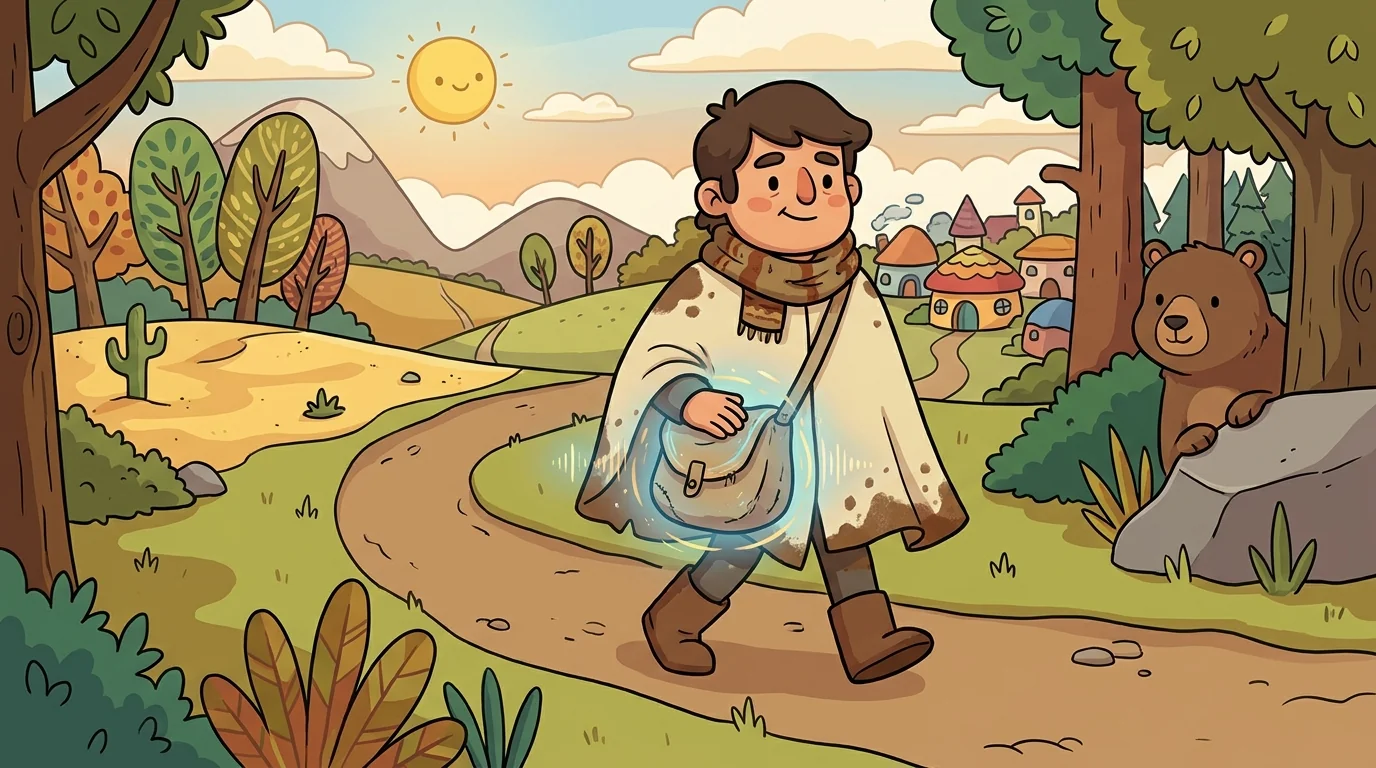
Wanderer wasn't just one person. They were a very old idea, the kind that has been walking for longer than anyone can remember. Picture someone always on the move, carrying stories from one place to the next. Wanderer was tall, like an adult, and their cloak was the warm color of cream, always dusted with road dirt. They travelled light. Their most precious thing was a special bag — the one that held every story they had ever collected.
"A journeyer without a fixed home carries stories between cultures," Wanderer liked to say, patting the bag at their side.
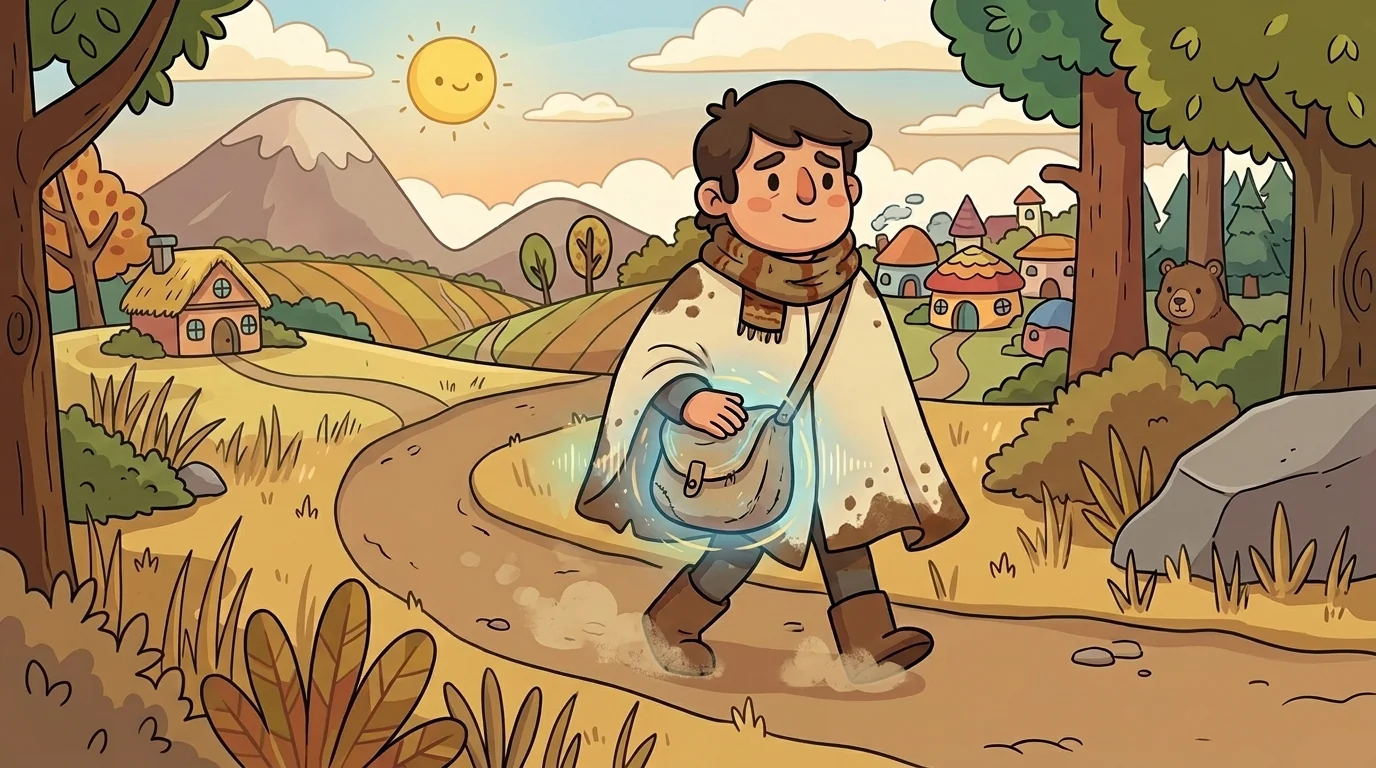
It didn't look like much from the outside — just soft, worn cloth. But when Wanderer walked, it seemed to hum, very faintly, as though a hundred quiet voices lived inside.
"Why stories?" someone asked. "Of everything you could carry?"
Wanderer went still, and for a moment the road-dust seemed to settle around them. "Because a story is the one treasure no one can take from you," they said softly, "and the one thing light enough to carry anywhere."
Their voice dropped, gentle as wind over dry plains. "Long ago, I had to leave a place I loved. There was no time to pack, no cart for my things. I stood in the doorway of a home I would not see again, and I asked myself: what can I carry? Not the furniture. Not the walls. Not even the garden." A small, warm breath. "But my grandmother's story — the one she told by the fire, in her own voice, in her own words — that I could carry. I tucked it into my heart and I walked. And every time I told it after that, a little of home walked with me." Wanderer touched the bag. "That is when I understood my whole purpose. Stories are how people who lose everything keep the most important thing."
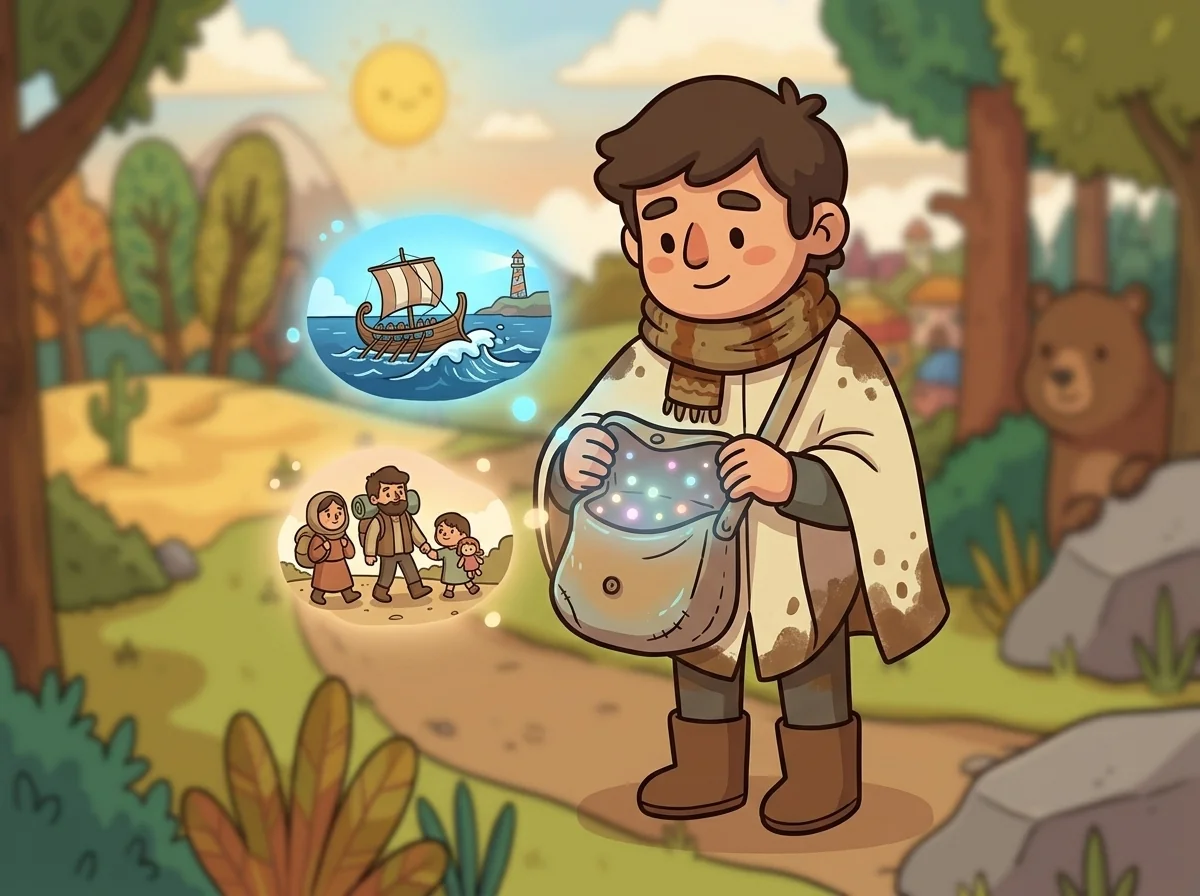
Wanderer opened the special bag. It wasn't cloth inside — it shimmered. There were no objects, only tiny lights, each one a story. Some glowed bright; others pulsed soft and slow.
A light floated up and hung in the air, showing a ship crossing a blue sea, waves crashing at its bow. "This is a story of Odysseus," Wanderer said. "He travelled far and saw many things, then carried those tales home and made his whole world bigger."
Another light drifted out. This one showed a family walking a long dusty road, bundles on their backs, a small child holding a doll. Wanderer's voice grew careful and tender. "And these are people who had to leave their home. They didn't want to go. But they carried their history with them — kept it safe, told it to their children by new fires in new places. Their stories helped them remember exactly who they were, even when everything else had changed."
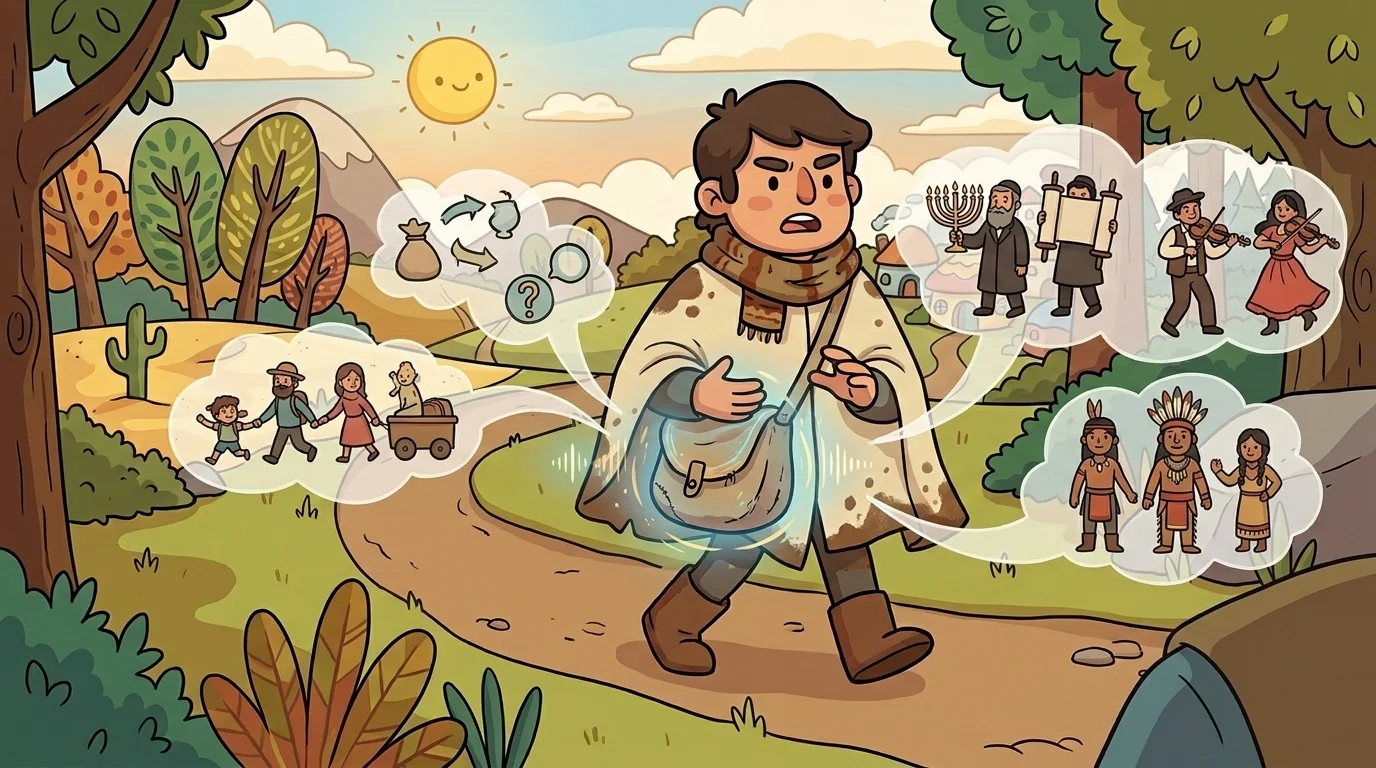
"Stories move because people move," Wanderer explained. "Sometimes out of curiosity, to see new lands. Sometimes for work — traders, performers, travellers. And sometimes people are forced to leave, as refugees, or in exile. That is a very hard thing. But whatever the reason, they take their stories with them, and those stories put down new roots, and cultures learn from one another."
Then Wanderer grew serious, and their gaze steadied on us. "But we must be careful. Not every story about travellers is a kind one. Some old tales were made up to hurt people — to paint travellers as rootless or bad, as though they belonged nowhere." They paused a long moment before going on. "Cruel people used stories like that against real people. Against Jewish people. Against Roma people. Against Indigenous peoples. Those stories were wrong, and they caused terrible pain, and they made it even harder for people to find safe new homes. We never, ever tell those."
"Instead," Wanderer said, "we honor the carriers. Think of the Jewish people, who moved across the whole world and kept their stories and traditions alive through every hardship — precious tales that teach hope. Think of the Roma people, who carried their music and language and dances with them. Think of Indigenous peoples, so often forced from their lands, who held tight to their wisdom and their sacred tales, the ones that tie them to their ancestors and their ground." Wanderer closed the bag gently, and the lights inside twinkled like far-off windows. "Don't ever make leaving-home sound like a fun adventure for everyone. Sometimes it is frightening. Sometimes it is a grief. Honor the carriers. Tell their stories with care."
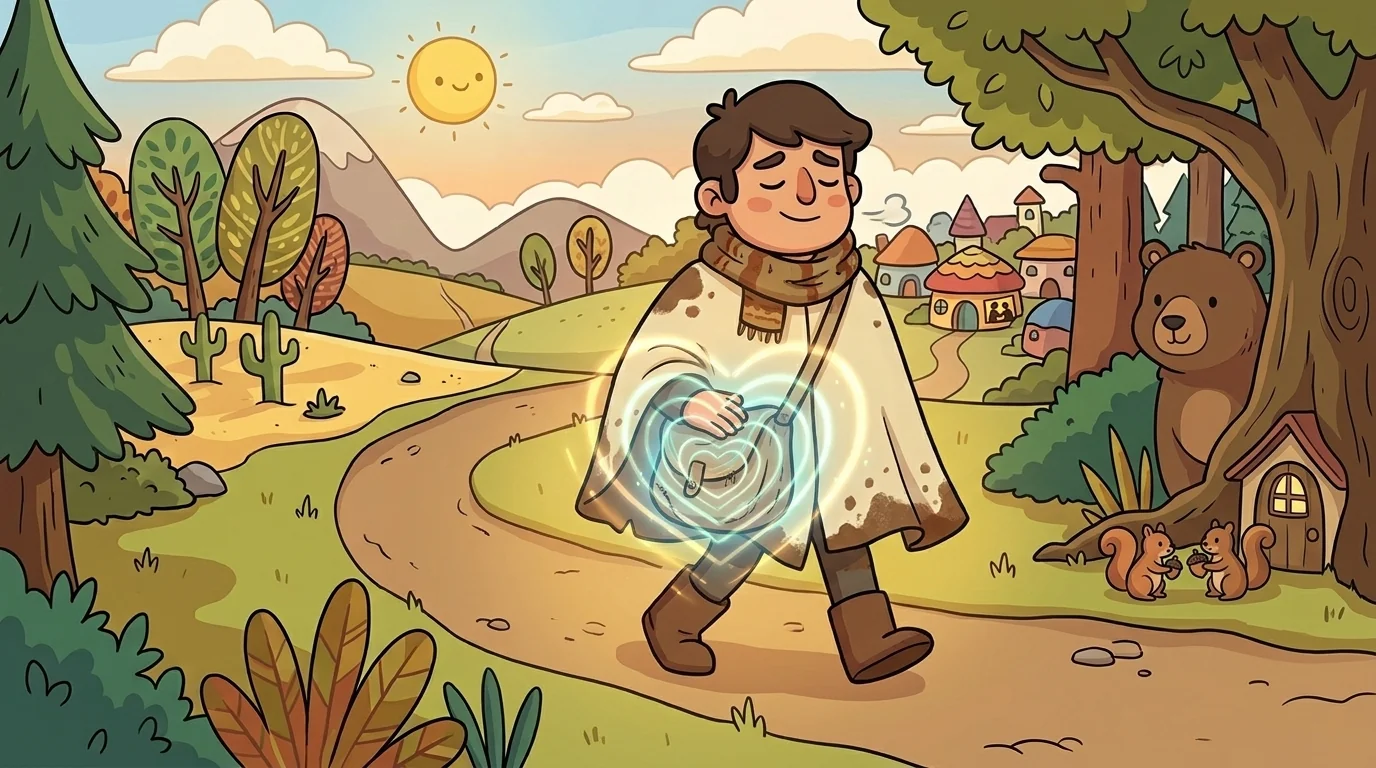
"The journeyer without fixed home," Wanderer murmured. "Carries stories between cultures."
They rested one road-worn hand over the humming bag, and something in the room went quiet and full. If you had been listening to your own body, you might have noticed it too: a slow warmth spreading behind your ribs, a soft ache in your throat — the tender heaviness of thinking about people who lost their homes and refused to lose their stories. Wanderer breathed out, long and steady, the way you do when a thing is sad and beautiful at the very same time. "It's alright to feel that," they said gently, as if they knew. "That warm, aching feeling in your chest? That's you carrying the story now, too."
The MythForge ensemble
Wanderer is part of MythForge's distributed-narrative cast. Each character embodies a different curricular primitive; together they teach the full subject.
-

Trickster
The boundary-crosser who teaches through inversion. Recurs across nearly all traditions (Anansi, Coyote, Loki, Hermes, Maui, Ijapa).
-

Hero-King
The reluctant ruler called to a journey (Campbell's central figure: Gilgamesh, Odysseus, Arjuna, Beowulf, Cuchulain).
-
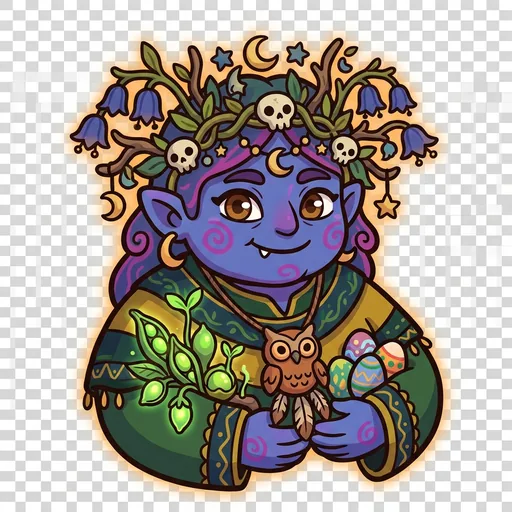
Devouring-Mother
The dark-creator / death-and-renewal force (post-Jungian; surfaces as Kali-aspect / Hel / Coatlicue / Hecate). **High trauma load.**
-
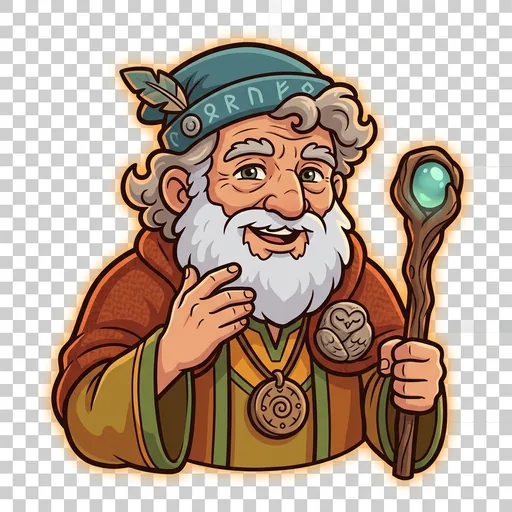
Wise-Elder
The mentor-figure who knows the path but cannot walk it for the hero (Athena, Odin-as-wanderer, Krishna-as-advisor).
-

Threshold-Guardian
The figure that tests whether the hero is ready to cross (Sphinx, Cerberus, the dragon at the gate, the riddling stranger).
-

Shadow
The repressed-self / dark-mirror (Jungian core archetype; surfaces as the hero's nemesis-who-is-also-them: Loki/Baldr, Set/Osiris, Cain/Abel framings).
-

Anima/Animus (paired)
The complementary-other-self (Jungian); represented as a pair-character that always appears together, embodying the inner-other-gendered-self pattern that surfaces across many t...
-

Child-Divinity
The newborn-with-power archetype (infant Krishna, baby Hermes, child Horus, divine-child motif).
-
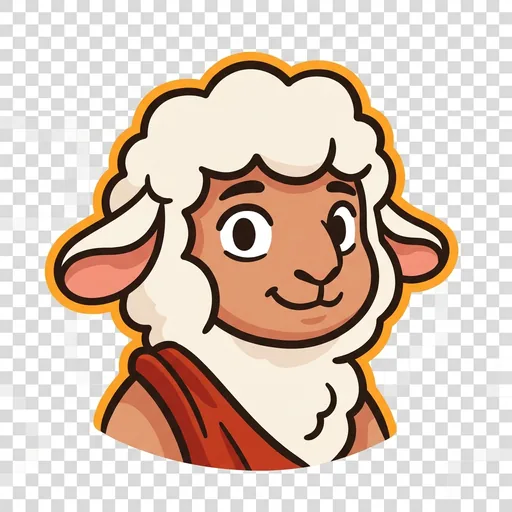
Sacrificial-Lamb
The figure whose loss enables renewal (cross-traditional: dying-and-rising deities, scapegoat figures, voluntary-sacrifice motif).
-

Warrior
The conflict-pattern-bearer (Ares, Tyr, Sekhmet-aspect, the warrior-figure across many traditions).
-

Lover
The relational-bond-bearer (Aphrodite-aspect, the romantic-mythic pair, the bond-that-shapes-the-world archetype).
-

Sovereign
The cosmic-order-keeper archetype (Zeus-aspect, Odin-as-ruler, Ra-as-cosmic-king, Quetzalcoatl-aspect).
-

Magician
The transformation-bearer (Hermes-Trismegistus, Tezcatlipoca-aspect, Merlin, the alchemist-figure, the shape-shifter pattern).